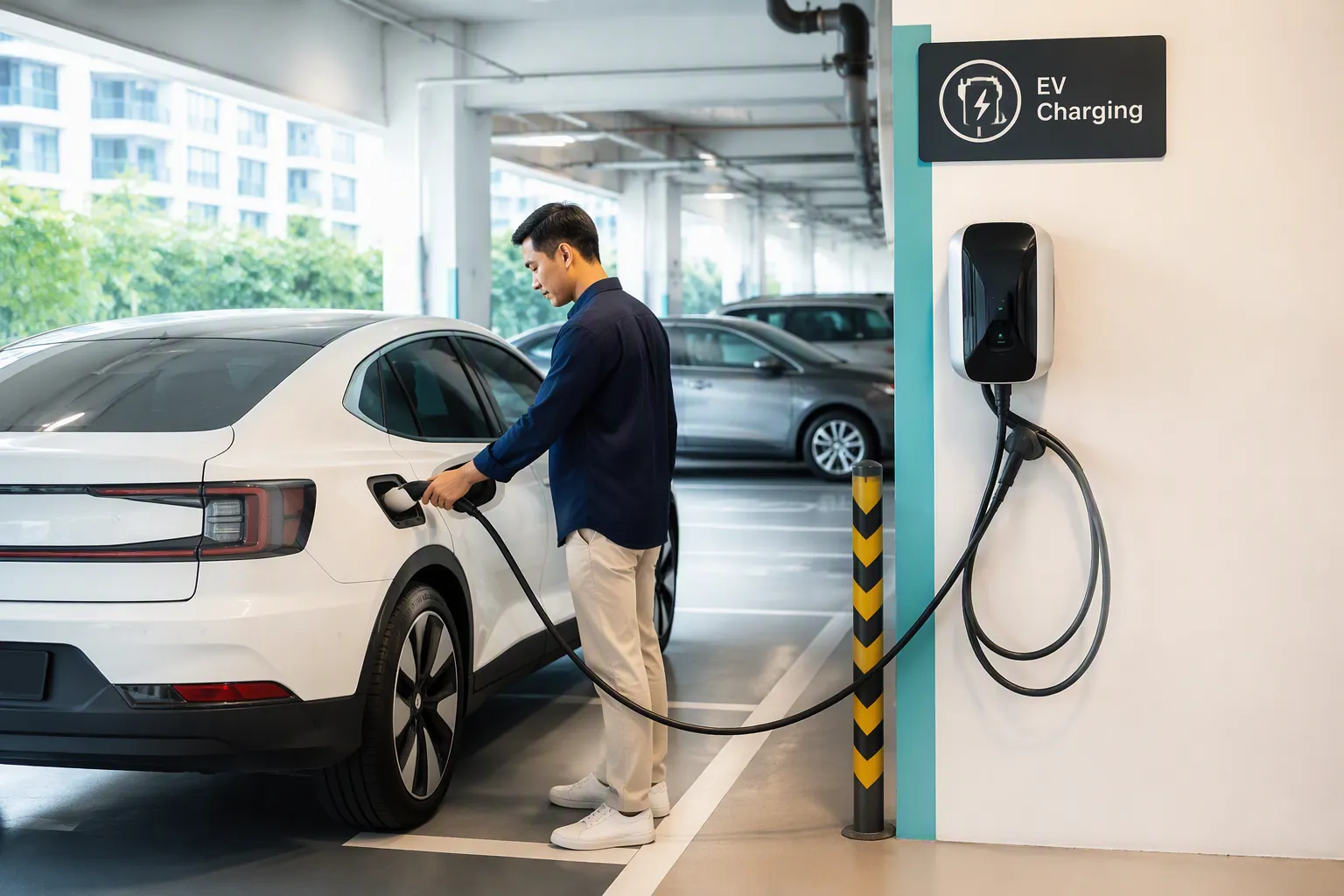

Uma estação de carregamento comercial privada transforma as operações de frota na Indonésia, oferecendo acesso confiável a Soluções de carregamento de veículos eléctricos. Os operadores de frota obtêm benefícios imediatos, como redução de tempo de inatividade e menores custos operacionais. O valor estratégico de uma infraestrutura dedicada torna-se claro através de várias vantagens:
- Sistemas inteligentes otimizam os horários de carregamento, aumentando o tempo de atividade da frota.
- Gestão energética abrangente apoia operações econômicas e balanceamento de carga.
- Integração com Fabricantes de carregadores para veículos eléctricos e carregadores ev portáteis garante flexibilidade para frotas comerciais.
Os gestores de frota alcançam maior controle, eficiência e sustentabilidade com uma Carregador EV rede privada.
Eletrificação de Frotas e Benefícios da Estação de Carregamento Comercial Privada
Eficiência Operacional para Frotas de VE
Tempo de Inatividade Reduzido com Carregamento Dedicado
Os operadores de frota na Indonésia observam melhorias significativas na eficiência operacional ao implantar uma estação de carregamento comercial privada. A infraestrutura de carregamento dedicada permite que os veículos elétricos recarreguem sem esperar em filas em estações públicas. Esta configuração garante que os veículos passem menos tempo ociosos e mais tempo na estrada, apoiando cronogramas de transporte confiáveis.
- Horários de carregamento otimizados permitem retorno mais rápido e maior tempo de atividade da frota.
- Sistemas inteligentes de agendamento e armazenamento de energia ajudam a reduzir despesas com energia.
- Os operadores ganham maior visibilidade sobre cada ciclo de carga e status do sistema, o que aprimora a gestão operacional.
Essas melhorias permitem que as frotas mantenham níveis de serviço consistentes e atendam às demandas de transporte com eficiência.
Agendamento Otimizado para Veículos de Frota
Uma solução de carregamento privada otimiza o agendamento para veículos elétricos. Os gestores de frota podem planejar sessões de carregamento conforme as necessidades operacionais, garantindo que os veículos estejam sempre prontos para implantação. Esta abordagem minimiza conflitos de agendamento e maximiza o uso de cada veículo. Ferramentas de monitoramento em tempo real fornecem atualizações sobre o progresso do carregamento, permitindo que os gestores ajustem os cronogramas rapidamente, se necessário. Como resultado, as frotas alcançam melhor utilização dos ativos e mantêm serviços de transporte pontuais.
Economia de Custos e Sustentabilidade com VEs
Custos de combustível e manutenção mais baixos
Os veículos elétricos oferecem economias substanciais de custos em comparação com veículos tradicionais movidos a combustível. Os operadores se beneficiam de custos de energia mais baixos, especialmente ao usar sistemas de carregamento inteligentes que otimizam o uso de eletricidade. As despesas de manutenção também diminuem porque os veículos elétricos têm menos peças móveis e requerem manutenção menos frequente. Com o tempo, essas economias contribuem para uma operação de frota mais sustentável e lucrativa.
Impacto Ambiental da Eletrificação de Frotas
A eletrificação de frotas apoia a mobilidade sustentável, reduzindo as emissões de gases de efeito estufa e a poluição do ar. Os veículos elétricos produzem zero emissões de escapamento, o que melhora a qualidade do ar nas áreas urbanas. A adoção do transporte elétrico está alinhada com as metas ambientais da Indonésia e demonstra um compromisso com práticas comerciais responsáveis. As empresas que investem em frotas elétricas ajudam a impulsionar a transição para soluções de transporte mais limpas.
Vantagem Competitiva para Operadores de Frota
Imagem de Marca Aprimorada pela Adoção de VEs
A adoção de veículos elétricos e infraestrutura de carregamento privada aprimora a imagem da marca de uma empresa. Clientes e parceiros valorizam cada vez mais a sustentabilidade e a inovação. Os operadores de frota que lideram a adoção de veículos elétricos se posicionam como visionários e ambientalmente responsáveis. Esta reputação pode atrair novas oportunidades de negócios e fortalecer os relacionamentos com as partes interessadas.
Atendimento aos Requisitos Regulatórios na Indonésia
O governo da Indonésia introduziu várias políticas para acelerar a adoção de veículos elétricos e infraestrutura de carregamento. Os operadores de frota devem cumprir essas regulamentações para permanecerem competitivos e acessarem os incentivos disponíveis.
| Regulamento/Política | Descrição |
|---|---|
| Regulamento Presidencial Número 55 de 2019 | Foca na aceleração do Programa de Motocicletas Elétricas Baseadas em Bateria para Transporte Rodoviário. |
| Instrução Presidencial Número 7 de 2022 | Incentiva o uso de Motocicletas Elétricas Baseadas em Bateria como veículos de serviço operacional para instituições governamentais. |
| Incentivos fiscais e não fiscais | Inclui benefícios fiscais para fabricantes de automóveis e baterias para promover a implantação de veículos elétricos. |
As estações de carregamento comercial privadas ajudam os operadores a atender esses requisitos com eficiência. A implantação estratégica em terminais de ônibus ou hubs de frota reduz a competição por carregadores públicos e apoia a conformidade com os padrões nacionais.
Sugestão: Contratos de energia de longo prazo com provedores de carregamento podem estabilizar os fluxos de caixa e apoiar o planejamento financeiro para operadores de frota.
| Descrição das provas | Explicação |
|---|---|
| A infraestrutura de carregamento pode ser implantada em terminais de ônibus, reduzindo a competição por localização | Este posicionamento estratégico permite que os operadores de frota evitem a intensa competição enfrentada pelos carregadores urbanos tradicionais, aumentando a eficiência operacional. |
| Contratos de energia de longo prazo proporcionam fluxos de caixa estáveis | Esses contratos permitem que os operadores de frota garantam fluxos de receita previsíveis, o que é crucial para o planejamento financeiro e investimento. |
| Replicação de modelos bem-sucedidos entre cidades | A capacidade de replicar modelos bem-sucedidos de estação de carregamento em diferentes cidades permite escalabilidade e maior alcance de mercado. |
Os operadores de frota que investem em infraestrutura de carregamento privada ganham uma clara vantagem competitiva no setor de transporte em evolução da Indonésia.
Importância da Plataforma de Gerenciamento de Carregamento de VEs para Otimização de Frota
Confiabilidade e Disponibilidade das Estações de Carregamento Comercial Privadas
Acesso Consistente para Veículos de Frota
Os operadores de frota na Indonésia dependem de acesso consistente a infra-estruturas de tarifação para manter a eficiência operacional. As estações de carregamento comercial privadas fornecem espaços dedicados para veículos elétricos, garantindo que cada veículo receba carregamento oportuno. Este arranjo elimina a incerteza da disponibilidade de carregamento público e apoia cronogramas de frota previsíveis. Os operadores podem implantar veículos com confiança, sabendo que os recursos de carregamento permanecem reservados para sua frota.
Minimizando a Ansiedade de Autonomia para os Motoristas
Os motoristas experimentam menos ansiedade de autonomia quando operam veículos elétricos dentro de uma frota apoiada por estações de carregamento privadas. A garantia de carregamento confiável reduz o estresse e permite que os motoristas se concentrem em suas rotas. Atualizações em tempo real da plataforma de gerenciamento de carregamento de veículos elétricos informam os motoristas sobre o progresso do carregamento e a disponibilidade da estação. Esta transparência ajuda os motoristas a planejar suas viagens e evitar atrasos inesperados.
Nota: A infraestrutura de carregamento confiável melhora a satisfação e retenção dos motoristas, o que fortalece o desempenho da frota.
Impacto no Desempenho da Frota e Utilização de Ativos
Tempos de Retorno Mais Rápidos para VEs
As estações de carregamento privadas aceleram os tempos de retorno para veículos elétricos. Os gestores de frota agendam sessões de carregamento com base nas necessidades operacionais, permitindo que os veículos recarreguem rapidamente e retornem ao serviço. Esta eficiência aumenta o número de viagens que cada veículo pode completar em um dia. A plataforma de gerenciamento de carregamento acompanha cada sessão, fornecendo informações que ajudam os gestores a otimizar os horários e a reduzir o tempo de inatividade.
Melhoria da utilização dos activos da frota
Os operadores de frotas maximizam a utilização dos activos através da integração dos dados de carregamento com os planos de utilização dos veículos. A plataforma de gestão de carregamento permite aos gestores monitorizar o estado dos veículos e os ciclos de carregamento. Esta informação apoia decisões estratégicas sobre a rotação e manutenção dos veículos. Os operadores alcançam uma maior produtividade e reduzem o tempo de inatividade desnecessário.
Integração com plataformas de gestão de frotas e de carregamento de veículos eléctricos
Monitorização em tempo real das operações de carregamento
A integração de sistemas de gestão de frotas com plataformas de carregamento cria uma camada digital unificada. Os gestores monitorizam as operações de carregamento em tempo real, acompanhando o consumo de energia e a prontidão dos veículos. Esta conetividade aumenta a eficiência operacional e apoia a manutenção proactiva.
Tomada de decisões com base em dados para gestores de frotas
Os gestores de frotas utilizam os dados da plataforma de carregamento para tomar decisões informadas. A plataforma proporciona uma gestão dinâmica da carga, optimizando os horários de carregamento e evitando sobrecargas na rede. Os gestores alinham o carregamento com as rotas de entrega, melhorando a eficiência e reduzindo os custos. A escalabilidade dos sistemas integrados permite aos operadores expandir a sua frota à medida que a procura aumenta.
| Benefício | Descrição |
|---|---|
| Camada digital unificada | Facilita a conetividade sem descontinuidades entre veículos, carregadores e a rede, melhorando a eficiência operacional. |
| Escalabilidade | Permite aos operadores de frotas expandir as suas operações de forma fiável e rentável à medida que a procura aumenta. |
| Gestão dinâmica da carga (DLM) | Optimiza os horários de carregamento para evitar sobrecargas na rede, alinhando com as rotas de entrega para maior eficiência. |
Os operadores de frotas na Indonésia ganham uma vantagem competitiva ao utilizarem uma plataforma de gestão de carregamento de veículos eléctricos. A plataforma suporta o carregamento fiável, a utilização eficiente dos activos e as operações baseadas em dados, que conduzem à otimização da frota.
Caraterísticas e vantagens das soluções de postos de carregamento comerciais privados
Personalização para necessidades de frotas e operações de VE
Soluções de carregamento escaláveis para frotas em crescimento
Os operadores de frotas na Indonésia necessitam de soluções flexíveis à medida que as suas operações se expandem. A estação de carregamento comercial privada oferece pontos de carregamento escaláveis que se adaptam ao crescimento da frota. Os operadores podem adicionar novos pontos de carregamento sem perturbar as actividades diárias. A TPSON fornece sistemas modulares que suportam tanto frotas pequenas como grandes. Esta abordagem garante que os veículos eléctricos têm sempre acesso a um carregamento fiável, mesmo quando o número de veículos aumenta.
Horários de carregamento personalizados para veículos comerciais
Cada frota tem padrões operacionais únicos. O carregamento privado permite aos gestores definir horários de carregamento que correspondam à utilização dos veículos. Podem dar prioridade ao carregamento de veículos com percursos urgentes ou distâncias mais longas. As ferramentas de programação inteligente ajudam a equilibrar o consumo de energia e a evitar picos de eletricidade. Esta personalização reduz os custos e maximiza a disponibilidade dos veículos.
Sugestão: Os gestores de frotas podem utilizar a análise da plataforma de carregamento para ajustar os horários e melhorar a eficiência.
Segurança e controlo melhorados para o carregamento de frotas
Gestão de acessos para operadores de frotas
A segurança continua a ser uma das principais prioridades dos operadores de frotas. As estações de carregamento privadas permitem aos gestores controlar quem pode aceder aos pontos de carregamento. Podem atribuir permissões aos condutores ou ao pessoal de manutenção. Esta gestão de acesso impede a utilização não autorizada e protege os bens da empresa. Os operadores podem monitorizar a utilização em tempo real e responder rapidamente a quaisquer problemas.
Privacidade e proteção de dados
As operações da frota geram dados sensíveis. Uma estação de carregamento comercial privada garante que todas as informações sobre as sessões de carregamento e o consumo de energia permanecem seguras. A TPSON utiliza protocolos avançados de encriptação e cibersegurança para proteger os dados da frota. Os operadores podem confiar que os seus detalhes operacionais permanecem confidenciais.
| Funcionalidade de Segurança | Benefício |
|---|---|
| Controlo de acesso | Limita a utilização do ponto de carregamento ao pessoal autorizado |
| Encriptação de dados | Protege os dados sensíveis da frota e do carregamento |
| Monitorização em tempo real | Permite uma resposta imediata a eventos de segurança |
Gestão de custos e compra de energia a granel
Despesas de energia previsíveis para operações de frotas
A gestão dos custos é essencial para a rentabilidade da frota. O carregamento privado permite despesas de energia previsíveis permitindo aos operadores monitorizar e controlar a utilização de energia. Podem acompanhar as despesas através de relatórios detalhados e planear orçamentos com confiança. Esta transparência apoia o planeamento financeiro a longo prazo.
Oportunidades de compra de energia a granel
Os operadores de frotas podem negociar acordos de compra de energia a granel com fornecedores de serviços públicos. Estes contratos resultam frequentemente em tarifas mais baixas para o carregamento de veículos eléctricos. A TPSON ajuda os operadores a analisar os padrões de consumo de energia e a identificar as melhores estratégias de compra. As compras a granel reduzem os custos globais e aumentam o retorno do investimento na infraestrutura de carregamento.
Nota: Os contratos de energia a granel podem estabilizar as despesas e proteger as frotas das flutuações dos preços de mercado.
Os operadores de frotas na Indonésia obtêm vantagens significativas ao investir numa estação de carregamento comercial privada. Conseguem um maior controlo, segurança e eficiência de custos, ao mesmo tempo que apoiam a transição para a mobilidade eléctrica.
Desafios e oportunidades para as frotas de VE na Indonésia
Navegar pelos regulamentos locais para postos de carregamento comerciais privados
Licenças e autorizações para infra-estruturas de carregamento de frotas
Os operadores de frotas na Indonésia devem obter as licenças e autorizações adequadas antes de instalação de uma estação de carregamento comercial privada. Os governos locais exigem documentação que verifique a conformidade com as normas de zonamento, segurança e ambientais. Os operadores trabalham muitas vezes com consultores para cumprir estes requisitos de forma eficiente. O processo pode envolver inspecções ao local e análises técnicas. O envolvimento precoce com as autoridades ajuda a evitar atrasos e garante uma execução tranquila do projeto.
Conformidade com as normas nacionais para VE
A Indonésia aplica normas nacionais para as infra-estruturas de carregamento de veículos eléctricos. Estas normas abrangem especificações de equipamento, protocolos de segurança e requisitos de interoperabilidade. Os operadores têm de garantir que todos os postos de carregamento cumprem estas diretrizes para evitar penalizações e apoiar operações de frota sem problemas. O cumprimento das normas nacionais também permite que as empresas beneficiem de incentivos governamentais e participem em futuros programas de mobilidade eléctrica.
Fiabilidade da rede e infraestrutura para carregamento de veículos eléctricos
Resolver os cortes de energia e os problemas da rede
As frotas eléctricas dependem de um fornecimento de energia estável. Na Indonésia, a fiabilidade da rede representa um desafio significativo para os operadores de frotas. As falhas de energia e as flutuações de tensão podem perturbar os horários de carregamento e afetar a prontidão da frota. Os operadores investem frequentemente em sistemas de reserva, tais como armazenamento de baterias ou geradores, para manter operações contínuas durante as interrupções da rede. A manutenção proactiva e a coordenação com os fornecedores de serviços públicos ajudam a minimizar o tempo de inatividade.
O quadro seguinte apresenta problemas comuns de fiabilidade e infraestrutura da rede enfrentados pelas frotas eléctricas na Indonésia:
| Tipo de problema | Descrição |
|---|---|
| Pressão sobre as redes eléctricas | O aumento da adoção de veículos eléctricos está a levar a procura de picos a novos patamares, afectando a fiabilidade da rede. |
| Redes de carregamento inadequadas | As redes de carregamento não estão a corresponder às expectativas crescentes dos consumidores, o que conduz a problemas de infra-estruturas. |
| Planeamento fragmentado | A falta de modelos de planeamento unificados complica a gestão da energia e da mobilidade. |
| Custos de atualização das infra-estruturas | Os elevados custos associados à modernização das infra-estruturas colocam obstáculos significativos. |
| Vulnerabilidades de cibersegurança | As vulnerabilidades na cibersegurança podem ameaçar a fiabilidade da infraestrutura de VE. |
| Ausência de quadros jurídicos unificados | A falta de quadros jurídicos coesos dificulta o progresso no desenvolvimento de infra-estruturas de VE. |
Atualização de sistemas eléctricos para operações de frotas
Os operadores de frotas têm frequentemente de atualizar os sistemas eléctricos para suportar o carregamento em grande escala. A infraestrutura existente pode não suportar o aumento da carga de vários veículos eléctricos. As actualizações podem incluir a substituição de transformadores, cablagem melhorada e sistemas avançados de gestão de energia. Estas melhorias garantem um carregamento fiável e protegem o equipamento contra sobrecargas. Os operadores que investem em sistemas eléctricos robustos posicionam as suas frotas para um crescimento a longo prazo.
Considerações sobre os custos da eletrificação da frota
Investimento inicial na infraestrutura de carregamento
A transição para frotas eléctricas exige um investimento inicial significativo. O custo de aquisição e instalação de infra-estruturas de carregamento pode ser elevado, especialmente para grandes frotas. Os operadores têm de orçamentar a preparação do local, o equipamento e a integração com os sistemas existentes. Muitas empresas procuram opções de financiamento ou subsídios governamentais para compensar estas despesas. O planeamento estratégico ajuda a maximizar o retorno do investimento e garante um crescimento sustentável.
Custos operacionais e de manutenção contínuos
A manutenção de uma rede de carregamento privada implica inspecções regulares, actualizações de software e assistência técnica ao equipamento. Os operadores devem afetar recursos à manutenção de rotina para evitar avarias inesperadas. Os custos operacionais também incluem despesas de energia e monitorização do sistema. Ao monitorizar estes custos, os gestores de frotas podem identificar oportunidades de poupança e melhorar a eficiência global. As práticas de manutenção fiáveis prolongam a vida útil dos activos de carregamento e apoiam as operações ininterruptas dos veículos eléctricos.
Sugestão: Os operadores de frotas que planeiam os custos iniciais e contínuos podem alcançar uma maior estabilidade financeira e sucesso operacional.
Oportunidades de mercado para os operadores de frotas de veículos eléctricos
Incentivos governamentais para a eletrificação das frotas
Os operadores de frotas na Indonésia deparam-se com um cenário dinâmico moldado por incentivos governamentais. As autoridades oferecem benefícios fiscais e não fiscais para incentivar a transição para frotas eléctricas. Os operadores recebem benefícios fiscais para a importação de veículos e baterias, o que reduz o custo da eletrificação da frota. O governo promove o fabrico local de veículos eléctricos, com o objetivo de reduzir as despesas e aumentar as taxas de adoção.
- A Indonésia oferece incentivos fiscais aos fabricantes de automóveis e de baterias.
- O governo tem como objetivo a venda exclusiva de automóveis e motociclos eléctricos até 2050.
- A produção local de veículos eléctricos recebe apoio para aumentar a acessibilidade dos preços.
- O interesse dos consumidores pelos veículos eléctricos é cada vez maior, influenciado por estes incentivos.
- O governo planeia eletrificar 2,1 milhões de motociclos até 2025, embora a absorção atual permaneça baixa, com 0,14%.
Os operadores de frotas beneficiam destas políticas, mas têm de enfrentar desafios como as lacunas nas infra-estruturas e os custos de investimento inicial. Os incentivos criam um ambiente favorável para as empresas dispostas a investir em frotas eléctricas.
Os operadores que aproveitam os incentivos governamentais posicionam as suas frotas para um crescimento e sustentabilidade a longo prazo. O compromisso com a eletrificação assinala uma mudança no sector dos transportes da Indonésia, oferecendo novas oportunidades para empresas com visão de futuro.
Crescente adoção de veículos eléctricos na Indonésia
O mercado indonésio demonstra um potencial crescente para os operadores de frotas eléctricas. O aumento dos rendimentos em toda a Ásia-Pacífico leva a uma maior posse de automóveis e a diminuição dos custos de produção torna os veículos eléctricos mais acessíveis. As áreas urbanas beneficiam de uma melhor qualidade do ar à medida que as frotas substituem os veículos movidos a combustíveis fósseis por alternativas eléctricas.
A substituição de veículos movidos a combustíveis fósseis por veículos eléctricos reduz a dependência das importações de petróleo e diminui as emissões de carbono. Esta mudança beneficia o sector dos transportes da Indonésia e apoia os objectivos nacionais de sustentabilidade.
O mercado de VE da ASEAN foi de avaliado em quase $500 milhões em 2021 e prevê-se que atinja $2,7 mil milhões até 2027. O objetivo da Indonésia de vender apenas automóveis e motociclos eléctricos até 2050, combinado com incentivos fiscais e não fiscais, estimula o crescimento do mercado para os operadores de frotas.
Prevê-se que a Ásia represente mais de 60% dos 115 milhões de veículos eléctricos vendidos em todo o mundo nos próximos cinco anos. A diminuição dos custos de produção representa uma oportunidade para os operadores de frotas electrificarem os seus activos e melhorarem a eficiência operacional.
Os operadores de frotas que investem em frotas eléctricas ganham acesso a um mercado em rápida expansão. A combinação de incentivos governamentais e o crescente interesse dos consumidores cria uma base sólida para o crescimento. As empresas que se adaptam a estas tendências asseguram uma vantagem competitiva e contribuem para o futuro da mobilidade sustentável na Indonésia.
Passos a seguir para os operadores de frotas que implementam postos de carregamento comerciais privados

Avaliação das necessidades da frota e do carregamento de veículos eléctricos
Avaliação dos tipos de veículos e da dimensão da frota
Os operadores de frotas na Indonésia devem começar por avaliar os tipos de veículos na sua frota e a dimensão total da frota. Esta avaliação ajuda a determinar o número de pontos de carregamento necessários e a capacidade de energia necessária para as operações diárias. Os operadores devem considerar a autonomia, o tamanho da bateria e as funções operacionais de cada veículo. A infra-estruturas energéticas globais apoia operações fiáveis e sustentáveis. Os operadores que conhecem a composição da sua frota podem planear as necessidades actuais e a expansão futura.
Analisar os padrões de utilização para um carregamento optimizado
Os operadores devem analisar os padrões de utilização diária para otimizar os horários de carregamento. A análise de dados aumenta a eficiência operacional e ajuda a antecipar a procura de energia. Ao acompanharem quando e como os veículos funcionam, os gestores podem programar o carregamento durante as horas de vazio ou entre turnos. A integração de soluções de software para a gestão de frotas permite o equilíbrio de carga em tempo real e a análise da utilização de energia. Estes passos garantem que cada veículo está pronto para ser utilizado, minimizando os custos de energia.
Dica: Os operadores que utilizam informações baseadas em dados podem ajustar rapidamente as estratégias de carregamento de acordo com as necessidades operacionais em constante mudança.
Planeamento da infraestrutura de carregamento para operações de frotas
Seleção do local para postos de carregamento comerciais privados
A seleção do local certo para uma estação de carregamento comercial privada é fundamental. Os operadores devem ter em conta a proximidade dos depósitos da frota, a facilidade de acesso e o espaço disponível para o equipamento. Análise das necessidades operacionais, A análise de dados, como a procura de arrefecimento, a carga, a distância e a autonomia da bateria, ajuda a desenvolver uma estratégia de carregamento eficaz. Em Jacarta, baterias mais pequenas combinadas com carregamento noturno e de oportunidade podem reduzir os custos. Os operadores devem também avaliar a capacidade da rede local e planear possíveis actualizações.
Planeamento da capacidade para frotas de VE
O planeamento da capacidade garante que a infraestrutura de carregamento pode suportar toda a frota. Os carregadores de oportunidade ajudam a distribuir a procura de energia pelas redes locais, evitando actualizações dispendiosas para grandes necessidades de carregamento noturno. A instalação de produção distribuída de energia renovável, como sistemas solares fotovoltaicos nos telhados dos terminais de autocarros, pode reduzir os custos operacionais de energia e diminuir a necessidade de actualizações de capacidade. Estas medidas criam uma rede de carregamento resiliente e económica.
Parcerias com fornecedores locais de carregamento de veículos eléctricos
Seleção de fornecedores para soluções de carregamento de frotas
Escolher o parceiro certo para soluções de carregamento tem impacto no desempenho da frota a longo prazo. Os operadores devem avaliar os fornecedores com base em vários critérios:
| Critérios | Descrição |
|---|---|
| Soluções de infra-estruturas | Os fornecedores devem oferecer soluções abrangentes de infra-estruturas de VE adaptadas às necessidades da frota. |
| Gestão da energia | São essenciais sistemas eficazes de gestão da energia que optimizem o consumo e protejam o abastecimento. |
| Serviços de apoio | Os serviços de assistência 24 horas por dia, 7 dias por semana, garantem o máximo tempo de funcionamento da infraestrutura de carregamento. |
| Software de frota | O software dedicado à frota para monitorização e programação é crucial para a eficiência operacional. |
| Desenvolvimento e construção | Os fornecedores devem prestar assistência na conceção do local e nas ligações à rede para uma instalação sem descontinuidades. |
Acordos de serviço e suporte
Os acordos de serviço definem o nível de apoio e manutenção fornecido pelo parceiro de carregamento. Os operadores devem procurar acordos que garantam tempos de resposta rápidos e actualizações regulares do sistema. Os serviços de assistência fiáveis ajudam a manter um elevado tempo de funcionamento das estações de carregamento e garantem que os veículos permanecem operacionais. Termos claros nos acordos de serviço protegem o investimento da frota e apoiam o sucesso a longo prazo.
Nota: A existência de parcerias sólidas com fornecedores locais permite aos operadores adaptarem-se rapidamente às novas tecnologias e às alterações regulamentares.
Implementação e expansão da infraestrutura de carregamento de veículos eléctricos
Programas-piloto para a eletrificação de frotas
Os operadores de frotas na Indonésia lançam frequentemente programas-piloto para testar a infraestrutura de carregamento de veículos eléctricos antes da sua implementação em grande escala. Estes programas permitem aos gestores avaliar o desempenho do sistema, identificar desafios operacionais e recolher dados sobre o consumo de energia. Os operadores selecionam um pequeno subconjunto de veículos e instalam estações de carregamento em locais estratégicos. Monitorizam os ciclos de carregamento, a prontidão dos veículos e os requisitos de manutenção. Esta abordagem ajuda os operadores a compreender o impacto da eletrificação nas operações diárias.
Um programa-piloto bem sucedido centra-se na construção de um infra-estruturas energéticas fiáveis. Os operadores dão prioridade a soluções rentáveis que apoiem as actividades de rotina da frota. Evitam a sobrecarga dos transformadores e gerem os custos de eletricidade programando o carregamento para as horas de menor consumo. Os gestores utilizam plataformas digitais para acompanhar a procura de energia e equilibrar as cargas em tempo real. Esta espinha dorsal digital transforma o carregamento de um potencial estrangulamento numa vantagem estratégica.
Sugestão: Os programas-piloto fornecem informações valiosas para dimensionar a infraestrutura e otimizar a gestão da energia.
Os operadores documentam as lições aprendidas durante a fase piloto. Analisam os dados para aperfeiçoar os planos de carregamento, melhorar a utilização dos activos e aumentar a eficiência operacional. Estas conclusões orientam os investimentos futuros e informam as estratégias de expansão.
Estratégias de expansão para frotas em crescimento
A expansão da infraestrutura de carregamento de veículos eléctricos requer um planeamento cuidadoso e um enfoque na sustentabilidade. Os operadores de frotas expandem capacidade de carregamento através da adição de novas estações e modernização dos sistemas eléctricos existentes. Avaliam as projecções de crescimento da frota e alinham o desenvolvimento da infraestrutura com as necessidades operacionais. Os gestores investem em soluções de carregamento modulares que se adaptam ao aumento do número de veículos.
Os operadores implementam sistemas de gestão de energia abrangentes para apoiar operações em grande escala. Monitorizam a utilização de energia, antecipam a procura e equilibram as cargas em vários locais. Esta abordagem evita as sobrecargas dos transformadores e reduz os custos de eletricidade durante os períodos de pico. As plataformas digitais permitem a monitorização em tempo real e fornecem dados acionáveis para a tomada de decisões.
| Estratégia de expansão | Benefício |
|---|---|
| Sistemas de carregamento modulares | Escalonamento flexível para o crescimento da frota |
| Balanceamento de carga em tempo real | Evita a sobrecarga da rede e reduz os custos |
| Planeamento baseado em dados | Apoia a modernização eficiente das infra-estruturas |
Os operadores de frotas colaboram com os fornecedores de serviços públicos locais para assegurar contratos de energia a granel. Estes acordos estabilizam as despesas e garantem um fornecimento de energia fiável. Os gestores também exploram opções de energia renovável, como painéis solares, para melhorar a sustentabilidade e reduzir os custos operacionais.
Nota: Uma infraestrutura de carregamento escalável posiciona as frotas para o crescimento a longo prazo e apoia a transição da Indonésia para a mobilidade eléctrica.
Os operadores que implementam programas-piloto e adoptam planos de expansão estratégica ganham uma vantagem competitiva. Criam infra-estruturas energéticas robustas, rentáveis e sustentáveis que suportam as operações diárias e o crescimento futuro.
Maximizar o ROI e os benefícios a longo prazo com a plataforma de gestão de carregamento de veículos eléctricos
Monitorização de métricas de desempenho para operações de frotas
Acompanhamento das poupanças de custos decorrentes da adoção de VE
Os operadores de frotas na Indonésia procuram maximizar o retorno do seu investimento em veículos eléctricos e infra-estruturas de carregamento. O controlo das economias de custos constitui uma parte essencial deste processo. Os operadores monitorizam as reduções nas despesas de combustível e nos custos de manutenção após a transição para frotas eléctricas. As plataformas de gestão de carregamento fornecem relatórios detalhados sobre o consumo de energia, permitindo aos gestores comparar os custos de eletricidade com as despesas de combustível anteriores. Estas informações ajudam os operadores a identificar as áreas em que a frota consegue obter as maiores poupanças. Ao longo do tempo, o acompanhamento consistente permite uma melhor orçamentação e planeamento financeiro.
Medir as melhorias operacionais na eficiência da frota
A eficiência operacional é um indicador-chave do sucesso da eletrificação da frota. As plataformas de gestão de carregamento permitem aos operadores medir as melhorias em várias áreas. Monitorizam o estado dos veículos, analisam os dados telemáticos e analisam indicadores de eficiência operacional. Os gestores também acompanham os padrões de mobilidade, optimizam os percursos e registam a quilometragem. Os dados de utilização da infraestrutura de carregamento revelam a eficácia com que a frota utiliza os recursos disponíveis. Ao analisar estas métricas, os operadores podem identificar os pontos de estrangulamento e ajustar as estratégias para um melhor desempenho.
- Monitorização do estado do veículo
- Análise de dados telemáticos
- Indicadores de eficiência operacional
- Seguimento de padrões de mobilidade
- Otimização de rotas
- Controlo da quilometragem
- Utilização da infraestrutura de carregamento
Sugestão: A revisão regular destas métricas ajuda os operadores a manter um elevado desempenho da frota e a adaptarem-se rapidamente às mudanças operacionais.
Otimização contínua da frota e da infraestrutura de carregamento
Adaptação às mudanças do mercado na Indonésia
O panorama da mobilidade eléctrica na Indonésia continua a evoluir. Os operadores de frotas têm de se manter ágeis para responder a novas regulamentações, a mudanças nas preferências dos consumidores e a avanços na tecnologia de carregamento. As plataformas de gestão de carregamento suportam esta adaptabilidade, fornecendo dados e análises em tempo real. Os operadores podem ajustar os horários de carregamento, atualizar os planos operacionais e dimensionar a infraestrutura à medida que as exigências do mercado mudam. Esta abordagem proactiva garante que as frotas se mantêm competitivas e em conformidade com os requisitos locais.
Tirar partido das novas tecnologias para a gestão de frotas
As novas tecnologias desempenham um papel vital na otimização contínua das operações da frota. As plataformas de gestão do carregamento integram-se nos sistemas telemáticos, permitindo a monitorização em tempo real do estado dos veículos e do progresso do carregamento. A inteligência artificial e as ferramentas de aprendizagem automática ajudam a prever a procura de energia e a otimizar os ciclos de carregamento. Estas inovações permitem aos operadores reduzir o tempo de inatividade, melhorar a utilização dos activos e aumentar a eficiência global. Ao adoptarem novas soluções, os gestores de frotas posicionam as suas operações para o sucesso a longo prazo no crescente mercado de veículos eléctricos da Indonésia.
Uma estação de carregamento comercial privada permite que os operadores de frotas indonésios optimizem o desempenho, reduzam os custos e apoiar os objectivos de sustentabilidade. As principais tendências do mercado incluem o rápido crescimento do mercado de VE da ASEAN, objectivos nacionais para os veículos eléctricos e grandes investimentos em infra-estruturas de carregamento. Os operadores enfrentam desafios como o carregamento público limitado e a fiabilidade da energia, mas o planeamento estratégico e a adaptação local - apoiados por tarifas para as energias renováveis e reformas regulamentares - aumentam o sucesso. Os gestores de frotas devem agir agora para eletrificar as frotas, investir em infra-estruturas robustas e aproveitar a cooperação regional para obter vantagens a longo prazo.
- O mercado de VE da ASEAN é projetado para atingir $2,7 mil milhões até 2027.
- A Indonésia tem como objetivo a venda de veículos totalmente eléctricos até 2050, com incentivos para os fabricantes.
- Os operadores beneficiam das tarifas das energias renováveis e das reformas regulamentares em curso.
FAQ
O que é uma estação de carregamento comercial privada?
Um posto de carregamento comercial privado serve apenas uma frota ou empresa específica. Fornece pontos de carregamento dedicados para veículos eléctricos. Esta configuração garante um acesso fiável e apoia operações de frota eficientes.
Como é que uma estação de carregamento privada reduz os custos da frota?
Uma estação de carregamento privada reduz as despesas de energia e os custos de manutenção. Os operadores de frotas podem negociar tarifas de energia a granel. Evitam também as taxas de carregamento público. Com o tempo, estas poupanças aumentam a rentabilidade.
Os postos de carregamento privados são seguros?
Os postos de carregamento privados oferecem caraterísticas de segurança avançadas. Os operadores controlam o acesso através de permissões digitais. A encriptação de dados protege as informações sensíveis. A monitorização em tempo real ajuda a detetar utilizações não autorizadas.
Quais são os principais desafios na instalação de uma estação de carregamento privada na Indonésia?
Os operadores enfrentam desafios como licenciamento, atualizações da rede elétrica e custos iniciais de investimento. Eles devem cumprir os padrões nacionais. Um fornecimento de energia confiável permanece essencial para operações sem interrupções.
Uma estação de carregamento privada pode apoiar a expansão da frota?
Sim. Soluções de carregamento modulares permitem que os operadores adicionem mais pontos de carregamento conforme a frota cresce. A infraestrutura escalável adapta-se às necessidades operacionais em mudança.
Quais incentivos o governo indonésio oferece para a eletrificação de frotas?
O governo oferece benefícios fiscais, incentivos à importação e apoio à produção local de veículos elétricos. Esses incentivos reduzem o custo da eletrificação da frota e incentivam uma adoção mais rápida.
Como uma plataforma de gerenciamento de carregamento ajuda os operadores de frota?
Uma plataforma de gerenciamento de carregamento monitora o uso de energia, agenda recargas e fornece dados em tempo real. Os operadores utilizam essas informações para otimizar o desempenho da frota e reduzir o tempo de inatividade.
Quais tipos de veículos podem utilizar uma estação de carregamento comercial privada?
Estações de carregamento comerciais privadas suportam vários veículos elétricos, incluindo ônibus, caminhões e vans. Os operadores podem personalizar os pontos de carregamento para atender aos requisitos dos veículos.