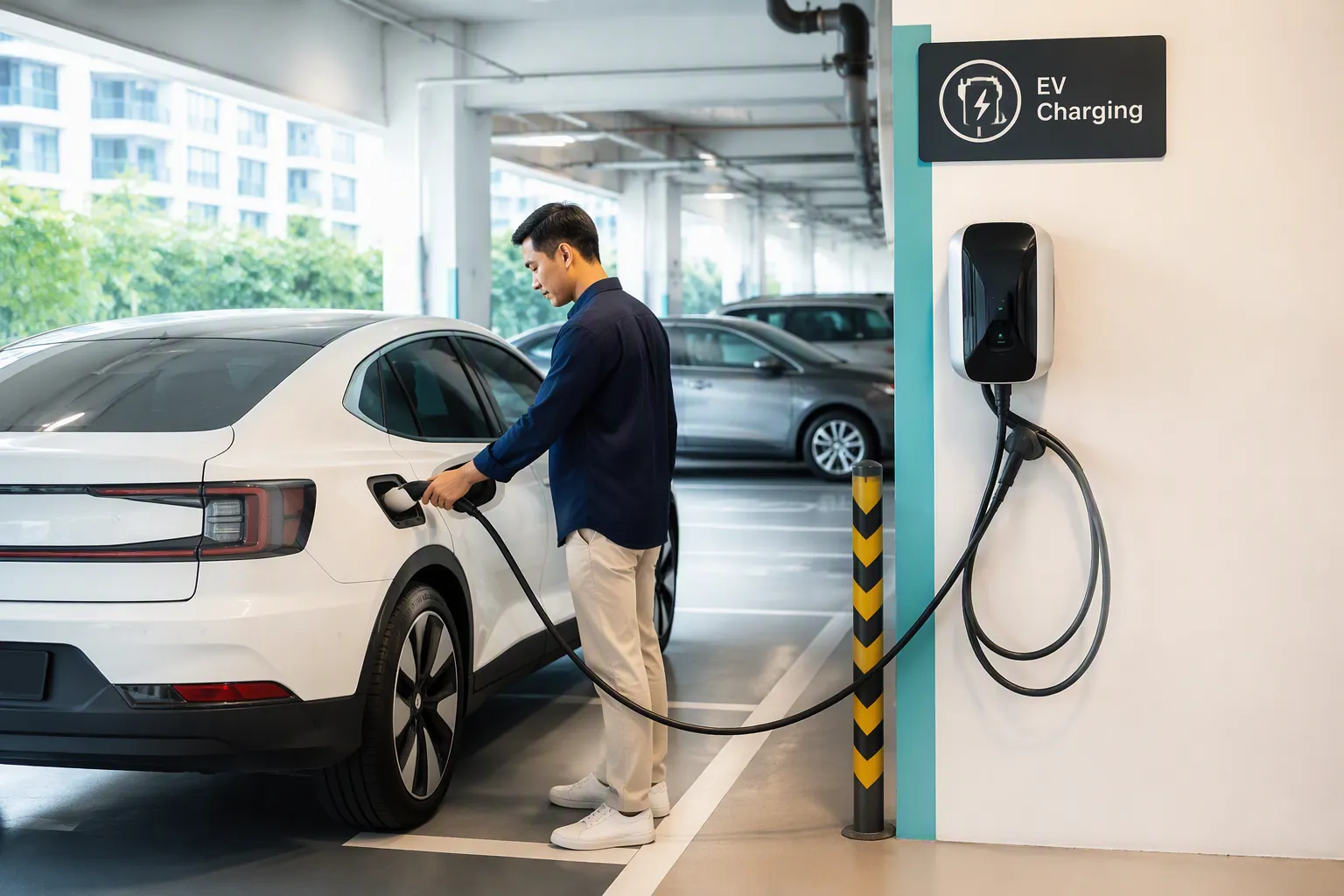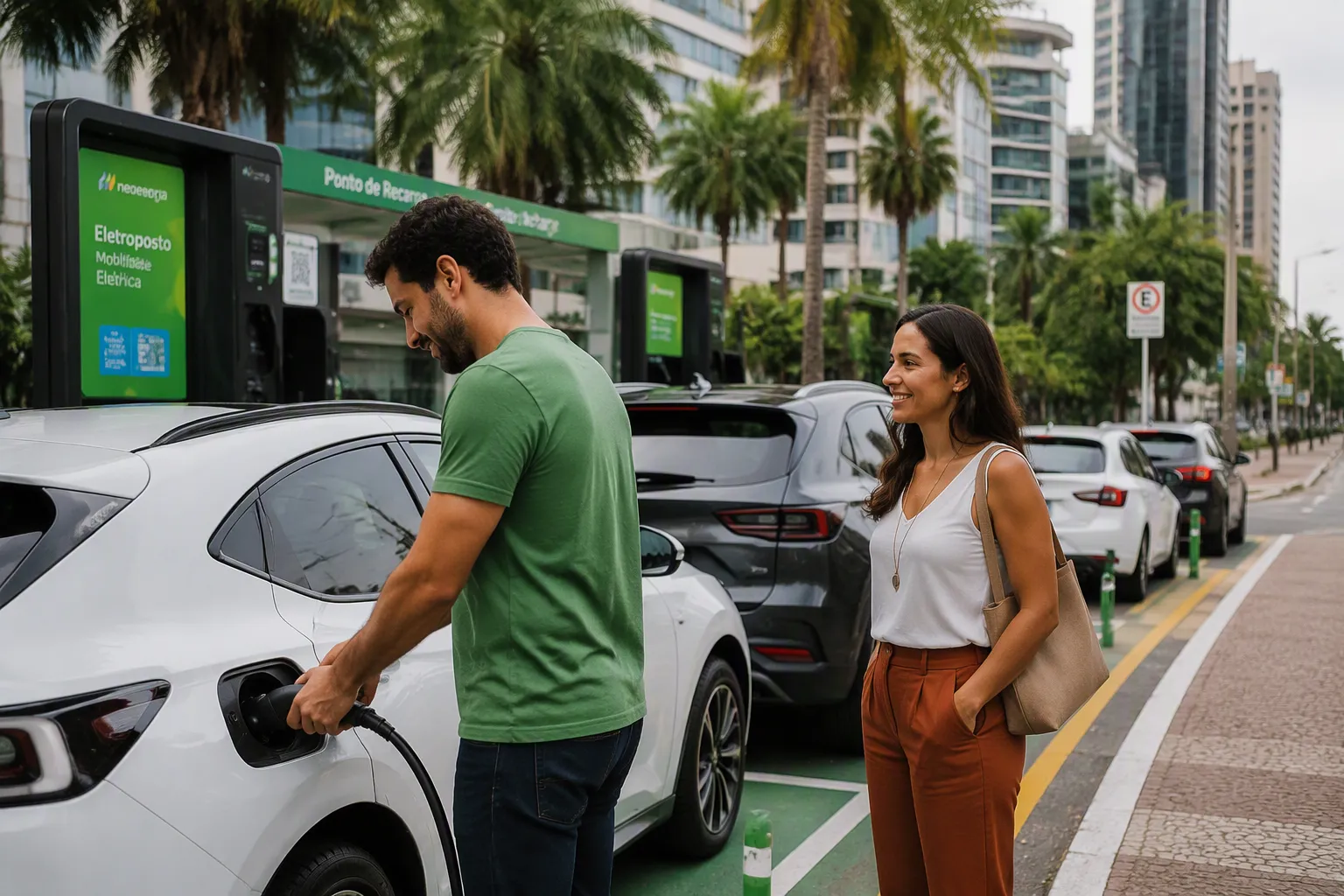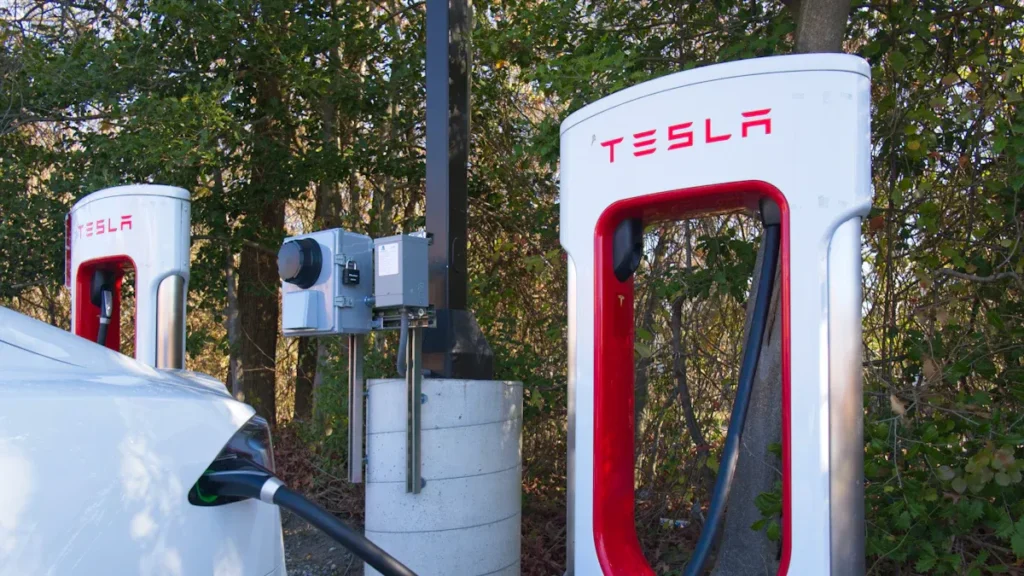

You can find EV chargers quickly in Southeast Asian cities by using mobile apps, navigation platforms, and official charging network websites. These tools help you locate EV charging stations for electric vehicles within seconds, whether you drive in busy cities or travel between regions. The number of electric vehicle charging stations continues to grow, with Thailand offering 647 stations, Indonesia 180, and Singapore 1,600. EV charger manufacturers expand their presence to meet the rising demand for vehicles. The chart below shows current station availability in key countries.
| Country | Current Number of Charging Stations | Future Target (if applicable) |
|---|---|---|
| Thailand | 647 (as of November 2020) | N/A |
| Indonesia | 180 (in 2020) | 7,146 by 2030 |
| Malaysia | N/A | 7,700 by 2025 |
| Singapore | 1,600 | 28,000 by 2030 |

Best Apps and Platforms to Find EV Chargers
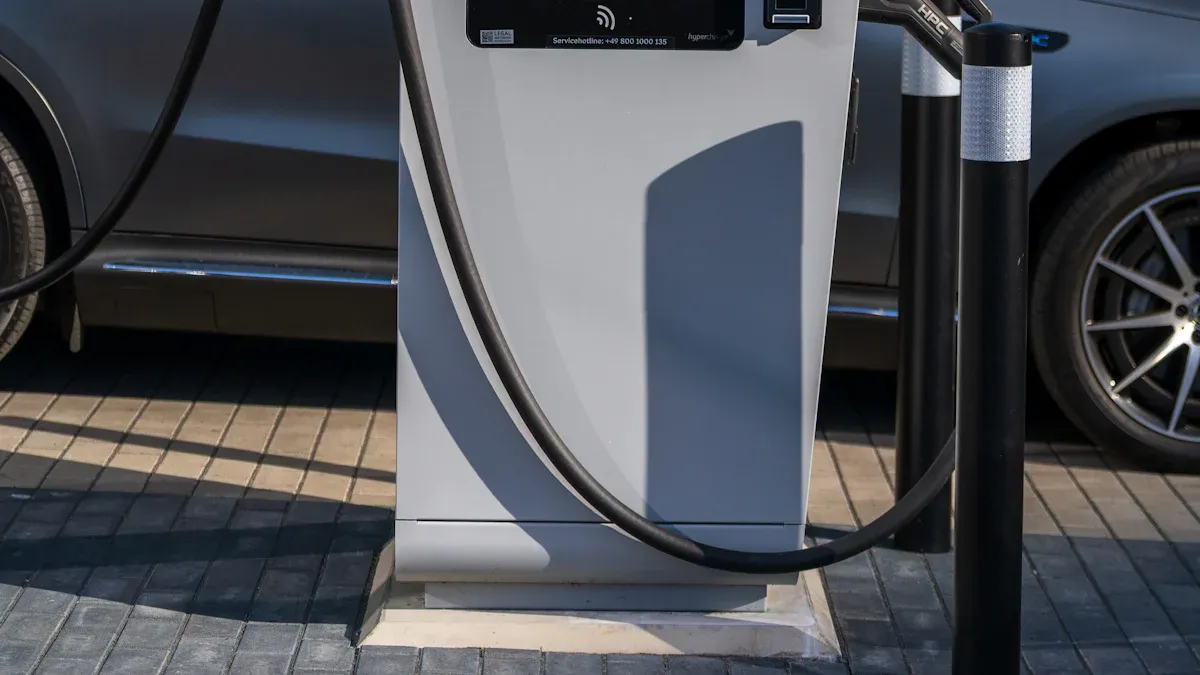
You can find EV chargers across Southeast Asia using a range of mobile apps, navigation platforms, and official charging network websites. These tools help you locate stations for electric vehicles quickly and reliably. Each option offers unique features that make your search for electric vehicle charging more efficient.
Popular Mobile Apps
You have access to several mobile apps that specialize in mapping and locating EV charging stations. These apps provide real-time data, user-friendly interfaces, and filtering options to help you find the best station for your needs.
PlugShare
PlugShare stands out as a global leader in EV charging station mapping. You can view thousands of stations, check user-generated reviews, and filter by connector type or charging speed. PlugShare’s interactive map lets you plan your route and avoid unnecessary detours.
ChargeFinder
ChargeFinder offers comprehensive coverage of charging stations in Southeast Asia. You can search for stations by location, charger type, and availability. The app updates its database regularly, ensuring you always have access to the latest station information.
ChargeZone
ChargeZone focuses on fast and reliable charging for electric vehicles. You can use the app to locate stations, check real-time availability, and receive notifications when a charger becomes free. ChargeZone’s network continues to expand in urban and suburban areas.
EA Anywhere
EA Anywhere provides detailed maps of charging stations in Thailand. You can filter stations by charging speed and connector type. The app also displays real-time status updates, helping you avoid busy or offline stations.
PlaceToPlug
PlaceToPlug connects you to a community of EV drivers. You can share information about stations, report issues, and find chargers based on user recommendations. The app supports multiple languages, making it accessible for travelers.
ChargePlus
ChargePlus operates in Singapore and other Southeast Asian countries. You can use the app to locate stations, check real-time availability, and manage payments. ChargePlus partners with XPENG to enhance its charging ecosystem, allowing you to access up-to-date station status.
Tip: Download multiple apps to compare station coverage and features. This approach helps you find EV chargers faster and ensures you always have a backup option.
Navigation Platforms
Navigation platforms like Google Maps and Waze help you find EV charging stations with ease. These platforms integrate real-time data, route optimization, and station details to improve your driving experience.
Google Maps
Google Maps allows you to search for “EV charging station” and view results instantly. You can check station ratings, photos, and directions. Google Maps integrates with HERE Technologies, which covers over 10,000 charging stations and more than 12,000 connectors in Southeast Asia. The platform provides real-time information and ongoing updates, ensuring you always have accurate data.
| Feature | HERE Technologies |
|---|---|
| Enhanced Charging Experience | Yes |
| Coverage of Charging Stations | Over 10,000 charging stations |
| Number of Connectors | More than 12,000 connectors |
| Dynamic EV Coverage | More than 80% globally |
| Real-time Information | Yes |
| Ongoing Updates | Yes |
Waze
Waze offers community-driven navigation and real-time traffic updates. You can search for EV charging stations and receive guidance based on current road conditions. Waze integrates telemetry data, weather, and traffic insights to optimize your route. You benefit from accurate estimated time of arrival and enhanced navigation through sensor data integration.
- Installation of the Grab driver application in BYD vehicles for easy access to jobs and navigation.
- Integration of telemetry data for better understanding of external conditions like weather and traffic.
- Guidance for drivers based on real-time data to optimize ride demand.
- Real-time insights into drivers’ behaviors to improve driving safety.
- Enhanced navigation and routing through sensor data integration.
- Accurate estimated time of arrival (ETA) based on real-time location data.
Note: Navigation platforms offer broader coverage and dynamic updates, making them ideal for long-distance travel and route planning.
Official Charging Network Websites
Official charging network websites provide reliable information on station locations, availability, and payment options. You can access these websites to find EV chargers and check real-time status before your trip.
EA Anywhere (Thailand)
EA Anywhere’s website features an interactive map of charging stations across Thailand. You can filter stations by type and view real-time availability. The platform updates station status regularly, helping you avoid delays.
ChargEV (Malaysia)
ChargEV’s website lists all active stations in Malaysia. You can check station details, connector types, and charging speeds. The site provides updates on new station launches and maintenance schedules.
SP Group (Singapore)
SP Group operates a large network of charging stations in Singapore. You can use the website to locate stations, check availability, and manage payments. Through its partnership with ChargePlus, SP Group enhances its charging ecosystem, allowing you to access real-time station availability.
- XPENG’s charging network in Singapore provides real-time information on charger availability for users.
- XPENG owners can check real-time station availability directly from their in-car displays.
PLN (Indonesia)
PLN’s website offers a comprehensive map of charging stations in Indonesia. You can view station locations, connector types, and charging speeds. The platform updates station status frequently, ensuring you have the latest information.
VinFast (Vietnam)
VinFast’s website lists all available charging stations for electric vehicles in Vietnam. You can check station details, availability, and payment options. The site supports multiple languages for international travelers.
MERALCO (Philippines)
MERALCO’s website provides information on charging stations in the Philippines. You can view station locations, connector compatibility, and charging speeds. The platform updates station status and availability in real time.
Tip: Always check official websites for the latest station updates and maintenance alerts. This practice helps you avoid unexpected closures and ensures a smooth charging experience.
Major EV Charging Networks and EV Charging Stations in Southeast Asia
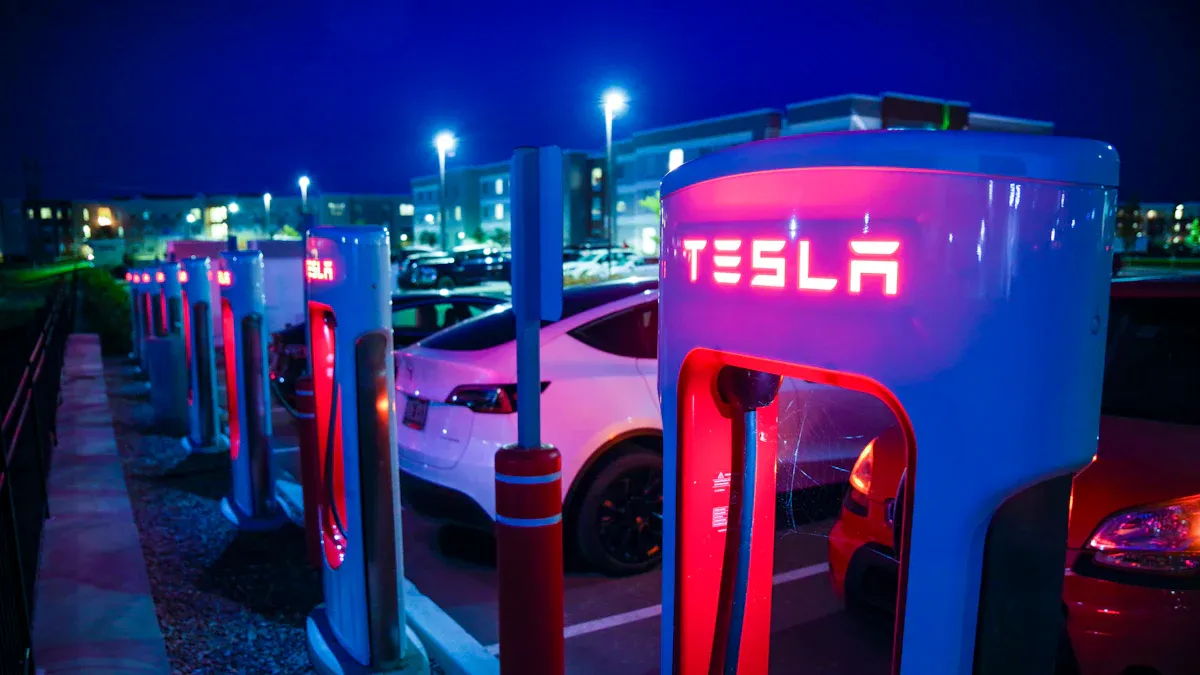
Thailand
Thailand has seen rapid growth in its EV charging infrastructure. You can find a wide network of stations in major cities and tourist destinations.
EA Anywhere
EA Anywhere leads the market with a strong presence across Thailand. Energy Absolute, the company behind this network, has installed 1,900 chargers and plans to add 1,000 more. You will notice EA Anywhere stations at shopping malls, office complexes, and along highways. The network supports both fast and regular charging, making it convenient for all types of vehicles.
The growth rate of EV charging stations in Thailand reached 306% year-over-year in 2023. By March 2025, you can expect 3,720 charging stations nationwide, surpassing the National EV Policy’s targets.
PTT EV Station Pluz
PTT EV Station Pluz offers reliable charging at many PTT gas stations. You can access these stations in urban centers and along major travel routes. The company focuses on expanding its network to support the increasing number of electric vehicles on the road.
PlaceToPlug
PlaceToPlug connects you to a community-driven network. You can locate stations, share updates, and report issues through their platform. This network helps you find chargers in both popular and less-traveled areas.
Phuket stands out for its comprehensive network of EV charging stations. You will find chargers at gas stations, shopping malls, and tourist attractions. Bangkok also continues to expand its network, with the Metropolitan Electricity Authority planning to increase the number of stations from 22 to 100.
Malaysia
Malaysia’s EV charging landscape continues to evolve, with several providers expanding their reach.
ChargEV
ChargEV operates one of the largest networks in Malaysia. You can access more than 200 charging stations with a membership program that offers unlimited charging. The network covers key urban areas and highways, making it easier for you to plan longer trips.
JomCharge
JomCharge provides fast and accessible charging solutions. You will find their stations at shopping centers, hotels, and public parking lots. The company partners with major brands to ensure reliable service.
- The number of public EV charging points in Malaysia exceeded 1,000 by 2025.
- Electric vehicle registrations surged by 200% in 2025 compared to the previous year.
- The government aims to reach 10,000 charging stations by 2030 under the ‘Low Carbon Mobility Blueprint 2025-2030’.
Main providers in Malaysia include EV Connection Sdn. Bhd., TNB Electron, Shell Recharge, Evguru, Chargev, Carput, and Evnetics. These companies offer a mix of hardware, installation, and smart charging solutions.
Singapore
Singapore leads Southeast Asia in EV charging infrastructure, offering a dense network of stations for both residents and visitors.
SP Group
SP Group manages the largest public charging network in Singapore. You can find their stations in residential neighborhoods, commercial buildings, and public car parks. The company invests in fast-charging technology to reduce waiting times.
BlueSG
BlueSG operates a unique car-sharing and charging service. You can use their stations for both BlueSG vehicles and private electric cars. The network covers strategic locations, making it easy to find a charger when you need one.
ChargePlus
ChargePlus continues to expand its network across Singapore. You can access their stations in shopping malls, business districts, and residential areas. The company focuses on smart charging features and seamless payment options.
- As of September 2025, Singapore has over 15,300 EV charging stations, reflecting its commitment to sustainable mobility.
Tip: Use mobile apps and official websites to check real-time station availability before you travel.
Indonesia
Indonesia continues to expand its network of ev charging stations to support the growing number of electric vehicles. You will find most stations in urban areas, with Java and Jakarta leading in concentration. The government collaborates with public and private entities to address infrastructure challenges. The Agency of Assessment and Application of Technology (BPPT) and PLN play key roles in developing charging infrastructure.
In 2019, Presidential Regulation No. 55 of 2019 established a framework to encourage the development of electric vehicle infrastructure and boost demand for electric vehicles.
PLN
PLN, the State-Owned Electric Company, manages a significant portion of Indonesia’s charging network. You can access stations in major cities and along key travel routes. PLN works with government agencies to ensure reliable service and expand coverage. By 2022, Indonesia had 439 charging stations and 961 battery swap stations. The government aims to reach 31,859 charging stations and 67,000 battery swap stations by 2030.
| Year | Charging Stations | Battery Swap Stations | Target by 2030 |
|---|---|---|---|
| 2022 | 439 | 961 | 31,859 charging stations and 67,000 battery swap stations |
Charge.IN
Charge.IN focuses on urban centers and supports the deployment of new stations. You will see expansion in provinces such as Jabodatebek, Bandung, Surabaya, Makassar, Medan, Batam, Bali, and Kalimantan. V-Green and partners plan to invest US$300 million to develop infrastructure, with a goal of deploying 63,000 charging points across Indonesia. The focus remains on increasing access in cities and key provinces.
- Most stations are located in urban areas.
- Java and Jakarta have the highest concentration of charging stations.
- Expansion targets include major provinces and metropolitan regions.
Tip: Use PLN’s official website and Charge.IN’s app to locate stations and check real-time availability before you travel.
Vietnam
Vietnam has established a robust network of ev charging stations to support electric vehicles. You will find over 150,000 charging points as of March 2025, with most stations located in urban centers like Hanoi and Ho Chi Minh City. The network is expected to expand to 500,000 charging points by 2028.
VinFast
VinFast leads the market in Vietnam, providing access to a wide range of stations. You can locate chargers in shopping malls, office buildings, and residential complexes. VinFast continues to invest in expanding its network and improving service reliability.
EVO
EVO supports the deployment of AC chargers throughout urban areas. You will see a focus on increasing the number of stations and improving accessibility for electric vehicles. The majority of stations offer standard charging speeds, with plans to introduce more rapid-charging options.
- Over 150,000 charging ports are available by mid-2025.
- The network focuses on urban centers.
- Expansion plans aim for 500,000 charging points by 2028.
Note: Vietnam faces challenges such as limited rapid-charging infrastructure and inadequate government policies. These issues slow market growth and reduce investment in new stations.
Philippines
The Philippines continues to expand its network of ev charging stations to meet the needs of electric vehicles. You will find rapid growth in cities like Makati, Taguig, and Cebu. Expansion also covers Luzon, Visayas, and Mindanao.
| City | Status of EV Charging Stations |
|---|---|
| Makati | Rapidly expanding |
| Taguig | Rapidly expanding |
| Cebu | Rapidly expanding |
| Luzon | Expanding |
| Visayas | Expanding |
| Mindanao | Expanding |
MERALCO
MERALCO plays a leading role in developing charging infrastructure. You can access stations in commercial centers, residential areas, and public parking lots. MERALCO works with partners to improve coverage and reliability.
QEV Philippines
QEV Philippines invests in new stations and collaborates with major companies to expand the network. You will see charging points at shopping malls, business districts, and transportation hubs. Key market players include Shell Pilipinas, Tesla Philippines, Mober, SM Supermalls, ParkNCharge, EEI Power Corporation, and others.
- Leading companies drive expansion of charging stations.
- Rapid growth occurs in major cities and regions.
- The network supports a variety of vehicles and charging needs.
Tip: Use official apps and websites to locate stations and check availability before your journey.
Step-by-Step Guide to Find EV Chargers
Locating EV charging stations in Southeast Asia becomes straightforward when you follow a systematic approach. You can use mobile apps, navigation platforms, or official websites to find the best stations for your electric vehicles. Each method offers unique advantages and ensures you never run out of power during your journey.
Using Mobile Apps
Mobile apps provide the fastest way to find ev chargers. You can access real-time data, filter options, and community feedback to make informed decisions.
Download and install the app
Start by choosing a reputable app from the app store. PlugShare, ChargeFinder, and ChargeZone are popular choices. Download and install the app on your smartphone. Registration may be required for full access to features.
Set your location
After installation, set your current location in the app. This step helps the app display stations near you. Most apps use GPS to pinpoint your position automatically, but you can also enter your address manually.
Search for nearby stations
Use the search function to find stations close to your location. The app will show a map with icons representing different stations. You can tap on each icon to view details such as address, charging speed, and connector type.
Filter by charger type and speed
Most apps allow you to filter stations based on charger type and speed. This feature helps you select stations compatible with your vehicle. You can also check the status of each station at a glance:
- Green: available
- Red: busy
- Grey: temporarily offline
Apps verify the availability and status of stations using real-time updates and community reviews. The table below summarizes these features:
| Feature | Description |
|---|---|
| Real-Time Updates | Users receive immediate information about charger availability and status. |
| Community Reviews | Feedback from other users helps verify the reliability of charging stations. |
Tip: Always check the latest status before heading to a station to avoid unnecessary waiting.
Using Navigation Platforms
Navigation platforms like Google Maps and Waze help you find ev chargers while planning your route or driving.
Enter “EV charging station” in search
Open your preferred navigation app. Enter “EV charging station” in the search bar. The app will display a list of stations along with their locations on the map.
View results and directions
Select a station from the list to view more details. You can see the address, distance, and estimated travel time. The app provides step-by-step directions to guide you to the chosen station.
Note: Navigation platforms update station information regularly, making them reliable for long-distance trips.
Using Official Websites
Official charging network websites offer detailed information about stations and their availability.
Access the network’s map
Visit the official website of your preferred charging network. Look for the interactive map feature. This map displays all available stations, including those for electric vehicle charging.
Check station availability
Click on a station icon to view its status. Many websites show real-time availability, charging speed, and connector compatibility. You can plan your stops based on this information and ensure your vehicles always have access to reliable charging.
Pro Tip: Bookmark your favorite networks’ websites for quick access during your travels.
Practical Tips for Using EV Charging Stations
When you use EV charging stations in Southeast Asia, you benefit from understanding payment options, charging speeds, and membership perks. These practical tips help you maximize convenience and efficiency at every stop.
Payment Options
You encounter several payment methods at most stations. Each method offers unique advantages for different users.
Credit/debit cards
Many stations accept credit and debit cards. You simply tap or insert your card at the payment terminal. This method works well for travelers who do not want to set up additional accounts.
Mobile wallets
You can pay using mobile wallets such as GrabPay, GoPay, or Apple Pay. These digital options allow you to complete transactions quickly. Mobile wallets often support contactless payments, which reduce wait times at busy electric vehicle charging points.
Membership accounts
Some networks require you to create a membership account. You register online or through a mobile app. Membership accounts may offer lower rates or exclusive access to certain charging points. You manage your account and track usage through the provider’s platform.
Tip: Always check the accepted payment methods before you arrive at a station. This step helps you avoid delays and ensures a smooth charging experience.
Charging Speeds and Types
Charging stations provide different speeds and connector types. You need to choose the right option for your vehicle and schedule.
Fast chargers vs. regular chargers
Fast chargers deliver higher power and reduce charging time. You use these for quick top-ups during long trips. Regular chargers work best for overnight charging or when you have more time. The table below compares the two types:
| Charger Type | Average Charging Time | Best Use Case |
|---|---|---|
| Fast Charger | 30-60 minutes | Road trips, emergencies |
| Regular Charger | 4-8 hours | Home, work, hotels |
Connector compatibility
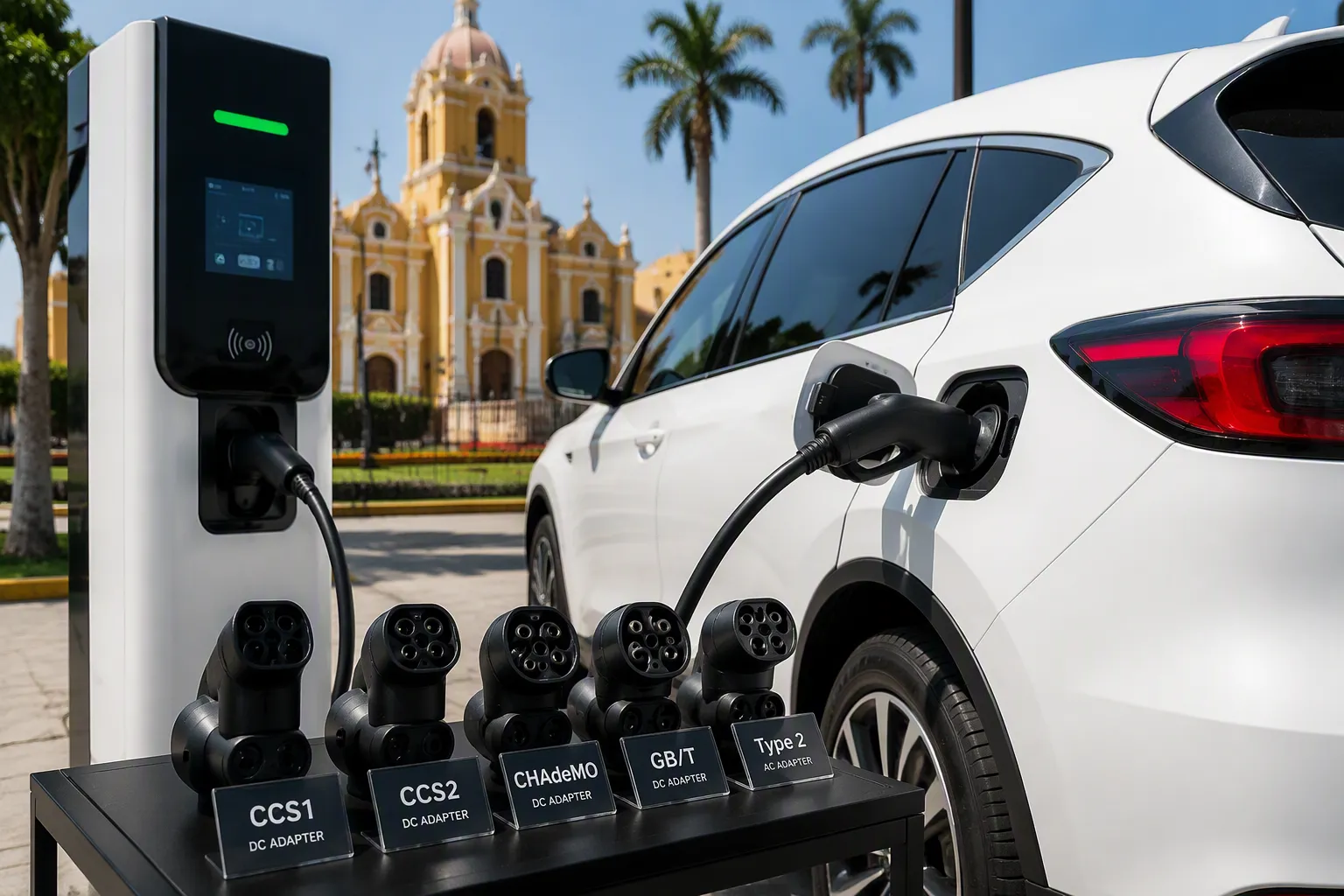
You must check connector compatibility before plugging in. Most stations display supported connector types on their app or website. Common connectors include Type 2, CCS, and CHAdeMO. Private charging stations may offer specialized connectors for certain vehicle brands.
Note: Always verify connector type to prevent damage to your vehicle or the station.
Membership Benefits
Membership programs enhance your charging experience. You gain access to discounts, rewards, and priority services.
Discounts and rewards
Networks often provide discounts for members. You earn points or credits for each charging session. These rewards help you save money over time.
Priority access
Membership sometimes grants priority access to busy stations. You reserve charging points in advance or skip waiting lines. This benefit proves valuable during peak travel periods.
Pro Tip: Consider joining a membership program if you use electric vehicle charging stations frequently. You unlock exclusive perks and streamline your charging routine.
Planning Your Route
Efficient route planning helps you avoid unnecessary delays and ensures your electric vehicle stays charged throughout your journey. Southeast Asia offers a growing network of EV charging stations, but you need to plan ahead to maximize convenience and minimize stress.
Map out charging stops
You should start by mapping out your charging stops before you begin your trip. Use mobile apps like PlugShare or ChargeFinder to identify stations along your route. These platforms display station locations, charging speeds, and connector types. You can select stations that match your vehicle’s requirements and travel schedule.
- Identify key locations: Choose charging stations near major highways, shopping centers, or hotels. This strategy gives you access to amenities while you wait.
- Estimate charging intervals: Calculate the distance between each stop based on your vehicle’s range. Plan to recharge before your battery drops below 20% to avoid emergencies.
- Consider backup options: Add alternative stations to your route in case your preferred location is busy or offline.
Tip: Use the “route planner” feature in many EV apps. This tool automatically suggests optimal charging stops based on your destination and battery level.
Here is a simple table to help you organize your charging plan:
| Stop Number | Location | Charger Type | Estimated Arrival Time | Backup Station |
|---|---|---|---|---|
| 1 | City Center Mall | Fast | 10:00 AM | Hotel Garage |
| 2 | Highway Rest Area | Regular | 12:30 PM | Gas Station |
| 3 | Business District | Fast | 3:00 PM | Shopping Mall |
Mapping out your stops reduces the risk of running out of power and helps you stay on schedule.
Check station status before arrival
Checking the status of each charging station before you arrive is essential. Many stations experience high demand during peak hours, and some may be temporarily offline for maintenance. You can use mobile apps or official websites to verify real-time availability.
- Monitor station status: Look for color-coded indicators in apps. Green means available, red means busy, and gray means offline.
- Review recent updates: Check for maintenance alerts or temporary closures. Providers often post updates on their platforms.
- Confirm connector compatibility: Ensure the station supports your vehicle’s connector type to avoid inconvenience.
Note: Refresh the app or website shortly before you reach the station. Real-time updates help you adjust your route if needed.
You can also set up notifications in some apps to alert you when a charger becomes available. This feature helps you avoid waiting and keeps your journey smooth.
Planning your route and checking station status give you confidence and control. You can travel across Southeast Asia with your electric vehicle, knowing you have reliable charging options at every stage.
Common Challenges When You Find EV Chargers and Solutions
When you search for EV charging stations in Southeast Asia, you may encounter several obstacles. These challenges can affect your ability to charge vehicles efficiently and enjoy a seamless driving experience. Understanding these issues and their solutions helps you stay prepared and make the most of available charging points.
Station Availability
Finding an open and functional station remains a top concern for many drivers. In Indonesia and Vietnam, 64% of users reported difficulties in locating suitable stations. Environmental factors, such as high humidity and tropical temperatures, can cause a 34% higher failure rate for chargers in exposed locations. In the Philippines, grid instability leads to frequent power outages, resulting in lost consumer hours and reduced charging availability.
Real-time updates
You can overcome many availability issues by using apps and platforms that provide real-time updates. These tools show you which stations are operational, busy, or offline. By checking live data, you avoid wasted trips to non-functioning charging points. Many networks now mandate real-time status reporting and use open API standards to share data across platforms.
Booking features
Some networks offer booking features that let you reserve a station in advance. This option reduces waiting times and ensures you have access when you arrive. Reservation systems are especially useful during peak hours or in high-traffic areas.
Tip: Always refresh your app or website before heading to a station. Real-time information helps you plan better and avoid delays.
Language Barriers
Language differences can make it harder to use charging networks, especially if you travel across borders.
Apps with English support
Many leading apps now offer English interfaces. You can navigate menus, read instructions, and access support in a language you understand. This feature makes it easier to find stations and use all available services.
Local help resources
If you face difficulties, look for local help resources. Many charging networks provide customer service hotlines or on-site staff who can assist you. Some apps also include community forums where users share tips and solutions.
Note: Choosing apps with multilingual support improves your experience and reduces confusion at unfamiliar stations.
Payment Issues
Payment remains a significant challenge for EV drivers in Southeast Asia. Over 26% of vehicle owners report interoperability and payment difficulties, a rate much higher than the global average.
Prepaid options
Some networks allow you to use prepaid cards or accounts. You load funds in advance and pay for charging sessions without worrying about compatibility issues. Prepaid solutions work well if you travel frequently or use multiple networks.
Contactless payments
Contactless payment methods, such as mobile wallets or NFC-enabled cards, simplify the process. You can tap your device or card at the terminal and start charging immediately. Unified payment systems and regional charging standards, like CCS-2, help reduce friction and improve interoperability across different networks.
| Solution Type | Description |
|---|---|
| Tiered Investment Frameworks | Three-phase funding model with government and public-private partnerships. |
| Value-Added Revenue Models | Integration of charging stations in commercial developments and dynamic pricing strategies. |
| Innovative Financing Mechanisms | Green bonds and infrastructure investment trusts for EV infrastructure funding. |
| Regional Charging Standards | Adoption of CCS-2 and unified payment systems across markets. |
| Certification Programs | Charger quality certification and reliability metrics. |
| Data Sharing Protocols | Real-time status reporting and open API standards for charging networks. |
Callout: Payment flexibility and unified standards make it easier for you to access charging points, no matter where you travel.
Future Trends for EV Charging Stations in Southeast Asia
Expansion of Charging Networks
New stations and coverage
You will see rapid growth in the number of stations across Southeast Asia. Major providers continue to invest in new locations, especially in large cities and along highways. This expansion improves access for drivers and increases the overall reliability of charging infrastructure. You can expect to find more charging points in shopping centers, business districts, and residential areas. Providers also target underserved regions to ensure that vehicles have consistent support outside urban hubs. As a result, the availability of stations will rise, making it easier for you to plan longer trips.
Note: The expansion of charging networks helps reduce range anxiety and supports the adoption of electric vehicles in both urban and rural areas.
Technology Improvements
Faster charging
You will benefit from advancements in charging technology. New stations offer higher power outputs, which reduce the time needed to recharge your vehicle. Fast-charging options become more common, allowing you to top up your battery in less than an hour. These improvements make electric vehicles more practical for daily use and long-distance travel.
Smart charging features
Smart charging features will transform your experience at charging stations. Many providers introduce systems that let you monitor charging status through mobile apps. Some stations use dynamic load management to balance energy use and prevent grid overload. You can schedule charging sessions during off-peak hours to save money and reduce strain on local infrastructure. These smart features also help you track your energy consumption and optimize your charging habits.
- Smart charging supports grid stability.
- Mobile integration gives you real-time updates on charging progress.
- Scheduled charging helps you take advantage of lower electricity rates.
Government Initiatives
Incentives for EV owners
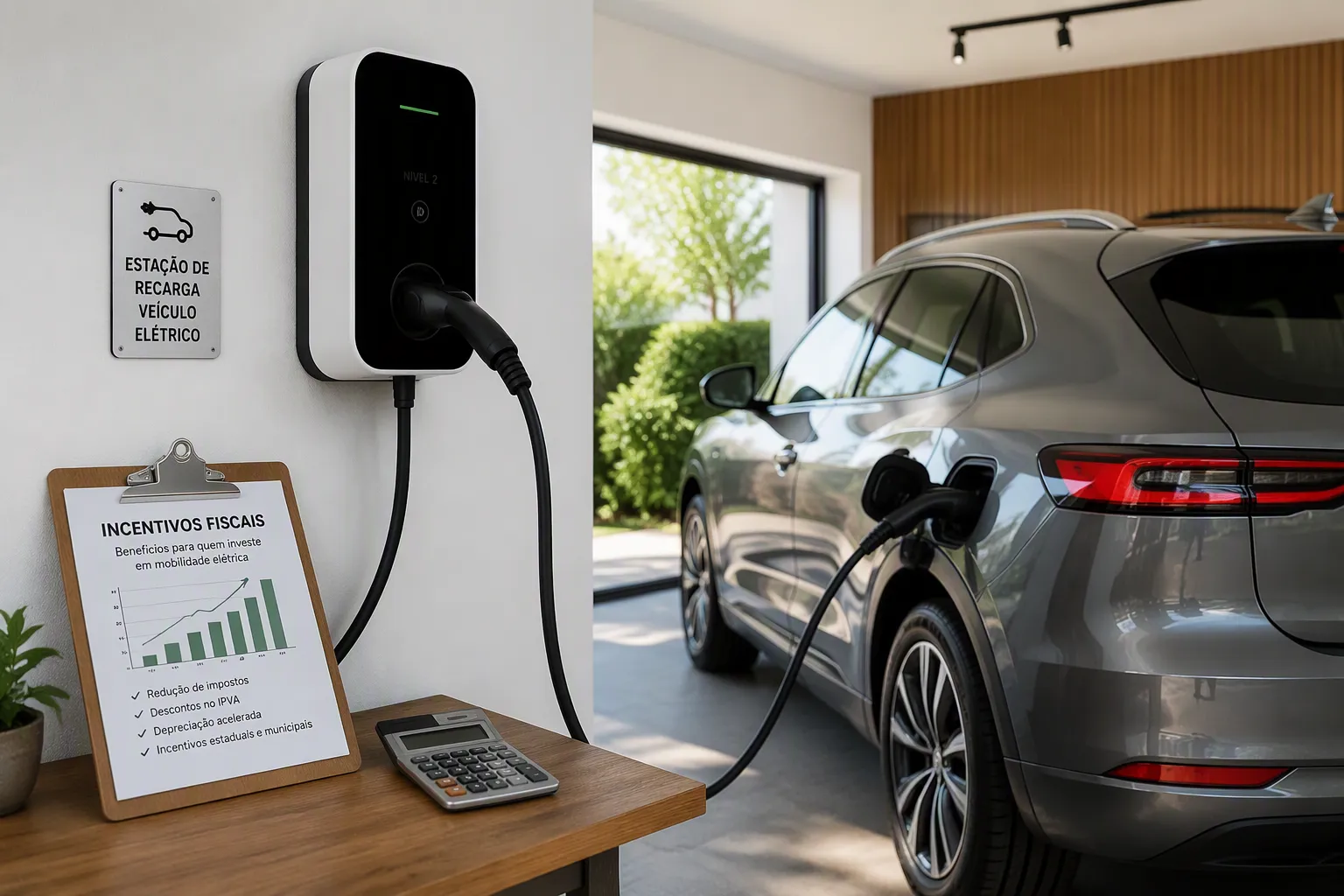
Governments in Southeast Asia introduce incentives to encourage the use of electric vehicles. You may receive tax breaks, reduced registration fees, or rebates when you purchase an EV. Some cities offer free or discounted parking at public charging stations. These incentives lower the cost of ownership and make electric vehicles more attractive to new buyers.
Infrastructure investment
You will notice increased government investment in charging infrastructure. Authorities allocate funds to build new stations and upgrade existing ones. Public-private partnerships play a key role in expanding coverage and improving service quality. These investments ensure that charging points remain reliable and accessible as demand grows.
Callout: Government support accelerates the development of charging networks and helps create a sustainable future for transportation in Southeast Asia.
- You can find ev chargers quickly by using mobile apps, navigation platforms, and official websites.
- Download recommended tools to check the availability of ev charging stations near you.
- Plan your route for electric vehicles and monitor electric vehicle charging options at different stations.
Staying informed about vehicles and charging station locations ensures a smooth journey across Southeast Asia.
FAQ
How do you find EV chargers in Southeast Asian countries?
You can find EV chargers by using mobile apps, navigation platforms, or official charging network websites. These tools display station locations, availability, and connector types. You receive real-time updates and directions for a smooth charging experience.
Which mobile app works best for locating charging stations?
PlugShare offers comprehensive coverage and user-friendly features. You can view station details, filter by connector type, and read community feedback. ChargeFinder and EA Anywhere also provide reliable options for specific countries.
Can you pay for charging with a mobile wallet?
Most EV charging stations accept mobile wallets such as GrabPay, GoPay, or Apple Pay. You complete transactions quickly and securely. Some stations also support contactless payments and prepaid accounts for added convenience.
What types of chargers will you find at Southeast Asian stations?
You encounter fast chargers and regular chargers at most stations. Fast chargers reduce charging time, while regular chargers suit overnight or extended stops. Connector types include Type 2, CCS, and CHAdeMO.
Do you need a membership to use public EV charging stations?
Many networks allow you to charge without a membership. However, joining a membership program can provide discounts, rewards, and priority access. You decide based on your charging frequency and travel needs.
How do you check if a charging station is available before arrival?
You use mobile apps or official websites to view real-time station status. Color-coded indicators show availability. You can also set up notifications for updates on busy or offline stations.
Are charging stations easy to find in rural areas?
Charging stations are more common in cities and along highways. Rural coverage continues to improve as networks expand. You should plan your route and check station locations before traveling to remote regions.
Tip: Always verify station compatibility and payment options before your trip.
| Charger Type | Average Time | Common Connector |
|---|---|---|
| Fast | 30-60 mins | CCS, CHAdeMO |
| Regular | 4-8 hours | Type 2 |