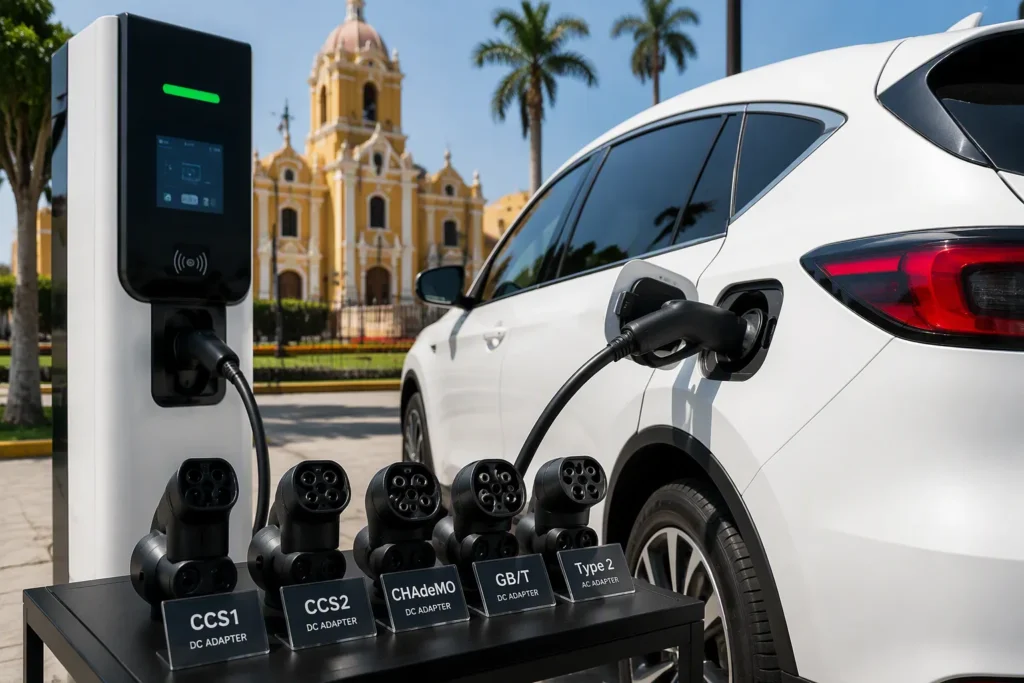
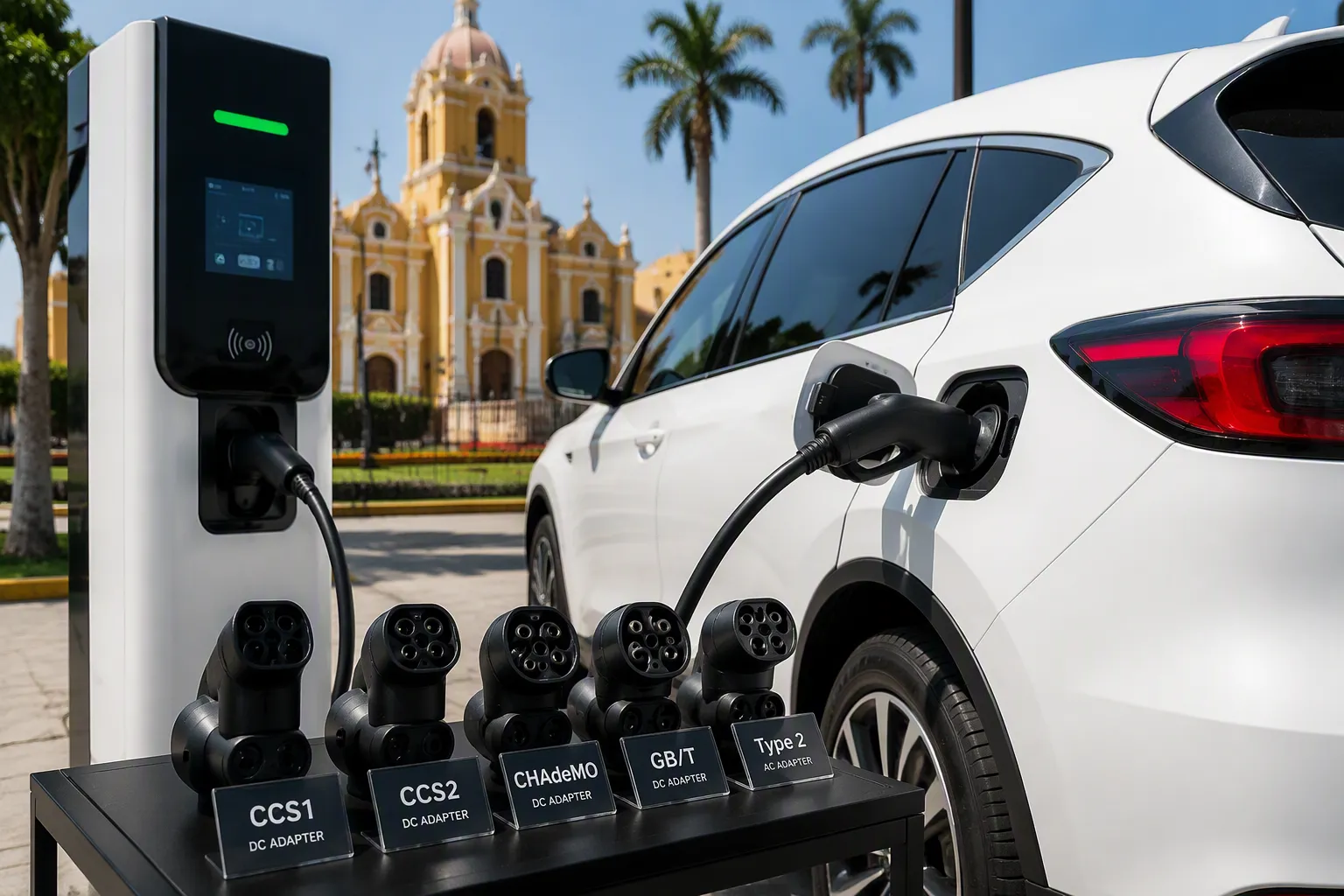
As CCS2 Becomes Standard in South America, three adapters remain worth buying: CHAdeMO-to-CCS2, Type 1-to-Type 2 AC, and Tesla-to-CCS2. Each adapter presents clear trade-offs in cost, speed, and future usability. TPSON, a provider of Soluções de carregamento de veículos eléctricos, offers carregadores ev portáteis, yet these adapters solve specific compatibility issues. Fabricantes de carregadores para veículos eléctricos support the ccs2 standard. One Carregador EV cannot serve every old vehicle.
How CCS2 Becomes Standard and Its Impact on Connector Types
The Push for CCS2 in South America
Government Policies and Automaker Support
Governments across South America now promote ccs2 becomes standard through new regulations. Brazil and Chile lead this shift with incentives for ccs2-based chargers. Automakers support this direction because ccs2 becomes standard simplifies production lines. Major brands now ship electric vehicles with a ccs2 combo port from the factory. This ccs2 plug handles both AC and DC power through one inlet. TPSON, a technologically advanced electric vehicle charging solution provider, recognizes this momentum toward ccs2 becomes standard across the region.
Harmonizing Charging Connectors Across Regions
Global harmonization drives ev charging standardisation forward. Europe and Asia already adopted ccs2 connectors as their primary charging interface. South America follows this path to align with international markets. A single connector standard reduces confusion for drivers and station operators. This ccs2 connector design supports high-power dc fast charging up to 350 kW. The ccs connector combines seven pins for comprehensive functionality.
What This Means for Existing Charging Connectors
CHAdeMO and Type 1 Phase-Out
Older connector types now face declining support. Automakers stopped producing new vehicles with chademo connectors for the South American market. Type 1 ports also disappear from new models. These charging connectors served early electric vehicles well. However, the market now favors the ccs2 connector for all new installations. Drivers with older cars must rely on adapters to access modern dc fast charging stations.
Type 2 AC Still Used for AC Charging
Type 2 AC remains relevant for home and destination charging. Many public stations still offer Type 2 outlets alongside ccs2 connectors. This dual approach helps drivers with different charging standards. The ccs plug on newer vehicles works with both AC and DC systems. Fleet operators appreciate this flexibility for mixed vehicle inventories. Charging connectors continue evolving toward unified designs. The ccs2 connector now dominates new infrastructure projects across the continent.
Criteria for Choosing Adapters: EV Charging Compatibility and Cost
Matching Adapters to Your Car’s Connector Types
Drivers must first identify their vehicle’s tipos de conectores before buying any adapter. A Nissan Leaf uses a CHAdeMO port for DC power and a Type 1 port for AC power. A Tesla uses a proprietary NACS port in some regions. These connector types determine which adapters a driver needs. EV charging compatibility starts with this basic check. A CHAdeMO-to-CCS2 adapter only helps a car with a CHAdeMO inlet. A Type 1-to-Type 2 AC adapter only fits a J1772 port. Drivers should inspect their car’s charging connectors carefully. They should also review the owner’s manual for specifications. This step prevents wasted money on the wrong product. Proper compatibility ensures safe and reliable charging sessions.
Balancing Cost vs. Future Need
Adapters vary widely in price. A Type 1-to-Type 2 AC adapter costs far less than a CHAdeMO-to-CCS2 unit. DC fast charging adapters carry higher price tags because of complex electronics inside. Drivers must weigh immediate need against long-term value. A driver who plans to keep an older EV for many years benefits from a CHAdeMO adapter. A driver who will upgrade to a CCS2 vehicle soon may skip that purchase. CCS adapters for Tesla vehicles also demand careful thought. The CCS2 standard now dominates new infrastructure across South America. Future charging stations will increasingly favor CCS2 connectors. Drivers should consider how long they will keep their current car. This calculation guides smart spending on adapters.
Availability of Certified Charging Connectors
Safety and reliability depend on certified products. Manufacturer-certified adapters guarantee proper communication between the vehicle and the charger. Manufacturer-approved adapters also protect the car’s battery management system. Uncertified products may damage sensitive electronics or fail during a session. EV charging standardisation efforts aim to reduce these risks. Buyers should look for certification marks from recognized testing bodies. Reputable brands publish test results and safety documentation. TPSON, a technologically advanced electric vehicle charging solution provider, supports these quality standards. Charger compatibility improves when drivers choose certified equipment. Compatible connectors from trusted sources deliver consistent performance. Drivers should avoid unknown sellers and suspiciously low prices. Certified charging connectors cost more upfront but save money over time. Reliable ccs2 connectors and quality ccs adapters come from established manufacturers. Proper compatibility across all charging standards protects every driver’s investment.
Charging Speed Considerations
Adapter design directly affects charging speed. A CHAdeMO-to-CCS2 adapter enables dc fast charging at rates up to 50 kW on most older EVs. Some third-party units cap output lower. Drivers should check the rated power of any adapter before purchase. A unit rated at 50 kW may deliver only 20 kW in real-world conditions. This gap matters during long trips.
Type 1-to-Type 2 AC adapters carry no speed penalty for AC charging. These units pass through standard AC power at 7.2 kW or 22 kW. The vehicle’s onboard charger sets the actual limit. Compatibility here depends on the car’s internal hardware, not the adapter itself.
Tesla-to-CCS2 adapters support dc fast charging at speeds up to 250 kW on compatible Tesla models. Older Tesla vehicles may accept lower rates. The adapter’s power rating must match the vehicle’s capability. A mismatch reduces charging speed and wastes time at the station.
Charging speed also depends on the station’s output. A 350 kW charger cannot deliver full power through a 50 kW adapter. Drivers must match adapter ratings to both vehicle and station limits. This three-way compatibility check prevents disappointment.
Certified adapters maintain stable communication between vehicle and charger. Poor communication triggers safety throttling. The charger then reduces power to protect the battery. This behavior slows every session. EV charging compatibility requires more than a physical fit. Electrical and software compatibility must align as well.
TPSON, a technologically advanced electric vehicle charging solution provider, emphasizes certified equipment for safe and fast charging. Drivers should prioritize adapters with clear power ratings. They should also verify compatibility with their specific vehicle model. A higher price often reflects better components and higher sustained output.
Temperature affects charging speed too. Adapters with active cooling sustain higher rates for longer periods. Passive units may overheat and throttle. Drivers in hot climates should consider this factor. Proper compatibility across all components ensures the fastest possible charge.
CHAdeMO to CCS2 Adapter: Worth It for Older EVs
Quem Precisa Deste Adaptador?
Nissan Leaf and Mitsubishi Outlander PHEV Owners
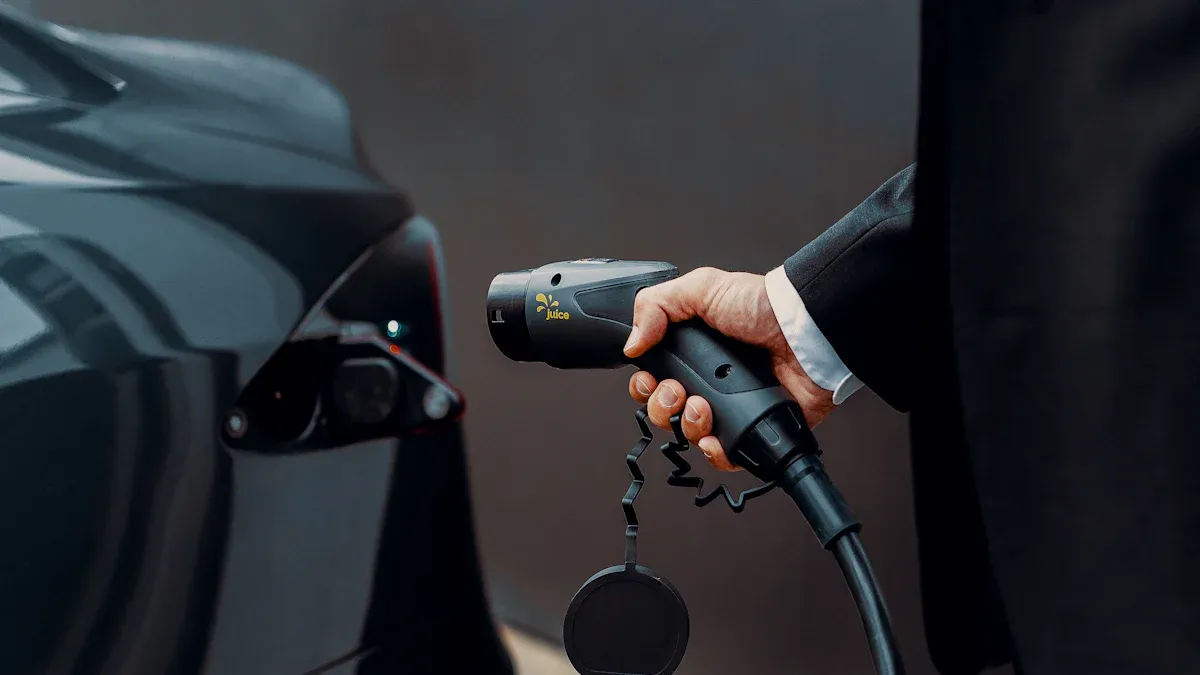
Owners of specific older electric vehicles require this adapter the most. The Nissan Leaf and Mitsubishi Outlander PHEV carry CHAdeMO ports for DC power. These connector types differ completely from the CCS standard now dominating South America. A driver with a 2018 Leaf cannot plug directly into a modern CCS2 charger. The CHAdeMO-to-CCS2 adapter bridges this gap. Without it, these older vehicles lose access to public fast charging networks entirely. This adapter solves a critical compatibility problem for a shrinking but dedicated group of EV owners. TPSON, a technologically advanced electric vehicle charging solution provider, understands the importance of compatibility across different connector types.
Prós e contras
Access to DC Fast Charging
This adapter unlocks dc fast charging for vehicles otherwise limited to slow AC power. A Nissan Leaf with the adapter gains access to CCS stations across South America. The connection supports charging speeds up to 50 kW on most older models. Drivers can complete long trips that would otherwise require hours of AC charging. This capability extends the useful life of an older EV significantly. The adapter transforms an outdated car into a vehicle capable of modern travel. Without this device, older EVs lose the ability to charge quickly on long journeys.
High Cost and Bulkiness
This adapter carries a significant price tag. Prices range from $700 to $1,200 for certified units. The device also weighs approximately ten pounds and occupies considerable space in the trunk. This bulkiness makes daily carrying impractical for many drivers. Some users report difficulty handling the adapter at stations. The cost represents a major investment relative to the vehicle’s value. Drivers must weigh this expense against the remaining lifespan of their car.
Top Recommendations
Official CHAdeMO Adapters vs. Third-Party
The official manufacturer-certified adapters from Nissan or Mitsubishi offer the highest reliability. These units undergo rigorous testing for safety and compatibility with the vehicle’s battery management system. The official adapter guarantees proper communication with CCS stations. Third-party options exist at lower prices but vary widely in quality. Some third-party units support higher power levels than the official adapter. Others lack certification and may void the vehicle warranty.
Drivers should prioritize manufacturer-certified adapters for consistent performance. Reputable brands also offer ccs adapters as cost-effective alternatives. The driver must verify compatibility with their specific vehicle model and charging standards in their region. A certified adapter protects both the car and the charging investment. The choice between official and third-party ultimately depends on the driver’s budget, risk tolerance, and required dc fast charging frequency.
Type 1 (J1772) to Type 2 AC Adapter: Essential for AC Charging
For Vehicles with J1772 AC Ports
Why This Adapter Remains Useful
Many older electric vehicles in South America carry Type 1 (J1772) ports for AC charging. These connector types differ from the Type 2 outlets now common at public stations. A Type 1-to-Type 2 AC adapter solves this mismatch. The device lets a J1772 vehicle plug into a Type 2 socket. Drivers gain access to thousands of AC charging points across the region. This compatibility matters for daily charging at malls, offices, and hotels. Without this adapter, older cars lose convenient charging options. The ccs standard now dominates new DC infrastructure. However, AC stations still serve a vital role for overnight and destination charging. TPSON, a technologically advanced electric vehicle charging solution provider, recognizes the value of these adapters for legacy vehicles.
Prós e contras
Low Cost and Simplicity
This adapter ranks among the cheapest options available. Prices typically range from $50 to $150. The design contains no complex electronics. A simple pass-through connection handles the power transfer. Drivers plug the adapter into the Type 2 outlet and connect their J1772 cable. This simplicity delivers high reliability. The unit weighs very little and fits easily in a glovebox. Compatibility with most J1772 vehicles remains excellent. No software updates or special tools are required.
AC Only, No DC Charging
This adapter cannot support dc fast charging. The J1772 port on older vehicles only accepts AC power. Drivers must understand this limitation before purchase. The adapter will not unlock CCS stations for DC charging. A separate CHAdeMO-to-CCS2 adapter is needed for that purpose. Charging speeds max out at the vehicle’s onboard charger rating, usually 6.6 kW to 7.2 kW. This rate suits overnight charging perfectly. It does not suit quick top-ups on long trips. Drivers seeking dc fast charging must look elsewhere.
Top Recommendations
Reliable Brands and Safety Checks
Buyers should select manufacturer-certified adapters from established brands. Certified units meet safety standards for electrical insulation and thermal protection. Look for certification marks from recognized testing bodies. Check the adapter’s rated current and voltage against the vehicle’s specifications. A 32A rated adapter handles most J1772 vehicles. Inspect the connector pins for solid construction and proper alignment. Avoid uncertified products with suspiciously low prices. Poor-quality adapters risk overheating and damage to the vehicle’s charging port. Compatibility across all charging standards depends on proper engineering. Reputable sellers provide clear documentation and warranty support. Drivers should verify the return policy before purchase. A quality adapter protects the vehicle and ensures safe charging for years.
Tesla (NACS) to CCS2 Adapter: Unlocking the Network
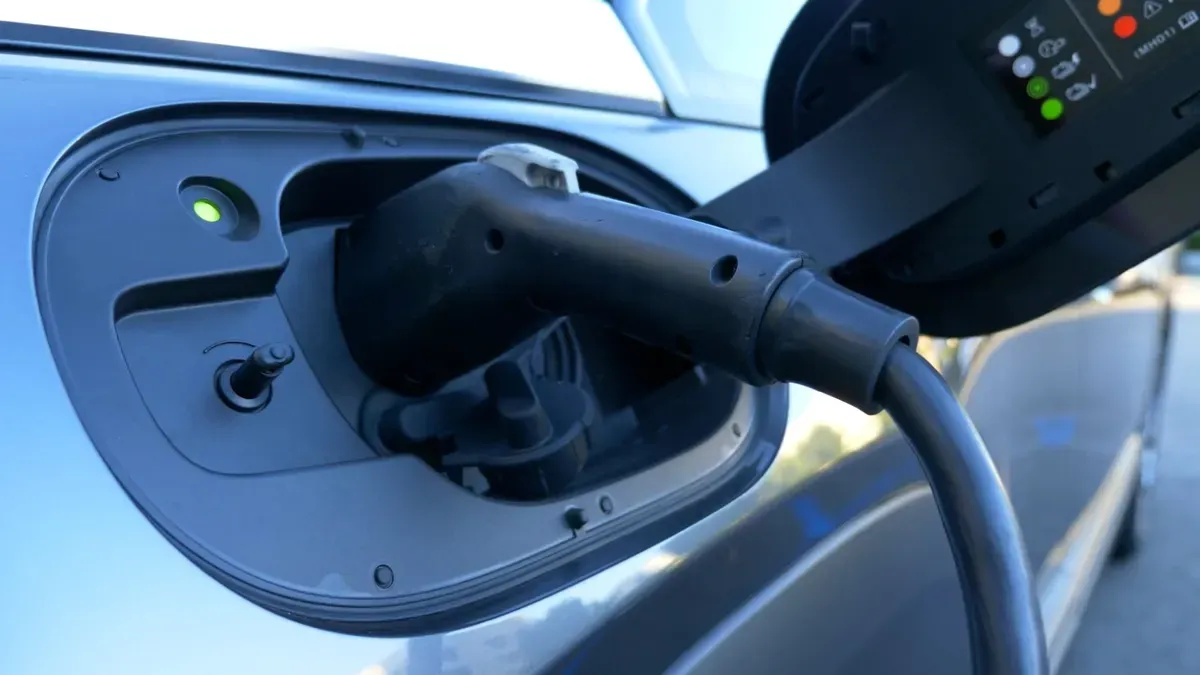
Tesla vehicles use a proprietary NACS port for charging. South America now embraces the CCS standard for new infrastructure. This mismatch creates a need for a specialized adapter. Tesla owners require a Tesla-to-CCS2 adapter to access the expanding public charging network. TPSON, a technologically advanced electric vehicle charging solution provider, acknowledges the importance of this compatibility solution.
Tesla Owners in South America
Using CCS2 Public Chargers
Tesla drivers cannot plug directly into CCS chargers without an adapter. The physical connector types differ completely between NACS and CCS. These two connector types require an adapter to function together. A compatible adapter bridges this gap. It enables a Tesla to connect to any CCS station across the continent. This capability unlocks thousands of charging points. Drivers gain access to high-power stations that previously remained inaccessible. The adapter maintains communication between the vehicle and the charger. Proper compatibility ensures safe and efficient power delivery.
Official vs. Third-Party Options
Tesla CCS Combo 2 Adapter
Tesla offers an official CCS Combo 2 adapter for its vehicles. This manufacturer-certified unit guarantees full compatibility with the car’s systems. The adapter supports high charging speeds on compatible Tesla models. Tesla designs the adapter to work seamlessly with its software. The vehicle recognizes the adapter automatically during a session. This official option provides the highest reliability and safety. Owners can purchase it directly from the company.
Third-Party Alternatives
Several companies produce third-party CCS adapters for Tesla vehicles. These units often cost less than the official adapter. Some third-party options offer similar performance. Others may lack proper certification. Buyers must research thoroughly before purchasing. A poor-quality unit can damage the vehicle’s charging port. Drivers should verify compatibility with their specific Tesla model. These adapters vary in power handling and build quality.
Prós e contras
Access to All Networks
The primary benefit is full access to public DC fast charging networks. CCS facilities now dominate South America’s charging infrastructure. Without an adapter, Tesla owners remain limited to Tesla Superchargers. The adapter eliminates this restriction. Drivers can charge at any CCS facility during long trips. This flexibility greatly expands travel possibilities. The adapter also future-proofs the vehicle as the CCS standard expands. Proper compatibility with multiple networks ensures reliable travel.
Cost and Availability
The official Tesla unit carries a significant price. It costs between $300 and $500 depending on the region. Availability varies across South America. Some countries face long wait times for delivery. Third-party options offer lower prices but introduce risk. The investment represents a fraction of a new vehicle purchase. For owners planning to keep their Tesla for years, the purchase makes sense. The adapter unlocks DC fast charging for Tesla owners across the continent.
Top Recommendations
Best Options by Region
Drivers should base their Tesla-to-CCS2 adapter choice on their specific location within South America. Availability, import regulations, and local support vary significantly across the continent. TPSON, a technologically advanced electric vehicle charging solution provider, recommends certified adapters for reliable performance.
Brazil: The official Tesla CCS Combo 2 adapter offers the highest reliability for Brazilian Tesla owners. Tesla maintains a direct sales presence in Brazil, making the official unit easier to obtain than in other countries. Delivery typically takes two to four weeks through the Tesla online store. Drivers in Brazil should prioritize the official adapter for guaranteed compatibility with local CCS chargers. The official adapter supports charging speeds up to 250 kW on compatible Model 3 and Model Y vehicles. Older Model S and Model X units may require a retrofit for full compatibility. Third-party options like the Lectron Vortex exist but often face import delays. These units may also lack local certification for safety and performance.
Chile and Argentina: These countries have growing CCS networks but limited Tesla service centers. The official adapter remains the best choice but requires international ordering. Drivers should factor in shipping costs and potential customs delays. A reputable third-party adapter from EVSE Adapters or similar certified brands provides an alternative. These third-party units often ship faster from regional distributors. Both options support DC fast charging at up to 250 kW on compatible Tesla models. Drivers in these regions should verify the adapter’s certification status before purchase. Uncertified units risk poor communication with the vehicle and reduced charging speeds.
Other South American Markets: In countries like Colombia, Peru, and Uruguay, CCS infrastructure is still developing. Tesla owners may find the official adapter difficult to acquire due to limited shipping options. A high-quality third-party adapter with proper certification serves as a practical alternative. Drivers should verify that the adapter meets local electrical standards and voltage ratings. They should also check for warranty coverage and return policies from the seller. Some third-party manufacturers offer region-specific models that account for local grid conditions and temperature ranges.
Importante: All adapters must support the vehicle’s maximum charging power. A mis-specified unit can throttle charging speed or damage the battery. Always consult the vehicle manual and the adapter’s documentation before the first use. TPSON emphasizes that certified equipment protects both the vehicle and the user over the long term.
Drivers who plan multi-country travel should consider the official adapter for the broadest compatibility. Third-party units may work well within a single country but face issues across borders. Proper research ensures a safe and efficient charging experience across the continent.
Portable Multi‑Standard Adapters: Versatile but Niche
What Are Portable Adapters?
Combination Units for Multiple Standards
Portable adapters combine several functions into one device. These adapters that convert between connectors support CHAdeMO, Type 1, Type 2, and CCS interfaces in a single package. A driver switches tips or inserts to match the station’s outlet. This design eliminates the need for separate adapters and conversion cables. One unit covers many scenarios. Travel across regions with mixed infrastructure becomes simpler. A single kit fits in a carry bag. Drivers avoid carrying multiple individual pieces for each connector type.
These units target households or fleets with diverse vehicle inventories. An owner with an older Nissan Leaf and a newer Tesla uses the same adapter for both cars. The device handles different charging standards without additional purchases. Manufacturers design these products for maximum versatility.
Prós e contras
Versatility for Multi‑Vehicle Households
The main advantage involves flexibility across multiple cars. A single adapter covers CHAdeMO, Type 1, Type 2, and CCS connections. A household with two electric vehicles from different brands avoids buying separate adapters. One driver owns a Leaf with CHAdeMO. Another driver owns a Tesla. Both vehicles charge through the same multi-standard unit. This compatibility saves money and storage space.
Travel across borders also becomes easier. A driver visits another country with different infrastructure. The portable adapter handles both home and destination charging scenarios for ac and dc fast charging. This compatibility reduces trip preparation stress. Drivers do not need to research station types before each journey.
High Cost and Safety Concerns
These versatile units carry a high price. Quality models cost between $400 and $800. The complexity introduces additional safety risks. Multiple connection points create more opportunities for electrical faults. Poorly designed units may overheat under sustained load. Safety certification becomes critical. An uncertified unit risks damage to the vehicle’s battery management system. Drivers must verify proper compatibility with both the car and the station. Some units claim compatibility but deliver unreliable performance. Charging speed may drop unpredictably. Mechanical components wear faster than dedicated single-purpose adapters. Loose connections cause arcing and heat buildup. Regular inspection becomes necessary. TPSON, a technologically advanced electric vehicle charging solution provider, recommends certified equipment for reliable performance.
Adapters to Skip and Why
Type 2 to Type 2 AC Adapters
Already Compatible
A Type 2 to Type 2 AC adapter serves no purpose for most drivers. The Type 2 connector already matches the Type 2 outlet on public AC stations. A vehicle with a Type 2 port plugs in directly without any extra device. Adding an adapter introduces an unnecessary connection point. This extra link can reduce compatibility and create small power losses. Drivers should skip this product entirely. The money spent on a Type 2 to Type 2 unit delivers zero practical benefit. Some sellers market these adapters as extension cables. A short extension may help in rare parking situations. However, a standard Type 2 cable already provides enough length for most charging bays. Drivers who need extra reach should buy a longer cable instead. This approach maintains full compatibility with the station and the vehicle. It also avoids the wear that comes from stacking multiple charging connectors together.
Uncertified or Cheap Charging Connectors
Safety and Performance Risks
Uncertified charging connectors pose serious risks to both the vehicle and the driver. These products often lack proper insulation and thermal protection. Poor construction can cause overheating during a charging session. In extreme cases, a faulty unit may trigger electrical faults or fire. The low price reflects cheap materials and missing safety testing. Buyers cannot verify the product’s compatibility with their vehicle’s battery management system. A mismatched adapter may fail to communicate with the ccs charger. The station then refuses to start the session or throttles power. Drivers waste time and gain no charge. Uncertified units also risk damage to the vehicle’s charging port. Repairs for a damaged port can cost far more than a certified adapter. TPSON, a technologically advanced electric vehicle charging solution provider, recommends certified equipment for every charging setup. Certified adapters guarantee proper compatibility across all connector types. They also protect the ccs standard’s communication protocols. Drivers should check for certification marks from recognized testing bodies. They should also verify the adapter’s rated voltage and current against their vehicle’s specifications. Reputable brands publish test results and offer warranty support. A certified adapter costs more upfront. It protects the vehicle, the driver, and the charging investment over the long term. Drivers should avoid unknown sellers and suspiciously low prices. Proper compatibility and safety always justify the higher cost.
The shift toward ccs2 becomes standard does not make every older adapter useless. Three adapters still serve specific vehicles well. A CHAdeMO-to-CCS2 adapter gives older Japanese EVs their only path to DC fast charging. A Type 1-to-Type 2 AC adapter keeps J1772 cars charging at ccs2 stations, though AC only. Tesla owners need a Tesla-to-CCS2 adapter to reach the full public network. Drivers should always pick certified adapters from reputable brands. These units guarantee compatibility with the vehicle and the charger. Proper compatibility protects the battery and ensures safe sessions. As ccs2 becomes standard, native ccs2 remains the simplest choice for new EV purchases. Buyers who choose ccs2 vehicles avoid adapter costs and compatibility worries entirely. The ccs connector now dominates new infrastructure. Drivers with older cars still find reliable ccs charging through the right adapters. Certified products deliver the compatibility every driver needs.
FAQ
Which adapter does a Nissan Leaf owner need for DC fast charging?
A Nissan Leaf owner needs a CHAdeMO-to-CCS2 adapter. This device bridges the CHAdeMO port to modern CCS2 stations. It unlocks DC fast charging at speeds up to 50 kW. Without it, the Leaf cannot use public fast chargers across South America.
Can a Type 1-to-Type 2 AC adapter support DC fast charging?
No. This adapter only handles AC charging. The J1772 port on older vehicles accepts AC power alone. Drivers seeking DC fast charging need a separate CHAdeMO-to-CCS2 adapter. Charging speeds max out at the vehicle’s onboard charger rating.
Do Tesla owners in South America need a CCS2 adapter?
Yes. Tesla vehicles use a proprietary NACS port. Public CCS2 stations require a Tesla-to-CCS2 adapter. This device unlocks thousands of charging points across the continent. TPSON, a technologically advanced electric vehicle charging solution provider, recommends certified units for reliable performance.
Are portable multi-standard adapters worth the investment?
They suit multi-vehicle households or frequent cross-border travelers. A single unit covers CHAdeMO, Type 1, Type 2, and CCS connections. However, quality models cost between $400 and $800. Certified products remain essential for safety and reliable charging.
Why should drivers skip Type 2 to Type 2 AC adapters?
A Type 2 vehicle already plugs directly into a Type 2 outlet. Adding an adapter creates an unnecessary connection point. This extra link reduces compatibility and causes small power losses. Drivers gain zero practical benefit from this purchase.
What risks come with uncertified charging connectors?
Uncertified connectors lack proper insulation and thermal protection. Poor construction can cause overheating or electrical faults during a session. These units may also damage the vehicle’s charging port. Repairs often cost far more than a certified adapter.
How does a driver verify adapter compatibility before purchase?
Drivers should check their vehicle’s connector types first. They must match the adapter’s rated voltage and current to the car’s specifications. Certification marks from recognized testing bodies confirm safety. Reputable brands publish test results and offer warranty support.
Is native CCS2 the best choice for new EV buyers?
Yes. Native CCS2 vehicles avoid adapter costs and compatibility worries entirely. The CCS2 standard now dominates new infrastructure across South America. Buyers gain direct access to all public charging stations. This choice offers the simplest, most future-proof ownership experience.