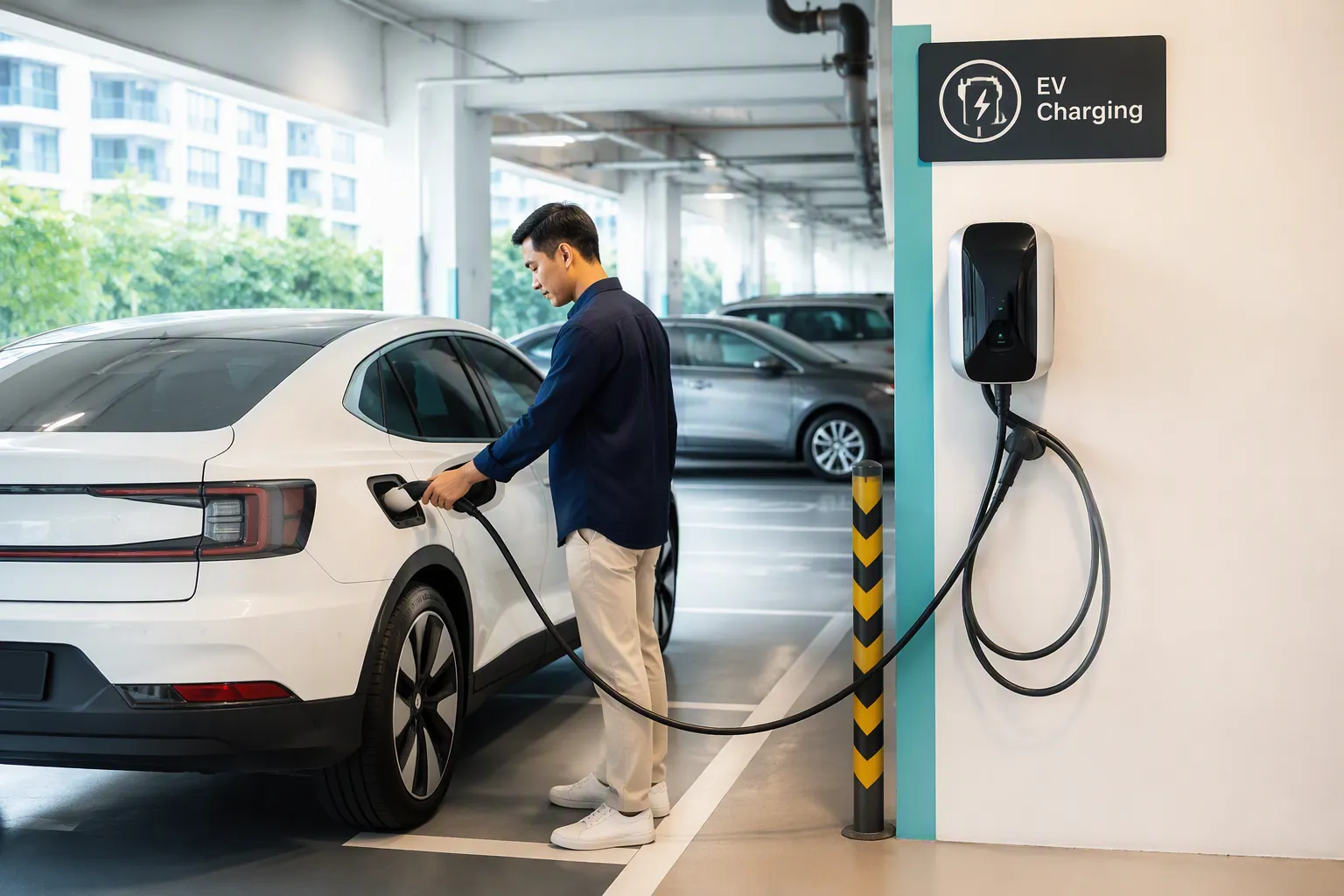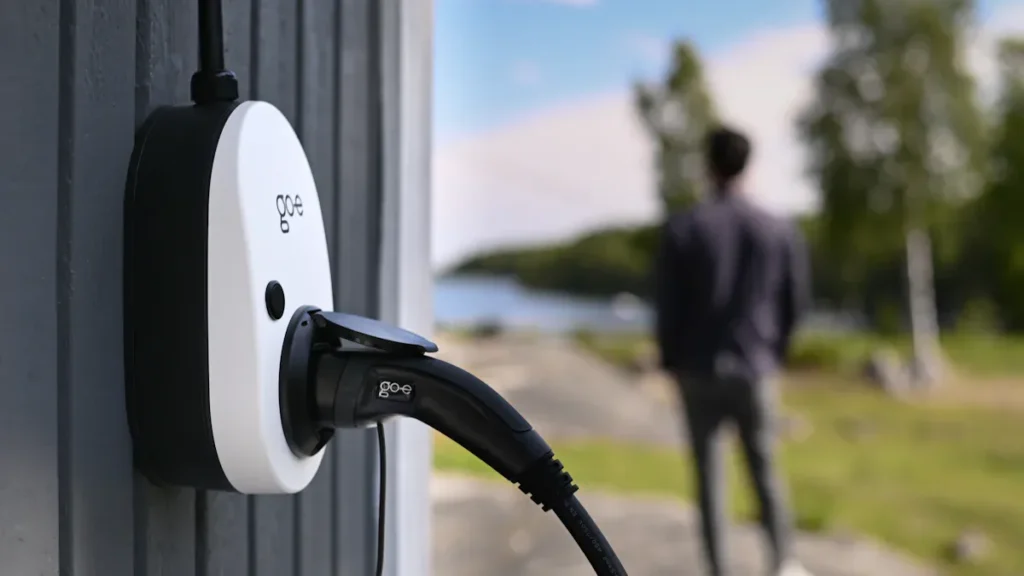
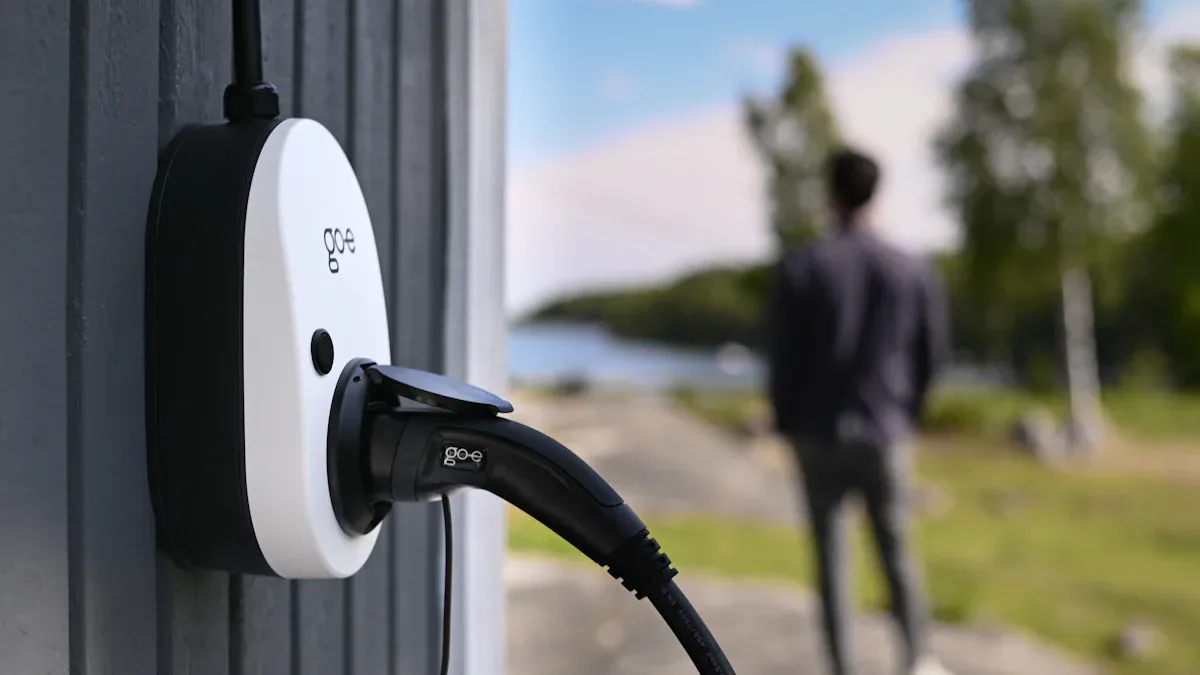
Pour la plupart des propriétaires de véhicules électriques, une installation dédiée Niveau 2 Chargeur EV représente un investissement financier judicieux. Bien qu'il y ait un coût initial, celui-ci est rapidement compensé par des gains significatifs en matière de commodité, de vitesse de charge et de sécurité. Cette Chargeur de VE solution est bien supérieure pour un usage quotidien comparée à une prise murale standard.
De nombreux fournisseurs réputés Fabricants de chargeurs de VE proposent une variété de Solutions de recharge pour véhicules électriques, modèles, incluant des unités murales et des chargeurs portables pour VE. bornes portables. Passer à une installation de recharge domestique professionnelle d'une marque de confiance garantit une expérience plus sûre et plus efficace pour tout véhicule électrique.
L'investissement initial : Détail du coût d'un chargeur VE de niveau 2

La considération principale d'un propriétaire de VE est souvent l'investissement initial. Comprendre les composantes de ce coût est la première étape pour évaluer la valeur à long terme du chargeur. La dépense totale combine le matériel lui-même et l' installation professionnelle, installation, dont les prix varient selon les fonctionnalités et la complexité.
Coût du matériel : Choisir son chargeur
Le chargeur, ou wallbox, est l'unité physique fixée au mur. Le marché offre un large éventail d'options, des modèles basiques aux systèmes hautement avancés. Des fournisseurs technologiquement avancés comme TPSON proposent un spectre de solutions de recharge pour véhicules électriques afin de répondre à des besoins utilisateurs divers.
Chargeurs d'entrée de gamme (5 000 – 8 000 NOK)
Les chargeurs d'entrée de gamme assurent la fonction principale : une recharge sûre et efficace. Ces unités sont souvent appelées chargeurs “ simples ” car elles n'ont pas de fonctionnalités de connectivité. Le propriétaire branche simplement son VE pour démarrer une session et le débranche pour l'arrêter. Ils constituent une amélioration fiable et abordable par rapport à une prise standard, mais n'offrent pas de capacités avancées de gestion de l'énergie.
Chargeurs intelligents (8 000 – 15 000 NOK)
Chargeurs intelligents représentent la catégorie la plus populaire pour les propriétaires de maison en Norvège. Ces unités se connectent au Wi-Fi et sont accompagnées d'une application smartphone. Cette connectivité débloque des fonctionnalités puissantes :
- Démarrage/arrêt à distance : Contrôler les sessions de recharge depuis n'importe où.
- Chargement programmé : Programmer le chargeur pour qu'il fonctionne pendant les heures creuses où l'électricité est la moins chère.
- Surveillance de l'énergie : Suivre la consommation d'électricité pour chaque session de recharge.
De nombreux chargeurs fabriqués en Norvège, comme ceux de la marque Easee, sont éprouvés sur leur marché domestique et reconnus pour leur technologie avancée. Un chargeur intelligent 22 kW d'une telle marque peut coûter environ 11 000 NOK, se situant précisément dans cette fourchette de prix moyenne.
Chargeurs premium (15 000+ NOK)
Les chargeurs premium offrent des fonctionnalités de pointe pour les utilisateurs qui veulent le meilleur. Ces modèles peuvent inclure :
- Une connectivité 4G intégrée pour les emplacements sans Wi-Fi stable.
- Des systèmes de paiement intégrés pour un usage commercial ou partagé.
- Une répartition de charge avancée pour gérer la puissance sur plusieurs chargeurs.
- La compatibilité Vehicle-to-Grid (V2G), une fonctionnalité d'avenir.
Coût d'installation professionnelle en Norvège
Une installation de chargeur VE de niveau 2 sûre et légale nécessite une pose professionnelle par un électricien certifié. Le coût de l'installation constitue une part significative de l'investissement total.
Ce qu'inclut une installation standard (7 000 – 12 000 NOK)
Un forfait d'installation standard convient à de nombreuses habitations et couvre typiquement les travaux essentiels. Le prix inclut généralement :
- Jusqu'à 10-15 mètres de câblage depuis le tableau électrique jusqu'à l'emplacement du chargeur.
- L'installation d'un disjoncteur dédié dans le tableau électrique.
- Le perçage d'un mur standard (bois ou plâtre).
- Toute la main-d'œuvre et les tests pour garantir la sécurité et la conformité du système.
- La documentation de l'installation (
déclaration de conformité).
Facteurs d'augmentation des coûts d'installation
).
- Longues longueurs de câble : Le prix final de l'installation peut dépasser la fourchette standard si les travaux sont plus complexes. Les facteurs courants incluent :.
- Perçage complexe : Avoir besoin de plus de 15 mètres de câble.
- Devoir percer du béton ou des murs épais. Travaux de terrassement :.
- Des tranchées sont nécessaires pour faire passer un câble en sous-sol jusqu'à un garage indépendant ou une place de parking. Mise à niveau du tableau électrique :.
- Le panneau électrique principal de la maison peut nécessiter une mise à niveau pour supporter la nouvelle charge. Complexité en appartement :.
L'installation dans un garage partagé peut nécessiter des travaux supplémentaires pour des systèmes de répartition de charge.
Pourquoi vous devez impérativement faire appel à un électricien certifié Sécurité et conformité sont non négociables.
En Norvège, la loi exige qu'un point de recharge VE dédié soit installé par un professionnel certifié. La Direction norvégienne de la protection civile (DSB) déconseille fortement la recharge régulière depuis une prise Schuko standard en raison du risque d'incendie. Une installation professionnelle garantit que le chargeur est correctement câblé sur un circuit dédié, respecte toutes les normes de sécurité et fonctionne sans surcharger l'installation électrique de votre domicile.
Calcul de votre dépense initiale totale.
L'investissement initial total est la somme du coût du matériel et de l'installation. Voici deux scénarios courants.
Exemple de coût : Appartement avec garage partagé.
| Objet | Coût estimé |
|---|---|
| Pour un propriétaire de VE en immeuble, un chargeur intelligent est souvent le meilleur choix pour gérer la puissance partagée. | Matériel - Chargeur intelligent |
| Installation standard | 9 500 NOK |
| Installation standard | 8 000 NOK |
Investissement total estimé
17 500 NOK.
| Objet | Coût estimé |
|---|---|
| Pour un propriétaire de VE en immeuble, un chargeur intelligent est souvent le meilleur choix pour gérer la puissance partagée. | Exemple de coût : Maison individuelle |
| Un propriétaire de maison avec un garage privé peut avoir une installation légèrement plus complexe mais peut choisir tout type de chargeur. | Matériel - Chargeur intelligent 22 kW |
| Installation standard | 11 000 NOK |
The Speed and Convenience Benefits of a Level 2 EV Charger

Beyond the financial calculations, the most immediate and tangible benefit of a home charger is the massive improvement in daily convenience. The upgrade transforms the EV ownership experience from one of planning and waiting to one of effortless readiness.
Drastically Reduced Charging Times
The primary advantage of a level 2 ev charger is its speed. It dramatically shortens the time an EV needs to be plugged in, making charging a seamless part of an owner’s routine rather than a time-consuming chore.
Level 1 (Schuko) vs. Level 2 Speed Comparison
A standard Schuko outlet provides very slow charging, often adding only a few kilometers of range per hour. A Chargeur de niveau 2 is significantly more powerful.
| Type de chargeur | Puissance de sortie typique | Gamme approximative ajoutée par heure |
|---|---|---|
| Level 1 (Schuko) | 1.4 kW – 2.3 kW | 8 – 12 km |
| Chargeur de niveau 2 | 7.4 kW – 22 kW | 40 – 120 km |
Real-World Impact: Daily Top-Ups
For an EV owner with a typical daily commute of 50 km, a Schuko outlet requires 4-6 hours of charging to replenish the battery. A Level 2 charger accomplishes the same task in under an hour. This speed ensures the electric vehicle is always ready for unplanned trips.
Real-World Impact: Full Overnight Charging
The difference becomes critical for full charging. A long-range EV with a large battery might need over 40 hours to charge from empty on a Schuko outlet. A Level 2 unit can fully charge the same EV overnight, guaranteeing a full battery every morning.
The Value of Everyday Convenience
This newfound speed translates directly into a more convenient and stress-free lifestyle. Owners no longer need to meticulously plan their charging sessions around public infrastructure.
Eliminating Range and Charging Anxiety
A home charger is the ultimate cure for range anxiety. Knowing that a full battery is just an overnight charging session away provides complete peace of mind. EV owners can use their vehicle’s full range without worrying about finding available EV charging stations.
The Simplicity of a “Plug-and-Go” Routine
Home charging creates a simple, effortless routine. The owner arrives home, plugs in the car, and wakes up to a fully charged EV. This process is as simple as charging a smartphone and removes the mental load of managing the vehicle’s energy needs.
Reducing Dependence on Public EV Charging Stations
Relying on public EV charging stations introduces uncertainty. These stations can be occupied, out of order, or more expensive. A home unit makes the public charging network a backup for long trips, not a daily necessity. This reduces time spent waiting at public EV charging stations and frees owners from the unpredictability of a third-party charging network. Many EV owners find they rarely use public EV charging stations for their daily driving needs.
A Critical Upgrade in Safety and Sustainability
An investment in a dedicated charger is not just about speed; it is a fundamental upgrade for safety and sustainability. It mitigates serious risks associated with improper charging methods and empowers EV owners to contribute to a greener energy ecosystem.
The Inherent Risks of Regular Schuko Charging
Using a standard household (Schuko) outlet for daily EV charging is a practice fraught with danger. These outlets are not designed for the task.
Overheating and Fire Hazards
A Schuko outlet is not built to handle the high, continuous power draw required for charging an EV. This prolonged load can cause the socket and plug to overheat significantly, posing a substantial fire risk inside a garage or home.
Wear on Your Home’s Electrical System
The sustained stress of charging an EV accelerates the wear and tear on a home’s internal wiring and outlet components. Over time, this degradation can lead to connection failures and further increases the risk of an electrical incident.
Why the DSB Recommends Dedicated Chargers
Norwegian authorities take this risk seriously. The Directorate for Civil Protection (DSB) strongly advises against the regular use of a Schuko socket for EV charging. Their official guidance recommends a professionally installed, dedicated charging station as the only safe, long-term solution.
Built-in Safety Features of a Level 2 EV Charger
A purpose-built level 2 ev charger is engineered with multiple layers of protection that are absent in a standard wall socket.
Protection contre les défauts à la terre
Every certified charger includes built-in ground fault protection (ground fault circuit interrupter Type B). This system instantly cuts the electric current if it detects a leakage, protecting users from the danger of severe shock.
Overcurrent and Temperature Monitoring
Smart internal sensors constantly monitor the charging session. If the charger detects excessive current or a rise in its internal temperature, it will automatically reduce power or shut down completely to prevent damage and ensure safety.
Secure, Weatherproof Connections
The Type 2 connectors used for home charging are robust and create a secure, locked connection with the vehicle. They are designed to be weatherproof, ensuring safe and reliable operation even when exposed to Norwegian rain and snow.
Enhancing Your EV’s Sustainability Profile
A smart charger elevates an EV from a mere mode of transport to an active component in a sustainable energy future. This commitment to sustainability is a key benefit.
Optimizing Energy Use with Smart Charging
Technologie de charge intelligente is a powerful tool for promoting sustainability. It allows owners to control when and how their EV charges.
- Delayed Sessions: Users can schedule charging to begin during off-peak hours, typically at night when electricity demand is lowest.
- Équilibrage de la charge: The system can intelligently distribute available power, which is especially useful in buildings with multiple chargers, ensuring efficient energy use without overloading the circuit. This optimization is a core part of promoting sustainability and enhancing overall sustainability.
Aligning with Norway’s Green Energy Goals
Using smart charging directly supports Norway’s national sustainability goals. By shifting energy demand away from peak times, EV owners help stabilize the national grid. This stability makes it easier to integrate power from renewable energy sources like hydro and wind. This action makes each EV a participant in promoting sustainability. This alignment with renewable energy sources is crucial for long-term sustainability. The effective use of renewable energy sources is a cornerstone of the country’s energy policy, and smart charging enhances this sustainability effort. This focus on sustainability benefits everyone.
The Financial Payback: How a Level 2 Charger Saves You Money
A level 2 ev charger is more than a convenience; it is a financial tool that delivers a strong return on investment (ROI). The investissement initial unlocks significant long-term savings, enhancing the overall profitability of owning an electric vehicle in Norway. An owner can actively reduce electricity costs and avoid new grid fees, making the charger a key part of their financial strategy. The profitability of this technology becomes clear when analyzing its interaction with the Norwegian electricity market.
Leveraging Norway’s Electricity Market with a Smart Charger
Smart charging technology empowers EV owners to take control of their energy expenses. This capability is central to the charger’s ROI and long-term profitability. By automating the charging process, the technology ensures the vehicle charges at the most economical times, directly improving the return on investment.
Understanding Spot Price (Spotpris) Fluctuations
The price of electricity in Norway, known as the spot price (spot price), changes hour by hour. Historically, prices were stable due to abundant hydropower. However, recent factors like new international power cables and volatile gas prices have created significant price swings, especially in southern Norway. This means the cost to charge an EV can be much higher during peak demand hours (like late afternoons) compared to off-peak hours (late at night). Understanding these fluctuations is the first step toward achieving a better ROI.
Automatisation de la charge en heures creuses pour réduire les coûts
A chargeur intelligent répond directement à cette volatilité des prix. Grâce à une application smartphone, le propriétaire peut programmer le chargeur pour qu'il ne prélève de l'électricité que lorsque le prix descend en dessous d'un certain seuil.
Un propriétaire de VE peut simplement brancher sa voiture en rentrant chez lui et régler l'application sur “ charge intelligente ”. Le système attend alors les heures nocturnes les moins chères pour démarrer automatiquement la session de charge. Cette simple action maximise les économies et améliore la rentabilité de l'investissement.
Cette automatisation transforme un marché complexe en une source simple d'économies, constituant ainsi un élément central du retour sur investissement (ROI) du chargeur.
Calcul des économies annuelles avec les tarifs de l'électricité variables
L'impact financier de la charge intelligente est substantiel. La différence entre les tarifs d'électricité en heures de pointe et en heures creuses influence directement la rentabilité du chargeur. Prenons l'exemple d'un propriétaire de VE typique parcourant 15 000 km par an.
| Scénario de charge | Prix moyen de l'électricité (par kWh) | Coût annuel de recharge | Économies annuelles |
|---|---|---|---|
| Recharge en heures de pointe | 2,00 NOK | 6 000 NOK | 0 NOK |
| Charge intelligente en heures creuses | 0,80 NOK | 2 400 NOK | 3 600 NOK |
Note : suppose une consommation du VE de 20 kWh/100 km. Les prix sont donnés à titre indicatif.
Ce tableau démontre comment la charge intelligente génère un retour sur investissement clair. Les économies annuelles contribuent directement à l'excellent ROI du chargeur et à sa rentabilité à long terme.
Gestion du nouveau tarif de réseau basé sur la capacité (Nettleie)
Un chargeur intelligent aide également les propriétaires à gérer le nouveau modèle de tarif de réseau (tarif de réseau) en Norvège. Cette nouvelle structure tarifaire vise à décourager une consommation électrique élevée et simultanée. C'est un autre domaine où la technologie démontre sa rentabilité.
Fonctionnement du tarif “ Pic de puissance ”
Le nouveau tarif pénalise les foyers pour les “ pics de puissance ” élevés. Il mesure l'heure de la journée où un foyer consomme le plus d'électricité. Plus cette consommation de pointe est élevée, plus les frais fixes mensuels du gestionnaire de réseau sont importants. Faire fonctionner simultanément plusieurs appareils de forte puissance – comme un four, un chauffe-eau et un chargeur de VE – peut créer un pic coûteux. Cela rend la gestion de la consommation d'électricité cruciale pour un bon ROI.
Utiliser un chargeur de VE de niveau 2 pour éviter les pénalités coûteuses
Un chargeur “ basique ” qui démarre à pleine puissance dès qu'un VE est branché peut facilement créer un nouveau pic de puissance, augmentant ainsi les factures mensuelles. Un chargeur intelligent évite cette pénalité. Il peut être programmé pour charger lentement pendant les heures de pointe ou attendre que la consommation globale du foyer soit faible. Cette gestion intelligente est essentielle à la rentabilité du chargeur et à un retour sur investissement rapide.
Le rôle de la technologie d'équilibrage de charge
L'équilibrage de charge est une fonction avancée qui perfectionne ce processus. Cette technologie surveille activement en temps réel la consommation électrique totale du foyer.
- Si elle détecte que le foyer approche d'un pic de puissance, elle réduit automatiquement la vitesse de charge du VE.
- Lorsque d'autres appareils s'éteignent, elle augmente à nouveau en toute sécurité la vitesse de charge.
Cette gestion dynamique garantit que le VE reçoit la charge dont il a besoin sans déclencher de tarifs élevés, maximisant ainsi le ROI du chargeur et sa rentabilité globale.
Augmenter la valeur de votre propriété
Enfin, les avantages financiers s'étendent à la valeur du bien immobilier lui-même. Sur un marché aussi avancé que la Norvège, un chargeur domestique est un atout important qui améliore le ROI de la propriété.
Un chargeur de VE comme argument de vente clé
Un chargeur installé professionnellement est un équipement moderne qui rend une propriété plus attractive pour les acheteurs potentiels. Il indique que la maison est moderne, tournée vers l'avenir et prête pour la réalité de la possession d'un véhicule électrique. Pour de nombreux acheteurs, c'est une caractéristique très recherchée qui ajoute une valeur tangible et contribue au prix de vente final du bien, améliorant ainsi le retour sur investissement du propriétaire.
Attirer les acheteurs sur un marché dominé par les VE
En Norvège, le premier marché mondial des VE, un chargeur dédié devient rapidement une attente standard plutôt qu'un luxe. Une maison qui n'en dispose pas pourrait être désavantagée. Proposer une solution de charge clé en main peut faire sortir une propriété du lot, attirer des acheteurs plus sérieux et potentiellement accélérer la vente. Cet avantage concurrentiel est un élément clé de l'excellent ROI et de la rentabilité à long terme du chargeur.
Facteurs spécifiques à la Norvège : climat froid et préparation du réseau
Un propriétaire de VE en Norvège doit prendre en compte des facteurs propres au climat et au paysage énergétique du pays. Un Chargeur de niveau 2 n'est pas seulement un confort ; c'est un outil essentiel pour gérer les performances hivernales et se préparer à l'avenir du réseau électrique.
L'impact du froid sur votre VE
Les basses températures affectent considérablement les performances de la batterie d'un VE. Les réactions chimiques à l'intérieur des batteries lithium-ion ralentissent, ce qui réduit à la fois l'autonomie et la vitesse de charge. Des études montrent qu'un VE peut perdre de 10 % à 30 % de son autonomie dans des conditions proches du gel.
Pourquoi le préconditionnement de la batterie est crucial en hiver
Le préconditionnement de la batterie est la stratégie la plus efficace pour lutter contre la perte d'autonomie due au froid. Cette fonction permet au VE d'utiliser l'énergie du chargeur pour réchauffer sa batterie et son habitacle avant avant que le propriétaire ne commence à conduire. Ce processus garantit que la batterie fonctionne à une température optimale dès le début du trajet, préservant ainsi sa charge pour la route..
Performance supérieure des chargeurs de niveau 2 par temps froid
Une prise standard ne fournit pas la puissance nécessaire à un préconditionnement efficace. Un chargeur de niveau 2, en revanche, fournit une puissance suffisante pour réchauffer efficacement la batterie et l'habitacle sans puiser dans les réserves d'énergie propres du VE. Cela fait une énorme différence, car charger une batterie froide prend beaucoup plus de temps. Une session qui pourrait durer 1,5 heure en été pourrait s'étendre à deux heures ou plus en hiver. L'impact du froid varie selon les modèles.
| Modèle EV | Pourcentage de perte d'autonomie |
|---|---|
| HiPhi Z | 5.9% |
| Polestar 2 | 30 % ou plus |
| Volvo C40 Recharge | 30 % ou plus |
| Toyota bZ4X | 30 % ou plus |
| Volkswagen ID.7 | 30 % ou plus |
| Modèle 3 de Tesla | 29.9% |
| Kia EV9 | 12.5% |
Une installation de recharge domestique puissante est essentielle pour surmonter ces défis hivernaux.
Maintenir la santé à long terme de la batterie
Charger régulièrement une batterie très froide peut, avec le temps, solliciter ses composants. Utiliser un chargeur de niveau 2 pour le préconditionnement aide à maintenir la batterie dans sa plage de température idéale. Cette bonne habitude de charge contribue à la santé à long terme et à la longévité du composant le plus coûteux du véhicule.
Le réseau norvégien et l'avenir de la recharge des VE
Le réseau robuste de la Norvège et ses politiques visionnaires font de la recharge domestique une partie intégrante de l'infrastructure énergétique nationale.
Capacité et stabilité du réseau norvégien
The Norwegian grid is one of the most stable and green in the world, built around abundant hydropower. This reliable infrastructure provides a solid foundation for the widespread adoption of electric vehicles and home charging solutions.
Future-Proofing for Vehicle-to-Grid (V2G)
A smart charger is an investment in the future. Norway is a European leader in readiness for Vehicle-to-Grid (V2G) technology. V2G will one day allow an EV to send power back to the grid during peak demand. Owning a modern, connected charger positions an owner to participate in this future energy market.
The Role of Home Charging in Grid Management
Smart home charging plays a vital role in managing the grid today. By scheduling charging sessions for off-peak hours, EV owners help balance the load on the national infrastructure. This distributed approach to energy consumption is a key part of the country’s charging infrastructure strategy, ensuring stability as the number of electric vehicles grows.
Analyzing the Alternatives to a Dedicated Level 2 EV Charger
While a dedicated home charger is the recommended solution, many new EV owners consider two main alternatives: relying exclusively on public EV charging stations or using a standard Schuko wall outlet. A closer analysis reveals the significant drawbacks of both approaches.
The True Cost of Relying on Public EV Charging Stations
The public charging network is essential for long-distance travel, but it is an expensive and inconvenient option for daily charging needs. The reliance on public EV charging stations introduces several challenges.
Price Per kWh: Home vs. Public Charging
The most significant drawback is the financial cost. Public fast-charging rates in Norway are substantially higher than residential electricity prices. An EV owner can expect to pay several times more per kWh at public EV charging stations compared to charging at home. This price difference quickly accumulates, eroding the fuel savings that make an electric vehicle attractive.
The Hidden Cost of Time and Inconvenience
Time is a valuable, non-refundable asset. Relying on public EV charging stations requires an owner to actively seek out a location, wait for an available charger, and then spend 30 minutes to an hour while the vehicle is charging. This process adds a significant time commitment to an owner’s schedule. These frequent trips to EV charging stations turn a simple task into a recurring chore.
Issues with Availability and Reliability
The public charging network is not always dependable. An EV driver may arrive at a location to find all EV charging stations occupied or out of service. This unpredictability can cause significant stress, especially when the battery is low. A charging station may be offline for maintenance, or another driver may occupy the spot for longer than expected. This makes depending on public EV charging stations a risky strategy for daily commuting.
Why Level 1 (Schuko) Charging Is Not a Long-Term Solution
Using the chargeur portable that comes with an EV and plugging it into a standard Schuko outlet is a temporary fix, not a permanent solution. It is inefficient, impractical, and poses serious safety risks.
Inefficiency and Extended Charging Cycles
A Schuko outlet delivers power very slowly. A full charging session for a modern EV can take 24 to 40 hours or more. This extremely slow rate makes it nearly impossible to replenish a battery overnight after a typical day of driving. The charging process becomes a constant race against time.
Unsuitability for Daily Driving Needs
The slow charging speed makes a Schuko outlet unsuitable for the daily needs of most EV drivers. An owner who commutes 50-100 km per day will find that the outlet cannot add enough range overnight. This leaves the driver with a partially charged battery each morning, limiting their flexibility and reintroducing range anxiety.
Safety Concerns from Norwegian Authorities
Norwegian safety authorities explicitly warn against the regular use of Schuko outlets for EV charging. The Norwegian Directorate for Civil Protection (DSB) has identified significant risks associated with this practice.
The primary concerns include:
- Fire Hazard: Standard outlets are not designed to handle the high, continuous electrical load required for EV charging, which can lead to overheating and fire.
- System Wear: The prolonged stress accelerates wear on a home’s wiring and the outlet itself.
- Official Recommendation: The DSB recommends a professionally installed, dedicated charging station as the only safe, long-term home charging method.
The evidence confirms the upfront cost of a Level 2 charger is a strategic investment, not a mere expense. The combination of faster charging, superior safety, and long-term savings makes it an essential part of EV ownership in Norway. A dedicated charger provides a more cost-effective and convenient charging experience for any electric vehicle. This EV charging solution is superior to the alternatives.
Final Verdict: For the majority of EV owners, a Level 2 EV charger is an investment that is unequivocally worth it.
FAQ
Un propriétaire peut-il installer lui-même un chargeur de VE ?
No. Norwegian law requires a certified electrician to install any dedicated EV charging station. This ensures the installation is safe, compliant with all regulations, and does not pose a fire risk. Self-installation is illegal and dangerous.
Do EV chargers work with all electric car brands?
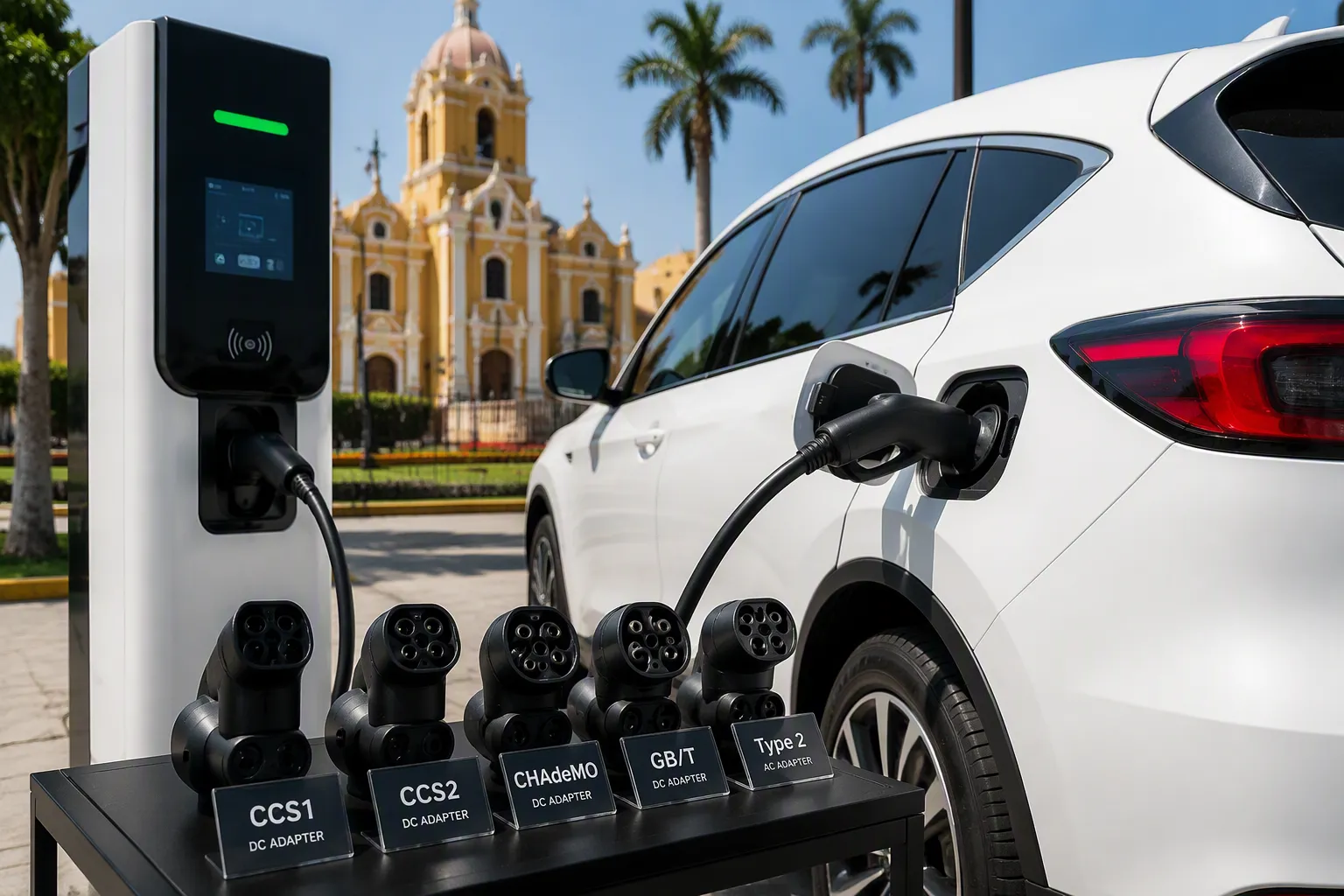
Yes. Nearly all electric vehicles sold in Norway and Europe use the standard Type 2 connector. A Level 2 charger with a Type 2 plug or cable is compatible with brands like Tesla, Volkswagen, Polestar, and more.
Un chargeur intelligent est-il nécessaire ?
A smart charger is not mandatory, but it is highly recommended. Its technology allows an owner to charge during off-peak hours. This capability significantly reduces electricity costs and helps manage the new capacity-based grid tariff, maximizing savings.
What is the difference between a 7.4 kW and a 22 kW charger?
The kilowatt (kW) rating indicates charging speed. A 22 kW charger can deliver power about three times faster than a 7.4 kW unit. However, the car’s onboard charger and the home’s electrical capacity ultimately determine the maximum charging speed.
Are there government subsidies for home EV chargers?
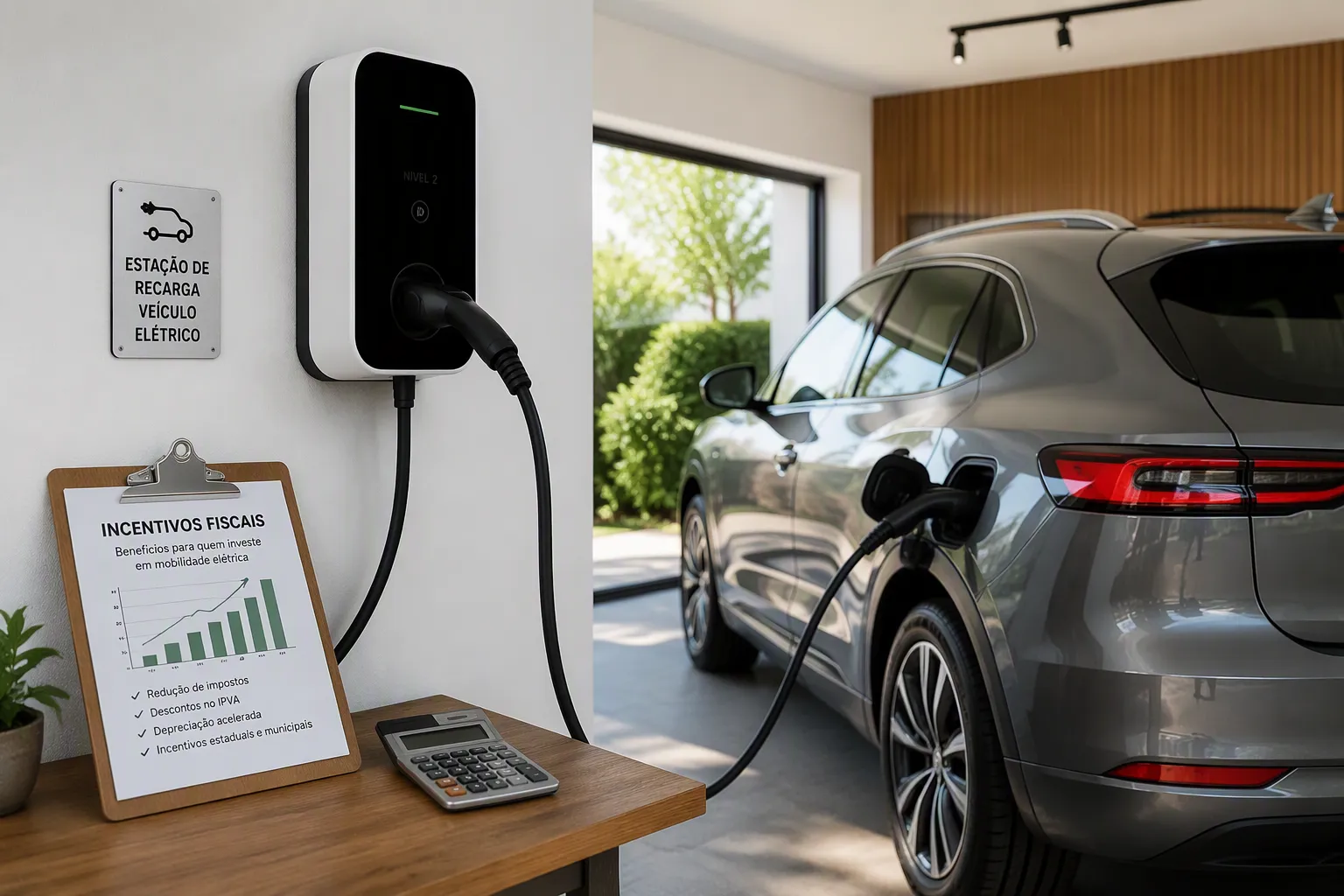
Currently, there are no national subsidies available for private individuals installing a home charger. Some municipalities or housing cooperatives (housing cooperatives) may offer local support programs. An owner should check with their local authorities for any available incentives.
How does charging work in an apartment building?
Installing a charger in a shared garage often requires approval from the housing board (the board). The building may need a load-balancing system to distribute power efficiently among multiple chargers. This ensures the building’s electrical system is not overloaded.