
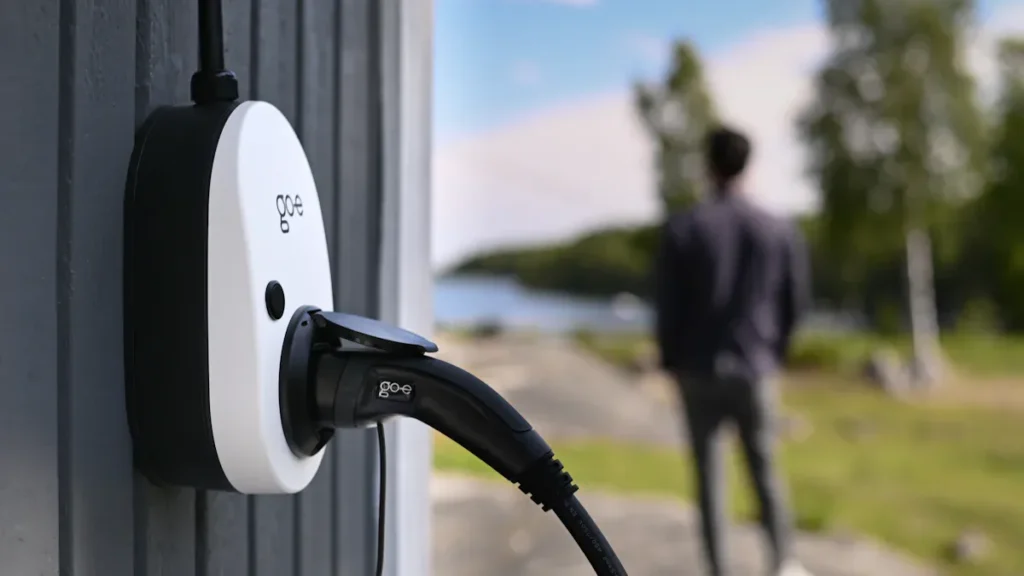
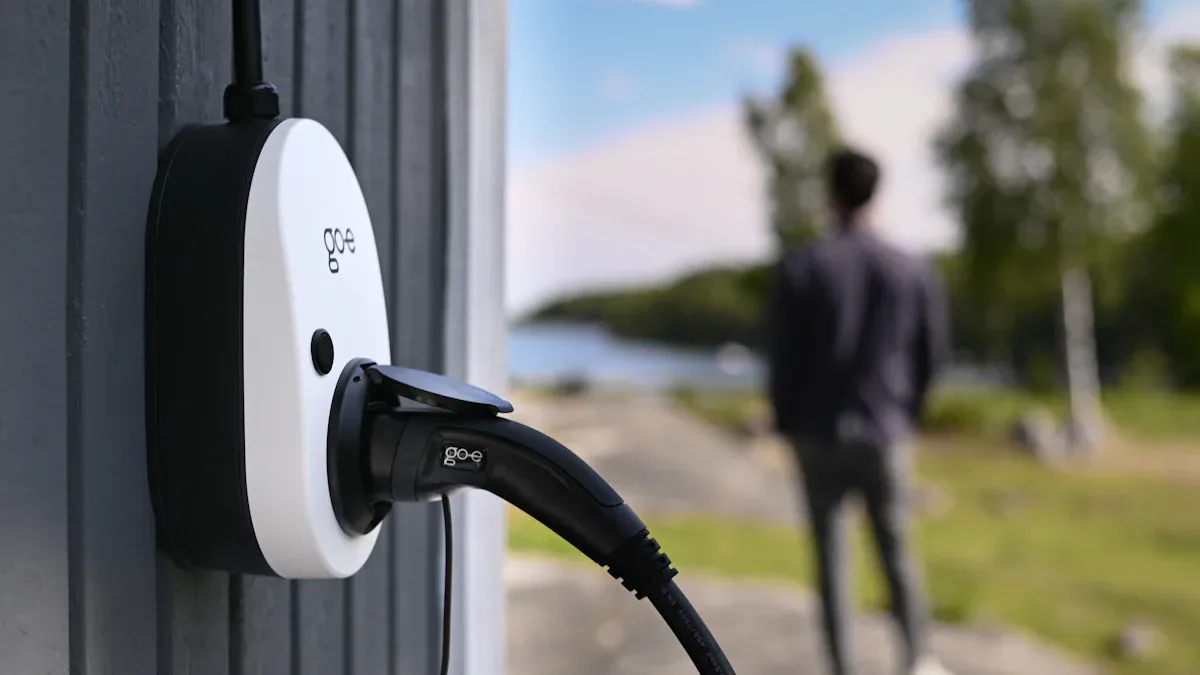
Para la mayoría de los propietarios de vehículos eléctricos, un punto de carga dedicado Nivel 2 Cargador EV representa una inversión financiera inteligente. Aunque existe un coste inicial, este se compensa rápidamente con importantes ganancias en comodidad, velocidad de carga y seguridad. Esta Cargador EV es una opción superior para el uso diario en comparación con un enchufe de pared estándar.
Muchos proveedores de renombre Fabricantes de cargadores para VE ofrecen una variedad de Soluciones de recarga de vehículos eléctricos, incluyendo unidades de pared y cargadores portátiles para vehículos eléctricos. Actualizar a una configuración de carga doméstica profesional de una marca de confianza garantiza una experiencia más segura y eficiente para cualquier vehículo eléctrico.
La Inversión Inicial: Desglosando el Coste del Cargador de Nivel 2 para VE

La consideración principal de un propietario de un VE suele ser la inversión inicial. Comprender los componentes de este coste es el primer paso para evaluar el valor a largo plazo del cargador. El gasto total es una combinación del hardware en sí y la instalación profesional, ambos con puntos de precio variables según las características y la complejidad.
Coste del Hardware: Eligiendo su Cargador
El cargador, o wallbox, es la unidad física montada en la pared. El mercado ofrece una amplia gama de opciones, desde unidades básicas hasta sistemas muy avanzados. Proveedores tecnológicamente avanzados como TPSON ofrecen un espectro de soluciones de carga para vehículos eléctricos para satisfacer diversas necesidades de los usuarios.
Cargadores de Nivel Básico (5.000 – 8.000 NOK)
Los cargadores de nivel básico proporcionan la función principal: carga segura y eficiente. A menudo se denominan cargadores “simples” porque carecen de funciones de conectividad. El propietario simplemente conecta su VE para iniciar una sesión de carga y lo desconecta para detenerla. Son una actualización fiable y asequible respecto a un enchufe estándar, pero no ofrecen capacidades avanzadas de gestión de energía.
Cargadores Inteligentes (8.000 – 15.000 NOK)
Cargadores inteligentes representan la categoría más popular para propietarios de viviendas en Noruega. Estas unidades se conectan a Wi-Fi y vienen con una aplicación para smartphone. Esta conectividad desbloquea funciones potentes:
- Arranque/parada a distancia: Controlar las sesiones de carga desde cualquier lugar.
- Carga programada: Configurar el cargador para que funcione durante las horas valle, cuando la electricidad es más barata.
- Control de la energía: Realiza un seguimiento del consumo eléctrico de cada sesión de carga.
Muchos cargadores fabricados en Noruega, como los de Easee, están probados en su mercado local y son conocidos por su tecnología avanzada. Un cargador inteligente de 22 kW de una marca como esta puede costar alrededor de 11.000 NOK, encajando perfectamente en este rango de precio medio.
Cargadores Premium (15.000+ NOK)
Los cargadores premium ofrecen funciones de vanguardia para usuarios que quieren lo mejor absoluto. Estos modelos pueden incluir:
- Conectividad 4G integrada para ubicaciones sin Wi-Fi estable.
- Sistemas de pago integrados para uso comercial o compartido.
- Equilibrio de carga avanzado para gestionar la potencia entre varios cargadores.
- Preparación para Vehículo-a-Red (V2G), una función preparada para el futuro.
Coste de Instalación Profesional en Noruega
Una configuración segura y legal de un cargador de nivel 2 para VE requiere una instalación profesional realizada por un electricista certificado. El coste de instalación es una parte significativa de la inversión total.
Lo que Incluye una Instalación Estándar (7.000 – 12.000 NOK)
Un paquete de instalación estándar es adecuado para muchas viviendas y normalmente cubre el trabajo esencial. El precio generalmente incluye:
- Hasta 10-15 metros de cableado desde el cuadro de fusibles hasta la ubicación del cargador.
- Instalación de un interruptor automático dedicado en el cuadro de fusibles.
- Taladrar a través de una pared estándar (madera o yeso).
- Toda la mano de obra y pruebas para garantizar que el sistema sea seguro y cumpla la normativa.
- Documentación de la instalación (
declaración de conformidad).
Factores que aumentan los costes de instalación
).
- El precio final de instalación puede superar el rango estándar si el trabajo es más complejo. Los factores comunes incluyen: Trayectos Largos de Cable:.
- Perforación compleja: Necesitar más de 15 metros de cable.
- Requerir taladrar a través de hormigón o muros gruesos. Trabajos de Obra Civil:.
- Es necesario abrir una zanja para tender un cable bajo tierra hasta un garaje independiente o plaza de aparcamiento. Actualizaciones del Cuadro de Fusibles:.
- Es posible que sea necesario actualizar el cuadro eléctrico principal de la vivienda para soportar la nueva carga. Complejidad en Apartamentos:.
La instalación en un garaje compartido puede requerir trabajo adicional para sistemas de equilibrio de carga.
Por qué Debe Utilizar un Electricista Certificado La Seguridad y el Cumplimiento son No Negociables.
En Noruega, es un requisito legal que un punto de carga dedicado para VE sea instalado por un profesional certificado. La Dirección de Protección Civil de Noruega (DSB) desaconseja firmemente la carga habitual desde un enchufe Schuko estándar debido al riesgo de incendio. Una instalación profesional garantiza que el cargador esté cableado correctamente a un circuito dedicado, cumpla con todos los códigos de seguridad y funcione sin sobrecargar el sistema eléctrico de su hogar.
Calculando su Desembolso Inicial Total.
La inversión inicial total es la suma de los costes del hardware y de la instalación. Aquí hay dos escenarios comunes.
Ejemplo de Coste: Apartamento con Garaje Compartido.
| Artículo | Coste estimado |
|---|---|
| Para un propietario de un VE en un edificio de apartamentos, un cargador inteligente suele ser la mejor opción para gestionar la energía compartida. | Hardware del Cargador Inteligente |
| Instalación estándar | 9.500 NOK |
| Instalación Estándar | 8.000 NOK |
Inversión Total Estimada
17.500 NOK.
| Artículo | Coste estimado |
|---|---|
| Para un propietario de un VE en un edificio de apartamentos, un cargador inteligente suele ser la mejor opción para gestionar la energía compartida. | Ejemplo de Coste: Casa Unifamiliar |
| Un propietario de una vivienda con garaje privado puede tener una instalación ligeramente más compleja, pero puede elegir cualquier tipo de cargador. | Cargador Inteligente de Gama Media |
| Instalación Estándar | 24,000 NOK |
The Speed and Convenience Benefits of a Level 2 EV Charger

Beyond the financial calculations, the most immediate and tangible benefit of a home charger is the massive improvement in daily convenience. The upgrade transforms the EV ownership experience from one of planning and waiting to one of effortless readiness.
Drastically Reduced Charging Times
The primary advantage of a level 2 ev charger is its speed. It dramatically shortens the time an EV needs to be plugged in, making charging a seamless part of an owner’s routine rather than a time-consuming chore.
Level 1 (Schuko) vs. Level 2 Speed Comparison
A standard Schuko outlet provides very slow charging, often adding only a few kilometers of range per hour. A Cargador de nivel 2 is significantly more powerful.
| Tipo de cargador | Potencia de salida típica | Alcance aproximado añadido por hora |
|---|---|---|
| Level 1 (Schuko) | 1.4 kW – 2.3 kW | 8 – 12 km |
| Cargador de nivel 2 | 7.4 kW – 22 kW | 40 – 120 km |
Real-World Impact: Daily Top-Ups
For an EV owner with a typical daily commute of 50 km, a Schuko outlet requires 4-6 hours of charging to replenish the battery. A Level 2 charger accomplishes the same task in under an hour. This speed ensures the electric vehicle is always ready for unplanned trips.
Real-World Impact: Full Overnight Charging
The difference becomes critical for full charging. A long-range EV with a large battery might need over 40 hours to charge from empty on a Schuko outlet. A Level 2 unit can fully charge the same EV overnight, guaranteeing a full battery every morning.
The Value of Everyday Convenience
This newfound speed translates directly into a more convenient and stress-free lifestyle. Owners no longer need to meticulously plan their charging sessions around public infrastructure.
Eliminating Range and Charging Anxiety
A home charger is the ultimate cure for range anxiety. Knowing that a full battery is just an overnight charging session away provides complete peace of mind. EV owners can use their vehicle’s full range without worrying about finding available EV charging stations.
The Simplicity of a “Plug-and-Go” Routine
Home charging creates a simple, effortless routine. The owner arrives home, plugs in the car, and wakes up to a fully charged EV. This process is as simple as charging a smartphone and removes the mental load of managing the vehicle’s energy needs.
Reducing Dependence on Public EV Charging Stations
Relying on public EV charging stations introduces uncertainty. These stations can be occupied, out of order, or more expensive. A home unit makes the public charging network a backup for long trips, not a daily necessity. This reduces time spent waiting at public EV charging stations and frees owners from the unpredictability of a third-party charging network. Many EV owners find they rarely use public EV charging stations for their daily driving needs.
A Critical Upgrade in Safety and Sustainability
An investment in a dedicated charger is not just about speed; it is a fundamental upgrade for safety and sustainability. It mitigates serious risks associated with improper charging methods and empowers EV owners to contribute to a greener energy ecosystem.
The Inherent Risks of Regular Schuko Charging
Using a standard household (Schuko) outlet for daily EV charging is a practice fraught with danger. These outlets are not designed for the task.
Sobrecalentamiento y riesgo de incendio
A Schuko outlet is not built to handle the high, continuous power draw required for charging an EV. This prolonged load can cause the socket and plug to overheat significantly, posing a substantial fire risk inside a garage or home.
Wear on Your Home’s Electrical System
The sustained stress of charging an EV accelerates the wear and tear on a home’s internal wiring and outlet components. Over time, this degradation can lead to connection failures and further increases the risk of an electrical incident.
Why the DSB Recommends Dedicated Chargers
Norwegian authorities take this risk seriously. The Directorate for Civil Protection (DSB) strongly advises against the regular use of a Schuko socket for EV charging. Their official guidance recommends a professionally installed, dedicated charging station as the only safe, long-term solution.
Built-in Safety Features of a Level 2 EV Charger
A purpose-built level 2 ev charger is engineered with multiple layers of protection that are absent in a standard wall socket.
Protección contra fallos a tierra
Every certified charger includes built-in ground fault protection (ground fault circuit interrupter Type B). This system instantly cuts the electric current if it detects a leakage, protecting users from the danger of severe shock.
Overcurrent and Temperature Monitoring
Smart internal sensors constantly monitor the charging session. If the charger detects excessive current or a rise in its internal temperature, it will automatically reduce power or shut down completely to prevent damage and ensure safety.
Secure, Weatherproof Connections
The Type 2 connectors used for home charging are robust and create a secure, locked connection with the vehicle. They are designed to be weatherproof, ensuring safe and reliable operation even when exposed to Norwegian rain and snow.
Enhancing Your EV’s Sustainability Profile
A smart charger elevates an EV from a mere mode of transport to an active component in a sustainable energy future. This commitment to sustainability is a key benefit.
Optimizing Energy Use with Smart Charging
Tecnología de carga inteligente is a powerful tool for promoting sustainability. It allows owners to control when and how their EV charges.
- Delayed Sessions: Users can schedule charging to begin during off-peak hours, typically at night when electricity demand is lowest.
- Equilibrio de la carga: The system can intelligently distribute available power, which is especially useful in buildings with multiple chargers, ensuring efficient energy use without overloading the circuit. This optimization is a core part of promoting sustainability and enhancing overall sustainability.
Aligning with Norway’s Green Energy Goals
Using smart charging directly supports Norway’s national sustainability goals. By shifting energy demand away from peak times, EV owners help stabilize the national grid. This stability makes it easier to integrate power from renewable energy sources like hydro and wind. This action makes each EV a participant in promoting sustainability. This alignment with renewable energy sources is crucial for long-term sustainability. The effective use of renewable energy sources is a cornerstone of the country’s energy policy, and smart charging enhances this sustainability effort. This focus on sustainability benefits everyone.
The Financial Payback: How a Level 2 Charger Saves You Money
A level 2 ev charger is more than a convenience; it is a financial tool that delivers a strong return on investment (ROI). The inversión inicial unlocks significant long-term savings, enhancing the overall profitability of owning an electric vehicle in Norway. An owner can actively reduce electricity costs and avoid new grid fees, making the charger a key part of their financial strategy. The profitability of this technology becomes clear when analyzing its interaction with the Norwegian electricity market.
Leveraging Norway’s Electricity Market with a Smart Charger
Smart charging technology empowers EV owners to take control of their energy expenses. This capability is central to the charger’s ROI and long-term profitability. By automating the charging process, the technology ensures the vehicle charges at the most economical times, directly improving the return on investment.
Understanding Spot Price (Spotpris) Fluctuations
The price of electricity in Norway, known as the spot price (spot price), changes hour by hour. Historically, prices were stable due to abundant hydropower. However, recent factors like new international power cables and volatile gas prices Han generado fluctuaciones significativas en los precios, especialmente en el sur de Noruega. Esto significa que el coste de cargar un vehículo eléctrico puede ser mucho más elevado durante las horas de mayor demanda (como las últimas horas de la tarde) en comparación con las horas valle (a altas horas de la noche). Comprender estas fluctuaciones es el primer paso para lograr un mejor retorno de la inversión (ROI).
Automatización de la Carga en Horas Valle para Reducir Costes
A cargador inteligente aborda directamente esta volatilidad de precios. Mediante una aplicación para smartphone, el propietario puede programar el cargador para que solo consuma energía cuando el precio de la electricidad caiga por debajo de un umbral determinado.
Un propietario de un vehículo eléctrico puede simplemente conectar su coche al llegar a casa y configurar la aplicación en modo “carga inteligente”. El sistema espera entonces a las horas nocturnas más económicas para iniciar la sesión de carga automáticamente. Esta simple acción maximiza el ahorro y mejora la rentabilidad de la inversión.
Esta automatización convierte un mercado complejo en una fuente sencilla de ahorro, constituyendo una parte fundamental del ROI del cargador.
Cálculo del Ahorro Anual con Tarifas por Horario de Consumo
El impacto financiero de la carga inteligente es sustancial. La diferencia entre las tarifas eléctricas en horas punta y horas valle influye directamente en la rentabilidad del cargador. Considérese un propietario típico de un vehículo eléctrico que recorre 15.000 km al año.
| Escenario de Carga | Precio Medio de la Electricidad (por kWh) | Coste Anual de Carga | Ahorro anual |
|---|---|---|---|
| Carga en Horas Punta | 2,00 NOK | 6.000 NOK | 0 NOK |
| Carga Inteligente en Horas Valle | 0,80 NOK | 2.400 NOK | 3.600 NOK |
Nota: Se asume un consumo del vehículo eléctrico de 20 kWh/100 km. Los precios son ilustrativos.
Esta tabla demuestra cómo la carga inteligente proporciona un claro retorno de la inversión. El ahorro anual contribuye directamente al excelente ROI del cargador y a su rentabilidad a largo plazo.
Gestión del Nuevo Peaje de Red Basado en la Capacidad (Nettleie)
Un cargador inteligente también ayuda a los propietarios a gestionar el nuevo modelo de peaje de red (peaje de red) en Noruega. Esta nueva estructura tarifaria está diseñada para desincentivar un consumo eléctrico alto y simultáneo. Esta es otra área donde la tecnología demuestra su rentabilidad.
Funcionamiento del Peaje por “Pico de Potencia”
El nuevo peaje penaliza a los hogares por los altos “picos de potencia”. Mide la hora del día en la que un hogar consume más electricidad. Cuanto mayor sea este consumo punta, mayor será la tarifa fija mensual de la compañía distribuidora. Poner en marcha simultáneamente varios electrodomésticos de alta potencia—como un horno, un calentador de agua y un cargador de vehículo eléctrico—puede generar un pico costoso. Esto hace que gestionar el consumo eléctrico sea crucial para un buen ROI.
Uso de un Cargador de Nivel 2 para Evitar Penalizaciones Costosas
Un cargador “tonto” que arranca a plena potencia en el momento de conectar el vehículo eléctrico puede crear fácilmente un nuevo pico de potencia, incrementando las facturas mensuales. Un cargador inteligente evita esta penalización. Puede programarse para cargar lentamente durante las horas punta o esperar a que el consumo general del hogar sea bajo. Esta gestión inteligente es esencial para la rentabilidad del cargador y un rápido retorno de la inversión.
El Papel de la Tecnología de Equilibrado de Carga
El equilibrado de carga es una función avanzada que perfecciona este proceso. Esta tecnología monitoriza activamente en tiempo real el consumo eléctrico total del hogar.
- Si detecta que el hogar se acerca a un pico de potencia, reduce automáticamente la velocidad de carga del vehículo eléctrico.
- Cuando otros electrodomésticos se apagan, vuelve a aumentar la velocidad de carga de forma segura.
Esta gestión dinámica garantiza que el vehículo eléctrico reciba la carga que necesita sin desencadenar tarifas elevadas, maximizando el ROI del cargador y su rentabilidad global.
Aumento del Valor de la Propiedad
Por último, los beneficios financieros se extienden al valor de la propiedad en sí. En un mercado tan avanzado como el noruego, un cargador doméstico es un activo importante que mejora el ROI de la propiedad.
Un Cargador para Vehículos Eléctricos como Punto de Venta Clave
Un cargador instalado profesionalmente es una comodidad moderna que hace que una propiedad sea más atractiva para compradores potenciales. Señala que la vivienda es moderna, preparada para el futuro y lista para las realidades de la propiedad de un vehículo eléctrico. Para muchos compradores, esta es una característica muy deseable que añade valor tangible y contribuye al precio final de venta de la vivienda, mejorando el retorno de la inversión del propietario.
Atracción de Compradores en un Mercado Dominado por los Vehículos Eléctricos
En Noruega, el mercado líder mundial de vehículos eléctricos, un cargador dedicado se está convirtiendo rápidamente en una expectativa estándar más que en un lujo. Una vivienda sin uno puede estar en desventaja. Ofrecer una solución de carga llave en mano puede hacer que una propiedad destaque, atraiga a compradores más serios y potencialmente conduzca a una venta más rápida. Esta ventaja de mercado es un componente clave del excelente ROI del cargador y su rentabilidad a largo plazo.
Factores Específicos de Noruega: Clima Frío y Preparación de la Red
Un propietario de un vehículo eléctrico en Noruega debe considerar factores únicos del clima y el panorama energético del país. Un Cargador de nivel 2 no es solo una comodidad; es una herramienta crítica para gestionar el rendimiento invernal y prepararse para el futuro de la red eléctrica.
Impacto del Clima Frío en su Vehículo Eléctrico
Las bajas temperaturas afectan significativamente al rendimiento de la batería de un vehículo eléctrico. Las reacciones químicas dentro de las baterías de iones de litio se ralentizan, lo que reduce tanto la autonomía como la velocidad de carga. Los estudios muestran que un vehículo eléctrico puede perder entre un 10% y un 30% de su autonomía en condiciones cercanas a la congelación.
Por Qué la Preacondicionamiento de la Batería es Crucial en Invierno
El preacondicionamiento de la batería es la estrategia más eficaz para combatir la pérdida de autonomía en climas fríos. Esta función permite al vehículo eléctrico utilizar energía del cargador para calentar su batería y habitáculo antes de antes de que el propietario comience a conducir. Este proceso garantiza que la batería funcione a una temperatura óptima desde el inicio del viaje, preservando su carga para la carretera.
Rendimiento Superior de los Cargadores de Nivel 2 en el Frío
Una toma de corriente estándar carece de la potencia necesaria para un preacondicionamiento efectivo. Un cargador de Nivel 2, sin embargo, proporciona potencia suficiente para calentar la batería y el habitáculo de manera eficiente sin agotar las reservas de energía propias del vehículo eléctrico. Esto marca una gran diferencia, ya que cargar una batería fría lleva mucho más tiempo. Una sesión que podría tomar 1,5 horas en verano podría extenderse a dos horas o más en invierno. El impacto del frío varía según el modelo.
| Modelo EV | Porcentaje de pérdida de autonomía |
|---|---|
| HiPhi Z | 5.9% |
| Polestar 2 | 30% o más |
| Volvo C40 Recharge | 30% o más |
| Toyota bZ4X | 30% o más |
| Volkswagen ID.7 | 30% o más |
| Tesla Modelo 3 | 29.9% |
| Kia EV9 | 12.5% |
Una potente instalación de carga doméstica es esencial para superar estos desafíos invernales.
Mantenimiento de la Salud de la Batería a Largo Plazo
Cargar consistentemente una batería muy fría puede estresar sus componentes con el tiempo. Utilizar un cargador de Nivel 2 para el preacondicionamiento ayuda a mantener la batería dentro de su rango de temperatura ideal. Este buen hábito de carga contribuye a la salud a largo plazo y la longevidad del componente más caro del vehículo.
La Red Noruega y el Futuro de la Carga de Vehículos Eléctricos
Norway’s robust grid and forward-thinking policies make home charging an integral part of the national energy infrastructure.
Norway’s Grid Capacity and Stability
The Norwegian grid is one of the most stable and green in the world, built around abundant hydropower. This reliable infrastructure provides a solid foundation for the widespread adoption of electric vehicles and home charging solutions.
Future-Proofing for Vehicle-to-Grid (V2G)
A smart charger is an investment in the future. Norway is a European leader in readiness for Vehicle-to-Grid (V2G) technology. V2G will one day allow an EV to send power back to the grid during peak demand. Owning a modern, connected charger positions an owner to participate in this future energy market.
The Role of Home Charging in Grid Management
Smart home charging plays a vital role in managing the grid today. By scheduling charging sessions for off-peak hours, EV owners help balance the load on the national infrastructure. This distributed approach to energy consumption is a key part of the country’s charging infrastructure strategy, ensuring stability as the number of electric vehicles grows.
Analyzing the Alternatives to a Dedicated Level 2 EV Charger
While a dedicated home charger is the recommended solution, many new EV owners consider two main alternatives: relying exclusively on public EV charging stations or using a standard Schuko wall outlet. A closer analysis reveals the significant drawbacks of both approaches.
The True Cost of Relying on Public EV Charging Stations
The public charging network is essential for long-distance travel, but it is an expensive and inconvenient option for daily charging needs. The reliance on public EV charging stations introduces several challenges.
Price Per kWh: Home vs. Public Charging
The most significant drawback is the financial cost. Public fast-charging rates in Norway are substantially higher than residential electricity prices. An EV owner can expect to pay several times more per kWh at public EV charging stations compared to charging at home. This price difference quickly accumulates, eroding the fuel savings that make an electric vehicle attractive.
The Hidden Cost of Time and Inconvenience
Time is a valuable, non-refundable asset. Relying on public EV charging stations requires an owner to actively seek out a location, wait for an available charger, and then spend 30 minutes to an hour while the vehicle is charging. This process adds a significant time commitment to an owner’s schedule. These frequent trips to EV charging stations turn a simple task into a recurring chore.
Issues with Availability and Reliability
The public charging network is not always dependable. An EV driver may arrive at a location to find all EV charging stations occupied or out of service. This unpredictability can cause significant stress, especially when the battery is low. A charging station may be offline for maintenance, or another driver may occupy the spot for longer than expected. This makes depending on public EV charging stations a risky strategy for daily commuting.
Why Level 1 (Schuko) Charging Is Not a Long-Term Solution
Using the cargador portátil that comes with an EV and plugging it into a standard Schuko outlet is a temporary fix, not a permanent solution. It is inefficient, impractical, and poses serious safety risks.
Inefficiency and Extended Charging Cycles
A Schuko outlet delivers power very slowly. A full charging session for a modern EV can take 24 to 40 hours or more. This extremely slow rate makes it nearly impossible to replenish a battery overnight after a typical day of driving. The charging process becomes a constant race against time.
Unsuitability for Daily Driving Needs
The slow charging speed makes a Schuko outlet unsuitable for the daily needs of most EV drivers. An owner who commutes 50-100 km per day will find that the outlet cannot add enough range overnight. This leaves the driver with a partially charged battery each morning, limiting their flexibility and reintroducing range anxiety.
Safety Concerns from Norwegian Authorities
Norwegian safety authorities explicitly warn against the regular use of Schuko outlets for EV charging. The Norwegian Directorate for Civil Protection (DSB) has identified significant risks associated with this practice.
The primary concerns include:
- Fire Hazard: Standard outlets are not designed to handle the high, continuous electrical load required for EV charging, which can lead to overheating and fire.
- System Wear: The prolonged stress accelerates wear on a home’s wiring and the outlet itself.
- Official Recommendation: The DSB recommends a professionally installed, dedicated charging station as the only safe, long-term home charging method.
The evidence confirms the upfront cost of a Level 2 charger is a strategic investment, not a mere expense. The combination of faster charging, superior safety, and long-term savings makes it an essential part of EV ownership in Norway. A dedicated charger provides a more cost-effective and convenient charging experience for any electric vehicle. This EV charging solution is superior to the alternatives.
Final Verdict: For the majority of EV owners, a Level 2 EV charger is an investment that is unequivocally worth it.
PREGUNTAS FRECUENTES
¿Puede un propietario instalar él mismo un cargador de VE?
No. Norwegian law requires a certified electrician to install any dedicated EV charging station. This ensures the installation is safe, compliant with all regulations, and does not pose a fire risk. Self-installation is illegal and dangerous.
Do EV chargers work with all electric car brands?
Yes. Nearly all electric vehicles sold in Norway and Europe use the standard Type 2 connector. A Level 2 charger with a Type 2 plug or cable is compatible with brands like Tesla, Volkswagen, Polestar, and more.
¿Es necesario un cargador inteligente?
A smart charger is not mandatory, but it is highly recommended. Its technology allows an owner to charge during off-peak hours. This capability significantly reduces electricity costs and helps manage the new capacity-based grid tariff, maximizing savings.
What is the difference between a 7.4 kW and a 22 kW charger?
The kilowatt (kW) rating indicates charging speed. A 22 kW charger can deliver power about three times faster than a 7.4 kW unit. However, the car’s onboard charger and the home’s electrical capacity ultimately determine the maximum charging speed.
Are there government subsidies for home EV chargers?
Currently, there are no national subsidies available for private individuals installing a home charger. Some municipalities or housing cooperatives (housing cooperatives) may offer local support programs. An owner should check with their local authorities for any available incentives.
How does charging work in an apartment building?
Installing a charger in a shared garage often requires approval from the housing board (the board). The building may need a load-balancing system to distribute power efficiently among multiple chargers. This ensures the building’s electrical system is not overloaded.




