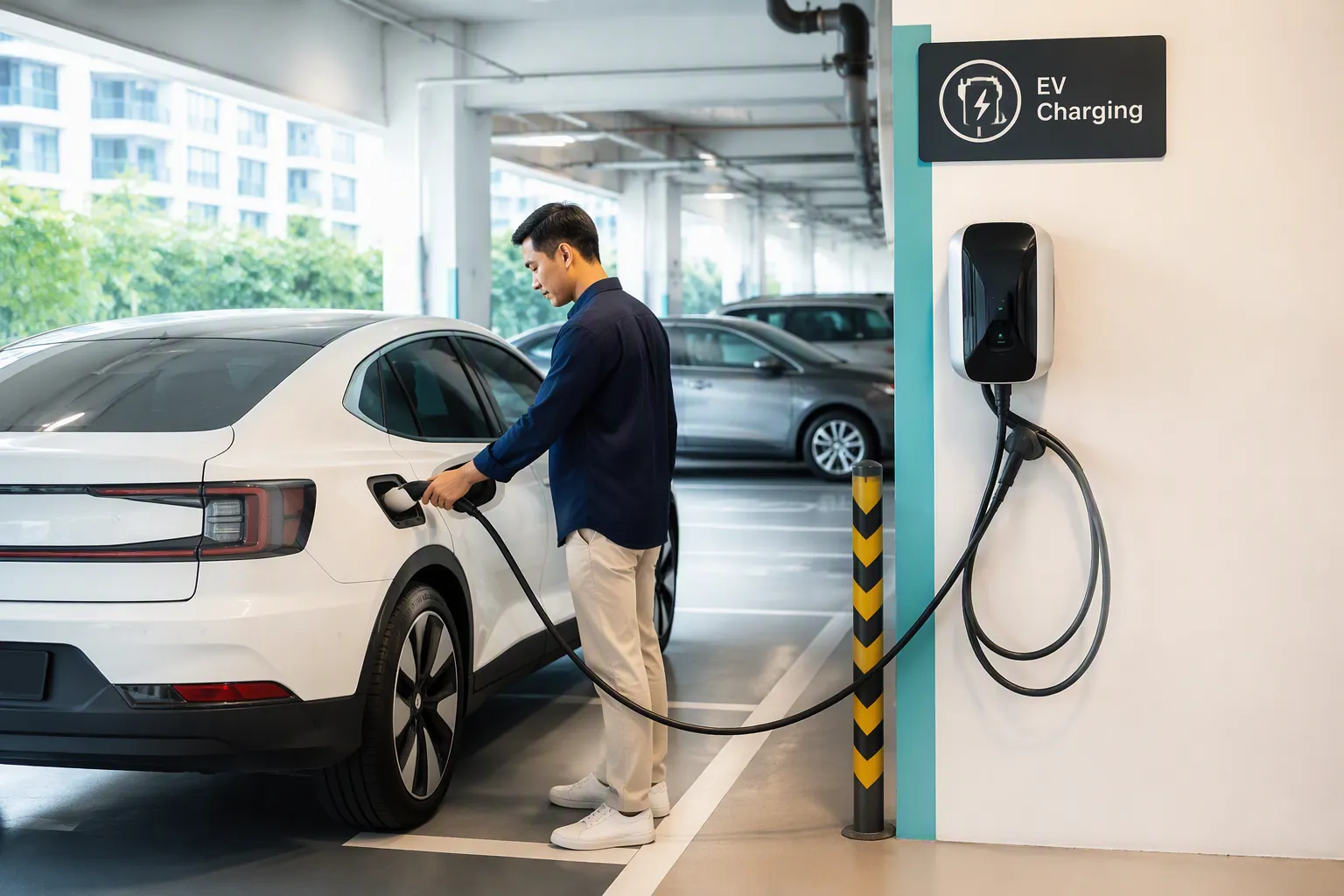
Bagi sebagian besar pemilik kendaraan listrik, pengisi daya khusus Level 2 Pengisi Daya Listrik merupakan investasi finansial yang cerdas. Meskipun ada biaya awal, hal ini dengan cepat diimbangi oleh peningkatan signifikan dalam hal kenyamanan, kecepatan pengisian, dan keamanan. Opsi ini Pengisi daya listrik jauh lebih unggul untuk penggunaan sehari-hari dibandingkan dengan stopkontak dinding standar.
Banyak penyedia terpercaya Produsen pengisi daya EV menawarkan berbagai macam Solusi pengisian daya kendaraan listrik, termasuk unit yang dipasang di dinding dan pengisi daya EV portabel. Beralih ke pengaturan pengisian daya rumah profesional dari merek terpercaya memastikan pengalaman yang lebih aman dan efisien untuk kendaraan listrik apa pun.
Investasi Awal: Memecah Biaya Pengisi Daya EV Level 2

Pertimbangan utama pemilik EV seringkali adalah investasi awal. Memahami komponen biaya ini adalah langkah pertama dalam menilai nilai jangka panjang pengisi daya. Total pengeluaran merupakan gabungan dari perangkat keras itu sendiri dan instalasi profesional, yang keduanya memiliki titik harga bervariasi berdasarkan fitur dan kompleksitas.
Biaya Perangkat Keras: Memilih Pengisi Daya Anda
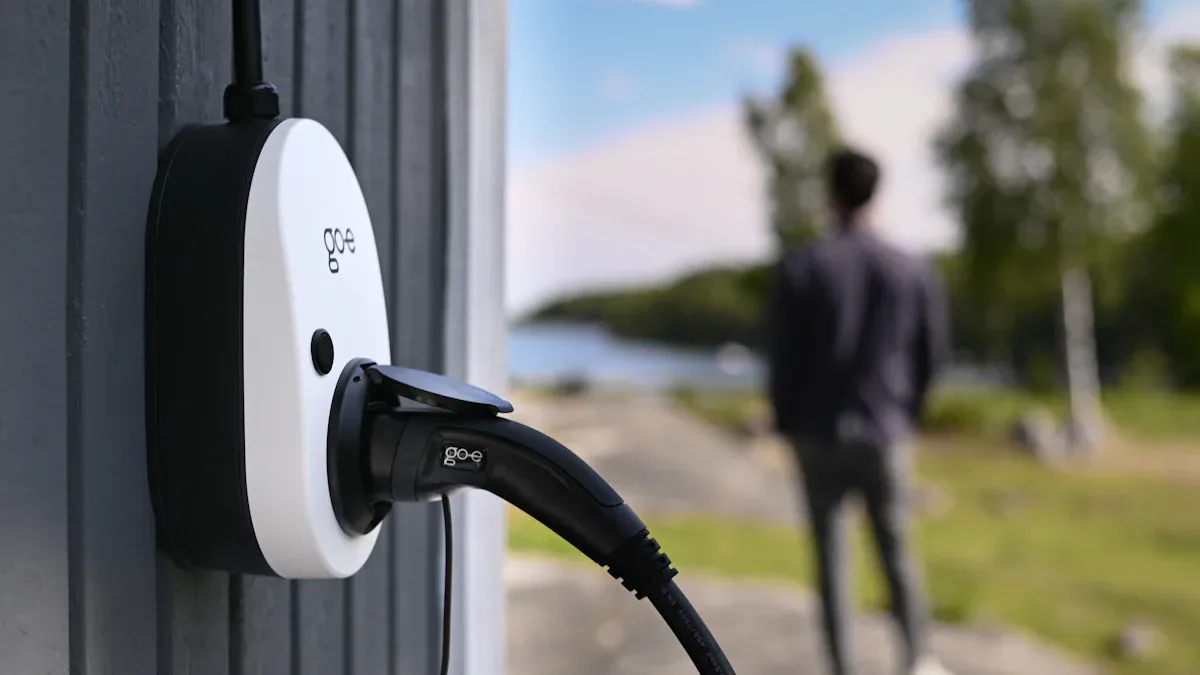
Pengisi daya, atau wallbox, adalah unit fisik yang dipasang di dinding. Pasar menawarkan beragam pilihan, dari unit dasar hingga sistem yang sangat canggih. Penyedia teknologi canggih seperti TPSON menawarkan beragam solusi pengisian kendaraan listrik untuk memenuhi kebutuhan pengguna yang beragam.
Pengisi Daya Tingkat Pemula (5.000 – 8.000 NOK)
Pengisi daya tingkat pemula menyediakan fungsi inti: pengisian daya yang aman dan efisien. Unit-unit ini sering disebut pengisi daya “biasa” karena tidak memiliki fitur konektivitas. Pemilik cukup mencolokkan EV mereka untuk memulai sesi pengisian dan mencabutnya untuk menghentikannya. Mereka merupakan peningkatan yang andal dan terjangkau dari stopkontak standar, tetapi tidak menawarkan kemampuan manajemen energi lanjutan.
Pengisi Daya Pintar (8.000 – 15.000 NOK)
Pengisi daya pintar mewakili kategori paling populer bagi pemilik rumah di Norwegia. Unit-unit ini terhubung ke Wi-Fi dan dilengkapi dengan aplikasi smartphone. Konektivitas ini membuka fitur-fitur canggih:
- Mulai/Hentikan Jarak Jauh: Mengontrol sesi pengisian dari mana saja.
- Pengisian Daya Terjadwal: Mengatur pengisi daya untuk beroperasi selama jam-jam di luar beban puncak ketika listrik termurah.
- Pemantauan Energi: Melacak konsumsi listrik untuk setiap sesi pengisian.
Banyak pengisi daya buatan Norwegia, seperti dari Easee, telah teruji di pasar domestik dan dikenal dengan teknologi canggihnya. Pengisi daya pintar 22 kW dari merek seperti ini dapat berharga sekitar 11.000 NOK, tepat berada dalam kisaran harga menengah ini.
Pengisi Daya Premium (15.000+ NOK)
Pengisi daya premium menawarkan fitur-fitur tercanggih bagi pengguna yang menginginkan yang terbaik. Model-model ini dapat mencakup:
- Konektivitas 4G terintegrasi untuk lokasi tanpa Wi-Fi stabil.
- Sistem pembayaran bawaan untuk penggunaan komersial atau bersama.
- Penyeimbangan beban lanjutan untuk mengelola daya di beberapa pengisi daya.
- Kesiapan Vehicle-to-Grid (V2G), fitur yang siap untuk masa depan.
Biaya Pemasangan Profesional di Norwegia
Pengaturan pengisi daya EV level 2 yang aman dan legal memerlukan pemasangan profesional oleh teknisi listrik bersertifikat. Biaya pemasangan merupakan bagian signifikan dari total investasi.
Apa yang Termasuk dalam Pemasangan Standar (7.000 – 12.000 NOK)
Paket pemasangan standar cocok untuk banyak rumah dan biasanya mencakup pekerjaan penting. Harganya umumnya mencakup:
- Kabel hingga 10-15 meter dari kotak sekering ke lokasi pengisi daya.
- Pemasangan pemutus sirkuit khusus di kotak sekering.
- Pengeboran melalui satu dinding standar (kayu atau plester).
- Semua tenaga kerja dan pengujian untuk memastikan sistem aman dan mematuhi peraturan.
- Dokumentasi pemasangan (
deklarasi kesesuaian).
Faktor-faktor yang Meningkatkan Biaya Instalasi
Harga pemasangan akhir dapat melebihi kisaran standar jika pekerjaannya lebih kompleks. Faktor umum meliputi:
- . Membutuhkan lebih dari 15 meter kabel.
- Pengeboran Kompleks: Membutuhkan pengeboran melalui beton atau dinding tebal.
- Pekerjaan Tanah: Penggalian parit diperlukan untuk memasang kabel di bawah tanah ke garasi terpisah atau tempat parkir.
- Peningkatan Kotak Sekering: Panel listrik utama rumah mungkin perlu ditingkatkan untuk mendukung beban baru.
- Kompleksitas Apartemen: Pemasangan di garasi bersama mungkin memerlukan pekerjaan tambahan untuk sistem penyeimbangan beban.
Mengapa Anda Harus Menggunakan Teknisi Listrik Bersertifikat
Keamanan dan Kepatuhan Tidak Dapat Ditawar Di Norwegia, merupakan persyaratan hukum bahwa titik pengisian EV khusus dipasang oleh profesional bersertifikat. Direktorat Perlindungan Sipil Norwegia (DSB) sangat menyarankan untuk tidak melakukan pengisian daya rutin dari soket Schuko standar karena risiko kebakaran. Pemasangan profesional memastikan pengisi daya terhubung dengan benar ke sirkuit khusus, memenuhi semua kode keselamatan, dan beroperasi tanpa membebani sistem kelistrikan rumah Anda secara berlebihan.
Menghitung Total Pengeluaran Awal Anda
Total investasi awal adalah jumlah dari biaya perangkat keras dan pemasangan. Berikut adalah dua skenario umum.
Contoh Biaya: Apartemen dengan Garasi Bersama
Bagi pemilik EV di gedung apartemen, pengisi daya pintar seringkali menjadi pilihan terbaik untuk mengelola daya bersama.
| Item | Perkiraan Biaya |
|---|---|
| Perangkat Keras Pengisi Daya Pintar | 9.500 NOK |
| Instalasi Standar | 8.000 NOK |
| Total Perkiraan Investasi | 17.500 NOK |
Contoh Biaya: Rumah Keluarga Tunggal
Pemilik rumah dengan garasi pribadi mungkin memiliki pemasangan yang sedikit lebih rumit tetapi dapat memilih dari semua jenis pengisi daya.
| Item | Perkiraan Biaya |
|---|---|
| Perangkat Keras Pengisi Daya Pintar | 11.000 NOK |
| Pemasangan Kompleks (misalnya, jalur kabel yang lebih panjang) | 13,000 NOK |
| Total Perkiraan Investasi | 24,000 NOK |
The Speed and Convenience Benefits of a Level 2 EV Charger

Beyond the financial calculations, the most immediate and tangible benefit of a home charger is the massive improvement in daily convenience. The upgrade transforms the EV ownership experience from one of planning and waiting to one of effortless readiness.
Drastically Reduced Charging Times
The primary advantage of a level 2 ev charger is its speed. It dramatically shortens the time an EV needs to be plugged in, making charging a seamless part of an owner’s routine rather than a time-consuming chore.
Level 1 (Schuko) vs. Level 2 Speed Comparison
A standard Schuko outlet provides very slow charging, often adding only a few kilometers of range per hour. A Pengisi daya level 2 is significantly more powerful.
| Jenis Pengisi Daya | Output Daya Khas | Perkiraan Rentang yang Ditambahkan Per Jam |
|---|---|---|
| Level 1 (Schuko) | 1.4 kW – 2.3 kW | 8 – 12 km |
| Pengisi Daya Level 2 | 7.4 kW – 22 kW | 40 – 120 km |
Real-World Impact: Daily Top-Ups
For an EV owner with a typical daily commute of 50 km, a Schuko outlet requires 4-6 hours of charging to replenish the battery. A Level 2 charger accomplishes the same task in under an hour. This speed ensures the electric vehicle is always ready for unplanned trips.
Real-World Impact: Full Overnight Charging
The difference becomes critical for full charging. A long-range EV with a large battery might need over 40 hours to charge from empty on a Schuko outlet. A Level 2 unit can fully charge the same EV overnight, guaranteeing a full battery every morning.
The Value of Everyday Convenience
This newfound speed translates directly into a more convenient and stress-free lifestyle. Owners no longer need to meticulously plan their charging sessions around public infrastructure.
Eliminating Range and Charging Anxiety
A home charger is the ultimate cure for range anxiety. Knowing that a full battery is just an overnight charging session away provides complete peace of mind. EV owners can use their vehicle’s full range without worrying about finding available EV charging stations.
The Simplicity of a “Plug-and-Go” Routine
Home charging creates a simple, effortless routine. The owner arrives home, plugs in the car, and wakes up to a fully charged EV. This process is as simple as charging a smartphone and removes the mental load of managing the vehicle’s energy needs.
Reducing Dependence on Public EV Charging Stations
Relying on public EV charging stations introduces uncertainty. These stations can be occupied, out of order, or more expensive. A home unit makes the public charging network a backup for long trips, not a daily necessity. This reduces time spent waiting at public EV charging stations and frees owners from the unpredictability of a third-party charging network. Many EV owners find they rarely use public EV charging stations for their daily driving needs.
A Critical Upgrade in Safety and Sustainability
An investment in a dedicated charger is not just about speed; it is a fundamental upgrade for safety and sustainability. It mitigates serious risks associated with improper charging methods and empowers EV owners to contribute to a greener energy ecosystem.
The Inherent Risks of Regular Schuko Charging
Using a standard household (Schuko) outlet for daily EV charging is a practice fraught with danger. These outlets are not designed for the task.
Bahaya Panas Berlebih dan Kebakaran
A Schuko outlet is not built to handle the high, continuous power draw required for charging an EV. This prolonged load can cause the socket and plug to overheat significantly, posing a substantial fire risk inside a garage or home.
Wear on Your Home’s Electrical System
The sustained stress of charging an EV accelerates the wear and tear on a home’s internal wiring and outlet components. Over time, this degradation can lead to connection failures and further increases the risk of an electrical incident.
Why the DSB Recommends Dedicated Chargers
Norwegian authorities take this risk seriously. The Directorate for Civil Protection (DSB) strongly advises against the regular use of a Schuko socket for EV charging. Their official guidance recommends a professionally installed, dedicated charging station as the only safe, long-term solution.
Built-in Safety Features of a Level 2 EV Charger
A purpose-built level 2 ev charger is engineered with multiple layers of protection that are absent in a standard wall socket.
Perlindungan Gangguan Tanah
Every certified charger includes built-in ground fault protection (ground fault circuit interrupter Type B). This system instantly cuts the electric current if it detects a leakage, protecting users from the danger of severe shock.
Overcurrent and Temperature Monitoring
Smart internal sensors constantly monitor the charging session. If the charger detects excessive current or a rise in its internal temperature, it will automatically reduce power or shut down completely to prevent damage and ensure safety.
Secure, Weatherproof Connections
The Type 2 connectors used for home charging are robust and create a secure, locked connection with the vehicle. They are designed to be weatherproof, ensuring safe and reliable operation even when exposed to Norwegian rain and snow.
Enhancing Your EV’s Sustainability Profile
A smart charger elevates an EV from a mere mode of transport to an active component in a sustainable energy future. This commitment to sustainability is a key benefit.
Optimizing Energy Use with Smart Charging
Teknologi pengisian daya pintar is a powerful tool for promoting sustainability. It allows owners to control when and how their EV charges.
- Delayed Sessions: Users can schedule charging to begin during off-peak hours, typically at night when electricity demand is lowest.
- Penyeimbangan Beban: The system can intelligently distribute available power, which is especially useful in buildings with multiple chargers, ensuring efficient energy use without overloading the circuit. This optimization is a core part of promoting sustainability and enhancing overall sustainability.
Aligning with Norway’s Green Energy Goals
Using smart charging directly supports Norway’s national sustainability goals. By shifting energy demand away from peak times, EV owners help stabilize the national grid. This stability makes it easier to integrate power from renewable energy sources like hydro and wind. This action makes each EV a participant in promoting sustainability. This alignment with renewable energy sources is crucial for long-term sustainability. The effective use of renewable energy sources is a cornerstone of the country’s energy policy, and smart charging enhances this sustainability effort. This focus on sustainability benefits everyone.
The Financial Payback: How a Level 2 Charger Saves You Money
A level 2 ev charger is more than a convenience; it is a financial tool that delivers a strong return on investment (ROI). The investasi awal unlocks significant long-term savings, enhancing the overall profitability of owning an electric vehicle in Norway. An owner can actively reduce electricity costs and avoid new grid fees, making the charger a key part of their financial strategy. The profitability of this technology becomes clear when analyzing its interaction with the Norwegian electricity market.
Leveraging Norway’s Electricity Market with a Smart Charger
Smart charging technology empowers EV owners to take control of their energy expenses. This capability is central to the charger’s ROI and long-term profitability. By automating the charging process, the technology ensures the vehicle charges at the most economical times, directly improving the return on investment.
Understanding Spot Price (Spotpris) Fluctuations
The price of electricity in Norway, known as the spot price (spot price), changes hour by hour. Historically, prices were stable due to abundant hydropower. However, recent factors like new international power cables and volatile gas prices have created significant price swings, especially in southern Norway. This means the cost to charge an EV can be much higher during peak demand hours (like late afternoons) compared to off-peak hours (late at night). Understanding these fluctuations is the first step toward achieving a better ROI.
Automating Off-Peak Charging to Reduce Cost
A pengisi daya pintar directly addresses this price volatility. Using a smartphone app, an owner can instruct the charger to only draw power when the electricity price drops below a certain threshold.
An EV owner can simply plug in their car when they get home and set the app to “smart charge.” The system then waits for the cheapest overnight hours to begin the charging session automatically. This simple action maximizes savings and boosts the investment’s profitability.
This automation turns a complex market into a simple source of savings, forming a core part of the charger’s ROI.
Calculating Annual Savings with Time-of-Use Rates
The financial impact of smart charging is substantial. The difference between peak and off-peak electricity rates directly influences the profitability of the charger. Consider a typical EV owner who drives 15,000 km per year.
| Charging Scenario | Avg. Electricity Price (per kWh) | Annual Charging Cost | Tabungan Tahunan |
|---|---|---|---|
| Peak-Hour Charging | 2.00 NOK | 6,000 NOK | 0 NOK |
| Smart Off-Peak Charging | 0.80 NOK | 2,400 NOK | 3,600 NOK |
Note: Assumes an EV consumption of 20 kWh/100 km. Prices are illustrative.
This table demonstrates how smart charging delivers a clear return on investment. The annual savings contribute directly to the charger’s excellent ROI and long-term profitability.
Managing the New Capacity-Based Grid Tariff (Nettleie)
A smart charger also helps owners manage the new grid tariff (grid tariff) model in Norway. This new pricing structure is designed to discourage high, simultaneous electricity consumption. This is another area where the technology shows its profitability.
How the “Power Peak” Tariff Works
The new tariff penalizes households for high “power peaks.” It measures the hour of the day when a household consumes the most electricity. The higher this peak consumption is, the higher the fixed monthly fee from the grid company. Running many high-power appliances at once—like an oven, a water heater, and an EV charger—can create a costly peak. This makes managing electricity usage crucial for a good ROI.
Using a Level 2 EV Charger to Avoid High-Cost Penalties
A “dumb” charger that starts at full power the moment an EV is plugged in can easily create a new power peak, increasing monthly bills. A smart charger avoids this penalty. It can be programmed to charge slowly during peak hours or wait until overall household consumption is low. This intelligent management is essential for the charger’s profitability and a fast return on investment.
The Role of Load Balancing Technology
Load balancing is an advanced feature that perfects this process. This technology actively monitors the home’s total electricity usage in real-time.
- If it detects that the home is approaching a power peak, it automatically reduces the charging speed of the EV.
- When other appliances turn off, it safely increases the charging speed again.
This dynamic management ensures the EV gets the charge it needs without triggering high tariff fees, maximizing the charger’s ROI and overall profitability.
Boosting Your Property’s Value
Finally, the financial benefits extend to the value of the property itself. In a market as advanced as Norway, a home charger is a significant asset that improves the property’s ROI.
An EV Charger as a Key Selling Point
A professionally installed charger is a modern amenity that makes a property more attractive to potential buyers. It signals that the home is modern, future-proof, and ready for the realities of electric vehicle ownership. For many buyers, this is a highly desirable feature that adds tangible value and contributes to the home’s final sale price, enhancing the owner’s return on investment.
Attracting Buyers in an EV-Dominant Market
In Norway, the world’s leading EV market, a dedicated charger is quickly becoming a standard expectation rather than a luxury. A home without one may be at a disadvantage. Offering a turnkey charging solution can make a property stand out, attract more serious buyers, and potentially lead to a faster sale. This market advantage is a key component of the charger’s excellent ROI and long-term profitability.
Norway-Specific Factors: Cold Climate and Grid Readiness
An EV owner in Norway must consider factors unique to the country’s climate and energy landscape. A Pengisi daya level 2 is not just a convenience; it is a critical tool for managing winter performance and preparing for the future of the electric grid.
The Impact of Cold Weather on Your EV
Cold temperatures significantly affect an EV battery’s performance. The chemical reactions inside lithium-ion batteries slow down, which reduces both driving range and charging speed. Studies show an EV can lose 10% to 30% of its range in near-freezing conditions.
Why Battery Preconditioning is Crucial in Winter
Battery preconditioning is the most effective strategy to combat cold-weather range loss. This feature allows the EV to use power from the charger to warm its battery and cabin sebelum the owner starts driving. This process ensures the battery operates at an optimal temperature from the moment the trip begins, preserving its charge for the road.
Superior Performance of Level 2 Chargers in the Cold
A standard outlet lacks the power needed for effective preconditioning. A Level 2 charger, however, provides ample power to warm the battery and cabin efficiently without draining the EV’s own energy reserves. This makes a huge difference, as charging a cold battery takes much longer. A session that might take 1.5 hours in summer could extend to two or more hours in winter. The impact of cold varies by model.
| Model EV | Range Loss Percentage |
|---|---|
| HiPhi Z | 5.9% |
| Polestar 2 | 30% or more |
| Volvo C40 Recharge | 30% or more |
| Toyota bZ4X | 30% or more |
| Volkswagen ID.7 | 30% or more |
| Tesla Model 3 | 29.9% |
| Kia EV9 | 12.5% |
A powerful home charging setup is essential to overcome these winter challenges.
Maintaining Long-Term Battery Health
Consistently charging a very cold battery can stress its components over time. Using a Level 2 charger for preconditioning helps maintain the battery within its ideal temperature range. This good charging habit contributes to the long-term health and longevity of the vehicle’s most expensive component.
The Norwegian Grid and the Future of EV Charging
Norway’s robust grid and forward-thinking policies make home charging an integral part of the national energy infrastructure.
Norway’s Grid Capacity and Stability
The Norwegian grid is one of the most stable and green in the world, built around abundant hydropower. This reliable infrastructure provides a solid foundation for the widespread adoption of electric vehicles and home charging solutions.
Future-Proofing for Vehicle-to-Grid (V2G)
A smart charger is an investment in the future. Norway is a European leader in readiness for Vehicle-to-Grid (V2G) technology. V2G will one day allow an EV to send power back to the grid during peak demand. Owning a modern, connected charger positions an owner to participate in this future energy market.
The Role of Home Charging in Grid Management
Smart home charging plays a vital role in managing the grid today. By scheduling charging sessions for off-peak hours, EV owners help balance the load on the national infrastructure. This distributed approach to energy consumption is a key part of the country’s charging infrastructure strategy, ensuring stability as the number of electric vehicles grows.
Analyzing the Alternatives to a Dedicated Level 2 EV Charger
While a dedicated home charger is the recommended solution, many new EV owners consider two main alternatives: relying exclusively on public EV charging stations or using a standard Schuko wall outlet. A closer analysis reveals the significant drawbacks of both approaches.
The True Cost of Relying on Public EV Charging Stations
The public charging network is essential for long-distance travel, but it is an expensive and inconvenient option for daily charging needs. The reliance on public EV charging stations introduces several challenges.
Price Per kWh: Home vs. Public Charging
The most significant drawback is the financial cost. Public fast-charging rates in Norway are substantially higher than residential electricity prices. An EV owner can expect to pay several times more per kWh at public EV charging stations compared to charging at home. This price difference quickly accumulates, eroding the fuel savings that make an electric vehicle attractive.
The Hidden Cost of Time and Inconvenience
Time is a valuable, non-refundable asset. Relying on public EV charging stations requires an owner to actively seek out a location, wait for an available charger, and then spend 30 minutes to an hour while the vehicle is charging. This process adds a significant time commitment to an owner’s schedule. These frequent trips to EV charging stations turn a simple task into a recurring chore.
Issues with Availability and Reliability
The public charging network is not always dependable. An EV driver may arrive at a location to find all EV charging stations occupied or out of service. This unpredictability can cause significant stress, especially when the battery is low. A charging station may be offline for maintenance, or another driver may occupy the spot for longer than expected. This makes depending on public EV charging stations a risky strategy for daily commuting.
Why Level 1 (Schuko) Charging Is Not a Long-Term Solution
Using the pengisi daya portabel that comes with an EV and plugging it into a standard Schuko outlet is a temporary fix, not a permanent solution. It is inefficient, impractical, and poses serious safety risks.
Inefficiency and Extended Charging Cycles
A Schuko outlet delivers power very slowly. A full charging session for a modern EV can take 24 to 40 hours or more. This extremely slow rate makes it nearly impossible to replenish a battery overnight after a typical day of driving. The charging process becomes a constant race against time.
Unsuitability for Daily Driving Needs
The slow charging speed makes a Schuko outlet unsuitable for the daily needs of most EV drivers. An owner who commutes 50-100 km per day will find that the outlet cannot add enough range overnight. This leaves the driver with a partially charged battery each morning, limiting their flexibility and reintroducing range anxiety.
Safety Concerns from Norwegian Authorities
Norwegian safety authorities explicitly warn against the regular use of Schuko outlets for EV charging. The Norwegian Directorate for Civil Protection (DSB) has identified significant risks associated with this practice.
The primary concerns include:
- Fire Hazard: Standard outlets are not designed to handle the high, continuous electrical load required for EV charging, which can lead to overheating and fire.
- System Wear: The prolonged stress accelerates wear on a home’s wiring and the outlet itself.
- Official Recommendation: The DSB recommends a professionally installed, dedicated charging station as the only safe, long-term home charging method.
The evidence confirms the upfront cost of a Level 2 charger is a strategic investment, not a mere expense. The combination of faster charging, superior safety, and long-term savings makes it an essential part of EV ownership in Norway. A dedicated charger provides a more cost-effective and convenient charging experience for any electric vehicle. This EV charging solution is superior to the alternatives.
Final Verdict: For the majority of EV owners, a Level 2 EV charger is an investment that is unequivocally worth it.
PERTANYAAN YANG SERING DIAJUKAN
Dapatkah pemilik memasang sendiri pengisi daya EV?
No. Norwegian law requires a certified electrician to install any dedicated EV charging station. This ensures the installation is safe, compliant with all regulations, and does not pose a fire risk. Self-installation is illegal and dangerous.
Do EV chargers work with all electric car brands?
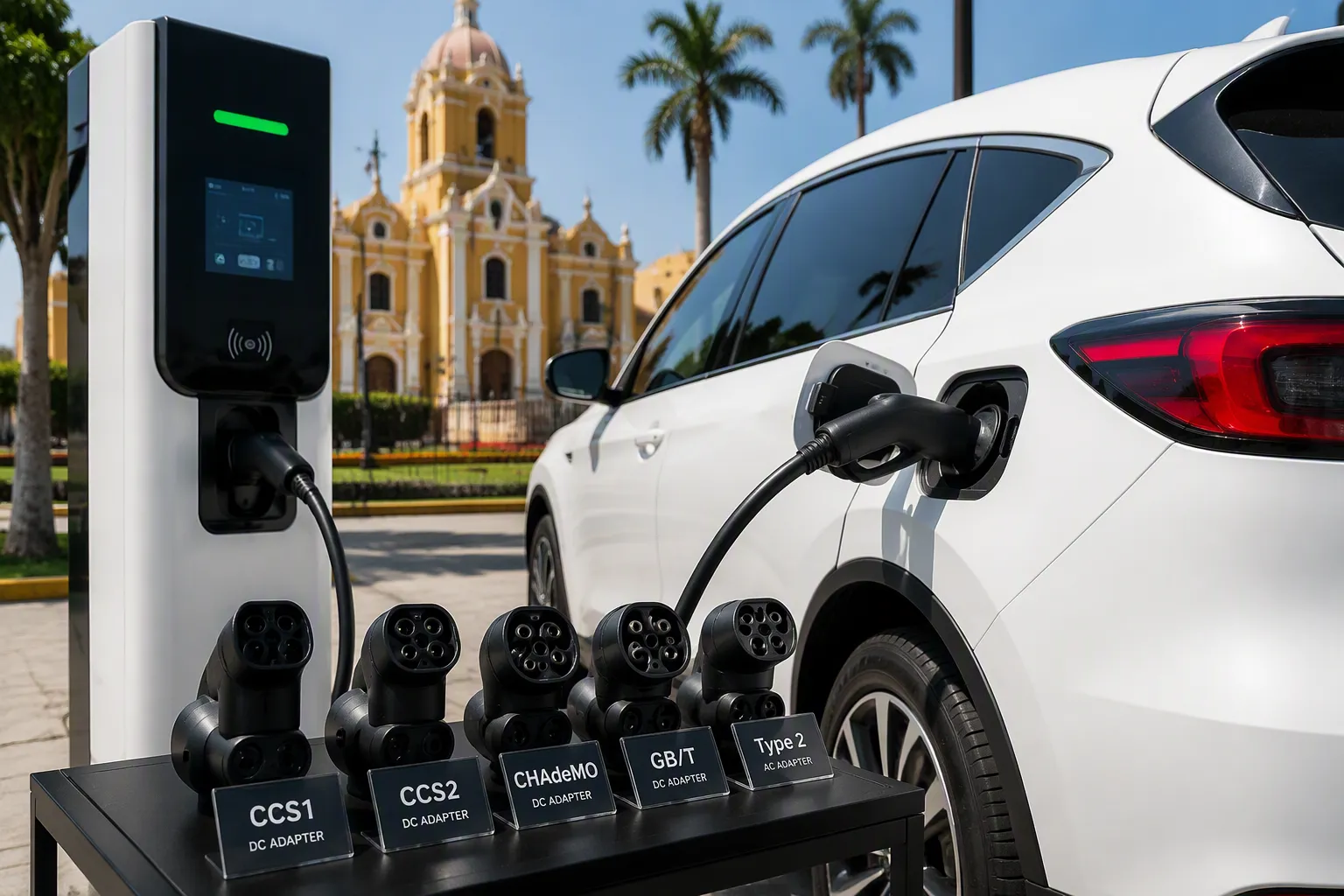
Yes. Nearly all electric vehicles sold in Norway and Europe use the standard Type 2 connector. A Level 2 charger with a Type 2 plug or cable is compatible with brands like Tesla, Volkswagen, Polestar, and more.
Apakah pengisi daya pintar diperlukan?
A smart charger is not mandatory, but it is highly recommended. Its technology allows an owner to charge during off-peak hours. This capability significantly reduces electricity costs and helps manage the new capacity-based grid tariff, maximizing savings.
What is the difference between a 7.4 kW and a 22 kW charger?
The kilowatt (kW) rating indicates charging speed. A 22 kW charger can deliver power about three times faster than a 7.4 kW unit. However, the car’s onboard charger and the home’s electrical capacity ultimately determine the maximum charging speed.
Are there government subsidies for home EV chargers?
Currently, there are no national subsidies available for private individuals installing a home charger. Some municipalities or housing cooperatives (housing cooperatives) may offer local support programs. An owner should check with their local authorities for any available incentives.
How does charging work in an apartment building?
Installing a charger in a shared garage often requires approval from the housing board (the board). The building may need a load-balancing system to distribute power efficiently among multiple chargers. This ensures the building’s electrical system is not overloaded.