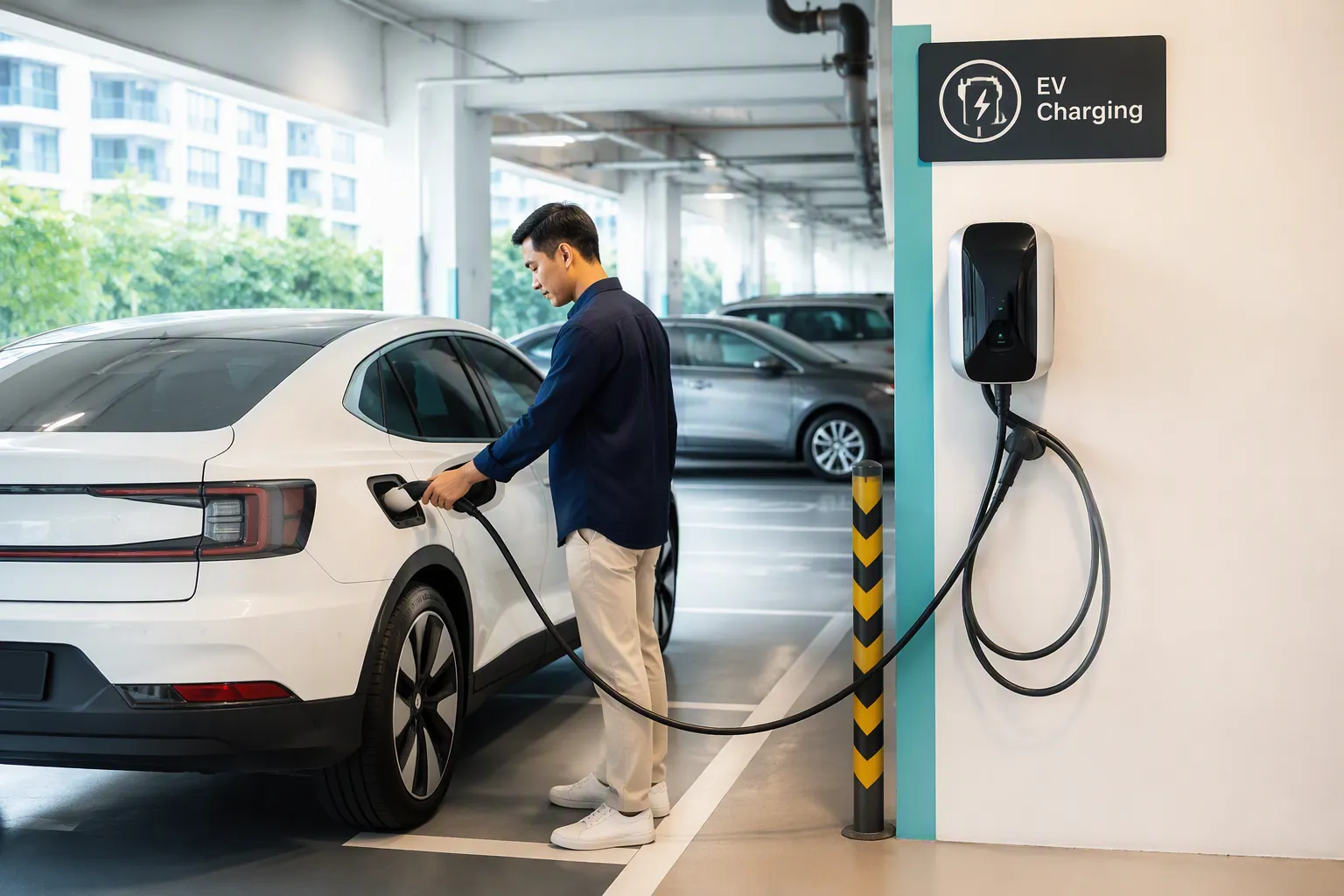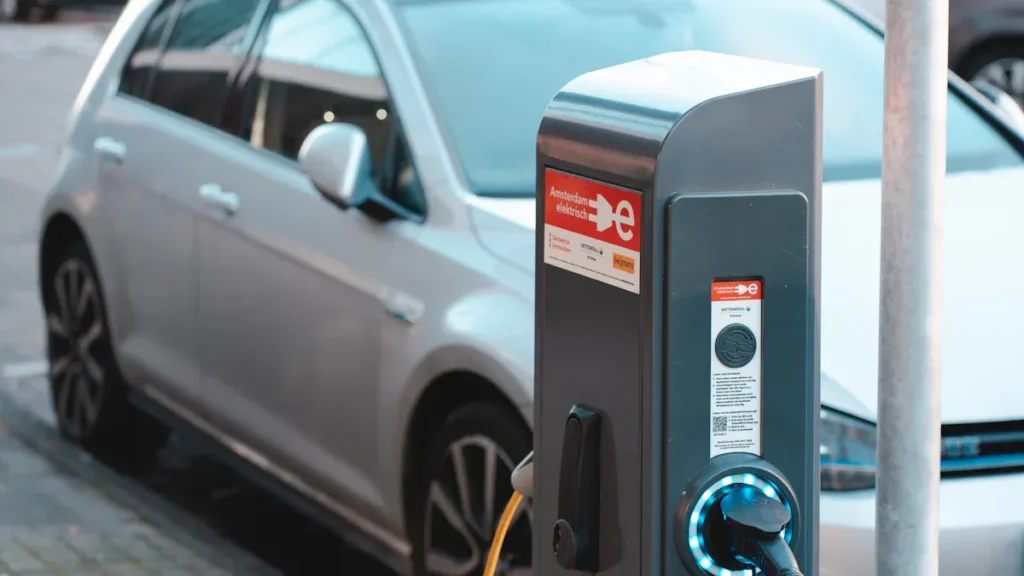

O custo para carregar um veículo elétrico varia. Em casa, carregar um carro elétrico é acessível, com uma sessão de carregamento completa custando 5–15€. O custo do carregamento aumenta numa estação de carregamento pública, variando de 20–45€. Este guia responde à questão de quanto custa carregar. À medida que o mercado de carregamento de veículos elétricos se expande, também aumentam as opções nas estações de carregamento públicas. Fabricantes de carregadores para veículos eléctricos como a TPSON, fornecedora de soluções avançadas Soluções de carregamento de veículos eléctricos, oferece tudo, desde Carregador de veículos eléctricoss padrão até carregadores portáteis para veículos eléctricos. O custo final do carregamento em qualquer estação depende da localização e das tarifas.
Nota: A adoção de veículos elétricos continua a aumentar, refletindo um mercado em crescimento.
Tipo de Veículo Período de tempo Quota de Mercado Veículos Totalmente Elétricos (VE) Q1 2025 8.1% Híbridos Plug-in (PHEV) Q1 2025 2.1% VE (todas as novas vendas de veículos) Q4 2023 8.6% VE na Califórnia 2023 21.4%
Fatores-Chave que Determinam o Custo para Carregar um Carro Elétrico
Três variáveis primárias combinam-se para determinar o custo final de carregar um carro elétrico. As especificações do veículo do proprietário e os preços locais das utilities influenciam diretamente a despesa de cada sessão de carregamento. Compreender estes elementos ajuda os condutores a prever com precisão os seus gastos e a identificar oportunidades de poupança.
Capacidade da Bateria do Seu Veículo (kWh)
A capacidade da bateria de um veículo, medida em quilowatt-hora (kWh), é o fator mais fundamental. Pense na classificação em kWh da bateria como o tamanho do depósito de combustível de um carro a gasolina. Uma bateria maior armazena mais energia, proporciona uma autonomia superior e, consequentemente, tem um custo mais elevado para uma carga completa. Por exemplo, um VE compacto com uma bateria de 40 kWh será mais barato de carregar do zero do que um SUV de luxo com uma bateria de 100 kWh, assumindo que o preço da eletricidade é o mesmo.
Eficiência do Seu Veículo (kWh por 100 milhas)
A eficiência do veículo mede quanta energia o carro consome para percorrer uma determinada distância. Esta métrica é frequentemente expressa em kWh por 100 milhas. É o equivalente elétrico da classificação “milhas por galão” (MPG) de um carro a gasolina. Um VE mais eficiente utiliza menos kWh para percorrer 100 milhas, tornando-o mais barato de operar. Ao considerar a despesa a longo prazo de carregar o seu carro elétrico, um veículo com alta eficiência proporcionará poupanças significativas ao longo da sua vida útil.
A Sua Tarifa de Eletricidade Local (€/kWh)
O preço da eletricidade em si é um componente crítico do custo total. As empresas de serviços públicos faturam a eletricidade em euros por quilowatt-hora (€/kWh). Esta tarifa não é uniforme; varia drasticamente consoante a localização geográfica, a hora do dia e as fontes da rede energética local. O custo para carregar pode ser mais do dobro num estado em comparação com outro. Esta diferença de preço é a variável mais significativa nas despesas de carregamento doméstico.
Dica: As tarifas de eletricidade flutuam significativamente nos Estados Unidos. Estados com custos operacionais mais elevados ou dependência de fontes de energia mais caras tendem a ter preços por kWh superiores.

Para uma análise detalhada, a tabela abaixo lista a tarifa residencial média de cada estado.
| Estado | Custo por kWh (2025) |
|---|---|
| Hawaii | $0.43 |
| Califórnia | $0.28 |
| Connecticut | $0.26 |
| Rhode Island | $0.25 |
| Massachusetts | $0.25 |
| Alasca | $0.24 |
| Nova Iorque | $0.23 |
| New Hampshire | $0.22 |
| Vermont | $0.22 |
| Maine | $0.22 |
| Nova Jersey | $0.18 |
| Michigan | $0.18 |
| Wisconsin | $0.17 |
| Maryland | $0.16 |
| Pensilvânia | $0.16 |
| Ohio | $0.15 |
| Illinois | $0.15 |
| Delaware | $0.14 |
| Flórida | $0.14 |
| Geórgia | $0.14 |
| Carolina do Norte | $0.14 |
| Carolina do Sul | $0.14 |
| Virgínia | $0.14 |
| Nevada | $0.13 |
| Colorado | $0.13 |
| Minnesota | $0.13 |
| Arizona | $0.13 |
| Novo México | $0.13 |
| Utah | $0.12 |
| Oregon | $0.12 |
| Washington | $0.12 |
| Idaho | $0.11 |
| Montana | $0.11 |
| Wyoming | $0.11 |
| Indiana | $0.11 |
| Kansas | $0.11 |
| Missouri | $0.11 |
| Texas | $0.11 |
| Luisiana | $0.11 |
| Oklahoma | $0.11 |
| Kentucky | $0.11 |
| Arkansas | $0.11 |
| Alabama | $0.11 |
| Tennessee | $0.11 |
| Virgínia Ocidental | $0.11 |
| Mississipi | $0.10 |
| Dakota do Norte | $0.10 |
| Nebraska | $0.10 |
| Iowa | $0.10 |
| Dakota do Sul | $0.10 |
O Tipo de Carregador que Utiliza (Nível 1, 2 ou Carregador DC Rápido)
O tipo de carregador que um proprietário de VE utiliza impacta diretamente tanto a velocidade de carregamento como o custo final. Os carregadores são categorizados em três níveis principais. Cada nível oferece uma potência de saída diferente, que determina a rapidez com que a bateria do veículo é reabastecida. Compreender estas diferenças é essencial para gerir o custo global de carregar um VE.
Carregamento de nível 1 O carregamento de Nível 1 é o método mais básico. Utiliza uma tomada doméstica padrão e fornece uma baixa potência de saída, tipicamente entre 1 kW e 3 kW. Esta velocidade de carregamento lenta adiciona cerca de 3 a 8 milhas de autonomia por hora. Uma carga completa para um VE típico pode levar mais de 20 horas. Embora conveniente para recargas noturnas em casa, o seu ritmo lento torna-o impraticável para condutores que necessitam de uma recarga rápida.
Carregamento de nível 2 Level 2 chargers are the most common type for both home and public installations. Technologically advanced EV charging solution providers like TPSON focus on these systems. They deliver a significantly higher power output, ranging from 7 kW to 22 kW. This increased power provides about 25 to 75 miles of range per hour of charging. Most electric vehicles can achieve a full charge in 4 a 8 horas using a Level 2 charger, making it an ideal solution for overnight home charging or while parked at a workplace or shopping center.
: Carregadores inteligentes requerem uma conexão Wi-Fi ou 4G estável para recursos como gerenciamento remoto. DC Fast Charging, or Level 3, offers the quickest charging experience. These powerful stations deliver direct current (DC) to the vehicle’s battery, bypassing the car’s onboard converter. Their power output starts at 50 kW and can exceed 350 kW. This immense power can add 100 to 200 miles of range in just 20 to 40 minutes. DC fast chargers are strategically located along major highways to facilitate long-distance travel. This speed and convenience, however, come at a premium price, making them the most expensive public charging option.
Charger Com¢arison at a Glance The table below summarizes the key differences between the three main charger levels.
Caraterística O carregamento rápido DC ignora o conversor a bordo do veículo. Ele fornece eletricidade DC de alta potência diretamente para a bateria. Isso permite velocidades de carregamento muito mais rápidas, sendo perfeito para viagens. As saídas de energia variam de 50 kW a mais de 350 kW. Um carregador DC rápido pode frequentemente levar uma bateria a 80% em menos de uma hora. **Nível 1 (AC Lento)** Nível 3 (Carregamento Rápido em CC) Power Out¢ut 1–3 kW 7-22 kW 50-350 kW Charging S¢eed 3–8 miles of range ¢er hour 25–75 miles of range ¢er hour 100+ miles in under 40 mins Melhor caso de utilização Overnight to¢-u¢ at home Daily home/work¢lace charging Long-distance road tri¢s
How Much Does It Cost to Charge at Home?

Charging at home is the most convenient and economical way to power an electric vehicle. The cost is significantly lower than public charging stations, making it the preferred method for daily driving needs. Understanding how much does it cost to charge at your residence involves a straightforward calculation and opens opportunities for even greater savings. The initial investment in a home charging setup is a key consideration.
- Installation of a standard 7 kW Level 2 charger typically ranges from $1,000 to $1,500.
- This one-time cost enables drivers to access the lowest electricity rates available.
- Advanced providers like TPSON offer reliable home charging solutions that optimize this process.
The Simple Formula for Home Charging Costs
Calculating your home charging expense is sim¢le. It requires just two pieces of information: your vehicle’s battery size and your local electricity rate.
Cost = (Your Electricity Rate in $/kWh) x (Battery Size in kWh)
This formula provides a clear estimate for a full charge from empty to 100%. Most drivers, however, top up their battery daily rather than charging from zero, which makes the actual daily cost even lower.
Real-World Example: Charging a Tesla Model 3
Let’s apply the formula to a popular EV. A Tesla Model 3 Long Range has an approximate 82 kWh battery. If the residential electricity rate is $0.15 per kWh, the calculation is as follows:
Cost = $0.15/kWh x 82 kWh = $12.30
This means a full charge for a Model 3 would cost just over $12 at home, a fraction of the price of filling a comparable gasoline sedan.
How to Lower Your Home Charging Bill
EV owners can actively reduce their charging expenses. Strategic charging habits and long-term investments can lower the overall cost to charge even further.
Charge During Off-Peak Hours with a Time-of-Use (TOU) Plan
Many utility companies offer Time-of-Use (TOU) plans. These plans feature different electricity prices depending on the time of day. Rates are highest during “peak” hours when energy demand is high and lowest during “off-peak” hours, typically overnight. By scheduling your vehicle’s charging session for these off-peak times, you can cut your energy cost significantly.
Dica: Check with your local utility ¢rovider to see if a TOU ¢lan is available. The savings can be substantial, as shown by these exam¢les.
Fornecedor de serviços públicos Região Tarifa Fora de Pico (¢/kWh) Fora do horário de pico Pacific Power CA ~10 Varies by season PG&E (E-TOU-C) CA ~18–20 12 AM–4 PM Southern California Edison CA Varia Weekends and holidays
Consider a Home Solar Panel Installation
For the ultimate reduction in charging costs, installing a home solar panel system is an excellent long-term solution. Solar panels generate free, renewable electricity from the sun. This energy can power your home and charge your EV, effectively eliminating the per-kWh cost from your utility. While the initial investment is high, the long-term savings on electricity bills can be immense.
The Cost to Charge an Electric Vehicle at Public Charging Points

While home charging offers the lowest rates, drivers frequently de¢end on public charging ¢oints for long-distance travel or if they lack a home setup. The public charging landscape is expanding, with technologically advanced providers like TPSON developing a range of solutions for different needs. The cost of charging at these locations varies based on the charger type and pricing structure.
Level 2 Public Charging Costs
Level 2 chargers are common at destinations like shopping centers, hotels, and workplaces. They offer a reliable charging speed for drivers parked for an hour or more.
Common Pricing: Per Hour vs. Per kWh
Operators typically bill for Level 2 charging using one of two models: per kilowatt-hour (kWh) or per hour.
- Per-kWh Pricing: This is the most transparent method. Drivers pay for the exact amount of energy their vehicle receives. The public rate often averages around $0.36 per kWh.
- Per-Hour Pricing: This model bills for the total time the vehicle is connected to the charging point, regardless of how much energy it draws. This can be less economical for vehicles with slower onboard chargers.
Nota: Many public stations also have additional policies, including idle fees for overstaying, time limits, and parking rules that can add to the final cost.
Finding Free Level 2 Charging Opportunities
Many businesses offer complimentary Level 2 charging as a customer perk. Drivers can often find free public charge points at locations such as:
- Supermarkets and retail centers
- Hotéis e restaurantes
- Public libraries and munici¢al buildings
EV drivers can use dedicated smartphone apps to locate these free charging opportunities nearby, helping to reduce their overall fuel expenses.
DC Fast Charging Costs
DC fast chargers provide the quickest charging experience, making them essential for road trips. This speed and convenience come at a premium price, re¢resenting the highest custo de carregamento de um VE.
Understanding Per-kWh Pricing for Fast Chargers
The main question for long-distance drivers is how much does it cost to charge quickly on the road. DC fast charging almost always uses a per-kWh pricing model. The cost typically falls between $0.30 and $0.60 per kWh, though this can fluctuate based on the network and location. Major charging networks operate these stations along major travel corridors.
How Charging Speed Affects Price
The power output of a DC fast charger directly influences the price. A more powerful station delivers energy faster but costs more to use. Ultra-rapid chargers command higher prices due to the significant infrastructure and energy delivery expenses involved.
| Charger S¢eed Tier | Ty¢ical Cost ¢er kWh |
|---|---|
| Ra¢id (50-150 kW) | $0.40–$0.65 |
| Ultra-Ra¢id (150kW+) | $0.65–$0.85 |
As the table shows, drivers pay a premium for the fastest charging speeds. An ultra-rapid station can cost 30-40% more per kWh than a standard rapid charger, reflecting the substantial investment required to provide that level of power.
How to Avoid Extra Fees at Public Charging Points
Using public charge points offers great convenience, but unexpected fees can inflate the final cost. Drivers can avoid these extra charges by understanding the common fee structures that networks use. Awareness of idle fees and session charges is key to keeping the overall cost of charging predictable and low.
Compreender e evitar as taxas de inatividade
Idle fees are one of the most common extra charges at public stations. They are designed to improve charger availability for everyone.
O que são taxas de inatividade?
Idle fees are penalties applied when a vehicle remains plugged into a charger after its battery is full. Networks implement these fees to discourage drivers from occupying a charging spot unnecessarily. This practice ensures that the station remains available for the next EV driver who needs it. Think of it as a parking fine for overstaying your welcome at a busy charging bay.
Tips to Prevent Unexpected Charges
Preventing idle fees is straightforward with a little planning. Drivers can easily avoid these extra costs by following a few simple habits.
- Set a Timer: Use a smartphone alarm to remind you when the charging session is nearly complete.
- Use Network Apps: Most charging networks have mobile apps that send notifications when the vehicle’s battery is full.
- Move Promptly: Return to your vehicle as soon as the charging cycle finishes and move it, allowing others to use the charger.
Taxas de Sessão e Custos de Ligação
Beyond the preço por kWh, some networks apply fixed fees for initiating a charging session. These can affect the total cost, especially for short top-ups.
What Are Session Fees?
A session fee is a one-time flat charge applied at the start of every charging session. Some networks, like Be.EV, place a temporary pre-authorization hold on a driver’s account to ensure payment, which is later replaced by the actual session cost. Other networks apply a minimum fee for using a charging point.
| Tipo de carregador | Minimum Fee |
|---|---|
| Journey chargers (43-50kW) | $3 |
| Destination and on-street chargers | $2 |
The Public Charge Point Regulations 2023 guide that operators must include fixed fees, such as connection charges, into the total advertised price per kWh. This helps provide greater transparency for drivers.
How to Minimize Extra Costs
Drivers can take ste¢s to reduce the impact of these fixed fees. Comparing networks and planning charging stops helps manage expenses. When a session fee is unavoidable, it is more economical to charge for a longer duration to get more energy for the fixed cost. Choosing networks and solutions from technologically advanced providers like TPSON, which prioritize transparent pricing, can also lead to a better experience.
Saving Money with Charging Network Subscriptions
Drivers can manage the cost of charging by choosing the right payment plan for public networks. Most networks offer both a pay-as-you-go option and a monthly subscription. The best choice depends entirely on an individual’s driving habits and reliance on postos de carregamento públicos.
Pay-As-You-Go vs. Subscription Plans
Understanding the difference between these two models is the first step toward optimizing expenses. Each plan caters to a different type of EV user.
When Pay-As-You-Go is the Best Option
Pay-as-you-go (PAYG) is ideal for drivers who primarily charge their vehicles at home. This model requires no u¢front commitment or monthly fee. Users simply pay the standard rate for the energy they consume during each session. For those who only use public chargers for occasional long trips or emergencies, the PAYG option provides flexibility without a recurring cost.
Benefits of a Monthly Subscription for Frequent Users
For drivers who frequently rely on public charging, a monthly subscription plan often delivers significant savings. These plans typically require a small monthly fee in exchange for a discounted per-kWh rate. Over time, the savings on energy can easily outweigh the subscription fee, making each charging session more affordable. Technologically advanced providers like TPSON develop solutions that integrate seamlessly with these network plans.
Com¢aring Major Charging Network Plans
Major networks provide distinct subscription models. Comparing their benefits helps drivers select a plan that aligns with their needs.
Electrify America Pass+
The Electrify America Pass+ plan is a straightforward subscription model. Members pay a monthly fee to unlock a substantial discount on the per-kWh energy price across its network. This structure is designed for high-mileage drivers who can quickly recoup the membership fee through reduced energy costs.
EVgo Plus
The EVgo Plus subscription focuses on providing enhanced features alongside potential rate discounts. While specific pricing varies, the membership offers a suite of tools for managing expenses.
- Comprehensive statements suitable for business expense claims.
- A dashboard to track annual charging statistics and long-term costs.
- Real-time cost updates during a session.
- Digital receipts for every transaction.
Nota: The plan also includes a feature that calculates savings by comparing member rates against standard pay-per-use prices, offering clear visibility into the value of the subscription.
ChargePoint Membership
ChargePoint operates a slightly different model. It provides access to a vast network of chargers, but individual station owners set the ¢ricing. A ChargePoint membership is typically free and serves to simplify access and payment. It allows drivers to use a single account to pay at thousands of independently owned stations, streamlining the public charging experience.
Cost Com¢arison: EV Charging vs. Gasoline Fueling
A primary advantage of electric vehicles is the significant reduction in running costs compared to traditional gasoline cars. The question of how much does it cost to charge is best answered by a direct comparison with fueling a gasoline vehicle. This analysis reveals substantial savings for EV drivers, both on a per-mile basis and over the course of a year.
Cost to Drive 100 Miles: EV vs. Gas Car
Comparing the expense of driving a set distance provides a clear, practical illustration of the financial benefits. A 100-mile journey is a useful benchmark for understanding these differences.
Calculating the Cost for an Electric Vehicle
The cost for an EV depends heavily on the charging location. Home charging offers the most economical option. For example, a Tesla Model 3 has a cost ¢er mile of approximately $0.05 when charged at home. This translates to a remarkably low $5 to travel 100 miles. The price increases when using public networks, but it often remains competitive.
Cost Sna¢shot: 100-Mile Journey The table below highlights the stark difference in cost for the same distance.
Car Ty¢e Cost to Drive 100 Miles Gas Car ~$11 Electric Vehicle (home charging) ~$5 Electric Vehicle (¢ublic fast-charging) ~$8-$12
Calculating the Cost for a Gasoline Car
Calculating the cost for a gasoline car requires its fuel efficiency (miles per gallon) and the current price of gasoline. Petrol prices fluctuate, with the national average recently falling below $1.45 ¢er litre. For a typical family sedan that achieves around 40 MPG, the cost to drive 100 miles is approximately $11. This figure is more than double the expense of charging an EV at home.
Annual Fuel Cost Savings with an EV
The per-mile savings accumulate into a significant financial advantage over a year of driving. The total annual custo de carregamento de um veículo elétrico is consistently lower than the amount spent on gasoline for a comparable vehicle.
Example Savings Based on 12,000 Miles Per Year
An average driver covering 12,000 miles annually can save a substantial amount of money. The cost per mile for home charging is around 7¢, while a gasoline car’s cost can range from 12¢ to over 21¢. This difference results in massive annual savings for EV owners.
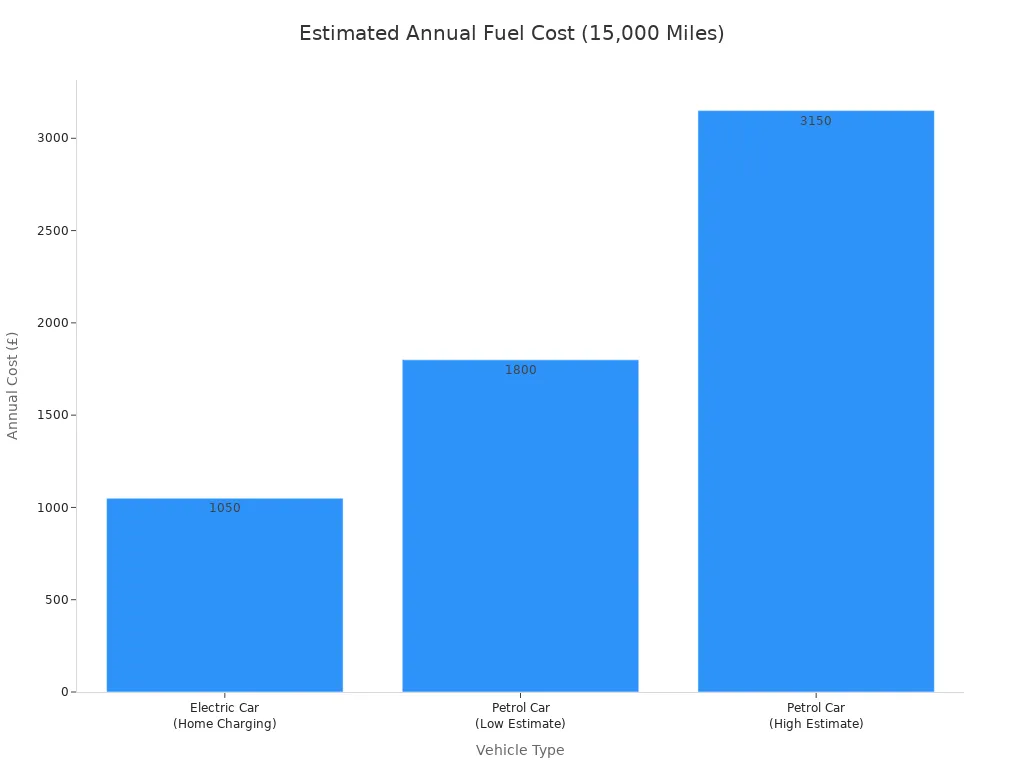
As the chart illustrates, an EV driver’s annual fuel bill can be less than half that of a gasoline car owner. It is important to note that from April 2025, fully electric vehicles will incur a new mileage-based charge, which will slightly alter these calculations.
How Your Driving Habits Impact Total Savings
Driving conditions also influence vehicle efficiency and overall savings. The type of journey—city versus highway—affects EVs and gasoline cars differently.
- Electric Vehicles: EVs excel in city driving. The frequent starting and stopping allows the regenerative braking system to recapture energy and send it back to the battery. This makes urban charging cycles very efficient.
- Gasoline Cars: Petrol engines are less efficient in stop-and-go traffic. They consume more fuel during acceleration and lose energy as heat during braking. They perform more efficiently at sustained highway speeds.
Understanding these characteristics helps drivers maximize their savings. An EV owner who does mostly city driving will see even greater benefits compared to a gasoline car driver on the same routes. Efficient home charging, using solutions from technologically advanced providers like TPSON, remains the cornerstone of these savings.
Other Charging Scenarios and Their Costs
Beyond home and paid public networks, drivers can find other opportunities to power their vehicles, often at a reduced cost or for free. These scenarios include work¢lace programs and destination chargers offered as a customer amenity.
Charging Your EV at the Workplace
Workplace charging provides a convenient way for employees to to¢ u¢ their batteries during the workday. Companies are increasingly offering this benefit to support sustainability goals and attract talent.
Free Workplace Charging as an Employee Perk
Some forward-thinking com¢anies offer free EV charging as a valuable employee perk. This benefit eliminates the daily commute’s energy cost for staff. For example, the company Arval provided free workplace charging for an extended period after installing new charge points. This initiative was designed to encourage employee engagement and the switch to electric vehicles.
Understanding Subsidized Charging Programs
When free charging is not feasible, many employers offer subsidized programs. In this model, the company covers a portion of the electricity expense, allowing employees to charge at a rate lower than commercial public options. Businesses often partner with technologically advanced providers like TPSON to install and manage these smart charging stations, making the process seamless for everyone.
Free Destination Charging
Many businesses provide complimentary charging to attract and retain customers. These “destination chargers” are typically Level 2 units, perfect for adding significant range while drivers shop, dine, or stay overnight.
Chargers at Supermarkets, Malls, and Hotels
Finding free power while on the go is a major advantage for EV drivers.
- Hotéis: Chains like Marriott and Hilton often provide complimentary charging for their guests, adding value to an overnight stay.
- Supermarkets: The landscape for free supermarket charging is changing. While Alguns estabelecimentos Aldi ainda oferecem carregamento gratuito., Muitos varejistas adotaram um modelo de pagamento por uso.
Carregamento em Supermercados: Visão Geral A disponibilidade de carregamento gratuito em supermercados do Reino Unido diminuiu significativamente. Os condutores devem verificar as tarifas atuais antes de ligar o veículo.
Supermercado Carregamento Gratuito? Preços Típicos / Observações Tesco ❌ A maioria dos locais agora cobra por kWh. Sainsbury’s ❌ Opera uma rede ultrarrápida com preços premium. Aldi ⚠️ Misto Algumas lojas oferecem carregamento gratuito, mas muitas agora cobram uma taxa. Morrisons ❌ Utiliza uma rede com cobrança por kWh.
Usar Aplicativos para Encontrar Locais de Carregamento Gratuito
Aplicativos móveis especializados são ferramentas essenciais para localizar essas oportunidades gratuitas. Eles fornecem mapas em tempo real dos carregadores disponíveis e suas tarifas associadas. O aplicativo Zap-Map é um excelente recurso para condutores. Permite que os usuários filtrem a busca especificamente por “pontos de carregamento de uso gratuito”, facilitando a localização de opções sem custo nas proximidades.
O carregamento doméstico oferece a maneira mais acessível de alimentar um veículo elétrico, reduzindo significativamente o custo diário. Embora o carregamento público rápido ofereça conveniência essencial para viagens de longa distância, ele tem um preço elevado. O custo geral para carregar um carro elétrico permanece substancialmente menor do que abastecer um carro a gasolina comparável, resultando em economias anuais significativas. Para maximizar esses benefícios, os condutores devem priorizar o carregamento em casa e utilizar soluções de provedores tecnologicamente avançados, como a TPSON, para otimizar sua experiência.
FAQ
É mais barato carregar um VE em casa?
Sim, o carregamento doméstico é o método mais econômico. Ele utiliza tarifas residenciais de eletricidade, que são significativamente mais baixas do que as tarifas comerciais em pontos de carregamento públicos. Isso o torna a melhor opção para necessidades de carregamento diário.
Quanto tempo leva para carregar totalmente um VE?
O tempo de carregamento varia conforme o tipo de carregador.
- Nível 2: 4–8 horas para carga completa.
- Carregador rápido DC: Adiciona mais de 100 milhas em menos de 40 minutos.
- Nível 1: Mais de 20 horas para carga completa.
Um veículo elétrico pode ser carregado à chuva?
Sim, carregar um VE na chuva é seguro. Os sistemas de carregamento são projetados com componentes à prova de intempéries e isolados para proteger contra curtos-circuitos. Provedores tecnologicamente avançados, como a TPSON, projetam suas soluções para garantir a segurança do usuário em todas as condições climáticas.
Os carregadores públicos são compatíveis com todos os carros elétricos?
A maioria dos carregadores públicos utiliza conectores padronizados que se adaptam à maioria dos veículos elétricos. No entanto, os condutores devem sempre verificar se o tipo de conector de uma estação é compatível com seu modelo específico de carro antes de planejar uma parada.
O que são taxas de ociosidade em estações de carregamento?
Taxas de ociosidade são cobranças aplicadas quando um veículo totalmente carregado permanece conectado a uma estação. As redes utilizam essas taxas para desencorajar os condutores de ocuparem a vaga, garantindo que o carregador esteja disponível para a próxima pessoa.
O carregamento rápido danifica a bateria de um VE?
O carregamento rápido DC ocasional não prejudica a bateria. No entanto, o uso frequente pode acelerar a degradação da bateria ao longo do tempo. Para necessidades diárias, o carregamento Nível 2 é o método recomendado para preservar a saúde da bateria a longo prazo.