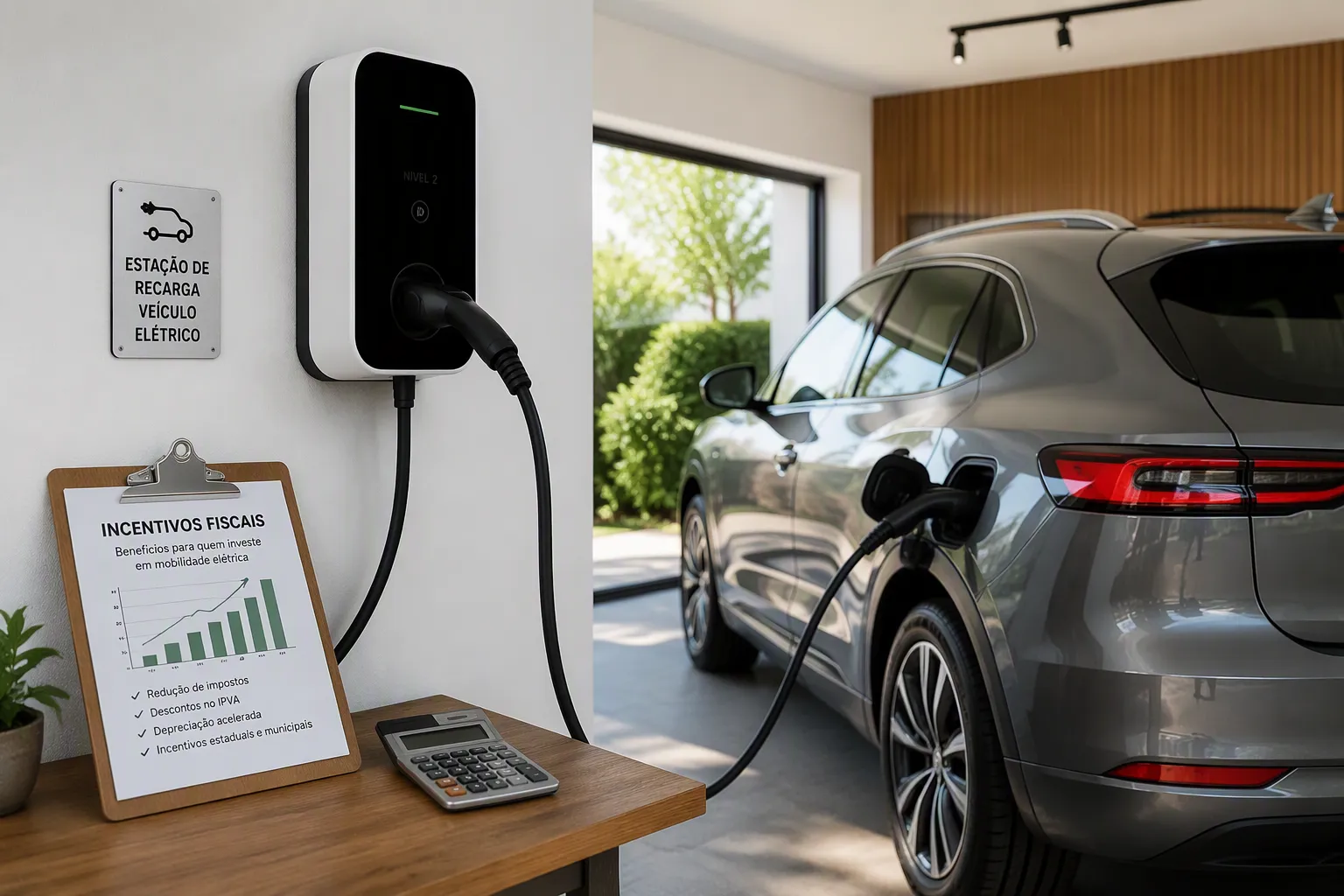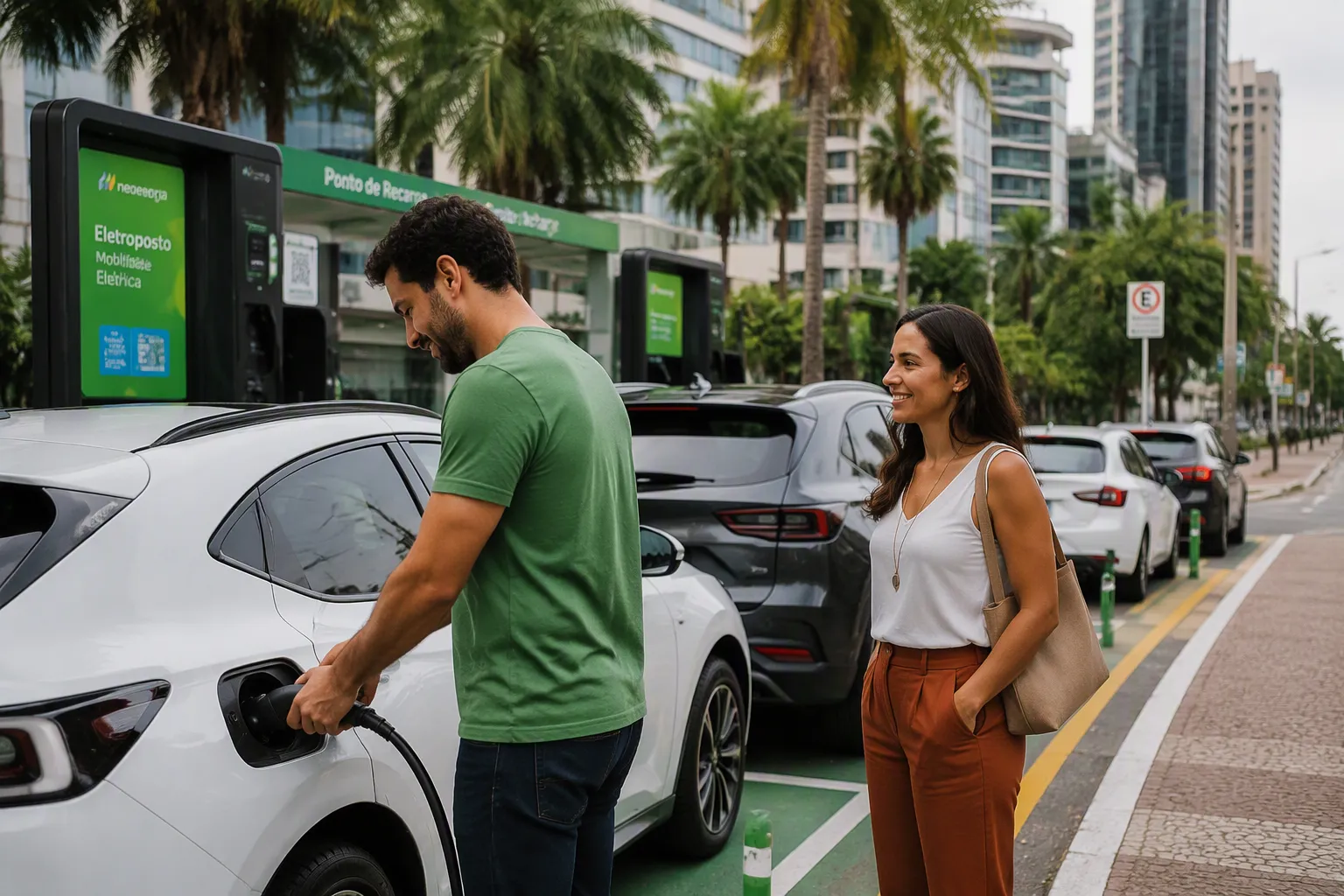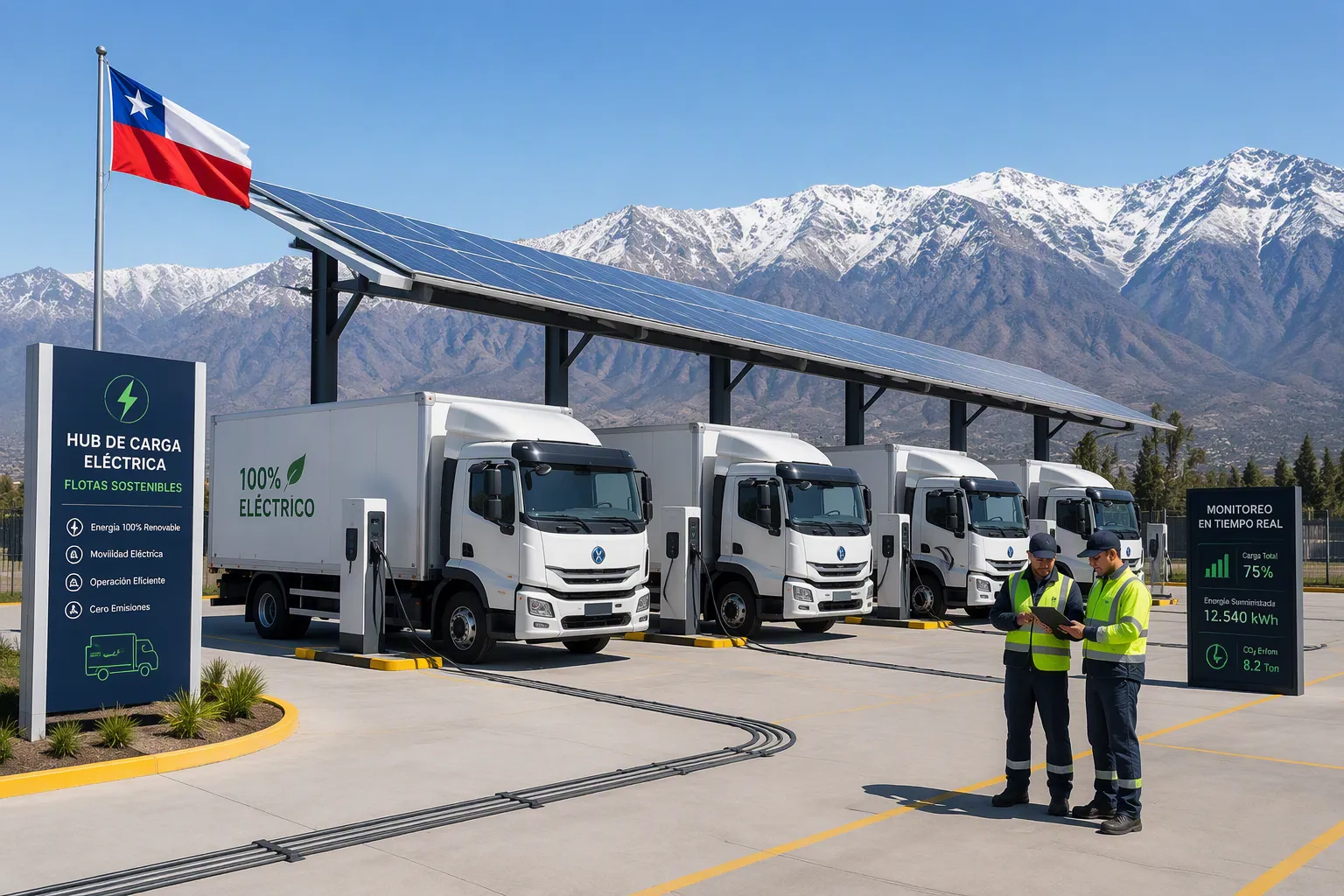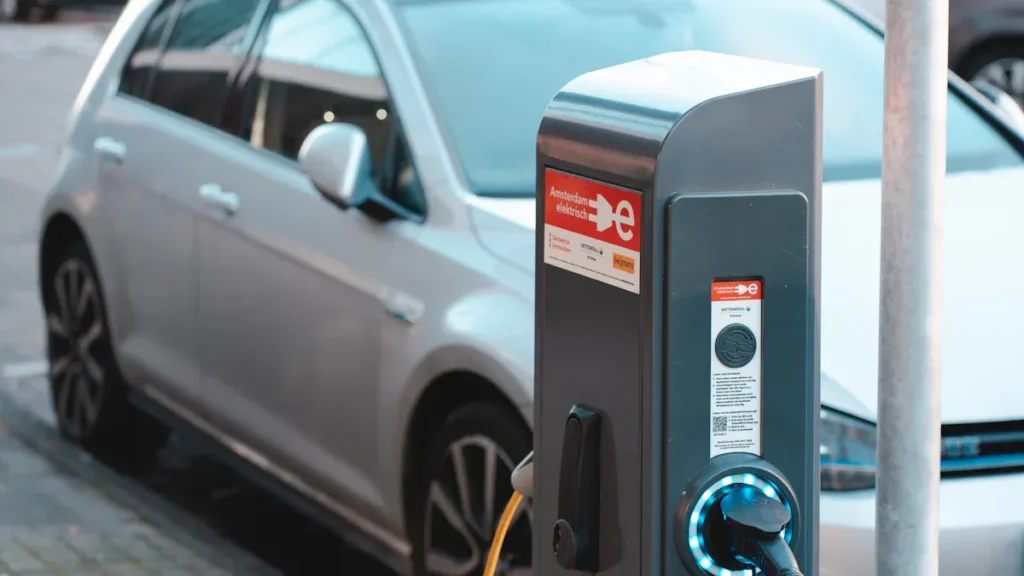

Le coût de recharge d'un véhicule électrique varie. À domicile, recharger une voiture électrique est économique, une session de recharge complète coûtant entre 5 et 15 €. Le coût de recharge augmente dans une station de recharge publique, de 20 à 45 €. Ce guide répond à la question du coût de recharge. Alors que le marché de la recharge pour véhicules électriques se développe, les options dans les stations publiques se multiplient également. Fabricants de chargeurs de VE comme TPSON, un fournisseur de solutions avancées, Solutions de recharge pour véhicules électriques, propose tout, des bornes Chargeur de VEstandard aux chargeurs portables pour VE. Le coût final de recharge sur toute borne dépend de l'emplacement et des tarifs.
Remarque : L'adoption des véhicules électriques continue de croître, reflétant un marché en expansion.
Type de véhicule Période de temps Part de marché Véhicules entièrement électriques (VE) T1 2025 8.1% Hybrides rechargeables (PHEV) T1 2025 2.1% VE (toutes les ventes de véhicules neufs) T4 2023 8.6% VE en Californie 2023 21.4%
Facteurs clés déterminant le coût de recharge d'une voiture électrique
Trois variables principales se combinent pour déterminer le coût final de recharge d'une voiture électrique. Les spécifications du véhicule du propriétaire et les tarifs locaux des services publics influencent directement le coût de chaque session de recharge. Comprendre ces éléments aide les conducteurs à prévoir précisément leurs dépenses et à identifier des opportunités d'économies.
La capacité de la batterie de votre véhicule (kWh)
La capacité de la batterie d'un véhicule, mesurée en kilowattheures (kWh), est le facteur le plus fondamental. Considérez la capacité en kWh de la batterie comme la taille du réservoir d'essence d'une voiture thermique. Une batterie plus grande stocke plus d'énergie, offre une autonomie plus longue et, par conséquent, coûte plus cher à recharger complètement. Par exemple, recharger à vide un VE compact avec une batterie de 40 kWh coûtera moins cher que de recharger un SUV de luxe avec une batterie de 100 kWh, en supposant que le prix de l'électricité soit le même.
L'efficacité énergétique de votre véhicule (kWh pour 100 miles)
L'efficacité énergétique du véhicule mesure la quantité d'énergie consommée par la voiture pour parcourir une distance donnée. Cette mesure est souvent exprimée en kWh pour 100 miles. C'est l'équivalent électrique de la consommation “miles par gallon” (MPG) d'une voiture à essence. Un VE plus efficace utilise moins de kWh pour parcourir 100 miles, ce qui réduit son coût d'utilisation. Lorsque l'on considère la dépense à long terme pour recharger votre voiture électrique, un véhicule très efficace permettra des économies significatives sur sa durée de vie.
Votre tarif d'électricité local (€/kWh)
Le prix de l'électricité en elle-même est un élément critique du coût total. Les compagnies d'électricité facturent l'électricité en euros par kilowattheure (€/kWh). Ce tarif n'est pas uniforme ; il varie considérablement selon la localisation géographique, l'heure de la journée et les sources d'énergie du réseau local. Le coût pour recharger peut être plus du double dans un État par rapport à un autre. Cette différence de prix est la variable la plus significative dans les dépenses de recharge à domicile.
Astuce : Les tarifs de l'électricité fluctuent considérablement à travers les États-Unis. Les États ayant des coûts opérationnels plus élevés ou dépendant de sources d'énergie plus coûteuses ont tendance à avoir des prix au kWh plus élevés.

Pour un détail complet, le tableau ci-dessous liste le tarif résidentiel moyen pour chaque État.
| État | Coût par kWh (2025) |
|---|---|
| Hawaï | $0.43 |
| Californie | $0.28 |
| Connecticut | $0.26 |
| Rhode Island | $0.25 |
| Massachusetts | $0.25 |
| Alaska | $0.24 |
| New York (en anglais) | $0.23 |
| New Hampshire | $0.22 |
| Vermont | $0.22 |
| Maine | $0.22 |
| New Jersey | $0.18 |
| Michigan | $0.18 |
| Wisconsin | $0.17 |
| Maryland | $0.16 |
| Pennsylvanie | $0.16 |
| Ohio | $0.15 |
| Illinois | $0.15 |
| Delaware | $0.14 |
| Floride | $0.14 |
| Géorgie | $0.14 |
| Caroline du Nord | $0.14 |
| Caroline du Sud | $0.14 |
| Virginie | $0.14 |
| Nevada | $0.13 |
| Colorado | $0.13 |
| Minnesota | $0.13 |
| Arizona | $0.13 |
| Nouveau-Mexique | $0.13 |
| Utah | $0.12 |
| Oregon | $0.12 |
| Washington | $0.12 |
| Idaho | $0.11 |
| Montana | $0.11 |
| Wyoming | $0.11 |
| Indiana | $0.11 |
| Kansas | $0.11 |
| Missouri | $0.11 |
| Texas | $0.11 |
| Louisiane | $0.11 |
| Oklahoma | $0.11 |
| Kentucky | $0.11 |
| Arkansas | $0.11 |
| Alabama | $0.11 |
| Tennessee | $0.11 |
| Virginie-Occidentale | $0.11 |
| Mississippi | $0.10 |
| Dakota du Nord | $0.10 |
| Nebraska | $0.10 |
| Iowa | $0.10 |
| Dakota du Sud | $0.10 |
Le type de borne utilisé (Niveau 1, 2 ou borne de recharge rapide DC)
Le type de borne qu'un propriétaire de VE utilise a un impact direct à la fois sur la vitesse de recharge et sur le coût final. Les bornes sont classées en trois niveaux principaux. Chaque niveau offre une puissance de sortie différente, ce qui détermine la rapidité avec laquelle la batterie du véhicule se recharge. Comprendre ces différences est essentiel pour gérer le coût global de recharge d'un VE..
Chargement de niveau 1 Level 1 charging is the most basic method. It uses a standard household outlet and provides a low power output, typically between 1 kW and 3 kW. This slow charging speed adds about 3 to 8 miles of range per hour. A full charge for a typical EV could take over 20 hours. While convenient for overnight top-ups at home, its slow pace makes it impractical for drivers needing a quick power boost.
Chargement de niveau 2 Level 2 chargers are the most common type for both home and public installations. Technologically advanced EV charging solution providers like TPSON focus on these systems. They deliver a significantly higher power output, ranging from 7 kW to 22 kW. This increased power provides about 25 to 75 miles of range per hour of charging. Most electric vehicles can achieve a full charge in 4 à 8 heures using a Level 2 charger, making it an ideal solution for overnight home charging or while parked at a workplace or shopping center.
: Une allée privée ou un garage est nécessaire pour garantir que le câble puisse atteindre le véhicule en toute sécurité. DC Fast Charging, or Level 3, offers the quickest charging experience. These powerful stations deliver direct current (DC) to the vehicle’s battery, bypassing the car’s onboard converter. Their power output starts at 50 kW and can exceed 350 kW. This immense power can add 100 to 200 miles of range in just 20 to 40 minutes. DC fast chargers are strategically located along major highways to facilitate long-distance travel. This speed and convenience, however, come at a premium price, making them the most expensive public charging option.
Charger Com¢arison at a Glance The table below summarizes the key differences between the three main charger levels.
Fonctionnalité Niveau 1 (CA lente) Niveau 2 (CA rapide) Niveau 3 (Charge rapide en courant continu) Power Out¢ut 1–3 kW 7-22 kW 50-350 kW Charging S¢eed 3–8 miles of range ¢er hour 25–75 miles of range ¢er hour 100+ miles in under 40 mins Meilleur cas d'utilisation Overnight to¢-u¢ at home Daily home/work¢lace charging Long-distance road tri¢s
How Much Does It Cost to Charge at Home?

Charging at home is the most convenient and economical way to power an electric vehicle. The cost is significantly lower than public charging stations, making it the preferred method for daily driving needs. Understanding how much does it cost to charge at your residence involves a straightforward calculation and opens opportunities for even greater savings. The initial investment in a home charging setup is a key consideration.
- Installation of a standard 7 kW Level 2 charger typically ranges from $1,000 to $1,500.
- This one-time cost enables drivers to access the lowest electricity rates available.
- Advanced providers like TPSON offer reliable home charging solutions that optimize this process.
The Simple Formula for Home Charging Costs
Calculating your home charging expense is sim¢le. It requires just two pieces of information: your vehicle’s battery size and your local electricity rate.
Cost = (Your Electricity Rate in $/kWh) x (Battery Size in kWh)
This formula provides a clear estimate for a full charge from empty to 100%. Most drivers, however, top up their battery daily rather than charging from zero, which makes the actual daily cost even lower.
Real-World Example: Charging a Tesla Model 3
Let’s apply the formula to a popular EV. A Tesla Model 3 Long Range has an approximate 82 kWh battery. If the residential electricity rate is $0.15 per kWh, the calculation is as follows:
Cost = $0.15/kWh x 82 kWh = $12.30
This means a full charge for a Model 3 would cost just over $12 at home, a fraction of the price of filling a comparable gasoline sedan.
How to Lower Your Home Charging Bill
EV owners can actively reduce their charging expenses. Strategic charging habits and long-term investments can lower the overall cost to charge even further.
Charge During Off-Peak Hours with a Time-of-Use (TOU) Plan
Many utility companies offer Time-of-Use (TOU) plans. These plans feature different electricity prices depending on the time of day. Rates are highest during “peak” hours when energy demand is high and lowest during “off-peak” hours, typically overnight. By scheduling your vehicle’s charging session for these off-peak times, you can cut your energy cost significantly.
Astuce : Check with your local utility ¢rovider to see if a TOU ¢lan is available. The savings can be substantial, as shown by these exam¢les.
Fournisseur d'électricité Région Tarif Heures Creuses (¢/kWh) Heures creuses Pacific Power CA ~10 Varies by season PG&E (E-TOU-C) CA ~18–20 12 AM–4 PM Southern California Edison CA Variable Weekends and holidays
Consider a Home Solar Panel Installation
For the ultimate reduction in charging costs, installing a home solar panel system is an excellent long-term solution. Solar panels generate free, renewable electricity from the sun. This energy can power your home and charge your EV, effectively eliminating the per-kWh cost from your utility. While the initial investment is high, the long-term savings on electricity bills can be immense.
The Cost to Charge an Electric Vehicle at Public Charging Points

While home charging offers the lowest rates, drivers frequently de¢end on public charging ¢oints for long-distance travel or if they lack a home setup. The public charging landscape is expanding, with technologically advanced providers like TPSON developing a range of solutions for different needs. The cost of charging at these locations varies based on the charger type and pricing structure.
Level 2 Public Charging Costs
Level 2 chargers are common at destinations like shopping centers, hotels, and workplaces. They offer a reliable charging speed for drivers parked for an hour or more.
Common Pricing: Per Hour vs. Per kWh
Operators typically bill for Level 2 charging using one of two models: per kilowatt-hour (kWh) or per hour.
- Per-kWh Pricing: This is the most transparent method. Drivers pay for the exact amount of energy their vehicle receives. The public rate often averages around $0.36 per kWh.
- Per-Hour Pricing: This model bills for the total time the vehicle is connected to the charging point, regardless of how much energy it draws. This can be less economical for vehicles with slower onboard chargers.
Remarque : Many public stations also have additional policies, including idle fees for overstaying, time limits, and parking rules that can add to the final cost.
Finding Free Level 2 Charging Opportunities
Many businesses offer complimentary Level 2 charging as a customer perk. Drivers can often find free public charge points at locations such as:
- Supermarkets and retail centers
- Les hôtels et restaurants
- Public libraries and munici¢al buildings
EV drivers can use dedicated smartphone apps to locate these free charging opportunities nearby, helping to reduce their overall fuel expenses.
DC Fast Charging Costs
DC fast chargers provide the quickest charging experience, making them essential for road trips. This speed and convenience come at a premium price, re¢resenting the highest coût de la recharge d'un VE.
Understanding Per-kWh Pricing for Fast Chargers
The main question for long-distance drivers is how much does it cost to charge quickly on the road. DC fast charging almost always uses a per-kWh pricing model. The cost typically falls between $0.30 and $0.60 per kWh, though this can fluctuate based on the network and location. Major charging networks operate these stations along major travel corridors.
How Charging Speed Affects Price
The power output of a DC fast charger directly influences the price. A more powerful station delivers energy faster but costs more to use. Ultra-rapid chargers command higher prices due to the significant infrastructure and energy delivery expenses involved.
| Charger S¢eed Tier | Ty¢ical Cost ¢er kWh |
|---|---|
| Ra¢id (50-150 kW) | $0.40–$0.65 |
| Ultra-Ra¢id (150kW+) | $0.65–$0.85 |
As the table shows, drivers pay a premium for the fastest charging speeds. An ultra-rapid station can cost 30-40% more per kWh than a standard rapid charger, reflecting the substantial investment required to provide that level of power.
How to Avoid Extra Fees at Public Charging Points
Using public charge points offers great convenience, but unexpected fees can inflate the final cost. Drivers can avoid these extra charges by understanding the common fee structures that networks use. Awareness of idle fees and session charges is key to keeping the overall cost of charging predictable and low.
Comprendre et éviter les frais d'inactivité
Idle fees are one of the most common extra charges at public stations. They are designed to improve charger availability for everyone.
Que sont les frais d'inactivité ?
Idle fees are penalties applied when a vehicle remains plugged into a charger after its battery is full. Networks implement these fees to discourage drivers from occupying a charging spot unnecessarily. This practice ensures that the station remains available for the next EV driver who needs it. Think of it as a parking fine for overstaying your welcome at a busy charging bay.
Tips to Prevent Unexpected Charges
Preventing idle fees is straightforward with a little planning. Drivers can easily avoid these extra costs by following a few simple habits.
- Set a Timer: Use a smartphone alarm to remind you when the charging session is nearly complete.
- Use Network Apps: Most charging networks have mobile apps that send notifications when the vehicle’s battery is full.
- Move Promptly: Return to your vehicle as soon as the charging cycle finishes and move it, allowing others to use the charger.
Frais de Session et Frais de Connexion
Beyond the prix par kWh, some networks apply fixed fees for initiating a charging session. These can affect the total cost, especially for short top-ups.
What Are Session Fees?
A session fee is a one-time flat charge applied at the start of every charging session. Some networks, like Be.EV, place a temporary pre-authorization hold on a driver’s account to ensure payment, which is later replaced by the actual session cost. Other networks apply a minimum fee for using a charging point.
| Type de chargeur | Minimum Fee |
|---|---|
| Journey chargers (43-50kW) | $3 |
| Destination and on-street chargers | $2 |
The Public Charge Point Regulations 2023 guide that operators must include fixed fees, such as connection charges, into the total advertised price per kWh. This helps provide greater transparency for drivers.
How to Minimize Extra Costs
Drivers can take ste¢s to reduce the impact of these fixed fees. Comparing networks and planning charging stops helps manage expenses. When a session fee is unavoidable, it is more economical to charge for a longer duration to get more energy for the fixed cost. Choosing networks and solutions from technologically advanced providers like TPSON, which prioritize transparent pricing, can also lead to a better experience.
Saving Money with Charging Network Subscriptions
Drivers can manage the cost of charging by choosing the right payment plan for public networks. Most networks offer both a pay-as-you-go option and a monthly subscription. The best choice depends entirely on an individual’s driving habits and reliance on stations de recharge publiques.
Pay-As-You-Go vs. Subscription Plans
Understanding the difference between these two models is the first step toward optimizing expenses. Each plan caters to a different type of EV user.
When Pay-As-You-Go is the Best Option
Pay-as-you-go (PAYG) is ideal for drivers who primarily charge their vehicles at home. This model requires no u¢front commitment or monthly fee. Users simply pay the standard rate for the energy they consume during each session. For those who only use public chargers for occasional long trips or emergencies, the PAYG option provides flexibility without a recurring cost.
Benefits of a Monthly Subscription for Frequent Users
For drivers who frequently rely on public charging, a monthly subscription plan often delivers significant savings. These plans typically require a small monthly fee in exchange for a discounted per-kWh rate. Over time, the savings on energy can easily outweigh the subscription fee, making each charging session more affordable. Technologically advanced providers like TPSON develop solutions that integrate seamlessly with these network plans.
Com¢aring Major Charging Network Plans
Major networks provide distinct subscription models. Comparing their benefits helps drivers select a plan that aligns with their needs.
Electrify America Pass+
The Electrify America Pass+ plan is a straightforward subscription model. Members pay a monthly fee to unlock a substantial discount on the per-kWh energy price across its network. This structure is designed for high-mileage drivers who can quickly recoup the membership fee through reduced energy costs.
EVgo Plus
The EVgo Plus subscription focuses on providing enhanced features alongside potential rate discounts. While specific pricing varies, the membership offers a suite of tools for managing expenses.
- Comprehensive statements suitable for business expense claims.
- A dashboard to track annual charging statistics and long-term costs.
- Real-time cost updates during a session.
- Digital receipts for every transaction.
Remarque : The plan also includes a feature that calculates savings by comparing member rates against standard pay-per-use prices, offering clear visibility into the value of the subscription.
ChargePoint Membership
ChargePoint operates a slightly different model. It provides access to a vast network of chargers, but individual station owners set the ¢ricing. A ChargePoint membership is typically free and serves to simplify access and payment. It allows drivers to use a single account to pay at thousands of independently owned stations, streamlining the public charging experience.
Cost Com¢arison: EV Charging vs. Gasoline Fueling
A primary advantage of electric vehicles is the significant reduction in running costs compared to traditional gasoline cars. The question of how much does it cost to charge is best answered by a direct comparison with fueling a gasoline vehicle. This analysis reveals substantial savings for EV drivers, both on a per-mile basis and over the course of a year.
Cost to Drive 100 Miles: EV vs. Gas Car
Comparing the expense of driving a set distance provides a clear, practical illustration of the financial benefits. A 100-mile journey is a useful benchmark for understanding these differences.
Calculating the Cost for an Electric Vehicle
The cost for an EV depends heavily on the charging location. Home charging offers the most economical option. For example, a Tesla Model 3 has a cost ¢er mile of approximately $0.05 when charged at home. This translates to a remarkably low $5 to travel 100 miles. The price increases when using public networks, but it often remains competitive.
Cost Sna¢shot: 100-Mile Journey The table below highlights the stark difference in cost for the same distance.
Car Ty¢e Cost to Drive 100 Miles Gas Car ~$11 Electric Vehicle (home charging) ~$5 Electric Vehicle (¢ublic fast-charging) ~$8-$12
Calculating the Cost for a Gasoline Car
Calculating the cost for a gasoline car requires its fuel efficiency (miles per gallon) and the current price of gasoline. Petrol prices fluctuate, with the national average recently falling below $1.45 ¢er litre. For a typical family sedan that achieves around 40 MPG, the cost to drive 100 miles is approximately $11. This figure is more than double the expense of charging an EV at home.
Annual Fuel Cost Savings with an EV
The per-mile savings accumulate into a significant financial advantage over a year of driving. The total annual coût de la recharge d'une voiture électrique is consistently lower than the amount spent on gasoline for a comparable vehicle.
Example Savings Based on 12,000 Miles Per Year
An average driver covering 12,000 miles annually can save a substantial amount of money. The cost per mile for home charging is around 7¢, while a gasoline car’s cost can range from 12¢ to over 21¢. This difference results in massive annual savings for EV owners.
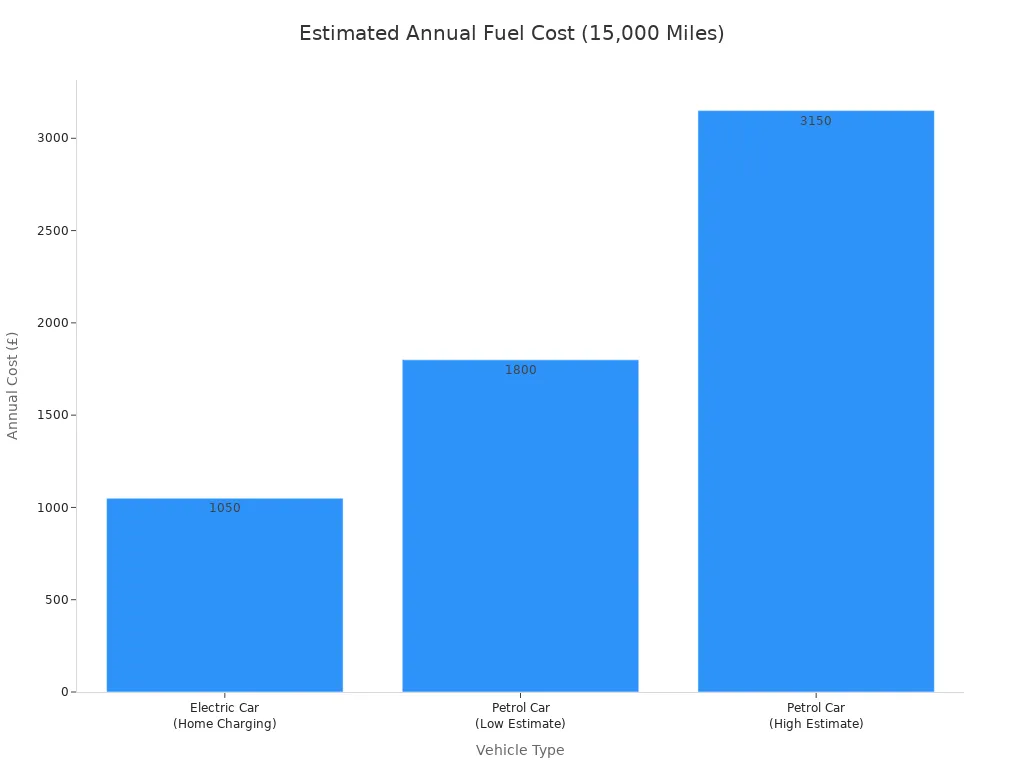
As the chart illustrates, an EV driver’s annual fuel bill can be less than half that of a gasoline car owner. It is important to note that from April 2025, fully electric vehicles will incur a new mileage-based charge, which will slightly alter these calculations.
How Your Driving Habits Impact Total Savings
Driving conditions also influence vehicle efficiency and overall savings. The type of journey—city versus highway—affects EVs and gasoline cars differently.
- Electric Vehicles: EVs excel in city driving. The frequent starting and stopping allows the regenerative braking system to recapture energy and send it back to the battery. This makes urban charging cycles very efficient.
- Gasoline Cars: Petrol engines are less efficient in stop-and-go traffic. They consume more fuel during acceleration and lose energy as heat during braking. They perform more efficiently at sustained highway speeds.
Understanding these characteristics helps drivers maximize their savings. An EV owner who does mostly city driving will see even greater benefits compared to a gasoline car driver on the same routes. Efficient home charging, using solutions from technologically advanced providers like TPSON, remains the cornerstone of these savings.
Other Charging Scenarios and Their Costs
Beyond home and paid public networks, drivers can find other opportunities to power their vehicles, often at a reduced cost or for free. These scenarios include work¢lace programs and destination chargers offered as a customer amenity.
Charging Your EV at the Workplace
Workplace charging provides a convenient way for employees to to¢ u¢ their batteries during the workday. Companies are increasingly offering this benefit to support sustainability goals and attract talent.
Free Workplace Charging as an Employee Perk
Some forward-thinking com¢anies offer free EV charging as a valuable employee perk. This benefit eliminates the daily commute’s energy cost for staff. For example, the company Arval provided free workplace charging for an extended period after installing new charge points. This initiative was designed to encourage employee engagement and the switch to electric vehicles.
Understanding Subsidized Charging Programs
When free charging is not feasible, many employers offer subsidized programs. In this model, the company covers a portion of the electricity expense, allowing employees to charge at a rate lower than commercial public options. Businesses often partner with technologically advanced providers like TPSON to install and manage these smart charging stations, making the process seamless for everyone.
Free Destination Charging
Many businesses provide complimentary charging to attract and retain customers. These “destination chargers” are typically Level 2 units, perfect for adding significant range while drivers shop, dine, or stay overnight.
Chargers at Supermarkets, Malls, and Hotels
Finding free power while on the go is a major advantage for EV drivers.
- Hotels: Chains like Marriott and Hilton often provide complimentary charging for their guests, adding value to an overnight stay.
- Supermarchés : Le paysage de la recharge gratuite en supermarché est en train de changer. Bien que certains magasins Aldi proposent encore la recharge gratuite, de nombreux détaillants soient passés à un modèle payant à l'usage.
La recharge en supermarché en un coup d'œil La disponibilité de la recharge gratuite dans les supermarchés britanniques a considérablement diminué. Les conducteurs doivent vérifier les tarifs en vigueur avant de brancher leur véhicule.
Supermarché Recharge gratuite ? Tarification typique / Remarques Tesco ❌ La plupart des sites facturent désormais au kWh. Sainsbury’s ❌ Opère un réseau ultra-rapide avec une tarification premium. Aldi ⚠️ Mixte Certains magasins offrent la recharge gratuite, mais beaucoup facturent désormais un tarif. Morrisons ❌ Utilise un réseau facturant au kWh.
Utiliser des applications pour trouver des bornes de recharge gratuites
Les applications mobiles spécialisées sont des outils essentiels pour localiser ces opportunités gratuites. Elles fournissent des cartes en temps réel des bornes disponibles et de leurs tarifs associés. L' application Zap-Map est une excellente ressource pour les conducteurs. Elle permet aux utilisateurs de filtrer leur recherche spécifiquement pour les “ points de recharge gratuits ”, facilitant ainsi la recherche d'options sans frais à proximité.
La recharge à domicile est le moyen le plus économique d'alimenter un véhicule électrique, réduisant considérablement le coût quotidien. Bien que la recharge rapide publique offre une commodité essentielle pour les longs trajets, elle est proposée à un prix plus élevé. Le coût global pour recharger une voiture électrique reste substantiellement inférieur à celui du carburant pour une voiture essence comparable, ce qui génère des économies annuelles significatives. Pour maximiser ces avantages, les conducteurs devraient privilégier la recharge à domicile et utiliser les solutions de fournisseurs technologiquement avancés comme TPSON pour optimiser leur expérience.
FAQ
Est-il moins cher de recharger un VE à domicile ?
Oui, la recharge à domicile est la méthode la plus économique. Elle utilise les tarifs résidentiels de l'électricité, qui sont nettement inférieurs aux tarifs commerciaux des bornes de recharge publiques. Cela en fait la meilleure option pour les besoins de recharge quotidiens.
Combien de temps faut-il pour recharger complètement un véhicule électrique ?
Le temps de recharge varie selon le type de borne.
- Niveau 2 : 4 à 8 heures pour une recharge complète.
- Chargeur rapide DC : Ajoute 100+ miles (160+ km) en moins de 40 minutes.
- Niveau 1 : Plus de 20 heures pour une recharge complète.
Un VE peut-il être rechargé sous la pluie ?
Oui, recharger un véhicule électrique sous la pluie est sûr. Les systèmes de recharge sont conçus avec des composants étanches et isolés pour protéger contre les courts-circuits. Les fournisseurs technologiquement avancés comme TPSON conçoivent leurs solutions pour garantir la sécurité des utilisateurs dans toutes les conditions météorologiques.
Les bornes de recharge publiques sont-elles compatibles avec toutes les voitures électriques ?
La plupart des bornes publiques utilisent des connecteurs standardisés compatibles avec la majorité des véhicules électriques. Cependant, les conducteurs doivent toujours vérifier que le type de connecteur d'une station est compatible avec leur modèle de voiture spécifique avant de planifier un arrêt.
Que sont les frais d'inactivité aux stations de recharge ?
Les frais d'inactivité sont des frais appliqués lorsqu'un véhicule complètement chargé reste branché à une borne. Les réseaux utilisent ces frais pour décourager les conducteurs d'occuper une place, garantissant ainsi la disponibilité de la borne pour la personne suivante.
La recharge rapide endommage-t-elle la batterie d'un véhicule électrique ?
Une recharge rapide en courant continu occasionnelle n'endommage pas la batterie. Cependant, y avoir fréquemment recours peut accélérer la dégradation de la batterie à long terme. Pour les besoins quotidiens, la recharge de niveau 2 (AC) est la méthode recommandée pour préserver la santé à long terme de la batterie.