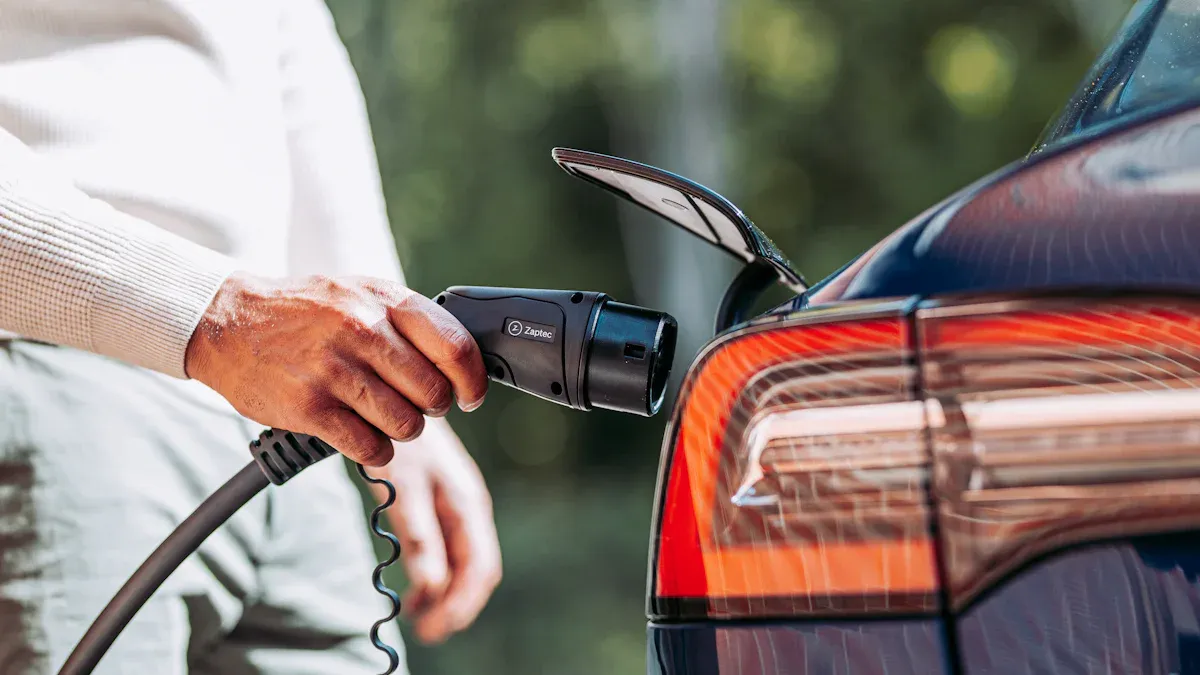
An electric vehicle driver almost always needs to pay for parking. Parking and charging are two different services. A free charge does not equal a free spot for an EV.
The Golden Rule: If a parking area has signs or pay stations, the EV driver must pay the fee. This rule applies whether the electric car is charging or not.
Dirigir Fabricantes de cargadores para VE como TPSON proporcionan Soluciones de recarga de vehículos eléctricos. Their products, from a stationary Cargador EV a cargadores portátiles para vehículos eléctricos, deliver a reliable charge, but the parking is not free. A free charging session is not free parking.
The Golden Rule: Parking and Charging Are Separate
Many new electric vehicle drivers are surprised to learn that parking and charging are two distinct transactions. An EV driver is essentially purchasing two services at the same time. Understanding this separation is key to avoiding fines and frustration.
Why You’re Billed for Two Different Services
The costs associated with parking an EV and getting a charge come from different sources. One is a real estate transaction, while the other is a utility service.
Parking as a Real Estate Cost
A parking space is a small piece of real estate. The owner of the garage or lot charges a fee for the temporary use of that land. This fee covers the owner’s expenses, such as property taxes, maintenance, lighting, and security. The cost of parking exists whether a vehicle is electric or gasoline-powered.
Charging as a Utility Service
Electric car charging is a utility service. When an EV driver plugs in, they are purchasing electricity. The cost of this charge covers the energy consumed, the maintenance of the charging hardware, and the software that manages the session. Advanced EV charging solutions from providers like TPSON deliver a reliable charge, but this service is separate from the physical parking spot. The process of charging your vehicle is a metered utility sale.
Different Companies, Different Bills
Often, the company that owns the parking lot is not the same company that operates the EV charging network. A property management firm might run the garage, while an electric mobility provider manages the charging stations. This means an EV driver must complete two separate payments to two different businesses for using one spot.
How to Think About the Two Transactions
To simplify the process, an EV driver should view the experience as two independent actions. This mindset helps ensure they pay for both services correctly.
A Simple Analogy: Think of it like buying a coffee inside a bookstore. You pay the cafe for the coffee and the bookstore for the book. You are in one location but making two separate purchases. The same logic applies to EV charging and parking.
Paying the Parking Lot Operator
The first transaction is for the parking space itself. An EV driver pays the garage or lot operator for the right to occupy the spot for a specific duration. This payment is usually made via a pay station, a mobile app, or a parking attendant.
Paying the EV Charging Network
The second transaction is for the electricity. The EV driver pays the red de tarificación for the energy transferred to the electric car’s battery. This payment for the charge is almost always handled through the charging station’s dedicated app or a credit card reader on the unit. An EV driver must initiate and pay for this charging session separately from the parking fee. It is a common mistake to assume one payment covers both the charge and the parking.
How to Know if You Need to Pay for Parking
An EV driver must become an expert at spotting payment requirements. The clues are always present, split between physical signs and digital instructions. Ignoring them can lead to costly mistakes. The first step is always to survey the physical environment before plugging in for a charge.
Read the Physical Signs Around You
The most reliable information about parking fees is found on signs posted around the EV charging spot. These signs are the legally binding instructions for the property.
Look for Pay Stations and Kiosks
Central pay stations or kiosks are common in garages and surface lots. An EV driver should look for a large, automated machine that accepts cash or cards. These kiosks typically require the driver to:
- Enter their license plate number.
- Select the duration of their parking session.
- Make a payment.
A receipt may be issued, but payment is often tracked digitally. This process is completely separate from initiating the electric vehicle charge.
Check for Traditional Parking Meters
Some street-side spots or older lots still use individual parking meters. If an EV charging space has a meter next to it, the driver must pay it. These meters accept coins, cards, or sometimes a tap-to-pay function. The meter’s timer shows the remaining paid parking time, which runs independently of the charging session.
Find Zone Numbers for Parking Apps
Many municipalities and private operators now use mobile apps to manage parking payments. An EV driver should look for signs displaying a specific “Zone Number.” This number is entered into a designated parking app (like PayByPhone or RingGo) to start and pay for a session. This is a common source of error, as the EV driver might be focused on the charging app and forget to open the separate parking app.
Scan for Rules on Garage Walls or Pillars
In complex environments like multi-story garages, rules are often posted on walls, pillars, or large entrance signs. However, this signage can be a significant source of confusion. A UK survey revealed that over 81% of drivers find parking signs unclear. This problem is amplified at EV bays where rules about active charging are not always obvious.
Signage Ambiguity: Drivers should be aware that stickers on an electric vehicle charger are often not considered sufficient legal signage. Regulations may require upright, pole-mounted signs for rules to be enforceable. These stickers can be ripped, obscured when a vehicle is charging, or placed too low to be easily seen, making it difficult to understand the parking requirements.
Check the Digital Instructions
After checking the physical signs, the next step is to consult the digital interfaces associated with the charging process. These tools often provide a second layer of information.
Read the Charging Station’s Screen
The screen on the charging point itself is a primary source of information. Before starting a charge, an EV driver should read all prompts carefully. The screen on an advanced cargador para vehículos eléctricos, like those from technology provider TPSON, may display a message such as:
"Parking fees are managed separately. Please pay at the kiosk.""This charging session does not include parking. See signs for payment."
This confirms that two separate actions are needed.
Look for Alerts in the Charging App
The mobile app used to start the EV charging session is another critical checkpoint. When a driver selects a specific charging station within the app, it may trigger an alert or display a prominent note about the location’s parking policy. For example, a pop-up might warn the user that they are in a paid parking zone and must pay the property owner directly. This digital reminder helps prevent an EV driver from assuming the charge payment covers everything.
Scan QR Codes for Parking Information
A growing number of locations use QR codes to streamline payments. An EV driver might find two different QR codes at the bay:
- One on the charger to start and pay for the electric charge.
- A second one on a sign or pillar specifically for parking payment.
Scanning this second code typically leads to a web portal where the driver can pay for parking. It is essential for the coche eléctrico owner to verify what each QR code is for before completing the transaction.
Understanding Different Location Rules for Electric Car Parking
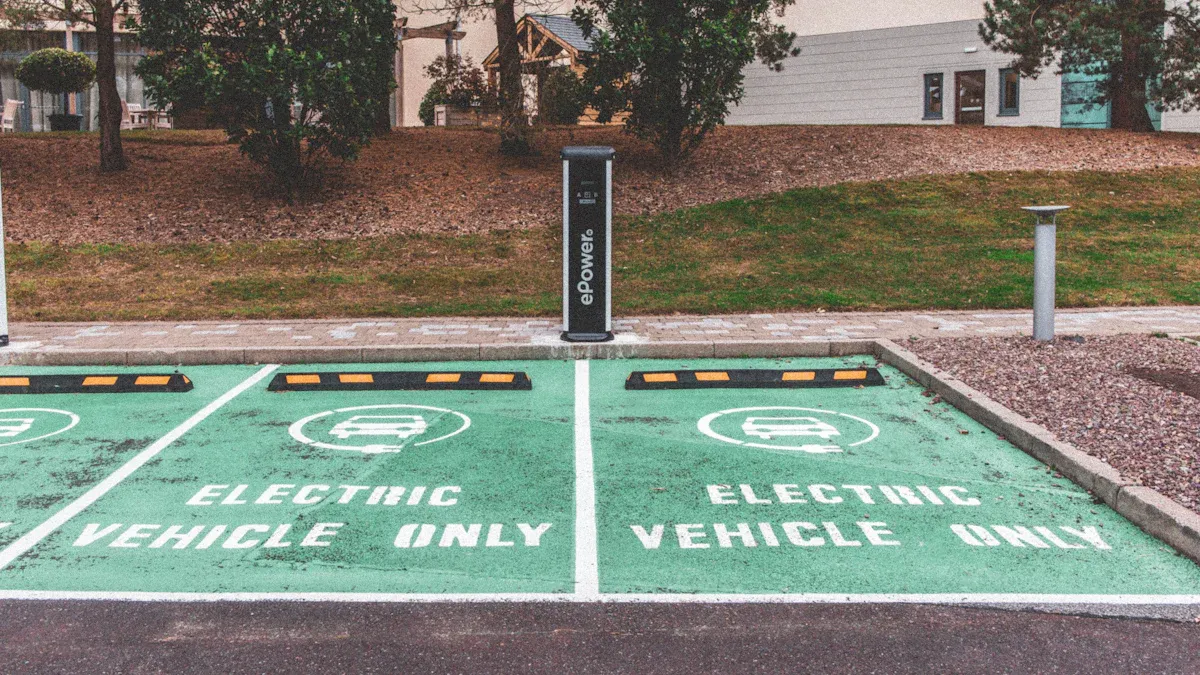
Parking rules for an electric vehicle change significantly depending on the location. An EV driver must adapt to the specific policies of garages, street-side spots, and retail centers. Assuming one location’s rules apply everywhere is a recipe for a fine.
Public and Private Parking Garages
Garages are commercial operations that sell the use of space. Free parking is extremely rare in these environments. The electric car parking rules are typically the same for every vehicle.
Hourly and Daily Rate Structures
Most garages charge for parking by the hour or by the day. An EV driver pays these standard rates just like the driver of a gasoline car. The fee for the electric charge is an additional cost.
- Hourly Rate: The driver pays for each hour the vehicle occupies the space.
- Daily Rate: A flat fee covers parking for up to 24 hours.
This structure means a long charging session can result in a substantial parking bill.
Event and Surge Pricing Rules
Garages near stadiums, concert halls, or convention centers often implement event pricing. During these times, parking rates can increase dramatically. An EV driver should check for event rate signs before entering. This higher parking fee is completely separate from the cost to charge the electric vehicle.
Street-Side Metered Spots
On-street electric car spaces offer convenience but come with strict regulations. These spots are managed by local authorities to ensure vehicle turnover.
Time Limits and Restrictions
Most metered spots have posted time limits, such as “2-Hour Parking.” An EV driver must move their electric car once the paid time expires, even if the battery is not full. Staying beyond the limit can result in a ticket. Some zones may also have restrictions during certain hours for street cleaning or rush hour traffic.
Paying via Meter vs. App
Payment for street parking is handled in one of two ways. The EV driver must pay for the spot separately from the electric charging session.
Nota: An EV driver should always start a parking session immediately. Waiting until the charge begins can lead to a ticket if an enforcement officer patrols the area first.
- Meter: The driver pays with coins or a card at the meter assigned to the electric car bay.
- App: The driver uses a designated mobile app, enters a zone number, and pays digitally.
Shopping Center and Retail Lots
Many retail centers provide electric car parking as an amenity for shoppers. This is one of the few situations where an EV driver might find free parking.
Free for Customers (with Time Limits)
Shopping centers often offer free parking to attract customers. However, this is almost always time-limited, typically for 90 minutes to three hours. An EV driver can enjoy this free period while they shop and charge their electric vehicle. If they stay longer than the allowed time, they risk a penalty. This setup provides a great opportunity for a free top-up.
Validation Requirements
Some retail lots require validation for free parking. This means the EV driver must make a purchase at a store within the center. The store then provides a code or stamps a ticket to validate the parking. Without validation, the driver must pay the standard rate. This policy ensures that the free amenity is reserved for actual customers.
Airport Parking Lots
Airport parking facilities present a unique set of rules for electric vehicle drivers. These lots are designed for travelers, with distinct options for short visits and extended trips. An EV driver must understand these differences to avoid significant costs. The parking fee is always a separate transaction from the sesión de carga.
Short-Term vs. Long-Term EV Spots
Airports clearly separate their parking facilities based on the duration of a traveler’s stay. The availability of EV chargers often differs between these zones. For example, Heathrow Airport provides EV charging stations in both its short-stay and long-stay parking areas. The short-stay lots near the terminals are ideal for quick drop-offs and offer fast charging solutions. The long-stay lots are designed for travelers on longer trips, giving an electric car ample time for a full charge.
However, this is not a universal standard. At Gatwick Airport, EV chargers are available in the North and South Terminal short-stay car parks, where normal parking fees apply. These lots are not recommended for long trips. Leaving a car in a short-stay electric car bay for a week would lead to huge parking fees and potential fines. Crucially, Gatwick’s long-stay car parks do not currently have public chargers. This means an EV driver cannot leave their car charging for the duration of their trip in these lots. The driver must pay the standard parking rate for the space, and the charging service is a separate cost.
Sistemas de reserva
Many airports now use reservation systems to manage the high demand for parking, including for electric car parking spaces. An EV driver can often book and prepay for a spot online before arriving at the airport.
Consejo profesional: Booking parking in advance can often secure a lower rate and guarantee a space, especially during peak travel seasons.
These reservation systems typically handle the parking payment only. The driver will still need to pay for the electricity used during the charging session. This is usually done through the charging provider’s app, such as the one used for a TPSON charger, or a credit card payment at the station. Some airports offer premium valet services that may bundle the parking and charging costs. For instance, services like Gatwick’s official Valet Parking or APH Park & Ride can manage the charging process for the driver as part of a comprehensive service package. This integrated approach simplifies the experience but usually comes at a higher price point.
When Might Electric Car Parking Be Free?
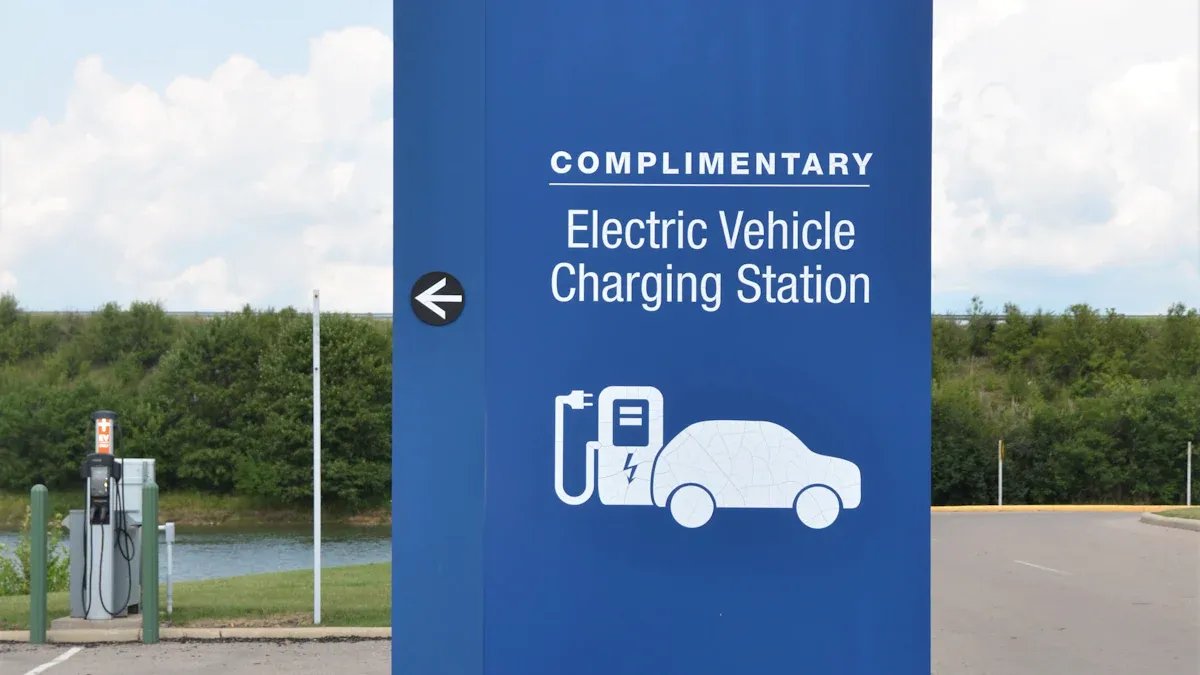
While the golden rule is to assume you must pay, some situations offer a welcome exception. An EV driver can find genuinely free electric car parking and even a free charge in specific locations. These opportunities usually exist as an incentive to attract customers, guests, or employees. Understanding where to look can lead to significant savings.
Locations with Genuinely Free Parking
Certain businesses and public entities provide both free parking and free EV charging as a complimentary service. In these cases, the driver enjoys a truly cost-free experience, but usually for a limited time.
Customer-Only Supermarket Lots
Many large supermarkets offer recarga gratuita de VE to attract shoppers. These chains install charging stations as a modern amenity, encouraging electric vehicle owners to shop at their stores.
- Cómo funciona: The parking is free for customers, and the charging session is often free as well.
- The catch: There are almost always strict time limits, such as 60 or 90 minutes. Staying beyond this period can result in a fine.
These free spots at supermarkets are perfect for a quick top-up while grocery shopping. Access is intended for paying customers only.
Hotel and Lodging for Guests
Hotels frequently provide free parking for their overnight guests. Many now also include free EV charging as a premium perk to enhance the guest experience. This amenity makes the hotel more attractive to the growing number of EV drivers. The cost is absorbed into the price of the room, so the access feels free to the guest. An electric car can get a full charge overnight without a separate bill.
Some Public Parks or Municipal Buildings
Local governments sometimes install chargers at public facilities like parks, libraries, or town halls. They may offer both the parking and the electric charge for free to promote EV adoption and serve the community. These initiatives support sustainability goals. However, these spots can be popular, and access may be limited by high demand or specific hours of operation.
Scenarios with Bundled Fees
A bundled fee simplifies the payment process by combining parking and charging costs into one transaction. This is not technically free, but it removes the hassle of paying two separate companies.
How Integrated Payment Systems Work
The confusion of separate payments has led to new technology solutions. Companies are developing integrated platforms to streamline the experience. For example, Paythru’s ‘Park and Charge’ system allows a driver to see a single tariff for both services. The EV driver makes one payment through an app or terminal. This cloud-based software then manages the complex task of splitting the payment between the parking operator and the charging network behind the scenes. This creates a clear, unified transaction for the user.
Valet Services with Integrated Charging
Premium valet services at hotels or airports often offer a seamless charging option. The EV driver hands their keys to the valet, who manages both parking and charging the electric vehicle. The costs are then bundled into a single bill.
Example Pricing Structures:
- A hotel might charge a flat fee of $25.00 for an overnight charge, which includes the service.
- Another might have a standard valet fee of $12.50 plus a separate charge for electricity, such as $0.60 per kWh. This service offers maximum convenience, as the driver does not need to find a station or manage the charging process.
Private and Semi-Private Arrangements
The most reliable access to free or low-cost charging comes from private arrangements where parking is already secured. These setups are typically not available to the general public.
Workplace Charging as an Employee Perk
A growing number of companies offer workplace charging as a benefit to attract and retain employees. In this scenario, the electric car parking is part of the employee’s standard access to the company lot. The business may offer the electricity for free as an added perk. This provides employees with convenient and cost-effective daily charging. Access is restricted to staff, ensuring availability.
Residential and Apartment Complex Parking
For residents of apartment complexes or managed communities, a parking space is often included with their lease or ownership. Many new developments are including EV charging infrastructure, sometimes with advanced TPSON solutions, as a key feature. | Parking Component | Charging Component | | :— | :— | | Usually included in rent/HOA fees. | May be free, billed by usage, or a flat monthly fee. | This arrangement gives residents reliable and easy access to charge their electric vehicle at home. The parking itself is effectively free as part of their housing agreement.
How to Charge Your Electric Car for Free (or Almost Free)
While parking often comes with a fee, an EV driver can find numerous opportunities to charge their electric car for free. Locating these spots requires a bit of planning, but the savings can be substantial. Free EV charging is a powerful incentive offered by businesses and municipalities to attract electric vehicle owners.
Finding Free EV Chargers
The key to finding a free charge is knowing where to look. Several resources are available to help an EV driver locate free EV chargers. These tools make it simple to find a no-cost charging session.
Using Apps like PlugShare to Filter for Free
Mobile apps are an EV driver’s best friend for finding free electric vehicle charging. An app like Zap-Map is highly effective for locating free-to-use public EV chargers. It allows users to filter their search to show only stations that offer a free charge. The app also provides crucial details on the quality of electric vehicle charging points, connector types, and charging speeds. User ratings and reviews help drivers identify reliable and truly free EV chargers.
Destination Chargers at Hotels and Restaurants
Many businesses offer “destination charging” as a customer perk. Hotels, restaurants, and shopping centers install an electric vehicle charger to attract EV drivers.
Consejo para el conductor: These locations often provide free EV charging to paying customers. A driver can enjoy a meal or an overnight stay while their electric car gets a complimentary charge. This is a popular way to get free electric car charging.
Municipal and Government Incentives
Local governments often promote electric vehicle adoption by providing free public EV chargers. These stations are typically found at convenient locations like:
- Public libraries
- Community centers
- Town halls
- Public parks
This type of free EV charging supports community sustainability goals. It provides a valuable service to residents and visitors.
Understanding “Free” Charging Promotions
Sometimes, “free” charging comes in the form of a temporary promotion rather than a permanent feature. These offers are great opportunities but usually have specific terms and conditions.
Limited-Time Offers from Networks
EV charging networks, which may use advanced solutions from providers like TPSON, occasionally run promotions to attract new users. These offers might include a certain number of free charging sessions or a period of unlimited free charging. An EV driver should keep an eye on network announcements to take advantage of these deals. These promotions are a fantastic way to experience a premium charging network at no cost.
Complimentary Charging with a Vehicle Purchase
Many automakers partner with charging networks to offer a package of complimentary charging with the purchase of a new electric vehicle. This perk can provide a significant amount of free charging for the first year or two of ownership. It helps new EV owners transition to electric driving without worrying about initial charging costs. This is a powerful incentive that makes the first experience to charge your electric car for free very easy.
The Financials of EV Charging and Parking
An EV driver must manage two separate sets of costs: one for the energy and another for the space. Understanding the breakdown of each bill is essential for budgeting and avoiding financial surprises. The costs for charging an electric vehicle and parking it are rarely combined into a single fee.
What’s on Your Charging Bill?
The bill for an EV charging session includes more than just the price of electricity. Network operators often itemize several different fees that contribute to the final cost. A free charge is rare in paid parking zones.
Cost per Kilowatt-Hour (kWh)
The primary cost is for the energy itself, measured in kilowatt-hours (kWh). This is similar to how a utility company bills a home for electricity usage. The price can vary significantly based on the charger’s speed and location.
- Public Level 2 Charging Costs: $0.20–$0.30 per kWh
- DC Fast Charging Costs: $0,30-$0,60 por kWh
Advanced EV charging solutions from providers like TPSON ensure this energy transfer is efficient, but the network sets the price.
Session and Connection Fees
Some charging networks add a flat fee just to initiate a session. This “connection fee” is charged regardless of how much energy the EV driver uses. It can range from a small amount to several dollars, making very short charging sessions less cost-effective.
Idle Fees for Staying Too Long
Networks impose idle fees to discourage drivers from leaving their electric car plugged in after the battery is full. These fees penalize an EV for occupying a valuable charging spot. This policy ensures the station remains available for the next user, but it can be an expensive surprise if a driver is not monitoring their charge status. A free moment can turn costly.
What’s on Your Parking Bill?
The parking bill is a completely separate transaction. It covers the rental of the physical space and has its own unique cost structure. This is true even if the parking is not free.
Standard Hourly or Daily Rates
Parking operators charge for their space by the hour or by the day. These rates can be substantial, especially in dense urban areas. An EV driver pays the same rate as any other vehicle. The cost of parking is often much higher than the cost of the electric charge itself.
| Ubicación | Type of Parking | Average Rate |
|---|---|---|
| Australia | 2-hour off-street | $19.12 |
| Australia | Daily off-street | $34.42 |
| Amsterdam | 2-hour on-street | $13.31 |
| Amsterdam | Daily off-street | $47.22 |
| South Korea | Daily on-street | $37.75 |
Convenience Fees for App Payments
Many lots now use mobile apps for payment. While convenient, these apps sometimes add a small “convenience fee” to the transaction. This fee covers the cost of the payment processing service. It is another small addition to the overall expense of a trip.
Taxes and Surcharges
Finally, the posted parking rate may not be the final price. Municipalities often add local taxes and surcharges to parking fees. These are typically listed on the pay station or within the app before a driver confirms payment. This is why free parking is such a valuable find for any EV driver.
What Happens If You Don’t Pay for Parking?
An EV driver who fails to pay for parking while charging invites serious and costly consequences. The belief that a charging session provides a free pass for the parking space is a common and expensive mistake. The rules of the lot apply to every vehicle, regardless of its power source.
The Most Common Consequence: A Parking Ticket
The most frequent outcome for non-payment is a parking ticket, officially known as a Penalty Charge Notice (PCN) or a private parking charge. These notices are issued swiftly by enforcement officers.
How Parking Enforcement Officers Check
Parking enforcement officers patrol lots and streets methodically. They use handheld devices to check if a vehicle’s license plate is registered in the payment system. They check pay-and-display tickets, digital app payments, and meter expirations. An officer can see if a parking session is active and paid for, independent of any charging activity shown on a TPSON station.
Why “But I Was Charging!” Is Not a Defense
The argument “I was charging my car” is not a valid defense against a parking ticket. Parking and charging are separate services. A driver’s contract with the charging network does not affect their obligation to the parking operator. The parking fee covers the use of the physical space. A free charge does not equal free parking.
Typical Fines and Penalties
Fines can be substantial. A story in The Guardian highlighted a driver who received a $112.50 PCN for charging at a Lidl without following the parking rules. It is important to understand the type of notice.
Only councils and authorities can issue a true penalty. A notice from a private company is technically an invoice for breaching the lot’s terms and conditions. However, these are still legally enforceable. Fines can reach up to $125.00 for parking in an EV bay without actively charging.
The More Severe Consequence: Getting Towed
In some cases, the penalty for failing to pay is far worse than a ticket. A driver could return to find their vehicle has been towed.
When is Towing Authorized?
Towing is typically authorized in zones where a vehicle causes an obstruction or has been left for an extended period in violation of clear rules. Private lots with prominent warning signs can legally tow vehicles that breach their terms. This is a drastic but legal measure to enforce parking compliance.
The High Cost of Retrieving Your Vehicle
Retrieving a towed vehicle is an expensive and stressful process. The costs include:
- The towing fee itself.
- A daily storage fee at the impound lot.
- The original unpaid parking fine.
These combined costs can easily run into hundreds of dollars, making it a severe financial penalty.
How to Locate a Towed Car
If a driver’s car is missing, they should look for signs in the area listing the towing company’s contact information. If it was a public street, contacting the local police or council is the next step. They can confirm if the vehicle was towed and provide details on its location.
Other Potential Penalties
Beyond tickets and towing, other penalties can affect a driver. These are less common but still problematic.
Being Banned from a Private Lot
Private property owners have the right to ban repeat offenders from their premises. A driver who consistently ignores the rules may find themselves unable to use that location’s convenient parking or charging facilities in the future.
Receiving a Formal Warning Notice
For a first-time or minor infraction, some operators may issue a formal warning notice instead of a financial penalty. This serves as a clear alert that future violations will result in fines or other actions. It is a final chance to follow the rules.
EV Parking Etiquette and Best Practices
Good etiquette is crucial for a positive electric car parking experience. Following best practices ensures that infraestructura de recarga remains accessible and functional for all EV drivers. It involves paying correctly, respecting shared resources, and handling common frustrations professionally.
Pay Correctly and On Time
Accurate and timely payment is the foundation of responsible electric car parking. Mistakes can lead to unnecessary fines and stress.
Double-Check Your Space or Zone Number
A simple typo can result in a parking ticket. Before confirming payment in an app, an EV driver should always double-check that the space or zone number they entered matches the one on the signs. This small step prevents paying for someone else’s parking and leaving their own vehicle unprotected.
Set a Timer to Avoid an Expired Meter
Time can pass quickly during a charging session. An EV driver should set a timer on their phone for a few minutes before their paid parking expires. This reminder provides enough time to either extend the session or move the electric vehicle, avoiding a costly fine for an expired meter.
Don’t Hog the Charger
An electric car bay is a utility, not a personal parking spot. Occupying a charger longer than necessary is a major frustration for the EV community.
Understanding and Avoiding Idle Fees
Charging networks implement idle fees to encourage vehicle turnover. These fees begin the moment an electric car’s charging session ends but the vehicle remains plugged in. An EV driver must monitor their charging status to unplug and move their car promptly, keeping the station available for others.
Move Your Car as Soon as It’s Done Charging
An EV driver should move their vehicle as soon as the charging is complete. Many modern charging systems, including advanced solutions from providers like TPSON, send a notification to the driver’s phone when the session is finished.
Best Practices for Moving Your EV:
- Move your electric car once it has enough range for your journey.
- Avoid using a charging spot for parking if you do not plan to charge.
- Stop DC fast charging around 80% unless a full charge is essential. The charging speed slows significantly after this point.
- Use app notifications to know exactly when your session is complete.
Common Parking Frustrations
Every driver encounters problems. Knowing how to handle them calmly and correctly makes a significant difference.
Dealing with a Broken Parking Meter
If a meter is broken, an EV driver should not assume the parking is free. They should first look for a nearby pay station or a zone number to use a mobile payment app. Documenting the issue by taking a photo of the broken meter can also serve as evidence if a dispute arises.
What to Do About Non-EVs in Charging Spots (ICEing)
“ICEing” occurs when an internal combustion engine (ICE) vehicle blocks an electric vehicle charging spot. A driver should avoid confrontation. The best course of action is to report the vehicle to the property manager or parking enforcement. They have the authority to ticket or tow the offending vehicle.
An EV driver should always assume they need to pay for parking. A free charge does not mean the parking is also free. Following a simple checklist ensures a smooth charging experience and helps avoid penalties. This approach makes every charging stop worry-free. Being a considerate driver means respecting the rules for both parking and charging, which benefits the entire EV community.
Final Checklist for EV Drivers 📝
- Look for Signs: First, check for parking signs, meters, or pay stations.
- Check Digital Instructions: Second, review the charging station’s screen and app for parking rules.
- Pay for Both: Third, pay for both services as required. This prevents expensive tickets.
PREGUNTAS FRECUENTES
What if the charging station is free to use?
A free charge does not equal free parking. An EV driver must still pay for the parking space if the lot requires it. They should always check nearby signs or pay stations for parking rules, as the two services are separate.
Can an EV driver park in a charging bay without charging?
No, an EV driver should not use a charging bay for parking only. These spots are reserved for vehicles that are actively charging. Misusing the space can lead to fines and prevents other drivers from accessing the charger.
What should a driver do if a non-EV is in the charging spot?
A driver should avoid confrontation. The best action is to report the vehicle to the property manager or parking enforcement. They have the authority to issue a ticket or tow the vehicle for violating the parking rules.
How can a driver pay for parking and charging separately?
Drivers manage two transactions. They pay for parking via a kiosk, meter, or a designated parking app. They pay for the charge through the charging network’s app, like one used for a TPSON station, or a card reader on the unit.
Do idle fees include the cost of parking?
No, idle fees are separate from parking costs. Charging networks charge idle fees to penalize a driver for leaving their car plugged in after it is full. The driver must still pay the parking operator for occupying the space.
What if the parking payment machine is broken? 🤔
A driver should not assume parking is free. They should look for alternative payment methods, such as a mobile app with a zone number or another pay station. Documenting the broken machine with a photo can help dispute any potential tickets.