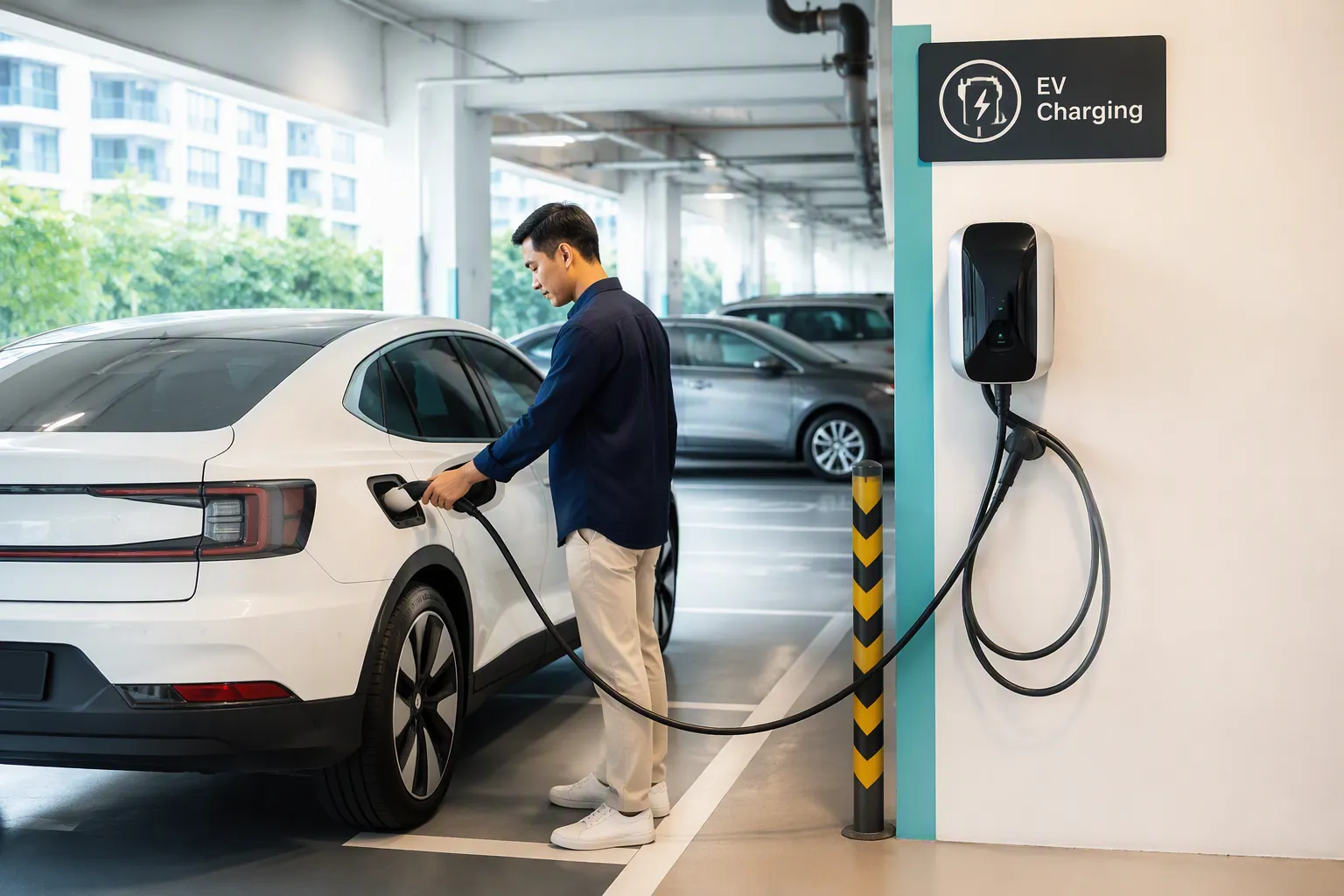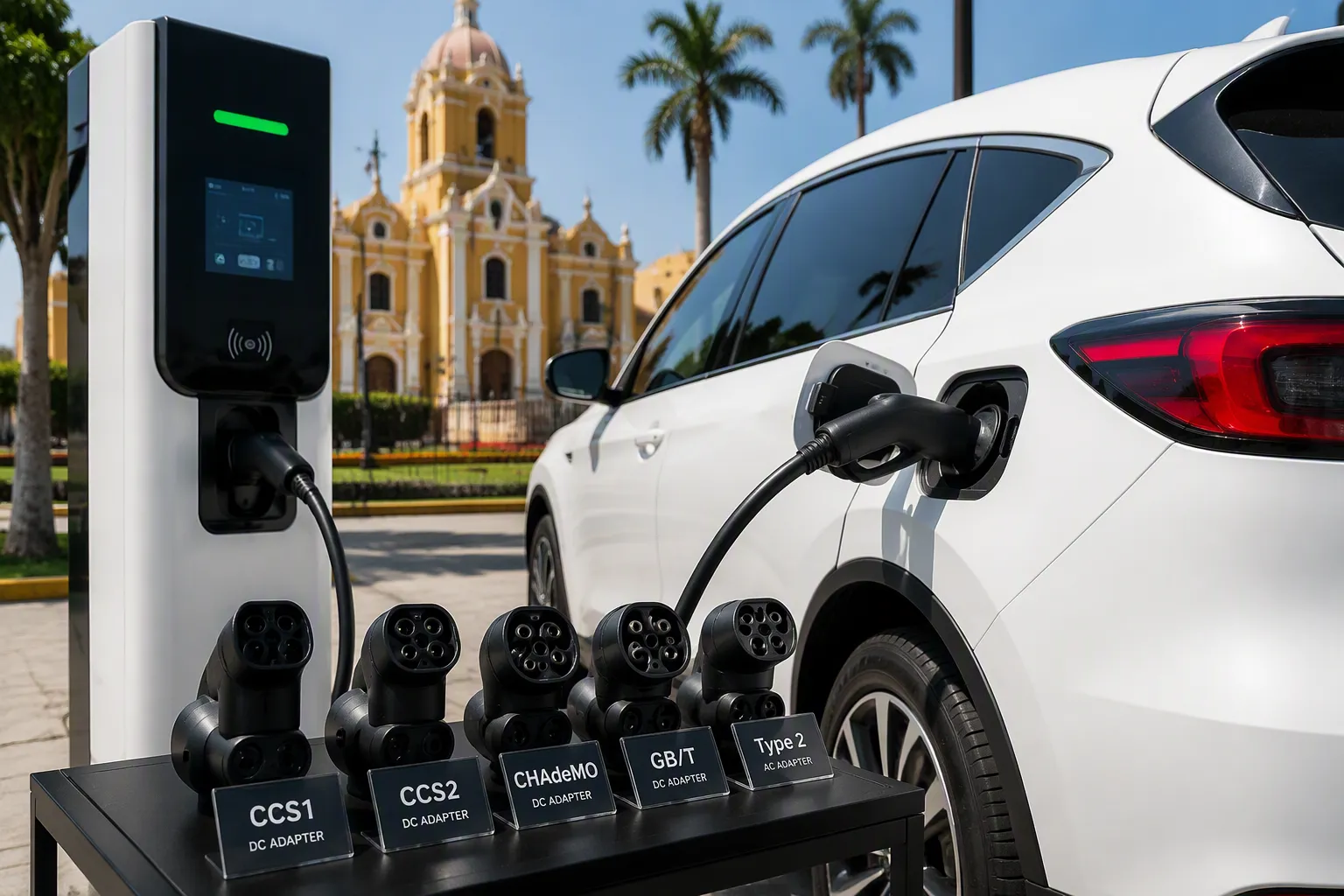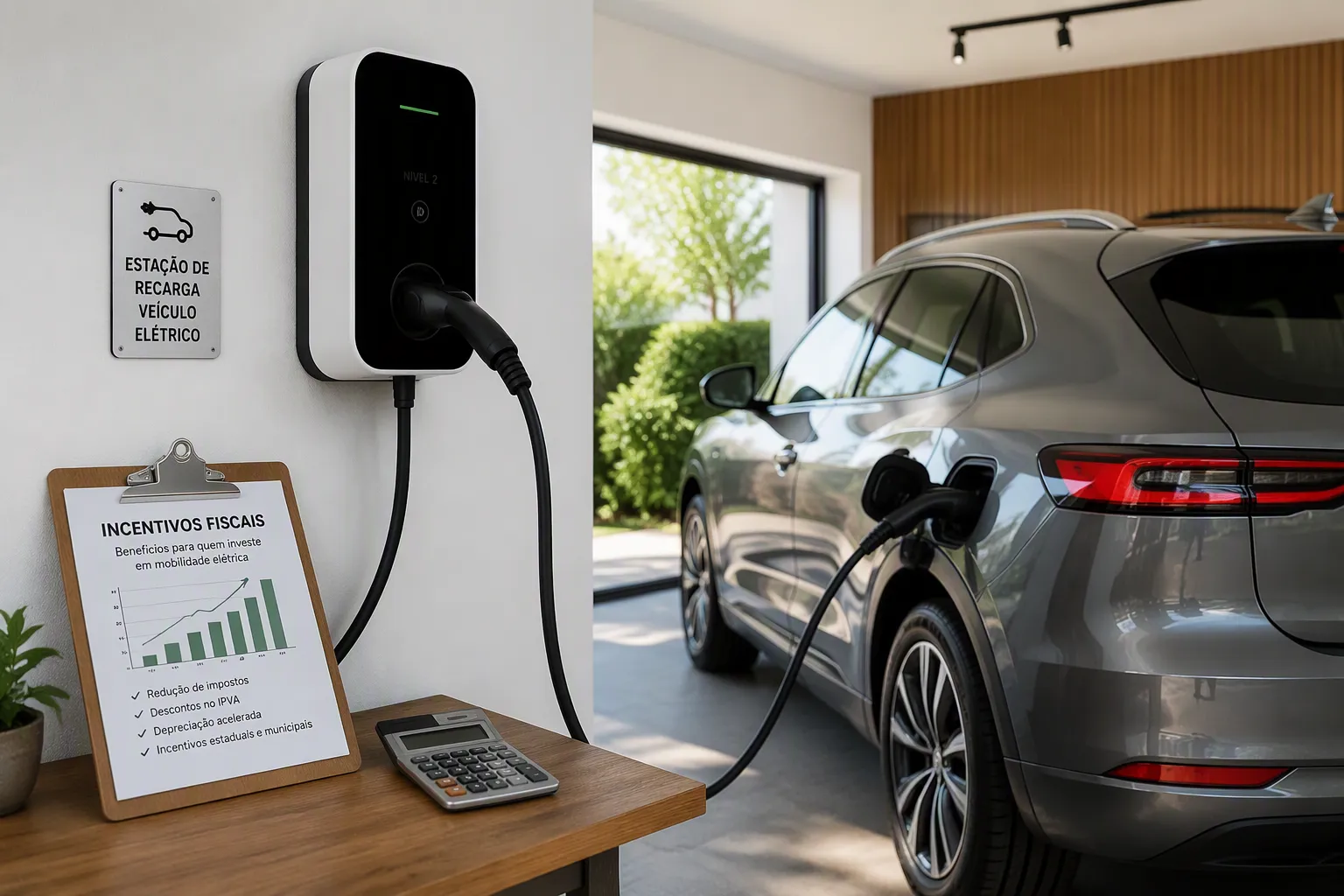
Selecting the ideal ev charging box is a critical decision for any EV owner in France. The process involves matching the charger to a vehicle’s specific charging needs. The market presents numerous options, from basic cargadores portátiles para vehículos eléctricos to a fully integrated residential Cargador EV.
Tecnológicamente avanzado Fabricantes de cargadores para VE, such as TPSON, offer sophisticated Soluciones de recarga de vehículos eléctricos. A homeowner must choose a home charging station that aligns with their power, features, and budget. This ensures the best performance for their EV.
Step 1: Determine Your Required Charging Power

Selecting the correct power level is the most critical decision when choosing a home EV charger. This choice directly impacts charging speed and installation requirements. An owner must balance their vehicle’s capabilities with their home’s electrical infrastructure and daily driving needs to find the perfect fit.
Understanding EV Charger Power Levels in France
In France, residential EV chargers are categorized by their power output, measured in kilowatts (kW). Each level offers a different charging speed, and understanding these differences is fundamental to making an informed choice.
Standard Power: 3.7 kW and 7.4 kW Chargers
Most French homes use a single-phase electrical supply, making 3.7 kW and 7.4 kW chargers the most common options.
- 3.7 kW Chargers: These are the entry-level models. They are suitable for plug-in hybrid vehicles (PHEVs) or for EV owners with low daily mileage. A 3.7 kW charger can fully replenish a battery overnight.
- 7.4 kW Chargers: This is the most popular choice for home charging in France. A 7.4 kW charger offers a practical balance of speed and cost. It can provide up to 250 km of range during an overnight charging session, which is more than enough for the average daily commute.
High Power: 11 kW and 22 kW Chargers
Higher power chargers require a three-phase (trifásico) electrical connection, which is less common in residential properties but available.
- 11 kW Chargers: An 11 kW charger provides a significant speed boost over 7.4 kW models. It is an excellent option for households with multiple EVs or for drivers who need faster turnaround times. Many modern EVs, like the MINI electric, are equipped with an 11 kW onboard charger to take full advantage of this power.
- 22 kW Chargers: This is the fastest available AC charging option. While 22 kW chargers offer maximum speed, few electric vehicles currently have an onboard charger capable of accepting this much power. They are best suited for future-proofing or for specific high-end EV models.
Match the Charger to Your Electric Vehicle
The EV itself is a key factor in the charging equation. The vehicle’s internal hardware, specifically its onboard charger (OBC), dictates the maximum AC charging speed it can handle.
Check Your Vehicle’s Onboard Charger (OBC) Capacity
Every EV has an onboard charger that converts AC power from the wallbox into DC power to store in the battery. The OBC has a maximum power rating. An owner can find this information in their vehicle’s manual or on the manufacturer’s website. This rating is the absolute limit for AC charging speed, regardless of the wallbox’s power.
Why a 22 kW Charger Won’t Speed Up Charging for an 11 kW Car
A common misconception is that a more powerful charger will always charge a vehicle faster. This is incorrect. The charging process is a negotiation between the EV charger and the vehicle’s OBC. The system will always default to the lowest maximum power rating between the two.
Ejemplo: If an owner connects a vehicle with an 11 kW OBC to a 22 kW charger, the vehicle will only charge at a maximum of 11 kW. The charger cannot force the car to accept more power than its OBC is designed for.
Compatibility Table: Common EVs and Max AC Charging Speeds
The French EV market features a wide range of vehicles with different charging capabilities. The Renault ZOE, a consistent top-seller in France, features an 11 kW onboard AC charger, making it a great match for an 11 kW wallbox. The following table shows the maximum AC charging speeds for some popular models.
| Modelo de vehículo | Maximum AC Charging Speed |
|---|---|
| Tesla Modelo 3 | 11 kW |
| Peugeot e-208 | 7.4 kW (or 11 kW option) |
| Renault ZOE | 11 kW |
| Dacia Spring | 6,6 kW |
| Fiat 500e | 11 kW |
| MG 4 | 11 kW |
| Audi Q6 e-tron | 11 kW (22 kW option planned) |
Assess Your Daily Driving and Charging Needs
An owner’s lifestyle and driving patterns are the final pieces of the puzzle. A clear understanding of daily energy consumption helps determine if a standard or high-power charger is necessary.
For the Daily Commuter: Is Overnight Charging Enough?
For most drivers, the answer is yes. An average daily commute in France is around 30-50 kilometers. A 7.4 kW charger can easily replenish this amount of energy in just a couple of hours. An overnight charging window of 8-10 hours provides more than enough time to ensure a full battery every morning.
For the High-Mileage Driver: The Need for Faster Charging
Drivers who cover long distances daily or have unpredictable schedules may benefit from faster charging. An 11 kW charger can significantly reduce charging times, offering greater flexibility. This is especially useful for households that share a single EV and need quick top-ups between trips.
How to Calculate Your Required Charging Time
An owner can estimate their charging time with a simple formula. This helps visualize how different charger power levels will meet their specific needs.
Formula:
Charging Time (hours) = Battery Size to Add (kWh) / Charger Power (kW)
For example, to add 40 kWh of energy to an EV:
- With a 7.4 kW charger: 40 kWh / 7.4 kW ≈ 5.4 hours
- With an 11 kW charger: 40 kWh / 11 kW ≈ 3.6 hours
This calculation demonstrates the tangible time savings a higher-power charger can provide for a compatible vehicle. Technologically advanced EV charging solution providers, such as TPSON, offer a range of chargers to meet these varied power requirements.
Check Your Home’s Electrical System: The Deciding Factor
A vehicle’s capabilities and a driver’s habits are important, but the home’s electrical system is the ultimate gatekeeper for charging power. The existing electrical installation determines which type of charger a homeowner can safely install. Understanding this system is a non-negotiable step before making a purchase.
Single-Phase (Monophasé): The Standard for Most French Homes
The vast majority of houses and apartments in France operate on a single-phase electrical supply. This system is perfectly adequate for typical household electricity consumption and is the foundation for the most common home charging solutions.
- Supported Power: A single-phase connection reliably supports chargers up to 7.4 kW.
- Compatibilidad: It is ideal for most EV owners, as a 7.4 kW charger can fully charge nearly any EV overnight.
- Subscription Impact: Installing a 7.4 kW charger usually requires an electricity subscription (subscription) of at least 9 kVA to prevent overloading the circuit when other appliances are in use.
This setup meets the daily charging needs of the average driver without requiring complex electrical work.
Three-Phase (Triphasé): For Higher Power Demands
A three-phase electrical supply delivers more power and is more stable under heavy loads. While less common in older residential properties, it is often found in newer, larger homes, or properties with high-consumption equipment like large heat pumps or professional workshops.
Nota: A three-phase connection is a prerequisite for installing a high-power 11 kW or 22 kW wallbox. It is impossible to run these powerful chargers on a standard single-phase supply.
Advanced providers like TPSON offer a versatile product range, ensuring homeowners can find a compatible charger for either a single-phase or three-phase installation.
How to Identify Your Electrical Installation Type
A homeowner can easily determine their electrical system type with a quick inspection. There are two simple methods to identify whether the supply is single-phase (monofásica) or three-phase (trifásico).
Examine the Main Circuit Breaker (Disjoncteur d’Abonné): This is the main switch, usually located next to the Linky meter.
- Monofásico: The breaker will be narrower and have two terminals at the bottom for the main wires (one phase and one neutral).
- Trifásico: The breaker will be wider and have four terminals at the bottom (three phases and one neutral).
Check Your Electricity Bill: The monthly or bimonthly bill from the electricity supplier (e.g., EDF, TotalEnergies) contains details about the service. The contract section will specify the subscribed power (puissance souscrite) and often indicates if the connection is monofásica o trifásico.
Upgrading Your Electrical Service (Abonnement) with Enedis
Installing an EV charger often requires more power than a standard household subscription provides. A homeowner may need to upgrade their electrical service, or subscription, to accommodate the new load. This process involves increasing the maximum power available from the grid, measured in kilovolt-amperes (kVA).
Consejo de experto: Before contacting your energy supplier, consult with your IRVE-certified installer. The installer will calculate your total power requirements, including the charger and existing appliances, and recommend the appropriate kVA subscription level (e.g., upgrading from 6 kVA to 9 kVA or 12 kVA).
To upgrade, a homeowner contacts their electricity provider. The provider then arranges the change with Enedis, the public grid operator. The upgrade may be performed remotely if the home has a Linky meter, but sometimes a technician’s visit is necessary. This change will result in a higher monthly subscription fee.
Step 2: Select the Right Features for Your EV Charging Box

After determining the right power level, the next step is to choose the features that will define the charging experience. This decision balances non-negotiable safety standards with convenience-enhancing smart technologies. A careful selection ensures the charger is safe, cost-effective, and future-proof.
Essential Safety and Compliance Features
Safety is the absolute priority for any home electrical installation. An EV charger must comply with strict European and French standards to guarantee protection for the user, the EV, and the home.
The Importance of Mode 3 Charging Protocol
Mode 3 is the required standard for dedicated home charging stations in France. This protocol establishes a continuous communication link between the EV and the charger. This “digital handshake” verifies that all conditions are safe before charging begins, during the session, and upon completion. It actively monitors for faults and can immediately stop the power flow if a problem is detected, making it significantly safer than charging from a standard domestic socket (Mode 2).
Built-in DC Leakage Protection (6mA DC)
An EV’s battery system can sometimes introduce small amounts of DC leakage current back into the home’s AC electrical system. Standard household circuit breakers (Type AC or Type A RCDs) are not designed to handle this and can be “blinded,” failing to trip during a genuine fault.
A built-in 6mA DC leakage detection device (RDC-DD) is a critical safety feature. It specifically monitors for this type of DC fault current. If detected, it signals the charger to shut down, ensuring the primary Type A RCD in the electrical panel continues to function correctly and protect against electric shock. This integrated protection is a hallmark of a high-quality, compliant EV charger.
IP and IK Ratings for Weather and Impact Resistance
The location of the charger—whether in a sheltered garage or exposed to the elements outdoors—dictates the required level of physical protection. These are defined by two key ratings:
- IP Rating (Ingress Protection): This two-digit code measures protection against solids (like dust) and liquids (like rain). For outdoor installation in France, a rating of at least IP54 is recommended to withstand rain and dust.
- IK Rating (Impact Protection): This rating indicates resistance to mechanical impacts. A rating of IK08 or higher is advisable for chargers in high-traffic areas like driveways or shared parking lots to protect against accidental bumps.
Smart Charging Features: Are They Worth It?
Funciones de carga inteligentes transform a basic charger into an intelligent device that offers cost savings, convenience, and greater control. For most EV owners, the benefits far outweigh the modest increase in upfront cost.
.
Connectivity is the gateway to all smart functionalities. Smart chargers use Wi-Fi or Bluetooth to connect to a home network and a smartphone. This connection enables a experiencia perfecta, allowing the charger to communicate with the user’s app and, in some cases, directly with the electricity grid operator. This data exchange is fundamental for managing the charging process remotely.
Scheduled Charging for Off-Peak Tariffs (Heures Creuses)
One of the most valuable smart charging features is the ability to schedule charging sessions. In France, many electricity contracts offer “Heures Creuses” (off-peak hours) with significantly lower electricity rates, typically overnight. A homeowner can use a smartphone app to program their EV to start charging only when these cheaper rates kick in, leading to substantial savings on their energy bill.
Remote Monitoring and Control via Mobile App
A dedicated mobile app puts complete control in the owner’s hands. From anywhere with an internet connection, a user can:
- Start or stop a charging session remotely.
- Track real-time energy consumption and costs.
- Receive notifications when the EV is fully charged.
- Manage access for different users.
- Receive over-the-air software updates that can add new features.
Advanced Energy Management Systems
For homeowners looking to maximize efficiency and safety, advanced energy management systems offer sophisticated control over how and when their EV draws power.
Dynamic Load Balancing (Délestage) to Prevent Overloads
Dynamic Load Balancing (DLB), or délestage in French, is a premier smart feature that prevents a home’s main circuit breaker from tripping. It works by continuously monitoring the home’s total electricity consumption in real-time.
Cómo Funciona: The system uses a smart meter or a current transformer (CT) clamp to measure the total power being used by the house. If it detects that the total demand is approaching the limit of the electrical subscription (e.g., when the oven, washing machine, and water heater are all running), it automatically and temporarily reduces the power going to the EV. Once other appliances turn off, the system restores full power to the charging session. This intelligent management prevents power outages and avoids the need for a costly electrical service upgrade.
Solar Integration for Photovoltaic (PV) System Owners
Homeowners with solar panels can leverage smart charging to maximize their self-consumption of green energy. Chargers with solar integration can be set to a “solar-only” mode. In this mode, the EV will only charge using the surplus electricity generated by the PV system that would otherwise be exported to the grid. This is the most economical and environmentally friendly way to power an EV.
Vehicle-to-Grid (V2G) and Vehicle-to-Home (V2H) Readiness
V2G and V2H are cutting-edge technologies that enable bidirectional charging, allowing an EV to not only draw power from the grid but also send it back.
- Vehículo a casa (V2H): Allows the EV to power the home during a blackout.
- Vehículo a red (V2G): Allows the EV to sell power back to the grid during peak demand, potentially generating income for the owner.
In France, this technology is still in its infancy. V2H is not yet authorized for general use, and only a single AC V2G charger is commercially available, requiring specific compatible vehicles like the new Renault 5 E-Tech. While not a primary feature for most buyers today, choosing a “V2G-ready” charger can be a wise investment for the future. Technologically advanced providers like TPSON are developing solutions to meet this emerging demand.
Access and Usability Options
Beyond power and connectivity, the daily usability of an EV charger depends on its physical design and access controls. These practical features determine how an owner interacts with their charging station every day. A homeowner should consider these charging options to ensure a seamless and secure experience.
Tethered vs. Untethered EV Charger Models
The first physical choice is between a tethered model with a permanently attached cable and an untethered model with a universal socket. Each design offers distinct advantages and disadvantages.
A cargador con cable comes with a fixed cable. This design prioritizes convenience and security.
- Advantages:
- The cable is included in the unit’s price.
- Charging is fast and simple; the owner just uncoils the cable and plugs it into the EV.
- The permanently attached cable is less likely to be stolen.
- Disadvantages:
- The owner is limited to the manufacturer-supplied cable length.
- The unit is restricted to one connector type (Type 2 is standard in Europe), limiting compatibility if a visitor has a different vehicle type.
En cargador sin cables features a socket, requiring the user to supply their own cable. This design offers maximum flexibility.
- Advantages:
- It is future-proof; an owner can easily switch cables for different lengths or connector types.
- The unit has a cleaner, tidier look when not in use, as the cable can be stored separately.
- The portable cable can be used for public charging.
- Disadvantages:
- The charging cable is usually a separate purchase.
- The process is less convenient, requiring the user to handle the cable at both ends for each session.
- The cable can be stolen or disconnected if not properly secured.
Decision Point: A tethered ev charger is ideal for users who value plug-and-go simplicity. An untethered model is better for those who prioritize a tidy aesthetic and the flexibility to use different cables.
RFID Card or App-Based Access Control
If the charging station is in an accessible area like a driveway or a shared parking garage, controlling who can use it is essential. This prevents unauthorized use and ensures the charger is always available for the owner. Modern chargers offer two primary access control options.
- RFID Card Access: This system requires a user to tap a small card or key fob against the charger to start or stop a charging session. It is a simple and reliable method, perfect for households where multiple family members need access without needing a smartphone app.
- App-Based Access: This method uses a smartphone application to authorize charging. It offers greater control, allowing the owner to remotely lock or unlock the charger, grant temporary access to guests, and monitor usage from anywhere.
Many advanced units from providers like TPSON offer both options, giving homeowners the best of both worlds.
User Interface: Simple LED Indicators vs. LCD Screens
The user interface on the ev charging box provides at-a-glance information about the charging status. The choice comes down to a preference for minimalist design or detailed, real-time data.
- Simple LED Indicators: Most chargers use a system of colored LED lights to communicate their status. For example, a blue light might indicate “ready,” a flashing green light “charging,” a solid green light “fully charged,” and a red light “fault.” This is a straightforward and effective interface that provides all the essential information.
- LCD Screens: Higher-end models often include a small LCD screen directly on the unit. This screen can display detailed information in real-time, such as the current charging power (kW), the amount of energy delivered (kWh), the duration of the session, and even the estimated cost. This is ideal for the data-driven EV owner who wants immediate feedback without opening a mobile app.
Step 3: Budgeting for Your Home Charging Station
Creating a clear budget is a crucial step in acquiring a home charging station. An owner must account for the price of the unit itself, the professional installation costs, and the potential savings from French government subsidies. This financial planning ensures there are no surprises along the way.
The Cost of the EV Charging Box Unit
The price of an ev charging box varies widely based on its power, features, and brand. Technologically advanced providers like TPSON offer a range of models to fit different budgets and needs.
Price Range for Basic 7.4 kW Chargers
Entry-level 7.4 kW chargers are the most affordable option. These units provide essential charging functions without advanced connectivity. A homeowner can expect to pay between €400 and €700 for a reliable, non-smart model.
Price Range for Smart 7.4 kW and 11 kW Chargers
Smart chargers offer significant advantages like remote control and scheduled charging. For a smart 7.4 kW or 11 kW unit with Wi-Fi connectivity and app integration, prices typically range from €700 to €1,200. This category represents the best value for most EV owners.
Price Range for High-End 22 kW Chargers
High-power 22 kW chargers and models with premium features like dynamic load balancing or V2G-readiness command the highest prices. These top-tier units generally cost €1,200 or more, reflecting their advanced capabilities and future-proof technology.
Understanding Installation Costs in France
Proper installation is non-negotiable for safety and compliance. In France, this work must be performed by a qualified professional.
The Role of the IRVE Certified Installer
An IRVE (Infraestructura de recarga para vehículos eléctricos) certified installer is a professional electrician with specialized training in EV charging systems. Hiring an IRVE installer is a legal requirement for any charger above 3.7 kW. It also guarantees the installation is safe and qualifies the homeowner for government aid.
Factors Influencing Installation Price
Several factors determine the final installation cost. The distance from the electrical panel to the charger’s location is a primary driver. Longer cable runs increase material and labor costs, especially if cables must pass through walls or be buried underground. Additionally, homes with older wiring may need an electrical panel upgrade to support the new electric charging station, which adds to the overall expense.
Average Installation Cost for a Standard Setup
For a standard installation with a short distance to the electrical panel and no major electrical work, a homeowner can expect to pay between €500 and €1,200. This price covers labor, cabling, and the necessary protective devices in the electrical panel.
What a Standard Installation Quote Should Include
A professional quote should be detailed and transparent. It must include:
- The cost of the charging unit (if supplied by the installer).
- Costos de mano de obra para la instalación.
- Price of the cabling and conduit.
- Cost of required safety components (e.g., Type A RCD, circuit breaker).
- The post-installation inspection and commissioning.
Navigating Financial Aid and Subsidies in France
The French government offers several financial incentives to encourage the adoption of home EV charging solutions. These programs can significantly reduce the overall cost.
The “Crédit d’impôt” (Tax Credit) for Home Charging
Homeowners can benefit from a tax credit for the purchase and installation of a charging station. This credit covers a percentage of the total cost, up to a fixed amount per charging point.
Nota: This aid is available for a primary or secondary residence and applies to both owners and tenants.
The “Prime ADVENIR” Subsidy Program
The ADVENIR program offers a subsidy for the installation of charging points in collective residential buildings (e.g., apartment complexes). It helps cover a portion of the supply and installation costs for individual or shared chargers.
Reduced VAT Rate (TVA à 5,5%) for Installation
For properties over two years old, the installation of an EV charger by a certified professional is eligible for a reduced VAT rate of 5.5% instead of the standard 20%. This applies to both the equipment and the labor if purchased through the installer.
Local and Regional Grants
Some regions and municipalities offer additional grants to promote EV adoption. An owner should check with their local town hall (town hall) or regional council to see if any local aid programs are available.
Step 4: The Installation Process for Your EV Charger
Securing the right ev charger is only half the journey; a professional installation is essential to ensure safety, compliance, and performance. This final step involves finding a certified expert, undergoing a technical assessment, and overseeing the installation day. A proper installation guarantees the system functions correctly and safely for years to come.
Finding and Choosing a Certified IRVE Installer
The selection of a qualified installer is the most critical part of the installation process. In France, only an IRVE-certified professional can legally install a charging station more powerful than 3.7 kW and unlock access to government subsidies.
Where to Find Qualified Professionals
Homeowners can find certified installers through official databases, such as the one managed by Qualifelec, the French certification body. Additionally, many reputable EV charger manufacturers and suppliers, including technologically advanced providers like TPSON, maintain a network of trusted installation partners they can recommend to their customers.
How to Compare Installation Quotes
It is wise to obtain at least two or three quotes before making a decision. A homeowner should compare more than just the final price. A professional quote will be transparent, itemizing costs for the charger unit, cabling, labor, and necessary safety devices. Vague or incomplete quotes can be a red flag.
The Pre-Installation Technical Site Visit (Visite Technique)
Before providing a final quote, a reputable installer will conduct a visite technique, o visita técnica in situ. Esta evaluación en el lugar es crucial para planificar una instalación segura y eficiente.
Qué evaluará el instalador
Durante la visita, el instalador evalúa la infraestructura eléctrica existente de la vivienda para determinar el alcance de los trabajos. Se trata de una inspección detallada que va más allá de una simple revisión visual.
El instalador realiza varias evaluaciones clave de seguridad:
- Análisis del material de las tuberías: Se identificará si las tuberías de agua y gas son metálicas (masas extrañas) o de plástico (no extrañas). Las tuberías metálicas pueden conducir corrientes de defecto y requieren una atención especial.
- Verificación de la equipotencialidad: En viviendas con tuberías metálicas, el instalador comprueba si existe una conexión de equipotencialidad. Esta conexión de seguridad vincula las tuberías a la toma de tierra principal. Si no existe, debe añadirse antes de proceder con la instalación del cargador.
Recepción de su presupuesto final detallado (Devis)
Tras la visita in situ, el instalador proporcionará un presupuesto final detallado (devis). Este documento reflejará los requisitos específicos de la propiedad, incluyendo cualquier mejora eléctrica necesaria o un trazado de cableado complejo. Este presupuesto constituye la base del contrato para los trabajos de instalación.
El Día de la Instalación
Con un presupuesto firmado, se puede programar la instalación. El proceso es sistemático y está diseñado para ser completado con eficacia por un profesional.
Pasos clave de la instalación
La instalación física sigue un plan estructurado para garantizar que todo se maneje correctamente de principio a fin.
- Notificación al DNO: El instalador notifica primero al Operador de la Red de Distribución (DNO) sobre el nuevo dispositivo de alta potencia. Este es un paso obligatorio para garantizar que la red local pueda soportar la carga adicional.
- Trabajos in situ: En el día programado, el ingeniero tiende el cable eléctrico dedicado desde el cuadro principal hasta la ubicación del cargador, instalándolo en un conducto protector.
- Instalación de componentes: El instalador coloca los dispositivos de seguridad necesarios (ID y interruptor automático) en el cuadro eléctrico y monta el cargador para vehículos eléctricos en la pared.
Comprobaciones finales y puesta en marcha del cargador
Una vez instalado el hardware, el instalador pone en marcha el cargador. Esto implica encenderlo, probar sus funciones de seguridad y conectarlo a la red Wi-Fi del hogar. Para un cargador inteligente, ayudarán al propietario a configurar la aplicación móvil para controlar y monitorizar la nueva estación de carga para vehículos eléctricos.
Recepción de su certificado de conformidad
Una vez finalizada la instalación, el instalador entrega al propietario un certificado de conformidad (attestation de conformité). Este documento oficial certifica que la instalación cumple con todas las normas eléctricas francesas. Es esencial para fines de seguros y para validar la garantía del vehículo eléctrico.
Un propietario elige el cargador para vehículos eléctricos perfecto ajustando la potencia a su vehículo eléctrico y al sistema eléctrico de su hogar. El tipo de sistema, , monofásico o trifásico, determina la velocidad máxima de carga. A continuación, el propietario selecciona funciones inteligentes que se adapten a sus necesidades de estilo de vida y presupuesto. El control remoto y la carga programada ofrecen valor a largo plazo, pero la seguridad es esencial. Por último, contratar a un instalador certificado IRVE garantiza una estación de carga doméstica segura y el acceso a las ayudas financieras francesas. Seguir estos pasos prepara al propietario para seleccionar un cargador que satisfaga sus necesidades de carga.
PREGUNTAS FRECUENTES
¿Puede un propietario instalar él mismo un cargador de VE?
No. La ley francesa exige que un profesional certificado IRVE instale cualquier cargador superior a 3,7 kW. Esto garantiza la seguridad, el cumplimiento normativo y la elegibilidad para las ayudas gubernamentales. La autoinstalación no está permitida para estas unidades de alta potencia.
¿Cuál es la principal diferencia entre un cargador de 7,4 kW y uno de 11 kW?
Un cargador de 7,4 kW utiliza una conexión monofásica, común en la mayoría de los hogares. Un cargador de 11 kW requiere una conexión trifásica, ofreciendo una carga más rápida para un vehículo eléctrico compatible. La elección la determina el sistema eléctrico del hogar.
¿Todos los vehículos eléctricos cargan a la misma velocidad?
No. Cada vehículo eléctrico tiene una velocidad máxima de carga en CA determinada por su cargador de a bordo. El vehículo solo tomará energía hasta su límite, incluso si está conectado a una wallbox más potente.
¿Es necesario un cargador inteligente?
Aunque no es obligatorio, un cargador inteligente para vehículos eléctricos ofrece beneficios significativos. Permite programar la carga durante las horas valle para ahorrar costes y proporciona control remoto a través de una aplicación para mayor comodidad y monitorización.
¿Cómo solicita un propietario el crédit d’impôt?
?Un propietario solicita el crédito fiscal al presentar su declaración anual de impuestos sobre la renta (declaración de impuestos sobre la renta.
). Debe aportar la factura del instalador IRVE como prueba de compra e instalación.
¿Qué hace que un cargador sea "a prueba de futuro"? equilibrio de carga dinámico, Un cargador a prueba de futuro tiene características como.