
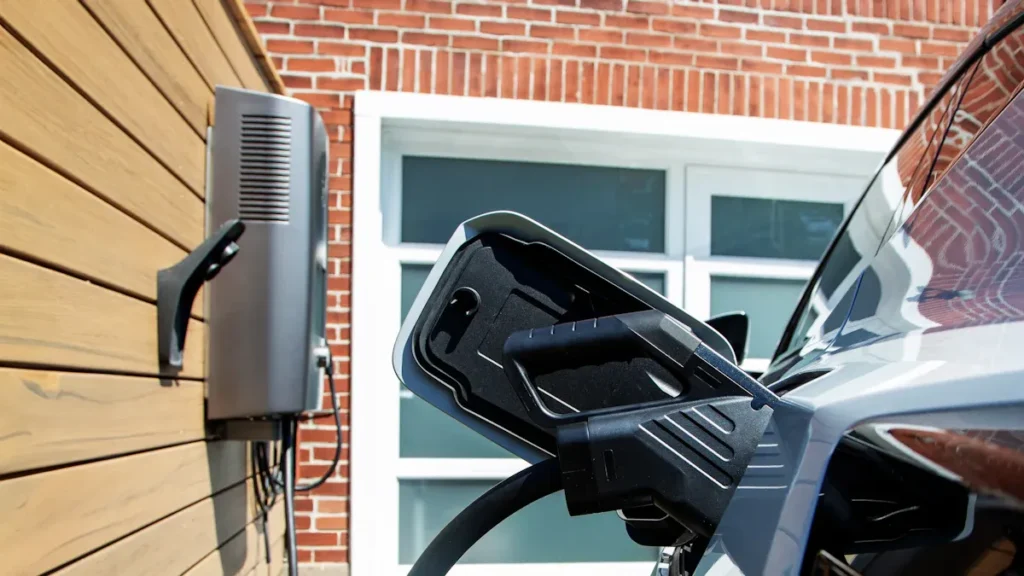
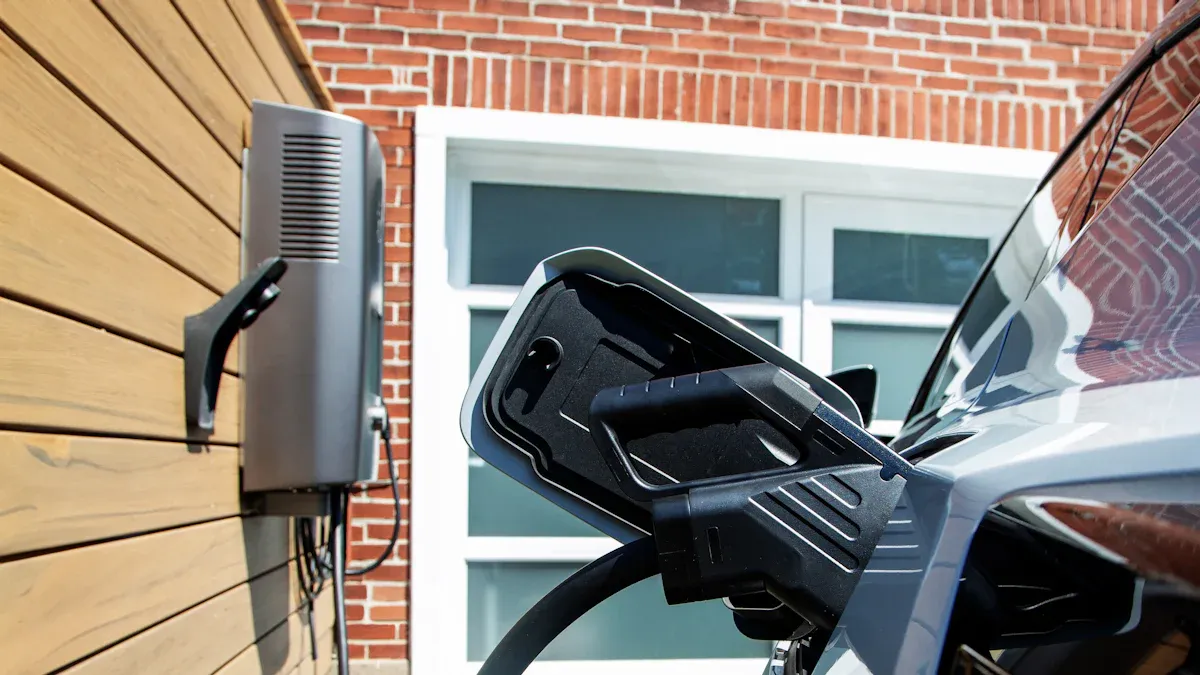
Selecting the ideal ev charging box is a critical decision for any EV owner in France. The process involves matching the charger to a vehicle’s specific charging needs. The market presents numerous options, from basic carregadores portáteis para veículos eléctricos to a fully integrated residential Carregador de veículos eléctricos.
Tecnologicamente avançado Fabricantes de carregadores para veículos eléctricos, such as TPSON, offer sophisticated Soluções de carregamento de veículos eléctricos. A homeowner must choose a home charging station that aligns with their power, features, and budget. This ensures the best performance for their EV.
Step 1: Determine Your Required Charging Power

Selecting the correct power level is the most critical decision when choosing a home EV charger. This choice directly impacts charging speed and installation requirements. An owner must balance their vehicle’s capabilities with their home’s electrical infrastructure and daily driving needs to find the perfect fit.
Understanding EV Charger Power Levels in France
In France, residential EV chargers are categorized by their power output, measured in kilowatts (kW). Each level offers a different charging speed, and understanding these differences is fundamental to making an informed choice.
Standard Power: 3.7 kW and 7.4 kW Chargers
Most French homes use a single-phase electrical supply, making 3.7 kW and 7.4 kW chargers the most common options.
- 3.7 kW Chargers: These are the entry-level models. They are suitable for plug-in hybrid vehicles (PHEVs) or for EV owners with low daily mileage. A 3.7 kW charger can fully replenish a battery overnight.
- 7.4 kW Chargers: This is the most popular choice for home charging in France. A 7.4 kW charger offers a practical balance of speed and cost. It can provide up to 250 km of range during an overnight charging session, which is more than enough for the average daily commute.
High Power: 11 kW and 22 kW Chargers
Higher power chargers require a three-phase (trifásico) electrical connection, which is less common in residential properties but available.
- 11 kW Chargers: An 11 kW charger provides a significant speed boost over 7.4 kW models. It is an excellent option for households with multiple EVs or for drivers who need faster turnaround times. Many modern EVs, like the MINI electric, are equipped with an 11 kW onboard charger to take full advantage of this power.
- 22 kW Chargers: This is the fastest available AC charging option. While 22 kW chargers offer maximum speed, few electric vehicles currently have an onboard charger capable of accepting this much power. They are best suited for future-proofing or for specific high-end EV models.
Match the Charger to Your Electric Vehicle
The EV itself is a key factor in the charging equation. The vehicle’s internal hardware, specifically its onboard charger (OBC), dictates the maximum AC charging speed it can handle.
Check Your Vehicle’s Onboard Charger (OBC) Capacity
Every EV has an onboard charger that converts AC power from the wallbox into DC power to store in the battery. The OBC has a maximum power rating. An owner can find this information in their vehicle’s manual or on the manufacturer’s website. This rating is the absolute limit for AC charging speed, regardless of the wallbox’s power.
Why a 22 kW Charger Won’t Speed Up Charging for an 11 kW Car
A common misconception is that a more powerful charger will always charge a vehicle faster. This is incorrect. The charging process is a negotiation between the EV charger and the vehicle’s OBC. The system will always default to the lowest maximum power rating between the two.
Exemplo: If an owner connects a vehicle with an 11 kW OBC to a 22 kW charger, the vehicle will only charge at a maximum of 11 kW. The charger cannot force the car to accept more power than its OBC is designed for.
Compatibility Table: Common EVs and Max AC Charging Speeds
The French EV market features a wide range of vehicles with different charging capabilities. The Renault ZOE, a consistent top-seller in France, features an 11 kW onboard AC charger, making it a great match for an 11 kW wallbox. The following table shows the maximum AC charging speeds for some popular models.
| Modelo do veículo | Maximum AC Charging Speed |
|---|---|
| Tesla Modelo 3 | 11 kW |
| Peugeot e-208 | 7.4 kW (or 11 kW option) |
| Renault ZOE | 11 kW |
| Dacia Spring | 6,6 kW |
| Fiat 500e | 11 kW |
| MG 4 | 11 kW |
| Audi Q6 e-tron | 11 kW (22 kW option planned) |
Assess Your Daily Driving and Charging Needs
An owner’s lifestyle and driving patterns are the final pieces of the puzzle. A clear understanding of daily energy consumption helps determine if a standard or high-power charger is necessary.
For the Daily Commuter: Is Overnight Charging Enough?
For most drivers, the answer is yes. An average daily commute in France is around 30-50 kilometers. A 7.4 kW charger can easily replenish this amount of energy in just a couple of hours. An overnight charging window of 8-10 hours provides more than enough time to ensure a full battery every morning.
For the High-Mileage Driver: The Need for Faster Charging
Drivers who cover long distances daily or have unpredictable schedules may benefit from faster charging. An 11 kW charger can significantly reduce charging times, offering greater flexibility. This is especially useful for households that share a single EV and need quick top-ups between trips.
How to Calculate Your Required Charging Time
An owner can estimate their charging time with a simple formula. This helps visualize how different charger power levels will meet their specific needs.
Formula:
Charging Time (hours) = Battery Size to Add (kWh) / Charger Power (kW)
For example, to add 40 kWh of energy to an EV:
- With a 7.4 kW charger: 40 kWh / 7.4 kW ≈ 5.4 hours
- With an 11 kW charger: 40 kWh / 11 kW ≈ 3.6 hours
This calculation demonstrates the tangible time savings a higher-power charger can provide for a compatible vehicle. Technologically advanced EV charging solution providers, such as TPSON, offer a range of chargers to meet these varied power requirements.
Check Your Home’s Electrical System: The Deciding Factor
A vehicle’s capabilities and a driver’s habits are important, but the home’s electrical system is the ultimate gatekeeper for charging power. The existing electrical installation determines which type of charger a homeowner can safely install. Understanding this system is a non-negotiable step before making a purchase.
Single-Phase (Monophasé): The Standard for Most French Homes
The vast majority of houses and apartments in France operate on a single-phase electrical supply. This system is perfectly adequate for typical household electricity consumption and is the foundation for the most common home charging solutions.
- Supported Power: A single-phase connection reliably supports chargers up to 7.4 kW.
- Compatibilidade: It is ideal for most EV owners, as a 7.4 kW charger can fully charge nearly any EV overnight.
- Subscription Impact: Installing a 7.4 kW charger usually requires an electricity subscription (subscription) of at least 9 kVA to prevent overloading the circuit when other appliances are in use.
This setup meets the daily charging needs of the average driver without requiring complex electrical work.
Three-Phase (Triphasé): For Higher Power Demands
A three-phase electrical supply delivers more power and is more stable under heavy loads. While less common in older residential properties, it is often found in newer, larger homes, or properties with high-consumption equipment like large heat pumps or professional workshops.
Nota: A three-phase connection is a prerequisite for installing a high-power 11 kW or 22 kW wallbox. It is impossible to run these powerful chargers on a standard single-phase supply.
Advanced providers like TPSON offer a versatile product range, ensuring homeowners can find a compatible charger for either a single-phase or three-phase installation.
How to Identify Your Electrical Installation Type
A homeowner can easily determine their electrical system type with a quick inspection. There are two simple methods to identify whether the supply is single-phase (Carregadores de 11 kW:) or three-phase (trifásico).
Examine the Main Circuit Breaker (Disjoncteur d’Abonné): This is the main switch, usually located next to the Linky meter.
- Single-Phase: The breaker will be narrower and have two terminals at the bottom for the main wires (one phase and one neutral).
- Three-Phase: The breaker will be wider and have four terminals at the bottom (three phases and one neutral).
Check Your Electricity Bill: The monthly or bimonthly bill from the electricity supplier (e.g., EDF, TotalEnergies) contains details about the service. The contract section will specify the subscribed power (potência souscrite) and often indicates if the connection is Carregadores de 11 kW: ou trifásico.
Upgrading Your Electrical Service (Abonnement) with Enedis
Installing an EV charger often requires more power than a standard household subscription provides. A homeowner may need to upgrade their electrical service, or subscription, to accommodate the new load. This process involves increasing the maximum power available from the grid, measured in kilovolt-amperes (kVA).
Dica de especialista: Before contacting your energy supplier, consult with your IRVE-certified installer. The installer will calculate your total power requirements, including the charger and existing appliances, and recommend the appropriate kVA subscription level (e.g., upgrading from 6 kVA to 9 kVA or 12 kVA).
To upgrade, a homeowner contacts their electricity provider. The provider then arranges the change with Enedis, the public grid operator. The upgrade may be performed remotely if the home has a Linky meter, but sometimes a technician’s visit is necessary. This change will result in a higher monthly subscription fee.
Step 2: Select the Right Features for Your EV Charging Box

After determining the right power level, the next step is to choose the features that will define the charging experience. This decision balances non-negotiable safety standards with convenience-enhancing smart technologies. A careful selection ensures the charger is safe, cost-effective, and future-proof.
Essential Safety and Compliance Features
Safety is the absolute priority for any home electrical installation. An EV charger must comply with strict European and French standards to guarantee protection for the user, the EV, and the home.
The Importance of Mode 3 Charging Protocol
Mode 3 is the required standard for dedicated home charging stations in France. This protocol establishes a continuous communication link between the EV and the charger. This “digital handshake” verifies that all conditions are safe before charging begins, during the session, and upon completion. It actively monitors for faults and can immediately stop the power flow if a problem is detected, making it significantly safer than charging from a standard domestic socket (Mode 2).
Built-in DC Leakage Protection (6mA DC)
An EV’s battery system can sometimes introduce small amounts of DC leakage current back into the home’s AC electrical system. Standard household circuit breakers (Type AC or Type A RCDs) are not designed to handle this and can be “blinded,” failing to trip during a genuine fault.
A built-in 6mA DC leakage detection device (RDC-DD) is a critical safety feature. It specifically monitors for this type of DC fault current. If detected, it signals the charger to shut down, ensuring the primary Type A RCD in the electrical panel continues to function correctly and protect against electric shock. This integrated protection is a hallmark of a high-quality, compliant EV charger.
IP and IK Ratings for Weather and Impact Resistance
The location of the charger—whether in a sheltered garage or exposed to the elements outdoors—dictates the required level of physical protection. These are defined by two key ratings:
- IP Rating (Ingress Protection): This two-digit code measures protection against solids (like dust) and liquids (like rain). For outdoor installation in France, a rating of at least IP54 is recommended to withstand rain and dust.
- IK Rating (Impact Protection): This rating indicates resistance to mechanical impacts. A rating of IK08 or higher is advisable for chargers in high-traffic areas like driveways or shared parking lots to protect against accidental bumps.
Smart Charging Features: Are They Worth It?
Caraterísticas de carregamento inteligente transform a basic charger into an intelligent device that offers cost savings, convenience, and greater control. For most EV owners, the benefits far outweigh the modest increase in upfront cost.
Conectividade Wi-Fi e Bluetooth
Connectivity is the gateway to all smart functionalities. Smart chargers use Wi-Fi or Bluetooth to connect to a home network and a smartphone. This connection enables a seamless experience, allowing the charger to communicate with the user’s app and, in some cases, directly with the electricity grid operator. This data exchange is fundamental for managing the charging process remotely.
Scheduled Charging for Off-Peak Tariffs (Heures Creuses)
One of the most valuable smart charging features is the ability to schedule charging sessions. In France, many electricity contracts offer “Heures Creuses” (off-peak hours) with significantly lower electricity rates, typically overnight. A homeowner can use a smartphone app to program their EV to start charging only when these cheaper rates kick in, leading to substantial savings on their energy bill.
Remote Monitoring and Control via Mobile App
Um aplicativo móvel dedicado coloca o controle total nas mãos do proprietário. De qualquer lugar com conexão à internet, um usuário pode:
- Iniciar ou parar uma sessão de carregamento à distância.
- Acompanhar o consumo de energia e os custos em tempo real.
- Receber notificações quando o veículo elétrico estiver totalmente carregado.
- Gerenciar o acesso para diferentes usuários.
- Receber atualizações de software *over-the-air* que podem adicionar novos recursos..
Sistemas Avançados de Gestão de Energia
Para proprietários que buscam maximizar a eficiência e a segurança, os sistemas avançados de gestão de energia oferecem controle sofisticado sobre como e quando o seu veículo elétrico consome energia.
Balanceamento Dinâmico de Carga (Délestage) para Prevenir Sobrecargas
O Balanceamento Dinâmico de Carga (BDC), ou *délestage* em francês, é uma funcionalidade inteligente de primeira linha que evita que o disjuntor principal da residência desarme. Ele funciona monitorando continuamente o consumo total de eletricidade da casa em tempo real..
Como funciona: O sistema utiliza um medidor inteligente ou uma pinça transformadora de corrente (TC) para medir a potência total utilizada pela casa. Se detectar que a demanda total está se aproximando do limite da potência contratada (por exemplo, quando o forno, a máquina de lavar e o aquecedor de água estão todos funcionando), ele reduz automatica e temporariamente a energia fornecida ao veículo elétrico. Quando outros aparelhos são desligados, o sistema restaura a potência total para a sessão de carregamento. Esta gestão inteligente previne interrupções de energia e evita a necessidade de uma dispendiosa atualização da instalação elétrica.
Integração Solar para Proprietários de Sistemas Fotovoltaicos (FV)
Proprietários com painéis solares podem aproveitar o carregamento inteligente para maximizar o autoconsumo de energia verde. Carregadores com integração solar podem ser configurados no modo “apenas solar”. Neste modo, o veículo elétrico só carrega usando o excedente de eletricidade gerado pelo sistema FV que, de outra forma, seria exportado para a rede. Esta é a forma mais econômica e ecológica de carregar um veículo elétrico.
Prontidão para Vehicle-to-Grid (V2G) e Vehicle-to-Home (V2H)
V2G e V2H são tecnologias de ponta que permitem o carregamento bidirecional, possibilitando que um veículo elétrico não apenas receba energia da rede, mas também a devolva.
- Vehicle-to-Home (V2H): Permite que o veículo elétrico alimente a casa durante um apagão.
- Veículo para rede (V2G): Permite que o veículo elétrico venda energia de volta à rede durante os picos de demanda, potencialmente gerando renda para o proprietário.
Na França, esta tecnologia ainda está em sua infância. O V2H ainda não está autorizado para uso geral, e apenas um único carregador AC V2G está disponível comercialmente, exigindo veículos compatíveis específicos, como o novo Renault 5 E-Tech. Embora não seja uma característica principal para a maioria dos compradores atualmente, escolher um carregador “pronto para V2G” pode ser um investimento sábio para o futuro. Provedores tecnologicamente avançados como a TPSON estão desenvolvendo soluções para atender a esta demanda emergente.
Opções de Acesso e Usabilidade
Além da potência e conectividade, a usabilidade diária de um carregador de veículo elétrico depende do seu design físico e controles de acesso. Estas características práticas determinam como um proprietário interage com sua estação de carregamento todos os dias. Um proprietário deve considerar estas opções de carregamento para garantir uma experiência perfeita e segura.
Modelos de Carregadores de VE com Cabo Fixo vs. com Tomada
A primeira escolha física é entre um modelo com cabo permanentemente fixado e um modelo com uma tomada universal. Cada design oferece vantagens e desvantagens distintas.
A carregador com fio vem com um cabo fixo. Este design prioriza conveniência e segurança.
- Vantagens:
- O cabo está incluído no preço da unidade..
- O carregamento é rápido e simples; o proprietário apenas desenrola o cabo e o conecta ao veículo elétrico.
- O cabo permanentemente fixado tem menor probabilidade de ser roubado..
- Desvantagens:
- O proprietário fica limitado ao comprimento do cabo fornecido pelo fabricante.
- A unidade está restrita a um tipo de conector (o Tipo 2 é padrão na Europa), limitando a compatibilidade se um visitante tiver um tipo de veículo diferente.
Um carregador sem fios apresenta uma tomada, exigindo que o usuário forneça seu próprio cabo. Este design oferece máxima flexibilidade.
- Vantagens:
- É à prova de futuro; um proprietário pode facilmente trocar cabos por diferentes comprimentos ou tipos de conector.
- A unidade tem uma aparência mais limpa e organizada quando não está em uso, pois o cabo pode ser armazenado separadamente.
- O cabo portátil pode ser usado para carregamento público.
- Desvantagens:
- O cabo de carregamento geralmente é uma compra separada.
- O processo é menos conveniente, exigindo que o usuário manipule o cabo em ambas as extremidades a cada sessão.
- O cabo pode ser roubado ou desconectado se não estiver devidamente protegido.
Ponto de Decisão: Um carregador de VE com cabo fixo é ideal para usuários que valorizam a simplicidade do "conectar e usar". Um modelo com tomada é melhor para aqueles que priorizam uma estética organizada e a flexibilidade de usar cabos diferentes.
Controle de Acesso por Cartão RFID ou Baseado em Aplicativo
Se a estação de carregamento estiver em uma área acessível, como uma garagem ou estacionamento compartilhado, controlar quem pode usá-la é essencial. Isso evita o uso não autorizado e garante que o carregador esteja sempre disponível para o proprietário. Os carregadores modernos oferecem duas opções principais de controle de acesso.
- Acesso por Cartão RFID: Este sistema requer que o usuário aproxime um pequeno cartão ou chaveiro do carregador para iniciar ou parar uma sessão de carregamento. É um método simples e confiável, perfeito para residências onde vários membros da família precisam de acesso sem a necessidade de um aplicativo de smartphone.
- Acesso Baseado em Aplicativo: Este método utiliza um aplicativo de smartphone para autorizar o carregamento. Oferece maior controle, permitindo que o proprietário bloqueie ou desbloqueie o carregador remotamente, conceda acesso temporário a convidados e monitore o uso de qualquer lugar.
Muitas unidades avançadas de provedores como a TPSON oferecem ambas as opções, dando aos proprietários o melhor dos dois mundos.
Interface do Usuário: Indicadores LED Simples vs. Telas LCD
A interface do usuário na caixa de carregamento do veículo elétrico fornece informações de relance sobre o status do carregamento. A escolha se resume a uma preferência por design minimalista ou dados detalhados em tempo real.
- Indicadores LED Simples: A maioria dos carregadores usa um sistema de luzes LED coloridas para comunicar seu status. Por exemplo, uma luz azul pode indicar “pronto”, uma luz verde piscante “carregando”, uma luz verde fixa “totalmente carregado” e uma luz vermelha “falha”. Esta é uma interface direta e eficaz que fornece todas as informações essenciais.
- LCD Screens: Higher-end models often include a small LCD screen directly on the unit. This screen can display detailed information in real-time, such as the current charging power (kW), the amount of energy delivered (kWh), the duration of the session, and even the estimated cost. This is ideal for the data-driven EV owner who wants immediate feedback without opening a mobile app.
Step 3: Budgeting for Your Home Charging Station
Creating a clear budget is a crucial step in acquiring a home charging station. An owner must account for the price of the unit itself, the professional installation costs, and the potential savings from French government subsidies. This financial planning ensures there are no surprises along the way.
The Cost of the EV Charging Box Unit
The price of an ev charging box varies widely based on its power, features, and brand. Technologically advanced providers like TPSON offer a range of models to fit different budgets and needs.
Price Range for Basic 7.4 kW Chargers
Entry-level 7.4 kW chargers are the most affordable option. These units provide essential charging functions without advanced connectivity. A homeowner can expect to pay between €400 and €700 for a reliable, non-smart model.
Price Range for Smart 7.4 kW and 11 kW Chargers
Smart chargers offer significant advantages like remote control and scheduled charging. For a smart 7.4 kW or 11 kW unit with Wi-Fi connectivity and app integration, prices typically range from €700 to €1,200. This category represents the best value for most EV owners.
Price Range for High-End 22 kW Chargers
High-power 22 kW chargers and models with premium features like dynamic load balancing or V2G-readiness command the highest prices. These top-tier units generally cost €1,200 or more, reflecting their advanced capabilities and future-proof technology.
Understanding Installation Costs in France
Proper installation is non-negotiable for safety and compliance. In France, this work must be performed by a qualified professional.
The Role of the IRVE Certified Installer
An IRVE (Infraestrutura de recarga para veículos eléctricos) certified installer is a professional electrician with specialized training in EV charging systems. Hiring an IRVE installer is a legal requirement for any charger above 3.7 kW. It also guarantees the installation is safe and qualifies the homeowner for government aid.
Factors Influencing Installation Price
Several factors determine the final installation cost. The distance from the electrical panel to the charger’s location is a primary driver. Longer cable runs increase material and labor costs, especially if cables must pass through walls or be buried underground. Additionally, homes with older wiring may need an electrical panel upgrade to support the new electric charging station, which adds to the overall expense.
Average Installation Cost for a Standard Setup
For a standard installation with a short distance to the electrical panel and no major electrical work, a homeowner can expect to pay between €500 and €1,200. This price covers labor, cabling, and the necessary protective devices in the electrical panel.
What a Standard Installation Quote Should Include
A professional quote should be detailed and transparent. It must include:
- The cost of the charging unit (if supplied by the installer).
- Custos de mão de obra para a instalação.
- Price of the cabling and conduit.
- Cost of required safety components (e.g., Type A RCD, circuit breaker).
- The post-installation inspection and commissioning.
Navigating Financial Aid and Subsidies in France
The French government offers several financial incentives to encourage the adoption of home EV charging solutions. These programs can significantly reduce the overall cost.
The “Crédit d’impôt” (Tax Credit) for Home Charging
Homeowners can benefit from a tax credit for the purchase and installation of a charging station. This credit covers a percentage of the total cost, up to a fixed amount per charging point.
Nota: This aid is available for a primary or secondary residence and applies to both owners and tenants.
The “Prime ADVENIR” Subsidy Program
The ADVENIR program offers a subsidy for the installation of charging points in collective residential buildings (e.g., apartment complexes). It helps cover a portion of the supply and installation costs for individual or shared chargers.
Reduced VAT Rate (TVA à 5,5%) for Installation
For properties over two years old, the installation of an EV charger by a certified professional is eligible for a reduced VAT rate of 5.5% instead of the standard 20%. This applies to both the equipment and the labor if purchased through the installer.
Local and Regional Grants
Some regions and municipalities offer additional grants to promote EV adoption. An owner should check with their local town hall (town hall) or regional council to see if any local aid programs are available.
Step 4: The Installation Process for Your EV Charger
Securing the right ev charger is only half the journey; a professional installation is essential to ensure safety, compliance, and performance. This final step involves finding a certified expert, undergoing a technical assessment, and overseeing the installation day. A proper installation guarantees the system functions correctly and safely for years to come.
Finding and Choosing a Certified IRVE Installer
The selection of a qualified installer is the most critical part of the installation process. In France, only an IRVE-certified professional can legally install a charging station more powerful than 3.7 kW and unlock access to government subsidies.
Where to Find Qualified Professionals
Homeowners can find certified installers through official databases, such as the one managed by Qualifelec, the French certification body. Additionally, many reputable EV charger manufacturers and suppliers, including technologically advanced providers like TPSON, maintain a network of trusted installation partners they can recommend to their customers.
How to Compare Installation Quotes
It is wise to obtain at least two or three quotes before making a decision. A homeowner should compare more than just the final price. A professional quote will be transparent, itemizing costs for the charger unit, cabling, labor, and necessary safety devices. Vague or incomplete quotes can be a red flag.
The Pre-Installation Technical Site Visit (Visite Technique)
Antes de fornecer um orçamento final, um instalador de renome realizará uma visita técnica, . Esta avaliação no local é crucial para planejar uma instalação segura e eficiente.
O que o Instalador Avaliará
Durante a visita, o instalador avalia a infraestrutura elétrica existente da casa para determinar o escopo do trabalho. Esta é uma inspeção detalhada que vai além de uma simples verificação visual.
O instalador realiza várias avaliações de segurança fundamentais:
- Análise do Material dos Tubos: Será identificado se os tubos de água e gás são metálicos (massas estranhas) ou plásticos (não massas estranhas). Tubos metálicos podem conduzir correntes de defeito e requerem atenção especial.
- Verificação da Ligação Equipotencial: Para casas com tubos metálicos, o instalador verifica a existência de ligação equipotencial elétrica. Esta conexão de segurança liga os tubos ao terminal principal de aterramento. Se a ligação equipotencial estiver ausente, deve ser adicionada antes que a instalação do carregador possa prosseguir.
Recebendo o Seu Orçamento Final e Detalhado (Devis)
Após a visita ao local, o instalador fornecerá um orçamento final e detalhado (devis). Este documento refletirá os requisitos específicos da propriedade, incluindo quaisquer atualizações elétricas necessárias ou roteamento complexo de cabos. Este orçamento forma a base do contrato para o trabalho de instalação.
O Dia da Instalação
Com um orçamento assinado, a instalação pode ser agendada. O processo é sistemático e projetado para ser concluído com eficiência por um profissional.
Principais Etapas da Instalação
A instalação física segue um plano estruturado para garantir que tudo seja tratado corretamente do início ao fim.
- Notificação ao GRD: O instalador primeiro notifica o Gestor da Rede de Distribuição (GRD) sobre o novo dispositivo de alta potência. Este é um passo obrigatório para garantir que a rede local possa suportar a carga extra.
- Trabalho no Local: No dia agendado, o engenheiro instala o cabo elétrico dedicado, do quadro principal até a localização do carregador, colocando-o em um conduíte de proteção.
- Instalação dos Componentes: O instalador monta os dispositivos de segurança necessários (disjuntor diferencial e disjuntor) no quadro elétrico e fixa o carregador para veículo elétrico na parede.
Verificações Finais e Comissionamento do Carregador
Uma vez que o hardware esteja instalado, o instalador comissiona o carregador. Isso envolve ligá-lo, testar seus recursos de segurança e conectá-lo à rede Wi-Fi doméstica. Para um carregador inteligente, eles ajudarão o proprietário a configurar o aplicativo móvel para controlar e monitorar a nova estação de carregamento para VE.
Recebendo o Seu Certificado de Conformidade
Após a conclusão, o instalador fornece ao proprietário um certificado de conformidade (attestation de conformité). Este documento oficial certifica que a instalação está em conformidade com todas as normas elétricas francesas. É essencial para fins de seguro e para validar a garantia do VE.
Um proprietário escolhe a caixa de carregamento para VE perfeita combinando a potência com seu VE e sistema elétrico doméstico. O tipo de sistema, , monofásico ou trifásico, dita a velocidade máxima de carregamento. Em seguida, o proprietário seleciona recursos inteligentes que se adequam às suas necessidades de estilo de vida e orçamento. Controle remoto e carregamento programado oferecem valor a longo prazo, mas a segurança é essencial. Finalmente, contratar um instalador IRVE certificado garante uma estação de carregamento doméstica segura e acesso a auxílios financeiros franceses. Seguir estes passos prepara um proprietário para selecionar um carregador que atenda às suas necessidades de carregamento.
FAQ
Um proprietário pode instalar ele próprio um carregador de veículos eléctricos?
Não. A lei francesa exige que um profissional IRVE certificado instale qualquer carregador acima de 3,7 kW. Isso garante segurança, conformidade e elegibilidade para auxílio governamental. A autoinstalação não é permitida para estas unidades potentes.
Qual é a principal diferença entre um carregador de 7,4 kW e um de 11 kW?
Um carregador de 7,4 kW usa uma conexão monofásica, comum na maioria das casas. Um carregador de 11 kW requer uma conexão trifásica, oferecendo carregamento mais rápido para um VE compatível. O sistema elétrico da casa determina a escolha.
Todos os VEs carregam na mesma velocidade?
Não. Cada VE tem uma velocidade máxima de carregamento em CA determinada pelo seu carregador de bordo. O veículo só consumirá energia até o seu limite, mesmo se conectado a uma wallbox mais potente.
É necessário um carregador inteligente?
Embora não seja obrigatório, um carregador inteligente para VE oferece benefícios significativos. Permite o carregamento programado durante horas de baixo consumo para economia de custos e fornece controle remoto via aplicativo para maior conveniência e monitoramento.
Como um proprietário solicita o crédito d'impôt?
?Um proprietário solicita o crédito fiscal ao declarar sua declaração anual do imposto de renda (declaração de imposto de renda.
). Eles devem fornecer a fatura do instalador IRVE como prova de compra e instalação.
O que torna um carregador "à prova de futuro"? balanceamento dinâmico de carga, Um carregador à prova de futuro possui recursos como.




