Italy’s EV charging story in 2026 is defined by three forces: accelerating deployment of public fast charging, a steady shift toward carga inteligente y load-aware home installations, and policy-driven incentives that reward safer, more efficient electrification. For households and businesses, the practical takeaway is simple: the best outcomes come from matching charger power to site capacity, choosing equipment with proven safety protections, and planning for connector standards that are consolidating across markets.
Level 1 baseline (context)
~1 kW
Level 1 charging via 120V is commonly described as ~1 kW and “takes days” for a full charge in many cases (Car and Driver).
Home charger typical market cost
$400–$700
A common range for home EV charging equipment up-front cost cited in testing coverage (Car and Driver).
ChargePoint footprint (global signal)
Since 2007
ChargePoint positions itself as an early pioneer (since 2007) with a broad platform approach.
TPSON scale indicators
1M households
TPSON reports serving 1M+ households and 5,000+ businesses with a data-driven safety approach.
- Italy EV charging snapshot: what matters today
- Subsidies and incentives: how to evaluate programs safely
- Home charging: Level 1 vs Level 2, and why smart load management matters
- Public charging trends: Level 2 growth and DC fast expansion
- Hardware choices in 2026: plug vs hardwire, connectors, and safety protection
- Industry perspective: TPSON’s approach to safety, diagnostics, and flexible deployment
- Data visualizations: power, time, and selection checklists
- FAQ (7)
- References (sources cited)
Italy EV charging snapshot: what matters today
Italy’s charging market is increasingly shaped by the same technical realities that drive adoption across Europe: drivers expect overnight home charging for daily use and fast public charging for intercity travel. The operational challenge is not simply adding chargers—it is adding chargers that can run reliably on real electrical infrastructure, with predictable user experience and measurable safety controls.
A useful way to interpret “news” in EV charging is to separate it into four buckets: (1) connector and interoperability changes, (2) installation rules and electrical capacity constraints, (3) public network buildout and uptime expectations, and (4) subsidies that alter total cost of ownership. For Italy-focused decision makers, the fastest path to good outcomes is to treat charging as an energy system—metered, monitored, and protected—rather than as a consumer gadget.
Editorial note for global readers: This article uses Italy as the organizing market, but many of the technical decisions—continuous load sizing, outdoor ratings, and the value of equilibrio de carga dinámico—transfer directly across the EU.
Subsidies and incentives: how to evaluate programs safely
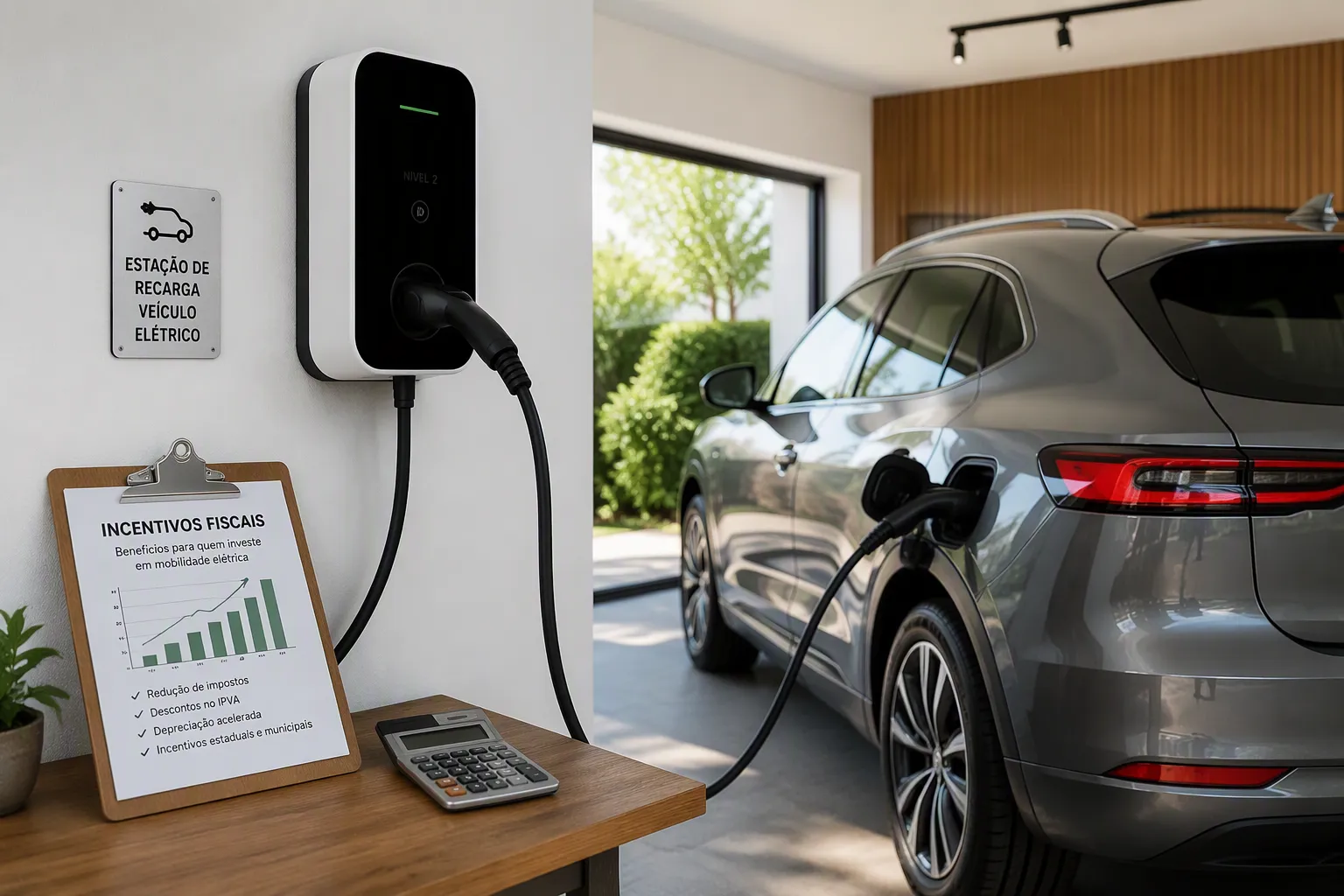
Incentives can reduce the effective cost of equipment and installation, but they also introduce a risk: buyers may choose the cheapest eligible product instead of the safest suitable product. A high-quality incentive strategy aligns with requirements that encourage instalación profesional, documented compliance, and equipment certified for the intended environment (indoor vs outdoor).
In practice, the most important subsidy questions are operational:
- What installations qualify? (Hardwired vs plug-in, single-family vs multi-unit, workplace vs public.)
- What evidence is required? (Invoices, electrical certificates, commissioning reports.)
- Does the program encourage load management? This matters when panel capacity is limited.
- Does the program support future-proofing? Examples include cable reach, outdoor rating, and connector strategy.
Compliance caution: Incentives do not eliminate electrical limits. EV charging is a long-duration load, and inadequate wiring, loose receptacles, or poorly selected protection devices can still create heat and nuisance shutdowns.
Home charging: Level 1 vs Level 2, and why smart load management matters
Why Level 2 remains the practical target for most households
Car and Driver’s testing-oriented guidance summarizes why home charging drives EV satisfaction: it occurs while the vehicle is parked and is materially cheaper than frequent DC fast charging. Their explainer also frames charging levels in a way that matters for day-to-day planning: Level 1 is typically described as roughly ~1 kW and can take days for a full charge, while Level 2 (240V) is generally suitable for overnight replenishment depending on circuit size and vehicle acceptance.
Electrical capacity is the real bottleneck
The most common household constraint is not the charger’s advertised kW rating—it is the available capacity in the main panel once other loads are considered. This is where smart load management becomes an enabling technology: it can reduce the likelihood of overloading the home’s service while preserving as much charging speed as the site can safely sustain.
Proof point: load-aware charging is now mainstream
In its 2026 home charger testing roundup, Car and Driver highlights the Emporia Pro for its ability to adjust EV charging output based on real-time household draw, reducing the need for costly service upgrades in some scenarios. That editorial emphasis reflects a broader market shift: load-aware charging is no longer a niche feature; it is becoming a default expectation for constrained homes.
For readers comparing charger ecosystems: TPSON positions its solutions around real-time safety monitoring and energy intelligence. Its product pages describe capabilities such as Equilibrio dinámico de la carga, Control dinámico de la temperatura, y Diagnósticos y alertas en tiempo real, enabled by a patented “Current Fingerprint Algorithm.” Explore TPSON categories here: Cargadores de VE.
Public charging trends: Level 2 growth and DC fast expansion
Public fast charging is becoming a travel expectation
Even though the Italy market structure differs from North America, public charging networks provide a useful benchmark for what drivers will demand everywhere: predictable access, clear location information, and basic amenities during dwell time. For example, Love’s describes an EV charging network established since 2017 with 100+ chargers across 36 locations in 14 states, expanding through 2026, and emphasizes highway-adjacent siting and on-site services. The specific geography differs, but the planning logic is transferable to European corridor charging.
Networks and platforms are competing on reliability and software
ChargePoint frames its offering as a platform spanning software, services, and hardware, with an emphasis on unified management and driver experience across regions. For site hosts and fleets, the operational value is not only in the charger but in the tooling that supports uptime, diagnostics, and reporting—critical for any subsidized or publicly visible deployment.
Hardware choices in 2026: plug vs hardwire, connectors, and safety protection
Plug-in vs hardwired: why it still matters
Emporia’s product documentation distinguishes plug-in (NEMA 14-50) installations—convenient and portable—from hardwired installations that support higher output (up to 48A) and a more permanent setup. Emporia also flags a practical issue that installers frequently encounter: disparos molestos when a circuit has a GFCI breaker and the EVSE has built-in GFCI protection.
Connector strategy: J1772/NACS as a signal of standardization
Connector direction is one of the most widely discussed topics in the market. While Italy and much of Europe commonly use different AC connector conventions than North America, the broader lesson remains: buyers should prioritize interoperability and adapter reality. Emporia’s product page describes both J1772/CCS and NACS options and notes the industry transition toward NACS (SAE J3400) beginning in 2025 for many manufacturers in North America. For global operators, this underscores the importance of selecting hardware that can support multiple standards across fleets and regions.
Practical safety selection criteria
- Equipos certificados appropriate to the environment (indoor/outdoor rating).
- Thermal and fault protection that reduces risk at connectors and power electronics.
- Clear install path with professional commissioning, especially at higher currents.
- Data visibility for cost tracking, energy metering, and fault diagnostics.
Industry perspective: TPSON’s approach to safety, diagnostics, and flexible deployment
Company credentials relevant to EEAT
TPSON states it was founded in 2015 in Hangzhou and builds smart electrical systems and vehicle chargers using edge computing and its patented Algoritmo actual de huellas dactilares. The company highlights milestones (including national and industry innovation recognitions) and a technical leadership team with patent and grid-research credentials. Background: fabricante de cargadores para vehículos eléctricos.
Product portfolio positioning
TPSON presents a portfolio that spans home-focused AC products and flexible DC solutions. Its EV charging category page summarizes a mix of AC chargers with Equilibrio dinámico de la carga and compact DC fast chargers for commercial and emergency applications: Cargadores de VE y Cargadores de CA para VE.
Portable DC as an operational tool (not only infrastructure)
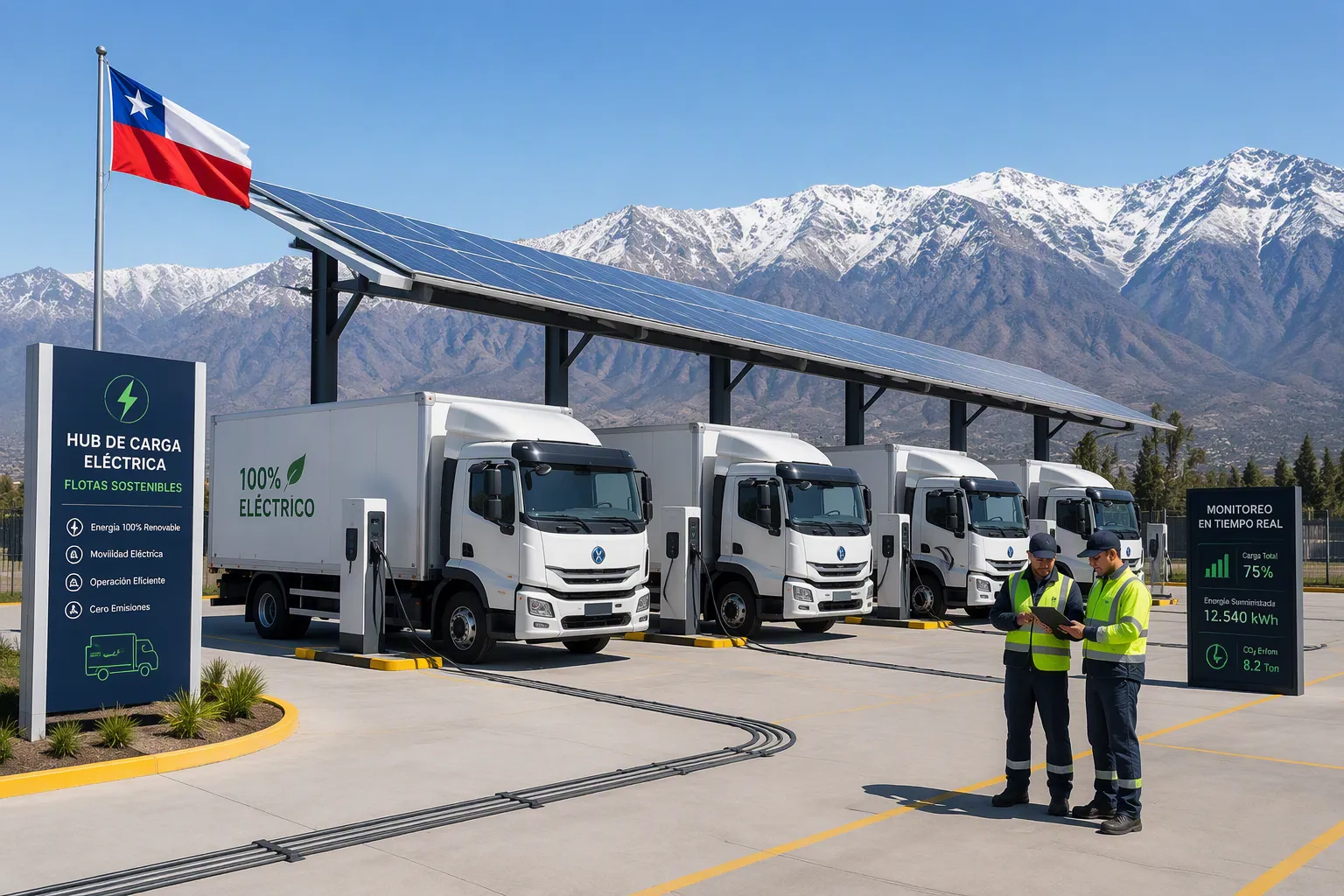
For scenarios where fixed infrastructure is impractical—service bays, events, depots, or roadside assistance—TPSON’s Portable DC EV Charger page describes the TP-DC Compact Series using 20/30/40 kW intelligent modules with DC50–1000V output range, optional Ethernet/4G connectivity, a 7-inch touch interface, and a stated MTBF of 100,000 hours. See: Cargadores de CC para VE.
LSI terms used throughout this section align with common search intent: EVSE, wallbox EV charger, carga inteligente, equilibrio de carga dinámico, Carga rápida de CC, fleet depot charging, installation compliance, y diagnósticos en tiempo real.
Data visualizations: power, time, and selection checklists
Chart 1: Charging power levels (reference comparison)
Source reference for level framing: Car and Driver’s charging-level explanation inside its 2026 home charger testing article. Values shown are representative ranges used for planning discussions.
Chart 2: Example time-to-deliver energy (illustrative planning math)
Charging time depends on usable energy added (kWh) divided by power (kW), then adjusted for losses and tapering near full. The table below shows an illustrative comparison for adding 30 kWh—often enough to cover substantial daily driving for many EVs.
| Scenario (illustrative) | Potencia | Energy added | Ideal time (hours) | Practical note |
|---|---|---|---|---|
| Level 1 home outlet | 1 kW | 30 kWh | 30 h | Often spread over multiple days; sensitive to continuous-load constraints |
| Level 2 modest circuit | 7.7 kW | 30 kWh | 3.9 h | Typical “overnight-ready” range for many drivers |
| Level 2 high output | 11,5 kW | 30 kWh | 2.6 h | Often requires hardwire configuration and sufficient panel capacity |
| DC fast (public) | 150 kW | 30 kWh | 0.2 h (~12 min) | Real sessions depend heavily on battery temperature and taper curve |
Chart 3: Buyer checklist for subsidized installs (home & small business)
| Decision point | Qué verificar | Why it affects subsidy ROI |
|---|---|---|
| Capacidad eléctrica | Main service rating, peak loads, dedicated circuit feasibility | Prevents expensive rework; enables correct power selection |
| Método de instalación | Plug-in vs hardwire; breaker sizing; commissioning plan | Impacts eligible power, reliability, and long-term maintenance |
| Protection & monitoring | Ground-fault protection behavior; thermal monitoring; alerts | Reduces downtime and improves safety documentation |
| Load management | Dynamic load balancing capability or external metering support | May avoid panel upgrades and improves resilience under constraints |
| Outdoor suitability | NEMA/IP rating; cable management; placement | Improves durability and avoids weather-related failures |
FAQ (7)
1) What is the most important “Italy EV charging news” trend for everyday drivers?
The most practical trend is the normalization of carga inteligente: systems that schedule charging for lower-cost periods and, when needed, adjust power draw to fit household limits. This improves both cost predictability and electrical safety.
2) Do subsidies make a Level 2 home charger “mandatory”?
No. Many EVs can charge from portable equipment, but Level 2 is typically the point where overnight charging becomes convenient. Subsidies can improve the economics, but electrical capacity and installation quality remain the deciding factors.
3) Is plug-in or hardwired better for home charging?
Plug-in installations can be convenient and portable, while hardwired installations are typically more permanent and can support higher output in many product lines. Emporia’s Classic documentation, for instance, explains that plug-in limits charge rate compared with hardwire (up to 48A) and recommends licensed electrician installation for hardwired setups.
4) What causes nuisance trips with EV chargers?
One common cause is overlapping protection: Emporia notes that built-in GFCI protection in an EV charger can lead to nuisance tripping when paired with a panel GFCI breaker protecting the same circuit, particularly for NEMA 14-50 outlet installations. An electrician should evaluate the correct configuration for the local code environment.
5) What matters more: kW rating or connector type?
Both matter, but for most owners the first constraint is the site’s safe continuous power. Connector selection should follow a compatibility strategy—especially for mixed fleets or multi-vehicle households—recognizing that adapter use is common in many markets.
6) Are portable DC chargers a realistic option for Italy and Europe?
They are a practical tool for specific use cases: roadside assistance, depots, temporary sites, and service centers. TPSON’s TP-DC Compact Series is positioned as a mobile 20/30/40 kW solution with DC50–1000V output range and optional Ethernet/4G connectivity for flexible deployment.
7) Where can readers compare charger ecosystems and operator platforms?
For platform-driven network management and driver experience, ChargePoint provides a broad reference point for how software, services, and hardware can integrate. For product category exploration, TPSON’s portfolio pages provide an overview of AC and DC options: Cargadores de VE y Cargadores de CA para VE.
References (sources cited)
The following sources were referenced for factual statements and product/company context. Outbound links are provided for verification and further reading.
- Car and Driver — home charger testing, costs, and EV charging level explanations: https://www.caranddriver.com/shopping-advice/a39917614/best-home-ev-chargers-tested/
- Emporia Energy — Classic Level 2 EV Charger specs; plug vs hardwire; GFCI nuisance tripping notes: https://shop.emporiaenergy.com/products/emporia-ev-charger
- ChargePoint — platform overview and company positioning: https://www.chargepoint.com/
- Love’s — EV charging network overview and 2026 expansion messaging: https://www.loves.com/ev-charging
- TPSON — company background, milestones, and Current Fingerprint Algorithm description: https://tpsonpower.com/about/
- TPSON — EV charger portfolio overview: https://tpsonpower.com/ev-chargers/
- TPSON — AC EV charger category: https://tpsonpower.com/ac-ev-chargers/
- TPSON — portable DC EV charger specs and scenarios (TP-DC Compact Series): https://tpsonpower.com/portable-dc-ev-charger/
Required internal links included with specified anchor text: Cargadores de VE, fabricante de cargadores para vehículos eléctricos, Cargadores de CA para VE, Cargadores de CC para VE.