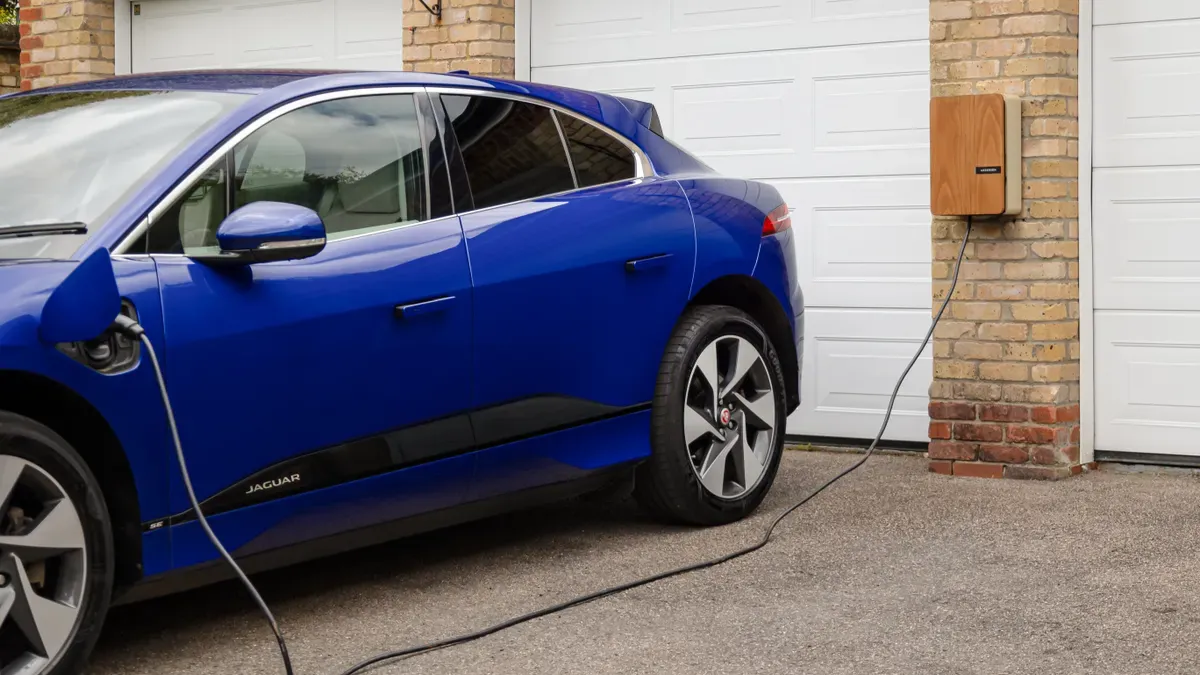

El mercado británico de vehículos eléctricos está en plena expansión. Las matriculaciones de vehículos eléctricos han alcanzado 478.657, lo que supone un aumento de 25% con respecto a 2024, muy superior al aumento de 3% del mercado total de automóviles.. En más de 80% de propietarios que dependen de él, el mercado de la recarga doméstica es crucial. Este crecimiento impulsa nuevas tendencias en la tecnología de recarga de VE.
La próxima evolución de la recarga doméstica transforma su vehículo de un simple medio de transporte en un componente activo del sistema energético de su hogar.
Este cambio en la recarga de vehículos eléctricos supone un importante ahorro de costes y una mayor independencia energética. Fabricantes de cargadores para VE, proveedores tecnológicamente avanzados como TPSON, están desarrollando la nueva generación de Cargador EV. Esta nueva infraestructura de recarga contribuye a un futuro más inteligente e integrado de la recarga de vehículos eléctricos.
Gestión inteligente de la energía: El futuro de la recarga doméstica de vehículos eléctricos con V2H y V2G

El futuro de la recarga de vehículos eléctricos va más allá del simple suministro de energía. Se está convirtiendo en un intercambio de energía inteligente y bidireccional. Proveedores tecnológicamente avanzados como TPSON están desarrollando el hardware de nueva generación que lo hace posible, transformando un VE en un activo energético dinámico para el hogar. Esta evolución se basa en el concepto de carga bidireccional.
Comprender la carga bidireccional
Del flujo de energía unidireccional al bidireccional
La carga tradicional de los vehículos eléctricos es unidireccional: la electricidad fluye desde la red, pasa por el cargador y llega a la batería del coche. La carga bidireccional abre una vía de doble sentido. Permite que la energía almacenada en la batería del vehículo eléctrico fluya de nuevo hacia el exterior, ya sea para alimentar el hogar o la red eléctrica general. Esta capacidad desbloquea dos potentes tecnologías: Vehículo a casa (V2H) y Vehicle-to-Grid (V2G).
Definición de vehículo a casa (V2H)
La tecnología del vehículo a la vivienda (V2H) permite que un vehículo eléctrico funcione como fuente de energía doméstica. Utiliza la batería del coche para suministrar electricidad directamente al hogar, evitando la red durante los cortes de electricidad o los periodos de máximo coste energético.
Definición de vehículo a red (V2G)
La tecnología Vehicle-to-Grid (V2G) permite a los vehículos eléctricos exportar el excedente de energía de sus baterías a la red nacional. Esto ayuda a los proveedores de energía a equilibrar la oferta y la demanda, y ofrece a los propietarios de vehículos eléctricos la oportunidad de obtener ingresos.
| Característica | V2H | V2G |
|---|---|---|
| Beneficio principal | Respaldo doméstico y ahorro energético | Apoyo a la estabilidad de la red nacional |
| Función | La batería del VE alimenta la vivienda | Exporta energía del VE a la red |
| Hardware necesario | Cargador bidireccional | Cargador específico V2G y soporte de proveedores |
Del vehículo a casa (V2H): Su coche como batería doméstica
Cómo V2H alimenta su hogar
Con un cargador compatible con V2H, tu coche se convierte en una gran batería doméstica. En las horas valle, cargas el vehículo con electricidad barata. Durante las horas punta, cuando la electricidad es cara, puedes cambiar tu casa para que funcione con la energía más barata almacenada en tu coche. A partir de 2025, varios modelos británicos lo permitirán:
- Nissan Leaf
- Hyundai Ioniq 5
- Kia EV6
- BYD Atto 3
Grandes fabricantes como Volkswagen y Ford también están desarrollando activamente capacidades V2H, lo que indica una adopción más amplia.
Beneficios prácticos y ahorro de costes en 2025
La principal ventaja de la V2H es económica. Al evitar la costosa electricidad de tarifa punta, los propietarios pueden reducir significativamente sus facturas de energía. También proporciona una fuente de energía de reserva fiable durante un apagón, ofreciendo una mayor independencia y eficiencia energética.
Vehículo a red (V2G): Gane dinero con su VE
Explicación del concepto V2G
V2G lleva el concepto bidireccional un paso más allá. En lugar de limitarse a alimentar su casa, puede vender la energía almacenada en su vehículo eléctrico a la red. Las empresas energéticas pagan por esta energía para ayudarles a gestionar los periodos de alta demanda.
Apoyo a la red nacional
V2G ayuda a crear una red energética más resistente y flexible. Cuando miles de vehículos eléctricos exportan energía simultáneamente, actúan como una gigantesca central eléctrica distribuida. Así se reduce la necesidad de centrales eléctricas alimentadas con combustibles fósiles que entran en funcionamiento cuando hay mucha demanda.
Oportunidades de monetización y ROI
Varios proveedores de energía del Reino Unido, entre ellos Octopus Energy, Ovo Energy y EDF, son pioneros en tarifas V2G.
Nota: Aunque los programas aún están en fase de expansión, las investigaciones de Cornwall Insight sugieren que, para 2030, la tecnología V2G podría reportar a los conductores de vehículos eléctricos una media de 1,5 millones de euros al año. 320 libras al año. Esto convierte a la tecnología V2G en una atractiva inversión a largo plazo para los propietarios de vehículos eléctricos que deseen maximizar el rendimiento financiero de su vehículo y de su sistema de recarga.
Integración solar avanzada: Nuevas tendencias en carga verde
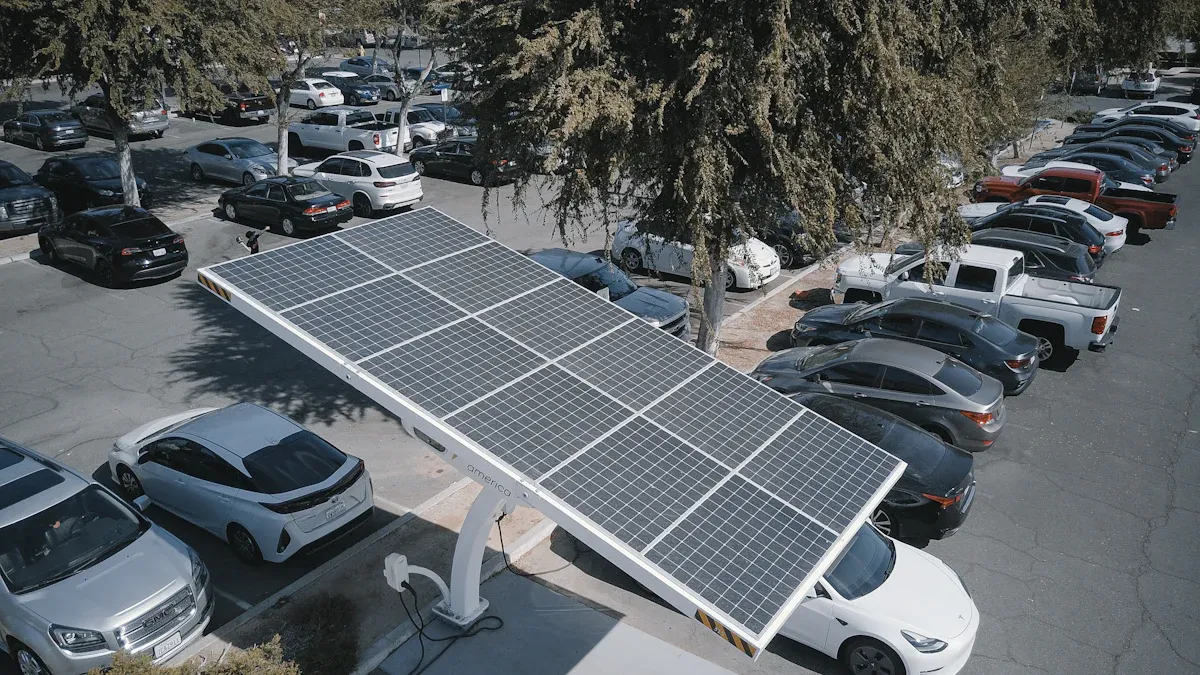
Combinar un vehículo eléctrico con un sistema de paneles solares domésticos representa la cumbre del transporte personal ecológico. Las últimas tendencias en Carga de vehículos eléctricos van más allá del simple desvío de energía. Crean un ecosistema profundamente integrado que maximiza el uso de energía limpia y renovable. Proveedores tecnológicamente avanzados como TPSON están desarrollando el hardware y el software de nueva generación que hacen posible esta sinergia.
Evolución de la recarga solar de vehículos eléctricos
Del simple desvío a la gestión inteligente
Los primeros sistemas solares de recarga de vehículos eléctricos simplemente desviaban la energía solar disponible hacia el coche. Los modernos sistemas de recarga inteligente son mucho más sofisticados. Utilizan una jerarquía de flujo energético para gestionar el encaminamiento de la energía. El sistema controla constantemente la generación solar y el consumo doméstico. A continuación, ordena al cargador que utilice solo la cantidad precisa de energía renovable sobrante, garantizando que el vehículo se cargue sin recurrir a la red a menos que sea necesario.
Por qué 2025 es un punto de inflexión para la energía solar
Varios factores hacen de 2025 un año crucial para la recarga solar de vehículos eléctricos. Los avances en la tecnología de paneles solares, como Eficiencia récord de 28,6% de una nueva célula de silicio-perovskita de Qcells, significa más potencia en menos espacio. Además, la mayor disponibilidad de Los cargadores bidireccionales permiten a los VE actuar como bancos de energía móviles. Esta integración con los sistemas domésticos de gestión de la energía optimiza todo el proceso en términos de costes y eficacia.
Modos de carga solar inteligente
“Modos de carga ”Eco“ y ”Rápida
Los cargadores modernos ofrecen distintos modos para gestionar la energía solar. El modo “Rápido” carga el vehículo a la máxima potencia, aprovechando tanto la energía solar como la de la red. El modo “Eco” da prioridad a la sostenibilidad. Utiliza sólo la energía renovable sobrante, aunque eso signifique cargar a un ritmo más lento.
Programación de cargas con previsiones solares
Los sistemas más avanzados integran la previsión meteorológica. El Elli Charger 2, por ejemplo, utiliza las previsiones solares para programar las sesiones de carga de los vehículos eléctricos. Planifica la carga para que coincida con las horas de máxima insolación. Esta función garantiza el máximo aprovechamiento de la energía solar disponible, reduciendo incluso la potencia de carga para utilizar eficazmente los pequeños excedentes.
Integración con la batería doméstica
Sistemas de baterías domésticas como el Tesla Powerwall 3 cambian las reglas del juego para los propietarios de sistemas solares. Integrar una batería con el cargador ofrece varias ventajas:
- La batería almacena el exceso de energía solar generado durante el día.
- Esta energía renovable almacenada puede cargar el vehículo eléctrico por la noche.
- Le ayuda a evitar la costosa electricidad de tarifa punta de la red, mejorando la sostenibilidad.
Maximizar el autoconsumo solar
El objetivo de 100% Millas Verdes
El objetivo final de muchos propietarios de VE solares es alimentar su vehículo totalmente con energía autogenerada. Alcanzar “100% millas verdes” reduce significativamente la huella de carbono y los costes energéticos de un hogar, creando una verdadera independencia energética.
Cómo los nuevos cargadores dan prioridad a la energía solar
Un cargador inteligente logra este objetivo mediante un proceso claro y automatizado:
- El sistema controla en tiempo real el flujo de energía desde los paneles solares hasta los electrodomésticos.
- Calcula la cantidad exacta de excedente de energía solar disponible.
- Ordena al cargador del VE que consuma sólo esa cantidad sobrante.
- Esto garantiza que el VE sea la primera prioridad para cualquier exceso de energía renovable.
Calcular el ahorro de la carga solar
El impacto financiero y medioambiental es considerable. Un sistema solar típico de 5 kW en el Reino Unido puede generar unos 18 kWh en un día soleado. Después de que un hogar medio utilice 9 kWh, los 9 kWh restantes pueden ir a su vehículo eléctrico. Dado que un VE típico recorre unos 6 km por kWh, ese excedente de energía solar proporciona 36 km de autonomía diaria. Esto equivale a casi 13.000 kilómetros ecológicos al año., totalmente alimentado por el sol. ☀️
Innovaciones para los residentes urbanos sin aparcamiento privado
Mientras que los propietarios de viviendas con entradas para coches disfrutan de la comodidad de la recarga en casa, una parte significativa de la población del Reino Unido se enfrenta a un gran obstáculo. Están surgiendo nuevas soluciones de recarga para colmar esta laguna de los residentes urbanos.
El desafío de la recarga en aceras
El problema del aparcamiento en la calle
El problema principal es la falta de espacio privado. Aproximadamente un tercio de los hogares británicos no tienen camino de entrada ni garaje. Esta cifra representa alrededor del 9 millones de hogares donde la instalación de un cargador privado de VE no es una opción sencilla. Estos residentes deben recurrir a la infraestructura pública de recarga, que puede resultar incómoda y más cara que la recarga doméstica.
Por qué las soluciones tradicionales son insuficientes
Algunos propietarios de vehículos eléctricos recurren a arrastrar cables de carga por las aceras para llegar a sus coches. Esta práctica crea importantes problemas de seguridad y accesibilidad. Los expertos subrayan los peligros de este método.
Canales de cable para pavimento
Cómo funcionan los canales de pavimentación
Los canales para cables en el pavimento ofrecen una solución elegante al peligro de los cables de arrastre. Se trata de canales estrechos y empotrados que se instalan en el pavimento, desde el límite de la propiedad hasta el bordillo. Un cable de carga se coloca dentro del canal, cubierto por una tapa abatible, creando una superficie plana y segura para los peatones.
Aprobación del Consejo y proceso de instalación
Los ayuntamientos están empezando a aprobar estas instalaciones. El Ayuntamiento de West Berkshire, por ejemplo, ha establecido un proceso para que los residentes soliciten un canal Kerbocharge. La solicitud típica implica estos pasos:
- El residente rellena un formulario de solicitud de canal de cable EV.
- El Consejo examina la idoneidad del emplazamiento.
- Tras su aprobación, el ayuntamiento expide una licencia.
- El residente se pone en contacto con un proveedor autorizado para la compra e instalación.
Coste y disponibilidad en el Reino Unido en 2025
El coste de suministro e instalación de un canal de acera suele oscilar entre 1.000 y 1.500 libras. A medida que más ayuntamientos formalicen sus procesos de aprobación, se espera que la disponibilidad se amplíe significativamente a lo largo de 2025, lo que convierte a esta solución en una de las más prometedoras para la tarificación de viviendas adosadas.
Soluciones de carga en farolas
Utilización de la infraestructura viaria existente
Otra innovación clave es la conversión de farolas existentes en estaciones de recarga de vehículos eléctricos. Las empresas instalan un cargador inteligente directamente en la farola, aprovechando la conexión eléctrica existente. Este enfoque amplía rápidamente la disponibilidad de recarga en la vía pública sin necesidad de obras civiles extensas y perturbadoras.
Velocidades y costes de carga típicos
Por lo general, los cargadores de farolas ofrecen velocidades de carga en torno al 5,5 kW. No es tan rápido como las unidades dedicadas de carga rápida, pero es perfectamente adecuado para la carga nocturna. Los costes varían según el operador de la red, pero normalmente se cobran por kilovatio-hora (kWh) y se gestionan a través de una aplicación para smartphone.
Estado del despliegue y accesibilidad en el Reino Unido
Se están llevando a cabo importantes implantaciones en los distritos de Londres, Coventry y otros centros urbanos. Esta expansión del red pública de recarga de vehículos eléctricos es fundamental para los conductores sin aparcamiento privado. Proveedores tecnológicamente avanzados como TPSON contribuyen a este ecosistema con hardware compatible con diversos entornos de recarga.
Puntos de recarga comunes y compartidos
Para los residentes de bloques de apartamentos y urbanizaciones modernas, los puntos de recarga comunes son una solución vital. Estas instalaciones compartidas llevan la comodidad de la recarga doméstica a edificios donde las instalaciones individuales son poco prácticas. Crean un sistema escalable y gestionable para varios conductores de vehículos eléctricos en un mismo lugar.
Soluciones específicas para bloques de apartamentos
Las soluciones de recarga específicas para bloques de apartamentos implican la instalación de una red de estaciones de recarga inteligentes en un aparcamiento compartido. Este enfoque requiere un sistema de gestión centralizado para gestionar las necesidades de muchos usuarios. La infraestructura de recarga está diseñada para un uso compartido y a menudo incorpora un equilibrio dinámico de la carga. Esta tecnología distribuye de forma inteligente la potencia disponible entre todos los cargadores activos, evitando que el suministro eléctrico del edificio se sobrecargue. Proveedores tecnológicamente avanzados como TPSON desarrollan hardware que se integra perfectamente en estos complejos entornos multiusuario.
Facturación y control de acceso para varios usuarios
Gestionar el acceso y la facturación es fundamental para las estaciones de recarga compartidas. Los sistemas modernos utilizan un sofisticado software para garantizar un uso justo y seguro. Se puede acceder a un único cargador inteligente y controlarlo de varias formas:
- Acceso de usuarios: Los conductores suelen utilizar una aplicación específica para smartphones o una tarjeta RFID física para iniciar y detener una sesión de carga.
- Gestión del sistema: Un operador de puntos de carga (CPO) puede utilizar un software basado en la nube para supervisar el estado de cada punto de carga y gestionar toda la red.
- Integración de terceros: Los sistemas suelen ser compatibles con el protocolo Open Charge Point Protocol (OCPP), lo que les permite trabajar con aplicaciones de gestión populares como Monta o Clenergy.
Estos sistemas integrar directamente la facturación, lo que agiliza el cobro de los pagos. La plataforma de gestión ofrece a los residentes un historial completo de su consumo de energía y sus costes. También les permite programar la tarificación para las horas de menor consumo y ahorrar dinero. Este proceso automatizado elimina la facturación manual y garantiza transacciones transparentes y precisas para todos.
El papel de las empresas de gestión inmobiliaria
Las empresas de gestión inmobiliaria y las asociaciones de la vivienda desempeñan un papel crucial en la aplicación recarga comunitaria de vehículos eléctricos. A menudo actúan como CPO o se asocian con un proveedor de servicios especializado para supervisar el sistema. Sus responsabilidades incluyen aprobar la instalación inicial, gestionar el acceso de los usuarios y garantizar el mantenimiento continuo. Al adoptar estas soluciones integrales de recarga, los administradores de fincas pueden ofrecer un servicio de gran valor que atrae y retiene a los residentes. Esto hace que sus propiedades sean más competitivas y las prepara para el futuro crecimiento continuo de la propiedad de vehículos eléctricos.
Requisitos clave de hardware y software para la próxima generación de cargadores domésticos de vehículos eléctricos
La tecnología de carga avanzada se basa en una sofisticada interacción entre hardware especializado y software inteligente. Estos componentes trabajan juntos para liberar todo el potencial de la gestión inteligente de la energía, desde el ahorro de costes hasta el apoyo a la red. Proveedores tecnológicamente avanzados como TPSON están diseñando la próxima generación de cargadores eléctricos domésticos que integran estos elementos a la perfección.
Hardware para la gestión inteligente de la energía
Los componentes físicos de un cargador son la base de todas las funciones avanzadas. La tecnología de carga moderna exige algo más que una conexión eléctrica; requiere un hardware específico para gestionar flujos de energía complejos.
Requisitos del cargador bidireccional para V2H/V2G
Un cargador bidireccional necesita una electrónica de potencia avanzada para gestionar el flujo de energía bidireccional. Los componentes clave son:
- Una unidad microcontroladora (MCU) para controlar el sistema.
- Módulos de alimentación de carburo de silicio (SiC) y transistores de nitruro de galio (GaN) de alta eficiencia.
- Topologías especializadas como el Totem-Pole PFC (TP-PFC) acoplado a un Puente Activo Doble (DAB).
Estos elementos permiten al cargador convertir la corriente continua del coche en corriente alterna para el hogar o la red eléctrica.
El papel de las pinzas CT en la integración solar
Las pinzas transformadoras de corriente (TC) son esenciales para una integración solar eficaz. Estos pequeños dispositivos se enganchan al cable principal de suministro eléctrico de una vivienda. Proporcionan datos muy precisos y en tiempo real sobre el consumo de energía del hogar. Esto permite al cargador calcular con precisión la cantidad de energía renovable sobrante disponible y dirigirla al vehículo, maximizando el uso de la energía solar gratuita.
Hardware de equilibrio de carga dinámico
El hardware de equilibrado dinámico de la carga evita que el circuito eléctrico de una vivienda se sobrecargue. Funciona mediante un proceso sencillo pero eficaz:
- Constantemente controla la demanda eléctrica total del inmueble.
- Calcula la capacidad disponible después de tener en cuenta otros aparatos.
- Ajusta automáticamente la potencia de carga del vehículo eléctrico para mantenerse dentro de unos límites seguros.
Esto garantiza que el cargador funcione eficientemente sin disparar un disyuntor, incluso cuando otros dispositivos de alta potencia están en uso.
Programas informáticos: El cerebro de la operación
Si el hardware es el músculo, el software es el cerebro. Procesa datos, automatiza decisiones y proporciona al usuario el control sobre su tecnología de carga inteligente.
El papel central de la aplicación de acompañamiento
La aplicación complementaria es la interfaz central para gestionar los cargadores EV domésticos. Permite a los usuarios iniciar, detener y programar sesiones de carga a distancia. Los usuarios también pueden personalizar los ajustes y supervisar el estado de su cargador desde cualquier lugar, poniendo el control total en la palma de su mano.
Datos en tiempo real y análisis energético
Las aplicaciones avanzadas ofrecen análisis energéticos detallados. Realizan un seguimiento del consumo eléctrico en tiempo real y generan informes sobre el historial de carga, los costes y el ahorro. Estos datos permiten a los usuarios comprender sus patrones de consumo y optimizar sus hábitos de carga para lograr la máxima eficiencia.
Actualizaciones de software por aire (OTA)
Las actualizaciones OTA son cruciales para garantizar el futuro de una inversión en tecnología de recarga. Permiten a los fabricantes ofrecer nuevas funciones, parches de seguridad y mejoras de compatibilidad directamente en el dispositivo. Esto garantiza que el cargador siga siendo seguro, eficiente y compatible con las nuevas tarifas energéticas y servicios de red durante años.
Integración de tarifas inteligentes y automatización
La combinación de hardware y software inteligentes con tarifas energéticas específicas para vehículos eléctricos abre el mayor potencial de ahorro de costes.
¿Qué son las tarifas inteligentes específicas para VE?
Los proveedores de energía del Reino Unido, como EDF, ofrecen tarifas específicas para VE que proporcionan periodos de electricidad a coste ultrabajo, normalmente durante la noche. Tarifas como GoElectric y Evolve están diseñadas para abaratar significativamente la carga de los vehículos eléctricos animando a los usuarios a cargar en las horas de menor consumo, cuando hay menos presión sobre la red.
Tarificación automatizada con tarifas valle
El software de recarga inteligente se integra directamente con estas tarifas. El usuario solo tiene que configurar su hora de salida y sus necesidades energéticas en la aplicación. A continuación, el sistema programa automáticamente las sesiones de carga para que coincidan con las horas valle más baratas, garantizando que el coche esté listo cuando se necesite al menor coste posible.
¿Cuánto puede ahorrarle la programación automatizada?
El ahorro que supone la recarga inteligente automatizada es considerable.
Según EDF, la combinación de una tarifa para vehículos eléctricos como GoElectric con carga inteligente puede salvar a un conductor más de 700 libras al año en comparación con una tarifa variable estándar. Esto demuestra las grandes ventajas económicas de adoptar un ecosistema de tarificación totalmente integrado.
La revolución de la IA en la automatización de la carga doméstica
Aunque la programación inteligente supone un importante paso adelante, la verdadera revolución en la recarga doméstica está siendo impulsada por la Inteligencia Artificial (IA). La IA y el aprendizaje automático están transformando los cargadores de dispositivos programables en sistemas inteligentes y autónomos. Este tecnología de carga avanzada aprende, predice y optimiza el uso de la energía sin intervención humana constante.
IA y Aprendizaje Automático en la Carga
La IA actúa como el cerebro detrás de los ecosistemas de carga más avanzados. Procesa grandes volúmenes de datos para tomar decisiones que benefician al usuario, su bolsillo y el medio ambiente.
Programaciones de Carga Predictivas
Los sistemas impulsados por IA analizan datos históricos, incluidos los desplazamientos diarios del conductor, las longitudes típicas de los viajes y los hábitos de carga pasados. Utilizando aprendizaje automático, el sistema predice las necesidades energéticas futuras. Garantiza que el vehículo esté siempre suficientemente cargado para el próximo viaje, pasando de simples programaciones basadas en el tiempo a una gestión energética verdaderamente proactiva.
Optimización para el Coste, el Carbono y la Salud de la Red
Los algoritmos de IA crean planes de carga que equilibran múltiples variables simultáneamente. Al analizar las condiciones de la red, los pronósticos de energía renovable y los precios dinámicos de las tarifas, estos sistemas optimizan cada sesión de carga.
- Desplazan la demanda de energía a horas de menor consumo, ayudando a equilibrar la red eléctrica nacional.
- Priorizan la carga cuando la generación solar o eólica es alta, reduciendo la intensidad de carbono de la electricidad utilizada.
- Pueden reducir las emisiones de carbono relacionadas con la carga de un vehículo hasta en un 40%.
Esta optimización inteligente puede ahorrar una media de 800 libras de CO2 por vehículo al año. Esto equivale a la energía que un hogar medio consume en unos 40 días.
El Futuro de la Carga “Configurar y Olvidar”
El objetivo final de la integración de la IA es crear una experiencia de “configurar y olvidar”. El usuario simplemente conecta su coche y le indica al sistema cuándo lo necesitará la próxima vez. La IA se encarga del resto, encontrando automáticamente el momento más barato, ecológico y favorable para la red para cargar. Esta automatización sin fisuras representa el futuro de la propiedad de vehículos eléctricos.
Experiencia de Usuario Mejorada mediante IA
Más allá de la optimización, la IA hace que todo el proceso de carga de vehículos eléctricos sea más intuitivo y fácil de usar. Proveedores tecnológicamente avanzados como TPSON están desarrollando sistemas que ofrecen una experiencia superior y personalizada.
Recomendaciones de carga personalizadas
La IA anticipa las necesidades del usuario aprendiendo sus preferencias. Puede sugerir velocidades de carga óptimas basándose en el comportamiento pasado o recomendar cargar en momentos específicos para aprovechar los precios dinámicos. Este nivel de personalización mejora la eficiencia general y garantiza una experiencia de propiedad más rentable.
Control por Voz e Integración con el Hogar Inteligente
Los cargadores más recientes se integran con los ecosistemas de hogar inteligente más populares. Esto permite a los usuarios gestionar su carga con comandos sencillos y sin usar las manos.
- Los usuarios pueden iniciar o detener una sesión de carga usando Amazon Alexa o Google Assistant.
- Los comandos de voz también pueden recuperar información sobre el consumo de energía y el gasto total.
Diagnósticos Proactivos y Alertas de Mantenimiento
Los sistemas de IA monitorizan continuamente el estado del hardware de carga. Pueden detectar anomalías y predecir posibles fallos antes de que causen una avería. El sistema alerta entonces proactivamente al usuario e incluso puede sugerir pasos para solucionar problemas, garantizando que el cargador siga siendo fiable y funcione con el máximo rendimiento.
Las tendencias de carga de vehículos eléctricos para 2025 muestran un camino claro a seguir. Los propietarios de viviendas ganan independencia con la integración de V2H y las energías renovables. Los residentes urbanos ven cómo se expanden las soluciones de carga en la calle. Al seleccionar un nuevo cargador, priorice un software robusto y la compatibilidad futura. El futuro del vehículo eléctrico está integrado, convirtiendo los vehículos en activos dinámicos. Este enfoque inteligente del uso de energías renovables mejora la sostenibilidad. Un cargador bidireccional es fundamental para este futuro del vehículo eléctrico.
PREGUNTAS FRECUENTES
¿Cuál es la principal diferencia entre V2H y V2G?
Vehicle-to-Home (V2H) utiliza la batería de su vehículo eléctrico para alimentar su hogar. Vehicle-to-Grid (V2G) exporta la energía almacenada de su vehículo eléctrico de vuelta a la red eléctrica nacional. V2H proporciona energía de respaldo y ahorros, mientras que V2G puede generar ingresos y apoyar la estabilidad de la red.
¿Todos los vehículos eléctricos admiten carga bidireccional?
No, no todos los vehículos eléctricos admiten actualmente esta función. Un conductor necesita un vehículo compatible, como un Nissan Leaf o un Kia EV6, y un cargador bidireccional. especial. Más fabricantes están añadiendo esta capacidad a sus nuevos modelos para 2025 y más allá.
¿Cuánto puedo ahorrar con un cargador solar para vehículos eléctricos?
El ahorro depende del tamaño de su sistema solar y de sus hábitos de conducción. Un sistema típico de 5kW puede proporcionar suficiente energía excedente para casi 13,000 millas de conducción gratuita con energía solar al año. Esto reduce significativamente las facturas energéticas del hogar y la dependencia de la red.
¿Y si vivo en un piso sin aparcamiento privado?
Los centros de carga comunitarios son la solución ideal para bloques de apartamentos. Los administradores de propiedades pueden instalar cargadores inteligentes compartidos para los residentes. Proveedores tecnológicamente avanzados como TPSON ofrecen sistemas con facturación integrada y control de acceso, haciendo que la carga compartida sea sencilla y justa para todos.
¿Es necesario un cargador inteligente para un vehículo eléctrico?
A cargador inteligente No es obligatorio, pero es muy recomendable. Permite ahorros significativos al cargar automáticamente durante las horas de menor consumo. También proporciona funciones como control remoto, monitorización de energía e integración solar para una experiencia más eficiente y conveniente.
¿Cómo mejora la IA mi experiencia de carga?
La IA automatiza y optimiza todo el proceso de carga. Aprende sus patrones de conducción para crear programaciones predictivas. También analiza los precios de la energía y las condiciones de la red para encontrar los momentos más baratos y ecológicos para cargar, creando una experiencia perfecta de “configurar y olvidar”. 🤖