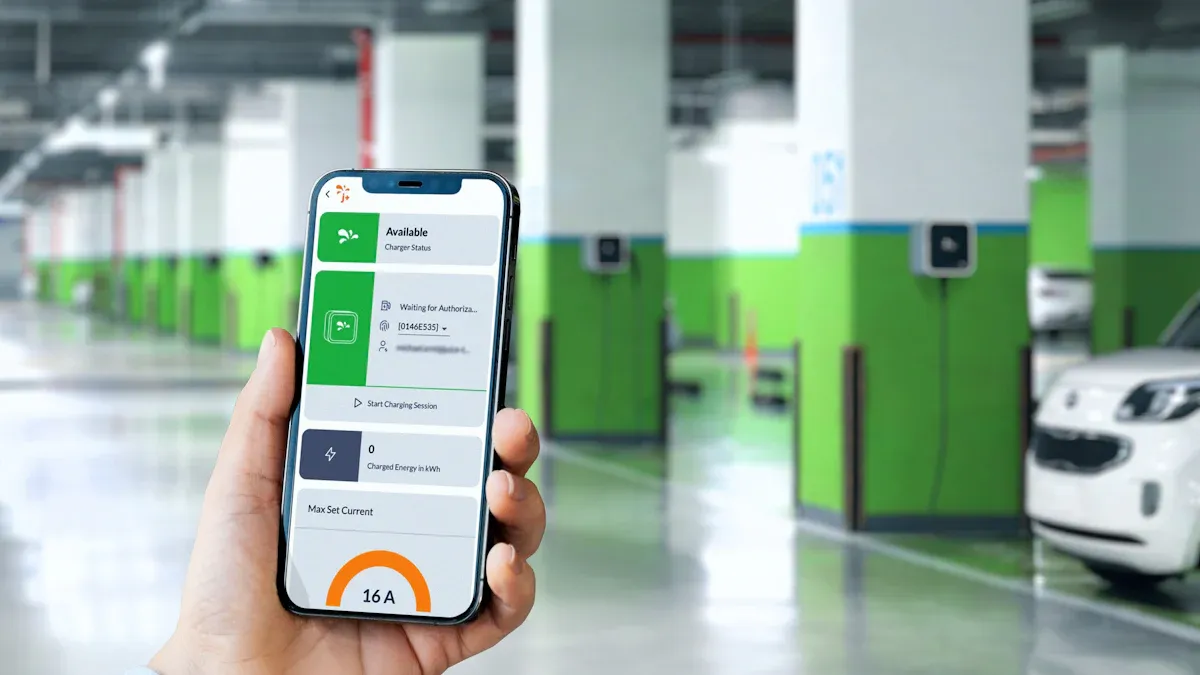
The open charge point protocol has transformed the way Fabricantes de carregadores para veículos eléctricos design and deploy Soluções de carregamento de veículos eléctricos. OCPP gives every Carregador EV the ability to communicate with multiple networks and platforms, which enhances charging flexibility for users. This protocol enables smart features that carregadores ev portáteis need to support seamless charging sessions. OCPP also allows users to avoid compatibility issues and ensures that any EV charging station purchased today will remain relevant as technology evolves.
Understanding OCPP and EV Charging Stations

What Is the Open Charge Point Protocol?
The open charge point protocol, often called OCPP, sets the standard for communication between electric vehicle charging stations and central management systems. OCPP creates a universal language that allows different brands of charging hardware and software to work together. This protocol supports the integration of new features and services, making it easier for manufacturers and operators to expand their infrastructure. OCPP integration ensures that every charging station can connect to a central system, regardless of the manufacturer.
The main components of OCPP include the charge point and the central system management system (CSMS). The table below outlines their roles and functions:
| Componente | Descrição | Funções |
|---|---|---|
| Charge Point | The physical charging station | Delivers electricity to the EV, initiates charging sessions, monitors energy consumption |
| Central System Management System (CSMS) | The software managing the charge points | Authorizes sessions, monitors status, manages pricing, performs diagnostics, updates firmware |
OCPP provides a foundation for reliable and secure communication, which is essential for the growth of electric vehicle charging stations worldwide.
The Role of OCPP in EV Charging Stations
OCPP plays a critical role in the operation of EV charging stations. It enables seamless communication between the charging station and the central management system. This connection allows operators to monitor charging sessions, authorize users, and manage pricing remotely. OCPP also supports diagnostics and firmware updates, which help maintain the reliability of the charging infrastructure.
OCPP integration benefits both operators and EV owners. Operators can oversee multiple charging stations from a single platform. EV owners enjoy consistent service and access to funcionalidades inteligentes, such as remote start and stop or real-time status updates. OCPP charging station networks can adapt to new requirements without replacing hardware, which protects investments in charging infrastructure.
How OCPP Works with Smart AC Wall Chargers
OCPP uses a structured message exchange to facilitate communication between smart AC wall chargers and central management systems. The protocol sends messages over secure channels, such as Wi-Fi or Ethernet, to ensure safe data transfer. Each message contains a header, body, and sometimes a signature, which organizes information for efficient processing.
- OCPP enables communication between EV charging stations and central management systems through a structured message exchange.
- Messages are sent over secure channels like Wi-Fi or Ethernet, ensuring safe communication.
- Each message consists of a header, body, and sometimes a signature, which organizes the information effectively.
- Different types of messages serve specific functions, such as initiating communication, providing updates, or sharing transaction details.
- The central management system oversees multiple charging stations, directing operations and collecting session data.
OCPP integration allows smart AC wall chargers to support advanced features, such as load management and remote monitoring. This flexibility ensures that the charging station remains compatible with future upgrades and new services. OCPP makes it possible for users to manage their charging experience efficiently, whether at home or in public locations.
Key Benefits of OCPP for Smart AC Wall Chargers
Interoperability Across EV Charging Stations
OCPP stands as a cornerstone for interoperability in the world of electric vehicle charging. This open charge point protocol enables different brands of smart AC wall chargers to communicate seamlessly with various central management systems. Interoperability ensures that users can access a wide range of charging solutions without compatibility concerns.
Using Different Brands and Networks
OCPP allows EV owners to use charging stations from multiple manufacturers within the same network. This flexibility means that a driver can charge their vehicle at home, at work, or in public spaces without worrying about hardware limitations. Operators can integrate new charging stations into their existing infrastructure, regardless of the brand. This approach simplifies expansion and supports the growth of diverse charging networks.
Avoiding Vendor Lock-In
Vendor lock-in poses a significant challenge for organizations managing EV charging infrastructure. OCPP addresses this issue by remaining vendor-agnostic and future-proof. The protocol empowers eMobility providers to build scalable and flexible networks, reducing dependence on a single supplier. OCPP 1.6, in particular, enhances interoperability, allowing organizations to manage fleets without being tied to one vendor. This minimizes operational risks and supports long-term planning.
Tip: Choosing OCPP-compatible chargers helps organizations avoid costly transitions and ensures access to the latest features from multiple providers.
Flexibility and Customization for EV Owners
OCPP brings a high degree of flexibility and customization to EV owners. The protocol’s open-source nature allows businesses to tailor their charging station management systems to meet specific requirements. This adaptability ensures that the charging experience aligns with individual preferences and operational needs.
Adapting to New Features and Services
OCPP enables the integration of new features and services as technology evolves. EV owners can customize charging parameters, such as scheduling, energy limits, or user authentication methods. This adaptability ensures that the charging infrastructure remains relevant and continues to deliver value over time. Operators can introduce unique features that enhance user satisfaction and operational efficiency.
Supporting Multiple Use Cases
Smart AC wall chargers equipped with OCPP support a variety of use cases. These include residential charging, workplace solutions, and public charging networks. The protocol allows for easy integration with energy management systems, solar panels, or battery storage. This versatility ensures that both individual users and organizations can optimize their charging strategies based on their unique needs.
Future-Proofing with OCPP-Compatible Chargers
OCPP-compatible chargers offer significant advantages when it comes to future-proofing investments in EV charging infrastructure. The protocol’s ongoing updates ensure adaptability to new technologies and security standards. This commitment to evolution protects both operators and users from rapid obsolescence.
Staying Ready for Technology Upgrades
OCPP’s profiles and configuration keys allow for customization and optimal performance. Operators can update firmware, add new features, or switch network providers without replacing physical chargers. This flexibility enables easy transitions between backend management systems, reducing operational costs and complexity.
Ensuring Long-Term Value
OCPP-compatible chargers maintain long-term value by offering flexibility and versatility. Users can switch software or hardware without facing compatibility issues. The protocol supports device management, smart charging, and robust security measures, which enhance operational efficiency. Cost savings arise from the ability to upgrade systems without extensive infrastructure changes, leading to reduced maintenance and utility expenses.
TPSON, as a technologically advanced electric vehicle charging solution provider, integrates OCPP into its smart AC wall chargers. This approach ensures that customers receive reliable, future-ready solutions that adapt to evolving market demands.
OCPP vs. Proprietary Protocols in EV Charging
What Are Proprietary Protocols?
Proprietary protocols in the context of EV charging often originate from specific manufacturers. These protocols create closed systems that restrict access to only certain brands or models of charging stations. Unlike the open charge point protocol, proprietary solutions limit interoperability and force asset owners to depend on a single provider. This dependency can lead to vendor lock-in, making it difficult for operators to switch networks or upgrade their charging infrastructure. OCPP, as an open-source standard, offers a clear contrast by promoting compatibility among various charging stations and management systems. Operators gain flexibility and avoid long-term risks associated with proprietary systems.
Limitations of Proprietary Systems
Proprietary charging systems present several challenges for EV owners and operators.
- Vendor lock-in restricts flexibility in choosing service providers.
- Lack of interoperability prevents different systems from working together.
- Potential data management issues arise from unclear data handling practices.
These limitations hinder the growth of EV charging stations and reduce the ability to adapt to new solutions. Operators may struggle to integrate new features or expand their network without replacing existing hardware. Compliance with evolving standards becomes difficult, and users may experience inconsistent charging experiences across different stations.
Note: Proprietary protocols can slow innovation and increase operational costs for charging infrastructure owners.
Advantages of Open Standards Like OCPP
Open standards such as OCPP deliver significant benefits for EV charging infrastructure.
- Cost-efficient setup minimizes cabling costs and maximizes utilization per installed kilowatt by placing chargers close to the main power source.
- Smart load management distributes available power across multiple chargers, allowing simultaneous charging without exceeding power limits.
- Safety and reliability ensure full electrical protection and consistent performance through certified equipment.
- Centralized management connects all chargers to a unified digital backend for enhanced operational control.
- Digital user experience allows seamless management of charging sessions through mobile applications.
- Future scalability facilitates easy expansion as EV adoption grows without the need for rewiring.
- Automated billing integrates with property management systems for direct reflection of usage in monthly service charges.
OCPP enables charging stations to operate within a flexible network, supporting interoperability and compliance with industry standards. Operators can manage multiple stations from a single platform, adapt to new solutions, and maintain long-term value. The protocol supports advanced features, such as remote monitoring and smart charging, which enhance the user experience. Open charge point protocol ensures that EV charging stations remain relevant as technology evolves, providing a foundation for reliable and scalable charging solutions.
| Caraterística | Proprietary Protocols | OCPP (Open Standards) |
|---|---|---|
| Interoperabilidade | Limitada | Elevado |
| Vendor Lock-In | Common | Avoided |
| Flexibilidade | Restricted | Melhorado |
| Conformidade | Challenging | Streamlined |
| Escalabilidade | Difficult | Easy |
OCPP stands out as the preferred protocol for modern EV charging solutions, offering unmatched flexibility, reliability, and future-proofing for both operators and users.
OCPP Features and Versions for Smart AC Wall Chargers
Essential Features of OCPP
OCPP stands out in the EV industry due to its robust set of features that support both operators and users. The protocol enables seamless communication between charging stations and central management systems, which forms the backbone of modern charge point management systems. The table below highlights the essential features that differentiate OCPP from other protocols:
| Caraterística | Descrição |
|---|---|
| Interoperabilidade | Facilitates communication between different charging station brands, avoiding vendor lock-in. |
| Scalability and security | Supports management of large-scale networks and includes security protocols like TLS. |
| Smart charging capabilities | Optimizes energy use by adjusting charging rates based on real-time conditions. |
| Asynchronous communication | Ensures smooth communication with uniquely identifiable request-response messages. |
Remote Monitoring and Control
OCPP allows operators to monitor and control smart AC wall chargers from any location. They can track charging sessions, adjust charging rates, and manage the overall charging infrastructure efficiently. Operators can remotely start or stop charging sessions and monitor usage in real time. This remote management capability ensures that the central management system can respond quickly to any issues, maximizing uptime and user satisfaction.
Operators benefit from OCPP’s ability to support funcionalidades de carregamento inteligente like load balancing and demand response, which are essential for effective remote management.
Carregamento inteligente e gestão de carga
Smart charging capabilities play a critical role in optimizing energy consumption. OCPP enables dynamic adjustment of charging rates based on grid demand, user preferences, or time-of-use tariffs. This feature helps prevent overloads and reduces energy costs for both operators and EV owners. Load management ensures that multiple chargers can operate simultaneously without exceeding the available power supply. As a result, charging infrastructure remains efficient and reliable.
Security and Data Protection
Security remains a top priority for any EV charging solution. OCPP includes advanced security protocols such as TLS, which protect data exchanged between charging stations and central management systems. These measures safeguard user information and prevent unauthorized access. Operators can trust that their networks remain secure, even as the number of connected devices grows.
OCPP Versions for EV Charging Stations
Which Version Should You Look For?
OCPP has evolved to meet the changing needs of the EV market. OCPP 1.6 introduced JSON over WebSocket, which reduced data usage and improved communication efficiency. OCPP 2.0.1 brought significant enhancements, including advanced transaction management, device management, and integration with ISO 15118 for plug-and-charge functionality. Enhanced security features and remote firmware updates also became standard in OCPP 2.0.1. The latest edition refines the protocol further, adding certification profiles and new test cases for better implementation support.
| OCPP 1.6 Features | OCPP 2.0.1 Features | Updates in 3rd Edition |
|---|---|---|
| Basic communication functions between charging points and control systems. | Advanced transaction management, enhanced security features, device management, smart charging, remote firmware updates, and integration with ISO 15118. | Clarifications and corrections to improve protocol accuracy, introduction of certification profiles, and new test cases for implementation support. |
OCPP 2.0.1 stands as the preferred choice for future-proofing EV charging infrastructure. It supports advanced features and ensures compatibility with upcoming technologies.
Backward Compatibility Considerations
When selecting a smart AC wall charger, users should consider backward compatibility. Many networks still operate on OCPP 1.6, so choosing a charger that supports both OCPP 1.6 and OCPP 2.0.1 ensures seamless integration with existing and future systems. This approach protects investments and allows for smooth transitions as the industry adopts newer standards.
Choosing an OCPP-Compatible Charger for Your EV
Security and Privacy Considerations
Security and privacy play a crucial role when selecting an OCPP-compatible charger for an EV. OCPP-compatible EV chargers offer advanced protection features that safeguard both user data and the charging process. Central management systems rely on secure communication protocols to ensure reliability and prevent unauthorized access. The following table outlines key security features found in OCPP-compatible chargers:
| Security Feature | Descrição |
|---|---|
| Transport Layer Security (TLS 1.2) | Ensures encrypted communication and mutual authentication. |
| Security Profiles | Includes Base, Client, and TLS with client-side certificate. |
| Certificate-based authentication | Provides a method for secure identification of devices. |
| Logging and anomaly detection | Enables forensic analysis through detailed logging of activities. |
| Integration with ISO 15118 | Ensures secure EV identification and supports advanced features like Plug and Charge. |
These features help protect sensitive information during charging sessions. Operators can monitor activity through logging and anomaly detection, which enhances reliability and supports forensic analysis. Certificate-based authentication ensures that only authorized devices connect to the central management system. Integration with ISO 15118 allows secure EV identification and enables smart features such as Plug and Charge. OCPP-compatible chargers provide a user-friendly charging infrastructure that meets modern security standards.
Tip: Always verify that the station supports the latest OCPP security profiles to maintain robust protection for both users and operators.
Integração com sistemas energéticos domésticos
Integration with home energy systems enables EV owners to optimize their charging experience and manage energy consumption efficiently. OCPP-compatible chargers support multiple integration methods, allowing seamless communication with central management systems and local energy management solutions. The table below summarizes common integration approaches:
| Integration Method | Descrição |
|---|---|
| Direct OCPP connection | Integrate seamlessly with OCPP servers for comprehensive management of the charging experience. |
| API integration | Use custom APIs to connect with partner cloud services for tailored control and monitoring. |
| Local EMS connection | Connect with Energy Management Systems locally, allowing the EMS to manage user experience while monitoring the charger. |
These integration methods provide flexibility for EV owners. Direct OCPP connection allows centralized management and monitoring through central management systems. API integration offers tailored control, supporting advanced features and custom solutions. Local EMS connection enables smart energy management at home, optimizing charging based on energy availability and user preferences. OCPP-compatible chargers adapt to evolving energy needs, ensuring reliability and efficient operation.
Note: Integration with home energy systems can reduce energy costs and support sustainable charging practices.
Scalability for Future Needs
Scalability remains essential for EV charging infrastructure as demand continues to grow. OCPP-compatible chargers support expansion and adaptation, allowing operators and homeowners to future-proof their investments. The following table highlights scalability options available with OCPP-compatible chargers:
| Scalability Option | Descrição |
|---|---|
| Interoperabilidade | OCPP enables different brands of chargers to work together, promoting vendor independence. |
| Flexibilidade | Allows integration of new hardware and software as demand grows. |
| Future Applications | Supports dynamic load management, renewable energy integration, and vehicle-to-grid solutions. |
OCPP allows seamless communication between charging equipment from different manufacturers. This interoperability enhances scalability and efficiency of EV charging networks. Operators can integrate new hardware and software as needs change, ensuring compatibility and improved management capabilities. OCPP supports future applications such as dynamic load management, renewable energy integration, and vehicle-to-grid solutions. These features help maintain reliability and optimize charging stations for evolving requirements.
- OCPP-compatible chargers enable expansion without replacing existing infrastructure.
- Central management systems facilitate efficient management of multiple stations.
- Smart features support advanced energy solutions and user-friendly charging infrastructure.
Callout: Choosing an OCPP-compatible charger ensures that EV owners and operators stay ready for future technology upgrades and maintain long-term value.
Support and Updates from Manufacturers
Manufacturers play a pivotal role in maintaining the reliability and performance of OCPP-compatible chargers. They deliver ongoing support and regular updates to ensure that charging stations remain secure, efficient, and compatible with evolving industry standards. These updates often include enhancements to smart charging profiles, security protocols, and device management features.
Manufacturers release firmware updates that introduce new capabilities and address vulnerabilities. OCPP 2.0.1, for example, brought advanced device management and vehicle-to-grid (V2G) functionalities. These improvements demonstrate that manufacturers actively upgrade their products to meet the demands of modern electric vehicle infrastructure.
A strong support system from manufacturers includes several key elements:
- Detailed changelogs accompany firmware updates, allowing users to track improvements and understand changes.
- Robust communication channels provide access to customer support and technical documentation.
- Technical documentation helps users and operators troubleshoot issues and optimize charger performance.
- Regular firmware updates enhance security and add new features, keeping chargers aligned with the latest OCPP standards.
Good communication between manufacturers and users ensures that technical issues receive prompt attention. Operators benefit from clear documentation and responsive support teams.
Manufacturers who prioritize transparency and responsiveness build trust with their customers. Analyzing changelogs helps operators evaluate the level of support and commitment from a manufacturer. Reliable support and timely updates protect investments and maximize the value of OCPP-compatible chargers. This approach ensures that charging stations remain future-ready and continue to deliver a seamless user experience.
Real-World Scenarios: OCPP in Action for EV Owners

Switching Charging Networks Without Replacing Hardware
EV owners often need to switch charging networks as their needs change or as new providers enter the market. OCPP allows seamless transitions between networks without requiring hardware replacement. The protocol supports interoperability, so users can connect their smart AC wall charger to different central management systems. This flexibility reduces costs and simplifies upgrades. Charging stations that use OCPP remain compatible with multiple software platforms, enabling operators to adapt quickly.
Switching networks becomes a straightforward process. Owners avoid downtime and maintain access to reliable charging services. OCPP ensures that the station continues to operate efficiently, regardless of the backend provider.
Adding Smart Features Over Time
OCPP has evolved since its introduction in 2009, enhancing smart charging capabilities and adopting standards like ISO 15118. EV owners benefit from these advancements by adding new features to their chargers over time. The protocol provides flexibility for hardware and software integration, making it easy to incorporate smart features such as device management, load balancing, and real-time price adjustments.
- Owners can modify their chargers to support specific needs, including different billing methods.
- Remote control of charging sessions becomes possible, improving convenience and efficiency.
- Smart charging features optimize energy distribution and reduce energy costs.
OCPP’s open-source nature enables continuous improvement. As EV adoption increases, secure networks develop to protect user data and maintain reliability. Owners gain access to advanced features without replacing their existing equipment.
Managing Multiple Chargers at Home or Work
Managing several chargers at home or in a workplace presents unique challenges. OCPP simplifies this process by enabling centralized control and monitoring. Operators can oversee multiple charging stations from a single platform, adjusting settings and tracking usage in real time. The protocol supports integration with energy management systems, allowing for efficient load balancing and smart charging.
| Cenário | OCPP Benefit |
|---|---|
| Home with multiple EVs | Centralized control and scheduling |
| Workplace fleet | Efficient load management and billing |
| Public charging network | Scalable integration and monitoring |
OCPP’s vendor-agnostic approach allows owners to mix and match chargers from different manufacturers. The protocol supports scalable networks, making expansion easy as demand grows. Owners maintain flexibility and avoid vendor lock-in, ensuring long-term value for their charging infrastructure.
Tip: Centralized management through OCPP improves operational efficiency and supports future technology upgrades.
Common Challenges with OCPP-Compatible Chargers
Ensuring True OCPP Compatibility
Many EV owners expect seamless integration when they purchase an OCPP-compatible charger. However, not all products deliver the same level of compliance. Some manufacturers claim OCPP support but only implement a limited set of features. This partial implementation can lead to issues with interoperability and management. Users may find that their charging station does not connect properly to certain networks or lacks remote control functions. To avoid these problems, buyers should verify Conformidade com a OCPP by checking for certification or detailed documentation from the manufacturer. True compliance ensures that the charger will work with a wide range of management systems and support future upgrades.
Dealing with Software Updates and Support
Actualizações de software play a vital role in the performance and reliability of OCPP-compatible chargers. Regular updates maintain connectivity with management software, whether the charger operates on a local network or through a wide area network. Network stability remains essential for effective operation. Staying current with OCPP protocol versions allows users to access remote control, updates, and billing features.
- Software updates help maintain compatibility with evolving management systems.
- Firmware management enables performance improvements and new features.
- Diagnostic log file downloads support troubleshooting and performance monitoring.
Manufacturers who provide timely updates and strong support help users avoid disruptions. Without proper updates, chargers may lose access to important management functions or become vulnerable to security risks. Owners should choose products from companies with a proven track record of ongoing support and transparent update policies.
Navigating the Market for Reliable Products
The market for OCPP-compatible EV charging products continues to expand. Selecting a reliable charger requires careful evaluation of several criteria. The following table outlines key factors to consider:
| Critérios | Descrição |
|---|---|
| Conformidade com a OCPP | Ensures that the product adheres to the Open Charge Point Protocol, facilitating interoperability. |
| Flexibility and Choice | Users can select from various hardware manufacturers, avoiding dependency on a single supplier. |
| Effective Management | OCPP compliant products can be managed through a Charge Point Management System for better control. |
| Competitive Solutions | Products must offer feature-rich and cost-effective solutions to remain attractive in the market. |
Buyers should prioritize OCPP compliance to guarantee interoperability and long-term value. Flexibility allows users to choose hardware that fits their needs without being locked into one supplier. Effective management ensures that the charger integrates smoothly with central systems. Competitive solutions provide advanced features at a reasonable price. By focusing on these criteria, EV owners can navigate the market with confidence and select products that deliver reliable charging and robust management capabilities.
The open charge point protocol stands as a must-have for smart AC wall chargers and EV charging stations. Choosing OCPP delivers lasting benefits, including flexibility, remote management, customization, enhanced customer experience, future-proofing, and budget savings.
| Benefício | Descrição |
|---|---|
| Flexibilidade | Owners can control and upgrade their infrastructure as needed. |
| Gestão remota | Monitoring and diagnostics improve reliability and reduce costs. |
| Personalização | Features can be tailored to meet specific needs. |
| Preparar o futuro | Regular updates keep systems compatible with new technologies. |
When selecting an OCPP-compatible charger for an EV, experts recommend:
- Assess charging speeds and connector types.
- Check power output and installation requirements.
- Look for carregamento inteligente features and durability.
- Consider cost, warranty, and future-proofing.
Smart charging and optimal scheduling maximize grid power usage and support cost savings.
FAQ
What does OCPP compatibility mean for an EV charger?
OCPP compatibility means the charger can communicate with different central management systems. This feature allows users to switch networks, add smart features, and avoid vendor lock-in. Operators gain flexibility and future-proof their charging infrastructure.
Can OCPP chargers work with any electric vehicle?
OCPP chargers support most electric vehicles. The protocol manages communication between the charger and backend systems. The vehicle must use a compatible connector and charging standard. OCPP ensures reliable operation across brands and models.
How does OCPP improve security for EV charging?
OCPP uses advanced security protocols like TLS and certificate-based authentication. These features protect user data and prevent unauthorized access. Operators monitor activity through logging and anomaly detection. Security profiles help maintain safe charging environments.
Is it possible to upgrade OCPP chargers with new features?
Manufacturers release firmware updates for OCPP chargers. These updates add new features, improve performance, and enhance security. Owners can upgrade their chargers without replacing hardware. OCPP supports continuous improvement and adaptation to new technologies.
What should buyers check before purchasing an OCPP charger?
Buyers should verify OCPP compliance, supported protocol versions, and security features. They must review manufacturer support and update policies. Checking integration options with home energy systems ensures compatibility. Reliable documentation and certification indicate true OCPP support.
Can OCPP chargers integrate with solar panels or home energy systems?
OCPP chargers connect with energy management systems and solar panels. Integration allows users to optimize charging based on energy availability. Owners reduce costs and support sustainable practices. The protocol enables smart scheduling and load management.
Do OCPP chargers require special installation?
Most OCPP chargers follow standard installation procedures. Electricians install the charger and connect it to the network. The charger must support secure communication channels. Operators configure the central management system for remote monitoring and control.
How does OCPP help manage multiple chargers at one location?
OCPP enables centralized control and monitoring of multiple chargers. Operators adjust settings, track usage, and balance loads from a single platform. The protocol supports scalable networks and efficient management for homes, workplaces, or public charging stations.