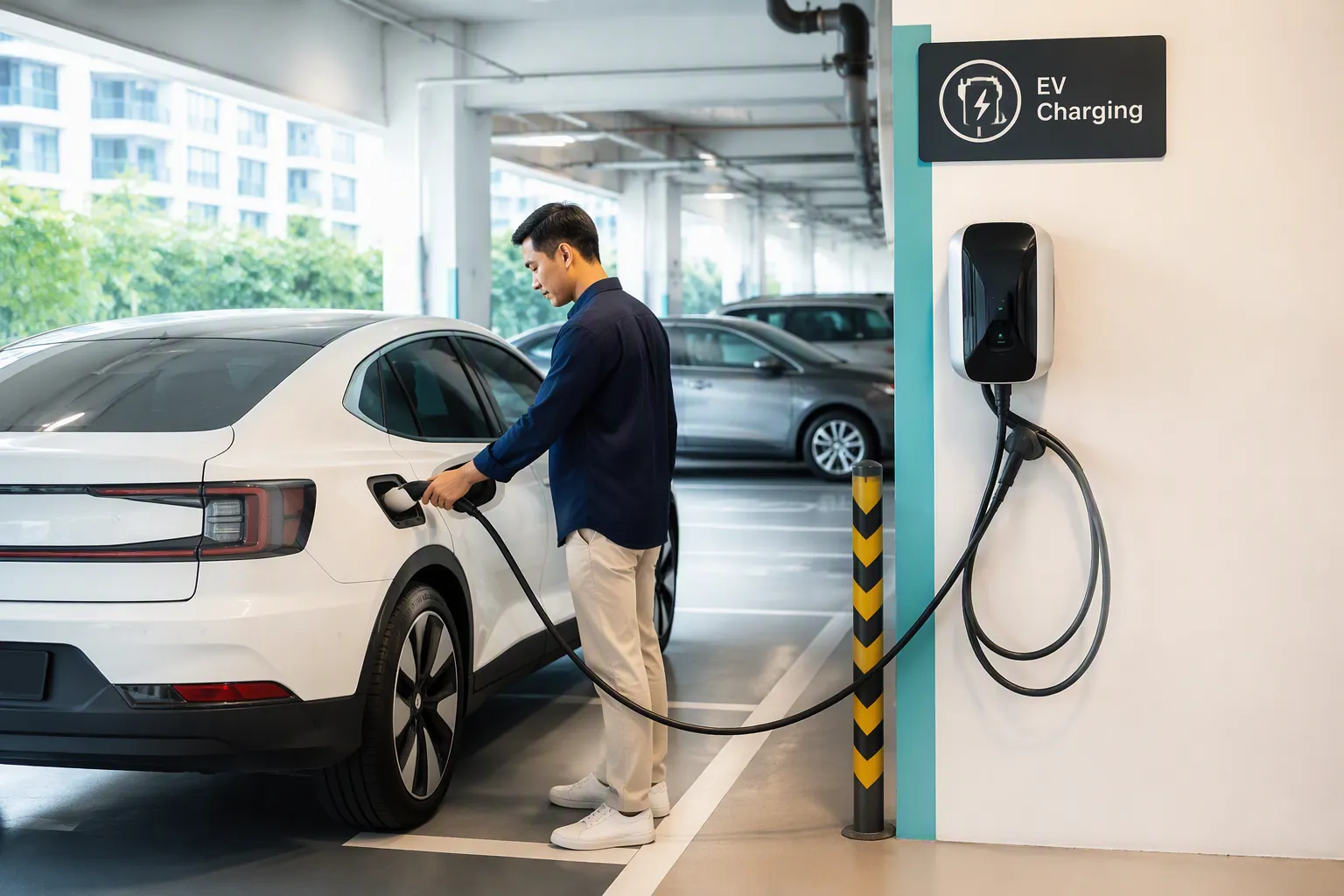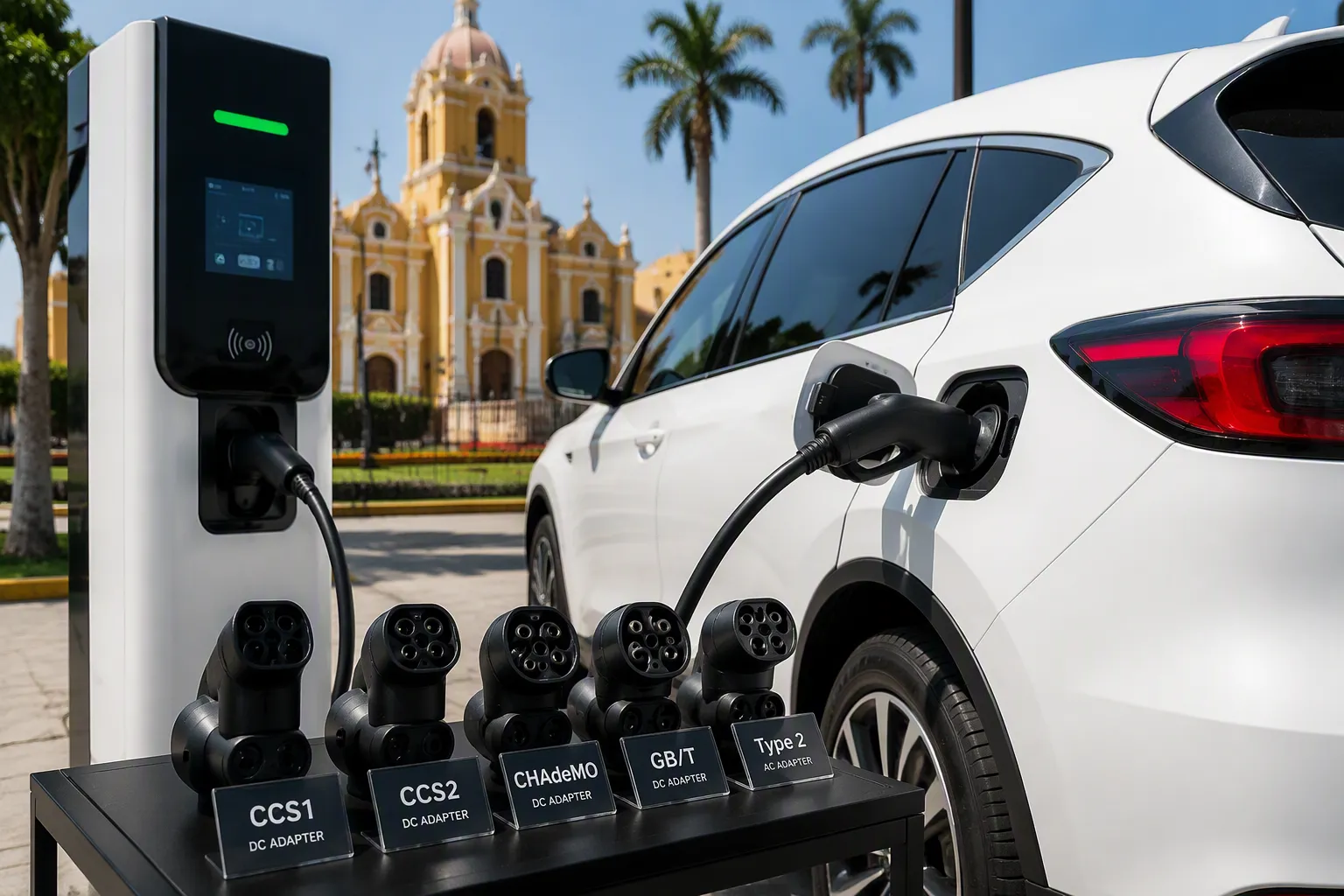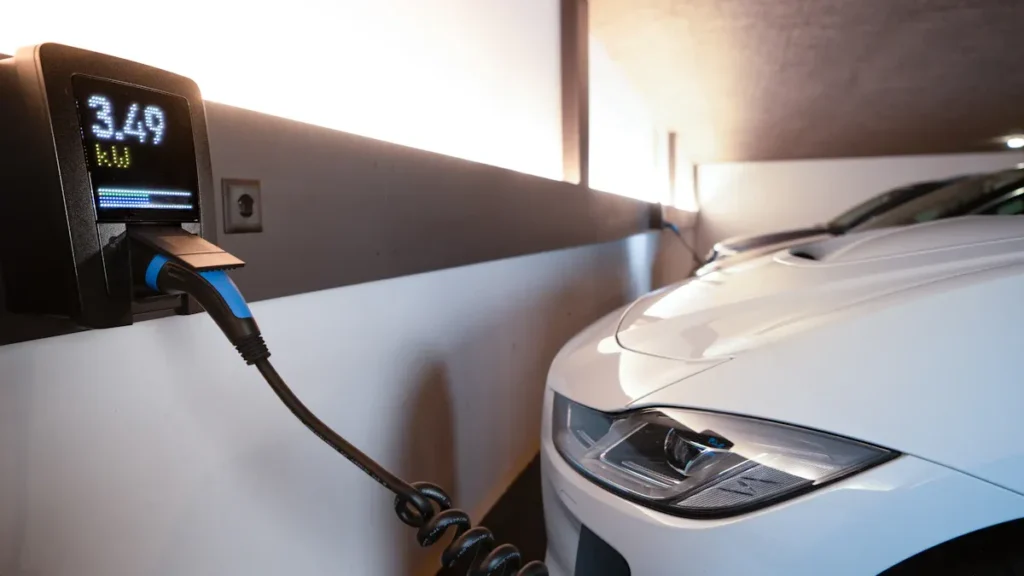

Home charging is the primary method for most electric vehicle (EV) owners. The convenience of waking up to a full battery makes a dedicated home Carregador de veículos eléctricos essential. Data shows a significant majority of EV drivers have a home charging setup.
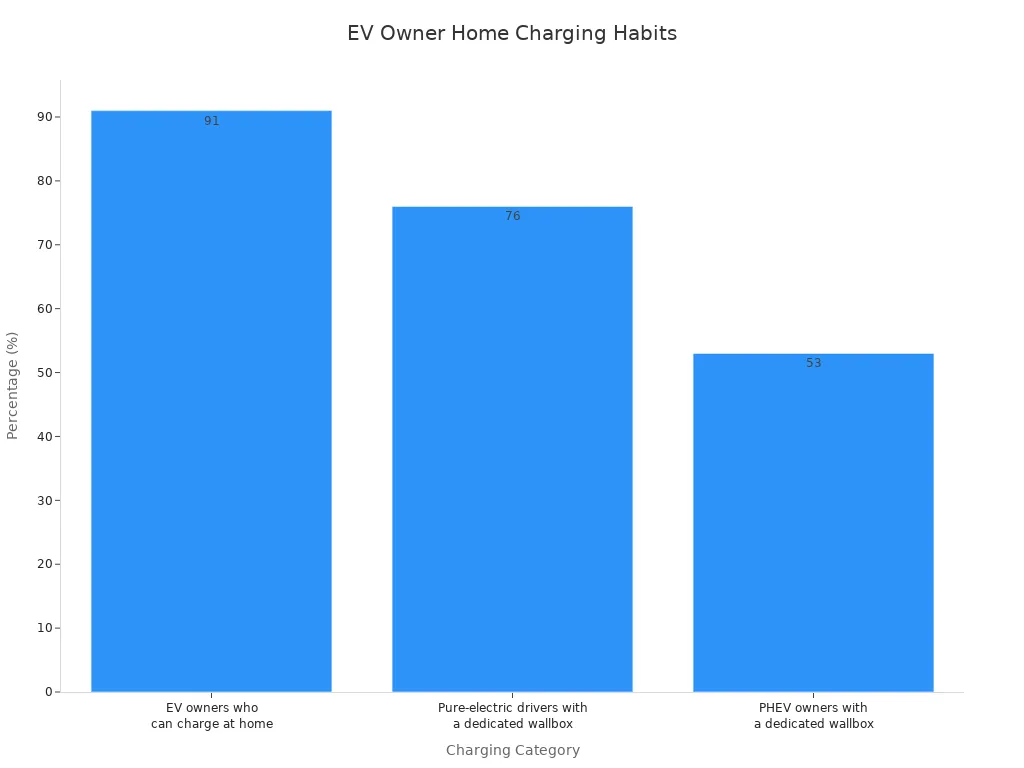
The typical cost to install a 240v outlet for an electric vehicle charger ranges from $300 to $1,200. This price covers a standard installation.
Final costs depend on the home’s electrical system and the installation’s complexity. While Fabricantes de carregadores para veículos eléctricos como a TPSON fornecem Soluções de carregamento de veículos eléctricos, from a wall-mounted EV Charger to carregadores portáteis para veículos eléctricos, the cost to install the required outlet is a separate consideration. The total cost for the charger project varies.
Understanding the Total Cost to Install a 240V Outlet
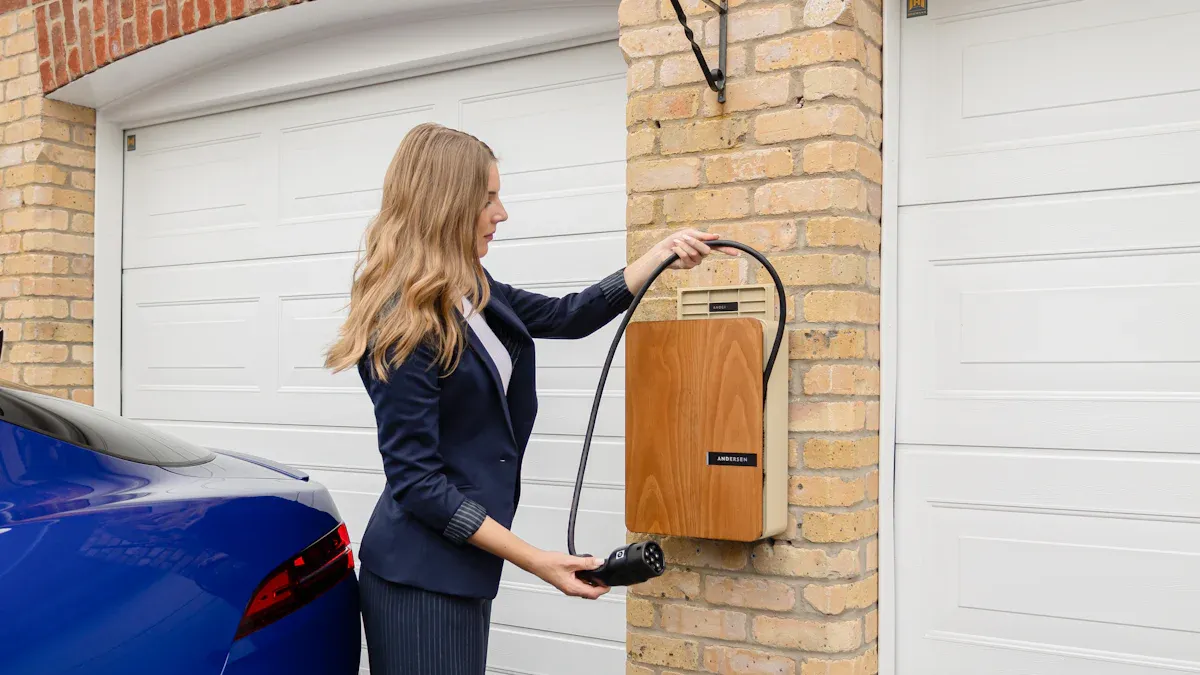
The final price for an Instalação de carregadores de veículos eléctricos project can be broken down into two main categories: standard and high-end. A homeowner’s specific situation, particularly their home’s existing electrical infrastructure, determines the total cost. Understanding these categories helps set realistic budget expectations for your electric vehicle charging setup.
Standard Installation Cost Range: $300 – $1,200
A standard installation represents the ideal scenario. This price range applies when the electrical work is straightforward and requires minimal complexity. Most homeowners with modern electrical systems and conveniently located panels will find their costs fall within this bracket.
What a Standard Installation Includes
A standard installation typically involves an electrician performing a few key tasks. The professional will install a new 50-amp dedicated circuit to your main electrical panel. They will then run the appropriate gauge electrical wire from that panel to the desired location for the charger. Finally, they will mount and connect a NEMA 14-50 or 6-50 outlet. This scenario assumes your electrical panel has enough spare capacity to handle the new load from the EV charger.
Nota: This cost to install the outlet is separate from the price of the charger itself. Companies like TPSON offer a range of advanced EV charging solutions, but the installation is a distinct service handled by a licensed electrician.
Why Prices Vary Within This Range
Even within a “standard” job, the final cost can fluctuate. Several factors contribute to the price difference for a basic EV charger installation. An electrician’s quote will account for these variables.
- Labor Charges: Electrician hourly rates vary by location and experience.
- Distance to Panel: A longer distance between the electrical panel and the charger location requires more wire and more labor time, increasing costs.
- Wiring and Materials: The price of copper wiring, conduit, and the outlet itself can add to the total.
- Permit Fees: Many municipalities require an electrical permit for this type of work, with fees typically ranging from $50 a $200.
High-End Installation Cost Range: $1,500 – $5,000+
The cost of EV charger installation can climb significantly when the project involves more than a simple outlet connection. These higher costs are not uncommon, especially in older homes or properties with detached garages. A proper pre-installation assessment is crucial to identify potential issues that could escalate the price.
Common Reasons for Higher Costs
Complexities in the home’s electrical system or layout are the primary drivers of higher installation costs. An electrician may discover that the main panel cannot safely handle the significant additional load required for EV charging. This is a common issue in older properties.
⚠️ Aviso: Attempting to run a high-power charger on an outdated system risks blown circuits or even electrical fires. Hiring an uncertified installer to save money can lead to improper grounding, inefficient charging, and voided warranties, resulting in much higher long-term maintenance costs.
Other factors that increase the project scope include:
- Long Wire Runs: Routing cable through finished walls, ceilings, or across multiple floors requires more labor and materials.
- Abertura de valas: If the charger is located far from the house, such as in a detached garage, trenching may be needed to bury the electrical line, adding hundreds of dollars to the project.
- Panel Upgrades: A home ev charger requires significant power. If your panel is full or lacks capacity, a subpanel or a full panel upgrade becomes necessary.
When to Expect a Major Project
A homeowner should anticipate a major project if their home’s electrical system is more than 20-30 years old or if the main service is less than 150 amps. In these cases, a full panel upgrade is often required to support the demands of carregamento de carros eléctricos safely. This turns the job from a simple outlet install into a significant electrical overhaul. This extensive work ensures the home can support modern charging at home needs for any EV.
Cost Breakdown: What Are You Paying For in an EV Charger Installation?

Understanding the final bill for an Instalação de carregadores de veículos eléctricos requires breaking down the total into its core components. The overall cost to install the outlet is a mix of professional labor, physical materials, and administrative fees. These installation costs are separate from the purchase price of the EV charger itself. Each element plays a crucial role in the safety and functionality of your home charging setup.
Labor Costs: The Electrician’s Fee
The largest portion of the bill for an EV charger installation is typically the electrician’s labor. Homeowners are paying for expertise, safety, and compliance. Hiring a licensed professional ensures the job is done correctly, protecting the home and the EV.
Average Hourly Rates for Licensed Electricians
Licensed electricians generally charge between $75 and $150 per hour. This rate varies based on geographic location, the electrician’s experience level, and market demand. A master electrician in a high-cost-of-living area will command a higher rate than a journeyman in a more rural location. These fees cover not just the time on-site but also insurance, licensing, and business overhead.
Estimated Time for a Standard Job
A straightforward installation is a relatively quick job for a qualified professional. For a standard project where the electrical panel is in the garage and has ample capacity, an electrician can typically complete the work in 2 to 4 hours. This timeframe covers adding a new circuit, running the wire, mounting the outlet, and testing the connection to ensure proper charging function.
Material Costs: The Price of Parts
Materials are the second major component of the total cost. The quantity and type of parts needed depend heavily on the distance between the electrical panel and the charger location. Longer runs require more wire and conduit, which directly increases the final cost.
- 240V Outlet (NEMA 14-50 vs. 6-50): The NEMA 14-50 is the most common outlet for modern EV charging, while the 6-50 is an alternative. The outlet itself is inexpensive, usually costing between $15 and $30.
- New Circuit Breaker: A dedicated 50-amp, two-pole circuit breaker is required for a NEMA 14-50 outlet. This part typically costs between $20 and $60, depending on the brand of the electrical panel.
- Electrical Wiring: The wire is often the most expensive material. A 50-amp circuit requires thick 6-gauge copper wire. The price fluctuates with the market but generally ranges from $2 to $5 per foot.
- Conduit and Fittings: An electrician will run the wiring inside a protective conduit (PVC or metal). These materials, along with clamps and fittings, add to the material costs, protecting the wire from damage.
Permit Costs: Ensuring Compliance
Many municipalities require an electrical permit to install a new 240v circuit. While it adds a small amount to the charging costs, a permit is a non-negotiable part of a safe and legal installation process.
Why Electrical Permits Are Often Required
Permits ensure that a licensed professional performs the installation according to local electrical codes. This third-party verification is critical for safety. An improper installation poses a significant risk of electrical shock or fire.
Safety & Warranty Alert: Skipping a required permit can have serious consequences. It may void the manufacturer’s warranty on your EV charger, including technologically advanced units from providers like TPSON. Furthermore, it can create issues with homeowner’s insurance claims and lead to fines from local authorities. A proper installation protects your investment and ensures safe electric car charging.
Typical Permit Fee Range by Municipality
The fee for an electrical permit varies widely by city and county. Homeowners can expect this administrative fee to range from $50 to $250. The electrician usually handles the paperwork for the permit as part of their service, including the fee in the total installation quote. This step is essential for a compliant EV charger installation.
Key Factor 1: Distance and Location of the Installation
The physical location of your EV charger and its distance from the electrical panel are two of the most significant factors influencing the final cost to install the outlet. A simple, short run is inexpensive, while a long, complex path can dramatically increase the project’s scope and price. The installation process becomes more involved with every foot of wire required.
How Far is Your Panel from Your Parking Spot?
The ideal scenario for a low-cost installation is having your electrical panel located in the garage, close to where you park your EV. The shorter the distance, the lower the overall cost. This proximity simplifies the entire job for the electrician.
Impact on Labor Hours
A greater distance directly translates to more labor hours. An electrician needs more time to plan the route, mount the conduit, and pull the heavy-gauge wire from the panel to the charger location. This is especially true if the path involves navigating around obstacles.
Why Distance Increases Labor:
- Electricians must run additional wiring and conduit to connect the charging location to the panel.
- A longer run makes the installation more complex and time-consuming.
- Navigating finished walls or ceilings requires careful, methodical work.
Impact on Material Quantities and Cost
Longer distances require more materials, which drives up custos de instalação. The most expensive material is typically the 6-gauge copper wire needed for a 50-amp EV charging circuit. A longer distance between the panel and the EV charger necessitates larger and longer cables to maintain electrical efficiency and safety. The closer the charger is to the fuse box, the simpler and more cost-effective the installation will be.
Attached Garage vs. Detached Garage Installation
Installing an EV charger in a detached garage presents a unique set of challenges. Since the structure is separate from the home, running a new electrical line requires significant extra work. This type of installation is almost always more expensive than one in an attached garage.
Cost Implications of Trenching
To get power to a detached structure, an electrician must bury the electrical line in a trench. The cost for trenching is typically quoted per linear foot or meter and depends on factors like depth and soil conditions. This process involves digging, laying conduit, backfilling the trench, and can add hundreds or even thousands of dollars to the project.
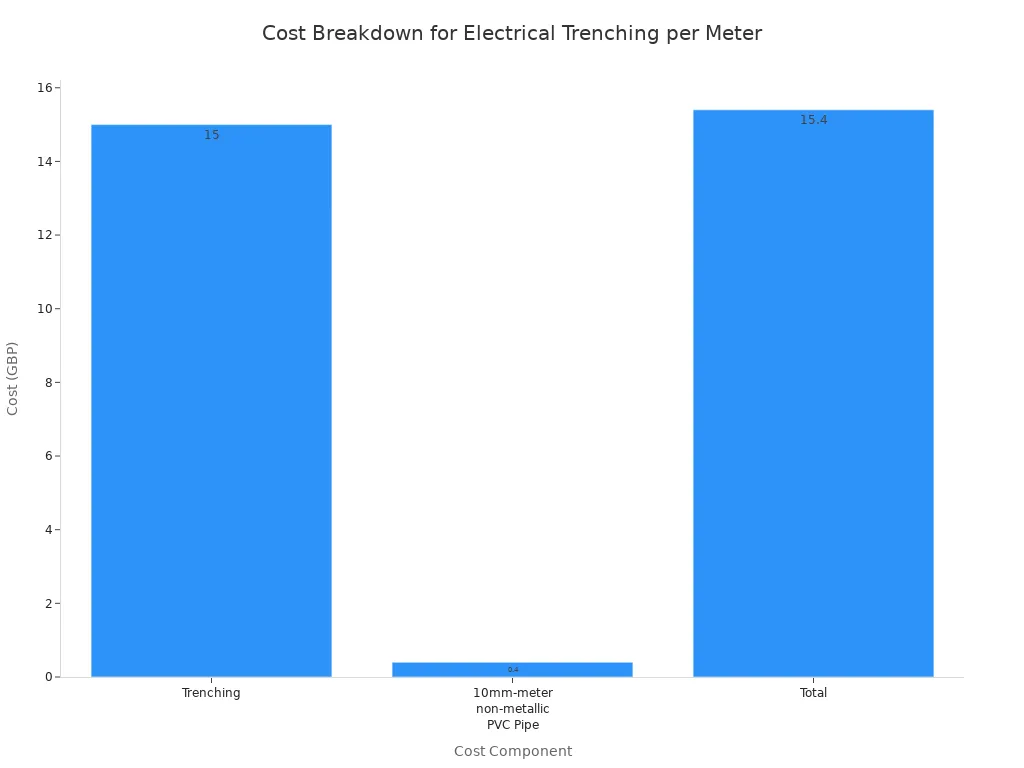
Wiring for Outdoor or Detached Structures
Wiring for a detached garage or an outdoor EV charger requires special materials. The electrician must use weatherproof conduit and burial-rated wire to protect the electrical line from moisture and physical damage. These specialized materials add to the total project costs but are essential for a safe and durable charging setup.
Challenges of Finished Walls and Ceilings
If your electrical panel is in the basement and your garage is on the main floor, the electrician will need to run the wire through finished walls and ceilings. This adds complexity and labor time to the EV charger installation. This is a common scenario in many home layouts.
Drywall Repair and Painting Costs
Sometimes, an electrician must cut small holes in drywall to route the wire for the EV charger. The electrician’s quote typically does not include the cost of repairing and painting this drywall. Homeowners should budget for these cosmetic repairs separately.
Labor for Fishing Wires
“Fishing” is the term for pulling wires through finished walls and ceilings without causing major damage. This is a skillful but slow process that requires patience and specialized tools. The extra labor time spent fishing wires will be reflected in the final bill for your EV charging installation. This careful work is necessary to install the outlet for your advanced TPSON EV charger with minimal disruption.
Key Factor 2: Your Home’s Electrical Panel Capacity
A home’s electrical panel is the heart of its power system. Its capacity is the single most important factor determining the complexity and cost to install an EV charger. A modern Level 2 charger is a high-power appliance, and the panel must be able to handle the significant, sustained load required for safe and efficient charging. An inadequate panel will require an upgrade, which can substantially increase the total installation cost.
Do You Need a Panel Upgrade for a Home EV Charger?
Before an electrician can install a new circuit, they must confirm the existing panel can support the additional demand. This assessment is a critical part of the processo de instalação for any home EV charger. Ignoring this step can lead to overloaded circuits and serious safety hazards.
Signs Your Panel Lacks Capacity
Homeowners can often spot warning signs that their electrical panel may be insufficient for electric vehicle charging. Key indicators include:
- The main breaker is rated for less than 100 amps.
- The panel is a very old model, possibly still using fuses instead of circuit breakers.
- There are no empty slots to add a new two-pole breaker for the EV charger.
- Lights in the home flicker or dim when large appliances like an air conditioner turn on.
How to Perform a Load Calculation
A definitive answer requires a professional load calculation. An electrician performs this assessment to measure the home’s total existing electrical demand. They compare this figure to the panel’s maximum capacity to determine if there is enough power available for the new EV charging circuit. This calculation ensures the installation will comply with electrical codes and operate safely.
The Cost of Adding a Subpanel
If the main panel has enough total capacity but lacks the physical space for new breakers, a subpanel is an excellent and cost-effective solution. It avoids the expense of a full panel replacement.
When a Subpanel is a Good Solution
A subpanel acts as a secondary distribution point for electricity. An electrician installs it near the main panel and runs a heavy-gauge wire to it. This new box provides the necessary slots for the EV charger circuit. This is a common solution for a crowded but otherwise capable main panel, making the charger installation feasible without a major overhaul.
Estimated Cost: $500 – $1,500
The cost for a subpanel installation typically adds a few hundred dollars to the overall project. The total price, including labor and materials, generally falls between $500 and $1,500. This cost covers the subpanel itself, the new breakers, and the labor to connect it to the main service, providing a dedicated space for your EV charging needs.
The Cost of a Full Panel Upgrade
In some cases, particularly in older homes, a full panel upgrade is unavoidable. This is the most expensive scenario but is essential for ensuring the safety of the home and the functionality of modern appliances and your EV charger.
When a Full Replacement is Necessary
A full upgrade is necessary when the home’s main service is too low (e.g., 60 amps or an already maxed-out 100-amp service). It is also required if the existing panel is outdated, damaged, or known to be unsafe. This major electrical work ensures your home can support the demands of charging at home and other modern electronics, including advanced units from providers like TPSON.
Estimated Cost: $1,500 – $4,000
Upgrading a 100-amp panel to a 200-amp service is a significant project with higher costs. The price for a full panel upgrade, including all labor and materials, typically ranges from $1,500 to $4,000. This increase accounts for the heavier cabling, a new meter base, and additional protective devices required for the higher amperage, making it a comprehensive electric car charging solution.
Outlet vs. Hardwired: Which Installation Has a Better Cost?
When planning for electric vehicle charging, homeowners must choose between installing a NEMA outlet or hardwiring the charger directly. The installation costs for both options are surprisingly similar. The decision often comes down to a preference for flexibility versus performance and permanence. The choice impacts the long-term convenience of charging at home.
Cost Comparison: NEMA Outlet Installation
An outlet installation provides a familiar plug-in experience for an EV charger. This installation process involves an electrician running a dedicated circuit to a high-power NEMA 14-50 or 6-50 receptacle.
Pros of an Outlet Installation
The primary advantage of an outlet is flexibility. A homeowner can easily unplug their charger and take it with them if they move. This setup also allows for the use of different compatible devices, such as a portable EV charger for travel. This makes it a versatile option for EV owners.
Typical All-In Cost
The all-in cost to install a NEMA outlet is nearly identical to a standard installation, typically ranging from $300 to $1,200. The core work of adding a breaker and running wire is the same, regardless of the final connection type.
Cost Comparison: Hardwired EV Charger Installation
A hardwired installation involves connecting the EV charger directly to the home’s electrical circuit. This creates a permanent and dedicated connection for the charging station. This type of installation is often recommended for advanced units from providers like TPSON to ensure optimal performance.
Pros of a Hardwired Installation
Hardwiring a charger offers several technical and safety benefits. It creates a more robust and reliable connection for your EV.
Key Advantages of Hardwiring:
- It prevents potential electrical issues and slower charging speeds that can sometimes occur with plug connections.
- It eliminates the need for a GFCI circuit breaker. Most Level 2 charger models have internal GFCI protection, and having two on one circuit can cause nuisance tripping, which requires manual resets.
- A hardwired charger is more secure, making it difficult or impossible to steal compared to a model that simply unplugs.
Typical All-In Cost
The installation costs for a hardwired charger are comparable to an outlet installation, also falling between $300 and $1,200 for a standard job. The labor and materials are essentially the same. The only difference is the final step, where the electrician wires directly into the charger instead of an outlet.
Which Option is Right for You?
The best choice depends on a homeowner’s priorities for their electric car charging setup. Both methods provide safe and effective EV charging when completed by a licensed professional.
Flexibility vs. Power
A NEMA outlet offers maximum flexibility, which is ideal for renters or those who may want to take their charger with them. A hardwired installation provides a more stable, permanent, and potentially more powerful charging connection, eliminating common points of failure associated with plugs and receptacles.
Valor a longo prazo
A hardwired EV charger installation is a permanent upgrade to the home, which can be an attractive feature for future buyers. An outlet provides personal, long-term value through the portability of the charger itself. The right decision balances the need for a reliable charging station with personal mobility and future plans.
Real-World Cost Scenarios for Your EV Charger Installation
Theoretical price ranges are helpful, but real-world examples provide the clearest picture of potential costs. The final price for an Instalação de carregadores de veículos eléctricos depends entirely on a home’s specific layout and electrical system. Below are three common scenarios, from the most straightforward to the more complex, to help homeowners budget accordingly.
Scenario 1: The Simple & Standard Installation
This scenario represents the ideal and most cost-effective project. It applies to many modern homes where the electrical infrastructure is up-to-date and conveniently located. The straightforward nature of this work minimizes both labor time and material expenses.
Details: Panel in garage, short distance, ample capacity
In this case, the main electrical panel is located in the garage, very close to where the EV will be parked for charging. The panel has plenty of spare capacity and open slots for a new 2-pole breaker. The installation path is clear and unobstructed. This setup is the simplest for an electrician to complete. A standard installation package often includes:
- A 7kW smart charger.
- Up to 30 feet of cable run.
- A modern electrical panel with proper protection.
- A strong Wi-Fi signal for smart charger features.
- No major obstacles along the cable route.
Estimated Total Cost: $300 – $600
The low cost reflects the efficiency of the job. An electrician can complete this type of installation in just a few hours. The material list is short, primarily consisting of a breaker, a short length of wire, and the outlet. The following table illustrates a hypothetical quote for such a project, showing how minimal complexity keeps costs down.
| Tipo de propriedade | Tipo de carregador | Cable Run | Electrical Panel | Wi-Fi Signal | Custo estimado |
|---|---|---|---|---|---|
| Modern 3-bed home | 7kW smart charger | 20 feet | Modern with available capacity | Strong | $950–$1,200 |
Scenario 2: The Mid-Range Installation
This situation is very common in homes where the electrical panel is not in the garage. It often resides in a basement, utility room, or on an opposite wall, requiring a more involved process to connect the charger.
Details: Panel in basement, longer wire run through finished ceiling
Here, the electrician must route the electrical wiring from the basement panel, up through the floor, and across a finished ceiling to reach the garage. This process, known as “fishing” wires, requires skill and significantly more time than a simple surface-mounted run. The increased distance also adds to material costs. The complexity of routing through a building is a primary reason for higher expenses.
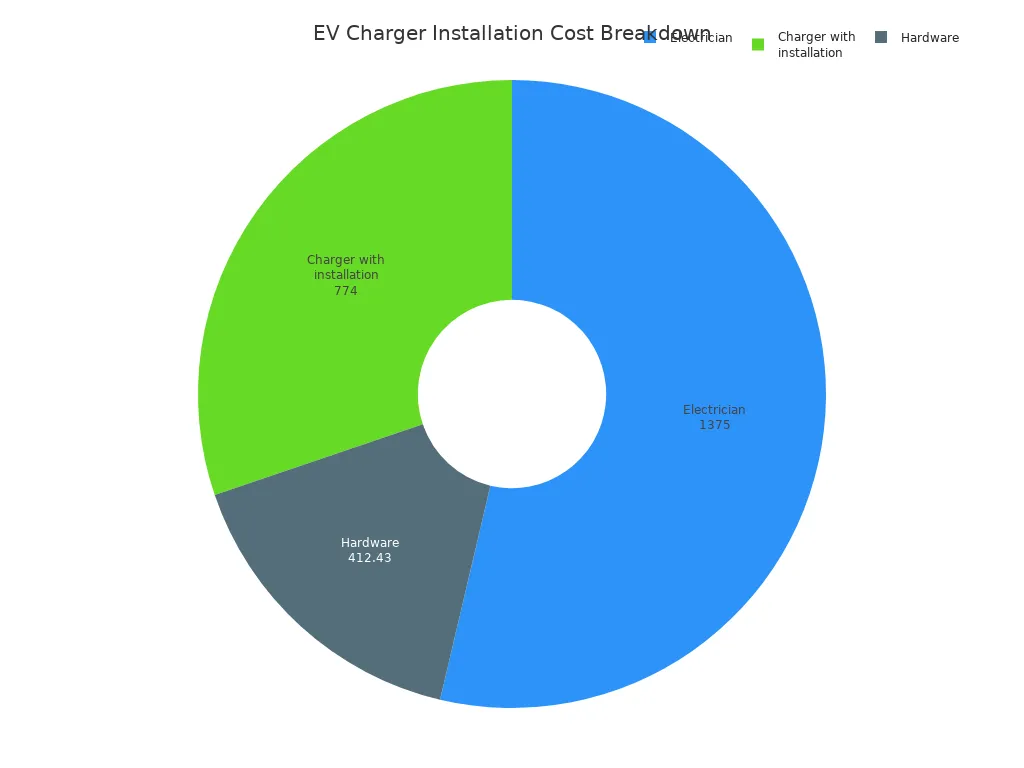
Estimated Total Cost: $700 – $1,200
The price increase directly reflects the added labor and materials. As the chart above illustrates from one complex project, the electrician’s fee makes up the largest portion of the total. The longer wire run and the need to navigate finished surfaces turn a simple task into a more detailed project. Homeowners should also budget for potential drywall repair and painting, as these cosmetic fixes are not typically included in an electrician’s quote for the EV charger installation. This ensures the home is ready for efficient EV charging.
Scenario 3: The Complex Installation with Subpanel
This scenario arises when the main electrical panel lacks the physical space for a new breaker, even if it has sufficient overall amperage. It is a common issue in homes where many circuits have been added over the years, leaving the panel completely full.
Details: Full panel, long run to the other side of the house
Imagine the main panel is full and located in a utility room at one end of the house, while the garage is at the other. An electrician cannot simply add the new EV charging circuit. The correct solution is to install a subpanel. This involves adding a new, large-amperage breaker to the main panel (which may require consolidating other circuits to create space), running a thick feeder cable to a new subpanel installed in the garage, and then connecting the EV charger circuit to the subpanel.
Estimated Total Cost: $1,200 – $2,500
This project is essentially two installations in one. The electrician first sets up the subpanel, a job that has its own labor and material costs. Then, they perform the final charger connection. This multi-step process is what drives the price into a higher bracket. While more expensive, a subpanel is a robust and safe solution. It provides dedicated capacity for EV charging and offers room for future electrical expansion, making it a smart long-term investment for the home. This level of work is often necessary to support advanced charging technology from providers like TPSON.
Scenario 4: The Major Overhaul with Panel Upgrade
This scenario represents the most extensive and costly type of EV charger installation. It occurs when a home’s electrical system is not only inconveniently located but fundamentally inadequate to support the high, sustained power draw required for Carregamento de veículos eléctricos de nível 2. This project moves beyond a simple circuit addition and becomes a major electrical system upgrade for the entire property.
Safety is Paramount: An undersized or outdated electrical panel poses a significant safety risk when adding a high-power appliance like an EV charger. A full upgrade is not an upsell; it is a necessary measure to prevent overloaded circuits, electrical fires, and to ensure the safe operation of your new charger.
Details: Requires a full panel replacement and a complex wire run
A full panel replacement becomes non-negotiable under several conditions. The most common reason is an old home with a low-amperage service, such as 60 or 100 amps, that is already at its maximum capacity. Other triggers include:
- An electrical panel that is physically full with no space for any new breakers.
- The presence of an outdated or recalled panel model known for safety defects.
- The need to power other major electrical appliances in addition to the EV charger.
This comprehensive installation involves replacing the main service panel itself. An electrician must coordinate with the local utility to disconnect power, replace the old box with a new 200-amp panel, and then reconnect and re-certify the entire system. This scenario is further complicated when combined with a difficult wire run—for instance, from a new panel in the basement to a charger location in a detached garage. This work ensures the home can safely power technologically advanced units, such as a smart charger from TPSON, for years to come.
Estimated Total Cost: $2,500 – $5,000+
The significant price tag reflects the project’s complexity and scope. These high costs are a direct result of extensive labor and a long list of required materials. The final bill for this EV charger installation accounts for several key components.
| Componente de custo | Descrição |
|---|---|
| New 200-Amp Panel | The main hardware, including the panel box and all new circuit breakers. |
| Extensive Labor | Often requires a full day or more for at least two licensed electricians. |
| Heavy-Gauge Cabling | New, thicker service entrance wire from the utility connection to the panel. |
| Licenças e inspeção | Fees for this level of work are typically higher and involve multiple inspections. |
| Complex Wire Run | All the labor and material costs associated with a long or difficult path for the charger circuit. |
While the initial expense is high, this upgrade is a long-term investment. It dramatically improves the home’s electrical safety and capacity, preparing it for a future that is increasingly electric. A modern panel provides reliable power for your EV charging needs and adds significant value to your property. This ensures your charger delivers consistent and efficient charging every time.
How to Save Money on Your Home EV Charger Installation
While a professional EV charger installation is a necessary investment, several strategies can help homeowners manage and reduce the final costs. Proactive research and careful planning are key to securing a safe and affordable setup for charging at home.
Encontrar incentivos federais, estatais e de serviços públicos
Government and utility programs exist to make electric car charging more accessible. These incentives can significantly lower the out-of-pocket expense for a new home EV charger installation.
The Federal Alternative Fuel Vehicle Refueling Property Credit
Homeowners may be eligible for a valuable federal tax credit. The Alternative Fuel Vehicle Refueling Property Credit allows individuals to claim 30% of the total cost of the charger equipment and installation, up to a maximum of $1,000. To qualify, the charger must be installed at a primary residence located within an eligible low-income or rural census tract. Taxpayers claim this credit by filing Form 8911. However, homeowners should be aware that proposed legislation could eliminate this credit in the future, making it wise to act sooner rather than later.
Searching for Local Rebates
Beyond federal programs, many state governments and local utility companies offer their own rebates. These programs can provide direct cash back for purchasing a qualified charger or for the installation itself. Homeowners should search their utility provider’s website for specific incentives related to Instalação de carregadores de veículos eléctricos.
A importância de obter vários orçamentos
One of the most effective ways to control costs is to shop around. The price for the same installation can vary significantly between different electricians.
Why You Should Get At Least Three Quotes
Obtaining at least three detailed quotes provides a clear picture of the fair market rate in a specific area. This comparison helps homeowners avoid overpaying and identify the best value. It is a critical step before committing to any service for your home.
How to Compare Electrician Quotes Effectively
A low price does not always equal the best deal. When comparing quotes for your charger installation, É crucial analisar os detalhes.
Dica profissional: Sempre verifique o que está incluído em uma instalação “padrão” versus o que é considerado um “extra”. Um orçamento que parece baixo pode não incluir trabalhos necessários que outros já consideraram. Certifique-se de que qualquer instalador potencial seja um eletricista qualificado e familiarizado com os padrões específicos para VE.
Planeamento Estratégico para Reduzir Custos
O planeamento do próprio proprietário pode ter um grande impacto na fatura final. Decisões simples sobre a localização do carregador e o momento da execução dos trabalhos podem gerar economias substanciais.
Escolher a Localização Ideal
A distância mais curta entre o quadro elétrico e o carregador é sempre a opção mais barata. Escolher uma vaga de estacionamento em casa que esteja próxima do quadro minimiza a quantidade de fio de cobre dispendioso e o tempo de mão de obra necessários para a instalação. Esta é a forma mais direta de reduzir os custos com materiais.
Agrupar com Outros Trabalhos Elétricos
Se uma casa necessitar de outras melhorias elétricas, agrupá-las com a instalação do carregador para VE pode ser rentável. Os eletricistas podem oferecer uma tarifa global melhor para um projeto maior do que para vários pequenos trabalhos agendados separadamente. Esta é uma forma eficiente de modernizar o sistema elétrico de uma casa e prepará-lo para um carregador tecnologicamente avançado de fornecedores como a TPSON.
Os custos de instalação de um carregador doméstico para VE são altamente variáveis, desde um trabalho simples até um projeto complexo. O preço final depende de fatores como a distância do quadro elétrico e a sua capacidade.
Próximo Passo: A ação mais crítica para um proprietário é obter vários orçamentos detalhados de eletricistas qualificados para determinar o preço exato para o seu carregador específico.
Investigar incentivos locais também pode reduzir a despesa de um novo carregador. Isto garante uma configuração acessível para carregar em casa com um carregador tecnologicamente avançado, como um carregador TPSON.
FAQ
Um proprietário pode instalar uma tomada de 240V?
Os proprietários não devem tentar fazer esta instalação. Um eletricista licenciado deve instalar a tomada para garantir a segurança e a conformidade com as normas. Uma instalação elétrica inadequada cria riscos significativos de incêndio e pode anular as garantias do VE e do carregador.
Quanto tempo demora uma instalação normal?
Um eletricista qualificado normalmente completa uma instalação padrão em 2 a 4 horas. Este prazo pressupõe que o quadro elétrico esteja acessível e tenha capacidade suficiente. Trabalhos mais complexos que envolvam atualizações do quadro ou percursos longos de cabos exigirão tempo adicional.
Uma tomada NEMA é melhor do que um carregador fixo (hardwired)?
A escolha depende das necessidades do utilizador. Uma tomada oferece flexibilidade para carregadores portáteis. Uma ligação fixa (hardwired) proporciona uma instalação mais robusta e permanente, que pode evitar disparos intempestivos e é frequentemente recomendada para carregadores avançados.
Preciso de uma licença para esta instalação?
A maioria dos municípios exige uma licença elétrica para instalar um novo circuito de 240v. A licença garante uma inspeção por terceiros para verificar a segurança e a conformidade com as normas. O eletricista geralmente trata do processo de licenciamento como parte do seu serviço.
Por que é que carregar em casa é melhor do que usar um ponto de carregamento público?
O carregamento doméstico oferece uma conveniência superior e é frequentemente mais económico do que usar um ponto de carregamento público. Permite que os proprietários de VE comecem cada dia com uma bateria cheia sem sair da sua propriedade, garantindo a máxima prontidão.
O que acontece se o meu quadro elétrico estiver cheio?
Se o quadro não tiver espaços livres mas tiver energia suficiente, um eletricista pode instalar um subquadro. Esta é uma solução rentável. Fornecedores tecnologicamente avançados como a TPSON oferecem carregadores que se integram perfeitamente com sistemas elétricos devidamente modernizados.