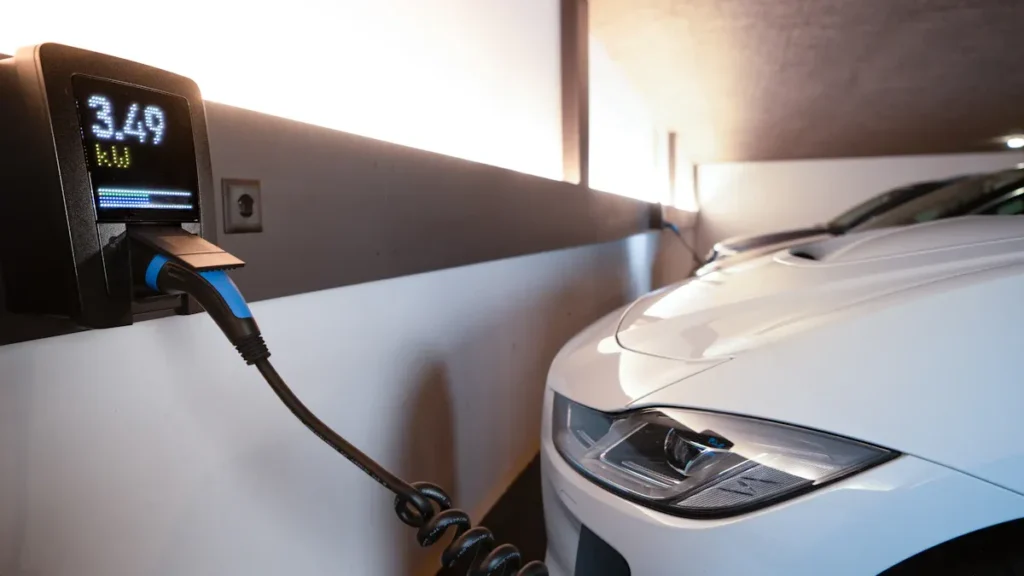

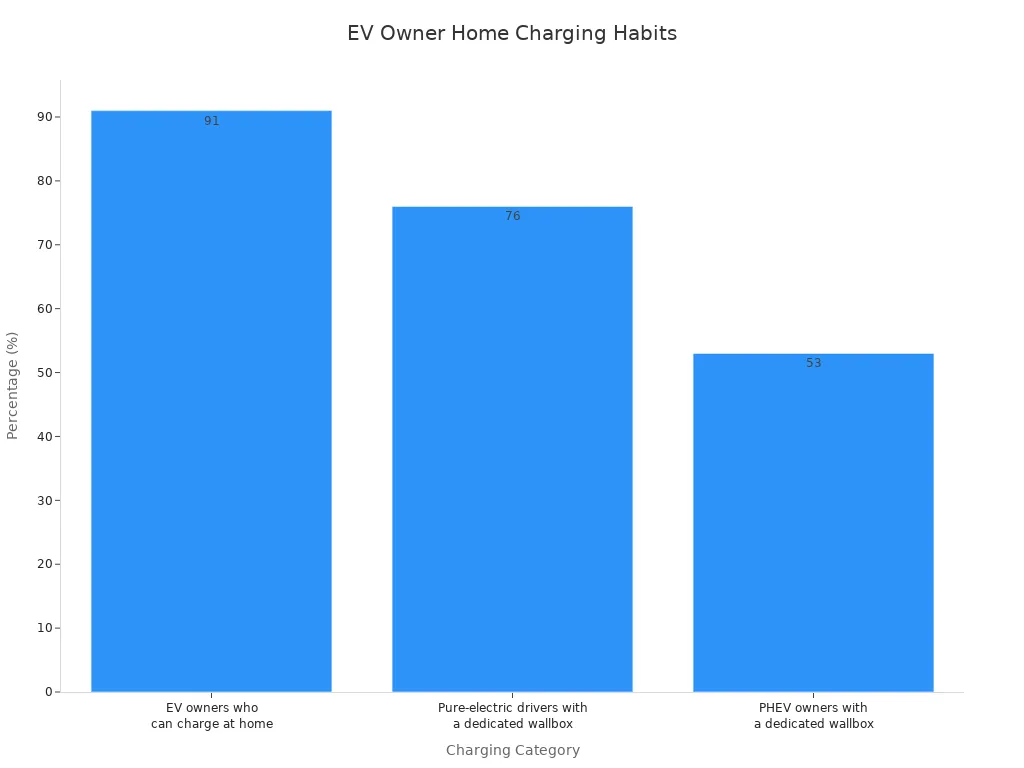
Home charging is the primary method for most electric vehicle (EV) owners. The convenience of waking up to a full battery makes a dedicated home Pengisi daya listrik essential. Data shows a significant majority of EV drivers have a home charging setup.
The typical cost to install a 240v outlet for an electric vehicle charger ranges from $300 to $1,200. This price covers a standard installation.
Final costs depend on the home’s electrical system and the installation’s complexity. While Produsen pengisi daya EV seperti TPSON menyediakan tingkat lanjut Solusi pengisian daya kendaraan listrik, from a wall-mounted EV Charger to pengisi daya EV portabel, the cost to install the required outlet is a separate consideration. The total cost for the charger project varies.
Understanding the Total Cost to Install a 240V Outlet
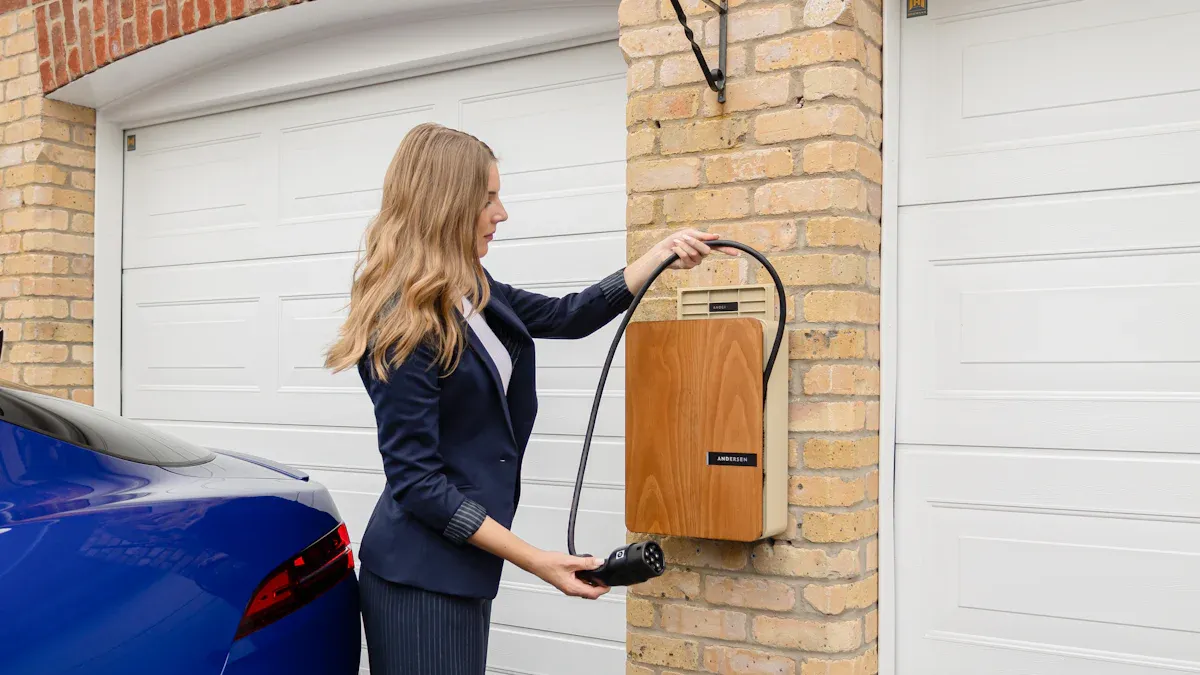
The final price for an Pemasangan pengisi daya EV project can be broken down into two main categories: standard and high-end. A homeowner’s specific situation, particularly their home’s existing electrical infrastructure, determines the total cost. Understanding these categories helps set realistic budget expectations for your electric vehicle charging setup.
Standard Installation Cost Range: $300 – $1,200
A standard installation represents the ideal scenario. This price range applies when the electrical work is straightforward and requires minimal complexity. Most homeowners with modern electrical systems and conveniently located panels will find their costs fall within this bracket.
What a Standard Installation Includes
A standard installation typically involves an electrician performing a few key tasks. The professional will install a new 50-amp dedicated circuit to your main electrical panel. They will then run the appropriate gauge electrical wire from that panel to the desired location for the charger. Finally, they will mount and connect a NEMA 14-50 or 6-50 outlet. This scenario assumes your electrical panel has enough spare capacity to handle the new load from the EV charger.
Catatan: This cost to install the outlet is separate from the price of the charger itself. Companies like TPSON offer a range of advanced EV charging solutions, but the installation is a distinct service handled by a licensed electrician.
Why Prices Vary Within This Range
Even within a “standard” job, the final cost can fluctuate. Several factors contribute to the price difference for a basic EV charger installation. An electrician’s quote will account for these variables.
- Labor Charges: Electrician hourly rates vary by location and experience.
- Distance to Panel: A longer distance between the electrical panel and the charger location requires more wire and more labor time, increasing costs.
- Wiring and Materials: The price of copper wiring, conduit, and the outlet itself can add to the total.
- Permit Fees: Many municipalities require an electrical permit for this type of work, with fees typically ranging from $50 hingga $200.
High-End Installation Cost Range: $1,500 – $5,000+
The cost of EV charger installation can climb significantly when the project involves more than a simple outlet connection. These higher costs are not uncommon, especially in older homes or properties with detached garages. A proper pre-installation assessment is crucial to identify potential issues that could escalate the price.
Common Reasons for Higher Costs
Complexities in the home’s electrical system or layout are the primary drivers of higher installation costs. An electrician may discover that the main panel cannot safely handle the significant additional load required for EV charging. This is a common issue in older properties.
⚠️ Peringatan: Attempting to run a high-power charger on an outdated system risks blown circuits or even electrical fires. Hiring an uncertified installer to save money can lead to improper grounding, inefficient charging, and voided warranties, resulting in much higher long-term maintenance costs.
Other factors that increase the project scope include:
- Long Wire Runs: Routing cable through finished walls, ceilings, or across multiple floors requires more labor and materials.
- Penggalian Parit: If the charger is located far from the house, such as in a detached garage, trenching may be needed to bury the electrical line, adding hundreds of dollars to the project.
- Panel Upgrades: A home ev charger requires significant power. If your panel is full or lacks capacity, a subpanel or a full panel upgrade becomes necessary.
When to Expect a Major Project
A homeowner should anticipate a major project if their home’s electrical system is more than 20-30 years old or if the main service is less than 150 amps. In these cases, a full panel upgrade is often required to support the demands of pengisian daya mobil listrik safely. This turns the job from a simple outlet install into a significant electrical overhaul. This extensive work ensures the home can support modern charging at home needs for any EV.
Cost Breakdown: What Are You Paying For in an EV Charger Installation?

Understanding the final bill for an Pemasangan pengisi daya EV requires breaking down the total into its core components. The overall cost to install the outlet is a mix of professional labor, physical materials, and administrative fees. These installation costs are separate from the purchase price of the EV charger itself. Each element plays a crucial role in the safety and functionality of your home charging setup.
Labor Costs: The Electrician’s Fee
The largest portion of the bill for an EV charger installation is typically the electrician’s labor. Homeowners are paying for expertise, safety, and compliance. Hiring a licensed professional ensures the job is done correctly, protecting the home and the EV.
Average Hourly Rates for Licensed Electricians
Licensed electricians generally charge between $75 and $150 per hour. This rate varies based on geographic location, the electrician’s experience level, and market demand. A master electrician in a high-cost-of-living area will command a higher rate than a journeyman in a more rural location. These fees cover not just the time on-site but also insurance, licensing, and business overhead.
Estimated Time for a Standard Job
A straightforward installation is a relatively quick job for a qualified professional. For a standard project where the electrical panel is in the garage and has ample capacity, an electrician can typically complete the work in 2 to 4 hours. This timeframe covers adding a new circuit, running the wire, mounting the outlet, and testing the connection to ensure proper charging function.
Material Costs: The Price of Parts
Materials are the second major component of the total cost. The quantity and type of parts needed depend heavily on the distance between the electrical panel and the charger location. Longer runs require more wire and conduit, which directly increases the final cost.
- 240V Outlet (NEMA 14-50 vs. 6-50): The NEMA 14-50 is the most common outlet for modern EV charging, while the 6-50 is an alternative. The outlet itself is inexpensive, usually costing between $15 and $30.
- Pemutus Sirkuit Baru: A dedicated 50-amp, two-pole circuit breaker is required for a NEMA 14-50 outlet. This part typically costs between $20 and $60, depending on the brand of the electrical panel.
- Kabel Listrik: Kawat seringkali merupakan material termahal. Sirkuit 50-amp membutuhkan kawat tembaga tebal ukuran 6. Harganya berfluktuasi sesuai pasar tetapi umumnya berkisar antara $2 hingga $5 per kaki.
- Konduit dan Perlengkapan: Tukang listrik akan memasang kabel di dalam konduit pelindung (PVC atau logam). Material ini, bersama dengan klem dan perlengkapan, menambah biaya material, melindungi kawat dari kerusakan.
Biaya Izin: Memastikan Kepatuhan
Banyak pemerintah daerah memerlukan izin listrik untuk memasang sirkuit 240v baru. Meskipun menambah sedikit biaya pengisian daya, izin adalah bagian yang tidak bisa ditawar dari proses instalasi yang aman dan legal.
Mengapa Izin Listrik Sering Diperlukan
Izin memastikan bahwa profesional berlisensi melakukan instalasi sesuai dengan kode listrik setempat. Verifikasi pihak ketiga ini sangat penting untuk keselamatan. Instalasi yang tidak tepat menimbulkan risiko sengatan listrik atau kebakaran yang signifikan.
Peringatan Keselamatan & Garansi: Melewatkan izin yang diperlukan dapat memiliki konsekuensi serius. Hal ini dapat membatalkan garansi pabrikan pada pengisi daya EV Anda, termasuk unit teknologi canggih dari penyedia seperti TPSON. Lebih lanjut, hal ini dapat menimbulkan masalah dengan klaim asuransi pemilik rumah dan mengakibatkan denda dari otoritas setempat. Instalasi yang tepat melindungi investasi Anda dan memastikan pengisian daya mobil listrik yang aman.
Kisaran Biaya Izin Khas Berdasarkan Kotamadya
Biaya untuk izin listrik sangat bervariasi menurut kota dan kabupaten. Pemilik rumah dapat mengharapkan biaya administrasi ini berkisar dari $50 hingga $250. Tukang listrik biasanya menangani dokumen untuk izin sebagai bagian dari layanan mereka, termasuk biaya dalam penawaran total instalasi. Langkah ini penting untuk instalasi pengisi daya EV yang patuh.
Faktor Kunci 1: Jarak dan Lokasi Instalasi
Lokasi fisik pengisi daya EV Anda dan jaraknya dari panel listrik adalah dua faktor paling signifikan yang mempengaruhi biaya akhir untuk memasang stopkontak. Pemasangan yang sederhana dan pendek harganya murah, sementara jalur yang panjang dan kompleks dapat secara dramatis meningkatkan ruang lingkup dan harga proyek. Proses instalasi menjadi lebih rumit dengan setiap kaki kawat yang diperlukan.
Seberapa Jauh Panel Anda dari Tempat Parkir?
Skenario ideal untuk instalasi berbiaya rendah adalah memiliki panel listrik Anda yang terletak di garasi, dekat dengan tempat Anda memarkir EV Anda. Semakin pendek jaraknya, semakin rendah biaya keseluruhan. Kedekatan ini menyederhanakan seluruh pekerjaan bagi tukang listrik.
Dampak pada Jam Kerja
Jarak yang lebih jauh secara langsung diterjemahkan menjadi lebih banyak jam kerja. Seorang tukang listrik membutuhkan lebih banyak waktu untuk merencanakan rute, memasang konduit, dan menarik kawat tebal dari panel ke lokasi pengisi daya. Hal ini terutama benar jika jalur tersebut melibatkan navigasi di sekitar rintangan.
Mengapa Jarak Meningkatkan Tenaga Kerja:
- Tukang listrik harus memasang kabel dan konduit tambahan untuk menghubungkan lokasi pengisian daya ke panel.
- Jalur yang lebih panjang membuat instalasi lebih kompleks dan memakan waktu.
- Menavigasi dinding atau langit-langit yang sudah jadi membutuhkan pekerjaan yang hati-hati dan metodis.
Dampak pada Kuantitas dan Biaya Material
Jarak yang lebih panjang membutuhkan lebih banyak material, yang mendorong naiknya biaya pemasangan. biaya. Material termahal biasanya adalah kawat tembaga ukuran 6 yang dibutuhkan untuk sirkuit pengisian daya EV 50-amp. Jarak yang lebih panjang antara panel dan pengisi daya EV memerlukan kabel yang lebih besar dan lebih panjang untuk menjaga efisiensi dan keselamatan listrik. Semakin dekat pengisi daya dengan kotak sekering, instalasi akan semakin sederhana dan hemat biaya.
Instalasi Garasi Menempel vs. Garasi Terpisah
Memasang pengisi daya EV di garasi terpisah menghadirkan serangkaian tantangan unik. Karena strukturnya terpisah dari rumah, memasang saluran listrik baru membutuhkan pekerjaan ekstra yang signifikan. Jenis instalasi ini hampir selalu lebih mahal daripada yang ada di garasi yang menempel.
Implikasi Biaya Penggalian Parit
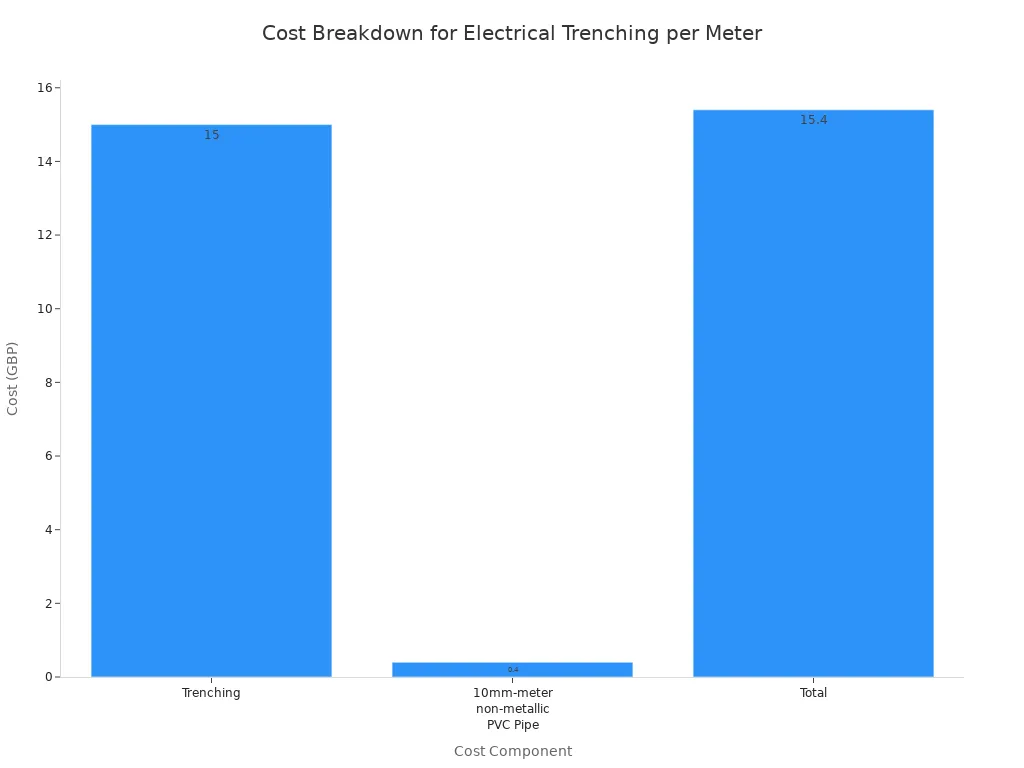
Untuk mendapatkan daya ke struktur terpisah, seorang tukang listrik harus mengubur saluran listrik di dalam parit. Biaya untuk penggalian parit biasanya dikutip per kaki atau meter linier dan tergantung pada faktor-faktor seperti kedalaman dan kondisi tanah. Proses ini melibatkan penggalian, peletakan konduit, pengurukan kembali parit, dan dapat menambah ratusan atau bahkan ribuan dolar ke proyek.
Kabel untuk Struktur Luar Ruangan atau Terpisah
Kabel untuk garasi terpisah atau pengisi daya EV luar ruangan memerlukan material khusus. Tukang listrik harus menggunakan konduit tahan cuaca dan kawat berperingkat penguburan untuk melindungi saluran listrik dari kelembaban dan kerusakan fisik. Material khusus ini menambah total biaya proyek tetapi penting untuk pengaturan pengisian daya yang aman dan tahan lama.
Tantangan Dinding dan Langit-Langit yang Sudah Jadi
Jika panel listrik Anda berada di ruang bawah tanah dan garasi Anda berada di lantai utama, tukang listrik perlu menarik kawat melalui dinding dan langit-langit yang sudah jadi. Hal ini menambah kompleksitas dan waktu tenaga kerja pada instalasi pengisi daya EV. Ini adalah skenario umum di banyak tata letak rumah.
Biaya Perbaikan dan Pengecatan Drywall
Terkadang, seorang tukang listrik harus memotong lubang kecil di drywall untuk merutekan kabel untuk pengisi daya EV. Penawaran tukang listrik biasanya tidak termasuk biaya perbaikan dan pengecatan drywall ini. Pemilik rumah harus menganggarkan perbaikan kosmetik ini secara terpisah.
Tenaga Kerja untuk "Memancing" Kabel
“Memancing” adalah istilah untuk menarik kabel melalui dinding dan langit-langit yang sudah jadi tanpa menyebabkan kerusakan besar. Ini adalah proses yang terampil tetapi lambat yang membutuhkan kesabaran dan alat khusus. Waktu tenaga kerja ekstra yang dihabiskan untuk memancing kabel akan tercermin dalam tagihan akhir untuk instalasi pengisian daya EV Anda. Pekerjaan hati-hati ini diperlukan untuk memasang stopkontak untuk pengisi daya EV TPSON canggih Anda dengan gangguan minimal.
Faktor Kunci 2: Kapasitas Panel Listrik Rumah Anda
Panel listrik rumah adalah jantung dari sistem dayanya. Kapasitasnya adalah faktor tunggal terpenting yang menentukan kompleksitas dan biaya untuk memasang pengisi daya EV. Pengisi daya Level 2 modern adalah peralatan berdaya tinggi, dan panel harus mampu menangani beban yang signifikan dan berkelanjutan yang diperlukan untuk pengisian daya yang aman dan efisien. Panel yang tidak memadai akan memerlukan peningkatan, yang dapat secara substansial meningkatkan total biaya instalasi.
Apakah Anda Membutuhkan Peningkatan Panel untuk Pengisi Daya EV Rumah?
Sebelum tukang listrik dapat memasang sirkuit baru, mereka harus memastikan panel yang ada dapat mendukung permintaan tambahan. Penilaian ini adalah bagian penting dari proses instalasi instalasi untuk pengisi daya EV rumah apa pun. Mengabaikan langkah ini dapat menyebabkan sirkuit kelebihan beban dan bahaya keselamatan yang serius.
Tanda-Tanda Panel Anda Kekurangan Kapasitas
Pemilik rumah sering dapat melihat tanda-tanda peringatan bahwa panel listrik mereka mungkin tidak cukup untuk pengisian daya kendaraan listrik. Indikator kunci meliputi:
- Pemutus utama memiliki peringkat kurang dari 100 amp.
- Panel adalah model yang sangat tua, mungkin masih menggunakan sekering alih-alih pemutus sirkuit.
- Tidak ada slot kosong untuk menambahkan pemutus dua kutub baru untuk pengisi daya EV.
- Lampu di rumah berkedip atau meredup ketika peralatan besar seperti AC menyala.
Cara Melakukan Perhitungan Beban
A definitive answer requires a professional load calculation. An electrician performs this assessment to measure the home’s total existing electrical demand. They compare this figure to the panel’s maximum capacity to determine if there is enough power available for the new EV charging circuit. This calculation ensures the installation will comply with electrical codes and operate safely.
The Cost of Adding a Subpanel
If the main panel has enough total capacity but lacks the physical space for new breakers, a subpanel is an excellent and cost-effective solution. It avoids the expense of a full panel replacement.
When a Subpanel is a Good Solution
A subpanel acts as a secondary distribution point for electricity. An electrician installs it near the main panel and runs a heavy-gauge wire to it. This new box provides the necessary slots for the EV charger circuit. This is a common solution for a crowded but otherwise capable main panel, making the charger installation feasible without a major overhaul.
Estimated Cost: $500 – $1,500
The cost for a subpanel installation typically adds a few hundred dollars to the overall project. The total price, including labor and materials, generally falls between $500 and $1,500. This cost covers the subpanel itself, the new breakers, and the labor to connect it to the main service, providing a dedicated space for your EV charging needs.
The Cost of a Full Panel Upgrade
In some cases, particularly in older homes, a full panel upgrade is unavoidable. This is the most expensive scenario but is essential for ensuring the safety of the home and the functionality of modern appliances and your EV charger.
When a Full Replacement is Necessary
A full upgrade is necessary when the home’s main service is too low (e.g., 60 amps or an already maxed-out 100-amp service). It is also required if the existing panel is outdated, damaged, or known to be unsafe. This major electrical work ensures your home can support the demands of charging at home and other modern electronics, including advanced units from providers like TPSON.
Estimated Cost: $1,500 – $4,000
Upgrading a 100-amp panel to a 200-amp service is a significant project with higher costs. The price for a full panel upgrade, including all labor and materials, typically ranges from $1,500 to $4,000. This increase accounts for the heavier cabling, a new meter base, and additional protective devices required for the higher amperage, making it a comprehensive electric car charging solution.
Outlet vs. Hardwired: Which Installation Has a Better Cost?
When planning for electric vehicle charging, homeowners must choose between installing a NEMA outlet or hardwiring the charger directly. The installation costs for both options are surprisingly similar. The decision often comes down to a preference for flexibility versus performance and permanence. The choice impacts the long-term convenience of charging at home.
Cost Comparison: NEMA Outlet Installation
An outlet installation provides a familiar plug-in experience for an EV charger. This installation process involves an electrician running a dedicated circuit to a high-power NEMA 14-50 or 6-50 receptacle.
Pros of an Outlet Installation
The primary advantage of an outlet is flexibility. A homeowner can easily unplug their charger and take it with them if they move. This setup also allows for the use of different compatible devices, such as a portable EV charger for travel. This makes it a versatile option for EV owners.
Typical All-In Cost
The all-in cost to install a NEMA outlet is nearly identical to a standard installation, typically ranging from $300 to $1,200. The core work of adding a breaker and running wire is the same, regardless of the final connection type.
Cost Comparison: Hardwired EV Charger Installation
A hardwired installation involves connecting the EV charger directly to the home’s electrical circuit. This creates a permanent and dedicated connection for the charging station. This type of installation is often recommended for advanced units from providers like TPSON to ensure optimal performance.
Pros of a Hardwired Installation
Hardwiring a charger offers several technical and safety benefits. It creates a more robust and reliable connection for your EV.
Key Advantages of Hardwiring:
- It prevents potential electrical issues and slower charging speeds that can sometimes occur with plug connections.
- It eliminates the need for a GFCI circuit breaker. Most Level 2 charger models have internal GFCI protection, and having two on one circuit can cause nuisance tripping, which requires manual resets.
- A hardwired charger is more secure, making it difficult or impossible to steal compared to a model that simply unplugs.
Typical All-In Cost
The installation costs for a hardwired charger are comparable to an outlet installation, also falling between $300 and $1,200 for a standard job. The labor and materials are essentially the same. The only difference is the final step, where the electrician wires directly into the charger instead of an outlet.
Which Option is Right for You?
The best choice depends on a homeowner’s priorities for their electric car charging setup. Both methods provide safe and effective EV charging when completed by a licensed professional.
Flexibility vs. Power
A NEMA outlet offers maximum flexibility, which is ideal for renters or those who may want to take their charger with them. A hardwired installation provides a more stable, permanent, and potentially more powerful charging connection, eliminating common points of failure associated with plugs and receptacles.
Long-Term Value
A hardwired EV charger installation is a permanent upgrade to the home, which can be an attractive feature for future buyers. An outlet provides personal, long-term value through the portability of the charger itself. The right decision balances the need for a reliable charging station with personal mobility and future plans.
Real-World Cost Scenarios for Your EV Charger Installation
Theoretical price ranges are helpful, but real-world examples provide the clearest picture of potential costs. The final price for an Pemasangan pengisi daya EV depends entirely on a home’s specific layout and electrical system. Below are three common scenarios, from the most straightforward to the more complex, to help homeowners budget accordingly.
Scenario 1: The Simple & Standard Installation
This scenario represents the ideal and most cost-effective project. It applies to many modern homes where the electrical infrastructure is up-to-date and conveniently located. The straightforward nature of this work minimizes both labor time and material expenses.
Details: Panel in garage, short distance, ample capacity
In this case, the main electrical panel is located in the garage, very close to where the EV will be parked for charging. The panel has plenty of spare capacity and open slots for a new 2-pole breaker. The installation path is clear and unobstructed. This setup is the simplest for an electrician to complete. A standard installation package often includes:
- A 7kW smart charger.
- Up to 30 feet of cable run.
- A modern electrical panel with proper protection.
- A strong Wi-Fi signal for smart charger features.
- No major obstacles along the cable route.
Estimated Total Cost: $300 – $600
The low cost reflects the efficiency of the job. An electrician can complete this type of installation in just a few hours. The material list is short, primarily consisting of a breaker, a short length of wire, and the outlet. The following table illustrates a hypothetical quote for such a project, showing how minimal complexity keeps costs down.
| Jenis Properti | Jenis Pengisi Daya | Cable Run | Electrical Panel | Wi-Fi Signal | Perkiraan Biaya |
|---|---|---|---|---|---|
| Modern 3-bed home | 7kW smart charger | 20 feet | Modern with available capacity | Kuat | $950–$1,200 |
Scenario 2: The Mid-Range Installation
This situation is very common in homes where the electrical panel is not in the garage. It often resides in a basement, utility room, or on an opposite wall, requiring a more involved process to connect the charger.
Details: Panel in basement, longer wire run through finished ceiling
Here, the electrician must route the electrical wiring from the basement panel, up through the floor, and across a finished ceiling to reach the garage. This process, known as “fishing” wires, requires skill and significantly more time than a simple surface-mounted run. The increased distance also adds to material costs. The complexity of routing through a building is a primary reason for higher expenses.
Estimated Total Cost: $700 – $1,200
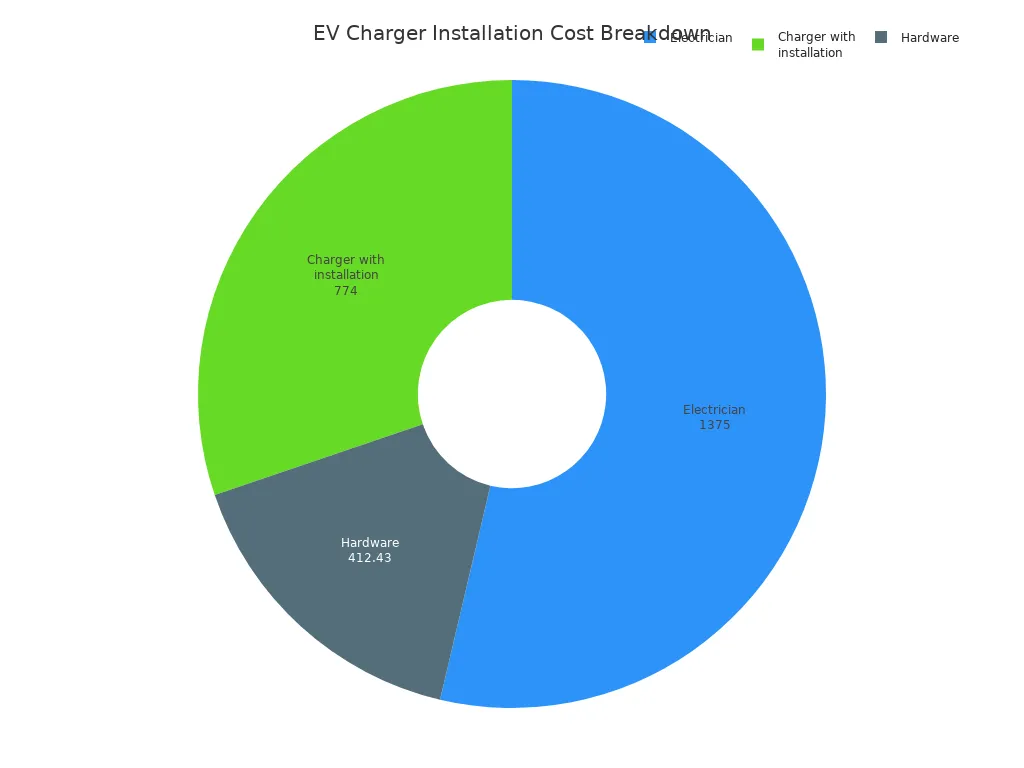
The price increase directly reflects the added labor and materials. As the chart above illustrates from one complex project, the electrician’s fee makes up the largest portion of the total. The longer wire run and the need to navigate finished surfaces turn a simple task into a more detailed project. Homeowners should also budget for potential drywall repair and painting, as these cosmetic fixes are not typically included in an electrician’s quote for the EV charger installation. This ensures the home is ready for efficient EV charging.
Scenario 3: The Complex Installation with Subpanel
This scenario arises when the main electrical panel lacks the physical space for a new breaker, even if it has sufficient overall amperage. It is a common issue in homes where many circuits have been added over the years, leaving the panel completely full.
Details: Full panel, long run to the other side of the house
Imagine the main panel is full and located in a utility room at one end of the house, while the garage is at the other. An electrician cannot simply add the new EV charging circuit. The correct solution is to install a subpanel. This involves adding a new, large-amperage breaker to the main panel (which may require consolidating other circuits to create space), running a thick feeder cable to a new subpanel installed in the garage, and then connecting the EV charger circuit to the subpanel.
Estimated Total Cost: $1,200 – $2,500
This project is essentially two installations in one. The electrician first sets up the subpanel, a job that has its own labor and material costs. Then, they perform the final charger connection. This multi-step process is what drives the price into a higher bracket. While more expensive, a subpanel is a robust and safe solution. It provides dedicated capacity for EV charging and offers room for future electrical expansion, making it a smart long-term investment for the home. This level of work is often necessary to support advanced charging technology from providers like TPSON.
Scenario 4: The Major Overhaul with Panel Upgrade
This scenario represents the most extensive and costly type of EV charger installation. It occurs when a home’s electrical system is not only inconveniently located but fundamentally inadequate to support the high, sustained power draw required for Pengisian daya EV Level 2. This project moves beyond a simple circuit addition and becomes a major electrical system upgrade for the entire property.
Safety is Paramount: An undersized or outdated electrical panel poses a significant safety risk when adding a high-power appliance like an EV charger. A full upgrade is not an upsell; it is a necessary measure to prevent overloaded circuits, electrical fires, and to ensure the safe operation of your new charger.
Details: Requires a full panel replacement and a complex wire run
A full panel replacement becomes non-negotiable under several conditions. The most common reason is an old home with a low-amperage service, such as 60 or 100 amps, that is already at its maximum capacity. Other triggers include:
- An electrical panel that is physically full with no space for any new breakers.
- The presence of an outdated or recalled panel model known for safety defects.
- The need to power other major electrical appliances in addition to the EV charger.
This comprehensive installation involves replacing the main service panel itself. An electrician must coordinate with the local utility to disconnect power, replace the old box with a new 200-amp panel, and then reconnect and re-certify the entire system. This scenario is further complicated when combined with a difficult wire run—for instance, from a new panel in the basement to a charger location in a detached garage. This work ensures the home can safely power technologically advanced units, such as a smart charger from TPSON, for years to come.
Estimated Total Cost: $2,500 – $5,000+
The significant price tag reflects the project’s complexity and scope. These high costs are a direct result of extensive labor and a long list of required materials. The final bill for this EV charger installation accounts for several key components.
| Komponen Biaya | Deskripsi |
|---|---|
| New 200-Amp Panel | The main hardware, including the panel box and all new circuit breakers. |
| Extensive Labor | Often requires a full day or more for at least two licensed electricians. |
| Heavy-Gauge Cabling | New, thicker service entrance wire from the utility connection to the panel. |
| Izin & Inspeksi | Fees for this level of work are typically higher and involve multiple inspections. |
| Complex Wire Run | All the labor and material costs associated with a long or difficult path for the charger circuit. |
While the initial expense is high, this upgrade is a long-term investment. It dramatically improves the home’s electrical safety and capacity, preparing it for a future that is increasingly electric. A modern panel provides reliable power for your EV charging needs and adds significant value to your property. This ensures your charger delivers consistent and efficient charging every time.
How to Save Money on Your Home EV Charger Installation
While a professional EV charger installation is a necessary investment, several strategies can help homeowners manage and reduce the final costs. Proactive research and careful planning are key to securing a safe and affordable setup for charging at home.
Menemukan Insentif Federal, Negara Bagian, dan Utilitas
Government and utility programs exist to make electric car charging more accessible. These incentives can significantly lower the out-of-pocket expense for a new home EV charger installation.
The Federal Alternative Fuel Vehicle Refueling Property Credit
Homeowners may be eligible for a valuable federal tax credit. The Alternative Fuel Vehicle Refueling Property Credit allows individuals to claim 30% of the total cost of the charger equipment and installation, up to a maximum of $1,000. To qualify, the charger must be installed at a primary residence located within an eligible low-income or rural census tract. Taxpayers claim this credit by filing Form 8911. However, homeowners should be aware that proposed legislation could eliminate this credit in the future, making it wise to act sooner rather than later.
Searching for Local Rebates
Beyond federal programs, many state governments and local utility companies offer their own rebates. These programs can provide direct cash back for purchasing a qualified charger or for the installation itself. Homeowners should search their utility provider’s website for specific incentives related to Pemasangan pengisi daya EV.
Pentingnya Mendapatkan Beberapa Penawaran Harga
One of the most effective ways to control costs is to shop around. The price for the same installation can vary significantly between different electricians.
Why You Should Get At Least Three Quotes
Obtaining at least three detailed quotes provides a clear picture of the fair market rate in a specific area. This comparison helps homeowners avoid overpaying and identify the best value. It is a critical step before committing to any service for your home.
How to Compare Electrician Quotes Effectively
Harga rendah tidak selalu berarti penawaran terbaik. Saat membandingkan penawaran untuk pemasangan pengisi daya Anda, sangat penting untuk memperhatikan detailnya.
Kiat Pro: Selalu verifikasi apa yang termasuk dalam instalasi “standar” versus apa yang dianggap sebagai “tambahan”. Penawaran yang tampak rendah mungkin tidak mencakup pekerjaan yang diperlukan yang telah diperhitungkan oleh penyedia lain. Pastikan calong pemasang adalah teknisi listrik berkualifikasi yang memahami standar khusus EV.
Perencanaan Strategis untuk Mengurangi Biaya
Perencanaan pemilik rumah sendiri dapat berdampak besar pada tagihan akhir. Keputusan sederhana mengenai lokasi pengisi daya dan waktu pengerjaan dapat menghasilkan penghematan signifikan.
Memilih Lokasi Optimal
Jarak terpendek antara panel listrik dan pengisi daya selalu yang termurah. Memilih tempat parkir di rumah yang dekat dengan panel meminimalkan jumlah kabel tembaga mahal dan waktu tenaga kerja yang dibutuhkan untuk pemasangan. Ini adalah cara paling langsung untuk mengurangi biaya material.
Bundling dengan Pekerjaan Kelistrikan Lainnya
Jika rumah memerlukan peningkatan kelistrikan lainnya, menggabungkannya dengan pemasangan pengisi daya EV dapat lebih hemat biaya. Teknisi listrik mungkin menawarkan tarif keseluruhan yang lebih baik untuk proyek besar daripada beberapa pekerjaan kecil yang dijadwalkan terpisah. Ini adalah cara efisien untuk meningkatkan sistem kelistrikan rumah dan menyiapkannya untuk pengisi daya canggih dari penyedia seperti TPSON.
Biaya pemasangan pengisi daya EV rumah sangat bervariasi, mulai dari pekerjaan sederhana hingga proyek kompleks. Harga akhir bergantung pada faktor seperti jarak dari panel listrik dan kapasitasnya.
Langkah Selanjutnya: Tindakan paling kritis bagi pemilik rumah adalah mendapatkan beberapa penawaran rinci dari teknisi listrik berkualifikasi untuk menentukan harga pasti untuk pengisi daya spesifik mereka.
Meneliti insentif lokal juga dapat menurunkan biaya pengisi daya baru. Ini memastikan pengaturan yang terjangkau untuk pengisian daya di rumah dengan pengisi daya canggih, seperti pengisi daya TPSON.
PERTANYAAN YANG SERING DIAJUKAN
Bisakah pemilik rumah memasang sendiri stopkontak 240V?
Pemilik rumah tidak boleh mencoba pemasangan ini. Teknisi listrik berlisensi harus memasang stopkontak untuk memastikan keselamatan dan kepatuhan terhadap kode. Pemasangan kabel yang tidak tepat menciptakan risiko kebakaran signifikan dan dapat membatalkan garansi EV dan pengisi daya.
Berapa lama waktu yang dibutuhkan untuk instalasi standar?
Teknisi listrik berkualifikasi biasanya menyelesaikan instalasi standar dalam 2 hingga 4 jam. Kerangka waktu ini mengasumsikan panel listrik dapat diakses dan memiliki kapasitas yang cukup. Pekerjaan yang lebih kompleks yang melibatkan peningkatan panel atau jalur kabel panjang akan membutuhkan waktu tambahan.
Apakah stopkontak NEMA lebih baik daripada pengisi daya hardwired?
Pilihan tergantung pada kebutuhan pengguna. Stopkontak menawarkan fleksibilitas untuk pengisi daya portabel. Sambungan hardwired memberikan instalasi permanen yang lebih kokoh yang dapat mencegah trip gangguan dan sering direkomendasikan untuk pengisi daya canggih.
Apakah saya perlu izin untuk instalasi ini?
Sebagian besar kota memerlukan izin kelistrikan untuk memasang sirkuit 240v baru. Izin memastikan inspeksi pihak ketiga untuk keselamatan dan kepatuhan kode. Teknisi listrik biasanya menangani proses perizinan sebagai bagian dari layanan mereka.
Mengapa pengisian daya di rumah lebih baik daripada menggunakan titik pengisian umum?
Pengisian daya di rumah menawarkan kenyamanan yang lebih unggul dan seringkali lebih hemat biaya daripada menggunakan titik pengisian umum. Hal ini memungkinkan pemilik EV memulai setiap hari dengan baterai penuh tanpa meninggalkan properti mereka, memastikan kesiapan maksimal.
Apa yang terjadi jika panel listrik saya penuh?
Jika panel tidak memiliki slot kosong tetapi memiliki daya yang cukup, teknisi listrik dapat memasang subpanel. Ini adalah solusi yang hemat biaya. Penyedia canggih seperti TPSON menawarkan pengisi daya yang terintegrasi mulus dengan sistem kelistrikan yang ditingkatkan dengan benar.