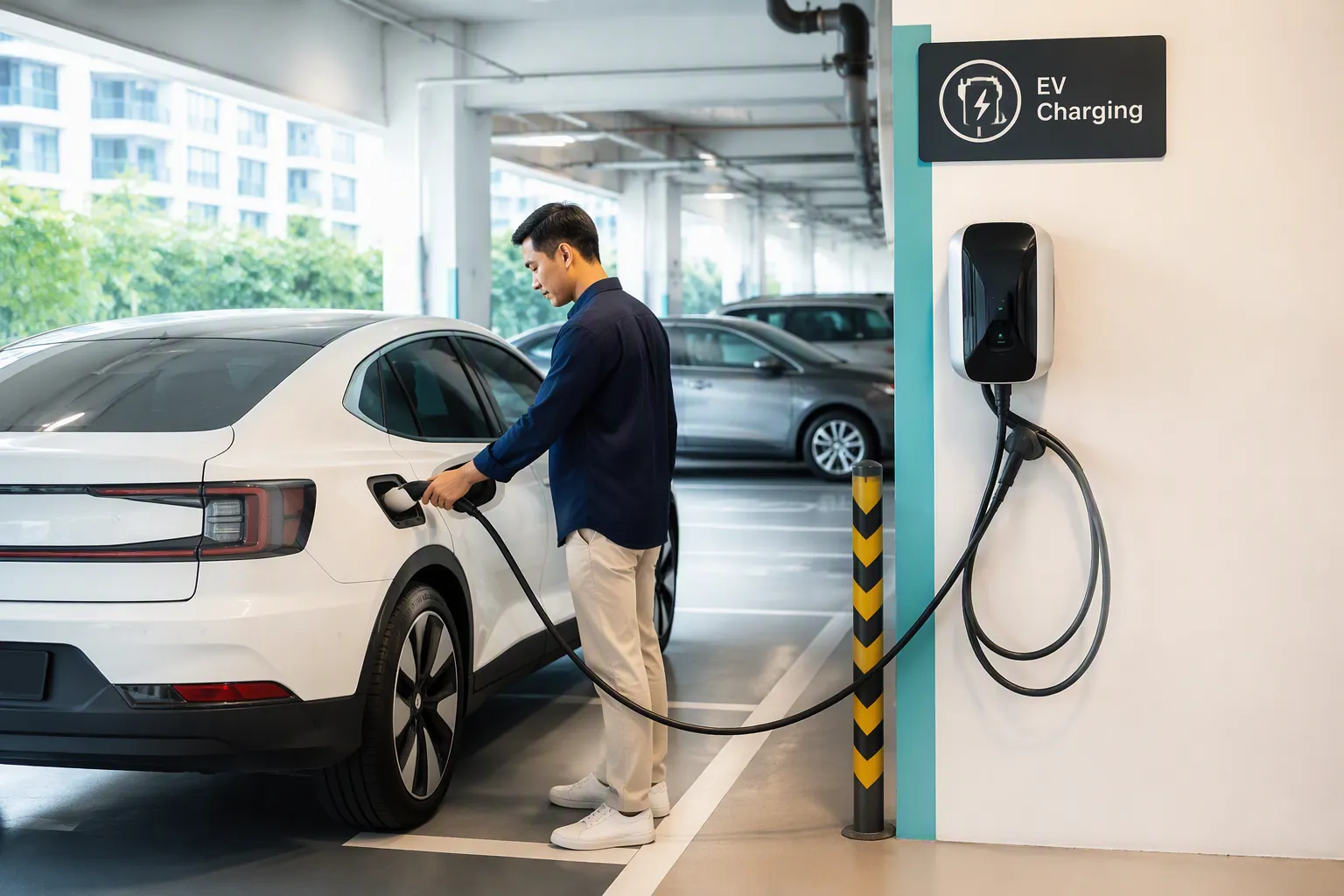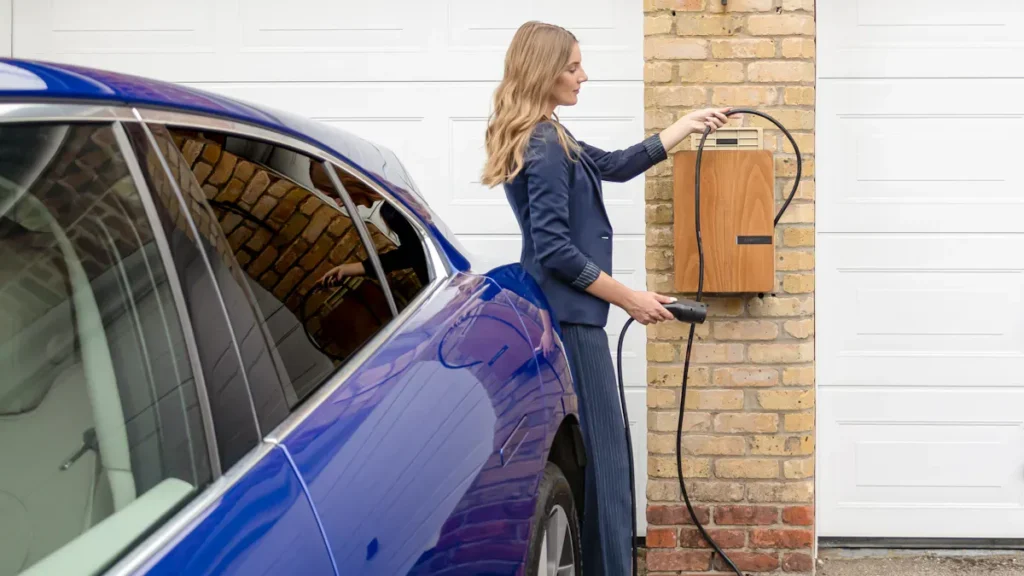
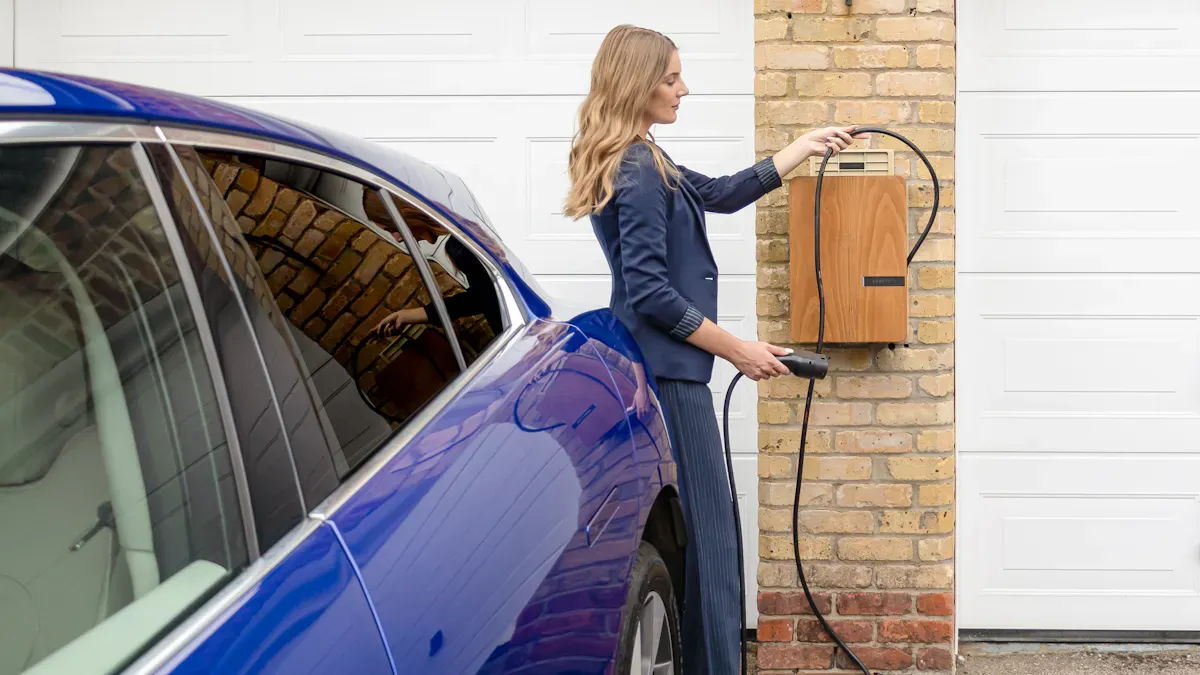
Os carregadores de parede CA bidirecionais representam um avanço revolucionário para o futuro do carregamento doméstico. Estes sistemas avançados permitem que a energia circule nos dois sentidos, possibilitando aos proprietários utilizarem os seus veículos elétricos como recursos de armazenamento flexíveis. Fabricantes de carregadores para veículos eléctricos design atual Soluções de carregamento de veículos eléctricos que dão resposta não só às deslocações diárias, mas também às necessidades de energia de reserva. Com carregadores ev portáteis, os utilizadores passam a ter mais controlo sobre o consumo de energia em casa. O certo Carregador EV pode ajudar a gerir os custos e a reduzir a dependência da rede elétrica.
Compreender o carregamento bidirecional e o fluxo de energia em casa
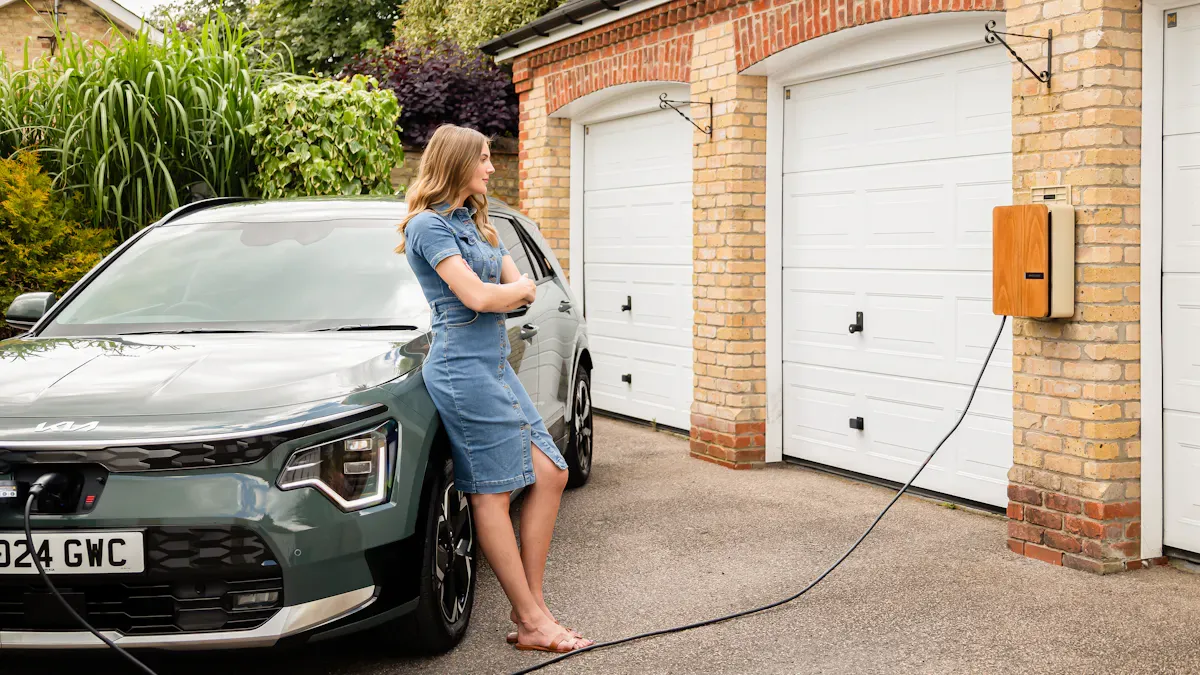
O que torna o carregamento bidirecional?
Fluxo de energia unidirecional vs. bidirecional
O carregamento doméstico tradicional de veículos elétricos funciona numa única direção. A energia flui da rede elétrica para o veículo, carregando a bateria para as necessidades diárias de condução. Este processo unidirecional limita o papel dos veículos elétricos ao simples transporte.
O carregamento bidirecional introduz uma nova dinâmica. A energia pode circular nos dois sentidos—carregar o veículo ou enviar a energia armazenada no veículo de volta para a casa ou para a rede elétrica. Esta flexibilidade transforma o veículo elétrico num ativo energético móvel. Carregadores bidirecionais monitorizar parâmetros críticos tais como a temperatura da bateria, a frequência da rede, a tensão e as intensidades de corrente. Funcionam como sistemas de controlo avançados para a gestão energética doméstica, ao contrário dos carregadores unidirecionais convencionais.
As principais características técnicas que distinguem o carregamento bidirecional incluem:
- Monitorização de vários parâmetros energéticos para garantir a segurança e a eficiência.
- Utilização de eletrónica de potência avançada, como componentes de carboneto de silício e nitreto de gálio.
- Integração com a tecnologia de redes inteligentes, permitindo aplicações como as centrais elétricas virtuais.
Como a energia circula entre o veículo elétrico, a casa e a rede elétrica
O carregamento bidirecional de veículos elétricos permite que a energia circule de forma contínua entre o veículo, a habitação e a rede elétrica. Durante períodos de baixa procura ou tarifas de eletricidade mais baixas, o sistema carrega a bateria do veículo. Quando a procura aumenta ou ocorrem cortes de energia, o veículo pode fornecer energia de volta à habitação ou à rede elétrica. Este processo contribui para a redução de custos e reforça a resiliência energética.
Os proprietários podem utilizar a energia armazenada nos seus veículos elétricos durante as horas de pico, reduzindo a dependência da rede elétrica e diminuindo as contas de eletricidade. Por exemplo, carregar um veículo elétrico durante a noite, quando as tarifas são mais baixas, e utilizar essa energia durante o dia pode permitir uma poupança de $50 a $150 por mês nas contas de eletricidade. A capacidade de fornecer energia de reserva durante as falhas de corrente garante que os sistemas domésticos essenciais permaneçam operacionais.
Tecnologias bidirecionais essenciais para a energia doméstica
Explicação da ligação do veículo à rede (V2G)
O V2G, ou «vehicle-to-grid» (veículo para rede), permite que a energia armazenada na bateria de um veículo elétrico (VE) seja devolvida à rede. Esta tecnologia contribui para a estabilidade da rede, fornecendo energia durante picos de procura ou situações de emergência. Os sistemas V2G comunicam com as empresas de eletricidade, permitindo que os proprietários participem em serviços de rede e, potencialmente, obtenham receitas através da venda do excedente de energia.
O que é o Vehicle-to-Home (V2H)?
O V2H, ou «vehicle-to-home», permite que o veículo elétrico alimente diretamente a habitação. Esta abordagem proporciona energia de reserva durante cortes de energia e ajuda a gerir o consumo energético doméstico. A integração do V2H permite que o veículo forneça energia a eletrodomésticos, iluminação e outros sistemas, reduzindo a dependência da rede elétrica. Os proprietários ganham maior controlo sobre o seu consumo de energia e os custos associados.
O que é o Vehicle-to-Load (V2L)?
V2L, ou «vehicle-to-load», refere-se à utilização da bateria de um veículo elétrico para alimentar dispositivos ou equipamentos autónomos. Esta funcionalidade é útil para atividades ao ar livre, estaleiros de construção ou situações de emergência. O V2L não requer integração com a instalação elétrica doméstica nem com a rede elétrica, oferecendo acesso flexível à energia onde quer que o veículo se desloque.
O sistema «Veículo para Veículo» (V2V) explicado
O V2V, ou veículo-para-veículo, permite a transferência de energia entre dois veículos elétricos. Esta funcionalidade dá resposta a situações de carregamento de emergência, permitindo que um veículo ajude outro com níveis baixos de bateria. O V2V aumenta a praticabilidade da posse de veículos elétricos e reforça a partilha de energia na comunidade.
Carregamento bidirecional CA/CC para uso doméstico
Diferenças técnicas na conversão de energia
Os sistemas de carregamento bidirecionais para veículos elétricos utilizam corrente alternada (CA) ou corrente contínua (CC) para a transferência de energia. Os carregadores bidirecionais de CA convertem a energia entre CA (utilizada nas habitações e na rede elétrica) e CC (utilizada nas baterias dos veículos elétricos) no interior do veículo. Os carregadores bidirecionais de CC realizam esta conversão externamente, alcançando frequentemente uma maior eficiência.
A tabela seguinte compara o eficiência dos sistemas de corrente alternada e corrente contínua:
| Tipo de sistema de carregamento | Eficiência (%) |
|---|---|
| Sistemas de corrente contínua | Até 98% |
| Sistemas de ar condicionado | Por volta de 91% |
Tanto os carregadores bidirecionais de corrente alternada (CA) como os de corrente contínua (CC) permitem que a energia flua em ambas as direções, suportando aplicações como V2G, V2H e V2L.
Prós e contras para os proprietários
Os carregadores bidirecionais de corrente alternada oferecem várias vantagens para uso residencial:
- Custos iniciais mais baixos em comparação com os sistemas de corrente contínua (CC). Por exemplo, a única estação de carregamento bidirecional de corrente alternada (CA) disponibilizada pela Renault e pela Mobilize em França custa cerca de $2,400, sem contar com a instalação.
- Requisitos de instalação mais simples, tornando-os acessíveis para a maioria das casas.
- Compatibilidade com a infraestrutura elétrica existente na habitação.
No entanto, os sistemas de corrente alternada (CA) apresentam, normalmente, uma eficiência inferior à dos sistemas de corrente contínua (CC). Os proprietários podem registar perdas de energia ligeiramente superiores durante a conversão. Os carregadores bidirecionais de corrente contínua (CC) oferecem uma eficiência superior, mas exigem frequentemente uma instalação mais complexa e implicam custos mais elevados.
Dica: Os proprietários devem avaliar as suas necessidades energéticas, o seu orçamento e a compatibilidade com o seu veículo elétrico antes de escolherem entre soluções de carregamento bidirecional em corrente alternada (CA) e corrente contínua (CC).
Requisitos para o carregamento bidirecional em casa e a integração energética
Veículos elétricos compatíveis com o carregamento bidirecional
Quais são os veículos elétricos que suportam o fluxo bidirecional de energia?
Nem todos os veículos elétricos suportam carregamento bidirecional. Os fabricantes começaram a equipar cada vez mais modelos com esta funcionalidade avançada. Os proprietários devem verificar se o seu veículo pode devolver energia à casa ou à rede elétrica. Alguns dos veículos elétricos mais notáveis com funcionalidades bidirecionais incluem:
- Ford F-150 Lightning (V2L, V2H, V2G)
- Nissan Leaf (V2G, V2H)
- Hyundai IONIQ 5 e IONIQ 6 (V2L)
- BMW iX3 (capacidade bidirecional)
- Mercedes-Benz GLC (V2G)
- Tesla Model Y Performance (V2L, V2H)
- Tesla Cybertruck (V2H, V2L)
- Genesis GV60 e GV70 (V2L)
- Kia EV6 (V2L)
- Volkswagen ID.4 e ID.Buzz (V2H)
- Veículos da plataforma Ultium da General Motors (V2H)
- Mitsubishi Outlander PHEV (V2G, V2H, V2L)
- Volvo EX90 (capacidade de carregamento bidirecional)
Estes veículos permitem que os proprietários utilizem os seus veículos elétricos como fontes de energia para as suas casas, para outros veículos ou para a rede elétrica.
Como verificar a compatibilidade bidirecional do seu veículo
Os condutores podem confirmar a compatibilidade bidirecional consultando o manual do veículo, visitando o site do fabricante ou contactando o concessionário. Atualmente, muitos fabricantes de automóveis destacam as funcionalidades bidirecionais nos seus materiais de marketing. Os proprietários devem também verificar se o seu veículo elétrico suporta modos específicos, como V2G, V2H ou V2L.
Artigos para o lar e serviços de instalação
Como escolher o carregador de parede CA bidirecional certo
A escolha de um carregador de parede compatível é essencial para um carregamento bidirecional seguro e eficiente. O carregador deve satisfazer os requisitos de fluxo de energia do veículo e integrar-se com os sistemas de energia domésticos. Os componentes-chave incluem uma caixa de parede adequada, software de comunicação e uma infraestrutura de carregamento robusta.
Modernizações do sistema elétrico doméstico
A maioria das habitações necessita de adaptações para permitir o carregamento bidirecional. Os eletricistas avaliam o quadro elétrico, instalam circuitos específicos e garantem que a instalação elétrica está em conformidade. O custo médio destas adaptações varia entre $1.500 a $5.000. Os proprietários devem planear a compatibilidade futura com sistemas avançados de ligação entre veículos e habitações.
Instalação profissional e considerações de segurança
A instalação profissional garante o cumprimento dos códigos locais e das normas de segurança. O processo inclui a obtenção de licenças, a gestão dos cabos e a aprovação nas inspeções. Os custos incluem a unidade de carregamento ($400–$700), mão-de-obra ($400–$800), cablagem ($100–$400) e licenças ($75–$150). As atualizações do quadro elétrico podem acrescentar $1 500–$3 000.
Dica: Recorra sempre a um eletricista certificado para a instalação, de modo a proteger a sua casa e o seu investimento.
Software, Conectividade e Gestão de Energia
Aplicações de carregamento inteligente para o controlo energético doméstico
As aplicações de carregamento inteligente permitem aos proprietários monitorizar e controlar o fluxo de energia. Estas aplicações disponibilizam funcionalidades como o carregamento ecológico, que utiliza o excedente de energia solar para carregar veículos elétricos. Além disso, suportam a tecnologia V2G, transformando as baterias dos veículos elétricos em recursos flexíveis da rede elétrica.
Integração com as empresas de serviços públicos e a rede elétrica
Soluções de software avançadas gerem a comunicação entre o carregador, o veículo e a rede elétrica. Os protocolos mais comuns incluem ISO 15118 para V2G e o OCPP para a gestão de sessões e a faturação. O software de carregamento inteligente otimiza a transferência de energia e equilibra a procura na rede.
| Tipo de solução | Descrição |
|---|---|
| ISO 15118 | Protocolo de comunicação entre um carregador e um veículo que permite funcionalidades V2G. |
| OCPP | Protocolo de comunicação entre as plataformas de cobrança e os sistemas de back-end, que permite a gestão de sessões e a faturação. |
| Software de carregamento inteligente | Otimiza a transferência de energia, equilibrando a procura da rede e gerindo o carregamento com base na disponibilidade de energia. |
Os sistemas de carregamento inteligentes ajudam os proprietários a maximizar a poupança de energia e a participar nos serviços da rede elétrica.
Principais vantagens do carregamento bidirecional para os proprietários
Poupança de custos e gestão energética doméstica
Reduzir as contas de eletricidade com o carregamento bidirecional
Os proprietários que utilizam carregamento bidirecional podem alcançar poupanças significativas em comparação com os métodos tradicionais de carregamento. Ao tirar partido da capacidade de armazenar energia durante as horas de menor consumo e de a revender à rede durante os picos de procura, podem reduzir os custos anuais de carregamento em cerca de $1,270. Este montante representa cerca de 90% do custo médio anual de recarga de um veículo familiar de tamanho médio. As poupanças resultam da flexibilidade para gerir quando e como a energia é utilizada e fornecida.
- Os proprietários podem poupar até $1,270 por ano em custos de carregamento de veículos elétricos.
- Esta abordagem cobre a maior parte do custo anual de recarga de um veículo familiar.
- O sistema permite revender a energia armazenada à rede, o que permite poupanças adicionais.
Utilização de energia fora dos horários de pico para as necessidades domésticas
O carregamento bidirecional permite aos proprietários otimizar o consumo de energia, carregando o seu veículo durante as horas de menor consumo, quando as tarifas de eletricidade são mais baixas. A energia armazenada pode, então, alimentar a casa durante as horas de pico, reduzindo a dependência da dispendiosa eletricidade da rede. Esta estratégia não só reduz as contas, como também proporciona um fonte de alimentação de reserva durante cortes de energia.
- Carregue o veículo quando a eletricidade estiver mais barata.
- Utilize a energia armazenada durante os picos de procura para evitar tarifas mais elevadas.
- Mantenha uma fonte de alimentação de reserva para situações de emergência.
Independência energética e energia de reserva em casa
Alimentar a sua casa durante as falhas de energia
A tecnologia bidirecional transforma o veículo elétrico numa fonte de energia de reserva fiável. A maioria dos veículos elétricos possui um capacidade da bateria entre 60 e 100 kWh. Um agregado familiar típico consome cerca de 30 kWh por dia. Isto significa que um único veículo pode fornecer energia a uma casa durante dois a três dias durante uma falha de energia. Em situações reais, como cortes de energia planeados, os proprietários de veículos elétricos que utilizam o carregamento bidirecional mantiveram o funcionamento normal das suas casas, enquanto outros tiveram de recorrer a geradores.
- Um veículo pode fornecer energia suficiente para vários dias.
- Os proprietários beneficiam de energia ininterrupta durante os cortes de energia.
- O sistema alimenta os aparelhos essenciais e a iluminação.
Reduzir a dependência da rede elétrica com tecnologia bidirecional
O carregamento bidirecional reduz a dependência da rede elétrica, permitindo que os proprietários utilizem a energia armazenada nos seus veículos. Esta abordagem aumenta a independência energética e a resiliência. Os proprietários podem gerir o seu consumo de energia de forma mais eficaz e evitar interrupções causadas pela instabilidade da rede elétrica.
Nota: A TPSON oferece soluções avançadas que ajudam os proprietários a alcançar uma maior independência energética através de uma tecnologia inovadora de carregamento bidirecional.
Potencial de rendimento e serviços de rede a partir da energia doméstica
Revenda de energia à rede elétrica
O carregamento bidirecional permite que os proprietários participem em serviços de rede, vendendo o excesso de energia de volta à rede. As empresas de eletricidade compensam os proprietários com base na quantidade de energia fornecida durante os picos de procura. Muitos programas governamentais também oferecem pagamentos pela eletricidade devolvida. Veículos compatíveis, como o Nissan Leaf e o Ford F-150 Lightning, podem aderir a estes programas. Os proprietários devem consultar o seu fornecedor de energia para se informarem sobre os programas disponíveis e os requisitos de instalação.
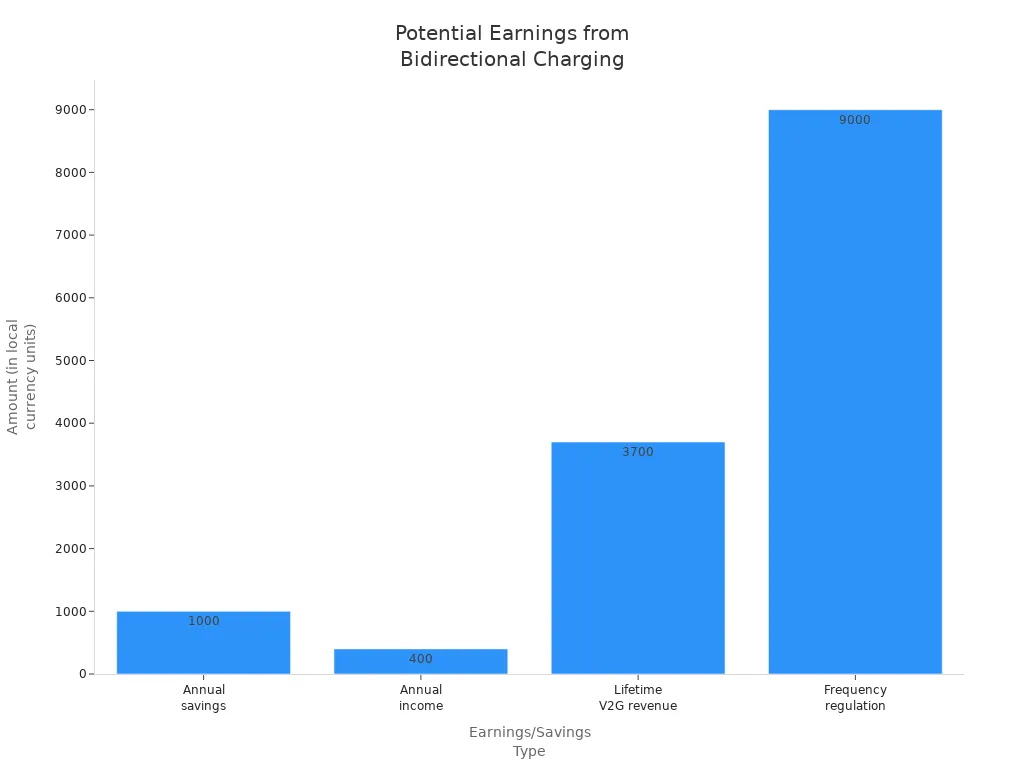
| Fonte de receitas | Resultados estimados |
|---|---|
| Rendimento anual proveniente do V2G | $430 |
| Receitas ao longo da vida útil do V2G | $3,950 |
| Mercado de regulação de frequência | Até $9 600 |
Participação em programas de resposta à procura
Os proprietários também podem aderir a programas de resposta à procura, que os recompensam por fornecerem energia à rede durante períodos de elevada procura. Estes programas ajudam a estabilizar a rede e proporcionam uma fonte de receitas adicional. Ao longo da vida útil de um veículo, os proprietários podem obter rendimentos substanciais ao participarem nestes serviços.
- Receba pagamentos por apoiar a rede elétrica durante os períodos de pico.
- Ganhe até $9,600 ao participar nos mercados de regulação de frequência.
- Aumentar o retorno do investimento, tanto no veículo como no sistema de carregamento.
Impacto ambiental do carregamento bidirecional em casa
Apoio à integração das energias renováveis
A tecnologia de carregamento bidirecional desempenha um papel fundamental na promoção da adoção de energia renovável ao nível residencial. Os veículos elétricos equipados com carregadores bidirecionais podem armazenar o excesso de energia renovável produzida por painéis solares ou turbinas eólicas durante as horas de pico de produção. Este processo permite aos proprietários maximizar a utilização de energia limpa e minimizar o desperdício.
- Os veículos elétricos armazenam o excedente de energia renovável gerado durante os períodos de sol ou vento.
- A energia armazenada fica disponível para utilização quando a procura aumenta, como, por exemplo, ao fim da tarde.
- Os proprietários reduzem a dependência da rede elétrica ao utilizarem os seus veículos como unidades de armazenamento de energia.
A produção de energia solar atinge frequentemente o seu pico durante o dia, enquanto a procura de energia das famílias aumenta ao fim da tarde. Sem armazenamento, as famílias têm de depender da eletricidade da rede quando os painéis solares não estão a produzir. O carregamento bidirecional colmata esta lacuna. A bateria de um veículo elétrico armazena a energia renovável produzida durante o dia para utilização ao fim da tarde, otimizando o consumo e contribuindo para um estilo de vida mais sustentável.
A integração da energia eólica também beneficia do carregamento bidirecional. As turbinas eólicas podem produzir mais energia à noite ou em dias ventosos. Os veículos elétricos absorvem essa energia renovável, tornando-a disponível quando necessário. Esta sinergia entre o carregamento bidirecional e as fontes renováveis reforça a resiliência dos sistemas energéticos residenciais.
Tip: Homeowners who invest in bidirectional charging and renewable energy systems gain greater control over their energy use and contribute to a cleaner environment.
Reducing Your Home’s Carbon Footprint
Bidirectional charging reduces the carbon footprint of a household by enabling greater use of renewable energy and decreasing dependence on fossil fuels. When homeowners charge their electric vehicles with renewable sources, they lower emissions associated with electricity generation. The ability to store and use renewable energy during peak demand further decreases the need for coal or gas-fired power plants.
A typical household that combines bidirectional charging with solar panels can cut annual carbon emissions by several tons. Electric vehicles used as energy storage units help offset the environmental impact of traditional grid electricity. This approach supports national and global efforts to reduce greenhouse gas emissions.
| Benefício | Impact on Carbon Footprint |
|---|---|
| Using renewable energy | Lowers emissions from electricity |
| Storing renewable power in EVs | Reduz a dependência de combustíveis fósseis |
| Supplying energy during peak hours | Minimizes grid-related emissions |
Families who adopt bidirectional charging and renewable energy solutions set an example for sustainable living. They demonstrate how technology can support environmental goals and improve quality of life.
Current Trends and the Future of Home Charging with Bidirectional Technology
Integration with Renewable Energy at Home
Solar Panels, Home Batteries, and Bidirectional Charging
Homeowners increasingly combine solar panels, advanced batteries, and carregamento bidirecional to optimize energy use. This approach enables renewable energy integration by storing excess solar power in vehicle batteries during the day. When the sun sets or demand rises, these batteries supply energy back to the grid or power household devices. Many families now rely on this system to reduce electricity costs and maximize the value of their investment in clean technology. TPSON offers solutions that support seamless connections between solar panels, batteries, and bidirectional charging stations, enhancing flexibility and efficiency.
Smart Home Energy Systems and Automation
Smart home energy systems play a vital role in managing bidirectional charging and batteries. These systems provide real-time energy management, allowing users to monitor and control energy flow. They optimize energy usage, deliver backup power during outages, and enable renewable energy integration. Key benefits include:
- Real-time energy management for efficient charging and discharging.
- Seamless integration with renewable sources, reducing electricity costs.
- Reliable backup power during emergencies, as seen during the Texas freeze of 2021.
Automation features allow these systems to respond instantly to changes in grid demand or energy prices. Homeowners experience greater control and resilience, making their energy systems more robust and adaptable.
Evolving Standards and Policies for Bidirectional Charging
Industry Standards for Home Bidirectional Chargers
Manufacturers continue to develop new standards for bidirectional charging and batteries. The latest chargers support energy flow between electric vehicles, the grid, and other vehicles. Many vehicles now feature onboard chargers built with advanced materials like silicon carbide and gallium nitride, improving efficiency. The table below highlights important industry standards:
| Caraterística/Padrão | Descrição |
|---|---|
| Carregamento bidirecional | Enables energy flow between EVs, the grid, and other vehicles. |
| Onboard Chargers (OBCs) | Use advanced materials for higher efficiency and bidirectional capability. |
| CCS Connectors | Support new bidirectional applications. |
| ABB 11 kW Charger | Meets strict grid timing for V2G with 10-15 ms response time. |
| UK V2G Trials | Use 7 kW AC bidirectional chargers with V2L for optimized charging. |
| V2G Technology | Allows charging during low-cost periods and discharging during high-cost periods. |
Government Incentives and Support
Governments encourage the adoption of bidirectional charging and batteries through financial incentives. Homeowners can claim up to 30% of eligible installation costs, with a maximum of $1,070, under the Alternative Fuel Vehicle Refueling Property Credit. Some programs have deadlines or budget caps, so early application is important. Eligibility often depends on location, such as non-urban or low-income census tracts. Many utility companies also offer rebates for installing smart chargers or joining managed-charging programs.
| Tipo de incentivo | Detalhes |
|---|---|
| Federal 30C Credit | Claim 30% of eligible costs up to $1,070 for installation. |
| Prazo de entrega | Some credits have deadlines or budget limits. |
| Critérios de elegibilidade | Based on location, such as non-urban or low-income areas. |
| Descontos em serviços públicos | Additional rebates for networked smart chargers or managed-charging program enrollment. |
Market Adoption and Availability for Homeowners
Leading Brands and Products in Bidirectional Charging
Several brands lead the market in bidirectional charging and batteries. The table below lists top products and their features:
| Marca | Nome do produto | Potência nominal | Compatibilidade |
|---|---|---|---|
| Caixa de parede | Quasar | 7,4kW | CHAdeMO DC vehicles |
| Fermata | FE-15 | 15kW | CHAdeMO DC vehicles |
| Rectifier Technologies | Highbury | 7kW / 11kW | Não especificado |
TPSON continues to innovate in this sector, providing technologically advanced solutions for efficient and reliable bidirectional charging.
Adoption Rates and Consumer Interest in Home Energy Solutions
Consumer interest in bidirectional charging and batteries grows each year. More homeowners seek ways to reduce energy costs, increase resilience, and support renewable energy integration. Adoption rates rise as more electric vehicles and chargers support bidirectional features. Utility companies and governments promote these technologies through incentives and education. The market expects continued growth as standards evolve and more products become available.
Note: Homeowners who invest in bidirectional charging and batteries position themselves at the forefront of renewable energy integration and smart energy management.
Challenges and Limitations for the Future of Home Charging
Technical Barriers to Home Integration
The adoption of bidirectional charging at home faces several technical obstacles. Many electric vehicles on the market do not support bidirectional energy flow. Manufacturers have not yet agreed on universal standards, which leads to problemas de compatibilidade between vehicles and charging equipment. Homeowners often encounter complex installation processes that require multiple authorizations and certifications. These steps make the setup more complicated than traditional charging stations. Regulations for bidirectional systems, especially those involving vehicle-to-home applications, remain unclear in many regions. This uncertainty can delay projects and discourage investment.
- Compatibility issues exist because few vehicles support bidirectional charging.
- Lack of industry standards creates challenges for seamless integration.
- Installation requires various authorizations and certifications.
- Regulations for vehicle-to-home systems remain uncertain.
- Technical complexity exceeds that of standard charging stations.
These barriers slow the widespread adoption of bidirectional charging and limit its benefits for homeowners. As the technology evolves, industry leaders must address these challenges to unlock the full potential of using electric vehicles as energy resources for the home and the grid.
Cost and Accessibility for Homeowners
Cost remains a significant limitation for many families considering bidirectional charging. The initial investment includes not only the charger but also professional installation and possible upgrades to the home’s electrical system. Homeowners must often pay out-of-pocket, as individual grants are no longer available in some regions. Only landlords and social housing providers can access certain incentive programs. The table below outlines the main cost and accessibility factors:
| Aspeto | Detalhes |
|---|---|
| Custo de instalação | Average costs can be reduced from $1,270 to $825 if eligibility requirements are met. |
| Eligibility for Grants | Individual homeowners are no longer eligible for grants since April 2022. |
| Available Incentives | Landlords and social housing providers can access separate schemes to offset costs. |
| Complexidade da instalação | Professional installation is required, which adds to the overall expense. |
| Additional Costs | Upgrades to existing electrical systems may be necessary, increasing the financial burden. |
Note: Homeowners should consult with certified electricians to understand the full scope of installation and potential upgrades.
The high upfront costs and limited incentives make bidirectional charging less accessible for the average homeowner. As a result, many families delay adoption despite the long-term benefits of energy independence and the ability to support the grid. Lowering these barriers will be essential for the future growth of bidirectional home charging.
Bidirectional AC wall chargers drive the future of home charging by enabling smarter energy management and new opportunities for homeowners. They support cost savings, energy independence, and revenue generation. For those seeking to future-proof their homes, consider these steps:
- Select chargers with higher power capacity to match future of home charging needs.
- Look for smart features that enhance energy management and charging efficiency.
- Choose modular systems to adapt as the future of home charging evolves.
The future of home charging promises a more sustainable and resilient energy landscape.
FAQ
What is a bidirectional AC wall charger?
A bidirectional AC wall charger allows energy to flow both to and from an electric vehicle. This device can charge the car and also supply power back to the home or grid.
Can any electric vehicle use bidirectional charging?
Not every electric vehicle supports bidirectional charging. Owners should check their vehicle’s specifications or consult the manufacturer to confirm compatibility with this technology.
How does bidirectional charging help during power outages?
During outages, a compatible electric vehicle can supply stored energy to the home. This feature keeps essential appliances running until grid power returns.
What is the difference between V2G, V2H, and V2L?
| Term | Descrição |
|---|---|
| V2G | Vehicle supplies energy to the grid. |
| V2H | Vehicle powers the home. |
| V2L | Vehicle powers standalone devices. |
Is bidirectional charging safe for home electrical systems?
Electricistas licenciados install bidirectional chargers to meet safety standards. These systems include built-in protections to prevent overloads and ensure safe energy transfer.
What does vehicle-to-everything mean?
Vehicle-to-everything describes technology that enables energy and data exchange between electric vehicles and various systems, including homes, grids, and other devices.