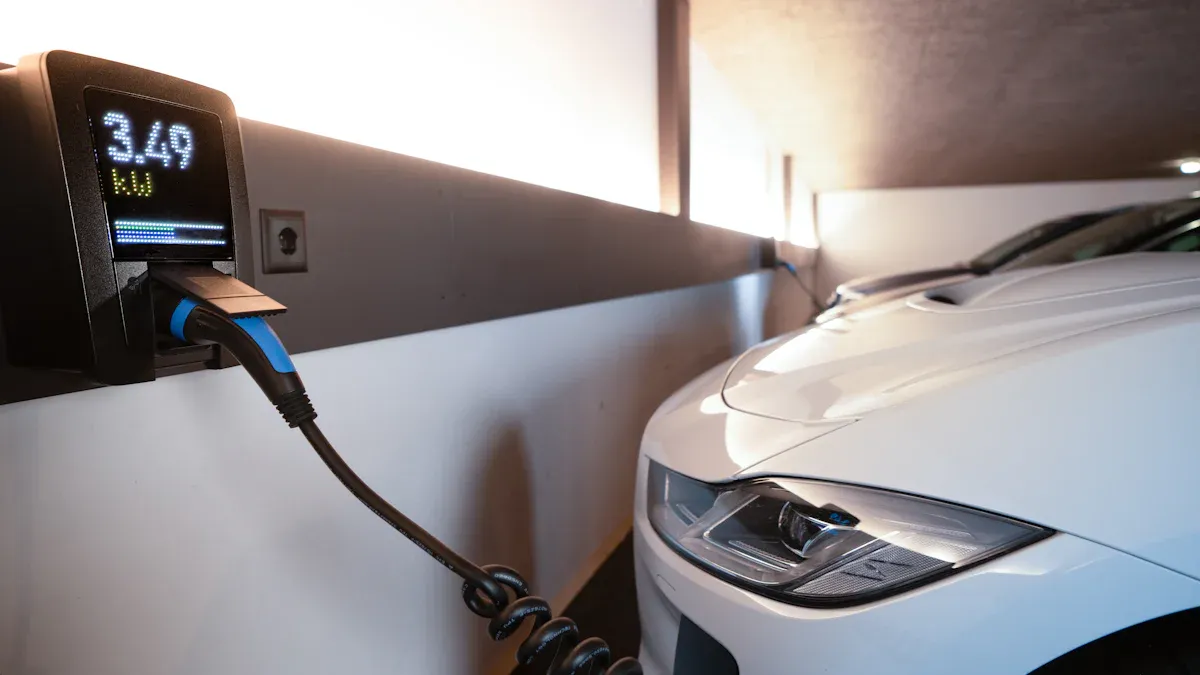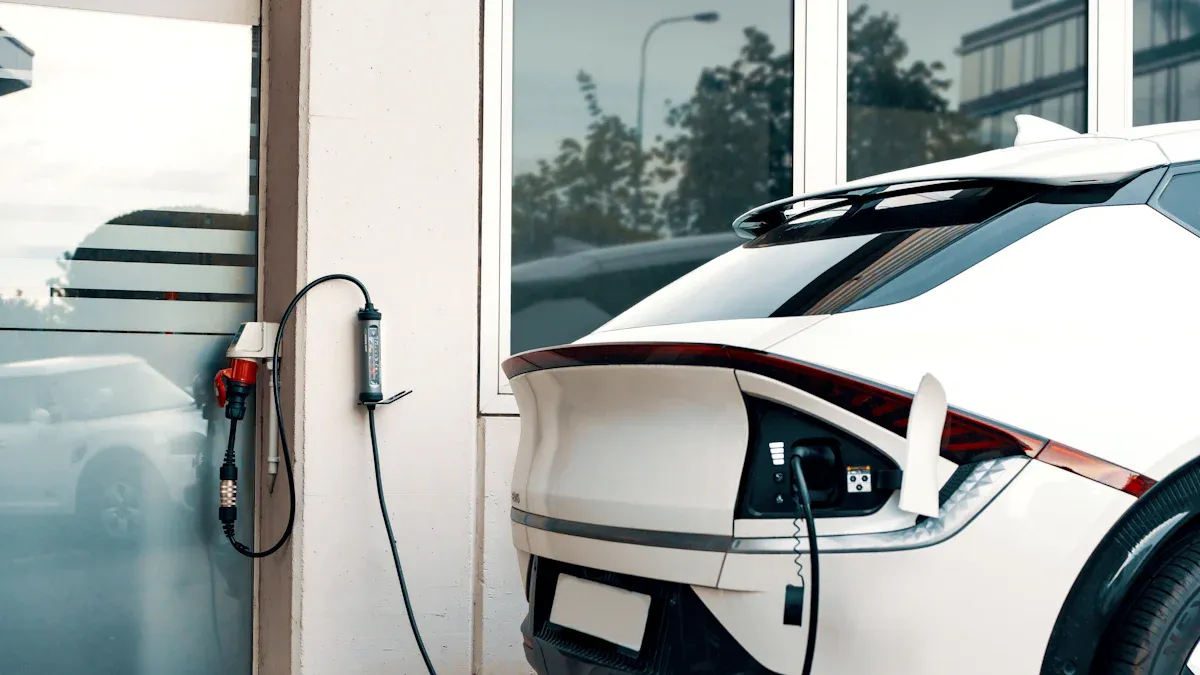
Installing a dedicated home charging point is the single best upgrade for an electric car. The benefits are clear. Data shows approximately 80% of Chargement des voitures électriques occurs at home, a testament to its convenience. A professionally installed Chargeur EV from a technologically advanced provider like TPSON makes daily electric car charging significantly cheaper. For instance, an off-peak home rate can be over 450% less expensive than average public charging stations in the UK. This upgrade also provides dramatically faster charging than a standard outlet, saving hours of waiting time. When considering your options, researching reputable Fabricants de chargeurs de VE can help you find the perfect solution for your needs.
The Financial Benefits of a Home EV Charging Point
The primary motivation for many drivers to install a home electric vehicle charging point is the substantial long-term savings. While the initial investment is a consideration, the ongoing financial benefits quickly outweigh the upfront cost. Charging at home turns your garage or driveway into the most affordable “fuel” station available, fundamentally changing the economics of car ownership.
The Real Cost: Home vs. Public Electric Car Charging
Understanding the cost difference between charging at home and using public infrastructure reveals the true value of a personal charger. Public stations offer convenience but at a premium price, whereas home charging leverages your domestic electricity supply for maximum savings.
Breaking Down Your Home Electricity Bill
Your home electricity bill provides a clear picture of your charging costs. The price is measured in pence per kilowatt-hour (p/kWh). A typical electric car requires about 15-20 kWh to travel 100 miles. By multiplying your electricity rate by the amount of energy your EV consumes, you can calculate the exact cost of each “fill-up.” For example, charging a 60kWh battery on a standard rate of 24.86p/kWh would cost just under £15. This transparency allows for precise budgeting and financial planning.
Comparing Public Charger Pay-Per-Use Fees
Public charging networks operate like traditional fuel stations, with prices that are significantly higher than domestic rates. The cost varies based on the provider and charging speed. As the data shows, public charging is consistently more expensive.
Remarque : Public fast charging is often 2 to 3 times more expensive than even standard daytime home charging rates. The convenience comes at a steep premium.
A comparison for charging a 60kWh EV battery in the UK illustrates this gap clearly:
| Lieu de chargement | Cost per kWh (p) | Cost for 60kWh Charge (£) |
|---|---|---|
| Home (EV Tariff, Night Rate) | 10-15 | 6-9 |
| Home (Standard Rate) | 24.86 | 14.92 |
| Public Slow (7-22kW) | 40-50 | 24-30 |
| Rapid Charging (50kW) | 65-80 | 39-48 |
| Ultra-Rapid (100kW+) | 85-120 | 51-72 |
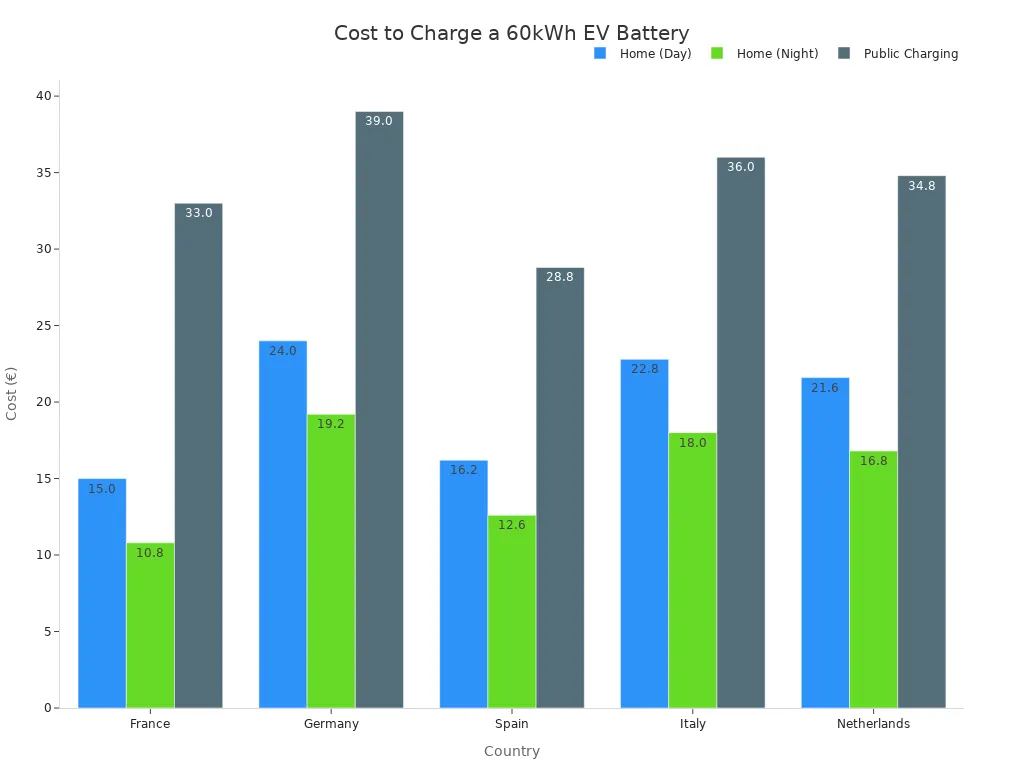
This trend holds true across Europe, where off-peak home charging consistently offers the most economical solution.
Maximize Savings with Smart Charging at Home
A standard home charger already provides savings. A smart EV charger, however, unlocks a new level of cost optimization by automating the charging process to take advantage of the cheapest electricity rates.
What Are Off-Peak Electricity Tariffs?
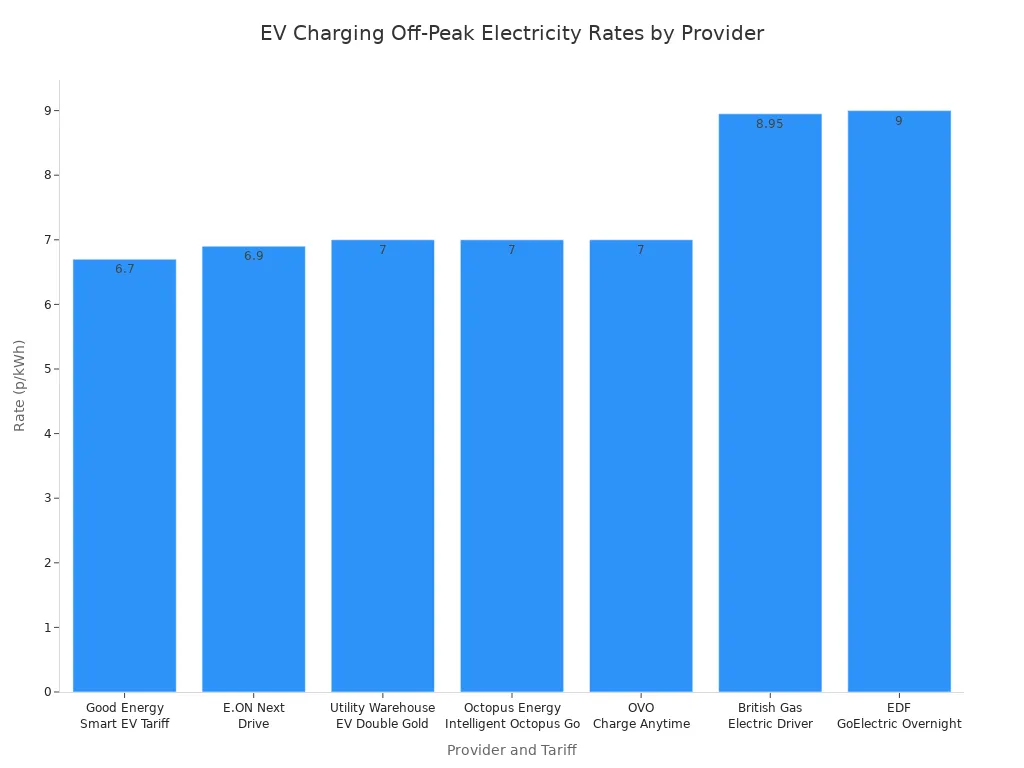
Energy providers offer special EV tariffs to incentivize charging when grid demand is low, typically overnight. These “Time of Use” tariffs feature significantly reduced electricity rates during off-peak hours.
- Two-rate tariffs: These plans offer cheap electricity overnight (e.g., 12 am to 5 am) and higher rates during the day.
- ‘Type of Use’ tariffs: These are add-ons that apply a cheaper rate specifically to the energy used for electric car charging, regardless of the time of day.
A smart meter is essential for these tariffs. It allows the energy supplier to track when electricity is used and apply the correct rate.
How Smart Chargers Automate Savings
A smart EV charger, like those from a technologically advanced provider such as TPSON, communicates directly with your utility provider or a dedicated app. You simply plug in your car and set your desired departure time. The charger then automatically starts and stops the charging session to align with the cheapest off-peak window. This “set it and forget it” approach ensures you always pay the lowest possible price without any manual effort. For a Tesla Model 3 with a 60kWh battery, this can reduce the cost of a full charge from £15 on a standard tariff to just £4.50 on an off-peak tariff—a 70% reduction.
Long-Term Financial Gains
The financial benefits of a home charger extend beyond daily savings. They accumulate into significant annual gains and can even increase the value of your property.
Calculating Your Annual Fueling Savings
The annual savings from home charging are substantial. An average driver covering 10,000 miles per year can save hundreds of pounds compared to using public chargers, and well over a thousand pounds compared to fueling a petrol or diesel car.
Consider a driver who needs 286 kWh per month.
- On a standard tariff (25p/kWh): Monthly cost is £71.50.
- On an off-peak tariff (7p/kWh): Monthly cost is just £20.02.
This simple switch results in annual savings of over £600 on electricity costs alone.
How a Charger Can Increase Your Property Value
A home EV charger is an increasingly desirable feature for homebuyers. It future-proofs a property and appeals to the growing market of EV owners. Real estate analyses have shown that homes with an EV charger installed can see a notable increase in their selling price. Even if a potential buyer does not currently own an EV, the presence of charging infrastructure signals that the home is modern and ready for the future of transportation. This makes the property more attractive, potentially speeding up a sale and increasing its market value. Installing a charger is not just an upgrade for your car; it is a smart investment in your home.
Unlock Faster Charging: Power Up in Hours, Not Days
Beyond cost savings, the most significant advantage of a dedicated home EV charger is speed. The difference between plugging into a standard wall outlet and using a purpose-built unit is transformative. It changes an EV owner’s relationship with their vehicle, shifting charging from a lengthy, planned event to a seamless background task. This speed provides unparalleled convenience and flexibility.
The Speed Difference Explained
The power output of a charging source directly dictates how quickly an electric vehicle‘s battery can be refilled. Home charging solutions fall into two main categories: Level 1 and Level 2. Understanding their capabilities reveals why a Level 2 charger is the superior choice for daily use.
Level 1 Charging: The Standard Outlet Crawl
Level 1 charging uses a standard 120V wall outlet, the same kind used for household appliances. While it requires no special installation, its performance is extremely limited. This method delivers power at a slow crawl. A Level 1 charger provides only about 1.44 kWh per hour. Fully charging a common 60 kWh EV battery from empty would take over 41 hours. This speed is often impractical for drivers who rely on their vehicle daily.
Level 2 Charging: The Home Charger Sweet Spot
Level 2 charging is the industry standard for home installations. These units, such as the advanced systems from providers like TPSON, use a 240V circuit similar to an electric stove or dryer. This higher voltage dramatically increases charging speed. A typical 7kW Level 2 EV charger can fully replenish a 60kWh battery in just 8-9 hours. This speed difference is a game-changer for EV ownership.
Speed Comparison: Range Added Per Hour A Level 2 charger adds significantly more range in the same amount of time, making it far more practical for daily driving needs.
| Type de chargeur | Miles d'autonomie ajoutés par heure |
|---|---|
| Niveau 1 | 4-5 |
| Niveau 2 | 20-25 |
Real-World Charging Scenarios
The practical benefits of Level 2 charging speed become clear in everyday situations. It adapts to a driver’s lifestyle, ensuring the vehicle is always prepared for the road ahead.
From Empty to Full Overnight
The 8-9 hour charge time of a Level 2 unit aligns perfectly with typical overnight sleeping schedules. A driver can arrive home with a nearly depleted battery, plug in their vehicle, and wake up to a 100% charge. This routine eliminates any need to visit a charging station during the week. The car is simply ready to go every morning, effortlessly.
Topping Off After Your Daily Commute
Most daily driving does not deplete the entire battery. For a typical 30-40 mile commute, a Level 2 charger can replenish the used energy in under two hours. This quick top-off means the vehicle is always near full capacity. It provides peace of mind and ensures there is ample range for unexpected errands or evening plans.
Why Speed Matters for Your Lifestyle
Fast, reliable home charging fundamentally improves the EV ownership experience. It removes logistical hurdles and provides a sense of freedom that slow, inconvenient charging methods cannot match.
Gaining Freedom from Range Anxiety
Range anxiety, the fear of a battery running out before reaching a destination, is a common concern for new EV drivers. A home charger is a powerful tool for alleviating this worry. Having a dedicated and dependable power source at home eliminates reliance on the public charging network, which can have occupied or broken stations. This assurance that the EV starts each day with a sufficient charge significantly reduces stress about battery levels during daily use.
Always Ready for Spontaneous Trips
The convenience of a fast home charger means an EV is always prepared for adventure. There is no need to plan a day in advance to “fill up” for a weekend getaway or an impromptu road trip. With the ability to add 20-25 miles of range per hour, a driver can quickly top off the battery and head out. This readiness transforms the electric vehicle from a commuter car into a go-anywhere vehicle, unlocking the full potential of driving electric.
The Ultimate Convenience of a Home Electric Vehicle Charging Point
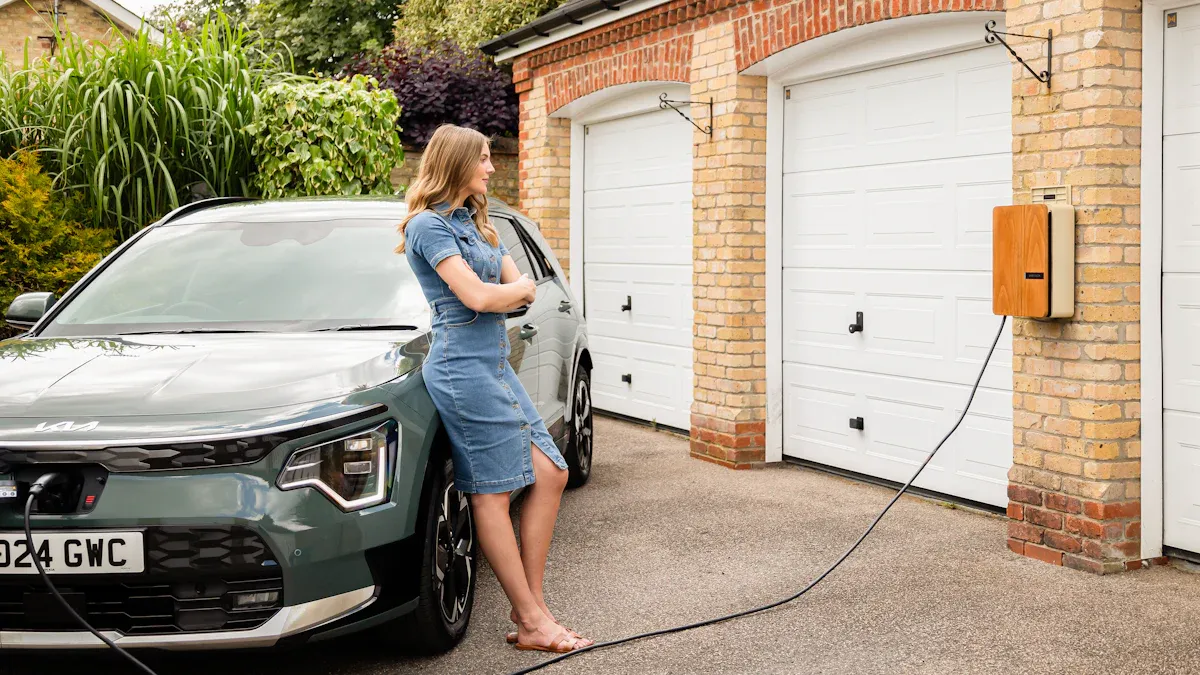
A home electric vehicle charging point offers more than just financial and speed benefits; it provides unparalleled convenience. This technology fundamentally redefines the relationship between a driver and their vehicle. It eliminates the chore of refueling and integrates the electric car charging process seamlessly into daily life. The result is a simple, stress-free ownership experience.
Your Personal “Set It and Forget It” Routine
The greatest advantage of a personal EV charger is the creation of an effortless routine. The process of keeping an EV ready becomes a simple, background task rather than a planned event.
The Ease of Plugging In When You Park
The daily charging habit is remarkably simple. A driver arrives home, parks their electric vehicle, and connects the charging cable. This small action, taking only a few seconds, becomes as automatic as locking the car door. Technologically advanced EV charger models from providers like TPSON make this process even smoother with ergonomic designs and smart features. This removes any mental effort associated with vehicle fueling.
Waking Up to a Full Battery Every Morning
The outcome of this simple routine is transformative. A driver begins every day with a fully charged vehicle, ready for any journey. This convenient reality offers several key advantages:
- It eliminates weekly trips to a fueling station.
- It provides maximum range for the day’s commute and any unplanned stops.
- It ensures the EV is always prepared for long-distance travel.
This consistent state of readiness provides complete peace of mind.
No More Hunting for Public Chargers
Relying on public infrastructure introduces uncertainty and hassle into the charging experience. A dedicated charger at home bypasses these common frustrations entirely.
Éviter les stations cassées ou occupées
Public charging stations can be unreliable. Drivers often face the frustrating scenario of arriving at a station only to find it occupied by another vehicle or, worse, out of service. This unpredictability can disrupt schedules and cause significant delays. A personal charger at home is always available and operational, offering 100% reliability when a driver needs it most.
Skipping the Apps and Payment Hassles
The public charging network is fragmented. A driver may need multiple smartphone apps and payment accounts to access different networks.
A home charging setup eliminates this complexity. There are no apps to juggle, no payment cards to swipe, and no connection fees to worry about. The entire process is managed through a single, private system, making the experience incredibly straightforward.
Safety Benefits: Why a Dedicated Charger is Essential
While convenience and cost savings are significant benefits, the most critical reason to install a dedicated EV charger is safety. An electric vehicle draws a large amount of power for many hours, a task that standard home wiring is not designed to handle. A purpose-built Level 2 EV charger provides the necessary safeguards to protect the driver, the vehicle, and the home.
The Risks of Using a Standard Wall Outlet
Using a regular wall outlet for daily charging, often called Level 1 charging, introduces significant and often hidden dangers. These outlets are not built for the continuous high-power demands of an EV.
Understanding Continuous Power Draw Dangers
A standard outlet can create a serious fire hazard when used for long-term EV charging. The continuous power draw generates substantial heat, which can cause catastrophic failure.
- Component Failure: Many low-cost outlets use inferior metal contacts that overheat, weaken, and create poor connections. This can lead to arcing and burning.
- Melting and Fire: Real-world incidents show that this heat buildup can melt the outlet face and scorch the wall. In one case, a Tesla owner’s outlet melted completely, with only the charger’s thermal protection preventing a larger fire.
Why Extension Cords Are a Major Hazard
The temptation to use an extension cord for charging is strong, but it is an extremely hazardous practice that manufacturers explicitly forbid.
Owner manuals are clear with their warnings. Chevrolet, for instance, tells Bolt owners: “Do not use extension cords, multi-outlet power strips, splitters, grounding adaptors, surge protectors, or similar devices.”
Using a standard extension cord multiplies the risks of overheating, electric shock, and fire. It also restricts voltage, leading to slower, less efficient charging.
Built-in Safety Features of Level 2 Chargers
A dedicated Level 2 charger, like those from a technologically advanced provider such as TPSON, is engineered with multiple layers of protection. These systems are certified to meet strict safety standards like UL, ETL, and FCC.
Overcurrent and Overheating Protection
Level 2 chargers continuously monitor the charging session to prevent electrical mishaps.
- Contrôle de la température: Internal sensors constantly check the temperature. If the unit begins to overheat, it will automatically reduce power or shut down completely to prevent damage.
- Protection contre les surintensités: Built-in circuit breakers and fuses prevent the charger from drawing too much power, protecting both the car’s battery and the home’s electrical system.
Weatherproof Designs for Outdoor Installations
High-quality chargers are built to last, whether installed inside a garage or outside in the elements. Many units carry a NEMA 4 rating, which certifies that the enclosure is protected against dust, rain, and ice formation. This robust construction ensures safe and reliable operation in any weather.
The Importance of Professional Installation
A safe charging setup depends entirely on correct installation by a qualified professional. This is not a DIY project.
Ensuring Code Compliance and Electrical Safety
A licensed electrician ensures the installation meets all national and local electrical codes, specifically Article 625 du NEC. This involves installing a dedicated circuit for the EV charger, using correctly sized wires and breakers, and securing the necessary permits and inspections.
Protecting Your Home’s Electrical System
Improper installation can overload a home’s electrical panel, creating a severe fire risk. A professional electrician performs a critical load calculation to confirm the electrical system can handle the added demand. This expert assessment is essential for a safe, reliable, and long-lasting installation that protects the entire property.
How to Choose the Right Home EV Charging Point

Selecting the right home EV charging point is a crucial step for any electric vehicle owner. The ideal Chargeur de VE balances charging speed, smart features, and cost to provide the best long-term value. A careful evaluation of key features ensures the chosen unit meets both current and future needs.
Principales caractéristiques à prendre en compte
Navigating the market requires understanding the core specifications that differentiate one charger from another. These features directly impact performance, convenience, and overall cost-effectiveness.
Understanding Kilowatt (kW) Ratings
The kilowatt (kW) rating of a charger determines its power output and, consequently, its charging speed. Most home installations use single-phase power, making 7kW chargers the most common and practical choice.
- 7kW Chargers: These units are perfect for overnight charging, typically refilling an EV battery in 6-12 hours.
- Chargeurs 11kW et 22kW: These faster options require a three-phase power supply, which is rare in residential properties but common in commercial settings.
The table below shows how these ratings affect the time needed to charge a typical 60kWh EV battery.
| Type de chargeur | Capacité de la batterie | Approximate Charging Time |
|---|---|---|
| 7kW | 60kWh | 8-9 heures |
| 11kW | 60kWh | 5-6 heures |
| 22kW | 60kWh | 2,5-3 heures |
Smart Features vs. Standard Chargers
A key decision is choosing between a “smart” and a standard (or “dumb”) EV charger. Standard units simply deliver power when plugged in. Smart chargers, like those from technologically advanced providers such as TPSON, connect to Wi-Fi and offer app-based controls. This allows for scheduled charging to take advantage of off-peak electricity rates, remote monitoring, and software updates that add value over time.
Cable Length and Management Options
The length of the charging cable is a practical consideration. A driver should measure the distance from the planned installation spot to the vehicle’s charging port. A longer cable offers more flexibility for parking, but it can also be cumbersome. Many chargers offer integrated cable hooks or holsters to keep the setup tidy.
Tethered vs. Untethered: Which Cable is Right for You?
A home charge point comes in two main styles:
- L'attache: The cable is permanently attached to the charger. This is highly convenient, as a driver just needs to unhook the cable and plug it in.
- Détaché: The unit has a universal socket, requiring the driver to use the separate cable that came with their EV. This offers a cleaner look and more flexibility.
Matching a Charger to Your Needs
The best home charging point is one that aligns with a driver’s vehicle, property, and lifestyle.
An Overview of Popular Charger Brands
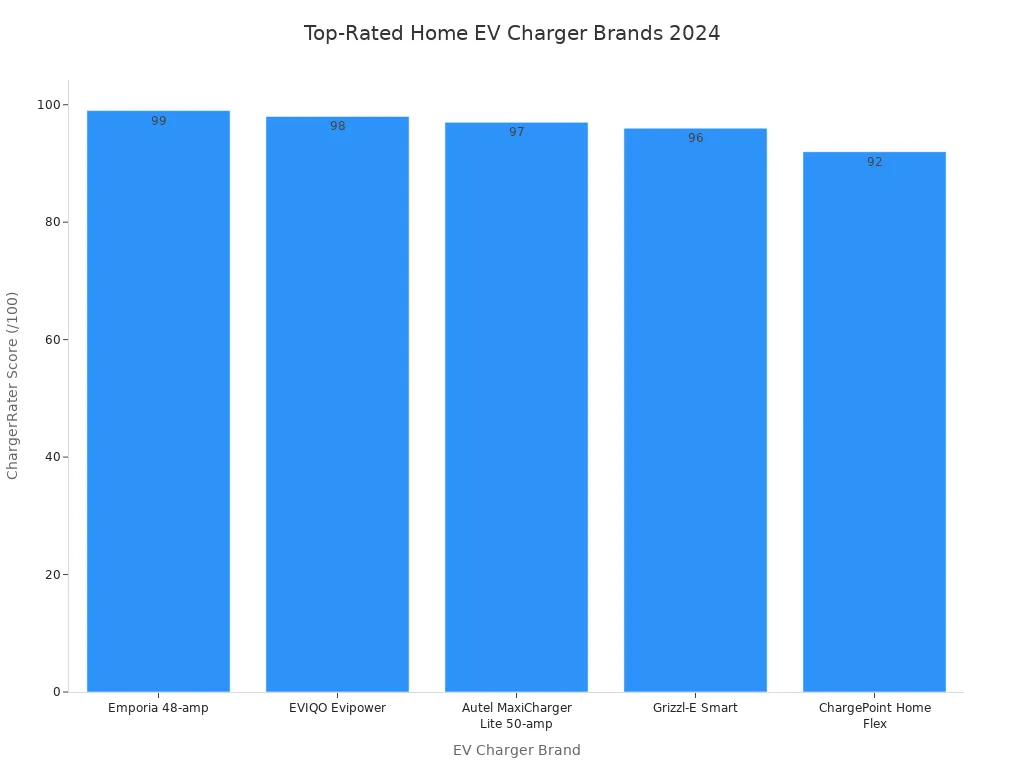
The market for home chargers is growing, with many reputable brands offering excellent products. Independent ratings can help identify top performers that deliver reliability and great value.
Ensuring Compatibility with Your Vehicle
A charger’s power is only useful if the vehicle can accept it. Every EV has an onboard charger with a maximum acceptance rate, measured in kilowatts or amps. An electric vehicle’s onboard charger determines the maximum power it can accept. For instance, if a car has an acceptance rate of 32 amps (around 7.4kW), a charging station with a higher amperage rating will not charge the car any faster. Matching the charger to the vehicle’s capability ensures a driver is not overpaying for unused power.
The Simple Path to Your Home Charger Installation
Getting an EV charger installed at home is a straightforward process when broken down into clear steps. It begins with a professional assessment and ends with a safe, fully operational charging station. This path ensures the final setup provides maximum value and reliability.
Step 1: The Initial Home Assessment
Before any work begins, a qualified electrician must conduct a thorough home assessment. This initial evaluation is critical for planning a safe and cost-effective installation.
Evaluating Your Electrical Panel Capacity
The most important part of the assessment is a load calculation. An electrician determines if the existing electric panel can handle the significant, continuous power draw of an EV charger.
- Capacité du panneau: They check if the panel has enough spare capacity for a new dedicated circuit.
- Potential Upgrades: If the panel is at or near its limit, the electrician will recommend solutions like a mise à niveau du panneau or a load management device.
- Wiring and Safety: The assessment ensures all components meet National Electric Code (NEC) requirements for safety.
Choisir le meilleur emplacement pour l'installation
The ideal location for the charger balances convenience with installation complexity. An electrician will consider the distance from the electrical panel to the parking spot. A longer distance increases costs due to the need for more wiring and labor, especially if trenching or drilling through walls is required. The goal is to find a spot that keeps the charging cable accessible without creating a hazard.
Step 2: The Professional Installation Process
With a plan in place, the professional installation can proceed. This phase is typically completed within a few hours.
À quoi s'attendre le jour de l'installation
The installation process follows a standard procedure to ensure safety and functionality.
- Préparation du site: The electrician prepares the chosen location, ensuring it is clear and safe for work.
- Circuit Installation: A new, circuit dédié de 240 volts is run from the electrical panel to the charger location.
- Charger Mounting: The EV charger unit is securely mounted to the wall or a pedestal.
- Final Connection: The unit is hardwired to the new circuit for the safest and most reliable connection.
- Essais: The electrician tests the charger to confirm it is operating correctly and safely delivering power.
Naviguer dans les permis et les inspections
A professional installer handles the necessary paperwork. They ensure the project complies with all local building codes and secures any required permits. This step is essential for a legal and safe electric vehicle home charging setup.
Comprendre les coûts d'installation
The final price of an installation can vary. Understanding the factors that influence cost helps a homeowner budget effectively and recognize the long-term value of the investment.
Factors That Influence the Final Price
Several variables can affect the total cost. The complexity of the job is the primary driver.
- Améliorations électriques: A panel upgrade is the most significant potential cost.
- Complexité de l'installation: The distance from the panel to the charger location can increase labor and material costs.
- Trenching or Drilling: Running wires underground or through finished walls adds to the final price.
The charger level also impacts the overall cost, with Niveau 2 being the standard for home charging.
| Niveau du chargeur | Fourchette de coûts typique |
|---|---|
| Niveau 1 | $300 - $600 |
| Niveau 2 | $500 - $2 000 |
| Niveau 3 | $15,000+ |
How to Find a Qualified Electrician
Hiring a licensed and insured electrician with specific experience in EV charger installation is non-negotiable. Reputable EV charger providers, such as the technologically advanced TPSON, can often recommend certified installers in a driver’s area. This ensures the job is done right, protecting the vehicle, the home, and the warranty of the charger.
A home charger is the key to unlocking the full potential of an EV. It transforms a garage into the most affordable and convenient “fuel” station, making daily electric car charging simple. A technologically advanced EV charger from a provider like TPSON provides a superior home charging experience. Yet, many EV owners miss out on further savings.
- Studies show a large number of EV drivers are unaware of utility programs that support home charging.
Exploring these options is crucial for maximizing the benefits of EV ownership. Taking control of electric car charging at home ensures every EV journey is cheaper and faster.
FAQ
Do I need a special charger for my EV?
Un service dédié Chargeur de niveau 2 is highly recommended. It provides faster, safer, and more reliable charging than a standard wall outlet. This type of charger is specifically designed for the high, continuous power draw required by an electric vehicle, protecting both the car and the home.
Combien de temps dure l'installation d'un chargeur domestique ?
A standard installation by a qualified electrician typically takes just a few hours. The duration can vary based on the complexity of the job. Factors include the distance from the electrical panel to the charger location and any required electrical upgrades.
Puis-je installer moi-même un chargeur de VE ?
Avertissement : A homeowner should never attempt a DIY installation. A licensed electrician must perform the work to ensure it meets all safety codes and electrical standards. This protects the property from fire hazards and ensures the charger operates correctly.
Quelle est la différence entre un chargeur connecté et un chargeur non connecté ?
The choice depends on user preference for convenience versus aesthetics.
- Tethered chargers have a permanently attached cable for quick plug-and-go use.
- Untethered chargers have a universal socket, offering a cleaner look. The driver uses the separate cable that came with their vehicle.
Will an EV charger work with any electric car?
Most modern chargers use a universal connector (Type 2 in Europe) compatible with nearly all electric vehicles. A driver should still confirm their vehicle’s maximum charging rate to select a charger that matches its capabilities for optimal performance.
Quels sont les avantages d'un chargeur intelligent ?
A smart charger connects to Wi-Fi, enabling advanced features through an app. Technologically advanced providers like TPSON offer smart chargers that allow users to schedule charging for off-peak hours, monitor energy use, and receive software updates, maximizing savings and convenience.