


Les conducteurs au Brésil peuvent désormais compter sur le réseau émergent de bornes de niveau 3 du pays chargeur ev pour alimenter leur véhicule électrique lors d'un voyage transfrontalier. Solutions de recharge pour véhicules électriques, y compris chargeurs ev portables, aidant les voyageurs à maintenir leur élan tout au long du trajet. Fabricants de chargeurs de VE L'infrastructure continue de s'étendre, rendant les déplacements électriques plus accessibles. Une planification stratégique garantit que chaque arrêt de recharge correspond à l'autonomie du véhicule et au terrain, favorisant un voyage électrique sans interruption.
Aperçu du réseau émergent de bornes de recharge rapide de niveau 3 au Brésil
Qu'est-ce qu'une borne de recharge de niveau 3 ?
Vitesse de charge et technologie
Les bornes de recharge de niveau 3, également appelées bornes de recharge rapide à courant continu, représentent une avancée significative dans la technologie des véhicules électriques infrastructure de recharge. Ces bornes utilisent le courant continu pour fournir des vitesses de recharge rapide, avec des puissances de sortie allant de 50 kW à 350 kW. De nombreuses stations au Brésil proposent désormais la recharge rapide, permettant aux conducteurs d'atteindre une charge de 80 % en moins de 30 minutes. La technologie de recharge rapide permet aux véhicules d'ajouter environ 100 miles en 30 à 40 minutes à 50 kW, et jusqu'à 200 miles en seulement 20 minutes à des puissances plus élevées. Contrairement aux bornes de niveau 2, plus lentes et principalement utilisées pour la recharge à domicile ou sur le lieu de travail, les bornes de niveau 3 peuvent fournir jusqu'à 1400 miles d'autonomie par heure et recharger complètement de nombreux VE standard en moins de 20 minutes. L'infrastructure de recharge rapide est essentielle pour les stations de recharge publiques et soutient l'adoption des véhicules électriques à travers le Brésil.
Avantages pour les voyages longue distance en VE
L'infrastructure de recharge rapide offre plusieurs avantages pour les voyages longue distance. Les conducteurs bénéficient de temps d'arrêt réduits, rendant les voyages transfrontaliers plus réalisables. Les bornes de recharge rapide sont idéales pour les applications commerciales et les véhicules à fort kilométrage, en particulier le long des autoroutes principales et dans les dépôts logistiques. Les vitesses de recharge rapide minimisent les temps d'attente aux stations de recharge pour véhicules électriques, soutenant des déplacements fiables sur le réseau émergent de bornes de recharge rapide de niveau 3 au Brésil. Cependant, l'infrastructure de recharge rapide nécessite des investissements et des coûts d'installation significatifs, et sa disponibilité reste limitée par rapport aux bornes de niveau 2.
Couverture actuelle des points de recharge pour véhicules électriques
Autoroutes et corridors principaux
L'infrastructure de recharge du Brésil continue de s'étendre le long des axes de transport clés. Les autoroutes et corridors principaux disposent désormais de stations de recharge rapide, permettant aux conducteurs d'accéder à des points de recharge pour véhicules électriques lors de voyages transfrontaliers. Le réseau de recharge couvre des emplacements stratégiques où un retournement rapide est crucial, tels que les centres logistiques et les stations de recharge publiques. L'investissement dans l'infrastructure de recharge garantit que les points de recharge pour véhicules électriques sont disponibles pour les véhicules privés et commerciaux.
Villes et régions clés
Les villes et régions clés du Brésil ont priorisé le développement de l'infrastructure de recharge pour véhicules électriques. Les centres urbains comme São Paulo, Rio de Janeiro et Brasília accueillent de nombreuses stations de recharge pour véhicules électriques. L'investissement régional soutient l'adoption des véhicules électriques et augmente la densité des points de recharge. La couverture des stations de recharge publiques continue de croître, rendant l'infrastructure de recharge pour véhicules électriques plus accessible aux résidents et aux voyageurs.
Acteurs clés et initiatives
Opérateurs de recharge leaders (Zletric, VoltBras)
Plusieurs entreprises pilotent l'expansion de l'infrastructure de recharge au Brésil. Zletric et VoltBras dirigent le développement des stations de recharge rapide, investissant dans une technologie avancée et des réseaux fiables. TPSON, un fournisseur de solutions de recharge pour véhicules électriques technologiquement avancé, contribue au déploiement d'une infrastructure de recharge efficace. Des fabricants internationaux tels que Tesla Inc., Volkswagen AG, BYD Co. Ltd., Stellantis NV et Toyota Motor Corporation investissent également dans le réseau de recharge brésilien, accélérant l'adoption des véhicules électriques.
Incitations gouvernementales et intégration au réseau intelligent
Les incitations gouvernementales jouent un rôle crucial dans l'expansion de l'infrastructure de recharge pour véhicules électriques. Les politiques encouragent l'investissement dans les stations de recharge rapide et soutiennent l'intégration de la technologie des réseaux intelligents. L'intégration au réseau intelligent améliore la fiabilité et l'efficacité du réseau de recharge, garantissant que les points de recharge pour véhicules électriques restent opérationnels et accessibles. La collaboration entre les secteurs public et privé renforce l'infrastructure de recharge pour véhicules électriques du Brésil et promeut l'adoption des véhicules électriques à l'échelle nationale.
Astuce : Les conducteurs doivent surveiller le réseau de recharge pour les nouvelles stations et les cartes de couverture mises à jour afin d'optimiser leurs plans de voyage.
Cartographier les points de recharge pour véhicules électriques pour les voyages longue distance
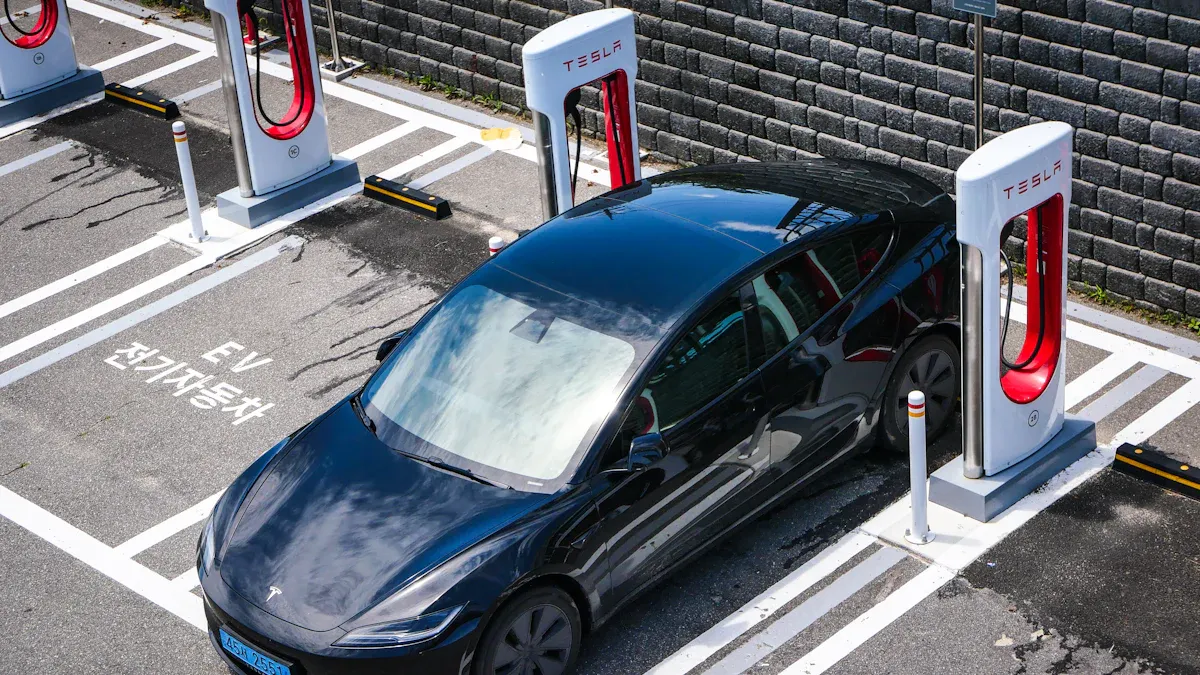
Meilleures cartes en ligne et applications pour le réseau émergent de bornes de recharge rapide de niveau 3 au Brésil
Plateformes de localisation de bornes en temps réel
Les conducteurs au Brésil s'appuient sur des plateformes numériques pour localiser les points de recharge pour véhicules électriques lors de voyages transfrontaliers. Ces plateformes affichent des informations en temps réel sur les emplacements des bornes, la disponibilité des ports et les vitesses de recharge. De nombreux VE modernes disposent de cartes intégrées qui affichent les stations de recharge électrique à proximité d'un coup d'œil. . Des applications tierces telles que ZapMap et Pod Point Network permettent aux utilisateurs de planifier des itinéraires en fonction de la disponibilité en direct des bornes et de l'autonomie du véhicule. Les cartes interactives fournissent l'état en direct des stations, aidant les conducteurs à éviter des détours et des retards inutiles. Certaines plateformes utilisent des calculs pilotés par l'IA pour suggérer des arrêts de recharge optimaux, intégrant le GPS et la télémétrie du véhicule pour une planification d'itinéraire précise.
Astuce : Les voyageurs doivent vérifier les mises à jour en direct sur la consommation de batterie, les conditions de trafic et l'état des points de recharge avant de commencer leur voyage.
Fonctionnalités à rechercher dans les outils de cartographie
Choisir le bon outil de cartographie améliore l'expérience de voyage électrique. Les plateformes fiables offrent plusieurs fonctionnalités clés :
- Disponibilité et statut des bornes en temps réel.
- Informations sur la vitesse de recharge pour chaque station.
- Intégration avec l'autonomie du véhicule et les données de la batterie.
- Ajustement dynamique de l'itinéraire basé sur le trafic en direct et le statut des bornes.
- Avis et évaluations des utilisateurs pour les stations de recharge électrique.
Un tableau ci-dessous résume les fonctionnalités essentielles :
| Fonctionnalité | Bénéfice |
|---|---|
| Disponibilité en temps réel | Réduction des temps d'attente |
| Info vitesse de recharge | Optimise la durée d'arrêt |
| Intégration à l'itinéraire | Garantit une planification efficace |
| Mises à jour dynamiques | S'adapte aux conditions changeantes |
| Retour utilisateur | Améliore la fiabilité |
Planification d'itinéraire avec points de recharge VE
Guide étape par étape pour planifier votre itinéraire
Une planification efficace garantit un voyage électrique fluide à travers le Brésil. Les conducteurs doivent suivre ces étapes :
- Identifier le point de départ et la destination.
- Utiliser une online map or app to locate electric charging stations along the route.
- Check real-time charger availability and charging speed at each station.
- Calculate distances between charging points based on vehicle range.
- Factor in terrain and traffic conditions for accurate planning.
- Adjust the route dynamically if charger status changes during travel.
Smart route planners in modern EVs automatically calculate routes with necessary charging stops and estimated wait times. Some apps provide live status updates, allowing drivers to modify their itinerary as needed.
Integrating Charging Stops into Your Itinerary
Integrating charging stops into a travel itinerary maximizes efficiency. Drivers should schedule stops at electric charging stations during meal breaks or rest periods. Real-time updates help adjust plans if a station becomes unavailable. Planning for backup charging options ensures reliability during unexpected outages. Travelers benefit from platforms that dynamically adjust journeys based on real-time data, keeping electric travel seamless and stress-free.
Planning a Cross-Country EV Trip in Brazil
Identifying Charging Stops and Distances
Calculating Distances Between Chargers
Drivers planning a long distance trip across Brazil must identify optimal charging stops to ensure a smooth journey. Specialized EV navigation apps help map out routes with ample electric vehicle charging stations, reducing range anxiety. These apps display electric vehicle charging points along major highways and corridors, allowing travelers to select stations based on real-time availability and charging speed. Charging network coverage continues to expand, making it easier to locate stations for long distance journeys.
Tip: Travelers should aim to charge their battery between 20% and 80% at each station. This practice maintains charging speed and battery health, and avoids unnecessary delays.
Factoring in EV Range and Terrain
EV range varies depending on battery capacity, driving style, and terrain. Drivers must factor in elevation changes, traffic, and weather conditions when planning their trip. Navigation apps suggest the most energy-efficient paths, helping travelers optimize their route and minimize charging stops. Planning for periodic charging ensures that the vehicle remains ready for unexpected detours or delays. Overnight charging at hotels provides a full battery each morning, supporting reliable travel across brazil’s emerging level 3 ev charger network.
- Map out routes with multiple charging points to alleviate range anxiety.
- Prepare for potential traffic, as it can impact the car’s estimated range.
- Schedule charges during meals or sightseeing to make efficient use of time.
- Always have a backup plan in case the preferred station is unavailable.
Estimating Charging Times and Vehicle Range
How Long to Expect at Each Stop
Charging times at electric vehicle charging stations depend on charger output and battery size. Level 3 chargers typically deliver rapid charging, allowing drivers to reach 80% capacity in less than 30 minutes. Most stations offer power outputs between 50 kW and 350 kW, supporting fast turnaround for electric vehicles. Travelers should check station details in advance to estimate stop duration and plan their trip accordingly.
| Type de chargeur | Temps de charge typique | Range Added per Session |
|---|---|---|
| Niveau 3 (DC rapide) | 20-30 minutes | 100 à 200 miles |
| Niveau 2 | 4-8 heures | 20-40 miles |
Planning for Meals and Breaks During Charging
Integrating charging stops into the itinerary maximizes efficiency. Drivers often schedule charging during meal breaks or sightseeing, making productive use of downtime. Public stations located near restaurants, shopping centers, or tourist attractions provide convenient options for travelers. Overnight charging at hotels ensures a full battery for the next day’s journey. This approach supports the adoption of electric vehicles and encourages more drivers to use the charging network for cross-country trips.
Note: Real-time updates from navigation apps help adjust plans if a station becomes unavailable or charging times change.
Tips for Reliable Charging on Brazil’s Emerging Level 3 EV Charger Network
Avoiding Peak Times and Waits
Travelers can avoid peak times by charging during off-peak hours or at less busy stations. User reviews and live status updates in mapping tools help identify stations with shorter wait times. Planning ahead reduces the risk of delays and ensures a smooth trip across the charging network.
Backup Options and Contingency Planning
Reliable charging requires contingency planning. Drivers should always have backup options in case their preferred station is unavailable or experiencing downtime. The table below outlines key strategies for ensuring reliable charging on brazil’s emerging level 3 ev charger infrastructure:
| Stratégie | Description |
|---|---|
| Safe installation and maintenance | Adhere to safety regulations, hire certified electricians, and conduct regular inspections. |
| Cybersecurity measures | Implement strong authentication, encryption protocols, and regular software updates. |
| Physical protection | Install barriers, use surveillance cameras, and ensure chargers are in well-lit areas. |
| Optimal placement of EV chargers | Position chargers strategically to minimize fire risks and ensure quick access during emergencies. |
| Liability and user safety | Follow EV charging standards, ensure compliance with regulations, and invest in staff training. |
| Operational efficiency | Maintain regular diagnostics and backup solutions for optimal performance. |
| Adequate insurance | Coverage for property damage, electrical fires, and cyber incidents is essential. |
Travelers benefit from planning routes with multiple electric vehicle charging points and stations, ensuring access to backup options. Operational efficiency and regular diagnostics keep the charging network reliable for long distance journeys. The adoption of electric vehicles continues to grow as infrastructure improves and public stations become more accessible.
Callout: Always check real-time station status and charger availability before starting your trip. This practice ensures a seamless electric journey across Brazil.
Real-World EV Experiences and Common Challenges

User Stories from Cross-Country Trips
Successful Trip Examples
Many drivers have completed long-distance journeys across Brazil using the growing network of electric vehicle charging stations. One group traveled from São Paulo to Brasília, relying on level 3 chargers along major highways. They planned each stop with real-time apps, ensuring access to electric vehicle charging points at strategic locations. Their trip highlighted the reliability of the current infrastructure and the convenience of charge rapide. Another traveler documented a journey from Rio de Janeiro to Salvador. He used public charging stations at shopping centers and hotels, integrating charging sessions with meal breaks. These stories demonstrate that cross-country travel with an electric vehicle is now possible in Brazil.
Lessons Learned from Early Adopters
Early adopters of electric travel in Brazil have shared valuable insights. They recommend checking charger status before each leg of the journey. Many found that charging during off-peak hours reduced wait times at stations. Some drivers experienced slower charging speeds in remote areas, which required flexibility in their plans. They also emphasized the importance of backup charging solutions, such as portable chargers, for added peace of mind. Early users noted that the adoption of electric vehicles will accelerate as more stations become available and as infrastructure improves.
Overcoming Network Gaps and Downtime
Dealing with Outages and Service Interruptions
Network gaps and outages can disrupt a trip. Drivers have reported occasional downtime at electric vehicle charging stations, especially in less populated regions. They suggest always having a list of alternative stations along the route. Real-time apps help identify operational chargers and avoid non-functioning stations. When faced with a service interruption, some travelers contacted station operators for support or used nearby public charging points. These strategies minimize delays and keep the journey on track.
Alternative Charging Solutions
Alternative charging solutions play a key role in overcoming network gaps. Portable chargers allow drivers to access power from standard outlets in emergencies. Some hotels and businesses offer private charging options for guests. Early adopters recommend carrying an adapter compatible with different charger types. The table below summarizes common solutions for unexpected charging needs:
| Solution | Description |
|---|---|
| Portable charger | Connects to standard outlets for emergencies |
| Hotel charging | Available for guests at select locations |
| Backup station list | Ensures options if primary station is down |
| Operator support | Assistance from charging network providers |
Tip: Drivers should update their charging apps regularly to access the latest station data and avoid surprises during their journey.
The Future of Brazil’s Emerging Level 3 EV Charger Network
Upcoming Expansions and Announced Projects
New Corridors and Charging Points
Brazil plans to expand its electric vehicle charging infrastructure by adding new corridors and charging points. Companies and government agencies have announced projects that will connect major cities and remote regions. These expansions will place fast charging stations along highways that link São Paulo, Rio de Janeiro, and Brasília. The network will also reach into the interior, supporting tourism and logistics. As more electric charging points appear, drivers will find it easier to plan cross-country trips. The rollout of public charging stations in urban centers and the installation of fast-charging units along key transit corridors will enhance accessibility and reduce range anxiety for EV users.
Initiatives des gouvernements et du secteur privé
Government and private sector initiatives drive the growth of Brazil’s charging infrastructure. These efforts focus on sustainable materials, job creation, and global energy leadership. The table below highlights several important initiatives and their impact on electric vehicle travel:
| L'initiative | Impact on EV Travel in Brazil |
|---|---|
| Sigma Lithium’s Trade Mission to China | Promotes investment in sustainable materials for EVs |
| Lithium Valley Initiative | Job creation and economic growth in Minas Gerais, enhancing local support for EV infrastructure |
| Participation in Global Energy Forums | Positions Brazil as a key player in global energy discussions, influencing EV policies and investments |
These projects support the development of electric vehicle charging infrastructure and encourage the adoption of electric vehicles across the country.
What to Expect for EV Travel in the Next 1-2 Years
Predicted Growth and Coverage Improvements
Industry experts predict rapid growth in Brazil’s electric charging network over the next two years. A denser network of charging facilities will increase confidence in long-distance travel. The table below summarizes how increased coverage will affect cross-country EV travel:
| Description des preuves | Impact on Cross-Country EV Travel |
|---|---|
| Rollout of public charging stations in major urban centers like São Paulo and Rio de Janeiro. | Enhances accessibility and reduces range anxiety for EV users. |
| Installation of fast-charging units along key transit corridors. | Facilitates longer journeys and supports cross-country travel. |
| A denser network of charging facilities is expected. | Increases EV adoption and confidence in long-distance travel. |
As the electric charging infrastructure grows, more drivers will consider electric vehicles for both daily commutes and extended trips.
Impact on Cross-Country EV Travel
The expansion of charging points and the integration of advanced technology will transform cross-country travel in Brazil. Drivers will experience shorter wait times and greater reliability at electric charging stations. The improved network will support the adoption of electric vehicles by making long-distance travel practical and convenient. Travelers can expect more charging options at hotels, shopping centers, and rest stops. These changes will help Brazil become a leader in sustainable transportation and electric mobility.
Tip: Travelers should stay informed about new charging station launches and infrastructure updates to maximize the benefits of the growing network.
Travelers can map out a successful trip by using reliable apps, planning charging stops, and monitoring real-time updates. Brazil’s emerging level 3 ev charger network supports efficient EV journeys across the country. Drivers experience greater convenience and confidence as infrastructure expands.
- Use trusted mapping tools
- Schedule charging during breaks
- Stay informed about new stations
Brazil offers exciting opportunities for EV travel, making cross-country trips more accessible than ever.
FAQ
What is a Level 3 charger?
A Level 3 charger, also called a DC fast charger, delivers high-speed charging. It can recharge most electric vehicles to 80% in less than 30 minutes. These chargers support long-distance travel and reduce downtime for drivers.
How can drivers find Level 3 charging stations in Brazil?
Drivers can use navigation apps or online maps to locate Level 3 charging stations. Many platforms provide real-time updates on charger availability, speed, and location. These tools help travelers plan efficient routes across the country.
Les chargeurs de niveau 3 sont-ils disponibles dans les zones rurales ?
Level 3 chargers mainly appear along major highways and in urban centers. Rural coverage remains limited but continues to expand. Drivers should plan routes carefully and identify backup charging options before traveling through remote regions.
What should travelers do if a charging station is out of service?
Travelers should check real-time station status before arrival. If a charger is unavailable, they can use backup stations listed in their navigation app. Portable chargers and hotel charging options provide additional support during unexpected outages.
How long does it take to charge an EV at a Level 3 station?
Charging times depend on battery size and charger output. Most Level 3 stations can add 100 to 200 miles of range in 20 to 30 minutes. Drivers should monitor charging progress using their vehicle’s dashboard or mobile app.
Tous les véhicules électriques peuvent-ils utiliser les chargeurs de niveau 3 ?
Not all electric vehicles support Level 3 charging. Drivers should check their vehicle’s specifications before planning a trip. Some older models or plug-in hybrids may only accept Level 2 charging.
What are the costs associated with using Level 3 chargers?
Charging costs vary by operator and location. Some stations charge per kilowatt-hour, while others use a flat fee. Drivers should review pricing details in their chosen app or at the charging station before starting a session.
Is it safe to use public Level 3 charging stations?
Public Level 3 charging stations follow strict safety standards. Operators conduct regular maintenance and inspections. Drivers should follow posted instructions and report any issues to the station operator for prompt resolution.
Tip: Always verify charger compatibility and station status before starting a cross-country ev journey.




