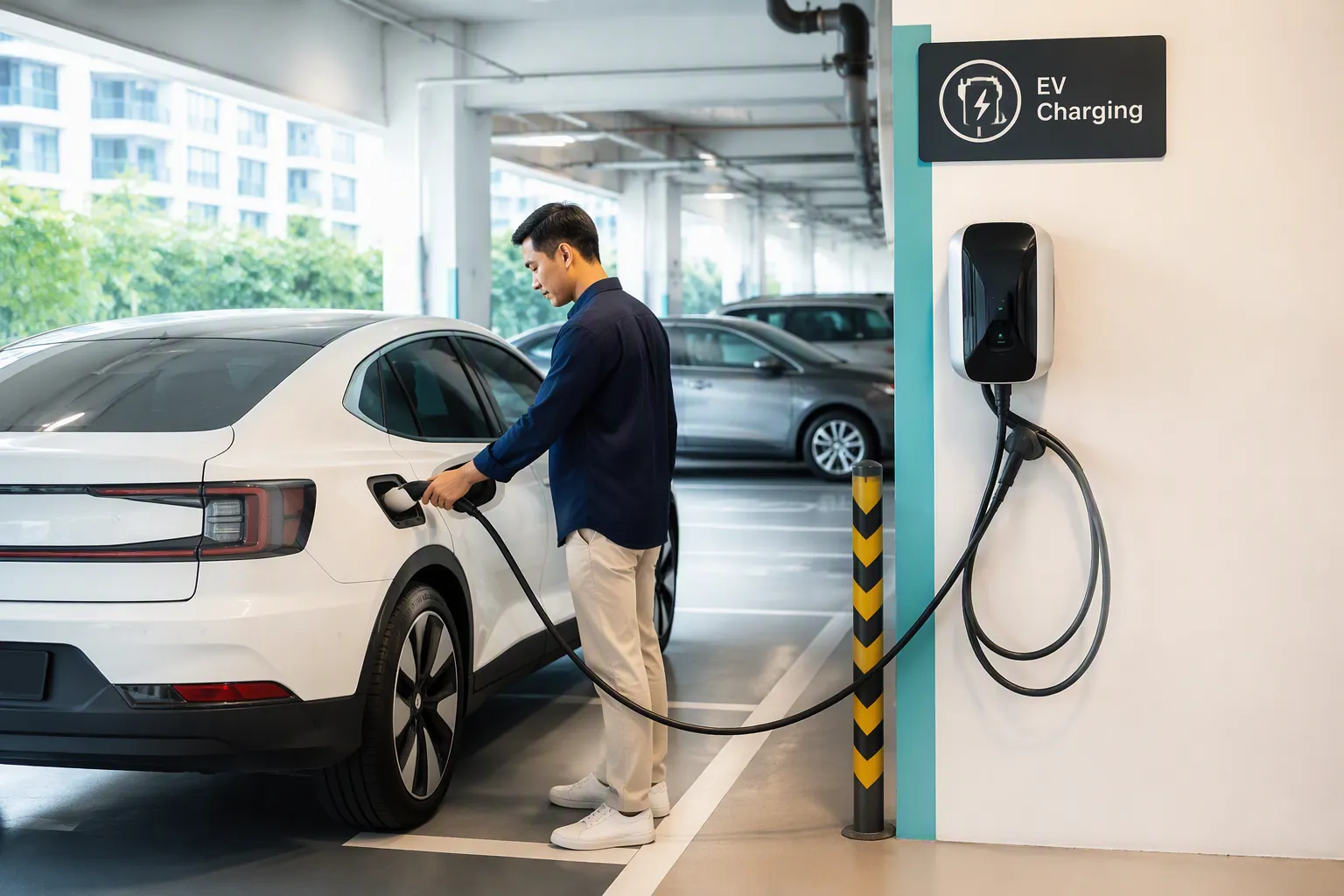

Drivers can charge an electric vehicle in multiple ways. The primary method is charging at home, offering convenience with a dedicated Chargeur de VE ou même chargeurs portables pour VE. For travel, public electric car charging is essential. The network is expanding rapidly; the United States government allocated $7.5 billion for 500,000 stations by 2030. Understanding how to charge is simple.
Global Network Growth
Europe’s public network also shows this growth. It is projected to double from 1 million charge points in 2025 to 2 million by 2029. Fabricants de chargeurs de VE fournissent une offre diversifiée Solutions de recharge pour véhicules électriques, making it easier to charge ev and manage charging electric vehicles.
Where to Charge an Electric Vehicle: Home and Public Options
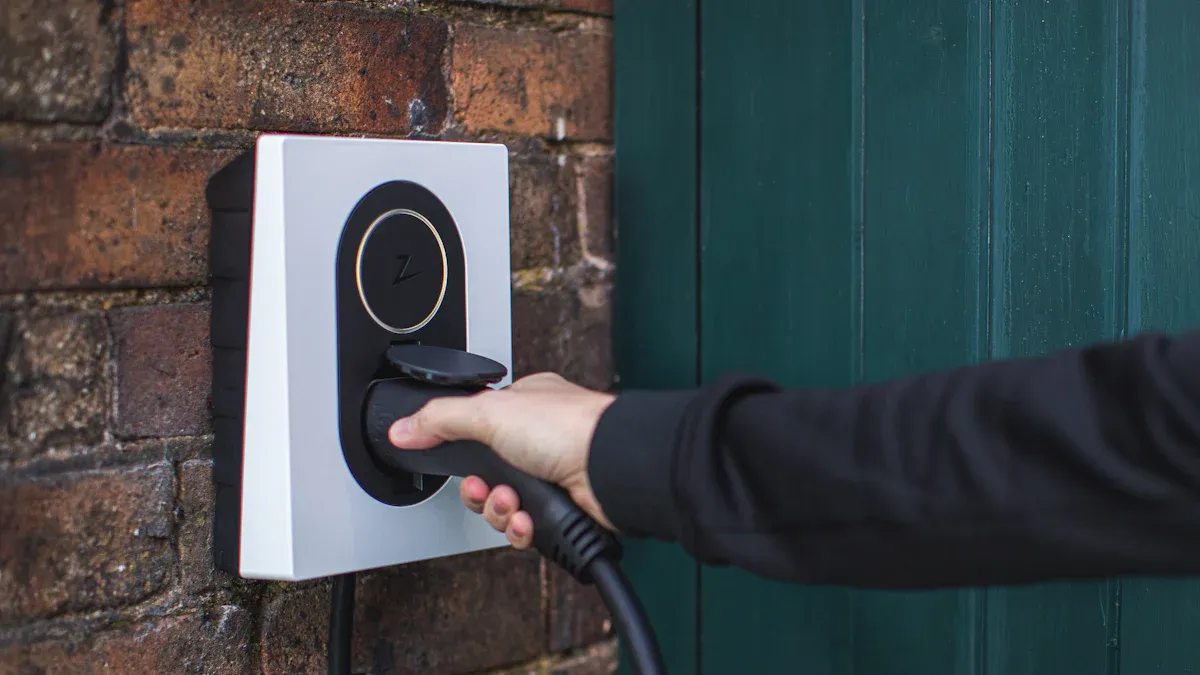
EV drivers have two primary environments for charging: the convenience of home and the necessity of public stations. Understanding the options in each category helps drivers plan their energy needs effectively. The most common and cost-effective method for daily driving is charging at home. For longer journeys or for drivers without private parking, the public network provides essential power.
Charging at Home: Your Daily Power-Up
Charging an EV at home is the foundation of electric vehicle ownership for most drivers. It allows them to start each day with a full battery, similar to charging a smartphone overnight. There are two main ways to accomplish this.
Dedicated Wall Box Chargers (Level 2)
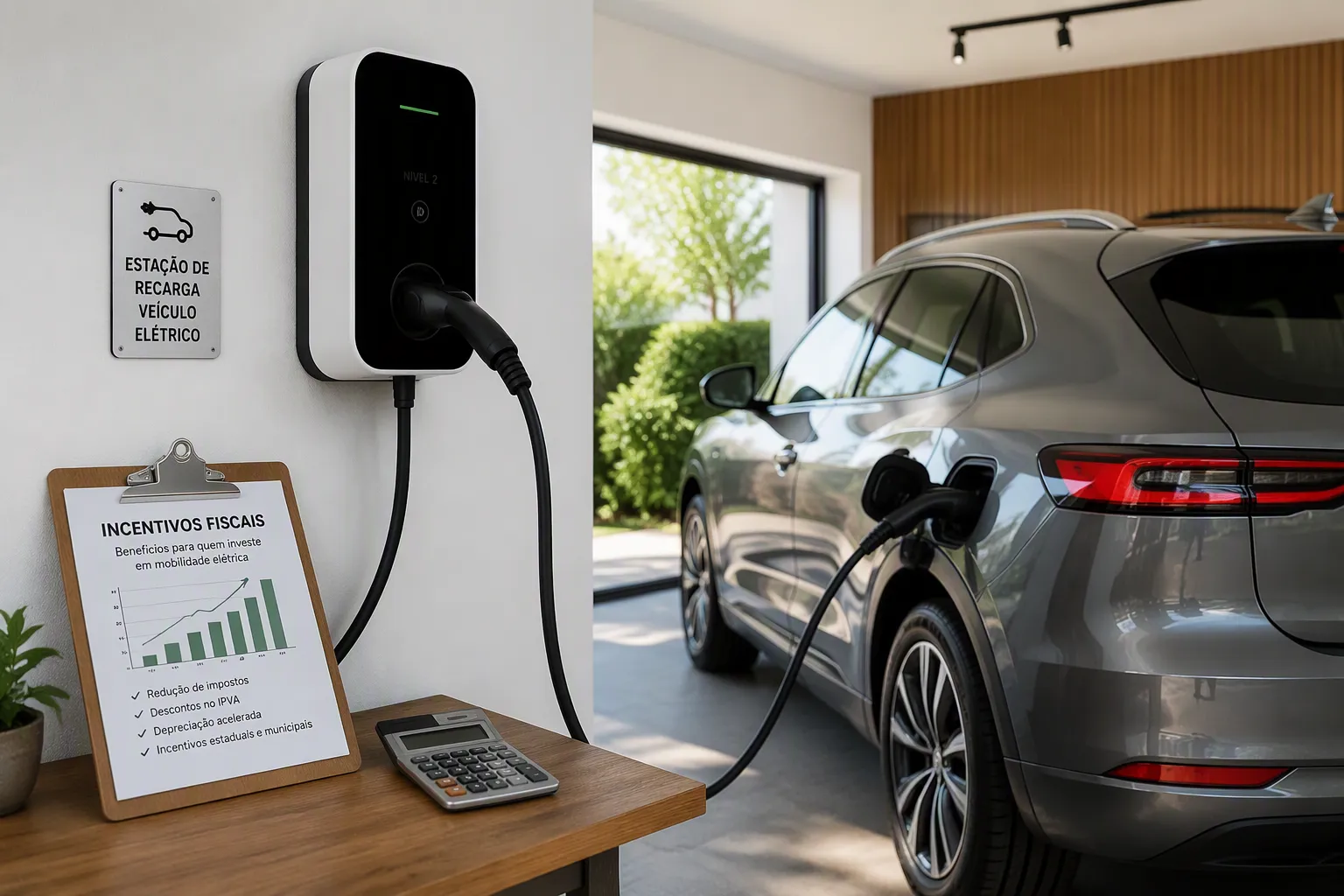
A dedicated wall box, or home charging station, is the most efficient way to handle electric car charging at home. These units provide much faster speeds than a standard socket. A typical 7kW home charger can fully charge most EVs overnight.
The process to install an ev charging station involves a qualified electrician. They will assess the home’s electrical system to ensure it can support the new load. The total cost to install an ev charging station, including the unit and labor, generally ranges from $800 à $1,500. For example, a 7kW charger unit might cost around $600, with installation adding another $400. Technologically advanced providers like TPSON offer a range of these smart EV charging solutions.
Pro Tip: Electrical System Check ⚡ Before installing a home charging station, a professional must verify the electrical system’s capacity. Key considerations include:
- A dedicated circuit, often requiring au moins 40 ampères.
- Notification or approval from the Distribution Network Operator (DNO).
- Potential upgrades to the main fuse or fuse box if capacity is insufficient.
Standard Domestic Sockets (Level 1)
Drivers can also charge an EV using a standard domestic wall socket with a suitable cable. This method, known as Level 1 charging, is significantly slower. It delivers power at a rate of up to 3kW. This can take over 24 hours for a full charge on a typical EV battery.
- Best Use: Overnight top-ups for plug-in hybrids or as an emergency backup for battery-electric vehicles.
- Limitation: The slow speed makes it impractical for daily use for drivers with long commutes.
- Sécurité: Always use a high-quality, manufacturer-approved cable designed for this purpose.
Charging in Public: Power for the Road
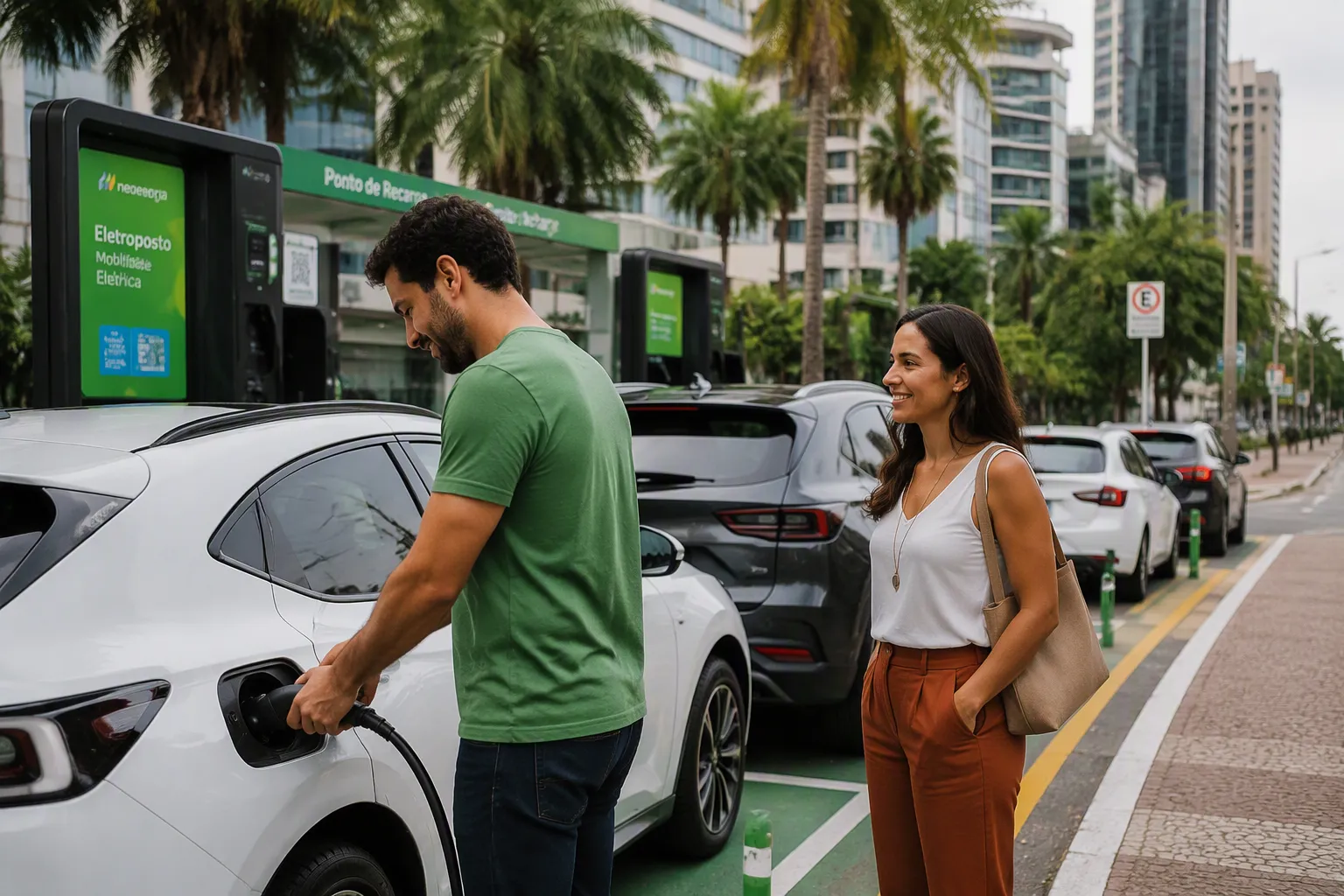
Public EV charging infrastructure is crucial for enabling long-distance travel and serving drivers without home charging access. This network is diverse, with charging points located in various accessible places.
Chargement sur le lieu de travail
Many companies now offer charging facilities for their employees. This is a significant benefit, allowing drivers to charge their vehicles during the workday. It effectively extends their daily range and functions similarly to charging at home.
Destination Charging (Supermarkets, Malls)
Destination chargers are becoming common at retail parks, supermarkets, hotels, and shopping malls. These are typically fast chargers (7-22kW). They allow drivers to add a significant amount of range in the one to two hours they might spend shopping or dining.
Réseaux publics de recharge
For rapid charging on long journeys, drivers rely on dedicated public charging networks. These networks operate the fast and ultra-rapid chargers found at highway service stations and charging hubs. Prominent operators across Europe inclure :
- Allego
- EVBox (Engie)
- Innogy
- Shell Recharge Solutions
- Vattenfall
- Virta
How to Find Public Charging Stations
Locating available and compatible charging points is a simple process thanks to modern technology. Drivers can use smartphone apps or their vehicle’s built-in systems.
Using Smartphone Apps
📱 A wide range of smartphone apps helps drivers find chargers. These applications provide a comprehensive map of charging stations from various networks.
- Un meilleur planificateur d'itinéraires (ABRP) excels at planning long journeys, suggesting optimal charging stops based on the vehicle, weather, and elevation.
- ChargeMap uses a large user community to provide real-time insights on charger reliability, availability, and pricing.
- Apps often show données en temps réel, including whether a charger is currently in use, its power output, and accepted payment methods.
Using Your Car’s Navigation
Most modern electric vehicles integrate charger search functions directly into their navigation systems. The car’s system can automatically plan routes that include necessary charging stops. These integrated systems often provide a seamless experience. They can show if a charger is available in real-time and may even allow drivers to initiate and pay for a session directly from the car’s infotainment screen.
Understanding the Basics of Electric Car Charging
Navigating the world of electric car charging requires a basic understanding of two key elements: charger speeds and connector types. The speed determines how long a driver must wait, while the connector ensures the charger is compatible with the vehicle. Mastering these concepts helps drivers make informed decisions for both daily commutes and long-distance journeys.
Charger Speeds Explained
Charger speed is measured in kilowatts (kW). A higher kW rating means faster energy delivery to the vehicle’s battery. Chargers are broadly categorized into three speeds, which correspond to different use cases and technologies (AC vs. DC).
AC vs. DC Power ⚡
Alternating Current (AC) is the type of electricity supplied to homes. When an EV uses an AC charger, the car’s onboard converter must change it to Direct Current (DC) to store it in the battery. DC chargers perform this conversion outside the car, allowing them to deliver power directly and much more quickly.
Slow Charging (AC, up to 3kW)
Slow charging uses Alternating Current (AC) at a power level of up to 3kW. This is the speed drivers get when plugging into a standard household wall socket. It is the most basic way to charge ev batteries. While convenient as a backup, its slow pace makes it best suited for plug-in hybrids with smaller batteries or for overnight top-ups on a battery-electric vehicle.
Fast Charging (AC, 7-22kW)
Fast chargers also use AC power but operate at a higher output of 7kW to 22kW. These are the most common types of chargers found in home wall boxes and public points de charge at destinations like supermarkets, gyms, and workplaces. A 7kW unit is standard for home installation and can fully replenish most EV batteries overnight, making it a practical solution for daily driving needs.
Rapid & Ultra-Rapid Charging (DC, 50kW+)
Rapid and ultra-rapid chargers deliver Direct Current (DC) power at speeds of 50kW and higher, with some modern units exceeding 350kW. This method bypasses the car’s onboard converter, enabling incredibly fast charging times. These chargers are essential for long-distance travel and are typically located along major highways and at dedicated charging hubs. The primary goal of rapid dc charging is to add significant range in a short amount of time.
The table below outlines the key differences in use cases for each charging type.
| Type de chargement | Cas d'utilisation |
|---|---|
| Slow (AC) | Ideal for overnight, at-home charging; gentler on the battery and uses cheaper electricity tariffs. |
| Rapide (AC) | Suitable for public spaces (e.g., shopping, work) and home wall boxes, offering a full charge in several hours. |
| Rapid (DC) | Perfect for long-distance travel or commercial fleets where speed is critical, adding substantial range quickly. |
| Ultra-Rapid (DC) | Makes long trips highly efficient, enabling a near-full charge in under 30 minutes for compatible vehicles. |
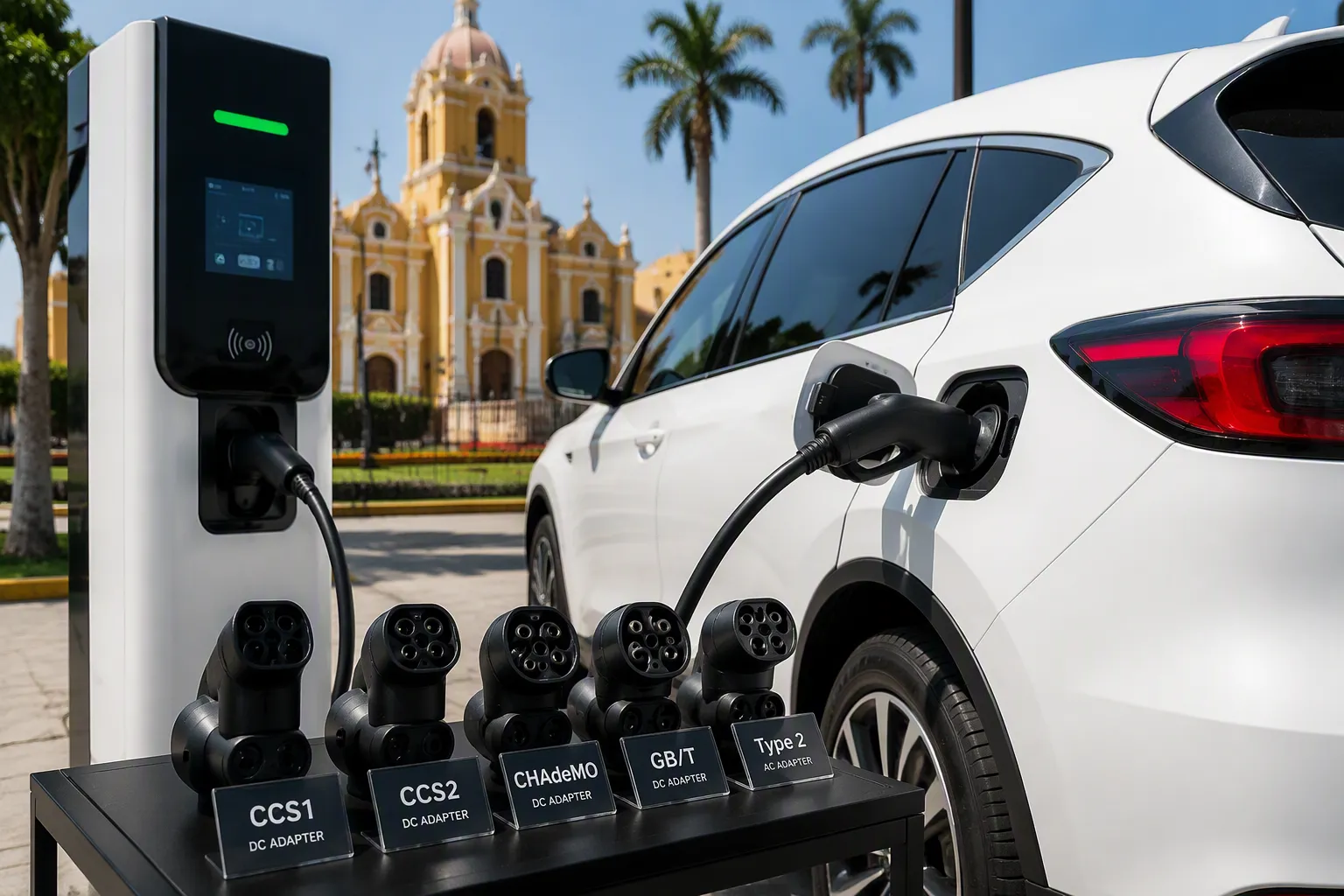
Common EV Connectors You’ll Encounter
Just as smartphones have different charging ports, electric vehicles use various connectors. While the industry is standardizing, drivers will still encounter a few different types. Knowing which plug their car uses is fundamental to successful electric car charging.
Type 2 (AC Charging Standard)
The Type 2 connector is the universal standard for AC charging across Europe. All modern electric vehicles sold in the region, including Tesla models, feature a Type 2 inlet for slow and fast charging. Its versatile design allows for single-phase (up to 7.4kW) and three-phase (up to 22kW) power.
CCS (DC Fast Charging Standard)
The Combined Charging System, or CCS, is the dominant standard for rapid dc charging. It cleverly adds two large DC pins below the standard Type 2 port, creating a single, combined connector. This design allows vehicles to use the same socket for both AC and DC charging. Major manufacturers that have adopted the CCS standard include:
- Audi
- BMW
- Volkswagen
- Volvo
- Tesla (Model 3, Model Y, and newer Model S/X)
CHAdeMO and NACS (Tesla)
Two other important connectors are CHAdeMO and NACS.
- CHAdeMO: This is a DC charging standard developed in Japan. It was an early rival to CCS and is primarily found on older models from Japanese automakers, such as the Nissan Leaf and Mitsubishi Outlander PHEV.
- NACS (North American Charging Standard): Developed by Tesla, NACS was initially proprietary. However, Tesla has opened its design, and it is now being adopted by numerous other automakers in North America. To improve interoperability, adapters are available that allow vehicles with other connectors to use Tesla’s network. For instance, some adapters let a driver with a Type 2 cable plug into a NACS socket for AC charging.
How to Use a Public EV Charger

Utiliser un public charger is a straightforward task once a driver understands the basic steps. While units vary between networks, the core actions remain consistent. Drivers typically initiate a session with an app, a payment card, or an RFID fob before connecting the vehicle.
Starting a Charging Session
Authentication is the first step at most public charging stations. Drivers must identify themselves and authorize payment. There are three common methods to do this.
Using a Smartphone App
Most charging networks require drivers to use a dedicated smartphone app. The driver first downloads the app and creates an account with payment details. At the station, they open the app, select the specific charger (often by scanning a QR code), and follow the prompts to begin charging.
Paying with a Contactless Card
Many newer charging stations offer a simpler payment method. Networks like Evolt are equipping their chargers with contactless payment terminals. Drivers can simply tap their bank card, Apple Pay, or Google Wallet on the reader to start and stop a session. This method eliminates the need for an app or a network account, though a small pre-authorization fee may apply.
Using an RFID Card or Fob
Some drivers prefer using a Radio-Frequency Identification (RFID) card. These cards are linked to a driver’s account with a specific charging network. Holding the card against the designated reader on the charger authenticates the user and starts the session. Many networks provide an RFID card upon registration.
Le processus de chargement étape par étape
The physical charging process involves a few simple actions. Following these steps ensures a safe and successful connection every time.
Connecting the Cable to Your Car
First, drivers must park in the designated bay. If the charger has a tethered cable, they simply plug it into their vehicle’s charging port. If the charger is untethered, drivers must use the car charger cable that came with their vehicle, connecting one end to the charger and the other to the car.
Authenticating and Starting the Charge
After connecting the cable, the driver authenticates using one of the methods described above (app, contactless, or RFID). The charger will communicate with the vehicle to confirm a secure connection. The charging process begins once authentication is successful, often indicated by a solid blue or green light on the unit.
Troubleshooting Tips: If a Charge Fails to Start 💡 Sometimes a session does not begin after authentication. Here are a few common checks:
- Check the Charger: A solid blue light usually means it is ready. Other colors or flashing lights indicate an issue.
- Inspect the Cable: Ensure the cable is securely plugged into both the charger and the vehicle.
- Verify Authentication: Make sure the correct charger is selected in the app or that the RFID card was held over the reader until it beeped.
- Vérifier les paramètres du véhicule : Confirmer qu'un minuteur de charge programmé à bord du véhicule n'empêche pas le démarrage de la session.
Mettre fin à la session et débrancher
Pour arrêter la charge, les conducteurs utilisent la même méthode que pour démarrer. Ils peuvent terminer la session via l'application, en retapant leur carte sans contact ou en présentant à nouveau leur carte RFID. Une fois que le chargeur libère le verrou, ils peuvent débrancher le câble de leur véhicule et le ranger dans son support. Ceci achève le processus de charge.
Combien de temps faut-il pour charger une batterie de véhicule électrique ?
Le temps nécessaire pour charger une batterie de véhicule électrique dépend de plusieurs variables interconnectées. Aucune réponse unique ne convient à toutes les situations. Comprendre ces éléments clés aide les conducteurs à prévoir les temps de charge et à planifier efficacement leurs trajets. Les principaux facteurs incluent la taille de la batterie, la puissance du chargeur, les limites propres au véhicule et les conditions environnementales.
Facteurs clés influençant le temps de charge
Quatre facteurs principaux agissent conjointement pour déterminer la vitesse de toute session de charge d'un véhicule électrique.
Taille de la batterie (kWh)
La capacité de la batterie d'un véhicule, mesurée en kilowattheures (kWh), est le facteur le plus fondamental. Une batterie plus grande stocke plus d'énergie et prendra naturellement plus de temps à se remplir qu'une plus petite, à puissance de charge constante.
Puissance de sortie du chargeur (kW)
La puissance de sortie du chargeur, mesurée en kilowatts (kW), détermine la rapidité avec laquelle il peut fournir de l'énergie. Un chargeur rapide de 50 kW rechargera une batterie bien plus vite qu'un chargeur domestique de 7 kW.
Le taux de charge maximal de votre véhicule
Un véhicule ne peut accepter de l'énergie qu'à la vitesse autorisée par ses systèmes embarqués. Pour la charge en courant alternatif (AC), le chargeur embarqué du véhicule convertit le courant alternatif en courant continu pour la batterie. Ce composant a une puissance maximale nominale.
- Si le chargeur embarqué d'une voiture est conçu pour 7,4 kW, il ne tirera que 7,4 kW de puissance, même lorsqu'il est connecté à une borne de 22 kW.
- Le véhicule communique avec le point de charge pour s'assurer qu'il ne tire jamais plus de puissance qu'il ne peut en gérer en toute sécurité.
Niveau de charge actuel et température
La vitesse de charge n'est pas linéaire. Elle suit une “courbe de charge”, ralentissant considérablement lorsque la batterie approche les 80 % de sa capacité pour préserver sa santé. La température joue également un rôle critique.
Impact de la température sur la charge 🌡️
Les températures extrêmes obligent le système de gestion de batterie du véhicule à travailler davantage. Par temps froid, le système doit chauffer la batterie à une température optimale, ce qui ralentit la vitesse de charge initiale. Par temps très chaud, il doit refroidir la batterie, ce qui peut également limiter la puissance pour éviter tout dommage.
Temps de charge estimés par type de chargeur
Pour illustrer ces différences, voici les temps estimés pour charger une batterie de VE typique de 60 kWh de 20 % à 80 %. Cette plage est souvent utilisée car les derniers 20 % de charge sont beaucoup plus lents.
| Type de chargeur | Puissance de sortie | Temps estimé (20–80 %) |
|---|---|---|
| Niveau 1 | ~2,3 kW | 12 – 15 heures |
| Niveau 2 | 7kW | 8 – 12 heures |
| Chargeur rapide DC | 150 kW et plus | ~40 minutes |
Niveau 1 (sortie standard)
Utiliser une prise murale standard est la méthode la plus lente pour charger les batteries de VE. Elle convient le mieux pour des recharges nocturnes de véhicules hybrides rechargeables ou comme option d'urgence.
Niveau 2 (Wall Box)
A Une wall box de niveau 2 ou un chargeur domestique offre une solution pratique pour les besoins quotidiens. Il peut recharger de manière fiable la plupart des VE pendant la nuit.
Chargeur rapide DC
La charge rapide en courant continu (DC) est conçue pour les longs trajets. Ces bornes puissantes peuvent ajouter une autonomie significative en moins d'une heure, rendant les voyages sur route bien plus pratiques. La vitesse de la charge rapide DC change la donne pour les conducteurs en déplacement.
Les coûts de charge des véhicules électriques
Comprendre l'aspect financier de la possession d'un VE est crucial. Le coût pour charger un VE varie considérablement entre la charge à domicile et l'utilisation de l'infrastructure publique. La charge à domicile est presque toujours l'option la plus économique, tandis que les coûts de la charge publique dépendent de la vitesse et de l'emplacement.
Calculer les coûts de charge à domicile
Calculer la dépense liée à la charge à domicile est simple. Cela dépend principalement du prix de l'électricité du fournisseur d'énergie résidentiel.
Comprendre votre facture d'électricité
Le coût de l'électricité est mesuré en centimes par kilowattheure (kWh). Début 2023, la moyenne nationale américaine était d'environ 15–17 cents par kWh. Pour trouver le coût d'une charge complète, un conducteur multiplie la taille de sa batterie (en kWh) par son tarif électrique. Par exemple, remplir une batterie de 60 kWh à0,17 $ par kWh coûterait environ 10,20 $. Cependant, les tarifs varient selon la région.
| Région | Tarif résidentiel moyen (par kWh) |
|---|---|
| National | 15–17 cents |
| Arkansas | ~$0.12 |
| Californie | >0,30 $ (dans certaines régions) |
Tirer parti des tarifs heures creuses et des tarifs à l'heure d'utilisation
De nombreuses compagnies d'électricité proposent des forfaits tarifaires spéciaux pour réduire le coût pour charger un VE. Les tarifs à l'heure d'utilisation (ToU) offrent une électricité moins chère pendant les heures creuses, généralement la nuit. Les propriétaires de VE peuvent réduire considérablement leurs dépenses en programmant leur borne de charge domestique pour qu'elle fonctionne pendant ces périodes. S'inscrire à ces forfaits implique généralement quelques étapes:
- Demande en ligne: Les clients peuvent souvent passer à un tarif VE ou ToU via le site web de leur fournisseur d'énergie.
- Remplir les conditions requises: This typically requires having an EV, a smart meter, and an online account.
- Confirmation: The utility handles the switch and confirms the start date.
- Switch Complete: The new, lower rates apply during the designated off-peak hours.
Public Charging Costs Explained
Public electric car charging costs are more varied. Prices are influenced by the charging network, the charger’s speed, and the pricing model used.
Tarification au kilowattheure (kWh)
Most public stations bill per kWh, similar to a gas station billing per gallon. DC fast chargers deliver power more quickly and are therefore more expensive than slower Level 2 chargers. A driver can expect to pay a premium for the convenience of speed. The price to charge ev at a public station reflects this difference.
| Type de chargement | Price Range per kWh |
|---|---|
| Public Niveau 2 | $0.30 – $0.40 |
| Chargement rapide DC | $0.45 – $0.85 |
| Charge rapide (7-22 kW) | $0.30 – $0.45 |
| Charge ultrarapide (50-150 kW) | $0.50 – $0.79 |
Session Fees and Per-Minute Billing
Some networks add a flat fee to start a session or bill by the minute instead of by energy delivered. Per-minute billing can become expensive if a vehicle has a slow charging rate, as the car will occupy the bay for a longer time.
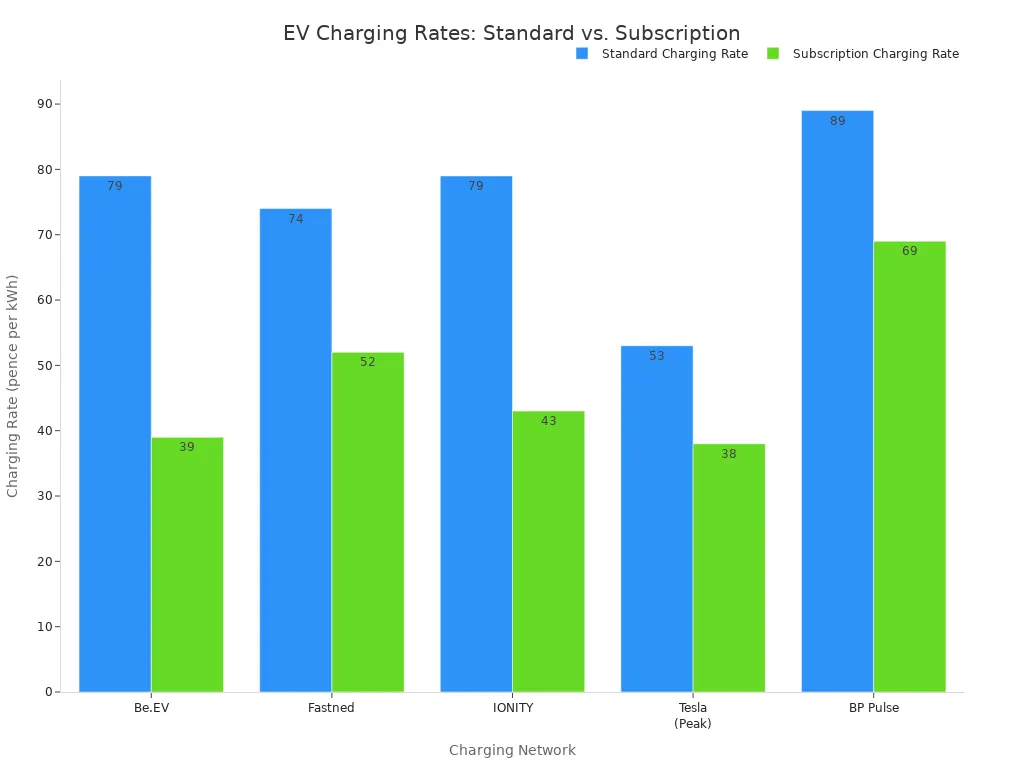
Network Subscriptions and Memberships
For drivers who frequently use public stations, many networks offer monthly or annual subscriptions. These memberships provide access to lower per-kWh rates in exchange for a recurring fee. Networks like BP Pulse and IONITY use this model for charging electric vehicles, offering significant savings for high-mileage drivers. A subscription can dramatically reduce the overall cost to charge an ev on the road.
Best Practices for Efficient Charging
Adopting smart charging habits helps drivers preserve their vehicle’s battery and extend its driving range. Proper battery care and efficient driving techniques are simple yet powerful ways to get the most out of an electric vehicle.
Tips for Maintaining Battery Health
A vehicle’s battery is its most vital component. Following a few key principles ensures its longevity and performance over many years.
The 80% Rule for Daily Charging
For most daily driving, it is best to limit the battery’s charge to 80%. Recharge à 100 % places significant stress on lithium-ion battery components. The final 20% of charging requires higher voltage, which generates heat and accelerates chemical aging. The optimal operating range for these batteries is between 20% and 80%. Keeping the charge within this “sweet spot” minimizes degradation and extends the battery’s lifespan.
A Note on Battery Chemistry 🧪
This 80% rule is less critical for vehicles with Lithium Iron Phosphate (LiFePO4) batteries. These batteries have a flatter charge curve, making it difficult to target a specific percentage. For LiFePO4 batteries, it is more important to avoid extreme high or low voltages than to stick to a strict 80% limit.
Avoiding Very Low Battery Levels
Just as a full charge can be stressful, consistently letting the battery drop to very low levels (below 20%) can also harm its long-term health. Drivers should aim to plug in before the battery level becomes critically low. This simple habit helps maintain the battery’s capacity over time.
Managing Charging in Extreme Weather
Temperature significantly affects battery performance and the electric car charging process.
- Freezing Winter Conditions: Cold weather reduces charging efficiency. Drivers should account for longer charging periods. It is wise to start commutes with a full battery to counteract the cold’s impact on range.
- Extreme Summer Heat: EV battery management systems are designed to protect the battery. In intense heat, the system may automatically stop a charging session if temperatures become too high. This is a safety feature to prevent overheating and preserve battery health.
How to Maximize Your Driving Range
Efficient driving habits can dramatically increase how far a vehicle travels on a single charge.
Drive Smoothly and Avoid Hard Acceleration
Aggressive driving consumes energy rapidly. Smooth acceleration and gentle braking are far more efficient. Maintaining a steady speed, especially on highways, helps conserve battery power and maximize the vehicle’s range.
Utilize Regenerative Braking
Regenerative braking is a key feature of electric vehicles. When a driver lifts their foot off the accelerator or applies the brakes, the electric motor reverses its function. It captures the car’s kinetic energy, which would be lost as heat in a traditional car. This system can recover and reuse up to 70% of the energy from braking, sending it back to the battery and extending the driving range.
Precondition Your Cabin While Plugged In
Heating or cooling the cabin uses a significant amount of energy. Drivers can use their vehicle’s app to “precondition” the cabin to a comfortable temperature while the car is still plugged into the charger. This action draws power from the grid instead of the battery, preserving precious range for the drive ahead.
Getting Started with Your First Charge
A new EV driver’s first charging experiences at home and in public are simple milestones. Understanding what to expect in each environment ensures a smooth transition into electric vehicle ownership. Home charging focuses on convenience and routine, while public charging requires a bit of planning and courtesy.
What to Expect at Home
Charging at home is the cornerstone of EV ownership. It provides a reliable and cost-effective way to start each day with sufficient range.
Using the Cable Provided with Your Car
Most new electric vehicles come with a standard Level 1 charging cable. This cable allows the car to plug directly into a typical household wall socket. It provides power at a rate of approximately 2.3-3 kW. This slow speed adds only about 8-10 miles of range for every hour of charging. A full charge could take over 20 hours, making this method best for occasional top-ups or emergencies rather than daily use.
Setting a Charging Schedule
Les conducteurs peuvent gérer les coûts et la commodité de la recharge en programmant une plage horaire. Cela se fait généralement via le système d'infodivertissement du véhicule ou une application smartphone. La programmation permet à la voiture de se recharger pendant les heures creuses, lorsque les tarifs d'électricité sont les plus bas. Bien que possible avec toute méthode de recharge, cette fonctionnalité fonctionne mieux avec un chargeur dédié. Les conducteurs qui installent une borne de recharge pour véhicule électrique bénéficient d'une recharge plus rapide et plus intelligente. Une borne intelligente station de recharge à domicile peut automatiquement démarrer et arrêter les sessions en fonction des tarifs du réseau. Pour cette raison, de nombreux propriétaires choisissent d' installent une borne de recharge pour véhicule électrique en installer une pour une expérience plus intégrée et efficace. Une borne chargeur domestique et un station de recharge à domicile dédiée constitue la solution la plus efficace à long terme.
À quoi s'attendre sur une borne publique
Utiliser une borne publique pour la première fois est un processus simple. Quelques considérations clés permettent de rendre l'expérience fluide.
Vérification de la compatibilité des connecteurs
Avant d'arriver à une station, un conducteur doit confirmer que le chargeur possède le connecteur adapté à son véhicule. La plupart des véhicules électriques modernes aux États-Unis utilisent une prise CCS ou NACS (Tesla) pour la recharge rapide en courant continu. Les applications de recharge et le système de navigation de la voiture permettent aux conducteurs de filtrer les stations avec des prises compatibles, évitant ainsi des déplacements inutiles.
Comprendre l'étiquette de recharge
La recharge publique est une ressource partagée. Suivre quelques règles simples garantit que le réseau reste accessible à tous.
Les règles non écrites de la recharge publique L'étiquette est cruciale pour une expérience communautaire positive.
- Rechargez et libérez la place: N'occupez une baie de recharge que pendant que le véhicule recharge activement. Déplacez la voiture une fois qu'elle a suffisamment d'autonomie pour votre trajet.
- Ne stationnez pas sans recharger: Les places de recharge sont pour recharger, pas pour stationner. Ne bloquez jamais une baie si vous n'avez pas l'intention de brancher votre véhicule.
- Évitez de charger à 100% sur les chargeurs rapides: La vitesse de recharge ralentit considérablement après 80%. À moins d'une absolue nécessité, débrancher à 80% libère le chargeur rapide beaucoup plus tôt pour le conducteur suivant.
Recharger un véhicule électrique est un processus simple. La recharge à domicile est la méthode la plus économique, permettant aux conducteurs d'économiser en moyenne 622,60 € par an par rapport aux propriétaires de voitures à essence. Le réseau en expansion des points de recharge publics, incluant l'accès à la recharge rapide en courant continu, rend les voyages longue distance de plus en plus pratiques. En comprenant les types de chargeurs et en adoptant des habitudes intelligentes, les conducteurs peuvent économiser de l'argent optimiser la recharge et protéger leur batterie. Avec un minimum de planification, l'utilisation de ces points de recharge devient une partie simple du quotidien.
FAQ
Les conducteurs peuvent-ils recharger un VE sous la pluie ?
Oui. Les systèmes de recharge des VE sont conçus pour toutes les conditions météorologiques. Les connecteurs et les ports sont étanches. Une connexion sécurisée empêche l'électricité de circuler tant que le système n'a pas confirmé que c'est sûr, rendant le processus totalement sécurisé.
Est-il mauvais de n'utiliser que des chargeurs rapides en courant continu ?
L'utilisation fréquente de la recharge rapide en courant continu peut dégrader la batterie plus rapidement à long terme en raison de l'augmentation de la chaleur. Pour les besoins quotidiens, la recharge alternative plus lente est plus douce et meilleure pour la santé à long terme de la batterie. Les conducteurs devraient réserver la recharge rapide pour les longs trajets.
Ai-je besoin d'une prise spéciale pour recharger à domicile ?
Non. Les conducteurs peuvent utiliser une prise domestique standard avec le câble de niveau 1. fourni avec la voiture. Cependant, l'installation d'un chargeur dédié de niveau 2 (borne de recharge domestique) offre une recharge quotidienne beaucoup plus rapide et plus efficace.
Que se passe-t-il si un VE est à court de batterie ?
La voiture émet plusieurs avertissements lorsque la batterie est faible. Si elle s'épuise complètement, le véhicule s'arrêtera. Le conducteur devra appeler une assistance routière pour un remorquage vers la station de recharge la plus proche.
Conseil de pro 💡
La plupart des polices d'assurance et des programmes d'assistance des constructeurs automobiles incluent des services de remorquage pour cette situation précise.
Pourquoi la charge ralentit-elle après 80% ?
Le système de gestion de la batterie du véhicule ralentit la vitesse de recharge pour protéger la batterie. Ce processus réduit la chaleur et le stress sur les cellules. Cette action contribue à préserver sa santé à long terme et sa capacité globale.
Tout véhicule électrique peut-il utiliser n'importe quel chargeur public ?
Non. Les conducteurs doivent vérifier la compatibilité des connecteurs. Aux États-Unis, la plupart des nouveaux VE utilisent des prises CCS ou NACS (Tesla). Les applications de recharge et les systèmes de navigation embarqués aident les conducteurs à trouver des stations avec la prise adaptée à leur véhicule.