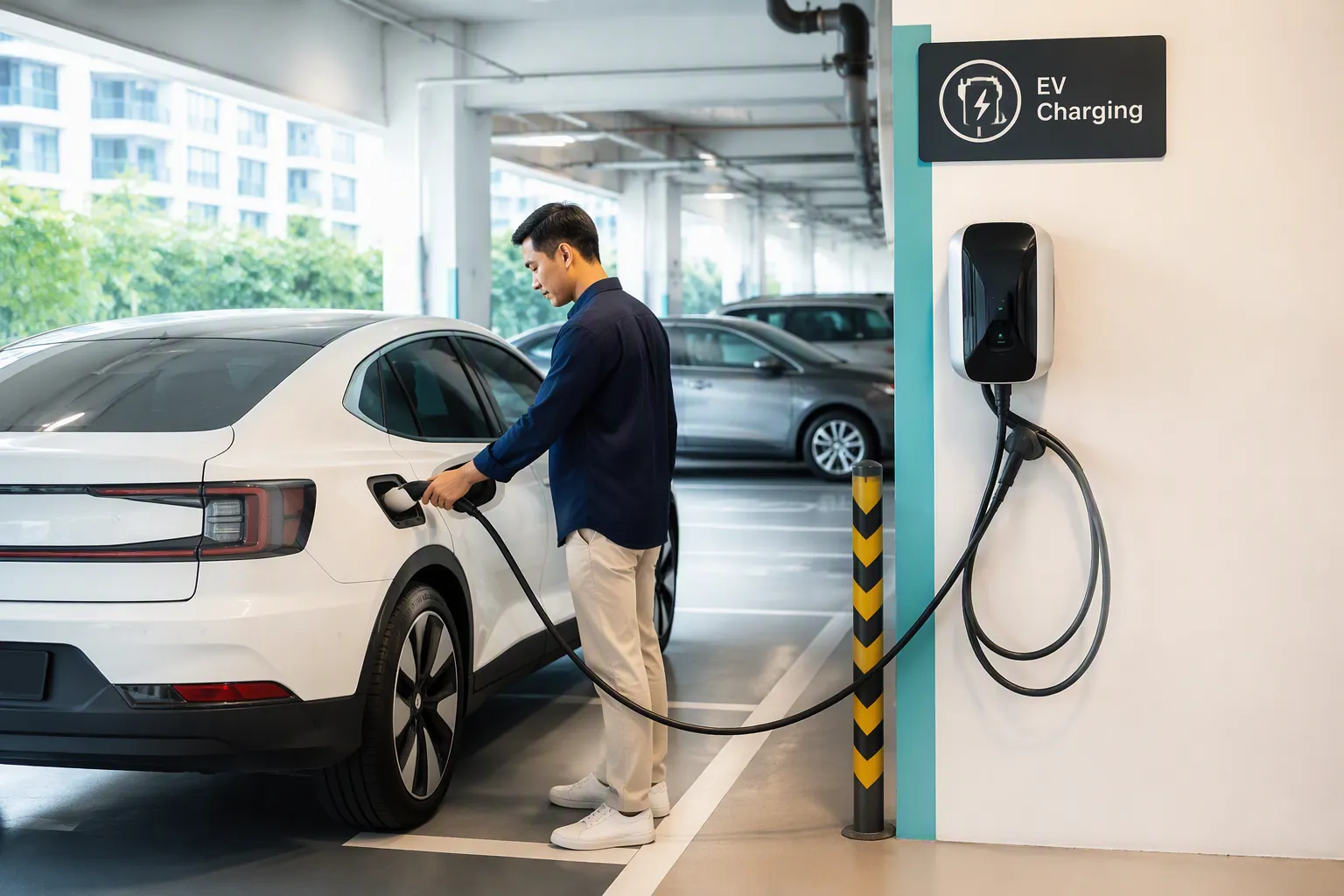
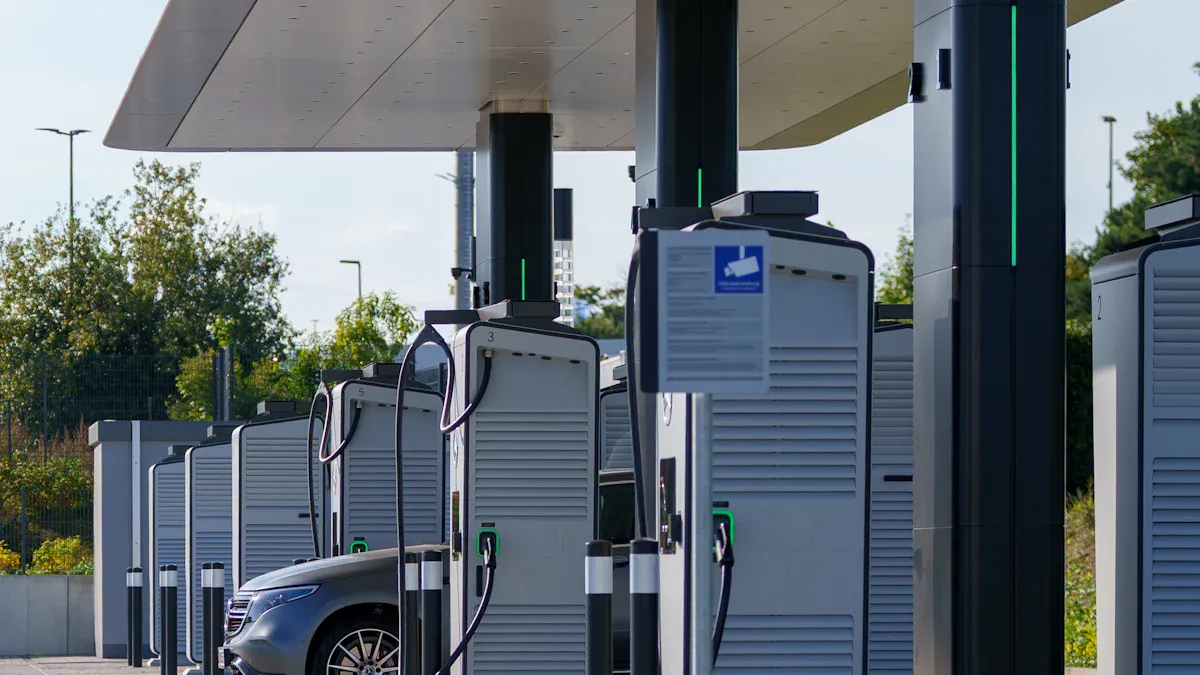
The true cost for a Chilean apartment dweller without a home Cargador EV ranges from Chilean Peso $50,000 to over $150,000 monthly. This figure includes more than just electricity payments. It combines direct public charging fees with indirect expenses. These expenses cover time, travel, and general inconvenience. While some Fabricantes de cargadores para VE como TPSON ofrecen Soluciones de recarga de vehículos eléctricos, incluyendo cargadores portátiles ev, the reliance on public networks creates a financial burden. This true cost calculation reveals the complete financial impact.
Unpacking the ‘True Cost’ Components
The total expense of public charging extends beyond the price per kilowatt-hour. A comprehensive analysis reveals three core elements that constitute the complete financial picture for an apartment dweller. These elements are direct costs, time value, and hidden expenses. Understanding each one is essential to calculating the full impact.
Component 1: Direct Financial Costs
Direct costs are the most straightforward part of the equation. They represent the money an EV owner pays directly to charging network operators.
Public Charging Rates in Chile
Public charging stations in Chile have electricity rates that are often two to four times higher than residential electricity tariffs. This premium covers the operator’s infrastructure, maintenance, and profit margins.
Suscripción frente a modelos de pago por uso
Drivers typically encounter two payment structures. Pay-as-you-go models allow anyone to charge for a standard per-kilowatt-hour fee. Subscription models may offer slightly lower rates in exchange for a monthly fee, benefiting high-mileage drivers.
The Home Charging Cost Benchmark
The ideal cost benchmark is home charging. Advanced solutions from tecnológicamente avanzados como TPSON allow for overnight charging using low residential electricity rates. This benchmark highlights the significant premium paid for relying exclusively on public networks.
Component 2: The Value of Your Time
Time is a finite resource with a quantifiable value. The hours spent managing an EV’s battery without home access represent a significant, non-monetary cost.
Calculating Your Personal “Time Tax”
Every trip to a public charger imposes a “time tax.” This includes travel to the station, the charging session itself, and the return trip. Summing these hours reveals a substantial time commitment each month.
The Opportunity Cost of Waiting
Waiting for a car to charge is time that could be spent on other activities. This opportunity cost includes lost work hours, missed family time, or forfeited leisure. Each hour at a charger has an associated value.
Component 3: Ancillary and Hidden Expenses
Several other expenses contribute to the total True Cost. These factors are often overlooked but have real financial consequences.
Transportation to and from Chargers
An EV owner must drive to a charging station. This “charging commute” consumes battery power and adds wear and tear to the vehicle, creating a small but recurring expense.
The Cost of “Charge Anxiety”
“Charge anxiety” is the mental stress associated with finding an available and functional charger. This constant planning and worry carry a psychological cost that detracts from the EV ownership experience.
Long-Term Battery Health Impact
Exclusive reliance on public DC fast chargers can negatively affect a battery’s lifespan. DC charging generates more heat than slower AC charging. This excess heat can accelerate battery degradation over time. Research from institutions like the Idaho National Laboratory confirms that frequent DC fast charging leads to faster capacity loss. To mitigate this, manufacturers like Audi suggest charging only to 80% on DC units. This practice, while protective, reduces the usable range per session and may necessitate more frequent charging stops, further increasing costs and time spent.
Step-by-Step: Calculating Your Monthly Public Charging Bill

Calculating the direct monthly cost of public charging requires a methodical approach. An EV owner must first understand the pricing structures of major Chilean networks. Then, they can apply a simple formula to their driving habits to project a realistic monthly expense. This process transforms abstract costs into a concrete budget item.
Understanding Public Charger Pricing
Chile’s public charging landscape is dominated by a few key players, each with its own pricing model. Drivers must know these rates to accurately estimate their expenses.
Copec Voltex Rate Structure
Copec Voltex is one of the most extensive networks in Chile. It primarily uses a pay-as-you-go model. The price is set per kilowatt-hour (kilowatt-hour) and varies depending on the charger’s speed (AC vs. DC). DC fast chargers, which deliver power more quickly, command a higher price per kilowatt-hour than slower AC units.
Enel X Way Rate Structure
Enel X Way offers both pay-as-you-go and subscription-based plans. The standard rate is a straightforward per-kilowatt-hour charge. However, subscribers pay a monthly fee to access lower per-kilowatt-hour rates, a model that benefits drivers who cover long distances and charge frequently.
Other Network Rates (AC vs. DC)
Beyond the major players, other networks and independent stations exist. A universal rule applies: DC fast charging is always more expensive than AC charging. Technologically advanced providers like TPSON offer portable chargers that can utilize AC power, but public AC stations provide a slower, more affordable alternative to DC for drivers who can wait longer.
The Core Calculation Formula
A simple formula provides the foundation for estimating monthly charging costs. It connects driving distance, vehicle efficiency, and electricity price.
Formula: (miles/month ÷ miles per kilowatt-hour) * Chilean Peso/kilowatt-hour
This formula is the key to an accurate cost projection.
(Total Kilometers Driven per Month ÷ Vehicle Efficiency in miles per kilowatt-hour) * Cost per kilowatt-hour in Chilean Peso
- Total Kilometers Driven per Month: The total distance the vehicle travels.
- Eficiencia del Vehículo: How many kilometers the EV can travel on one kilowatt-hour of energy.
- Cost per kilowatt-hour: The rate charged by the public charging station.
Example: Charging a 50 kilowatt-hour Battery
Consider an EV with a 50 kilowatt-hour battery and an efficiency of 6 miles per kilowatt-hour. A full charge provides approximately 300 miles of range. If the public DC fast charger costs Chilean Peso $300 per kilowatt-hour, the cost for a full charge is:
50 kilovatios-hora * $300 chilenos/kilovatio-hora = $15,000 chilenos
Proyección de su total mensual
Aplicar la fórmula a diferentes patrones de conducción revela un rango de costos mensuales potenciales.
Escenario de bajo uso (Trayectos urbanos)
Una persona que se desplaza por la ciudad recorre aproximadamente 800 millas al mes. Utilizando un vehículo con una eficiencia de 6 millas por kilovatio-hora, necesita alrededor de 133 kilovatios-hora de energía.
- Cálculo: (800 millas ÷ 6 millas/kilovatio-hora) * $300 chilenos/kilovatio-hora = $39,900 chilenos al mes
Escenario de alto uso (Viajero frecuente)
Un viajero frecuente podría cubrir 2,000 millas al mes. Este conductor requiere alrededor de 333 kilovatios-hora de energía.
- Cálculo: (2,000 millas ÷ 6 millas/kilovatio-hora) * $300 chilenos/kilovatio-hora = $99,900 chilenos al mes
Estos escenarios demuestran cómo los hábitos de conducción influyen directamente en la factura mensual de carga, estableciendo una línea base financiera clara.
Monetizando su tiempo: El cálculo del “Impuesto de Tiempo”
El impacto financiero de la carga pública incluye más que solo las tarifas de electricidad. Un componente significativo y a menudo ignorado es el “impuesto de tiempo”: el valor de las horas que un propietario de un VE dedica a gestionar las necesidades energéticas de su vehículo. Calcular este costo transforma una inconveniencia abstracta en un número concreto, revelando una parte importante del Costo Real.
Cómo asignar un valor a su hora
Un propietario de un VE primero debe asignar un valor monetario a su tiempo. Esta tasa personal ayuda a cuantificar el costo de oportunidad de esperar en un cargador en lugar de hacer otra cosa.
Usando su salario por hora
Para profesionales, trabajadores independientes o de la economía colaborativa, el método más directo es usar su salario por hora. Cada hora pasada en una estación de carga es una hora que podrían haber estado generando ingresos. Una persona puede calcular esto dividiendo su salario mensual por la cantidad de horas que trabaja.
Asignando un valor personal
El tiempo fuera del trabajo también tiene valor. Un propietario podría valorar una hora de tiempo familiar, desarrollo personal u ocio en una cantidad específica, como $10,000 chilenos o más. Esta cifra personal representa lo que estaría dispuesto a pagar por una hora extra de tiempo libre.
Mapeando su rutina semanal de carga
A continuación, un propietario necesita registrar el tiempo total dedicado a cargar cada semana. Esta rutina implica más que solo el tiempo que el automóvil está enchufado.
Tiempo de viaje al cargador
Esto incluye el trayecto de ida y vuelta desde el hogar o el trabajo al cargador público confiable más cercano. Un viaje de 15 minutos en cada sentido añade 30 minutos a cada sesión de carga.
Tiempo de espera de carga activa
Este es el período dedicado a esperar que el vehículo alcance un estado de carga suficiente, típicamente el 80%. Una sesión de carga rápida en CC puede tomar entre 30 y 60 minutos.
Compromiso de tiempo semanal total
Un propietario puede sumar estos componentes para encontrar su total semanal.
- Viaje: 30 minutos
- Espera: 45 minutos
- Total por sesión: 75 minutos.
Calculando el costo final del tiempo
Con un valor asignado a su hora y el compromiso de tiempo total calculado, un propietario puede determinar el costo mensual final del tiempo.
Fórmula: Total de horas/mes * Valor de su hora
El cálculo proporciona un valor monetario claro para el impuesto de tiempo.
(Total de horas semanales dedicadas a cargar * 4.33) * Valor personal por hora = Costo mensual del tiempo
Estudio de caso: El impuesto de tiempo de una profesional de Santiago
Una consultora con sede en Santiago valora su tiempo en $15,000 chilenos por hora. Su rutina semanal de carga consume 2.5 horas.
| Métrica | Valor |
|---|---|
| Compromiso de tiempo semanal | 2.5 horas |
| Compromiso de tiempo mensual | 10.8 horas (2.5 * 4.33) |
| Valor personal por hora | $15,000 chilenos |
| Impuesto de tiempo mensual | $162,000 chilenos |
Este estudio de caso muestra cómo el impuesto de tiempo puede superar fácilmente el costo directo de la electricidad, convirtiéndose en el mayor gasto oculto de depender de la carga pública.
Considerando costos ocultos e inconvenientes

Más allá de los pagos directos y el tiempo, una serie de gastos auxiliares y cargas no financieras se suman al costo real de la carga pública. Estos factores ocultos incluyen el costo del viaje a los cargadores, el desgaste a largo plazo del vehículo y el esfuerzo mental significativo requerido para gestionar un VE sin carga domiciliaria. Reconocer estos elementos proporciona una visión completa de la experiencia de propiedad.
El gasto del “Trayecto de Carga”
Cada viaje a un cargador público es un pequeño viaje en sí mismo, y este “trayecto de carga” tiene un costo financiero directo. Un propietario debe contabilizar la energía y las posibles tarifas de transporte asociadas con cada sesión de carga.
Costo de los kilómetros conducidos para cargar
Un propietario de un VE usa la energía del propio automóvil para viajar a una estación de carga. Este consumo se suma directamente a la cantidad de energía que necesita comprar. Por ejemplo, un viaje de ida y vuelta de 10 millas a un cargador en un vehículo con una eficiencia de 6 millas por kilovatio-hora consume aproximadamente 1.67 kilovatios-hora. A una tarifa de $300 chilenos/kilovatio-hora, esto añade casi $500 chilenos al costo de cada carga.
Usando transporte alternativo
En algunas situaciones, un propietario podría dejar el vehículo cargando y regresar más tarde. Este escenario introduce nuevos costos.
| Método de transporte | Costo estimado de ida y vuelta |
|---|---|
| Transporte público (Metro/Bus) | $1,500 – $2,000 chilenos |
| Servicio de transporte compartido | Chilean Peso $5,000 – $10,000+ |
These small but frequent expenses accumulate over a month, adding another layer to the total cost.
The Financial Impact of Battery Degradation
The type of charging used has a direct impact on the battery’s long-term health and, consequently, the vehicle’s value. A reliance on public fast chargers can accelerate battery degradation.
Why Relying on DC Fast Charging Matters
DC fast chargers deliver high power, which generates significant heat. Over time, this heat can cause the battery’s internal components to degrade, reducing its ability to hold a charge. Technologically advanced providers like TPSON offer solutions that utilize slower, gentler Carga de CA, which is widely recognized as better for daily battery health.
Estimating Potential Long-Term Costs
While not a monthly bill, accelerated degradation represents a future financial loss.
A battery that degrades faster may lead to a lower resale value when the owner decides to sell the vehicle. In a worst-case scenario, it could necessitate a premature and expensive battery replacement years down the line, a cost that can run into millions of pesos.
The Mental Load Premium
The constant need to plan and manage charging creates a significant psychological burden, or “mental load.” This stress is a real, albeit non-monetary, cost of not having a charger at home.
The Stress of Finding Available Chargers
An apartment dweller constantly faces uncertainty when seeking a charge. Common stressors include:
- Arriving to find all chargers occupied.
- Discovering a charger is out of service or broken.
- Dealing with payment apps that fail to connect.
- Worrying about finding another available station before the battery runs too low.
Planning Life Around Charging Sessions
🗓️ EV ownership without home charging requires meticulous planning. An owner must build their weekly schedule around charging stops. A simple trip to the grocery store can become a complex logistical task, involving a detour and a 45-minute wait. This lack of spontaneity detracts from the convenience that EV ownership is meant to offer.
Building Your Personal Cost Analysis
An EV owner can move from general estimates to a precise financial figure by creating a personal cost analysis. This structured approach requires gathering individual driving data, organizing it logically, and calculating a final monthly total. This process reveals the complete financial picture for an apartment dweller who depends on public charging.
Step 1: Gather Your Personal Data
Accurate calculation begins with accurate data. An owner must collect three key pieces of information specific to their vehicle and lifestyle.
Determine Your Monthly Driving Distance
An owner should track their total kilometers driven over a typical month. This can be done by checking the vehicle’s trip meter at the beginning and end of the month. Alternatively, they can estimate the distance by adding up daily commutes, weekly errands, and any regular weekend trips. This number is the foundation of the entire cost analysis.
Find Your EV’s Real-World Efficiency
The manufacturer’s stated efficiency (miles per kilowatt-hour) is often optimistic. An owner needs to find their car’s real-world efficiency, which is influenced by driving style, terrain, and climate.
A simple method is to note the battery percentage before and after a known distance drive. For example, if a 100 miles trip uses 25% of a 60 kilowatt-hour battery (15 kilowatt-hour), the efficiency is approximately 6.7 miles per kilowatt-hour (100 miles ÷ 15 kilowatt-hour). Tracking this over several trips provides a reliable average.
Identify Your Most-Used Public Chargers
Different charging networks have different prices. An owner should identify the specific chargers they use most often—whether Copec Voltex, Enel X Way, or another provider. They must note the exact cost per kilowatt-hour for those stations, distinguishing between more expensive DC fast chargers and slower AC options.
Step 2: Create Your Cost Spreadsheet
A spreadsheet is the best tool for organizing the data and calculating the costs. It allows an owner to see how each component contributes to the total monthly expense. For those looking for a starting point, several templates are available online that can be adapted for personal use.
- XLSX Spreadsheet Template: A downloadable template compatible with Microsoft Excel.
- Numbers Spreadsheet Template: A version designed for Apple Numbers users.
Column for Direct Charging Costs
This column calculates the monthly electricity expense. The owner will use the core formula: (Total Monthly miles ÷ Real-World Efficiency) * Average Chilean Peso/kilowatt-hour. This calculation provides the baseline cost for the energy consumed.
Column for Your Calculated Time Tax
Here, the owner quantifies the value of their time. They will multiply their total monthly hours spent charging (including travel and waiting) by their personal hourly value. This figure often reveals a surprisingly high hidden cost.
Column for Ancillary Travel Costs
This column tracks the smaller expenses associated with the “charging commute.” It should include the cost of energy used to drive to the charger and any fees for alternative transport like ride-sharing or public transit used while the car charges.
Step 3: Tally Your Grand Total
The final step is to consolidate all the calculated costs into a single, comprehensive figure. This number represents the True Cost of public charging for the individual.
Summing All Costs for Your Monthly Figure
The owner adds the totals from each column: Direct Charging Costs + Time Tax + Ancillary Travel Costs. The result is a comprehensive monthly figure that reflects the full financial and time commitment required.
Comparing Your Total to the Home Charging Benchmark
Finally, the owner should compare their grand total to the cost of charging at home. A home charging setup, like those from advanced providers such as TPSON, uses residential electricity rates, which are significantly lower.
| Componente de coste | Public Charging (Example) | Home Charging Benchmark |
|---|---|---|
| Direct Electricity Cost | Chilean Peso $75,000 | Chilean Peso $25,000 |
| Time Tax | Chilean Peso $90,000 | Chilean Peso $0 |
| Ancillary Costs | Chilean Peso $10,000 | Chilean Peso $0 |
| Total Mensual | Peso Chileno $175.000 | Chilean Peso $25,000 |
Esta comparación final ilustra de manera contundente la prima pagada por no tener acceso a carga doméstica. Proporciona el dato crítico necesario para evaluar la viabilidad financiera a largo plazo de la propiedad de un vehículo eléctrico para un residente de apartamento en Chile.
Un propietario puede utilizar este marco para calcular su costo real personal ingresando sus datos de conducción y el valor de su tiempo. La cifra final probablemente alcanzará o superará el rango mensual estimado de Peso Chileno $50.000 a $150.000+. Aunque el gasto es elevado, la decisión es personal y depende del presupuesto, el estilo de vida y la disposición a planificar las sesiones de carga en torno a las rutinas diarias.
En última instancia, este Costo Real calculado es la cifra más crítica para cualquier residente chileno de apartamento que evalúe si un vehículo eléctrico es la elección correcta para él en la actualidad.
PREGUNTAS FRECUENTES
¿Es la carga pública siempre más cara que la carga doméstica?
Sí. Las redes de carga pública en Chile incluyen costos de infraestructura, mantenimiento y ganancias. Las tarifas eléctricas residenciales son significativamente más bajas, lo que convierte a la carga doméstica en la opción más económica. Esto resulta en una prima de precio sustancial para los conductores que dependen de estaciones públicas.
¿Cómo puede un propietario de un VE reducir los costos de carga pública?
Un propietario puede reducir costos utilizando cargadores AC lentos cuando sea posible, ya que son más baratos que los cargadores DC rápidos. Algunas redes, como Enel X Way, ofrecen planes de suscripción con tarifas por kilovatio-hora más bajas para usuarios frecuentes, lo que proporciona posibles ahorros.
¿Qué es el “impuesto de tiempo” en la carga de VE?
El “impuesto de tiempo” es el valor monetario de las horas que un propietario dedica a actividades de carga. Incluye el viaje a la estación, la espera a que se complete la carga y el viaje de regreso. Este costo representa tiempo perdido para el trabajo o el ocio.
¿La carga rápida DC frecuente daña la batería de un VE?
Sí, el uso constante de cargadores DC rápidos puede acelerar la degradación de la batería. El alto calor generado durante la carga rápida puede reducir la capacidad a largo plazo y la vida útil general de la batería. La carga AC lenta es generalmente mejor para la salud diaria de la batería.
¿Existen opciones de carga portátil para residentes de apartamentos?
Sí, los cargadores portátiles para VE ofrecen una solución flexible. Proveedores tecnológicamente avanzados como TPSON desarrollan unidades portátiles que permiten a los conductores cargar desde enchufes eléctricos estándar donde esté permitido. Esto puede proporcionar una alternativa conveniente a las estaciones públicas para carga nocturna u ocasional.
¿Por qué mi eficiencia en el mundo real es menor que la calificación del fabricante?
La eficiencia en el mundo real de un VE se ve afectada por muchos factores.
- Estilo de conducción (agresivo vs. suave)
- Topografía chilena (colinas y montañas)
- Clima (el clima frío reduce la autonomía)
- Uso de calefacción o aire acondicionado
Estas variables consumen energía extra, reduciendo los kilómetros por kilovatio-hora.
¿Cuál es el mayor costo oculto de no tener carga doméstica?
El mayor costo oculto suele ser el “impuesto de tiempo”. El valor del tiempo que un propietario dedica a viajar y esperar en los cargadores puede superar fácilmente el costo directo de la electricidad cada mes, convirtiéndolo en una carga financiera significativa.