Level 2 EV chargers offer UK homeowners a practical upgrade from standard charging options. They provide faster charging, enhanced safety, and greater reliability for any home. Many Fabricantes de cargadores para VE have designed Soluciones de recarga de vehículos eléctricos tailored to the UK market, addressing the specific needs of homeowners. Unlike cargadores portátiles para vehículos eléctricos, a fixed charger supports daily EV use with convenience and control. An Cargador EV helps future-proof the home, preparing it for evolving electric vehicle technology.
Understanding EV Charging and Home Charging
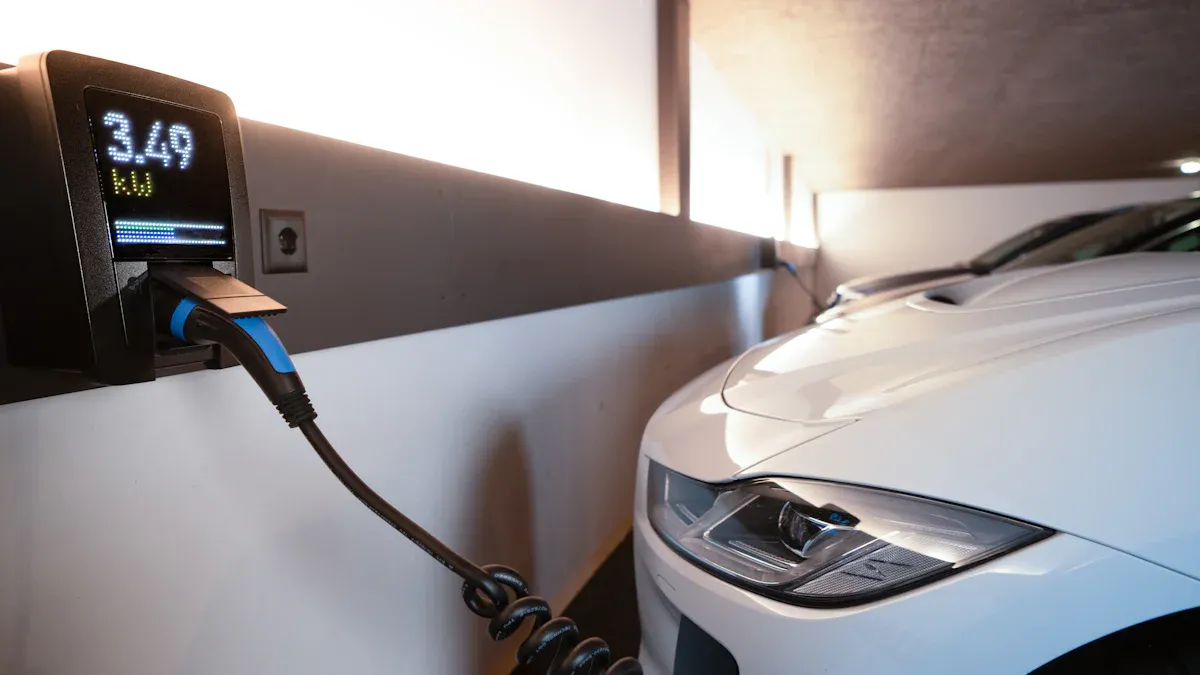
EV Charging Basics for UK Homeowners
How EV Charging Works at Home
Residential EV charging allows homeowners in the UK to power their electric vehicles conveniently. An EV charger connects to the home’s electrical supply, delivering energy directly to the vehicle’s battery. Most home EV chargers use a dedicated circuit to ensure safe and efficient charging. Home charging solutions provide flexibility, enabling users to charge overnight or during off-peak hours. The process involves plugging the EV into the charger, which communicates with the vehicle to regulate power flow and monitor battery status. Homeowners benefit from the ability to control charging times and monitor energy usage, making residential EV charging a practical choice for daily use.
Types of Home EV Chargers Explained
UK homes typically feature two main types of chargers for electric vehicles. The following table outlines the differences:
| Tipo de cargador | Descripción | Potencia de salida | Tiempo de carga |
|---|---|---|---|
| Nivel 1 | Slow Charging using a standard household socket | 2–3 kW | 24 – 38 hours |
| Nivel 2 | Fast Charging with a Type 2 connector | 7-22 kW | 100+ miles in a few hours on 7 kW charger |
Level 1 chargers offer basic electric vehicle charging but require long charging times. Level 2 EV chargers deliver faster charging solutions, making them ideal for residential use. Homeowners who install a cargador doméstico de VE with Level 2 capability enjoy greater convenience and efficiency.
Level 2 EV Chargers: Speed, Safety, and Convenience
Charging Times and Power Output
Level 2 chargers provide significant improvements in charging speed compared to Level 1 units. The table below highlights key differences:
| Tipo de cargador | Potencia (kW) | Range Added (miles/hour) | Tiempo de carga completa (horas) |
|---|---|---|---|
| Nivel 1 | 2.3-3 | 8-10 | >20 |
| Nivel 2 | 7.4 | 25-30 | 6-8 |
Level 2 EV chargers can add an average of 32 miles of driving range per hour of charge. Most electric vehicles reach a full charge in 4-8 hours, depending on battery size. Charging overnight with a Level 2 charger ensures the vehicle is ready for daily use. Home charging with Level 2 solutions supports busy lifestyles and reduces reliance on public charging stations.
Consejo: Level 2 charging at home or work typically completes a full charge in 4-8 hours, making it suitable for overnight charging.
Safety Features and Reliability
Safety remains a top priority for residential EV charging in the UK. Level 2 EV chargers must comply with strict standards to ensure reliable operation. The table below summarizes key safety regulations:
| Estándar | Descripción |
|---|---|
| ISO 15118-2 | Defines vehicle-to-charger communication, enabling Plug & Charge |
| ISO 15118-20 | Extends vehicle-to-charger communication, enabling V2G |
| SESS | Smart Secure Energy Systems: a regulatory framework for load controllers |
| OCPP 1.6 → 2.0.1 / 2.1 | Handles data exchange between chargers and back-offices |
| IEC 61851 / 62196 | Specifies electrical safety and connector formats |
| Smart Charge Points Regulations 2021 | Mandates cybersecurity and off-peak scheduling |
| Reglamento sobre puntos de recarga públicos 2023 | Requires payment, reliability, and open-data transparency |
| PAS 1899 | Ensures accessible public-charging design |
Manufacturers design home EV chargers to meet these standards, providing homeowners with peace of mind. Level 2 EV chargers offer robust safety features, including automatic shutoff, surge protection, and secure communication protocols. Reliable charging solutions help protect both vehicles and homes, supporting the transition to electric vehicle charging in the UK.
Benefits of Level 2 EV Chargers for Home Charging
Faster Charging and Daily Convenience
Cargadores de nivel 2 para vehículos eléctricos transform daily routines for UK homeowners. These chargers deliver a charging speed that far exceeds the standard three-pin plug. A dedicated wallbox provides up to 7.4kW, which is roughly three times faster than a traditional socket. Homeowners experience a significant boost in efficiency, as a level 2 charger adds approximately 25 to 30 miles of range per hour. In contrast, a standard plug adds only 3 to 5 miles per hour. This improvement means that level 2 chargers are about 3 to 6 times faster, making them ideal for residential EV charging.
Note: Overnight charging ensures vehicles are ready for daily use, offering unmatched convenience for busy families.
The following table highlights how level 2 EV chargers enhance daily routines:
| Beneficio | Descripción |
|---|---|
| Overnight Charging | Ensures the vehicle is ready for daily use, enhancing convenience for EV owners. |
| Carga rápida | Adds significant range quickly, allowing for a full recharge overnight. |
| Full Battery Every Morning | Guarantees the car is fully charged and ready for use each day, improving daily routines. |
Flexibility and Control Over EV Charging
Homeowners gain greater flexibility and control with a home charging point. Modern home EV chargers offer advanced features that support residential EV charging. App connectivity enables remote monitoring and management of charging sessions. Scheduling charging during off-peak hours can reduce costs by up to 40%. Real-time tracking of energy consumption provides insight into kWh usage and charging costs. Notifications alert users when charging starts, completes, or encounters issues. Adjusting charging speeds helps balance household power demands instantly. Diagnostic information facilitates troubleshooting without needing a technician. Solar PV integration maximizes renewable energy usage, prioritizing solar-generated electricity for charging. Dynamic load balancing prevents circuit overloads by distributing power intelligently across devices. Energy management systems integrate with time-of-use tariffs to minimize electricity costs.
| Característica | Beneficio |
|---|---|
| App connectivity | Enables remote monitoring and management of charging sessions from anywhere. |
| Schedule charging sessions | Allows charging during off-peak hours, reducing costs by up to 40%. |
| Seguimiento del consumo de energía | Provides real-time data on kWh usage and charging costs. |
| Recibir notificaciones | Alerts when charging starts, completes, or encounters issues. |
| Adjust charging speeds | Balances household power demands instantly. |
| Access diagnostic information | Facilitates troubleshooting without needing a technician. |
| Solar PV integration | Maximizes renewable energy usage by prioritizing solar-generated electricity for charging. |
| Equilibrio dinámico de la carga | Prevents circuit overloads by distributing power intelligently across devices. |
| Energy management systems | Integrates with time-of-use tariffs to minimize electricity costs. |
Future-Proofing Your Home for EVs
Installing a home EV charger prepares a residential property for the evolving landscape of electric vehicles. Smart app control allows remote management of charging, providing cost-saving and convenience. Dynamic load balancing adjusts power distribution to prevent system overloads. V2G and V2H capabilities enable energy flow from EV to home, potentially powering the home with stored energy. Connectivity options such as Wi-Fi, Bluetooth, and RFID ensure seamless integration. Solar integration allows charging from solar energy, reducing reliance on the grid. Scalability supports future EV models and increased energy demands. Smart technology offers features like smart scheduling and load balancing. Renewable integration maximizes energy efficiency by working with solar and battery systems. OZEV grant eligibility provides financial incentives for homeowners.
Tip: Investing in level 2 EV chargers ensures that a home remains compatible with future EV models and supports sustainable energy solutions.
A home charging point with advanced features positions homeowners to benefit from the latest innovations in EV charging. Homeowners who choose home EV chargers gain access to a range of benefits, including enhanced convenience, flexibility, and long-term value.
How to Choose the Right Level 2 EV Charger
Selecting the best level 2 EV charger for a UK home involves careful consideration of several important features. Homeowners must evaluate velocidad de carga, compatibility, smart technology, and durability to ensure optimal performance and safety.
Key Features to Consider in an EV Charger
Potencia de salida y velocidad de carga
Charging speed depends on the power output of the charger and the battery capacity of the EV. Fast chargers with ratings between 7kW and 22kW deliver a significant speed advantage over slow chargers. A 7kW charger suits most residential EV charging needs, providing a balance between efficiency and accessibility. Higher power chargers reduce charging time, but not all vehicles can accept maximum rates. Charging speed often slows as the battery approaches full capacity. Homeowners should match the charger’s power output to their EV’s capabilities and daily driving requirements.
Tip: A 7.4kW charger typically offers optimal performance for home charging, ensuring quick top-ups and reliable overnight charging.
Cable Length and Connector Types
Cable length and connector type play a crucial role in usability. Most UK electric vehicle chargers use the Conector de tipo 2, which is compatible with nearly all modern EVs. Homeowners should assess their parking situation and choose a cable length that allows easy access from the charger to the vehicle. Tethered chargers feature a fixed cable, providing convenience and reducing setup time. Untethered chargers require a separate cable, offering flexibility for different vehicles. The Type 2 connector ensures compatibility across major brands, including Tesla, BMW, Volkswagen, Nissan, Renault, Jaguar, and Hyundai.
| Tipo de cargador | Tipo de conector | Cable Length Options | Adecuado para |
|---|---|---|---|
| Conectado | Tipo 2 | 5m, 7.5m, 10m | Single EV households |
| Sin ataduras | Tipo 2 | Customizable | Varios VE |
Funciones inteligentes e integración de aplicaciones
Smart features enhance control and convenience for residential EV charging. Many home EV chargers offer app connectivity, enabling remote monitoring, scheduled charging, and load management. Homeowners can track energy consumption, receive notifications, and adjust charging speeds. Smart scheduling allows charging during off-peak hours, reducing electricity costs. Software updates future-proof the charger, ensuring compatibility with evolving EV technology. Integration with solar PV systems maximizes renewable energy usage. Brand reputation and warranty options provide additional peace of mind.
- Key smart features to consider:
- Smartphone app control
- Carga programada
- Load management
- Energy tracking
- Remote diagnostics
- Actualizaciones de software
EV Compatibility and Home Electrical Requirements
Compatibility remains essential when choosing a level 2 charger. Nearly all new electric vehicles in the UK support Type 2 charging, making selection straightforward. Homeowners must verify that the charger matches their EV’s connector type and charging specifications. The installation requirements for residential EV charging include a dedicated circuit, adequate electrical service, and proper wiring. Most installations require a 240V supply and a 40-amp circuit breaker. Electricians must follow UK regulations, notify the Distribution Network Operator, and fit RCDs for safety. Ground Fault Circuit Interrupters protect against electrical imbalances, ensuring safe operation.
- Typical home electrical requirements:
- Dedicated circuit for the EV charger
- 240V electrical supply
- 40-amp circuit breaker
- Proper wiring (usually 8-gauge)
- Ground Fault Circuit Interrupter (GFCI)
- Compliance with UK installation codes
Note: Professional consultation ensures the electrical system supports the additional load and meets all safety standards.
Weatherproofing and Durability for UK Homes
Durability and weatherproofing are vital for outdoor installation in the UK climate. Level 2 chargers must withstand rain, dust, sunlight, and corrosion. The IP rating indicates protection against environmental factors. An IP65 rating or higher ensures reliable operation in outdoor conditions. UV resistance prevents material degradation from sunlight exposure. Corrosion-resistant materials protect chargers in coastal or humid areas.
| Característica | Importancia | Recomendación |
|---|---|---|
| Clasificación IP | Protects against dust and rain, ensuring functionality in outdoor conditions | Choose IP65 or higher |
| Resistencia UV | Prevents material degradation from sunlight exposure | Select products designed for outdoor use |
| Corrosion Resistance | Essential in coastal/humid areas to prevent deterioration | Use corrosion-resistant materials |
A robust home charging point guarantees long-term reliability and safety for residential EV charging. Homeowners should select electric vehicle chargers designed for the UK climate, ensuring consistent performance and minimal maintenance.
Trusted Brands and Safety Certifications
Selecting a reliable Level 2 charger remains essential for every UK homeowner who values safety and long-term performance. The market offers several trusted brands, each recognized for unique strengths in design, smart features, and durability. Homeowners often look for products that combine robust engineering with advanced technology to ensure seamless charging experiences.
Leading Brands for Level 2 Chargers in the UK
- KD Energy 11kW Charger stands out for its fast charging capability and robust construction. The high IP66 rating ensures excellent outdoor durability, while smart features allow users to monitor charging remotely.
- ChargePoint Home Flex appeals to those who value intuitive app controls. The scheduling and energy tracking functions simplify daily routines, and the installation process is straightforward.
- JuiceBox 40 offers a balance of reliability and affordability. Many users appreciate its app functionality, which makes it a practical choice for those who seek value without sacrificing performance.
- Wallbox Pulsar Plus features a compact design and delivers reliable charging speeds. Its smart app integration supports flexible energy management.
- Easee One receives high marks for installation satisfaction, with 96% of users reporting positive experiences. However, some users have noted slower aftersales service and occasional issues with charging speed.
- TPSON provides technologically advanced solutions for electric vehicle charging. Their products focus on innovation, safety, and integration with smart energy systems.
Tip: Homeowners should consider both product reliability and aftersales support when choosing a charger brand.
Safety Certifications for UK Chargers
Safety remains a top priority for every installation. The UK enforces strict standards to protect both property and users. Homeowners should verify that any Level 2 charger meets the following requirements:
- Compliance with Part P of the Building Regulations, which governs electrical safety in domestic properties.
- Adherence to Part S, mandating that new homes with parking spaces include EV charging points.
- Installation in line with BS 7671 wiring regulations, ensuring proper wiring and safe operation.
- Support for smart energy management functions, which help optimize charging and reduce energy costs.
- Inclusion of RCD (Residual Current Device) protection and weatherproof housing for enhanced safety.
- Proper earthing, as specified by BS 7671, to prevent electrical hazards.
The table below summarizes the essential safety certifications and features:
| Certification/Feature | Propósito | UK Requirement |
|---|---|---|
| Part P (Building Regulations) | Electrical safety in domestic properties | Sí |
| Part S (Building Regulations) | EV charging points in new homes | Sí |
| BS 7671 | Safe wiring and installation | Sí |
| Protección RCD | Prevents electric shock | Sí |
| Weatherproof Housing | Outdoor durability | Sí |
| Gestión inteligente de la energía | Optimizes charging and energy use | Sí |
| Proper Earthing | Prevents electrical faults | Sí |
Homeowners who select a charger from a reputable brand and confirm these certifications can trust their system to deliver safe, efficient, and future-ready charging for any EV. This approach ensures compliance with UK regulations and supports a smooth transition to electric mobility.
EV Charger Installation Process and Costs
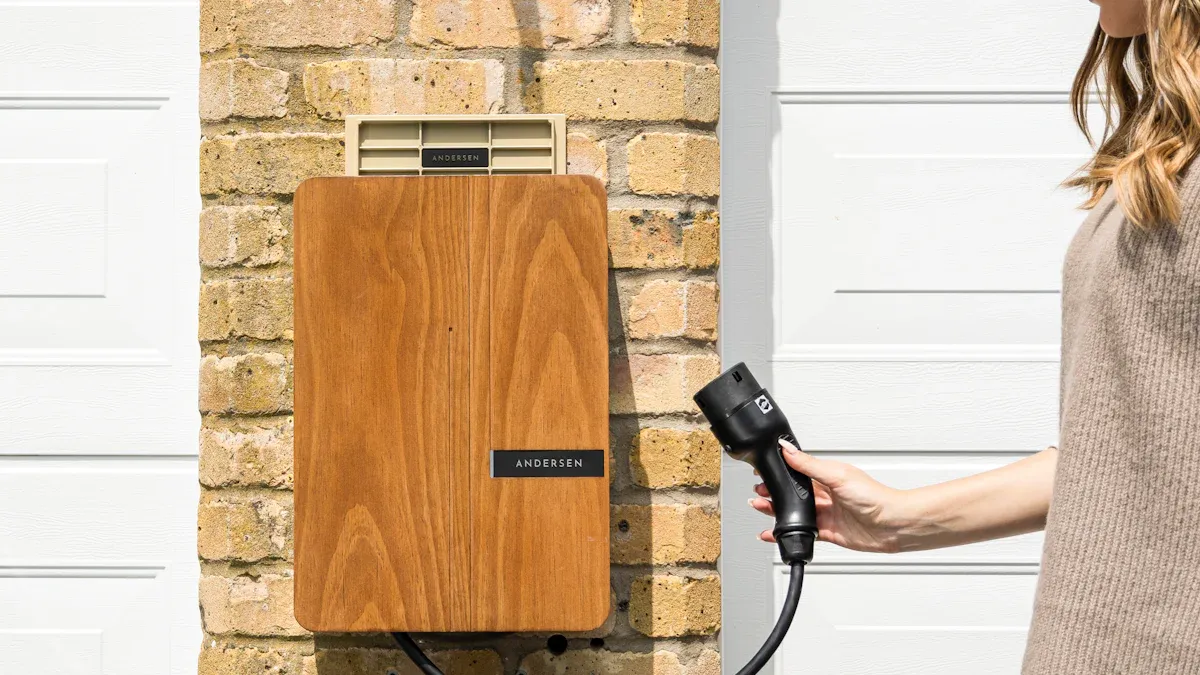
Finding a Qualified EV Charger Installer
What to Look for in an Installer
Selecting the right installer for a residential EV charging point ensures safety and compliance. Homeowners in the UK should prioritize professionals with proven experience in electric vehicle chargers. Installers must complete specialized training for EV charger equipment. Approval by the Office for Zero Emission Vehicles demonstrates expertise in home charging solutions. Prior experience with EV charging infrastructure adds confidence in the quality of work.
Accreditation and Safety Standards
Accreditation remains essential for any installer. The following table outlines key qualification requirements:
| Qualification Requirement | Descripción |
|---|---|
| Professional Registration | Must be registered with NAPIT, NICEIC, or a similar body. |
| Self-Certification | Ability to self-certify work under Part P of Building Regulations. |
| Wiring Regulations | All work must comply with BS 7671 Wiring Regulations. |
Installers who meet these standards ensure that the installation process follows UK regulations. Homeowners benefit from peace of mind knowing their EV charger meets all safety requirements.
What to Expect During EV Charger Installation
Estudio y evaluación del emplazamiento
The installation process begins with a site survey. The installer assesses the property’s electrical system and determines the best location for the charging point. They check for adequate power supply and review parking arrangements to ensure easy access to the charger.
Electrical Upgrades and Preparation
Some homes require electrical upgrades before installing a Level 2 charger. The installer may need to fit a dedicated circuit or upgrade the consumer unit. Compliance with BS 7671 wiring regulations guarantees safe operation. Preparation includes verifying the capacity of the electrical system and ensuring proper earthing.
Installation Day Steps
On installation day, the installer mounts the charger and connects it to the electrical supply. They test the charging point for functionality and safety. The installer provides guidance on using the charger and explains maintenance requirements. Homeowners receive documentation confirming compliance with UK standards.
Tip: Professional installation ensures that the EV charger operates safely and efficiently, reducing risks associated with residential EV charging.
Installation Costs and Factors Affecting Price
Installation costs for Level 2 EV chargers in the UK vary. The average cost of a Type 2 home EV charger ranges from £700 to £1,300. The charger unit alone costs between £400 and £800. Professional installation fees are estimated at £300 to £500. Overall, the total cost for purchasing and installing a charging point typically falls between £800 and £1,500.
Several factors influence the price of charging point installation. The type and power output of the charger set the baseline cost. Properties with older electrical systems may require upgrades, increasing costs. Labor rates differ across regions, affecting the final price. Additional charges may apply for longer cable runs or complex installations.
Note: Investing in a quality charger and professional installation supports reliable home charging and long-term value for EV owners.
Grants and Incentives for Home EV Charging in the UK
The OZEV EV Chargepoint Grant Explained
The UK government supports the transition to electric vehicles by offering financial incentives for residential charging infrastructure. The Office for Zero Emission Vehicles (OZEV) EV Chargepoint Grant provides homeowners with a substantial discount on the purchase and installation of eligible charging points. This grant covers up to 75% of the total cost, capped at £350. Homeowners benefit from reduced upfront expenses, making the adoption of EV technology more accessible.
Who Qualifies and How to Apply
Eligibility for the OZEV EV Chargepoint Grant depends on several criteria. Individuals must meet specific requirements to receive funding:
- Residents must live in a flat they own or rent a residential property.
- The property must feature a private off-street parking space.
- Applicants must own or use an eligible vehicle listed by OZEV.
- The grant excludes homeowners living in houses unless converted into flats.
- Residents cannot apply if they rent accommodation where the landlord or homeowner lives.
- The grant does not support applicants planning to move or those who have already claimed the grant.
- Replacement or relocation of existing chargepoints is not covered.
- Properties must be located in the UK, excluding the Channel Islands and Isle of Man.
- Supporting evidence, such as a rental agreement, is required for renters.
Additional vehicle-related requirements include:
- Only vehicles on the OZEV-approved list qualify.
- Applicants must be registered keepers or lease an eligible vehicle for at least six months.
- Company car users or primary users of eligible vehicles may also qualify.
Applicants must submit documentation and follow the official application process. OZEV reviews each submission to ensure compliance with uk ev charging regulations.
What the Grant Covers for Homeowners
The grant assists with the cost of buying and installing a home EV charging point. Homeowners receive a discount of up to £350, which covers both hardware and installation fees. The grant applies to new installations only. It does not support upgrades or replacements of existing chargers. This financial support encourages more residents to invest in EV technology and aligns with the UK’s sustainability goals.
Tip: Homeowners should consult OZEV’s official guidance to confirm eligibility and maximize grant benefits.
Other Local and Regional EV Charging Incentives
Local authorities across the UK offer additional incentives to promote EV adoption. These programs complement national grants and provide further support for residents.
- Local grants and financial incentives help communities transition to electric vehicles.
- Some cities, such as Oxford and Milton Keynes, offer free parking spaces for EVs.
- Residents may access street parking permits and use bus lanes in select areas.
- Dundee provides free public charging stations for local EV owners.
- Local Electric Vehicle Infrastructure (LEVI) funding supports local authorities.
- LEVI funding enables installation of on-street charging infrastructure in areas without off-street parking.
- Authorities must complete an application process to secure funding.
These incentives make EV ownership more attractive and practical for a wider range of residents. Local schemes often address unique challenges, such as limited parking or access to charging facilities.
Note: Residents should check with their local council for the latest incentives and eligibility requirements.
Ongoing Costs and Saving on Home EV Charging
How Much Does Home EV Charging Cost?
Homeowners in the UK often find that charging an EV at home is more affordable than using public chargers. The average annual cost for home charging depends on the electricity tariff and the vehicle’s energy consumption. Most drivers pay between £165 and £512 per year for charging, based on their chosen tariff. Home charging integrates seamlessly into the household electricity bill, making it easier to track energy usage and manage costs. Many EV owners have halved their fueling expenses by switching to home charging, especially when they select a tariff tailored for EV use. Installation costs for a home EV charger are a one-time expense, while ongoing costs relate to electricity usage and maintenance.
Choosing the Right Electricity Tariff for EV Charging
Selecting the right electricity tariff can significantly reduce the cost of charging an EV at home. Time-of-use tariffs, such as Octopus Agile or OVO Charge Anytime, reward users who charge during low-cost periods. These tariffs offer dynamic pricing, allowing homeowners to benefit from lower rates when demand is low. EV-specific tariffs cater to those with unpredictable schedules, providing flexibility and savings.
Off-Peak and EV-Friendly Tariffs
Charging during off-peak hours remains one of the most effective ways to lower costs. The table below compares standard and EV off-peak tariffs:
| Tipo de tarifa | Annual Cost (£) | Savings (£) |
|---|---|---|
| Standard Tariff | 512 | N/A |
| EV Off-Peak Tariff | 165 | 347 |
EV-friendly tariffs can save homeowners up to £347 annually. Charging overnight or during designated off-peak periods maximizes these savings. Many energy suppliers in the UK now offer tariffs designed specifically for EV charging, making it easier for homeowners to optimize their charging routines.
Tip: Scheduling charging sessions during off-peak hours can reduce electricity costs by up to 40%.
Tips for Reducing Your EV Charging Costs
Homeowners can adopt several strategies to minimize ongoing costs associated with EV charging:
- Home charging is generally more affordable than public chargers, especially with a good energy tariff.
- Tracking energy usage is simpler when charging is integrated into the home electricity bill.
- Installing solar panels allows for free daytime charging, potentially saving over £500 annually.
- Solar panels can generate electricity when the charger is idle, allowing for energy storage for later use.
- A home battery system enables charging during the evening with solar energy captured during the day.
- Charging directly from solar energy during the day helps avoid peak electricity rates.
- Partial solar charging can significantly lower annual running costs, especially for those who work from home.
- Combining solar charging with off-peak EV tariffs enhances cost efficiency.
Smart scheduling, solar integration, and choosing the right tariff all contribute to lower costs. Homeowners who invest in these solutions enjoy greater control over their energy expenses and maximize the value of their EV charger installation.
Common Concerns and Troubleshooting for Home EV Chargers
Safety, Maintenance, and Support
Safety remains a primary concern for homeowners in the UK who install a Level 2 EV charger. Certified installers ensure compliance with national safety standards, reducing the risk of electrical fires and system malfunctions. Mantenimiento regular helps maintain the efficiency and reliability of the charger. Over time, components may wear out, so scheduled inspections and timely replacements prevent costly repairs and voided warranties.
Key safety features in EV chargers protect users from electrical and fire hazards. Chargers shut down immediately when they detect electrical faults, minimizing risks. Compliance with the National Electric Code is essential for safe operation. Homeowners should establish a maintenance schedule to keep their EV charger functioning efficiently.
- Safety features protect against electrical hazards.
- Chargers shut down during faults to prevent accidents.
- Regular maintenance ensures efficiency and reliability.
Professional support from manufacturers and installers provides guidance on troubleshooting and repairs. Homeowners benefit from warranty coverage and access to technical assistance, which helps resolve issues quickly.
Moving Home with Your EV Charger
Relocating a charger when moving home presents unique challenges. Homeowners in the UK often wish to take their EV charger to a new property. They must consult a certified installer to disconnect and reinstall the charger safely. The installer assesses the new site for compatibility and electrical requirements. Moving a charger may incur additional costs, including installation fees and potential upgrades to the electrical system.
Homeowners should check the warranty terms before relocating the charger. Some warranties may not cover reinstallation or damage during transit. Registering the charger at the new address ensures continued support and compliance with UK regulations. Proper planning and professional assistance simplify the process and maintain the reliability of the EV charging system.
Tip: Always use an OZEV-authorized installer for relocation to ensure safety and preserve warranty coverage.
Dealing with Power Outages and Charging Issues
Power outages and charging issues can disrupt daily routines for EV owners. Homeowners in the UK should monitor their charger for signs of external damage, exposed wiring, or slower charging times. Regular cleaning and drying of cable connectors maintain functionality and prevent faults. Storing charging cables properly extends their lifespan.
Troubleshooting steps for common issues include:
- Inspect the charger for visible damage.
- Check for exposed wiring that may pose safety hazards.
- Monitor charging speed; slower rates may indicate underlying problems.
Professional inspections help prevent malfunctions and safety hazards. Homeowners should schedule regular checks to ensure compliance with industry standards and maintain system reliability. Registering the warranty immediately after installation avoids future complications. Promptly addressing issues reduces downtime and protects the investment in EV charging technology.
Note: Regular maintenance and professional support keep the EV charger safe, efficient, and ready for daily use.
Level 2 EV chargers offer UK homeowners a range of benefits that make daily life easier and more efficient. Key advantages include:
- Conveniencia: Charge an EV at home overnight and avoid waiting at public stations.
- Cost-effectiveness: Home charging saves money, especially with off-peak rates.
- Faster charging: A charger adds up to 30 miles of range per hour, ideal for busy schedules.
- Increased property value: Homes with a charger attract more buyers.
- Environmental benefits: Charging at home with renewable energy supports sustainability.
Taking the next step toward installing a home EV charger helps homeowners enjoy these benefits. Support and guidance remain available from trusted installers and local resources across the UK.
PREGUNTAS FRECUENTES
How long does it take to charge an EV at home with a Level 2 charger?
Charging an EV at home with a Level 2 charger usually takes between 4 and 8 hours. Battery size and charging speed determine the exact time. Most drivers find overnight charging meets their daily needs.
Can a Level 2 EV charger be installed outdoors?
Manufacturers design Level 2 EV chargers for outdoor installation. Weatherproof housing and high IP ratings protect the unit from rain and dust. Installers recommend placing the charger in a sheltered location for added durability.
Is a dedicated circuit required for a home EV charger?
A dedicated circuit is required for safe operation. Electricians install the circuit to prevent overloads and ensure compliance with UK regulations. This setup protects both the charger and the home’s electrical system.
Will a Level 2 charger work with any electric vehicle?
Most Level 2 chargers use a Type 2 connector, which fits nearly all modern EVs in the UK. Owners should check compatibility with their vehicle before installation. Manufacturers provide compatibility lists for reference.
¿Qué mantenimiento necesita un cargador EV doméstico?
Routine maintenance includes visual inspections, cleaning connectors, and checking for damage. Installers recommend annual checks to ensure safety and performance. Warranty coverage often includes support for troubleshooting and repairs.
Are there grants available for installing a home EV charger?
The UK government offers the OZEV EV Chargepoint Grant. Eligible homeowners receive up to £350 toward installation costs. Local authorities may provide additional incentives, depending on the region.
What happens if there is a power outage during charging?
Charging stops immediately during a power outage. The EV charger resumes operation when power returns. Owners should inspect the charger for damage after outages and contact support if issues arise.
Can the EV charger be moved to a new home?
Installers can relocate the charger to a new property. Owners must consult a certified professional for safe removal and reinstallation. Warranty terms may affect coverage after moving the unit.