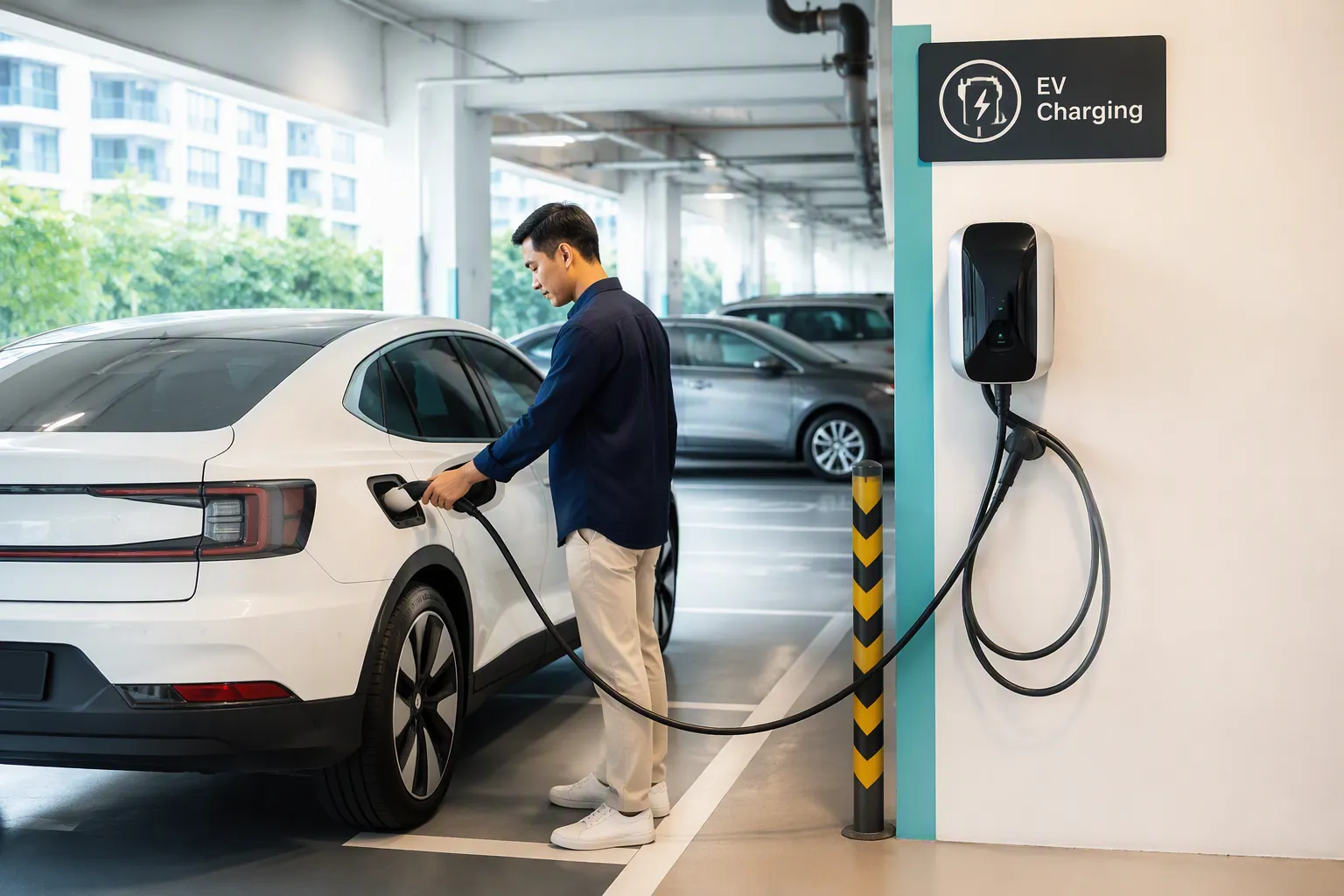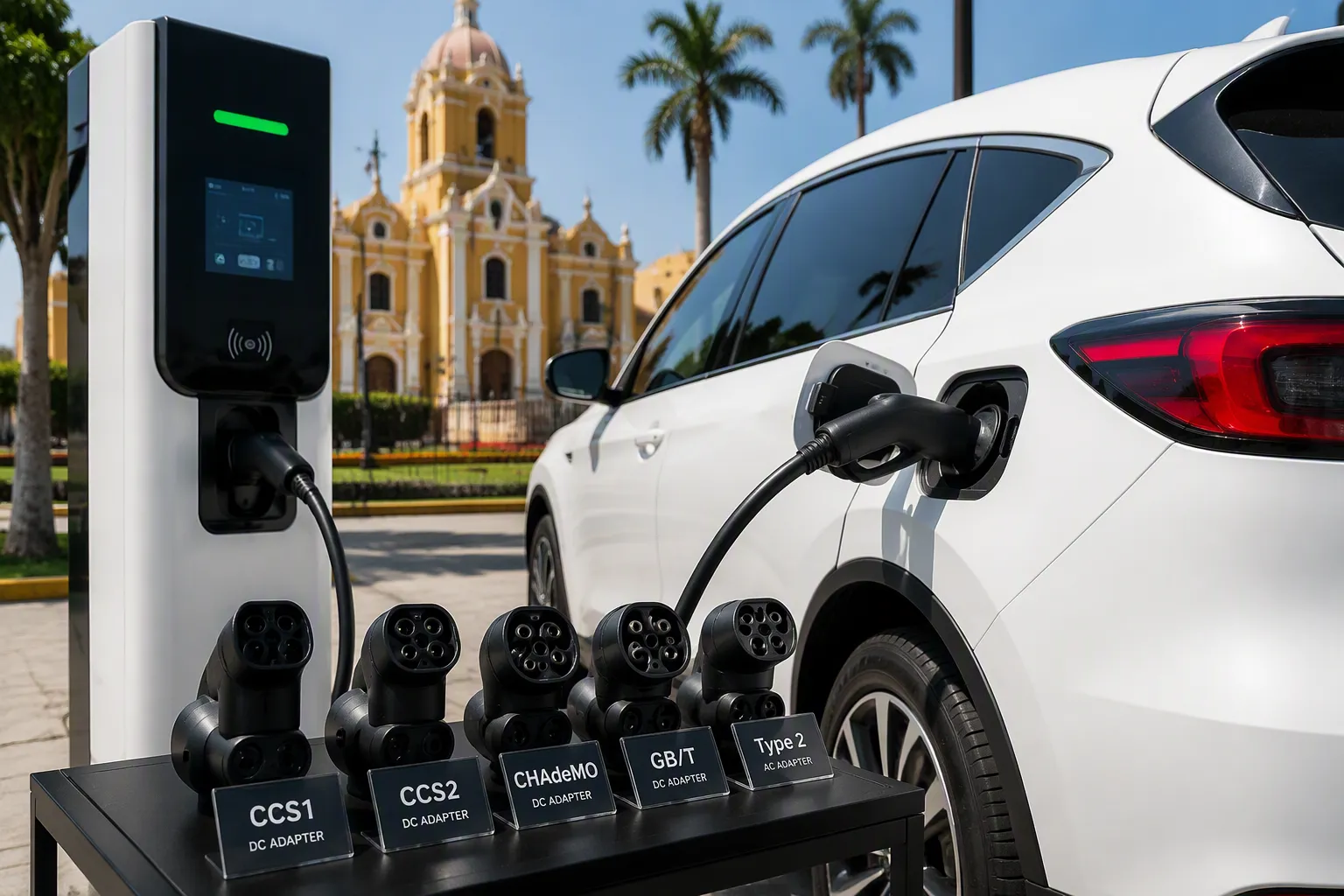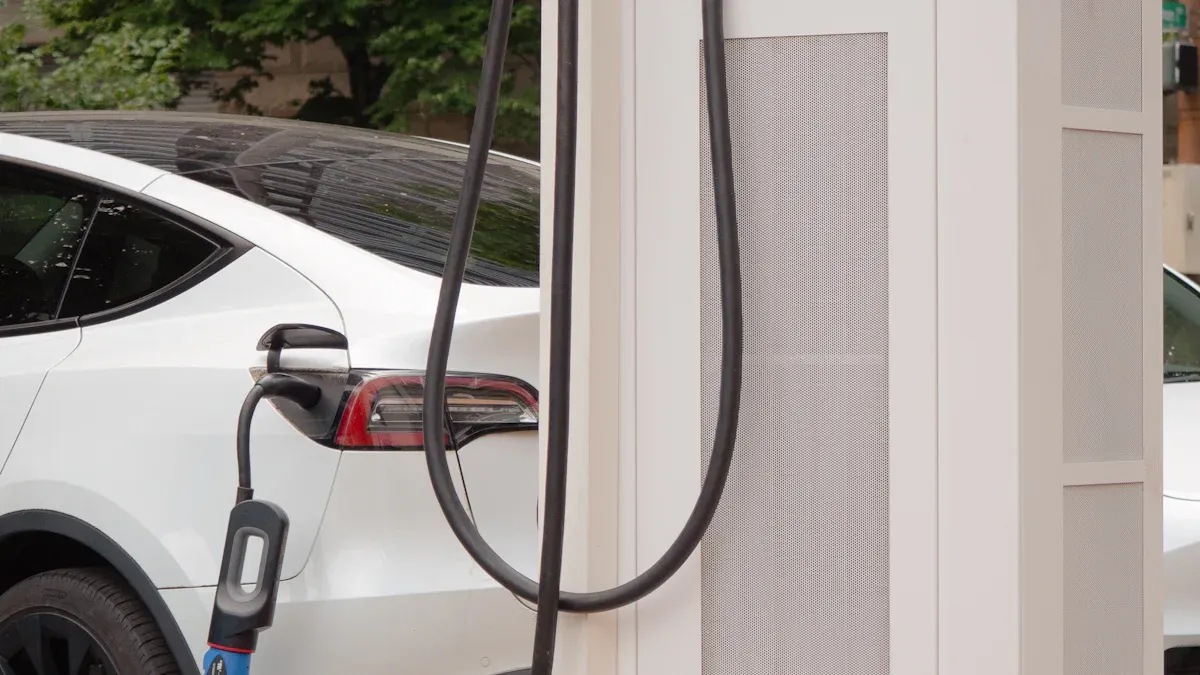
Encontrar el mejor Cargador EV for apartment living in major German cities is now a manageable task. A smart Level 2 wallbox with OCPP compliance stands out as the premier choice. This type of EV Charger offers the ideal balance of charging speed and safety for overnight EV charging.
Nota: Germany’s “Right to a Wallbox” legally empowers tenants to request a professional charger installation for their EV, making home EV charging an attainable goal.
Avanzado Soluciones de recarga de vehículos eléctricos del líder Fabricantes de cargadores para VE deliver future-proof technology. This dedicated charger ensures reliable EV charging, a significant upgrade over slow cargadores portátiles ev. The right setup makes daily EV charging convenient for any EV owner, simplifying the EV charging process.
Why a Smart Level 2 Wallbox is the Best EV Charger Choice

Selección del mejor cargador para vehículos eléctricos involves understanding the fundamental differences in charging technology. An EV driver’s choice directly impacts charging speed, cost, and convenience, especially in a shared living environment. A smart Level 2 wallbox emerges as the superior solution for apartment buildings in Germany.
Understanding EV Charging Levels
Level 1 (protective contact Socket): The Slow Emergency Option
Level 1 charging uses a standard household protective contact socket. This method is incredibly slow, often requiring over 24 hours for a full charge. It serves best as a last-resort option when no other charging infrastructure is available. Relying on this daily is impractical for most EV drivers.
Level 2 (Wallbox): The Apartment Sweet Spot
A Level 2 wallbox is the ideal solution for residential buildings. This dedicated charger provides a much faster and safer charging experience, typically replenishing an EV battery overnight in 6-10 horas. It ensures reliable charging availability for daily commutes and makes home charging a convenient reality for any EV owner.
Level 3 (DC Fast Charging): Public and Not for Home Use
Level 3, or DC fast charging, delivers extremely rapid charging speeds. These powerful systems are fixtures of the public charging infrastructure and are found at dedicated DC charging locations along highways. They are not designed for home installation due to their immense power requirements and cost. While public charging at DC charging locations offers rapid charging, it is meant for long-distance travel, not daily use. The public charging infrastructure of DC charging locations provides rapid charging for travelers. Drivers use DC charging locations for rapid charging sessions that can restore 80% battery in under an hour. The goal of public charging at DC charging locations is speed, offering rapid charging to get drivers back on the road. These DC charging locations are essential for the viability of long-range EV travel.

Smart vs. ‘Dumb’ Wallboxes
What Defines a ‘Dumb’ Wallbox?
A ‘dumb’ wallbox is a basic device. It performs one function: it delivers electricity to an EV when plugged in. These units lack connectivity and cannot communicate with a network, an app, or the power grid. They offer no features beyond basic safety protections.
Essential Smart Features for Apartments
Smart wallboxes integrate Wi-Fi or LAN connectivity. This connection unlocks crucial features for apartment dwellers.
- Mando a distancia: Users can start, stop, and monitor charging sessions via a smartphone app, which grants easy access to the charger.
- Carga programada: Owners can schedule charging for off-peak hours when electricity is cheaper.
- Control de la energía: The app tracks electricity usage for accurate billing and reimbursement. Technologically advanced providers like TPSON build these smart capabilities directly into their charging stations.
The Critical Role of Dynamic Load Management (Load Management)
In a building with multiple charging points, Dynamic Load Management is essential. This smart feature automatically balances the electrical load across all active charging stations. It ensures the building’s total power capacity is never exceeded, preventing tripped breakers and promoting a stable charging infrastructure for every EV.
Future-Proofing with Open Charge Point Protocol (OCPP)
What is OCPP?
The Open Charge Point Protocol (OCPP) is a universal application protocol. It allows any OCPP-compliant charging points to communicate with any OCPP-compliant management software, regardless of the manufacturer. It creates a standardized and open charging network.
Why OCPP Prevents Vendor Lock-In
OCPP compliance is the ultimate future-proofing feature. It gives property managers the freedom to choose or switch their backend management software provider without replacing the physical charging infrastructure. If a service provider’s fees increase or their service declines, the building can simply migrate to a new OCPP-compliant platform, ensuring competitive pricing and flexible access for years to come.
Key Factors for Choosing the Best EV Charger
Selecting the right hardware is a critical step after understanding the technology. An EV driver must evaluate the building’s electrical system, their personal charging needs, and the software that ties it all together. These factors ensure the chosen charger is both practical and efficient for apartment living in Germany.
Assessing Your Building’s Electrical Infrastructure
Checking Your Building’s Grid Connection Capacity
Before any installation, it is vital to determine the building’s total electrical capacity. This assessment reveals how much power is available for new EV charging points without overloading the system. A property’s grid connection dictates the number and power of the chargers the charging infrastructure can support.
Single-Phase vs. Three-Phase Connections
Most modern German apartment buildings use three-phase power. This is highly advantageous for EV charging. A three-phase connection provides a steadier, more balanced power delivery ideal for higher electrical loads.
An 11 kW charger on a three-phase connection draws a manageable 16 amps per phase. The same charger on a single-phase connection would draw a much higher 48 amps, placing significant strain on the wiring.
This balanced distribution prevents conductor overloading and enables faster, more efficient charging. It is the foundation for a robust charging infrastructure.
The Importance of a Pre-Installation Site Check
A professional site check by a certified electrician is non-negotiable. The electrician will inspect the main distribution board, assess the existing wiring, and determine the best installation path. This check confirms the feasibility of adding new charging points and provides an accurate quote for the work.
Matching Charger Power to Your Needs
11 kW vs. 22 kW: What’s the Difference?
The primary difference is charging speed. A 22 kW charger can replenish an EV battery in three hours or less, while an 11 kW charger typically takes four to six hours. However, the EV itself must be able to accept 22 kW AC charging.
| Tipo de vehículo | Max AC Charging |
|---|---|
| Renault Zoe, Smart #3 | 22 kW |
| Tesla Model 3, KIA EV6 | 11 kW |
Many popular EV models cannot take advantage of 22 kW charging, making an 11 kW charger a more universally practical choice.
Why 11 kW is Often Sufficient for Overnight Charging
For the average daily commute, an 11 kW charger is perfectly adequate. It reliably provides a full charge overnight, ensuring the EV is ready each morning. This power level offers an excellent balance of charging speed and cost, meeting the needs of most EV drivers without requiring extensive electrical upgrades. This makes it the best EV charger option for many.
Regulatory Considerations for Chargers Over 11 kW
In Germany, any charging station up to 11 kW only needs to be registered (registered) with the local grid operator. However, any charger with a power rating above 11 kW requires formal approval (approval) before installation. This adds an extra administrative step to the process.
Evaluating Connectivity and Software
Wi-Fi and LAN Connectivity Options
Reliable connectivity is the backbone of a cargador inteligente. Wi-Fi is convenient, but a wired LAN connection offers superior stability, especially in underground garages where wireless signals can be weak. Technologically advanced providers like TPSON offer charging points with both options to ensure consistent communication.
User-Friendliness of the Companion App
The companion app is the primary interface for the EV owner. A user-friendly app allows for easy scheduling of charging sessions, monitoring energy consumption, and managing payments. An intuitive design simplifies the entire charging experience.
Integration with Other Smart Home Systems
For homeowners, integrating the EV charger with other smart home energy systems provides a holistic view of power usage. This allows for advanced energy management, further optimizing charging times and costs based on solar production or dynamic electricity tariffs.
Navigating German Regulations and Installation
Understanding the legal and technical landscape is crucial for a successful EV charger installation in Germany. The process involves asserting legal rights, following a structured installation plan, and ensuring full compliance with national grid standards. This ensures a safe and legally sound charging setup for any EV owner.
Your Legal Right: The ‘Right to a Wallbox’ Explained
A landmark piece of legislation fundamentally changed the game for EV owners in apartments. The ‘Right to a Wallbox,’ or ‘Right to a Wallbox,’ provides a legal foundation for tenants and condominium owners to request the installation of a private charging station.
The Modernized Condominium Law (WEMoG)
Enacted in December 2020, the Condominium Modernization Act (WEMoG) is the cornerstone of this right. The German government, recognizing the need to support e-mobility, passed this law to remove previous barriers to private charging infrastructure. It provides planning security for homeowners and tenants who want to transition to an electric vehicle.
“The right to install a private wallbox is important for the success of e-mobility. Both home owners and tenants in Germany can at last plan reliably.” – Thomas Ulbrich, former VW board member
This law establishes that the installation of an EV charging station is a “privileged measure” (privileged measure), similar to accessibility modifications or burglary protection.
Your Rights as a Renter (renter)
A renter (renter) has the right to request permission from their landlord to install an EV charging station at their designated parking space. The landlord cannot unreasonably refuse this request. The renter typically bears the cost of the installation and the electricity used for charging. The landlord may require the renter to sign an agreement covering liability and the process for removing the charger upon moving out. This provides renters with clear access to home charging.
Your Rights as a Condominium Owner (condominium owner)
For a condominium owner (condominium owner), WEMoG simplified the approval process dramatically. Previously, installing a charger often required the unanimous consent of all other owners, an almost impossible hurdle. Now, an owner only needs to bring the motion to the owners’ association (condominium owners’ association, or WEG). A simple majority vote is sufficient for approval. The other owners can only object on very specific grounds. This change grants owners easier access to EV charging solutions.
Legitimate Reasons for a Request to be Denied
While the right is strong, it is not absolute. A landlord or condominium association can deny a request under specific circumstances:
- Structural Impracticability: The building is a protected historical landmark (historical landmark protection), and the installation would deface it.
- Technical Impossibility: The building’s electrical system cannot be upgraded to support even one EV charger without disproportionate effort.
- Unreasonable Burden: The required construction is exceptionally complex or expensive, placing an unreasonable burden on the landlord or community.
These exceptions are narrowly defined, making most requests for a standard EV charging installation difficult to refuse.
The Official Installation Process Step-by-Step
A systematic approach ensures a smooth installation from initial request to the first charging session. Following these steps helps manage expectations and coordinates all involved parties.
Step 1: Formal Request to Landlord or property management
The process begins with a formal, written request ✍️. An EV owner should send a letter or email to their landlord or property management company (property management). The request should clearly state the intent to install an EV charging station at their personal parking spot and ask for permission to proceed with obtaining quotes.
Step 2: Obtaining Quotes from Certified Electricians (certified contractors)
Once permission is granted to explore options, the next step is to contact certified electrical contractors (certified contractors). It is best practice to obtain at least two or three detailed quotes. These quotes should cover:
- The cost of the wallbox itself.
- All necessary wiring and electrical components.
- Labor for installation and commissioning.
- The cost of registering the charger with the grid operator.
Step 3: Grid Operator Approval (grid operator)
The chosen electrician handles the communication with the local grid operator (Preguntas Clave para Hacer a su Electricista Potencial). The electrician will formally register the planned installation. This step is mandatory for all wallboxes and ensures the local grid can handle the additional load from EV charging. This process provides grid operators with the necessary data to maintain a stable power supply for everyone.
Step 4: Professional Installation and Handover
After receiving the green light from the grid operator, the certified electrician can perform the installation. They will run the necessary cables, mount the wallbox, and connect it to the building’s electrical panel. Upon completion, the electrician provides the owner with all necessary documentation, including an installation protocol and instructions on how to operate the new EV charger. This finalizes the access to convenient home charging.
Technical Rules and Grid Compliance
All electrical work in Germany must adhere to strict technical standards to ensure safety and grid stability. EV charging installations are no exception.
Adhering to TAR Niederspannung (VDE-AR-N 4100)
This regulation, “Technical Connection Rules for Low Voltage,” sets the requirements for connecting systems like EV charging stations to the public grid. It covers everything from the type of circuit protection required to the technical capabilities of the charger. A qualified electrician ensures the entire installation, from the fuse box to the wallbox, is fully compliant with VDE-AR-N 4100.
Notification vs. approval: Notifying vs. Getting Permission
This is a key distinction in the approval process:
- Notification (Notification): All charging stations up to 11 kW must be registered with the grid operator before installation. This is a notification process.
- approval (Approval): Any charging station with a power rating above 11 kW (e.g., 22 kW) requires explicit permission from the grid operator before it can be installed.
This rule is why 11 kW chargers are often recommended for apartment buildings, as they streamline the administrative process.
The Electrician’s Role in Ensuring Compliance
The certified electrician is ultimately responsible for guaranteeing that the installation is safe, legal, and compliant. They select appropriate hardware, like advanced charging stations from providers such as TPSON that meet all German standards, and perform the installation according to all relevant codes. Their final sign-off provides the EV owner with the assurance that their charging setup is reliable and secure, granting them worry-free access to their EV charging solution.
Managing Costs: Subsidies, Billing, and Shared Use
Effectively gestión de costes is a key part of implementing a successful EV charging solution. EV owners can significantly lower expenses by exploring government subsidies, establishing fair billing systems, and creating cost-sharing models. These strategies make private EV charging more accessible and financially viable in multi-unit buildings.
Finding Federal and Local Charging Subsidies
Financial incentives can dramatically reduce the initial investment for EV charging infrastructure. While nationwide programs fluctuate, many cities offer their own support.
The Legacy of KfW 440/441 and Future Outlook
The popular KfW 440 and 441 programs provided significant federal funding for private charging stations. Although these specific programs have ended, they set a precedent. EV owners should monitor announcements from federal ministries for future initiatives designed to expand the private charging infrastructure.
Active City-Specific Programs in Berlin
Berlin actively supports the shift to e-mobility. The city’s programs often provide funding for the installation of charging points in residential buildings. These incentives aim to improve access to private charging, complementing the public charging infrastructure.
Active City-Specific Programs in Munich and Hamburg
Major cities like Munich and Hamburg also feature local subsidy programs. These initiatives are tailored to their specific urban environments, encouraging property owners and residents to invest in EV charging. The goal is to increase the number of available charging points across these densely populated cities.
How to Find Current Local Incentives
To find the latest subsidies, EV owners should check their city’s official website (city portal). Searching for terms like “charging infrastructure subsidy” or “wallbox grant” will yield the most current information on available financial support for EV charging.
Solutions for Fair EV Electricity Billing
Accurate billing ensures each EV owner only pays for the electricity they use. Several reliable methods exist to manage this.
Wallboxes with Calibrated Meters (MID meter)
Many smart wallboxes come equipped with a calibrated meter that complies with the European Measuring Instruments Directive (MID). This integrated meter accurately tracks the energy consumed during each charging session, providing transparent data for billing and ensuring fair access.
Installing a Separate Electricity Meter
For a dedicated parking space, installing a separate, official electricity meter is another robust solution. This meter connects directly to the EV owner’s utility account. It completely separates the charging electricity from the building’s general consumption.
Using Third-Party Billing Service Providers
Specialized companies offer comprehensive billing management for shared charging stations. For instance, ChargeGuru operates in Germany and provides solutions for apartment buildings. They use Charge Point Operator (CPO) software to track usage and handle billing, simplifying the process for property managers and ensuring residents have clear access to charging data.
Cost-Sharing Models in Multi-Unit Buildings
In buildings with multiple EV drivers, collaborative models can make the charging infrastructure more affordable for everyone.
Options for Buildings with Multiple EV Drivers
When several residents need EV charging, a shared system is often the most efficient solution. This can involve installing a few shared charging stations in a common area or equipping multiple private spots with smart chargers connected by a load management system.
Splitting Installation Costs Among Residents
Residents can agree to split the initial installation costs. This approach lowers the financial barrier for each individual. The property management can facilitate this agreement, ensuring all participating EV owners contribute their fair share for the new charging infrastructure.
Setting Up a System for Shared Charger Access
For shared charging points, a booking system managed through a smartphone app ensures equitable access. Users can reserve charging times, preventing conflicts and guaranteeing that every EV driver has an opportunity for charging. This organized approach maximizes the utility of the shared charger.
Modelos de Wallbox Más Recomendados para el Mercado Alemán

Elegir el El hardware adecuado es el paso final para asegurar una configuración de carga doméstica conveniente. El mercado alemán ofrece excelentes opciones de varios fabricantes. La mejor elección depende del presupuesto del conductor de VE, las funciones deseadas y los requisitos específicos de su edificio. A continuación, se presentan tres modelos altamente recomendados que atienden a diferentes necesidades de los residentes de apartamentos.
Heidelberg Wallbox Energy Control: Mejor Opción para Inquilinos Conscientes del Presupuesto
El Heidelberg Wallbox Energy Control es un cargador robusto y sin complicaciones, fabricado en Alemania. Se centra en la fiabilidad y la seguridad, lo que lo convierte en una excelente opción de nivel básico para inquilinos que necesitan una solución de carga confiable sin un alto costo inicial.
Características y Especificaciones Clave
- Potencia de salida: Disponible en versión de 11 kW, ideal para la carga nocturna de VE y un registro simplificado en la red.
- Conectividad: Carece de integración Wi-Fi o con aplicación, centrándose únicamente en la función principal de carga.
- Gestión de Carga: Cuenta con gestión de carga dinámica integrada para hasta 16 wallboxes conectados, una característica crucial para edificios de múltiples unidades.
- Control de Acceso: Utiliza un interruptor de llave o un contacto externo para habilitar o deshabilitar la carga, proporcionando una seguridad física simple.
- Cable: Incluye un cable de carga fijo, disponible en longitudes de 5m o 7.5m.
Ventajas y Desventajas para Residentes de Apartamentos
Pros:
- ✅ Rentable: Su precio competitivo lo convierte en una opción accesible para inquilinos que gestionan sus propios costos de instalación.
- ✅ Fiable y Duradero: Conocido por su construcción de alta calidad y rendimiento confiable.
- ✅ Gestión de Carga Integrada: El balanceo de carga integrado es una ventaja significativa para edificios que planean instalar múltiples cargadores para VE.
Contras:
- ❌ Sin Funciones Inteligentes: La ausencia de control por aplicación significa que no hay monitoreo remoto, programación o seguimiento de energía.
- ❌ Control de Acceso Básico: El interruptor de llave es funcional, pero menos conveniente que la autenticación por RFID o basada en aplicación.
- ❌ Complejidad de Facturación: Sin un medidor incorporado, el seguimiento de la electricidad para reembolso requiere un medidor externo separado, lo que añade costo y complejidad.
Easee Charge Lite: Mejor Opción para Funciones Inteligentes Avanzadas y Escalabilidad
El Easee Charge Lite es una solución de carga compacta, inteligente y altamente escalable. Está diseñado para edificios modernos y usuarios expertos en tecnología que desean control avanzado, tecnología preparada para el futuro e integración perfecta con otros sistemas energéticos.
Características y Especificaciones Clave
- Potencia de salida: Proporciona hasta 11 kW, optimizando la velocidad de carga con un proceso de aprobación de red simplificado.
- Escalabilidad: El sistema es excepcionalmente escalable.
- Una placa trasera “Easee Ready” permite el precableado de plazas de aparcamiento con un bajo costo inicial.
- Los módulos inteligentes completos “Chargeberry” pueden conectarse más tarde a medida que más residentes adopten un VE.
- Hasta 101 unidades pueden operar en un solo circuito con balanceo autónomo de carga y fases.
- Características inteligentes: Ofrece un conjunto completo de capacidades inteligentes a través de la aplicación Easee.
- Los usuarios pueden programar sesiones de carga para aprovechar las tarifas eléctricas en horas valle.
- La aplicación proporciona un seguimiento detallado del consumo para una fácil gestión de gastos.
- Admite integración solar cuando se combina con el Easee Equalizer, priorizando la energía autogenerada para la carga del VE.
- Control de Acceso: Gestiona el acceso a través de la aplicación o con llaveros RFID, permitiendo un fácil uso compartido y seguridad.
Ventajas y Desventajas para Usuarios Expertos en Tecnología
Pros:
- ✅ Excelente Escalabilidad: El sistema “Easee Ready” es perfecto para edificios de apartamentos, permitiendo una expansión gradual de la infraestructura de carga sin necesidad de grandes recableados.
- ✅ Control Inteligente Avanzado: La aplicación fácil de usar proporciona herramientas potentes para programar, monitorear y optimizar la carga del VE.
- ✅ Diseño Preparado para el Futuro: Su capacidad para integrarse con energía solar y recibir actualizaciones inalámbricas lo convierte en una inversión a largo plazo.
Contras:
- ❌ Costo Inicial Más Alto: La tecnología avanzada tiene un precio más alto en comparación con los modelos básicos.
- ❌ Dependencia de la Conectividad: Aunque tiene capacidades sin conexión, alcanzar su máximo potencial requiere una conexión Wi-Fi estable.
Tesla Wall Connector Gen 3: Mejor Opción para Propietarios de Tesla que Necesitan Compatibilidad Universal
El Tesla Wall Connector Gen 3 es una estación de carga elegante y potente. Aunque diseñado principalmente para el ecosistema Tesla, su conector universal Tipo 2 lo convierte en una opción viable para todos los modelos de VE en Europa. Es una excelente elección para hogares con vehículos Tesla y no Tesla.
Características y Especificaciones Clave
- Potencia de salida: Soporta hasta 22 kW, aunque a menudo se instala a 11 kW para simplificar las regulaciones y coincidir con el cargador de a bordo de la mayoría de los VE.
- Conectividad: Utiliza Wi-Fi para actualizaciones de firmware y una función única de uso compartido de energía.
- Uso Compartido de Energía: Permite que hasta cuatro Wall Connectors compartan energía de un solo circuito. Las unidades se comunican de forma inalámbrica para distribuir dinámicamente la corriente disponible, asegurando una carga eficiente sin sobrecargar el sistema eléctrico. Esta tecnología de uso compartido de carga es distinta del balanceo de carga dinámico que se ajusta al consumo total de un edificio.
- Control de Acceso: La aplicación ofrece una función única de control de acceso. Un propietario puede restringir la carga solo a vehículos Tesla, a todos los vehículos eléctricos o solo a VINs específicos de Tesla, ofreciendo flexibilidad en un garaje compartido. Sin embargo, no puede autorizar selectivamente vehículos no Tesla específicos..
Ventajas y Desventajas para Hogares con Varios Vehículos Eléctricos
Pros:
- ✅ Diseño Elegante: Presenta una estética minimalista y de alta tecnología que atrae a muchos propietarios de vehículos eléctricos.
- ✅ Compatibilidad universal: El conector Tipo 2 le permite cargar cualquier vehículo eléctrico moderno.
- ✅ Compartición de Energía Efectiva: La función inalámbrica de compartición de energía es una solución elegante para propiedades que instalan un pequeño número de cargadores en un mismo circuito.
Contras:
- ❌ Funciones Inteligentes Limitadas para No Teslas: Las funciones avanzadas de programación y monitorización están disponibles principalmente al cargar un vehículo Tesla.
- ❌ Control de Acceso Restrictivo: La incapacidad de autorizar vehículos no Tesla específicos lo hace menos ideal para gestionar el acceso en un edificio de múltiples unidades grande y diverso.
- ❌ Sin Equilibrio de Carga Dinámico: La función de compartición de energía solo equilibra la carga entre los cargadores Tesla conectados, no contra el uso general de energía del edificio.
Encontrar el mejor cargador para vehículos eléctricos en Alemania para vivir en apartamento es posible. Una wallbox inteligente de Nivel 2 con OCPP es la solución óptima para una carga de vehículos eléctricos preparada para el futuro. El ‘Derecho a una Wallbox’ faculta legalmente a un propietario de un vehículo eléctrico para solicitar una instalación. Los pasos clave para una carga exitosa incluyen una comunicación clara, contratar a un instalador cualificado para la configuración de la carga del vehículo eléctrico, y explorar subvenciones. Un conductor de vehículo eléctrico puede iniciar la conversación hoy para comenzar su camino hacia una carga conveniente en casa. Esto hace que la carga diaria del vehículo eléctrico sea una realidad sencilla.
PREGUNTAS FRECUENTES
¿Qué pasa si mi arrendador rechaza mi solicitud de un cargador?
Un arrendador solo puede rechazarla por motivos específicos y legítimos, como la imposibilidad estructural o si el edificio es un monumento protegido. El ‘Derecho a una Wallbox’ otorga a los inquilinos una sólida posición legal. Un propietario de un vehículo eléctrico debe conocer sus derechos antes de iniciar la conversación sobre la carga del vehículo eléctrico.
¿Quién es responsable de los costes de instalación?
El inquilino o propietario del condominio que solicita el cargador es típicamente responsable de todos los costes. Esto incluye el hardware de la wallbox, la instalación profesional y cualquier mejora eléctrica necesaria. Esta inversión hace posible la carga en casa.
¿Es un cargador de 11 kW lo suficientemente potente para la carga diaria?
Sí, un cargador de 11 kW es suficiente para la mayoría de los conductores. Recarga completamente una batería típica de vehículo eléctrico durante la noche. Este nivel de potencia simplifica el proceso de aprobación de la red, convirtiéndolo en una opción práctica para la carga en apartamentos.
¿Cómo se factura la electricidad de mis sesiones de carga?
La facturación justa se logra de varias maneras.
- Una wallbox con un contador MID calibrado registra el uso.
- Se puede instalar un contador de servicios públicos separado para la estación de carga.
- Servicios de terceros pueden gestionar la facturación para sistemas de carga compartidos.
¿Es la carga en casa más barata que la carga pública?
La carga en casa es casi siempre más económica que la carga pública. Las tarifas eléctricas residenciales son más bajas que las tarifas en la mayoría de las estaciones comerciales, especialmente en los cargadores rápidos de corriente continua. Esto hace que la carga diaria sea más económica.
¿Puedo usar mi cargador si se cae el Wi-Fi?
Más cargadores inteligentes, incluidos modelos avanzados de proveedores como TPSON, permiten la carga sin conexión. La unidad seguirá suministrando energía al vehículo. Sin embargo, funciones inteligentes como el monitoreo remoto o la programación requieren una conexión a internet activa para su plena funcionalidad.
¿Qué pasa con la wallbox cuando un inquilino se muda?
Típicamente, el contrato de alquiler especifica que el inquilino debe retirar el cargador y restaurar el espacio de estacionamiento a su estado original a su propio costo. Algunos arrendadores pueden ofrecer comprar el equipo. Esto hace que la instalación de carga sea un activo portátil..