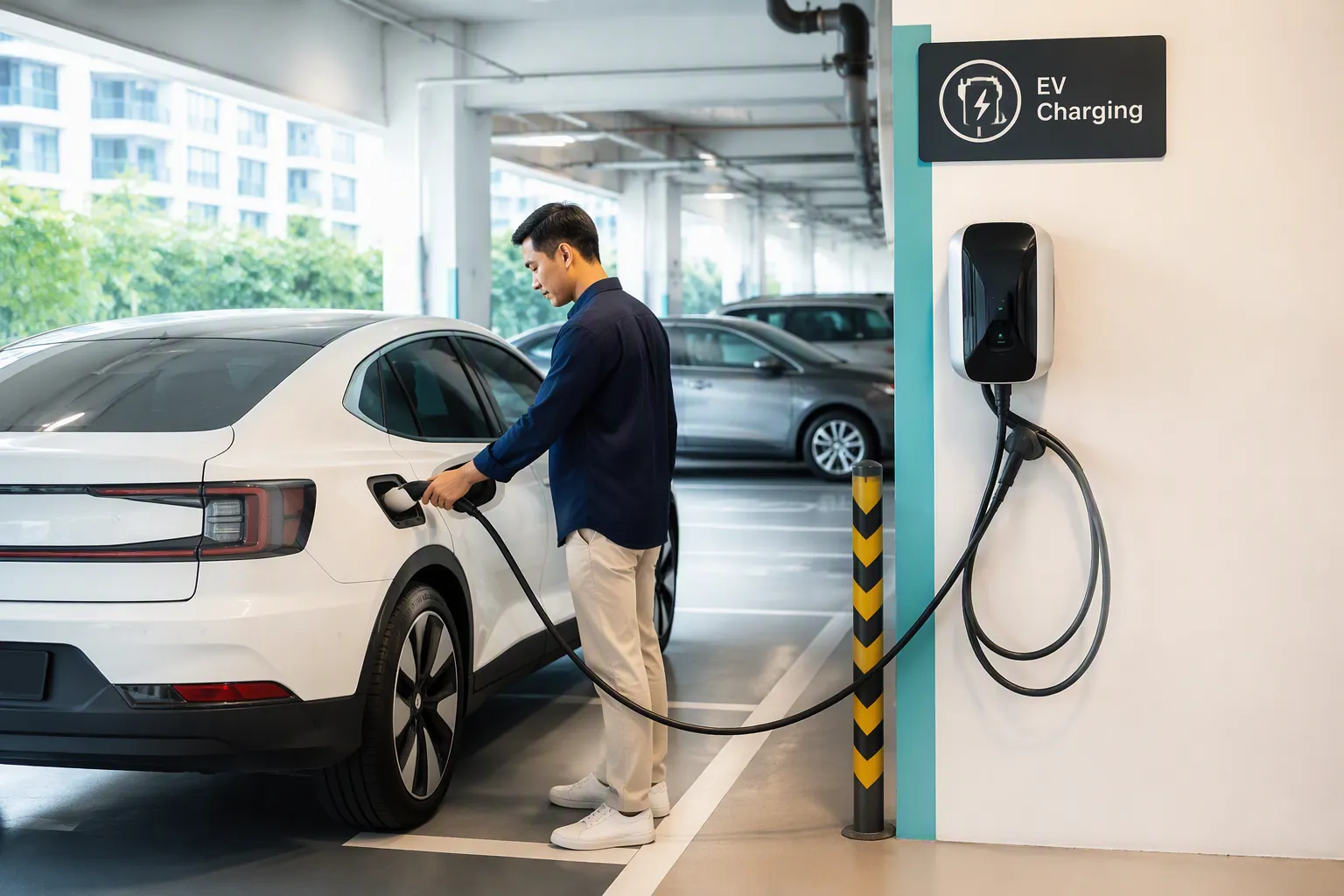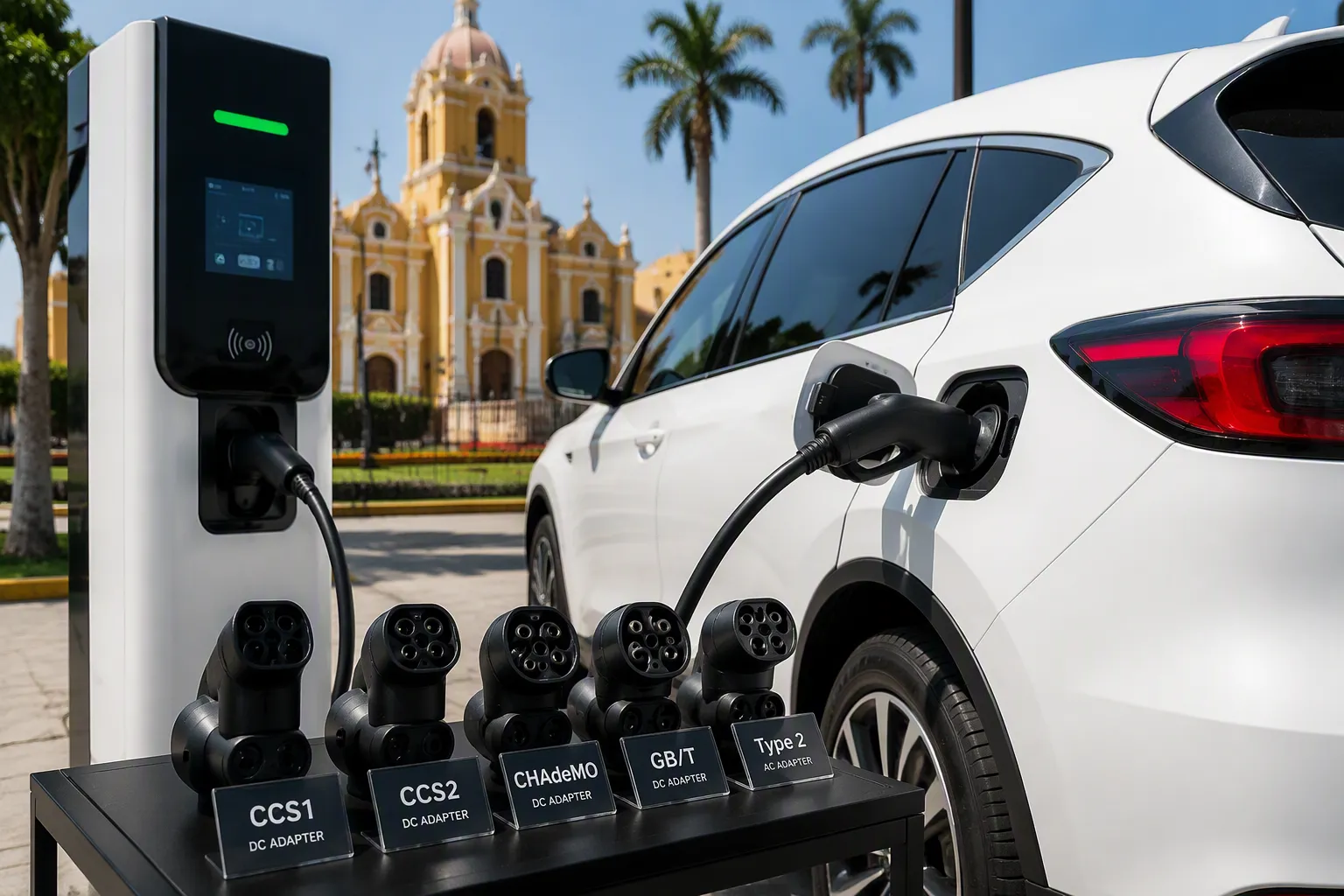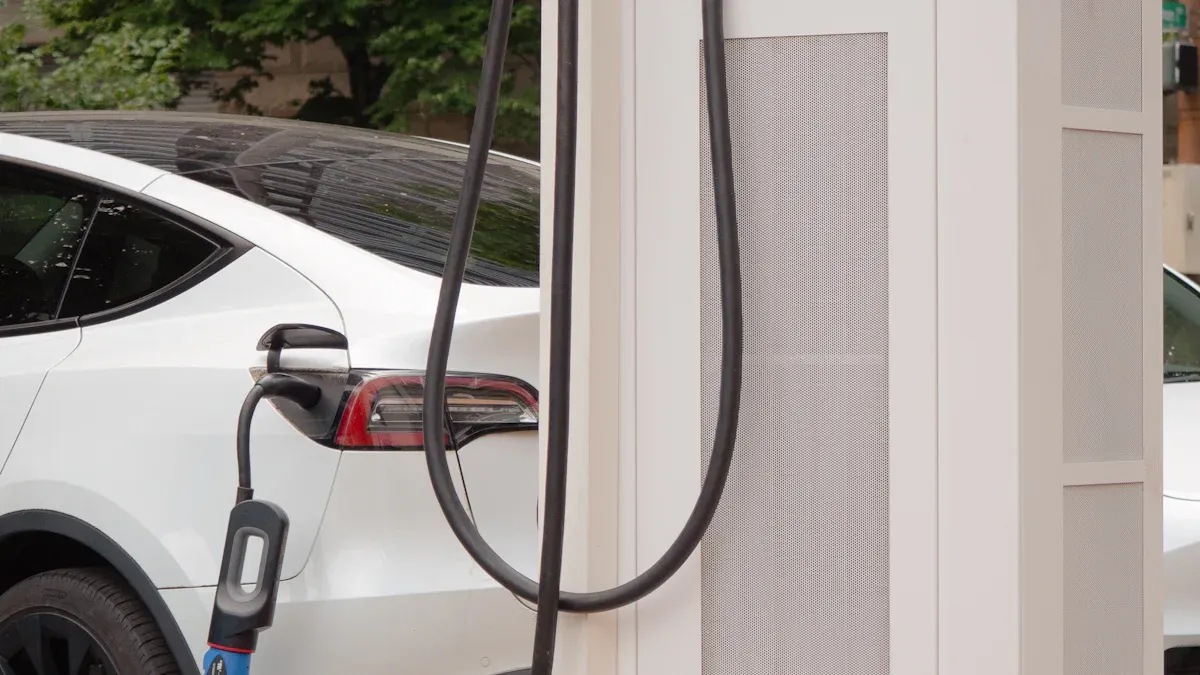
Finding the best EV-Ladegerät for apartment living in major German cities is now a manageable task. A smart Level 2 wallbox with OCPP compliance stands out as the premier choice. This type of EV Charger offers the ideal balance of charging speed and safety for overnight EV charging.
Anmerkung: Germany’s “Right to a Wallbox” legally empowers tenants to request a professional charger installation for their EV, making home EV charging an attainable goal.
Fortgeschrittene EV-Ladelösungen von führenden Hersteller von EV-Ladegeräten deliver future-proof technology. This dedicated charger ensures reliable EV charging, a significant upgrade over slow tragbare ev-ladegeräte. The right setup makes daily EV charging convenient for any EV owner, simplifying the EV charging process.
Why a Smart Level 2 Wallbox is the Best EV Charger Choice

Die Auswahl der best EV charger involves understanding the fundamental differences in charging technology. An EV driver’s choice directly impacts charging speed, cost, and convenience, especially in a shared living environment. A smart Level 2 wallbox emerges as the superior solution for apartment buildings in Germany.
Understanding EV Charging Levels
Level 1 (protective contact Socket): The Slow Emergency Option
Level 1 charging uses a standard household protective contact socket. This method is incredibly slow, often requiring over 24 hours for a full charge. It serves best as a last-resort option when no other charging infrastructure is available. Relying on this daily is impractical for most EV drivers.
Level 2 (Wallbox): The Apartment Sweet Spot
A Level 2 wallbox is the ideal solution for residential buildings. This dedicated charger provides a much faster and safer charging experience, typically replenishing an EV battery overnight in 6-10 Stunden. It ensures reliable charging availability for daily commutes and makes home charging a convenient reality for any EV owner.
Level 3 (DC Fast Charging): Public and Not for Home Use
Level 3, or DC fast charging, delivers extremely rapid charging speeds. These powerful systems are fixtures of the public charging infrastructure and are found at dedicated DC charging locations along highways. They are not designed for home installation due to their immense power requirements and cost. While public charging at DC charging locations offers rapid charging, it is meant for long-distance travel, not daily use. The public charging infrastructure of DC charging locations provides rapid charging for travelers. Drivers use DC charging locations for rapid charging sessions that can restore 80% battery in under an hour. The goal of public charging at DC charging locations is speed, offering rapid charging to get drivers back on the road. These DC charging locations are essential for the viability of long-range EV travel.

Smart vs. ‘Dumb’ Wallboxes
What Defines a ‘Dumb’ Wallbox?
A ‘dumb’ wallbox is a basic device. It performs one function: it delivers electricity to an EV when plugged in. These units lack connectivity and cannot communicate with a network, an app, or the power grid. They offer no features beyond basic safety protections.
Essential Smart Features for Apartments
Smart wallboxes integrate Wi-Fi or LAN connectivity. This connection unlocks crucial features for apartment dwellers.
- Fernsteuerung: Users can start, stop, and monitor charging sessions via a smartphone app, which grants easy access to the charger.
- Planmäßige Aufladung: Owners can schedule charging for off-peak hours when electricity is cheaper.
- Energieüberwachung: The app tracks electricity usage for accurate billing and reimbursement. Technologically advanced providers like TPSON build these smart capabilities directly into their charging stations.
The Critical Role of Dynamic Load Management (Load Management)
In a building with multiple charging points, Dynamic Load Management is essential. This smart feature automatically balances the electrical load across all active charging stations. It ensures the building’s total power capacity is never exceeded, preventing tripped breakers and promoting a stable charging infrastructure for every EV.
Future-Proofing with Open Charge Point Protocol (OCPP)
What is OCPP?
The Open Charge Point Protocol (OCPP) is a universal application protocol. It allows any OCPP-compliant charging points to communicate with any OCPP-compliant management software, regardless of the manufacturer. It creates a standardized and open charging network.
Why OCPP Prevents Vendor Lock-In
OCPP compliance is the ultimate future-proofing feature. It gives property managers the freedom to choose or switch their backend management software provider without replacing the physical charging infrastructure. If a service provider’s fees increase or their service declines, the building can simply migrate to a new OCPP-compliant platform, ensuring competitive pricing and flexible access for years to come.
Key Factors for Choosing the Best EV Charger
Selecting the right hardware is a critical step after understanding the technology. An EV driver must evaluate the building’s electrical system, their personal charging needs, and the software that ties it all together. These factors ensure the chosen charger is both practical and efficient for apartment living in Germany.
Assessing Your Building’s Electrical Infrastructure
Checking Your Building’s Grid Connection Capacity
Before any installation, it is vital to determine the building’s total electrical capacity. This assessment reveals how much power is available for new EV charging points without overloading the system. A property’s grid connection dictates the number and power of the chargers the charging infrastructure can support.
Single-Phase vs. Three-Phase Connections
Most modern German apartment buildings use three-phase power. This is highly advantageous for EV charging. A three-phase connection provides a steadier, more balanced power delivery ideal for higher electrical loads.
An 11 kW charger on a three-phase connection draws a manageable 16 amps per phase. The same charger on a single-phase connection would draw a much higher 48 amps, placing significant strain on the wiring.
This balanced distribution prevents conductor overloading and enables faster, more efficient charging. It is the foundation for a robust charging infrastructure.
The Importance of a Pre-Installation Site Check
A professional site check by a certified electrician is non-negotiable. The electrician will inspect the main distribution board, assess the existing wiring, and determine the best installation path. This check confirms the feasibility of adding new charging points and provides an accurate quote for the work.
Matching Charger Power to Your Needs
11 kW vs. 22 kW: What’s the Difference?
The primary difference is charging speed. A 22 kW charger can replenish an EV battery in three hours or less, while an 11 kW charger typically takes four to six hours. However, the EV itself must be able to accept 22 kW AC charging.
| Fahrzeugtyp | Max AC Charging |
|---|---|
| Renault Zoe, Smart #3 | 22 kW |
| Tesla Model 3, KIA EV6 | 11 kW |
Many popular EV models cannot take advantage of 22 kW charging, making an 11 kW charger a more universally practical choice.
Why 11 kW is Often Sufficient for Overnight Charging
For the average daily commute, an 11 kW charger is perfectly adequate. It reliably provides a full charge overnight, ensuring the EV is ready each morning. This power level offers an excellent balance of charging speed and cost, meeting the needs of most EV drivers without requiring extensive electrical upgrades. This makes it the best EV charger option for many.
Regulatory Considerations for Chargers Over 11 kW
In Germany, any charging station up to 11 kW only needs to be registered (registered) with the local grid operator. However, any charger with a power rating above 11 kW requires formal approval (approval) before installation. This adds an extra administrative step to the process.
Evaluating Connectivity and Software
Wi-Fi and LAN Connectivity Options
Reliable connectivity is the backbone of a intelligentes Ladegerät. Wi-Fi is convenient, but a wired LAN connection offers superior stability, especially in underground garages where wireless signals can be weak. Technologically advanced providers like TPSON offer charging points with both options to ensure consistent communication.
User-Friendliness of the Companion App
The companion app is the primary interface for the EV owner. A user-friendly app allows for easy scheduling of charging sessions, monitoring energy consumption, and managing payments. An intuitive design simplifies the entire charging experience.
Integration with Other Smart Home Systems
For homeowners, integrating the EV charger with other smart home energy systems provides a holistic view of power usage. This allows for advanced energy management, further optimizing charging times and costs based on solar production or dynamic electricity tariffs.
Navigating German Regulations and Installation
Understanding the legal and technical landscape is crucial for a successful EV charger installation in Germany. The process involves asserting legal rights, following a structured installation plan, and ensuring full compliance with national grid standards. This ensures a safe and legally sound charging setup for any EV owner.
Your Legal Right: The ‘Right to a Wallbox’ Explained
A landmark piece of legislation fundamentally changed the game for EV owners in apartments. The ‘Right to a Wallbox,’ or ‘Right to a Wallbox,’ provides a legal foundation for tenants and condominium owners to request the installation of a private charging station.
The Modernized Condominium Law (WEMoG)
Enacted in December 2020, the Condominium Modernization Act (WEMoG) is the cornerstone of this right. The German government, recognizing the need to support e-mobility, passed this law to remove previous barriers to private charging infrastructure. It provides planning security for homeowners and tenants who want to transition to an electric vehicle.
“The right to install a private wallbox is important for the success of e-mobility. Both home owners and tenants in Germany can at last plan reliably.” – Thomas Ulbrich, former VW board member
This law establishes that the installation of an EV charging station is a “privileged measure” (privileged measure), similar to accessibility modifications or burglary protection.
Your Rights as a Renter (renter)
A renter (renter) has the right to request permission from their landlord to install an EV charging station at their designated parking space. The landlord cannot unreasonably refuse this request. The renter typically bears the cost of the installation and the electricity used for charging. The landlord may require the renter to sign an agreement covering liability and the process for removing the charger upon moving out. This provides renters with clear access to home charging.
Your Rights as a Condominium Owner (condominium owner)
For a condominium owner (condominium owner), WEMoG simplified the approval process dramatically. Previously, installing a charger often required the unanimous consent of all other owners, an almost impossible hurdle. Now, an owner only needs to bring the motion to the owners’ association (condominium owners’ association, or WEG). A simple majority vote is sufficient for approval. The other owners can only object on very specific grounds. This change grants owners easier access to EV charging solutions.
Legitimate Reasons for a Request to be Denied
While the right is strong, it is not absolute. A landlord or condominium association can deny a request under specific circumstances:
- Structural Impracticability: The building is a protected historical landmark (historical landmark protection), and the installation would deface it.
- Technical Impossibility: The building’s electrical system cannot be upgraded to support even one EV charger without disproportionate effort.
- Unreasonable Burden: The required construction is exceptionally complex or expensive, placing an unreasonable burden on the landlord or community.
These exceptions are narrowly defined, making most requests for a standard EV charging installation difficult to refuse.
The Official Installation Process Step-by-Step
A systematic approach ensures a smooth installation from initial request to the first charging session. Following these steps helps manage expectations and coordinates all involved parties.
Step 1: Formal Request to Landlord or property management
The process begins with a formal, written request ✍️. An EV owner should send a letter or email to their landlord or property management company (property management). The request should clearly state the intent to install an EV charging station at their personal parking spot and ask for permission to proceed with obtaining quotes.
Step 2: Obtaining Quotes from Certified Electricians (certified contractors)
Once permission is granted to explore options, the next step is to contact certified electrical contractors (certified contractors). It is best practice to obtain at least two or three detailed quotes. These quotes should cover:
- The cost of the wallbox itself.
- All necessary wiring and electrical components.
- Labor for installation and commissioning.
- The cost of registering the charger with the grid operator.
Step 3: Grid Operator Approval (grid operator)
The chosen electrician handles the communication with the local grid operator (Wichtige Fragen an Ihren potenziellen Elektriker). The electrician will formally register the planned installation. This step is mandatory for all wallboxes and ensures the local grid can handle the additional load from EV charging. This process provides grid operators with the necessary data to maintain a stable power supply for everyone.
Step 4: Professional Installation and Handover
After receiving the green light from the grid operator, the certified electrician can perform the installation. They will run the necessary cables, mount the wallbox, and connect it to the building’s electrical panel. Upon completion, the electrician provides the owner with all necessary documentation, including an installation protocol and instructions on how to operate the new EV charger. This finalizes the access to convenient home charging.
Technical Rules and Grid Compliance
All electrical work in Germany must adhere to strict technical standards to ensure safety and grid stability. EV charging installations are no exception.
Adhering to TAR Niederspannung (VDE-AR-N 4100)
This regulation, “Technical Connection Rules for Low Voltage,” sets the requirements for connecting systems like EV charging stations to the public grid. It covers everything from the type of circuit protection required to the technical capabilities of the charger. A qualified electrician ensures the entire installation, from the fuse box to the wallbox, is fully compliant with VDE-AR-N 4100.
Notification vs. approval: Notifying vs. Getting Permission
This is a key distinction in the approval process:
- Notification (Notification): All charging stations up to 11 kW must be registered with the grid operator before installation. This is a notification process.
- approval (Approval): Any charging station with a power rating above 11 kW (e.g., 22 kW) requires explicit permission from the grid operator before it can be installed.
This rule is why 11 kW chargers are often recommended for apartment buildings, as they streamline the administrative process.
The Electrician’s Role in Ensuring Compliance
The certified electrician is ultimately responsible for guaranteeing that the installation is safe, legal, and compliant. They select appropriate hardware, like advanced charging stations from providers such as TPSON that meet all German standards, and perform the installation according to all relevant codes. Their final sign-off provides the EV owner with the assurance that their charging setup is reliable and secure, granting them worry-free access to their EV charging solution.
Managing Costs: Subsidies, Billing, and Shared Use
Effectively Kostenmanagement is a key part of implementing a successful EV charging solution. EV owners can significantly lower expenses by exploring government subsidies, establishing fair billing systems, and creating cost-sharing models. These strategies make private EV charging more accessible and financially viable in multi-unit buildings.
Finding Federal and Local Charging Subsidies
Financial incentives can dramatically reduce the initial investment for EV charging infrastructure. While nationwide programs fluctuate, many cities offer their own support.
The Legacy of KfW 440/441 and Future Outlook
The popular KfW 440 and 441 programs provided significant federal funding for private charging stations. Although these specific programs have ended, they set a precedent. EV owners should monitor announcements from federal ministries for future initiatives designed to expand the private charging infrastructure.
Active City-Specific Programs in Berlin
Berlin actively supports the shift to e-mobility. The city’s programs often provide funding for the installation of charging points in residential buildings. These incentives aim to improve access to private charging, complementing the public charging infrastructure.
Active City-Specific Programs in Munich and Hamburg
Major cities like Munich and Hamburg also feature local subsidy programs. These initiatives are tailored to their specific urban environments, encouraging property owners and residents to invest in EV charging. The goal is to increase the number of available charging points across these densely populated cities.
How to Find Current Local Incentives
To find the latest subsidies, EV owners should check their city’s official website (city portal). Searching for terms like “charging infrastructure subsidy” or “wallbox grant” will yield the most current information on available financial support for EV charging.
Solutions for Fair EV Electricity Billing
Accurate billing ensures each EV owner only pays for the electricity they use. Several reliable methods exist to manage this.
Wallboxes with Calibrated Meters (MID meter)
Many smart wallboxes come equipped with a calibrated meter that complies with the European Measuring Instruments Directive (MID). This integrated meter accurately tracks the energy consumed during each charging session, providing transparent data for billing and ensuring fair access.
Installing a Separate Electricity Meter
For a dedicated parking space, installing a separate, official electricity meter is another robust solution. This meter connects directly to the EV owner’s utility account. It completely separates the charging electricity from the building’s general consumption.
Using Third-Party Billing Service Providers
Specialized companies offer comprehensive billing management for shared charging stations. For instance, ChargeGuru operates in Germany and provides solutions for apartment buildings. They use Charge Point Operator (CPO) software to track usage and handle billing, simplifying the process for property managers and ensuring residents have clear access to charging data.
Cost-Sharing Models in Multi-Unit Buildings
In buildings with multiple EV drivers, collaborative models can make the charging infrastructure more affordable for everyone.
Options for Buildings with Multiple EV Drivers
When several residents need EV charging, a shared system is often the most efficient solution. This can involve installing a few shared charging stations in a common area or equipping multiple private spots with smart chargers connected by a load management system.
Splitting Installation Costs Among Residents
Residents can agree to split the initial installation costs. This approach lowers the financial barrier for each individual. The property management can facilitate this agreement, ensuring all participating EV owners contribute their fair share for the new charging infrastructure.
Setting Up a System for Shared Charger Access
For shared charging points, a booking system managed through a smartphone app ensures equitable access. Users can reserve charging times, preventing conflicts and guaranteeing that every EV driver has an opportunity for charging. This organized approach maximizes the utility of the shared charger.
Top Recommended Wallbox Models for the German Market

Die Auswahl der right hardware is the final step in securing a convenient home charging setup. The German market offers excellent options from various manufacturers. The best choice depends on an EV driver’s budget, desired features, and the specific requirements of their building. Below are three highly recommended models that cater to different needs for apartment dwellers.
Heidelberg Wallbox Energy Control: Best for Budget-Conscious Renters
The Heidelberg Wallbox Energy Control is a robust, no-frills charger made in Germany. It focuses on reliability and safety, making it an excellent entry-level choice for renters who need a dependable charging solution without a high upfront cost.
Hauptmerkmale und Spezifikationen
- Leistungsabgabe: Available in an 11 kW version, ideal for overnight EV charging and simplified grid registration.
- Konnektivität: Lacks Wi-Fi or app integration, focusing purely on the core function of charging.
- Load Management: Features integrated dynamic load management for up to 16 connected wallboxes, a crucial feature for multi-unit buildings.
- Access Control: Uses a key switch or an external contact to enable or disable charging, providing simple, physical security.
- Cable: Comes with a fixed charging cable, available in 5m or 7.5m lengths.
Pros and Cons for Apartment Dwellers
Vorteile:
- ✅ Kostengünstig: Its competitive price point makes it an accessible option for renters managing their own installation costs.
- ✅ Reliable and Durable: Known for its high-quality construction and dependable performance.
- ✅ Integrated Load Management: The built-in load balancing is a significant advantage for buildings planning multiple EV charger installations.
Nachteile:
- ❌ No Smart Features: The absence of app control means no remote monitoring, scheduling, or energy tracking.
- ❌ Basic Access Control: The key switch is functional but less convenient than RFID or app-based authentication.
- ❌ Billing Complexity: Without a built-in meter, tracking electricity for reimbursement requires a separate external meter, adding cost and complexity.
Easee Charge Lite: Best for Advanced Smart Features and Scalability
The Easee Charge Lite is a compact, intelligent, and highly scalable charging solution. It is designed for modern buildings and tech-savvy users who want advanced control, future-proof technology, and seamless integration with other energy systems.
Hauptmerkmale und Spezifikationen
- Leistungsabgabe: Delivers up to 11 kW, optimizing charging speed with a streamlined grid approval process.
- Scalability: The system is exceptionally scalable.
- An “Easee Ready” backplate allows for pre-wiring of parking spots at a low initial cost.
- Full “Chargeberry” smart modules can be plugged in later as more residents adopt an EV.
- Bis zu 101 units can operate on a single circuit with autonomous load and phase balancing.
- Intelligente Funktionen: Offers a comprehensive suite of smart capabilities via the Easee app.
- Users can schedule charging sessions to take advantage of off-peak electricity rates.
- The app provides detailed consumption tracking for easy expense management.
- It supports solar integration when paired with the Easee Equalizer, prioritizing self-generated power for EV charging.
- Access Control: Manages access through the app or with RFID key fobs, allowing for easy sharing and security.
Pros and Cons for Tech-Savvy Users
Vorteile:
- ✅ Excellent Scalability: The “Easee Ready” system is perfect for apartment buildings, allowing for gradual expansion of the charging infrastructure without major rewiring.
- ✅ Advanced Smart Control: The user-friendly app provides powerful tools for scheduling, monitoring, and optimizing EV charging.
- ✅ Future-Proof Design: Its ability to integrate with solar and receive over-the-air updates makes it a long-term investment.
Nachteile:
- ❌ Higher Initial Cost: The advanced technology comes at a higher price point compared to basic models.
- ❌ Reliance on Connectivity: While it has offline capabilities, realizing its full potential requires a stable Wi-Fi connection.
Tesla Wall Connector Gen 3: Best for Tesla Owners Needing Universal Compatibility
The Tesla Wall Connector Gen 3 is a sleek and powerful charging station. While designed primarily for the Tesla ecosystem, its universal Type 2 plug makes it a viable option for all EV models in Europe. It is an excellent choice for households with both Tesla and non-Tesla vehicles.
Hauptmerkmale und Spezifikationen
- Leistungsabgabe: Supports up to 22 kW, though it is often installed at 11 kW to simplify regulations and match the onboard charger of most EVs.
- Konnektivität: Uses Wi-Fi for firmware updates and a unique power-sharing feature.
- Power Sharing: Allows up to four Wall Connectors to share power from a single circuit. The units communicate wirelessly to dynamically distribute the available current, ensuring efficient charging without overloading the electrical system. This load-sharing technology is distinct from the dynamic load balancing that adjusts to a building’s total consumption.
- Access Control: The app provides a unique access control feature. An owner can restrict charging to only Tesla vehicles, all EVs, or only specific Tesla VINs, offering flexibility in a shared garage. However, it Es können nicht selektiv bestimmte Nicht-Tesla-Fahrzeuge autorisiert werden..
Vor- und Nachteile für Haushalte mit verschiedenen Elektrofahrzeugmarken
Vorteile:
- ✅ Elegantes Design: Bietet ein minimalistisches, hochtechnologisches Ästhetik, die viele Elektrofahrzeugbesitzer anspricht.
- ✅ Universelle Kompatibilität: Der Typ-2-Stecker ermöglicht das Laden jedes modernen Elektrofahrzeugs.
- ✅ Effektives Power-Sharing: Die drahtlose Power-Sharing-Funktion ist eine elegante Lösung für Grundstücke, die eine geringe Anzahl Ladestationen an einem Stromkreis installieren.
Nachteile:
- ❌ Eingeschränkte Smart-Features für Nicht-Teslas: Erweiterte Zeitplanungs- und Überwachungsfunktionen sind hauptsächlich beim Laden eines Tesla-Fahrzeugs verfügbar.
- ❌ Restriktive Zugangskontrolle: Die Unfähigkeit, bestimmte Nicht-Tesla-Fahrzeuge zu autorisieren, macht die Lösung weniger ideal für die Zugangsverwaltung in großen, gemischten Mehrfamilienhäusern.
- ❌ Kein dynamisches Lastmanagement: Die Power-Sharing-Funktion gleicht die Last nur zwischen den angeschlossenen Tesla-Ladestationen aus, nicht im Verhältnis zum Gesamtenergieverbrauch des Gebäudes.
Die beste Elektrofahrzeug-Ladestation für das Wohnen in einer Wohnung in Deutschland zu finden, ist möglich. Eine intelligente Level-2-Wallbox mit OCPP ist die optimale Lösung für zukunftssicheres Elektrofahrzeug-Laden. Das ‘Recht auf eine Wallbox’ ermächtigt einen Elektrofahrzeugbesitzer gesetzlich, eine Installation zu verfolgen. Wichtige Schritte für erfolgreiches Elektrofahrzeug-Laden umfassen klare Kommunikation, die Beauftragung eines qualifizierten Installateurs für die Elektrofahrzeug-Ladeeinrichtung und das Erkunden von Förderungen. Ein Elektrofahrzeugfahrer kann das Gespräch heute beginnen, um seinen Weg zum bequemen Laden zu Hause zu starten. Dies macht das tägliche Elektrofahrzeug-Laden zu einer einfachen Realität.
FAQ
Was passiert, wenn mein Vermieter meine Anfrage für eine Ladestation ablehnt?
Ein Vermieter kann nur aus bestimmten, legitimen Gründen ablehnen, wie strukturelle Unmöglichkeit oder wenn das Gebäude ein denkmalgeschütztes Bauwerk ist. Das ‘Recht auf eine Wallbox’ gibt Mietern eine starke rechtliche Position. Ein Elektrofahrzeugbesitzer sollte seine Rechte kennen, bevor er das Gespräch über das Elektrofahrzeug-Laden beginnt.
Wer ist für die Installationskosten verantwortlich?
Der Mieter oder Wohnungseigentümer, der die Ladestation beantragt, ist in der Regel für alle Kosten verantwortlich. Dies umfasst die Wallbox-Hardware, die professionelle Installation und alle notwendigen Elektro-Upgrades. Diese Investition ermöglicht das Laden zu Hause.
Ist eine 11-kW-Ladestation für das tägliche Laden leistungsstark genug?
Ja, eine 11-kW-Ladestation ist für die meisten Fahrer ausreichend. Sie lädt eine typische Elektrofahrzeugbatterie über Nacht vollständig auf. Diese Leistungsstufe vereinfacht das Netzfreigabeverfahren und ist damit eine praktische Wahl für das Laden in Wohnungen.
Wie wird der Strom für meine Ladevorgänge abgerechnet?
Eine faire Abrechnung wird auf mehrere Arten erreicht.
- Eine Wallbox mit einem kalibrierten MID-Zähler erfasst die Nutzung.
- Ein separater Stromzähler kann für die Ladestation installiert werden.
- Drittanbieterdienste können die Abrechnung für gemeinsame Ladesysteme verwalten.
Ist das Laden zu Hause günstiger als das öffentliche Laden?
Das Laden zu Hause ist fast immer kostengünstiger als das öffentliche Laden. Private Stromtarife sind niedriger als die Gebühren an den meisten kommerziellen Stationen, insbesondere an DC-Schnellladern. Dies macht das tägliche Laden wirtschaftlicher.
Kann ich meine Ladestation noch nutzen, wenn das Wi-Fi ausfällt?
Die meisten intelligente Ladegeräte, einschließlich fortschrittlicher Modelle von Anbietern wie TPSON, ermöglichen Offline-Laden. Die Einheit wird weiterhin Strom an das Fahrzeug liefern. Allerdings erfordern Smart-Features wie Fernüberwachung oder Zeitplanung eine aktive Internetverbindung für volle Funktionalität.
Was passiert mit der Wallbox, wenn ein Mieter auszieht?
Typischerweise legt der Mietvertrag fest, dass der Mieter die Ladestation auf eigene Kosten entfernen und den Parkplatz in seinen ursprünglichen Zustand versetzen muss. Einige Vermieter bieten möglicherweise an, die Ausrüstung zu kaufen. Dies macht die Ladeeinrichtung zu einem transportablen Gut.