The demand for reliable EV charging is rising among UK residents. While households in flats show a higher likelihood of having an EV charger, overall access remains limited. This presents a significant opportunity for property managers.
| Dwelling Type | Access to EV Charge Point |
|---|---|
| Flats | 11% |
| Houses/Bungalows | 6% |
Property managers must find the right charging solution for their EV-driving residents. The best ev charging solution considers building capacity and future EV adoption for vehicle charging. The UK government offers grants, making this an ideal time to explore top Elektrikli araç şarj çözümleri itibaren Elektrikli araç şarj cihazı üreticileri, moving beyond basic taşınabilir elektrikli araç şarj cihazları. Technologically advanced providers like TPSON deliver a comprehensive electric solution for electric vehicles.
Step 1: Assess Your Property and Resident Needs
A successful EV charging project begins with a thorough assessment of your property and its community. This foundational step ensures the final solution aligns with both physical limitations and resident expectations.
Survey Current and Future EV Demand
Gauging Initial Resident Interest
Property managers should first understand the immediate need for EV charging. A simple digital survey is an effective tool to gather this data from residents. It can help determine how many current EV drivers live in the flats or terrace houses.
Key questions to ask residents include:
- Do you currently own or lease an electric vehicle?
- Are you planning to acquire an EV in the next 1-2 years?
- Would on-site EV charging access influence your decision to remain a resident?
This initial feedback provides a clear baseline for the project’s scope.
Projecting Future EV Adoption
Current demand is only part of the picture. The UK plans to end the sale of new petrol and diesel vehicles by 2035. This policy will accelerate EV adoption across the country. Property managers must plan for a future where a majority of residents in flats and terrace properties may own an EV. A scalable charging infrastructure is not just an amenity; it is a long-term investment. Planning for future growth now prevents more costly upgrades later.
Evaluate Your Car Park Layout
Mapping Allocated vs. Communal Spaces
The layout of your parking area dictates the type of charging infrastructure needed. Properties with allocated bays, common for a terrace or some flats, can have a charger dedicated to a single vehicle. In contrast, residential buildings with communal parking areas require a different strategy. These spaces are better suited for shared chargers that serve multiple residents. Mapping these zones is a critical step in designing an equitable system for all residents.
Identifying Optimal Charger Locations
Profesyonel ipucu: Charger placement impacts cost, usability, and safety. The ideal location is close to the main electrical intake to minimize trenching and cabling costs. It should also be well-lit, clearly marked, and compliant with accessibility standards.
Conduct a Professional Site Survey
A professional site survey is the most critical action in this phase. It moves planning from theoretical to practical. Technologically advanced providers like TPSON can deliver a comprehensive assessment for your EV charging solution.
Assessing Main Electrical Supply
An installer will first inspect the building’s main incoming electric supply. They check the Distribution Network Operator (DNO) fuse rating and the condition of the main supply cables. This assessment determines the total power available to the entire property, including the flats, terrace homes, and all communal areas.
Determining Maximum Load Capacity
The survey identifies the building’s existing peak electricity usage. Subtracting this from the total available supply reveals the maximum load capacity for a new EV şarj cihazı installation. This calculation dictates how many EVs can perform charging simultaneously without overloading the system. If capacity is limited, the survey will inform the need for advanced EV charging solutions, like dynamic load management, to maximize the existing infrastructure.
Step 2: Understand UK EV Chargers and Regulations
Navigating the technical and legal landscape is a crucial step in selecting the right EV charging solution. Property managers must understand charger speeds, UK government mandates, and available financial incentives to make an informed decision.
Choosing the Right Charger Speed
The speed of an EV şarj cihazı determines how quickly a vehicle’s battery can be refilled. For apartment complexes, the choice typically comes down to 7kW and 22kW units.
7kW Chargers for Overnight Use
A 7kW charger is the industry standard for residential properties. It provides a reliable and efficient overnight charging solution, which aligns perfectly with resident behavior. Most EV drivers plug in when they arrive home and unplug in the morning. A 7kW unit can fully charge most electric vehicles in 4-8 saat, ensuring residents start each day with a full battery.
| EV Modeli | Batarya Boyutu (kWh) | 7kW Charging Time (approx.) | 22kW Charging Time (approx.) |
|---|---|---|---|
| Nissan Leaf | 62 | 9 hours | 3 saat |
| Tesla Model 3 | 57.5 | 8 hours | 2,5 saat |
| Volkswagen ID.3 | 58 | 8.5 hours | 2,5 saat |
When to Consider 22kW Fast Chargers
While 7kW chargers are sufficient for most needs, 22kW units offer a faster charge, refilling a typical EV battery about three times faster. These are best for specific scenarios.
When is a 22kW charger a good choice?
A 22kW charger is ideal for apartment buildings with large, shared parking areas. A single 22kW post can serve multiple vehicles more quickly, which is useful when demand is high and charger turnover is necessary. However, installing them requires a three-phase electrical supply, which a site survey must confirm is available.
Complying with UK Smart Charging Rules
The UK government has established clear regulations for new EV charge point installations to help manage the national grid’s energy demand.
The Legal Mandate for Smart Chargers
The Electric Vehicles (Smart Charge Points) Regulations 2021 mandate that most new private EV chargers sold in the UK must be smart. This means the charger must be able to:
- Send and receive information over a network.
- Respond to signals to adjust charging times or rates.
- Include pre-set, off-peak default charging hours.
- Meet specific cybersecurity and safety standards.
Property managers must select a smart charging solution from a provider like TPSON to ensure full compliance with UK law.
How Off-Peak Charging Reduces Costs
A key benefit of a smart EV charger is its ability to schedule charging for off-peak hours when electricity is cheapest. This feature offers significant savings for residents. Shifting a charging session to an off-peak tariff can save a typical EV driver hundreds of pounds annually compared to charging at peak rates. For high-mileage drivers, these savings can exceed £1,000 per year.
Leveraging the OZEV Grant for Landlords
The UK government offers financial support through the Office for Zero Emission Vehicles (OZEV) to encourage the installation of EV infrastructure.
Checking Eligibility Criteria
The EV Chargepoint Grant for landlords provides funding to reduce the upfront cost. To be eligible, an applicant must:
- Be a registered entity, such as a Right to Manage company, housing association, or a company owning the building’s common areas.
- Have designated off-street parking for the property.
- Use an OZEV-approved installer for the project.
The grant provides up to £350 per charging socket. Landlords can claim up to 200 of these grants per financial year.
The Application Process
The process begins with the landlord or management company creating an account on the OZEV portal. They will need to provide their company registration or VAT number. The applicant then starts a claim, providing property details and the information for their chosen OZEV-approved installer. The installer completes the final technical details of the claim after the work is finished.
Grant Access for Residents’ Management Companies
Residents’ Management Companies (RMCs) are explicitly listed as eligible applicants for OZEV grants. This empowers residents to take a leading role in future-proofing their own building, giving them a direct path to accessing government funding for their EV charging project.
Step 3: Select Your EV Charging Solution and Management System
After assessing your property, the next step is to choose the hardware and software that will power your EV charging network. This decision impacts everything from resident satisfaction to your building’s operational efficiency. Technologically advanced providers like TPSON offer integrated systems that combine robust hardware with intelligent management software.
Comparing Hardware Options
The physical charger is the most visible part of the system, but not all chargers are created equal. The choice between a basic “dumb” unit and a connected smart charger is a critical one.
The Limitations of “Dumb” Chargers
“Dumb” chargers offer a single function: they supply power to an EV. They lack the connectivity and intelligence needed for a multi-unit dwelling.
These basic units cannot connect to a network, integrate with smart energy tariffs, or balance electrical loads. This limitation risks overloading the building’s circuits and offers no way to manage costs or user access, making them unsuitable for a shared apartment environment.
Benefits of a Smart EV Charging Solution
Smart EV charging solutions provide the connectivity and control essential for apartment complexes. These systems offer reliable charging and are a requirement for OZEV grant eligibility in the UK. They connect to a central platform, enabling a host of features that benefit both managers and residents. Top-rated smart hardware options in the UK include:
- Easee One: A secure and robust charger with a universal socket and app-based management, ideal for commercial and domestic use.
- QUBEV Smart: A versatile charger with an adjustable power rating and an easy-to-use app, well-suited for residential parking areas.
- Project EV EVA-22D-SE-RFID: A 22kW dual-socket charger designed for high-usage commercial applications, featuring RFID access for secure use in shared car parks.
Implementing Load Management Technology
A key feature of smart EV charging solutions is load management. This technology is vital for installing multiple EV chargers without requiring an expensive upgrade to the building’s main electrical supply.
What is Static Load Balancing?
Static load balancing sets a fixed, maximum power limit for a group of chargers. For example, if four chargers share a 22kW supply, the system might cap each charger at 5.5kW. This method prevents overloads but is inefficient, as it does not adapt to how many EVs are actually charging.
How Dynamic Load Management Maximizes Capacity
Dinamik yük yönetimi is a smarter solution. It continuously monitors the building’s total electricity consumption in real-time. The system then intelligently distributes all available power to the EVs that are charging. If only one EV is plugged in, it can receive the maximum possible power. When multiple EVs connect, the system shares the available capacity among them.
This technology uses components that update constantly to prevent overloads.
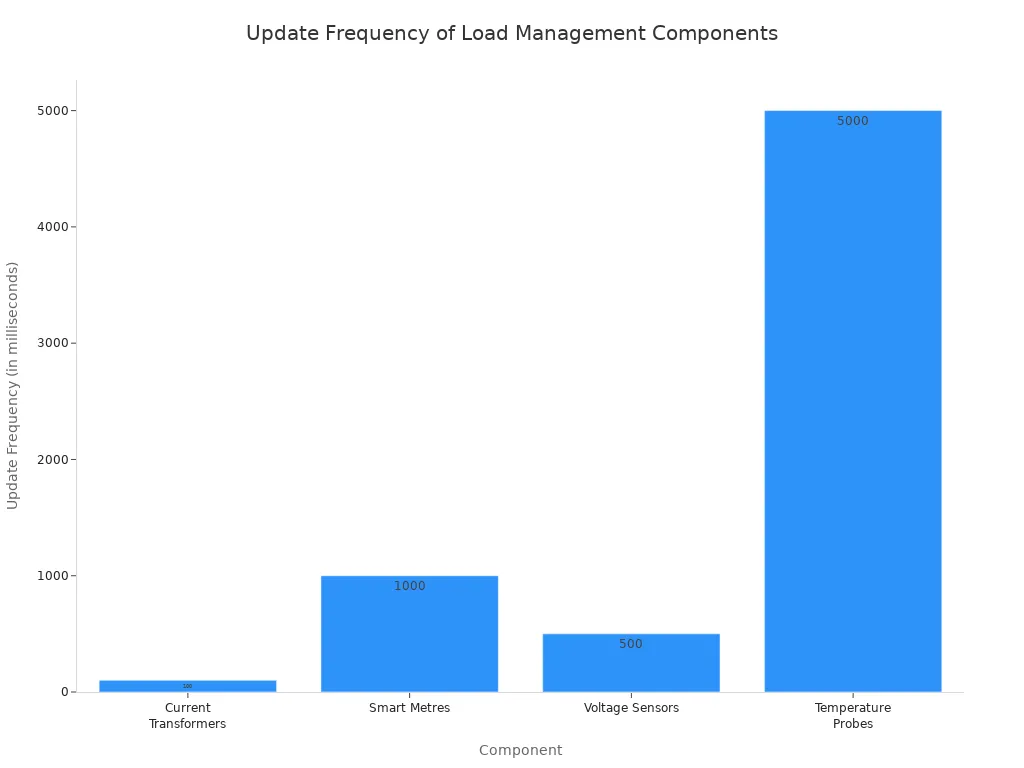
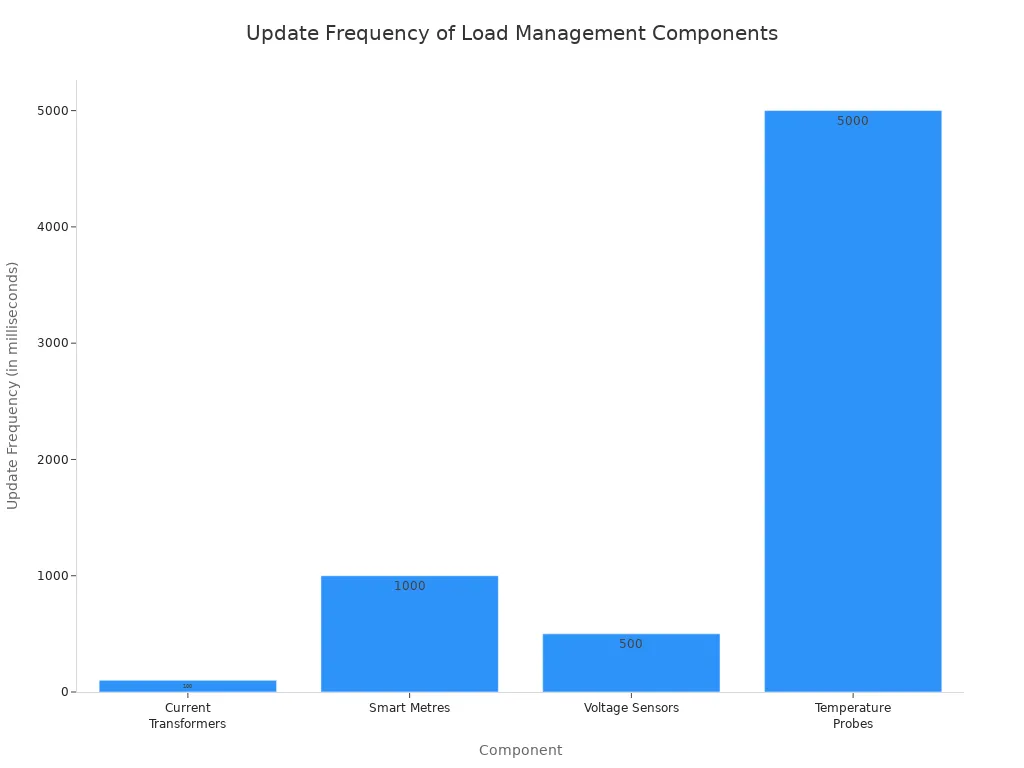
A West London property, Convent Way, successfully used this technology to install 45 EV charge points. Dynamic load management reduced the building’s projected maximum demand by 53%, making the project feasible without a costly grid upgrade.
Using a Central Management Platform
Smart EV charging solutions are managed through a central software platform. This gives property managers complete oversight of the entire charging network from a single dashboard.
Uzaktan İzleme ve Kontrol
A management platform allows property managers to monitor the status of every charger remotely. They can see which units are in use, available, or require maintenance. Managers can also restart a charger or manage user access directly from a mobile app or web portal, ensuring the system runs smoothly without needing to be on-site.
Usage Tracking and Reporting
The platform tracks every charging session, recording data like energy consumed, charging duration, and the specific user. This information is essential for creating a fair billing system. Detailed reports help managers understand usage patterns, forecast future demand, and ensure the costs of the EV infrastructure are covered. This data provides the foundation for the transparent billing models discussed in the next step.
Step 4: Design a Fair and Transparent Billing Model
A successful EV charging installation depends on a billing model that is both financially sustainable for the property and fair for residents. A clear, transparent system builds trust and encourages adoption. Property managers must select a method that aligns with their operational capabilities and the community’s needs.
Choosing a Resident Billing Method
There are three primary models for billing residents for their EV energy consumption. Each offers distinct advantages and is suited to different property types.
Pay-As-You-Go (PAYG) via App
The PAYG model offers maximum flexibility. It allows any resident or visitor to use an EV charger without prior registration, typically by scanning a QR code and paying via a mobile app. While convenient for occasional use, this method often results in a higher cost per kilowatt-hour for the EV driver. It is an excellent option for properties expecting varied use or guest charging.
Subscription-Based Access
A subscription model provides a more integrated experience for regular users. Some services offer residents a comprehensive package for a monthly fee. These packages can be highly attractive, often including:
- Free installation of a smart Ohme charger.
- A full warranty on the hardware.
- Inclusive overnight EV charging.
- An annual power allowance, sometimes starting from 6,000 miles of EV driving.
This all-in-one approach simplifies the EV ownership experience for residents.
Integrating Costs into Service Charges
Integrating EV infrastructure costs into the building’s service charge is a legally complex option. It requires a thorough review of property leases to ensure cost recovery is permitted.
Key Legal Questions for Landlords:
- Does the lease allow for recovering installation and maintenance costs?
- Can the cost of future technology upgrades be passed on through the service charge?
- Is a formal Section 20 consultation process required for communal works?
This path requires careful legal navigation to confirm the lease allows for recovering costs for “improvements.” A separate meter must also be installed to track electricity usage for accurate billing, ensuring compliance with OFGEM regulations.
Ensuring Transparent Pricing
Regardless of the billing method, transparency is paramount. Residents must understand what they are paying for and why.
Setting a Fair Rate Per kWh
A fair rate should cover more than just the raw cost of electricity. The price per kWh must account for the energy used, software management fees, hardware maintenance, and a small margin for future system upgrades. Technologically advanced providers like TPSON offer management platforms that help automate these calculations, simplifying the process of setting a sustainable tariff for each EV.
Communicating Costs Clearly to Residents
Property managers should proactively communicate the pricing structure. Using the central management platform, they can provide residents with detailed reports showing their individual charging session data, energy consumed, and total cost. This level of detail demystifies the billing process, prevents disputes, and demonstrates a commitment to fairness for every EV user.
Step 5: Plan Your EV Charger Installation and Future Scalability

The final phase of your project involves selecting a professional partner, evaluating costs, and designing an EV charging infrastructure that can grow with resident demand. A strategic approach to the EV charger installation ensures a smooth process and a future-proof investment for your flats or terrace.
Finding a Qualified Installation Partner
The success of your EV charger installation hinges on the expertise of your chosen installer. For a multi-unit residential building, this requires a partner with specific qualifications and proven experience.
Why to Use OZEV-Approved Installers
To access the UK government’s EV Chargepoint Grant, property managers must use an OZEV-approved installer. This is a non-negotiable requirement. OZEV certification guarantees that the installer meets stringent government standards for safety and quality. It also means the installer can claim the grant on your behalf, simplifying the process and reducing upfront costs for the installation in your flats or terrace. Choosing an OZEV-approved partner provides assurance that the work will be compliant and professional, delivering reliable charging for every EV.
Verifying Multi-Unit Dwelling Experience
Beyond OZEV approval, it is critical to verify an installer’s experience with multi-unit projects like flats and terrace homes. A qualified electrician for this type of EV charger installation will hold advanced certifications.
Key Installer Qualifications:
- Level 3 Award in the Installation and Commissioning of Electric Vehicle Charging Equipment.
- City & Guilds certifications for EV charger installation, design, and maintenance.
- A current ECS Gold Card as an Installation or Maintenance Electrician.
An experienced partner understands the complexities of shared electrical systems in flats and terrace properties, ensuring a hassle-free installation.
Fiyat Teklifi Alma ve Karşılaştırma
Property managers should obtain detailed quotes from at least three qualified installers. A thorough comparison reveals the true cost of the project beyond the initial price tag.
Analyzing Hardware and Software Costs
The quote should clearly itemize the cost of each charger and the central management software. Compare the features of the proposed hardware. Look for a system that offers a good balance of performance and ease of installation. The software is the brain of your EV charging solutions, so ensure it provides the management features your property needs.
Reviewing Installation and Labor Fees
This section of the quote covers all physical work, including trenching, cabling, and mounting the charger units. The cost can vary significantly based on the distance from the electrical supply to the parking bays. A detailed quote will break down these labor and material costs, providing transparency for the complete installation.
Understanding Ongoing Maintenance Fees
Managed EV charging systems incur ongoing operational costs. These fees are essential for keeping the infrastructure running smoothly. A comprehensive quote will outline these recurring expenses.
- Annual Maintenance Contracts: Typically range from £150-£400 per charger.
- Network Management Fees: Often £15-£40 per charger monthly, covering payment processing and user authentication.
- Software Licensing: Can cost £50-£150 per charger annually for updates and security.
Understanding these fees is crucial for budgeting the long-term operation of the EV charging service for your flats and terrace.
Future-Proofing Your Investment
The number of EV drivers will only increase. Planning for scalability from the outset protects your investment and prepares your property for future demand.
Choosing a Scalable System
A scalable system is modular and managed by a powerful Charge Point Management System (CPMS). This software provides a single dashboard to monitor all chargers, add new units, and analyze real-time usage data. This makes it simple to expand the charging infrastructure as more residents in your flats or terrace switch to an EV.
Planning for Phased Expansion
A phased approach allows you to install chargers based on current demand while preparing for future growth. An installer can lay the foundational electrical infrastructure to support additional EV chargers later. This strategy minimizes disruption and spreads the cost over time, making it easier to scale up as EV adoption rises.
Selecting the right EV charging solution requires a clear process. Property managers must assess their site, understand UK regulations, and choose smart EV charging solutions with fair billing. Partnering with a scalable installer is essential. A professional site survey is the most critical first step for any EV project. Installing smart EV charging now prepares a property for the future of electric vehicles.
Research shows that smart EV infrastructure enhances property appeal for residents. It can increase a UK property’s value by up to £5,000 ve boost rental income. This makes a smart EV solution a valuable investment for any EV-ready vehicle fleet, attracting residents ve future-proofing the building for all EV vehicles. Each EV driver benefits from a reliable vehicle charging solution.
SSS
What is the most critical first step for an EV project?
A professional site survey is the most important initial action. An installer assesses the building’s electrical supply and maximum load capacity. This survey provides the essential data needed to design a safe and effective charging solution for any EV.
Are smart chargers a legal requirement in the UK?
Yes, The Electric Vehicles (Smart Charge Points) Regulations 2021 mandate that most new private EV chargers must be smart. This ensures they can manage charging times, connect to a network, and help balance grid demand, which is a key feature for any modern EV.
How can a building with limited power support multiple EV chargers?
Properties can use dynamic load management. This technology monitors the building’s total energy use in real-time. It then intelligently distributes all available power to the connected EV chargers without overloading the main supply. This is an efficient solution.
Who is eligible for the OZEV grant for landlords?
Landlords, property management companies, and Residents’ Management Companies (RMCs) can apply. The applicant must be a registered entity with designated off-street parking. They must also use an OZEV-approved installer for the project to receive funding for their EV.
What costs should a resident billing model include?
A fair billing rate should cover more than just electricity. It must also account for software management fees, hardware maintenance, and a small margin for future system upgrades. Technologically advanced providers like TPSON offer platforms that simplify setting a sustainable tariff.
How can a property prepare for future EV demand?
Property managers should choose scalable ev charging solutions. A phased installation allows for initial setup based on current need. Pre-installing the foundational electrical work makes it easier and more cost-effective to add more chargers as EV adoption grows.