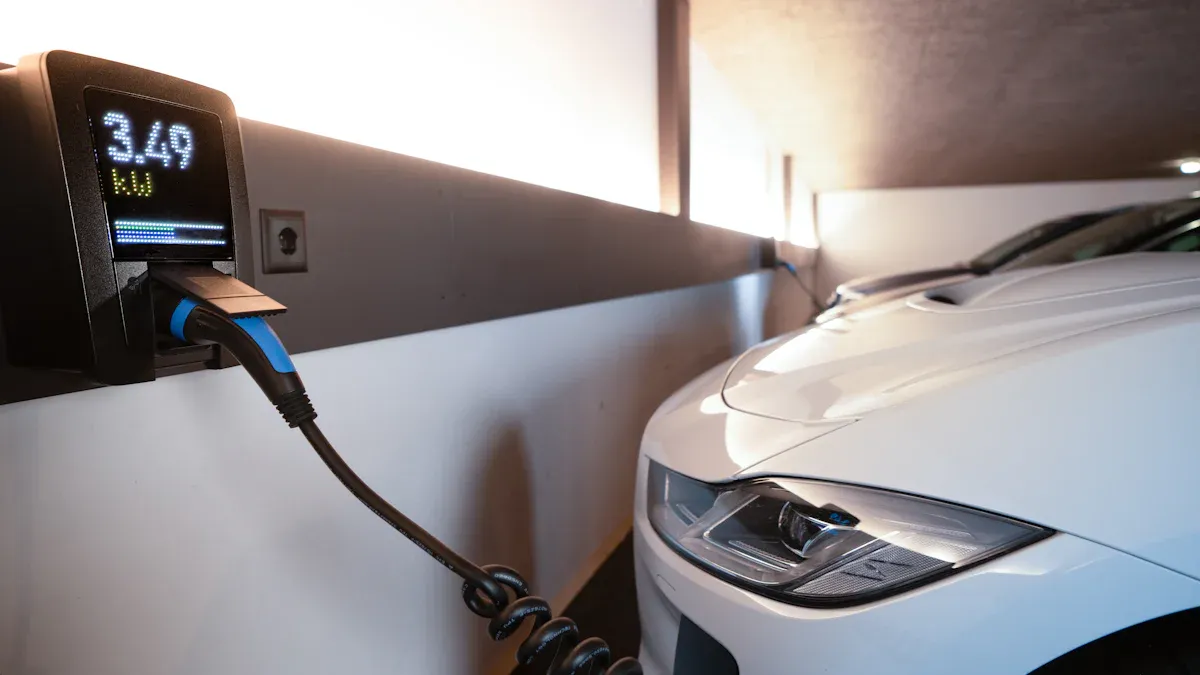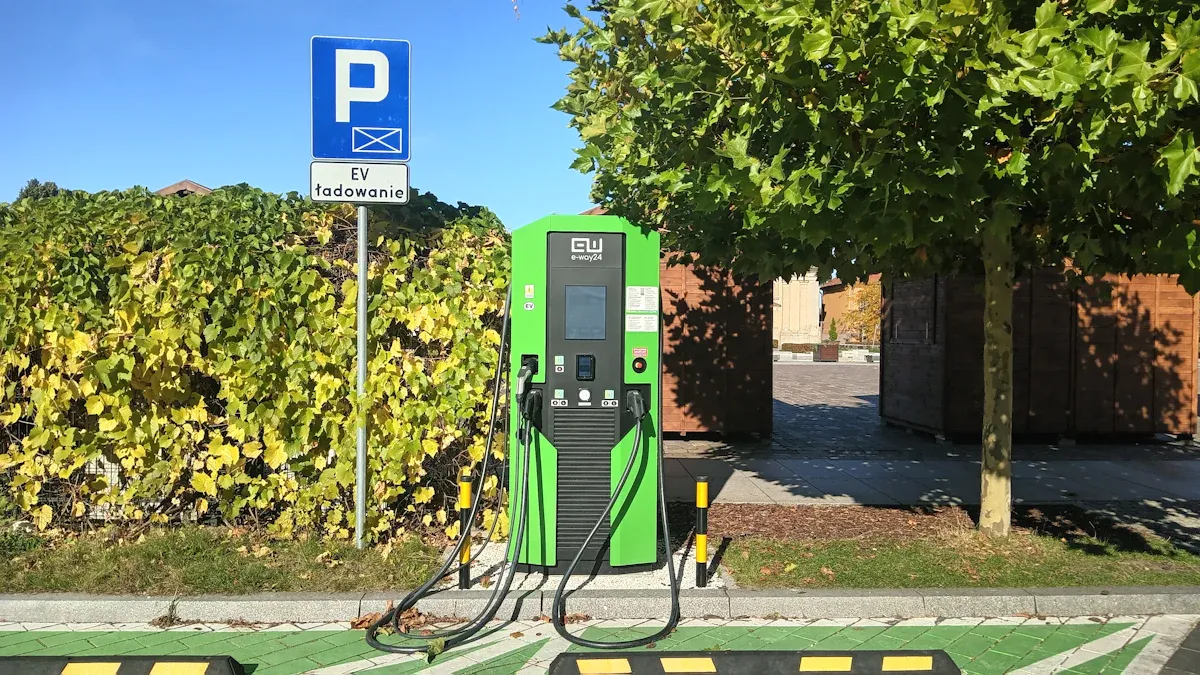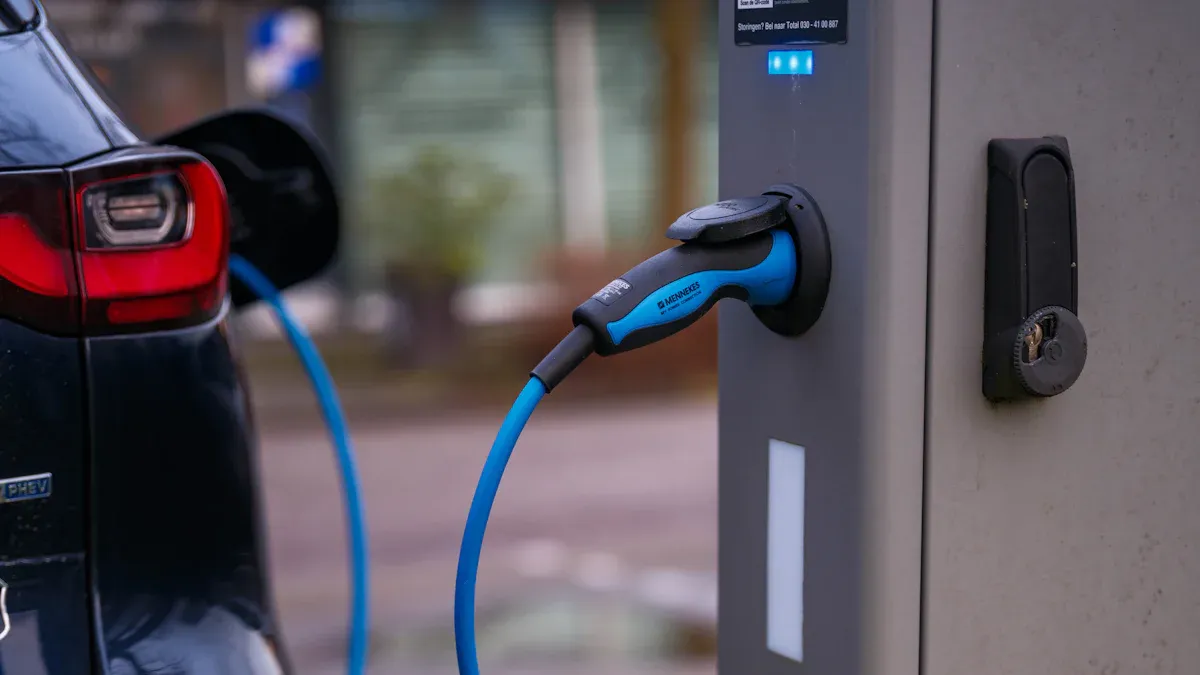
An electric vehicle owner’s primary concern often revolves around maximizing EV battery life. With the projected mass adoption of EVs expected by 2028 in the United States, understanding proper charging habits is crucial. More than 80% of EV owners charge their vehicles at home, making daily routines central to battery health. For daily driving, the simple rule is to initiate charging with your EV Şarj Cihazı before the EV battery drops below a 20% state of charge. Adhering to the “20-80% rule”—keeping the charge level within this range—is the optimal strategy for long-term electric vehicle battery preservation. Occasional dips below 20% for long trips are acceptable and will not cause significant harm. Many Elektrikli araç şarj cihazı üreticileri offer a variety of Elektrikli araç şarj çözümleri, dahil olmak üzere taşınabilir elektrikli araç şarj cihazları, to help owners maintain optimal battery health.
The Critical Importance of Avoiding a Low Battery Level
While modern EV batteries are remarkably durable, understanding how to care for them is key to ensuring their longevity. Good habits prevent premature wear and help maintain optimal performance for years. A crucial aspect of this care is avoiding a consistently low battery level.
What Happens Inside Your EV Battery at a Low Charge?
An electric vehicle battery operates through a constant chemical dance. Letting the charge level drop too low puts unnecessary stress on its internal components.
Understanding Chemical Strain on Lithium-Ion Cells
Lithium-ion cells function by moving lithium ions between a cathode and an anode. At a very low state of charge, the materials in these components experience higher mechanical and chemical strain. This stress makes it harder for the ions to move, which can cause microscopic damage over time. Think of it like a sponge; it’s easy to get water in and out when it’s damp, but wringing out the very last drop requires much more effort and can damage the sponge’s structure.
The Concept of Deep Discharging
A deep discharge occurs when a battery is drained to nearly 0%. Each time this happens, it contributes to irreversible chemical changes inside the battery cells. While a single deep discharge is not catastrophic, making it a regular habit significantly shortens the battery’s lifespan. It forces the battery to work harder during the subsequent charge cycle, generating more heat and accelerating wear.
The Long-Term Consequences of Frequent Low Levels
Consistently running your EV on a low charge has tangible, negative effects. While experts note the impressive durability of modern batteries, poor habits can still lead to costly issues.
“EV batteries aren’t dying. They’re outliving the cars.”
— Professor Colin Herron
Even with this durability, avoiding frequent low charge levels is a smart strategy, especially considering the high cost of battery replacement.
Accelerated Battery Degradation
The most significant consequence is faster degradation. Every time an EV battery is deeply discharged and recharged, it loses a tiny fraction of its ability to hold energy. Frequent drops below 20% increase the rate of this degradation. Drivers should aim to keep their electric car between 20% and 80% for the highest efficiency.
Permanent Capacity Loss Explained
Permanent capacity loss is the irreversible reduction in the total energy a battery can store. This is different from the temporary range reduction seen in cold weather. Each deep discharge contributes to this permanent loss. Over hundreds of cycles, this behavior can noticeably reduce your vehicle’s maximum range, impacting its daily usability and long-term value.
Increased Internal Resistance and Performance Issues
As a battery degrades, its internal resistance increases. This has two main effects:
- Reduced Power Output: Higher resistance means the battery cannot deliver power as quickly. This can lead to sluggish acceleration and diminished overall performance.
- Slower Charging: The battery will also accept a charge more slowly, especially at DC fast-charging stations, as the battery management system works to prevent overheating.
The “20-80 Rule”: The Gold Standard for EV Battery Care

EV owners often hear about the “20-80% rule” as the key to battery longevity. This guideline suggests keeping the state of charge between 20% and 80% for daily driving. This practice is not an arbitrary recommendation; it is based on the fundamental chemistry of lithium-ion batteries. Adhering to the 20-80% rule minimizes stress, reduces wear, and can significantly extend the life of an electric vehicle battery.
Why the 20-80% Range is Optimal
The 20-80% window represents a “sweet spot” where the battery operates with the highest efficiency and lowest stress. Staying within this range helps the internal components maintain their structural integrity for longer.
The Science of Minimizing Battery Stress
A lithium-ion battery works by moving lithium ions between its electrodes. At very high states of charge (above 80%), the charging process forces ions into the anode’s graphite structure, creating physical stress. Conversely, at very low states of charge (below 20%), the nearly empty structure can become unstable. The 20-80% range avoids these extremes.
Profesyonel ipucu: Think of the battery as being in a comfortable, relaxed state within this range. Pushing it to 100% or draining it to 0% is like stretching a rubber band to its absolute limits repeatedly. It will eventually lose its elasticity.
Keeping the battery in this optimal zone provides several key benefits:
- Minimized Stress: It reduces wear on the battery’s electrodes.
- Optimal Performance: The battery delivers reliable power without risking damage.
- Extended Lifespan: This habit can prolong battery life compared to frequent full charge cycles.
How This Range Prevents Lithium Plating
Lithium plating is a harmful phenomenon where metallic lithium builds up on the anode’s surface. This process is more likely to occur at high states of charge and during fast charging, especially in cold temperatures. Plating permanently reduces the battery’s capacity and can even pose a safety risk in extreme cases. By capping the daily charge at 80%, drivers reduce the conditions that foster lithium plating, protecting the long-term health of their ev battery.
The “80%” Cap: Why You Shouldn’t Fully Charge Daily
The upper limit of the 20-80% rule is just as important as the lower one. While seeing “100%” might feel reassuring, consistently charging to full capacity for daily use accelerates degradation.
The Stress of High Voltage on Battery Cells
As a battery approaches a full charge, its internal resistance increases. This causes the charging process to generate more heat. High voltage and excess heat are two of the primary enemies of battery health, causing chemical reactions that degrade the battery’s materials over time. Capping the charge at 80% minimizes this high-voltage stress and heat generation. This simple habit also preserves the effectiveness of regenerative braking, as a full battery cannot store any additional energy captured during deceleration.
When to Charge to 100% for Long Trips
The advice to avoid a 100% charge applies to daily routines. For long road trips, charging to 100% is perfectly acceptable and often necessary. The key is to manage the timing. An electric vehicle owner should schedule the charging session to finish just before they plan to depart. This strategy minimizes the time the battery sits at a stressful 100% state of charge.
The “20%” Floor: Your Daily Charging Trigger
Just as avoiding 100% is crucial, so is preventing the battery from dropping too low. The 20% mark serves as a reliable and safe trigger to begin a charging session.
Why 20% is the Widely Recommended Minimum
Dropping below 20% regularly puts the battery into a state of deep discharge, which strains the electrodes and can lead to irreversible damage. The 20% floor acts as a protective buffer, ensuring the battery’s internal structure remains stable and healthy. Making a habit of plugging in before the battery level gets this low is one of the easiest ways to preserve its maximum capacity.
Is It Okay to Go Below 20% Occasionally?
Yes, it is perfectly fine. An occasional dip below 20% to make it to the next charging station on a long trip will not cause significant harm. Modern battery management systems are designed to protect the battery from occasional deep discharges. The primary goal is to avoid making it a regular habit. For daily driving, initiating charging before the battery hits 20% remains the best practice.
Implementing Smart Charging Best Practices at Home

Translating battery theory into daily habits is simple with modern EV technology. Establishing a consistent home charging routine is the most effective way to protect the battery investment. These charging best practices ensure both longevity and convenience.
Setting Up Your Daily Charging Routine
A smart routine automates battery care. Owners can leverage their vehicle’s built-in software and efficient hardware to create a hands-off system that follows the 20-80 kuralı.
Using Your Vehicle’s Charge Limit Settings
Nearly every electric vehicle allows the owner to set a maximum charge level through its infotainment system or mobile app. This is the most critical tool for daily battery care.
How to Set Your Limit:
- Navigate to the ‘Charging’ menu on your vehicle’s touchscreen.
- Find the setting for ‘Charge Limit’ or ‘Target Charge Level’.
- Adjust the slider or input a value of 80% günlük kullanım için.
This simple setting instructs the vehicle to automatically stop the charging session once it reaches 80%, preventing the stress of a full charge.
The Benefits of Overnight Level 2 Charging
While a standard wall outlet (Level 1) can charge an EV, it is extremely slow. A Seviye 2 şarj cihazı is the superior choice for home charging. Technologically advanced providers like TPSON offer elektri̇kli̇ araç şarj çözümleri̇ that make this process efficient. A Level 2 unit can add 25-30 miles of range per hour, allowing most EVs to reach their 80% target in just a few hours overnight. This speed ensures the vehicle is always ready for the next day’s commute.
Should You Charge Your EV Every Night?
The question of nightly charging frequency depends on driving habits and personal preference. There are valid arguments for both topping up daily and waiting for the battery to drop lower.
Topping Up vs. Waiting for 20%
Plugging in every night, even with minimal daily driving, offers peace of mind and eliminates range anxiety. This charging practice also allows owners to take advantage of cheaper off-peak electricity rates. However, for those who drive less than 40 miles a day, waiting until the battery approaches 20% before initiating a charge is also a sound strategy. This approach reduces the total number of charging cycles over the vehicle’s life.
How Modern Battery Management Systems Help
EV owners can feel confident because a sophisticated Battery Management System (BMS) is always working to protect the battery. The BMS is the brain of the battery pack. It performs several critical functions:
- Prevents Overcharging: It automatically stops the flow of electricity when the set limit (e.g., 80%) is reached.
- Manages Temperature: It uses heating or cooling systems to keep the cells in their optimal temperature range during charging.
- Balances Cells: It ensures all individual cells within the battery pack maintain a uniform charge, maximizing lifespan and capacity.
This intelligent system provides a crucial safety net, making home charging a safe and worry-free process.
How External Factors Influence Your Electric Vehicle Battery
An owner’s habits and environment play a significant role in the long-term health of an electric vehicle battery. Factors like charging speed, ambient temperature, and driving style directly influence its efficiency and lifespan. Understanding these variables allows drivers to make informed decisions that protect their investment.
The Impact of Charging Speed
The method an owner chooses for charging has a direct effect on battery health. Not all charging speeds are created equal.
Level 1 & 2 (AC) Charging for Daily Health
For routine charging, Level 1 and Level 2 AC chargers are the best option. These methods supply power at a slower, more manageable rate. This gentle flow of energy generates minimal heat within the battery pack, reducing stress on the cells. Overnight Level 2 charging is the ideal balance of convenience and battery care.
DC Fast Charging: A Tool for Road Trips, Not Daily Use
DC fast chargers deliver a massive amount of power directly to the battery, enabling a rapid charge. This technology is invaluable for long-distance travel. However, its high power makes it unsuitable for daily use. Frequent reliance on DC fast charging can accelerate battery degradation over time.
Why Excessive Heat from Fast Charging is Harmful
Heat is a primary enemy of the ev battery. While the DC charging process itself is efficient, the high rate of energy transfer can cause the battery’s internal temperature to rise significantly.
DC charging generates less heat in the charging process compared to AC charging. Heat generation can slow down the charging rate, so DC charging is more efficient in this regard.
Despite this efficiency, the battery must work hard to absorb the power, creating internal heat that stresses its chemical components.
How Extreme Temperatures Affect Your Battery
An electric vehicle performs best within a specific temperature window. Extreme cold and heat can negatively impact both range and battery health.
The Dangers of a Low Battery Level in Cold Weather
Cold temperatures reduce a battery’s efficiency and available range. A low state of charge in freezing conditions is particularly risky, as the battery has less energy available to warm itself. This can lead to sluggish performance and even prevent the vehicle from starting.
How Extreme Heat Accelerates Degradation
High ambient temperatures accelerate the chemical reactions inside a battery, leading to faster degradation and permanent capacity loss. Owners should avoid leaving their electric vehicle parked in direct sunlight for extended periods on hot days.
Tips for Managing Temperature Extremes
Most EVs have a thermal management system to protect the battery. Owners can also help by following a few guidelines.
- An EV battery performs optimally 15°C ile 45°C arasında (59°F and 113°F).
- The ideal temperature for battery health and charging is between 20-25°C (68-77°F).
- Drivers can use the vehicle’s preconditioning feature to warm or cool the battery while it is still plugged in.
The Role of Your Driving Style
How a person drives has a direct and immediate impact on battery consumption and long-term wear.
Aggressive Driving and Faster Battery Drain
Aggressive driving habits, such as rapid acceleration and hard braking, deplete the battery much faster. This style forces the battery to discharge energy at a high rate, which induces stress on its internal components and contributes to faster degradation.
Maximizing Range with Smooth Driving and Regenerative Braking
A smooth driving style is crucial for maximizing range. Gentle acceleration and coasting to a stop allow the regenerative braking system to work effectively. This system captures kinetic energy during deceleration and converts it back into a charge for the battery. In urban driving, regenerative braking can recover as much as 26% of the energy used for propulsion, significantly extending the vehicle’s range.
Manufacturer Guidance and Different Battery Chemistries
While the 20-80 rule is an excellent general guideline, the ideal charging strategy can vary based on a vehicle’s specific battery chemistry. Automakers provide tailored advice to help owners maximize the lifespan of their particular electric vehicle battery.
Do All EVs Follow the Same Rules?
Not all electric vehicles use the same type of battery. The two most common chemistries in modern EVs are Nickel Manganese Cobalt (NMC) and Lithium Iron Phosphate (LFP), and they have different care requirements.
General Advice for NMC (Nickel Manganese Cobalt) Batteries
Most EVs on the road today use NMC batteries. For these vehicles, the 20-80 rule is the gold standard. Consistently charging to 100% or letting the charge drop below 20% puts more stress on the cells, zaman içinde hızlanan bozulma.
Special Considerations for LFP (Lithium Iron Phosphate) Batteries
LFP batteries are gaining popularity, especially in standard-range models. These batteries are more durable and less susceptible to stress from high states of charge. LFP cells can be safely charged to full capacity in each cycle. In fact, many manufacturers recommend charging an LFP-equipped electric car to 100% at least once a week to help the Battery Management System accurately calibrate its range estimate.
What Major Brands Recommend
Major automotive brands often provide specific charging guidance directly to their customers, sometimes right on the vehicle’s display.
Tesla’s On-Screen Charging Advice
Tesla is a leader in providing clear, accessible advice. The company’s recommendations vary depending on the battery type in the vehicle.
| Model/Battery Type | Daily Charging Recommendation |
|---|---|
| Model 3 RWD (LFP) | Set limit to 100% and charge fully at least weekly |
| Other Tesla Models (NMC) | Set limit to 80-90% for daily use |
Guidance from Ford, Hyundai, GM, and Others
Most other major manufacturers, including Ford, Hyundai, and General Motors, generally recommend the 20-80% range for their NMC-equipped vehicles. They advise a full 100% charge only when needed for long trips.
Where to Find Your Car’s Specific Guidelines
The best source of information is always the manufacturer. Owners can find these details in a few convenient places.
Consulting the Owner’s Manual
The vehicle’s owner’s manual is the definitive resource. It contains precise information about the battery type and the manufacturer’s official charging recommendations for preserving long-term health.
Checking the Infotainment System and Mobile App
Modern EVs integrate this guidance into their software. The infotainment screen often displays a recommended daily charging limit. Furthermore, mobile apps offer powerful tools for managing your vehicle’s charging.
Profesyonel ipucu: EV mobile apps allow owners to remotely manage their vehicle. Key features often include:
- Scheduling charge times to use cheaper electricity.
- Preconditioning the cabin and battery while plugged in.
- Receiving notifications to track charging sessions.
These tools make it easy to follow best practices from anywhere.
Adhering to the 20-80% rule is the primary strategy for maintaining a healthy battery in daily use. An electric vehicle owner can charge to 100% for long trips, but this should not be a daily habit. The long-term benefits of this discipline are significant.
For example, one driver surpassed 300,000 miles in a hybrid by consistently keeping the charge between 20% and 80%.
Slow charging and mindful driving further protect the electric vehicle battery. For the most accurate advice, owners should always consult their vehicle’s manual, as it provides the best care instructions for their specific ev battery.
SSS
What is the 20-80 rule for EV batteries?
The 20-80 rule is a guideline for daily battery care. An owner keeps the battery’s state of charge between 20% and 80%. This practice minimizes chemical stress on the lithium-ion cells, which helps maximize the battery’s long-term health and lifespan.
Is it bad to charge my EV to 100%?
Charging to 100% daily accelerates battery degradation due to high voltage stress. Owners should reserve a full charge for long trips. For best results, they should plan for the charge to finish just before departure, minimizing time spent at 100%.
Should I charge my EV every night?
Nightly charging offers convenience and ensures the car is always ready. However, owners with short commutes can wait until the charge level approaches 20%. Modern Battery Management Systems (BMS) make both approaches safe and effective for the battery.
Does DC fast charging damage the battery?
Frequent DC fast charging can accelerate battery degradation. The high power generates significant heat, which stresses the battery’s internal components. Owners should use fast charging for road trips, not as their primary daily charging method. Slower AC şarj is better for routine use.
Do LFP batteries follow the 20-80 rule?
No, Lithium Iron Phosphate (LFP) batteries have different requirements. Manufacturers often recommend charging LFP batteries to 100% at least once a week. This practice helps the Battery Management System accurately calibrate and display the vehicle’s estimated range.
How does cold weather affect my EV battery?
Cold temperatures reduce a battery’s efficiency and available range. A low state of charge in freezing weather is particularly risky. The battery needs energy to warm itself for optimal performance, so keeping a higher charge level is wise in winter.
Is it okay to let my battery go below 20%?
Yes, an occasional dip below 20% is acceptable. Modern EVs have protective systems to prevent damage from infrequent deep discharges. The main goal is to avoid making it a regular habit for daily driving. Always plug in before 20% when possible.