Drivers often ask about plugging an ev into a french household socket. This method works for emergencies but is not for daily use. The practice carries significant safety risks and offers very slow charging. A standard household socket cannot handle the sustained load from an electric vehicle. This charging socket guide emphasizes safety.
Not: Proper Elektrikli araç şarj çözümleri, like a dedicated EV Şarj Cihazı or advanced taşınabilir ev şarj cihazları itibaren Elektrikli araç şarj cihazı üreticileri such as TPSON, are essential for safe, efficient charging from the correct socket.
The Critical Dangers of Using a Standard French Socket for EV Charging
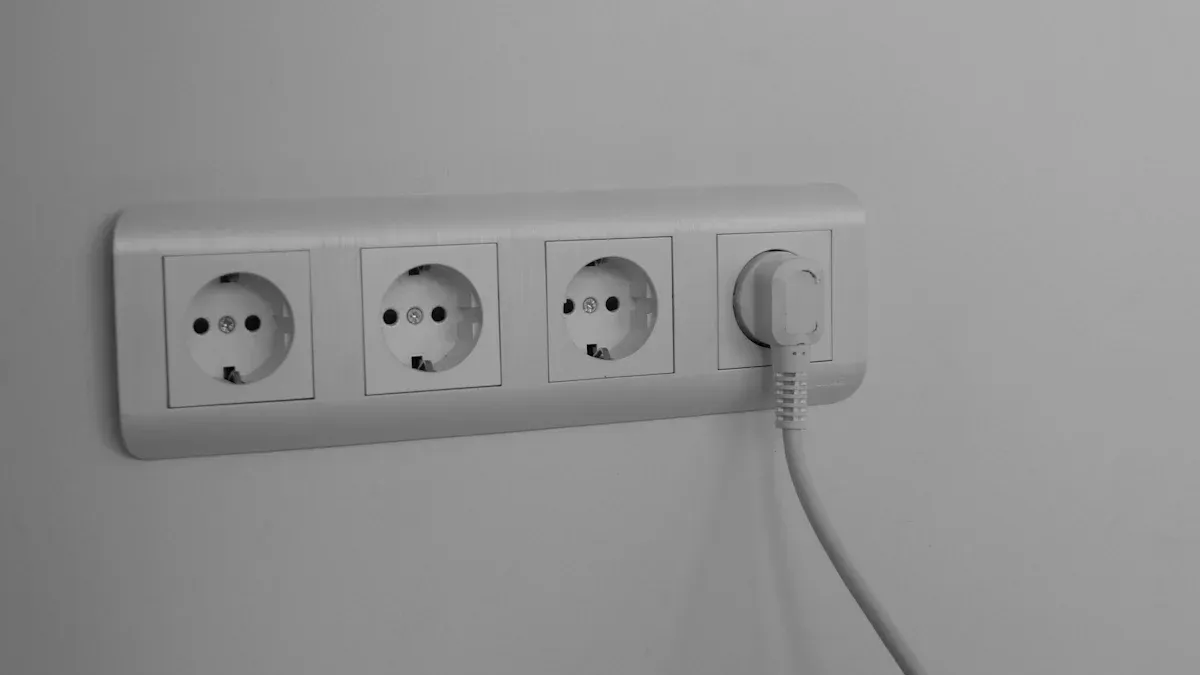
Plugging an EV into a French household socket introduces severe risks that far outweigh the convenience. This method is fundamentally unsuited for the demands of electric vehicle charging. It jeopardizes the electrical system, the vehicle, and the home itself. Understanding these dangers is the first step toward adopting safer charging practices.
The Primary Risk: Overheating and Fire Hazards
The most immediate and severe danger is fire. A standard domestic socket is not engineered to handle the unique electrical load of an EV, creating a perfect storm for overheating. This is a critical safety concern.
Sustained High Load vs. Short-Term Use
Household appliances like microwaves or kettles draw a high current, but only for a few minutes at a time. The wiring and socket have time to cool down. EV charging, however, places a continuous, heavy-duty load on the circuit for many hours. This sustained demand generates significant heat that a standard socket cannot safely dissipate.
How EV Charging Stresses Standard Wiring
A typical charging session pulls a high, uninterrupted current through wires designed for intermittent use. This constant flow causes the copper wiring inside the walls to heat up progressively. The insulation around the wires can degrade or melt over time, increasing the risk of a short circuit and creating a major fire hazard within the wall cavity.
The Problem with Aging Wiring in French Homes
Many older homes in France have electrical systems that predate modern standards. This wiring may be thinner, have degraded insulation, or use outdated components. Subjecting such a system to the heavy-duty demands of EV charging dramatically elevates the risk of failure. An old domestic socket is particularly vulnerable to overheating.
Understanding Socket and Plug Melt-Down
When a socket overheats, the plastic housing can soften, deform, and ultimately melt. This is a clear sign of a dangerous failure.
🔥 Uyarı: A melted socket or plug indicates that the electrical connection has become unstable. This can lead to arcing—an electrical spark jumping between connections—which can easily ignite nearby materials and cause a fire. The socket is not built for this heavy-duty task.
Damage to Your Home’s Electrical System
Beyond the immediate fire risk at the socket, charging from a domestic socket can inflict widespread damage on your home’s entire electrical infrastructure. The system is simply not prepared for this type of heavy-duty load.
Why Your Circuit Breaker Will Likely Trip
A circuit breaker is a safety device designed to cut power when it detects an overload. Because EV charging draws a high current for a long duration, it will often exceed the rating of the circuit. Frequent tripping is not a minor inconvenience; it is a clear warning that the circuit is dangerously overloaded. Common signs of an overloaded system include:
- Repeated tripping of fuses or circuit breakers during a charging session.
- Noticeably slow charging power, indicating the system cannot deliver the requested energy.
Risk of Overloading Your Electrical Panel
The main electrical panel (electrical panel) is the heart of your home’s electrical system. A continuous heavy-duty EV charging load can strain the entire panel, not just one circuit. This increases the risk of a component failure within the panel itself, which can be a costly and dangerous event.
The Impact of Voltage Drops on Your Home
When a single circuit is under extreme load from EV charging, it can cause a voltage drop across your entire home. This can manifest in several ways, signaling a stressed electrical supply.
- Flickering or dimming lights, especially when the charging cycle begins.
- Other appliances on different circuits may underperform or malfunction due to the unstable voltage.
The Practical Downside: Inefficient and Slow Charging
Even if a user ignores the significant safety risk, charging from a domestic socket is an incredibly inefficient and impractical method for daily use. The low charging power makes it unsuitable for modern EV lifestyles.
Understanding Power Output (kW) from a Domestic Socket
A standard French domestic socket typically delivers a maximum charging power of about 2.3 kilowatts (kW). In many cases, to ensure safety, taşınabilir şarj cihazları that come with the vehicle will automatically limit this charging power even further, often to around 1.8 kW (8 amps). This minimal charging power is a trickle compared to dedicated solutions.
Calculating Charging Time: A Reality Check
The low charging power translates to extremely long charging times. For example, charging a common 50 kWh EV battery, like the one in a Citroën C4 X, from a standard 2.3 kW household socket would take approximately 20 hours and 7 minutes to go from empty to full. This makes a full recharge an overnight-and-through-the-next-day affair.
Why This Method is Impractical for Daily Driving
This slow charging method offers very little range per hour. When charging an EV from a standard socket, a driver can only expect to add about 4.8 to 8 kilometers of range for every hour of charging. If a driver returns home with a low battery, an entire night of charging might not even be enough to cover the next day’s commute. For regular use, a more robust solution is necessary. Advanced portable chargers from specialists like TPSON offer better safety and efficiency than basic cables, but the ultimate solution remains a dedicated, professionally installed charging point.
Emergency Protocol: Safety Rules for Occasional Charging
While regular use of a standard socket is unsafe, an emergency may leave a driver with no other option. In these rare instances, following a strict protocol is essential to minimize risk. These rules are not a substitute for proper installation but a guide for one-time, supervised charging.
Rule 1: Mandate a Professional Electrical Inspection
Before even considering plugging into a domestic socket, a driver must have the home’s electrical system professionally inspected. This is a non-negotiable first step for safety.
Finding an Electric Vehicle Charging Infrastructure-Certified Electrician
An Electric Vehicle Charging Infrastructure (Infrastructure de Recharge pour Véhicules Électriques) certified electrician is the only professional qualified to assess an electrical system for EV charging. They possess the specific training required to understand the unique demands of electric vehicle charging.
Verifying Your Home’s Earth Connection
A proper earth connection (earth connection) is critical. The electrician will verify that the home’s grounding system is compliant and effective. A faulty earth connection can prevent safety devices in the charging cable from working correctly, creating a severe risk of electric shock.
Assessing Your Electrical Panel’s Capacity
The electrician will examine the main electrical panel (electrical panel) to determine if it can handle the sustained load of EV charging without overloading. This assessment prevents damage to the entire home system.
The Importance of a Formal Electrical Diagnosis
A formal diagnosis provides a comprehensive report on the state of the wiring, socket, and circuit breakers. This document confirms if the specific socket is safe for even a single emergency charging session.
Rule 2: Always Use a Dedicated and Inspected Circuit
The socket used for charging must be on a dedicated line. Sharing a circuit with other appliances is extremely dangerous.
What Is a Dedicated Electrical Circuit?
A dedicated electrical circuit, or dedicated line, is a circuit that serves a single outlet or socket. No other appliances or lights draw power from this dedicated line. The installation of a dedicated line ensures the EV has exclusive access to the circuit’s full capacity.
The Dangers of a Shared Circuit
EV charging draws up to seven times more power than a microwave. Plugging a charging cable into a socket on a shared circuit with a refrigerator or washing machine will almost certainly cause an overload. This leads to tripped breakers and increases the risk of sparks ve elektri̇k yanginlari. A dedicated line prevents this conflict.
How to Identify if a Socket is on a Dedicated Circuit
An Electric Vehicle Charging Infrastructure electrician can definitively identify a dedicated line. They will trace the wiring from the socket back to its specific circuit breaker in the electrical panel. A proper dedicated line for EV charging has specific components.
French Standards for a Dedicated Line:
- Devre Kesici: A 20A, Curve C breaker.
- Kablolama: Cable cross-section of at least 2.5 mm².
- Safety Device: A Type F Residual Current Device (RCD).
Rule 3: Use Only Manufacturer-Approved Charging Equipment
The equipment connecting the car to the socket is a critical safety component. Only the official charging cable should be used.
Understanding Your Mode 2 Portable Charging Cable
Bu taşınabilir şarj kablosu (Mod 2) that comes with an EV includes an In-Cable Control Box (ICCB). This box manages the charging session and contains vital safety features, like an RCD, to detect faults and prevent electric shock. This charging cable is designed for this specific type of charging.
The Dangers of Uncertified Adapters and Cables
Third-party adapters and uncertified charging cable products from unknown online sellers often lack essential safety testing. Using a cheap, unverified charging cable with a domestic socket is a recipe for disaster, as it may not have the components to prevent overheating or electrical faults. A quality charging cable is essential.
Checking for Official CE and NF Safety Markings
A legitimate charging cable will have official markings. The CE mark indicates compliance with European safety standards, while the NF mark signifies compliance with French standards (French standard NF C 18-510). A charging cable without these marks is not safe for use.
Why You Must Never Modify Your Charging Cable
Modifying a charging cable, such as removing the ICCB or changing the plug, disables its built-in protections. A tampered-with charging cable is incredibly dangerous and voids any warranty. The charging cable must remain in its original state for every charging session.
Rule 4: Never Use Standard Extension Cords or Power Strips
A driver must never use a standard household extension cord or multi-socket power strip to connect an EV to a wall socket. This practice introduces an extremely high risk of fire and electrical damage. These devices are not designed for the intense, prolonged power draw required for vehicle charging.
Why Standard Extension Cords Are a Fire Risk
Standard extension cords are a significant fire hazard when used for EV charging. Their internal wiring is too thin to handle the high, continuous current an EV demands over many hours. This sustained load causes the cable to overheat, which can melt the plastic insulation and expose live wires.
🔥 Critical Safety Warning: Electrical safety experts explicitly advise against using extension cords for EV charging. Official fire service statistics show that electrical faults are responsible for over 20,000 accidental household fires each year. An overloaded cord connected to a wall socket is a primary contributor to these preventable disasters. The socket itself is not the only point of failure; the entire length of the cord becomes a fire risk.
The Myth of the “Heavy-Duty” Extension Cord
Many people believe a “heavy-duty” extension cord is a safe alternative. This is a dangerous misconception. The term “heavy-duty” on a consumer-grade cord usually refers to its suitability for power tools, which draw high power for short bursts. It does not mean the cord is rated for the continuous, multi-hour load of EV charging.
- Unverified Quality: EV manufacturers do not recommend any third-party extension cords because they cannot control their quality or safety standards. A so-called heavy-duty cord may still use substandard components.
- Incorrect Specifications: A true heavy-duty connection requires specific wiring gauges and connector quality that most off-the-shelf products lack. A standard heavy-duty cord is not a substitute for a proper charging cable connected directly to a suitable socket. This heavy-duty myth puts homes at risk. The socket must be the final connection point. A heavy-duty cord is not a safe bridge to a distant socket.
Why Multi-Socket Adapters Can’t Handle the Load
Multi-socket adapters, or power strips, are even more dangerous than extension cords. These devices are designed to power multiple low-draw electronics, like lamps and phone chargers, from a single wall socket. They are fundamentally incapable of managing the power an EV requires. Plugging a heavy-duty EV charger into a power strip will immediately overload the adapter and the wall socket. This creates an acute risk of the adapter melting, arcing, and causing a fire. A single socket must serve a single heavy-duty appliance. Never split a socket’s power for a heavy-duty task like EV charging. The socket is designed for one plug, especially a heavy-duty one.
Superior Solutions for Safe Home Electric Car Charging in France

Relying on a standard domestic socket is an emergency-only measure. For daily use, EV owners need reliable, safe, and efficient home charging solutions. Upgrading from a standard socket is not just a matter of convenience; it is a critical investment in the safety of a home and vehicle. France offers two superior tiers of upgrades: the reinforced socket and the dedicated wallbox charger.
The Smart Upgrade: The Reinforced Socket Solution
The most accessible and significant upgrade from a standard domestic socket is the installation of a reinforced socket. This solution provides a major boost in both safety and charging performance, making it a highly recommended minimum for regular home charging.
What Is a Reinforced Socket?
A reinforced socket is a heavy-duty electrical outlet specifically engineered for the sustained power draw of electric car charging. Unlike a standard socket, it uses higher-grade materials with better heat resistance. It must be installed on its own dedicated circuit with an appropriate circuit breaker and protective device, ensuring it can handle a continuous load for many hours without overheating.
The Legrand Green’up Socket Explained
In France, the most common reinforced socket is the patented Legrand Green’up Access socket. This system is more than just a tougher socket; it includes smart technology. A special magnet within the Green’up plug allows a compatible Mode 2 charging cable to recognize the socket. This recognition unlocks a higher charging current, enabling faster and more efficient power delivery than a standard socket could ever safely provide.
Key Safety Benefits Over a Standard Socket
The primary advantage of a reinforced socket is its enhanced safety profile.
- Superior Heat Management: It is built with materials that dissipate heat more effectively, drastically reducing the risk of the socket melting during a long charging session.
- Dedicated Circuit Protection: Installation on a dedicated line prevents circuit overloads. This stops other household appliances from interfering with the charging process and eliminates the danger of tripping breakers.
- Robust Construction: These sockets are designed for durability and can better withstand the repeated plugging and unplugging of a heavy charging cable.
Improved Charging Speed (Up to 3.7 kW)
A reinforced socket delivers a significant improvement in charging speed. While a standard socket is limited to about 2.3 kW, a reinforced socket like the Green’up can safely provide up to 3.7 kW. This increase in power dramatically reduces charging times.
| Özellik | Standard French Socket | Legrand Green’up Socket |
|---|---|---|
| Max. Amperage for Charging | 8A – 10A | 16A |
| Max. Power | ~2.3 kW | 3,7 kW |
| Estimated Charging Time (50 kWh Battery) | ~22 hours | ~14 hours |
This faster charging rate makes overnight charging a viable and practical strategy. A driver can reliably replenish a significant amount of range each night, ensuring the car is ready for the next day’s commute. The difference in power delivery is clear when comparing amperage levels.

Installation Process and Typical Costs
A qualified Electric Vehicle Charging Infrastructure-certified electrician must install a reinforced socket to ensure it complies with all safety standards. The process involves running a new, dedicated line from the electrical panel to the desired socket location. While there is an installation cost, the French government offers financial incentives to encourage safer home charging.
Financial Aid for Home Charging:
- Tax Credit: Homeowners and tenants can benefit from a tax credit covering 75% of the cost of the equipment, up to a maximum of €500 per charging system. This applies to the purchase of the socket itself.
- ADVENIR Program: For apartment buildings (condominiums), the ADVENIR program can subsidize up to 50% of the supply and installation costs for a shared or individual charging solution.
The Gold Standard: The Dedicated Wallbox Charger
For the ultimate in speed, safety, and convenience, the dedicated wallbox is the gold standard for home electric car charging. A wallbox, or home charging point, is a purpose-built device that transforms a home into a personal refueling station.
What Is a Wallbox (Mode 3 Charger)?
A wallbox is a compact, wall-mounted unit that provides Mode 3 charging. This charging mode is significantly more advanced than the Mode 2 charging used with a portable cable and socket. It involves direct communication between the wallbox and the vehicle, creating a faster, safer, and more intelligent charging ecosystem.
Maximum Safety with Built-In Protections
Wallboxes, like those from advanced providers such as TPSON, are engineered with multiple layers of integrated protection that a simple socket cannot offer. These systems actively manage the charging session to guarantee safety. Key features include:
- Control Pilot Signal: The wallbox and car communicate before power flows. The charging process only begins after the system confirms a secure connection and a valid ground.
- Integrated Fault Detection: They include built-in residual current devices (RCDs) that can detect even tiny electrical faults (including 6mA DC leakage) and immediately cut the power, preventing electric shock.
- Thermal Monitoring: Internal sensors constantly monitor temperature. If any overheating is detected, the wallbox automatically reduces the charging power or shuts down completely to prevent damage.
Achieving Drastically Faster Charging Speeds
A wallbox offers the fastest possible home charging speeds. Standard single-phase wallboxes deliver 7.4 kW of power, more than three times faster than a standard socket. This can charge most EVs from empty to full in just 6-8 hours. Homes with a three-phase electrical supply can support wallboxes of 11 kW or even 22 kW, reducing charging times to only a few hours.
Smart Features: Load Management and Off-Peak Charging
Modern wallboxes are smart devices. One of their most valuable features is dynamic load management.
How Load Management Works: The wallbox monitors the total electricity being used in the house in real-time. If you turn on the oven and dishwasher while the car is charging, the wallbox will automatically reduce the charging power to prevent overloading your home’s main circuit. Once the other appliances turn off, it restores the charging to full power.
This feature ensures the electrical system remains stable and eliminates the risk of tripping the main breaker. Many wallboxes also allow users to schedule charging sessions via a smartphone app, enabling them to charge during off-peak hours when electricity rates are lowest.
Why Installation Requires an Electric Vehicle Charging Infrastructure Professional
Installing a wallbox is a significant electrical upgrade that requires a certified Electric Vehicle Charging Infrastructure professional. The electrician will assess the home’s electrical capacity, install the necessary dedicated circuit with appropriate protections, and safely connect the home charging point to the electrical panel. Professional installation is mandatory to ensure safety and is often a requirement for claiming government subsidies.
Comparing Your Options: Plugging an EV into a French Household Socket vs. Upgrades
Choosing the right home charging method involves balancing speed, safety, and cost. A driver must understand the distinct differences between using a standard socket and investing in a proper upgrade. This comparison clarifies the trade-offs for each option.
Comparison by Charging Speed
The time it takes to recharge a vehicle is a critical factor for daily usability. Each charging solution offers a vastly different performance level.
Standard Socket: 1.8 kW – 2.3 kW
A standard domestic socket provides the slowest charging speed. This method delivers only a trickle of power, making it impractical for anything beyond a rare emergency. A full charging session can take more than 20 hours.
Reinforced Socket: 3.2 kW – 3.7 kW
A reinforced socket offers a noticeable improvement. It enables a faster and more reliable overnight charging experience. This option is a practical minimum for regular electric car charging needs.
Wallbox Charger: 7.4 kW – 22 kW
A dedicated wallbox is the fastest home charging solution. It dramatically reduces charging times, turning a full day’s wait into a simple overnight task. The difference in charging speed is significant.
| Kurulum Tipi | Max Power | Estimated Time for 50 kWh Battery* |
|---|---|---|
| Reinforced Socket (16A) | 3,7 kW | ~13 hours |
| Wallbox Charger (32A) | 7,4 kW | ~7 hours |
*Charging times are estimates and can vary based on vehicle and conditions.
Comparison by Safety Level
Safety should be the primary consideration for any home charging setup. The risk level varies dramatically between a standard socket and dedicated equipment.
Standard Socket: Low (Emergency Use Only)
Plugging an EV into a French household socket presents a low safety level. The standard socket is not designed for the high, sustained load of EV charging, creating a serious risk of overheating and fire. This method is only for emergencies.
Reinforced Socket: High (Recommended)
A professionally installed reinforced socket provides a high level of safety. The heavy-duty socket and its dedicated circuit are built to handle the continuous power draw, effectively eliminating the overheating risk associated with a standard socket.
Wallbox Charger: Very High (Best Practice)
A wallbox offers the highest safety level. Advanced wallboxes from providers like TPSON integrate multiple layers of protection that a simple socket cannot match.
- They use a dedicated circuit with over-current protection.
- They include advanced Type B RCDs to protect against DC faults.
- They perform constant communication with the vehicle to ensure a secure connection before charging begins.
Comparison by Installation and Cost
The financial investment differs for each solution, but so does the long-term value and safety.
Standard Socket: No Installation Cost
Using an existing socket has no upfront installation cost. However, this “free” option carries hidden risks of potential electrical damage and fire hazards, making it a costly gamble.
Reinforced Socket: Low to Moderate Cost
Installing a reinforced socket involves a low to moderate cost. An electrician must run a dedicated line from the panel to the new socket. Government incentives can often reduce this expense, making it an affordable safety upgrade.
Wallbox Charger: Moderate to High Cost
A wallbox has a moderate to high initial cost, covering both the unit and professional installation.
Not: While the upfront cost is higher, a wallbox provides the fastest charging, maximum safety, and smart features like load management. Financial aid can also help offset the investment in this superior charging technology.
Comparison by Best Use Case
Choosing the right charging setup depends entirely on how a driver uses their electric vehicle. A solution that works for one person may be impractical or unsafe for another. Understanding the ideal scenario for each option helps drivers make an informed decision that aligns with their lifestyle.
Standard Socket: One-Time Emergency
Plugging an EV into a French household socket is strictly for rare, unforeseen situations. This method is the last resort when no other option is available. For example, a driver visiting a remote location without dedicated charging infrastructure might use it once to gain enough range to reach a proper charging station. It is not a sustainable or safe solution for any regular use. Its extremely slow speed and high safety risks make it unsuitable for routine charging.
Reinforced Socket: Regular Overnight Charging
A reinforced socket is the ideal solution for drivers who need reliable, regular charging at home. It is particularly well-suited for overnight use. A driver can plug in their vehicle in the evening and wake up to a sufficiently charged battery for the next day’s activities. This method provides a safe and efficient way to handle daily charging needs without the higher cost of a wallbox. It represents a significant and necessary safety upgrade over a standard socket for any EV owner planning to charge at home regularly.
Wallbox Charger: Fast Daily Charging and Future-Proofing
A dedicated wallbox is the premium choice for drivers who demand speed, convenience, and maximum safety. It is the best option for households with multiple EVs or for drivers with long daily commutes who need a fast turnaround. The smart features of a wallbox, like those from advanced providers such as TPSON, offer dynamic load management and scheduled charging. These capabilities optimize energy use and protect the home’s electrical system. Installing a wallbox is also a forward-thinking investment. As EV battery capacities increase, a wallbox ensures a home’s charging infrastructure can handle future technology.
The ideal charging frequency also depends on driving patterns.
| Driver Type | Recommended Charging Frequency | Rationale |
|---|---|---|
| Long Daily Commutes | Daily | This maintains a consistent charge, ensures the battery can handle long distances, and keeps the battery topped up without unnecessary strain. |
| Short, Infrequent Trips | Haftalık | This approach preserves battery health by reducing charging cycles, which supports a longer battery lifespan. |
Ultimately, a wallbox provides the most robust and future-proof solution for any serious EV owner.
Plugging an ev into a french household socket is technically possible. A standard household socket, however, is an unsafe and impractical solution for regular charging. A driver must prioritize safety.
- A professionally installed reinforced socket provides a significant safety and efficiency upgrade. It is the minimum recommended step for regular use.
- The safest, fastest, and most convenient long-term solution is a dedicated wallbox charger from an advanced provider like TPSON.
- Protecting a home and family with proper charging equipment is a non-negotiable responsibility for every EV owner.
SSS
Is it legal to charge an EV from a standard French socket?
Yes, it is legal for emergency use. Safety regulations, however, strongly discourage it for regular charging due to significant fire risks. A driver must prioritize safer, dedicated solutions for daily needs.
Why is an Electric Vehicle Charging Infrastructure-certified electrician necessary for installation?
Bir Electric Vehicle Charging Infrastructure-certified electrician possesses specialized training for EV charging installations. They ensure the wiring, circuit, and safety devices meet strict French standards. This guarantees a safe and compliant setup for any home.
Can a driver use a “heavy-duty” extension cord for charging?
No. A driver must never use any type of extension cord for EV charging. Consumer-grade “heavy-duty” cords are not rated for the sustained, high power draw. They create a severe fire hazard.
What is the main difference between a reinforced socket and a wallbox?
A reinforced socket is a safer, faster outlet providing up to 3.7 kW. A wallbox is a dedicated charging station. It offers maximum speed (7.4 kW+) and advanced safety features like dynamic load management.
Are there financial incentives for home charging upgrades in France?
Yes. The French government offers financial aid, including a tax credit and the ADVENIR program. These incentives help homeowners and tenants reduce the cost of installing a reinforced socket or a wallbox charger.
How do advanced portable chargers improve safety?
Advanced portable chargers from providers like TPSON include superior safety electronics. They offer better thermal monitoring and fault detection than basic cables. This reduces risks during occasional charging from a suitable, inspected socket.
Why does the charging cable limit power from a standard socket?
The portable charging cable detects the standard socket and automatically reduces the current. This crucial safety feature helps prevent the socket and home wiring from overheating during a long, continuous charging session.