In the UK, you cannot legally install an EV charging point on your own. Safety regulations mandate that a qualified electrician must handle the installation. As the owner, your role is to oversee the process, ensuring your EV Şarj Cihazı provides safe and efficient charging. Leading Elektrikli araç şarj cihazı üreticileri, such as the technologically advanced provider TPSON, offer comprehensive Elektrikli araç şarj çözümleri that go far beyond basic taşınabilir ev şarj cihazları. Following the correct steps to install an EV charger is critical for a compliant and safe home charging setup anywhere in the U.K.
Why You Can’t Install Your Own EV Charging Point

Attempting to install your own charger is not a matter of skill, but of legality and safety. The decision to prohibit a DIY EV charger installation in the UK is based on stringent regulations designed to protect homeowners, their property, and the electrical grid. The reasons fall into three critical categories: legal mandates, severe safety hazards, and significant financial penalties.
The Legal Requirements in the UK
The U.K. government enforces strict rules for all domestic electrical work. An Elektrikli araç şarj cihazı kurulumu is considered a major modification to a property’s electrical system, placing it under specific legal scrutiny.
Part P of the Building Regulations
Since 2005, all domestic electrical work in the UK must comply with Part P of the Building Regulations. These regulations establish the official standards for electrical safety in dwellings. A charging point installation falls directly under this rule. Failure to comply with Part P is a criminal offense. All electrical installations must also meet the national safety standard, BS 7671 (the “Wiring Regulations”).
Notifiable Electrical Work Explained
Installing an EV charging point is classified as ‘notifiable work’. This means the project must be legally certified and registered with the local authorities.
What is Notifiable Work? Notifiable work involves creating a new electrical circuit or altering an existing one in a high-risk area. A person must inform the Local Authority Building Control (LABC) about the project before it begins. A qualified electrician can self-certify their work, handling this notification process for the homeowner.
An electrician must demonstrate competency with multiple standards to perform this work legally. Key regulations include:
- BS 7671 (IET Wiring Regulations): These are the foundational rules for all electrical work in the UK, specifying that a
charging pointmust have its own özel devre. - Part P of the Building Regulations: This legally requires a competent person to carry out and certify the work.
- Electric Vehicles (Smart Charge Points) Regulations 2021: This law mandates that new chargers have smart
chargingcapabilities, adding another layer of technical complexity to theinstallation.
Local Authority Building Control (LABC)
The LABC is responsible for enforcing the Building Regulations. If you install ev charger yourself, the work will not have the required legal certification. The LABC can inspect the work and take enforcement action if it is found to be non-compliant, leading to serious financial and legal consequences.
The Critical Safety Risks of DIY Installation
Beyond the legal framework, the safety risks associated with an improper installation are severe. Electric vehicle charging involves high, sustained electrical loads that can be dangerous if managed incorrectly.
⚠️ Critical Warning Electrical faults are a leading cause of house fires in the U.K. Government statistics show that over 5,800 house fires in England during 2022/23 were caused by electrical issues. Attempting to
install ev charger yourselfsignificantly increases this risk.
Fire and Electric Shock Hazards
An EV charger draws a continuous high current for hours. A DIY installation can easily lead to mistakes like incorrect wiring, loose connections, or improper circuit protection. These errors can cause overheating, short circuits, and arc faults, which are primary causes of electrical fires. Furthermore, incorrect grounding creates a severe risk of electric shock to anyone using the charger or touching the vehicle while it is charging.
Damage to Your EV’s Battery
While modern electric vehicles have sophisticated battery management systems, they are not foolproof. A faulty installation can cause issues that damage your vehicle over time. These include:
- Power Surges: Incorrectly installed circuits can deliver unstable power, stressing the battery.
- Grounding Problems: Improper earthing can interfere with the vehicle’s internal electronics.
- System Errors: A poor connection can trigger persistent error codes in the vehicle, affecting its performance and longevity.
Overloading Your Home’s Electrical System
A qualified installer always assesses a home’s existing electrical system, including the consumer unit and main fuse capacity. They ensure the system can handle the additional load of an EV charger. If you install your own charger without this assessment, you risk overloading your home’s main fuse, causing power outages or, in the worst case, an electrical fire.
The Financial & Insurance Consequences
The legal and safety issues of a DIY job directly lead to serious financial repercussions. The short-term savings are insignificant compared to the potential long-term costs.
Invalidating Your Home Insurance Policy
Home insurance policies require that all modifications to your property, especially electrical work, comply with U.K. regulations. A non-certified elektrikli araba şarjı point will invalidate your policy. If a fire or other damage occurs as a result of the faulty point, your insurer will refuse to cover the losses.
Voiding the Charger’s Warranty
Liderlik elektrikli araç şarjı solution providers, including technologically advanced manufacturers like TPSON, require their products to be installed by a certified professional. An attempt to install ev charging point on your own will immediately void the manufacturer’s warranty, leaving you with no recourse if the unit fails.
Potential Fines and Rectification Orders
Local authorities in the U.K. have the power to enforce electrical safety standards. If they discover a non-compliant installation, they can issue a rectification order, forcing you to hire a qualified electrician to remove the unsafe work and reinstall it correctly at your own expense. They can also issue substantial fines for breaches of electrical safety duties, with penalties reaching up to £30,000.
Who is Qualified to Install an EV Charger in the UK?
Since a DIY installation is not an option, a homeowner’s primary responsibility is to find a qualified professional. In the U.K., electrical work is strictly regulated. Only a “competent person” can legally perform an EV charger installation. This ensures the work is safe, compliant, and certified.
Defining a “Competent Person” for Electrical Work
U.K. government regulations, specifically the Electrical Safety Standards, provide a clear definition of a qualified and competent person. A homeowner can verify an electrician’s competence by checking for two key things:
- The inspector is a member of a government-approved competent person scheme.
- The inspector can provide a signed checklist certifying their competence, which includes their qualifications, experience, and adequate insurance.
Government-Approved Installer Schemes
Competent Person Schemes are organizations that assess electricians and confirm they meet the required U.K. standards. Membership allows an electrician to self-certify their work, meaning they can handle the legal notification to Local Authority Building Control (LABC) on the homeowner’s behalf. This simplifies the process and guarantees compliance with Part P of the Building Regulations.
OZEV-Authorized Installers
The Office for Zero Emission Vehicles (OZEV) maintains a list of authorized installers. While the main grant for homeowners has ended, using an OZEV-authorized installer is still a mark of quality. These professionals are approved to install charge points under specific government grant schemes, such as those for tenants and flat owners, demonstrating their familiarity with the latest smart charging regulations.
Essential Certifications to Verify
A competent professional will hold several key certifications. A homeowner should always ask for proof of these credentials before work begins.
NICEIC or NAPIT Registration
NICEIC and NAPIT are the two leading government-approved registration bodies in the UK electrical industry. While both ensure an electrician is competent, they have different market positions.
| Faktör | NICEIC | NAPIT |
|---|---|---|
| Brand Recognition | The largest and most recognized scheme in the UK. | A modern, fast-growing scheme known for technical support. |
| Technical Support | Provides extensive technical resources. | Praised for its personalized, real-world technical helpline. |
| Maliyet | Membership fees are generally higher. | Often a more affordable option for electricians. |
City & Guilds EV Charging Qualifications
An electrician should hold a specific qualification for installing electric vehicle charging equipment. The industry standard is the City & Guilds 2919 qualification.
What the City & Guilds 2919 Covers:
- Key requirements for EV charging equipment.
- Design and preparation for an EV charger installation.
- Procedures for domestic, commercial, and on-street installation.
- Inspection, testing, commissioning, and handover processes.
Manufacturer-Specific Training
Top-tier charger manufacturers often require installers to complete product-specific training. Technologically advanced providers like TPSON ensure that electricians are experts in their systems. This training is crucial for a flawless installation and is usually required to validate the product’s warranty.
How to Check an Installer’s Credentials
Verifying an installer’s qualifications is a straightforward but critical step.
Using the Electrical Safety Register
The easiest way to check if an electrician is registered with a recognized scheme like NICEIC or NAPIT is to use the official Electrical Safety Register. You can search for registered electricians in your area at electricalcompetentperson.co.uk.
Asking for Proof of Public Liability Insurance
An installer must have adequate insurance. A homeowner should ask for proof of Public Liability Insurance with a minimum coverage of £2 million. Some larger projects may even require coverage of £5 million or more. This protects the homeowner from liability in case of an accident during the installation.
Requesting Customer References and Portfolios
Finally, a reputable professional who is ready to install ev charger systems will be happy to provide references or show a portfolio of previous work. Seeing examples of their past projects helps confirm the quality of their work and their experience with jobs similar to yours. This is a good final check before you ev şarj cihazı kurun.
What Are the Requirements to Install an EV Charger?
Before a homeowner can bir elektrikli araç şarj cihazı kurun, several key installation requirements must be met. These prerequisites cover the property, its electrical system, and local planning rules. A certified installer will assess these factors to ensure a safe and compliant installation.
Property and Parking Prerequisites
The physical location of the charging point is the first consideration. A suitable and legally accessible parking space is essential.
The Need for Off-Street Parking
Designated, private off-street parking is a fundamental requirement. This could be a driveway, garage, or a dedicated parking bay. Government grant schemes in the UK are clear: eligibility often depends on having a private space where a vehicle can be charged safely. Running cables across public pavements is not a viable solution.
Under Section 178 of the Highways Act 1980, placing a cable across a highway or pavement without council consent is illegal. It creates a serious trip hazard and is not a safe or permitted method for EV charging.
Do You Need to Own Your Home?
Homeowners with off-street parking can proceed with an installation after meeting electrical and planning criteria. The process is straightforward for those who own their freehold property.
Renting: How to Get Landlord Permission
Tenants must obtain written permission from their landlord before they can install ev charger systems. This agreement should be formally documented to protect both parties and clarify responsibilities for the charging point.
Solutions for Apartments and Flats
Residents of flats or apartments also need a designated, private parking space. They must secure permission from the property’s freeholder or management company. The EV Chargepoint Grant for flat owners in the UK requires proof of legal entitlement to the parking space.
Your Home’s Electrical System Needs
An EV charger places a significant, sustained load on a home’s electrical system. A professional assessment is mandatory.
Consumer Unit (Fuse Box) Assessment
An installer will first inspect the consumer unit (fuse box). They check for sufficient space to add a new dedicated circuit for the charging point. Older units may require an upgrade to meet current safety standards.
Main Fuse and Supply Capacity Check
The installer must verify the home’s main fuse rating and overall supply capacity. A standard 7kW charger requires a dedicated 32A circuit. The property’s main fuse, typically 60A or 100A, must be able to handle this additional load alongside other household appliances.
The Role of a Residual Current Device (RCD)
Every charging point needs protection from a Residual Current Device (RCD) to prevent electric shock. Regulations in the UK require a specific type of RCD. A Type A RCD is only suitable if the charger has integrated 6mA DC leakage detection. Technologically advanced chargers, like those from TPSON, often include this feature, simplifying the installation. Otherwise, a more expensive Type B RCD is necessary.
Earthing Arrangements (TN-C-S, TN-S, TT)
The property’s earthing system is another critical safety check. The installer will identify the earthing type (e.g., TN-C-S, TN-S, or TT) and ensure the chosen charger and installation method provide adequate protection against electrical faults.
Understanding Planning Permission
In most cases, installing a home charger falls under “permitted development,” meaning a full planning application is not needed.
When is Planning Permission Not Required?
An installation generally does not require planning permission if it meets specific conditions. This makes the process much faster for most homeowners.
Conditions for Permitted Development
For a wall-mounted point, the unit’s casing must not exceed 0,2 metreküp in volume. It must not face a highway if located in a conservation area. The charger must be removed and the wall restored if it is no longer needed.
When You Must Apply for Permission
A homeowner must apply for permission if the installation does not meet permitted development conditions. This is also true if these rights have been removed by the local authority, which can happen in certain designated areas.
Rules for Listed Buildings and Conservation Areas
Permitted development rights do not apply to listed buildings. Any external modification to a listed building, including adding a charging point, requires Listed Building Consent. For properties in conservation areas, restrictions are tighter, and it is essential to check with the local planning authority before proceeding with any work.
The Step-by-Step Process to Install a Home EV Charger
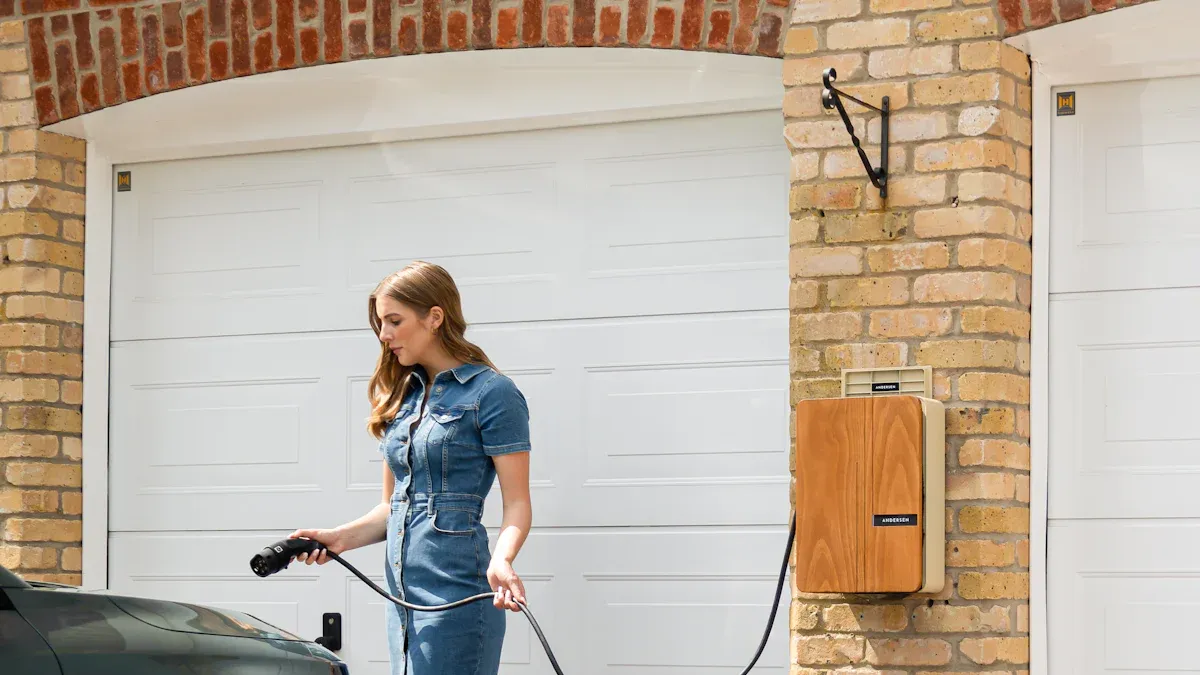
Following a structured process is the best way to bir elektrikli araç şarj cihazı kurun. It ensures all legal, safety, and practical requirements are met. This journey involves confirming eligibility, selecting the right hardware, and finding a qualified professional for the installation.
Step 1: Confirm Your Eligibility
Before choosing a charger, a homeowner must confirm they meet the basic property and permission requirements. This first step prevents wasted time and effort later in the process.
Assess Your Parking and Property Status
The first check is physical. A homeowner needs a designated, private, off-street parking space like a driveway or garage. This is a non-negotiable requirement for a safe and legal home EV charger installation. Next, they must consider their property status. Homeowners have a clear path, but tenants and flat dwellers have specific criteria to meet, especially if applying for a government grant.
Secure Necessary Permissions
Permissions are crucial. Renters must get written consent from their landlord. Flat owners need approval from the building’s freeholder or management company. For those eligible for the EV Chargepoint Grant, which offers up to £350 or 75% off the cost, specific conditions apply.
EV Chargepoint Grant Eligibility This grant is for tenants and flat owners. To qualify, an individual must:
- Rent any residential property or own and live in a flat.
- Own, lease (for at least 6 months), or be the primary user of an eligible electric vehicle.
- Have a designated, private off-street parking space.
- Provide written permission from a landlord or property manager if applicable.
- Not have previously received a grant for a home charger.
Step 2: Choose the Right Electric Car Charger
With eligibility confirmed, the next step is selecting the hardware. The choice of electric car charger depends on charging speed, cable type, and smart features.
Power Ratings: 3.6kW vs. 7.4kW vs. 22kW
The power rating determines how quickly the charger replenishes an EV’s battery.
- 3.6kW Chargers: These are slower, adding about 11 miles of range per hour. They are suitable for plug-in hybrids or for drivers with low daily mileage.
- 7.4kW Chargers: This is the most common and recommended power rating for home use. A 7.4kW unit adds around 22 miles of range per hour, fully charging most EVs overnight.
- 22kW Chargers: These offer the fastest charging, but most UK homes cannot support them. They require a three-phase electrical supply, which is rare in residential properties.
The table below shows typical charging times for popular EV models.
| Şarj Cihazı Tipi | Nissan Leaf (40kWh) | Hyundai IONIQ 5 (58kWh) | Tesla Model Y (75kWh) | Kia EV6 (77.4kWh) |
|---|---|---|---|---|
| 3.6kW | ~12 hours 30 mins | ~17 hours 15 mins | ~24 hours | ~23 hours 45 mins |
| 7.4kW | ~7 hours | ~8 hours 45 mins | ~12 hours | ~11 hours 45 mins |
| 22kW | ~7 hours* | ~6 hours* | ~8 hours 15 mins* | ~8 hours* |
*Note: Many EVs have an onboard charger limit (e.g., 7kW or 11kW), so they cannot take full advantage of a 22kW charger.

Tethered vs. Untethered Cable Options
A homeowner must also decide between a tethered or untethered charger.
- Tethered: The charging cable is permanently attached to the unit. This is convenient, as the cable is always ready to use.
- Untethered: The unit has a socket, requiring the driver to use the separate cable that came with their vehicle. This offers a cleaner look and flexibility to switch cable types in the future.
Key Smart Charging Features
UK regulations mandate that all new home chargers must have smart charging capabilities. These features are essential for grid stability and cost savings. Key smart features include:
- Planlı Şarj: Allows the user to set charging sessions to coincide with off-peak electricity tariffs, reducing costs.
- Remote Connectivity: Users can monitor and control charging sessions via a smartphone app.
- Cybersecurity: All smart chargers must have security measures like tamper protection and password requirements to prevent unauthorized access.
- Yazılım Güncellemeleri: The charger must be able to receive over-the-air updates to improve functionality and security.
Güneş Enerjisi Entegrasyon Yetenekleri
For homeowners with solar panels, choosing a charger with solar integration is a smart move. These chargers can divert surplus solar energy directly to the vehicle. This provides free, green electric car charging. Technologically advanced providers like TPSON offer chargers with sophisticated solar modes that maximize self-consumption.
Step 3: Find and Select a Certified Installer
Finding the right installer is the most critical part of the process. A homeowner should never attempt to install ev charger systems themselves.
Why You Should Get Multiple Quotes
It is wise to get quotes from at least three different certified installers. Comparing offers helps a homeowner understand the market rate for the installation. This practice ensures they receive good value and are not overcharged for the work.
Comparing Installer Services and Warranties
A quote is more than just a price. A homeowner should compare the services included, such as groundwork or extra cabling. They should also check the workmanship warranty offered by the installer. A good warranty provides peace of mind that the installation is guaranteed for a set period.
Reading Online Reviews and Testimonials
Finally, a homeowner should research each installer’s reputation. Checking online reviews on platforms like Trustpilot or Google gives insight into their professionalism, reliability, and customer service. Positive feedback from previous customers is a strong indicator of a quality installation.
Step 4: Complete the Pre-Installation Survey
After selecting a charger and an installer, the next phase is the pre-installation survey. This assessment is a mandatory step. It allows the electrician to evaluate the property’s electrical system and plan the installation. This ensures the work on the day is efficient and safe.
What is a Remote Digital Survey?
Most installers now use a remote digital survey to gather initial information. This is a convenient and time-saving process. The homeowner completes an online form and uploads photos of key areas. The installer uses this information to assess the job’s complexity and provide an accurate quote. This remote method can often confirm if a standard installation is possible without a physical visit.
When is an On-Site Visit Necessary?
A remote survey may not be sufficient for every property. An installer will schedule an on-site visit if the project appears complex. Common reasons for a physical inspection include:
- An old or fully occupied consumer unit (fuse box).
- A long or complicated cable run (over 15 meters).
- The need for significant groundwork, like digging a trench.
- Unusual earthing arrangements that require a specialist solution.
Information You Need to Provide
To complete the survey, a homeowner must provide specific details about their property. The installer needs this information to plan the ev charger installation correctly. A clear and thorough submission helps avoid delays.
Through a custom-built onboarding form, a homeowner will provide information and upload images relevant to their charge point installation.
Key items to prepare include:
- 📸 Photos of the consumer unit (fuse box).
- 📸 A picture of the electricity meter.
- 📸 A photo of the proposed charger location on the external wall.
- 📏 The distance from the consumer unit to the charger location.
- 📝 Details about the property’s main fuse rating.
Step 5: The Installation Day
With the survey complete and a date agreed upon, the next step is the installation itself. A qualified electrician will arrive to carry out the work, ensuring everything is safe and compliant.
What to Expect During the Installation
The electrician follows a structured process to install ev charger hardware. The homeowner should be aware of these steps to understand what is happening at their property.
- Arrival and Assessment: The electrician arrives, introduces themselves, and confirms the final charger location and cable route with the homeowner.
- Charger Placement: They assess the best spot for the charger, considering proximity to the car’s charging port and protection from potential impacts.
- Cable Run Planning: The electrician maps out the path for the cable connecting the charger to the fuse box. They will discuss any parts of the cable that will be visible.
- Fuse Box Work: The installer inspects the fuse box to add a new circuit. If no space is available, they may need to install a small, separate consumer unit.
- Drilling and Clipping: The electrician drills holes to mount the charger and run the cable. The power will be turned off for a short period (usually 15-30 minutes) while they connect the new circuit.
- Testing and Setup: After the physical installation, the electrician performs comprehensive tests and helps the homeowner set up the charger’s smartphone app for smart charging features.
How Long Does the Installation Take?
A standard installation is typically completed within a few hours. Most straightforward jobs take between 2 to 4 hours. However, non-standard installations with complex cabling, groundwork, or fuse box upgrades can take a full day. The installer will provide a time estimate based on the pre-installation survey.
Final Testing and Commissioning
The final step on installation day is testing and commissioning. The electrician will conduct a series of electrical tests to verify that the circuit is safe and functioning correctly. They will then power on the charger, connect it to the home’s Wi-Fi network, and demonstrate its basic functions. This includes showing the homeowner how to start and stop a charging session and how to use the companion app for scheduling.
Step 6: Post-Installation Paperwork
After the work is complete, the homeowner will receive important legal documents. This paperwork is not just a formality; it is essential proof that the installation is safe, compliant, and protected by warranty.
Receiving Your Electrical Installation Certificate
Within 30 days of the installation, the homeowner must receive an Electrical Installation Certificate (EIC). This formal document is legal proof that the work meets UK safety standards.
- An EIC is issued by the electrician after installing a new electrical circuit.
- It confirms the work complies with the BS 7671 Wiring Regulations.
- The certificate details all the tests performed and their results, proving the installation is safe.
Receiving this certificate provides several key benefits:
- Peace of Mind: It gives the homeowner official assurance that the electrical system is safe.
- Insurance and Legal Protection: Many home insurance providers require an EIC for any major electrical work.
- Energy Efficiency: The inspection may identify other areas for potential electrical upgrades.
- Home Value: A valid EIC is a valuable document when selling a property.
- Prevention of Costly Problems: It certifies that the work was done correctly, preventing future faults.
How to Register Your Charger’s Warranty
The final piece of paperwork is the product warranty. The charger unit and the installation itself often have separate warranties. The homeowner is responsible for registering the charger’s warranty with the manufacturer. Technologically advanced providers like TPSON often have a simple online registration process. Completing this step is crucial. It activates the warranty, ensuring the homeowner is covered for any potential hardware faults.
Understanding the Costs to Install an EV Charging Point
A homeowner must budget for both the hardware and the professional work required to install an EV charging point. The toplam kurulum mali̇yeti̇ can vary significantly based on the property’s specific needs and the chosen charger.
Breakdown of Installation Costs
The final bill is a sum of several parts. These include the charger unit itself, the labor for the installation, and any necessary electrical upgrades.
The Price of the Charger Unit
The cost for a 7kW home electric car charger typically ranges from £500 ila £1,000 in the UK. The price depends on the brand, features, and whether it is tethered or untethered. Technologically advanced providers like TPSON offer smart chargers with features that justify their position in the market.
Standard vs. Non-Standard Installation Fees
Many installers offer a fixed price for a “standard” installation. This usually covers a straightforward job where the charger is fixed to the house and the cable run to the fuse box is under 15 meters. A non-standard installation cost arises when the work is more complex.
What makes an installation non-standard? Extra charges apply if:
- The cable run exceeds the standard length (e.g., over 15 meters).
- The installer must drill through more than one wall.
- The parking space is not adjacent to the home, requiring a separate mounting post.
- Significant groundwork or upgrades to the existing electrical system are needed.
Costs for Additional Cabling or Groundwork
The installation cost will increase if the cable needs to run further than the standard distance. Installers often have tiered pricing for longer cable runs. If the cable must cross a driveway, trenching will be required, adding to the labor and material costs.
Potential Electrical System Upgrade Costs
An installer’s survey may reveal that the home’s consumer unit or main fuse cannot support the new charging point. Upgrading these components is essential for safety and will add to the overall installation cost. This work ensures the system can handle the sustained load from electric car charging.
Current Government Grants in the UK
The UK government offers several grants to reduce the charging point installation cost, although the main grant for homeowners has ended. These schemes target specific groups.
The EV Chargepoint Grant for Tenants and Flat Owners
This grant provides funding for people who rent or own a flat. It helps cover the cost to install ev charger hardware in a designated, off-street parking space.
The EV Infrastructure Grant for Landlords
Landlords in the UK can apply for this grant to add charging infrastructure to residential or commercial properties. The scheme covers up to 75% of the cost, with caps of £350 per chargepoint socket and £500 per enabled parking space. A key requirement is that the work must cover at least five parking spaces.
İşyeri Ücretlendirme Programı (WCS)
The WCS is a voucher-based scheme for businesses in the U.K. It helps with the upfront costs of purchasing and installing an EV charger installation for employees.
Why the OZEV Grant for Homeowners Ended
The original OZEV grant for homeowners was phased out to refocus funding on expanding the public charging network and supporting those without private driveways. The government shifted its support toward tenants and flat dwellers who face greater barriers to home charging.
A homeowner in the UK cannot legally install ev charger yourself. The law in the U.K. requires a certified electrician to install a home charging point. A diy ev charger installation is a serious breach of safety regulations. The homeowner’s role is to manage the process. Following the correct steps ensures a safe and compliant charging point.
A professional will install ev charging point hardware correctly. This is the only way to protect your property, your vehicle, and the product warranty for the point. Remember, you cannot install ev charger yourself. A diy ev charger installation is never the right choice for this type of electrical point in the UK. This point is critical for safety in the U.K.
SSS
Standart bir elektrikli araç şarj cihazı kurulumu ne kadar sürer?
A qualified electrician typically completes a standard installation in 2 to 4 hours. Non-standard jobs involving complex cabling or groundwork may require a full day. The installer provides a time estimate after the pre-installation survey.
What happens if my fuse box is old or full?
An installer will assess your fuse box. If it is outdated or lacks space, they must upgrade it or install a small, separate consumer unit for the charger. This ensures the installation meets current UK safety regulations.
Can I use an extension lead to charge my EV?
No, a homeowner must never use a standard extension lead for EV charging. These leads are not designed for the high, continuous power draw. They create a serious fire hazard and can damage the vehicle’s battery.
Do I need Wi-Fi for a smart EV charger?
Yes, a stable Wi-Fi connection is necessary for smart charging features. It allows the charger to receive software updates and enables the homeowner to use a smartphone app for scheduling. Technologically advanced providers like TPSON rely on this for optimal performance.
What is the main difference between a 7kW and 22kW charger?
A 7kW charger is standard for U.K. homes and charges an EV overnight. A 22kW charger is much faster but requires a three-phase electrical supply. Most UK residential properties do not have a three-phase supply, making 7kW the practical choice.
What certificate should I receive after the installation?
A homeowner must receive an Electrical Installation Certificate (EIC) from the installer within 30 days. This legal document proves the work complies with U.K. safety standards (BS 7671) and is essential for insurance and property records.
Why do I need a professional to install my EV charger?
UK law requires a serti̇fi̇kali elektri̇kçi̇ for this work.
A professional installation guarantees:
- Compliance with Part P of the Building Regulations.
- Protection for your home insurance and charger warranty.
- Safety from fire and electric shock hazards.