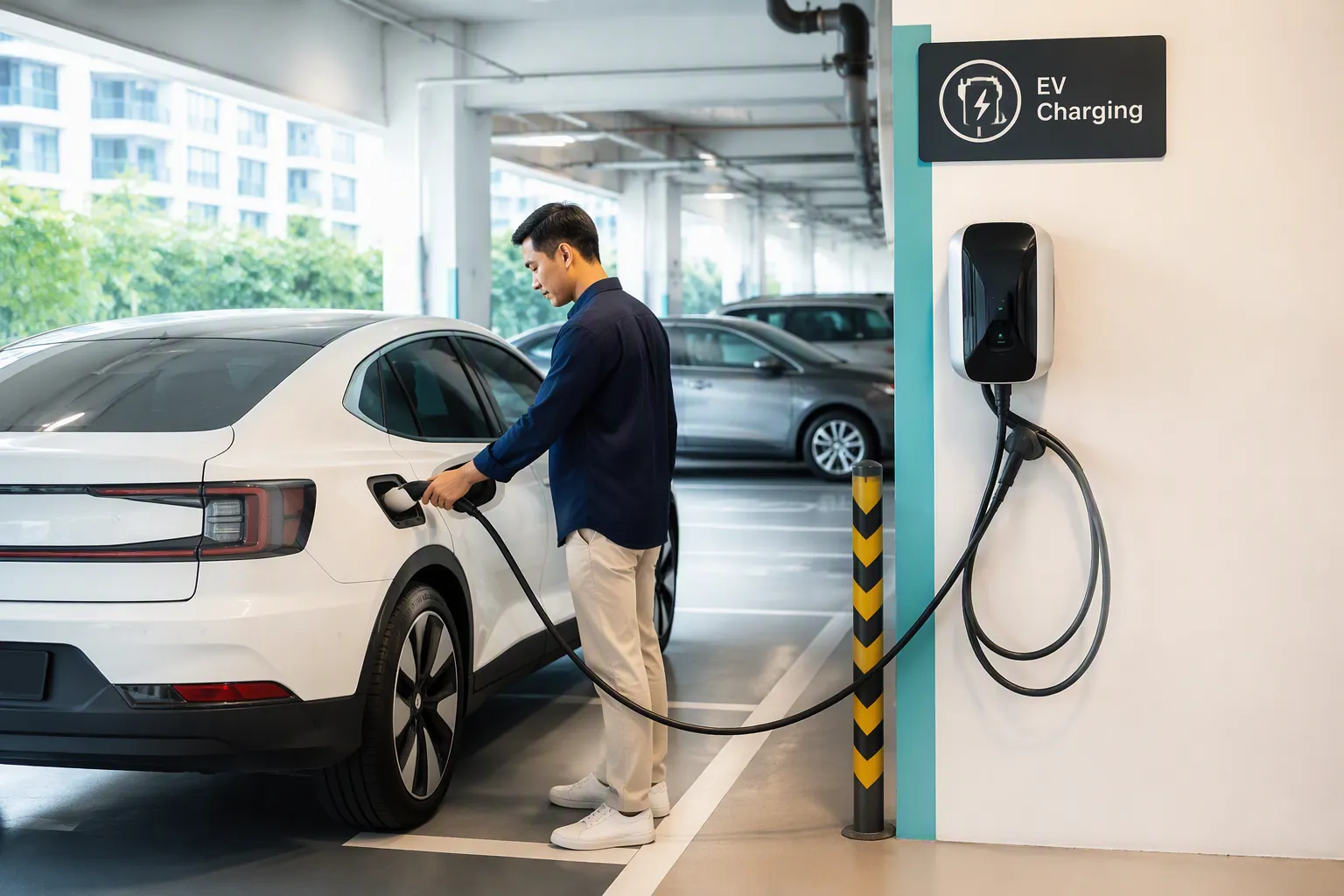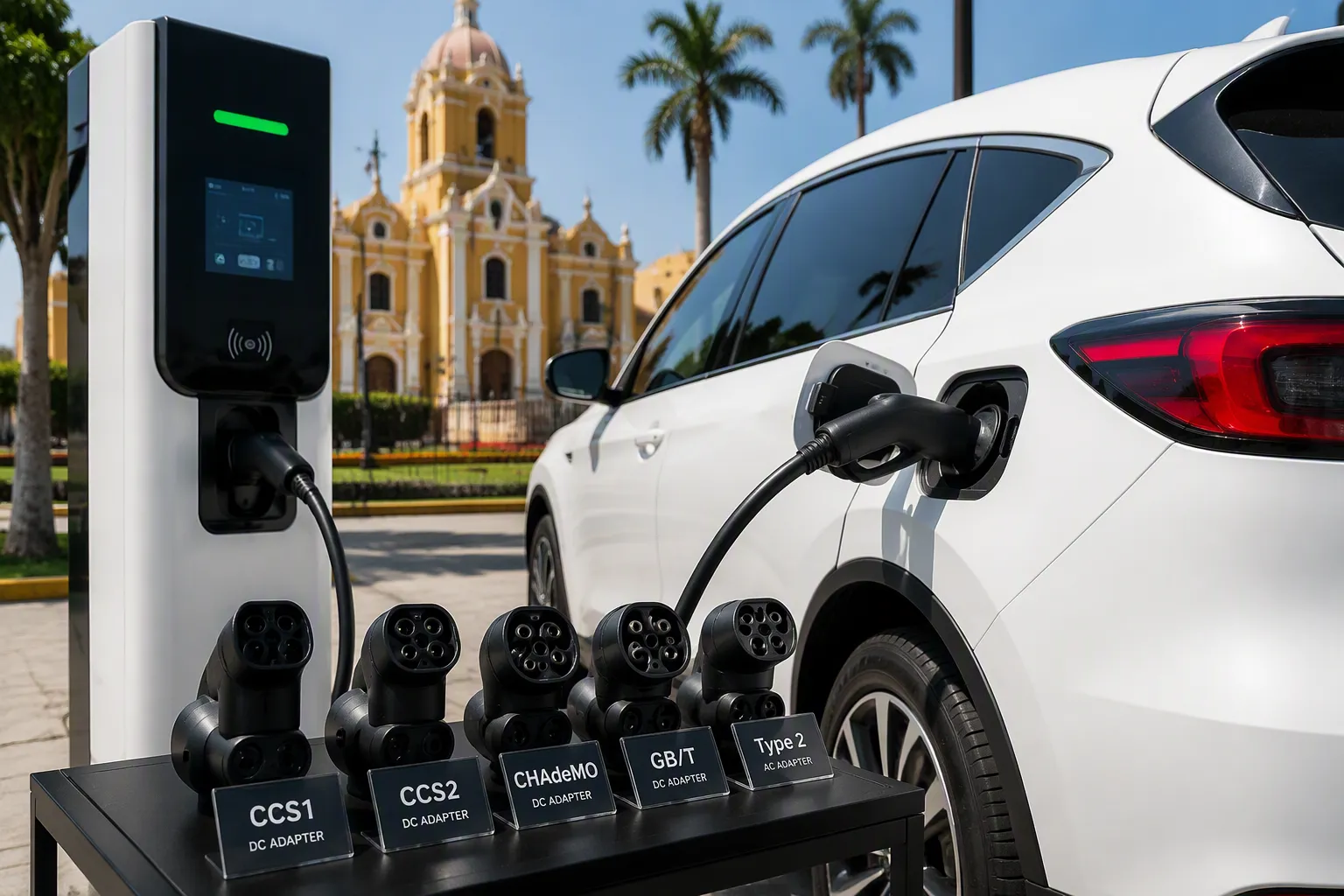
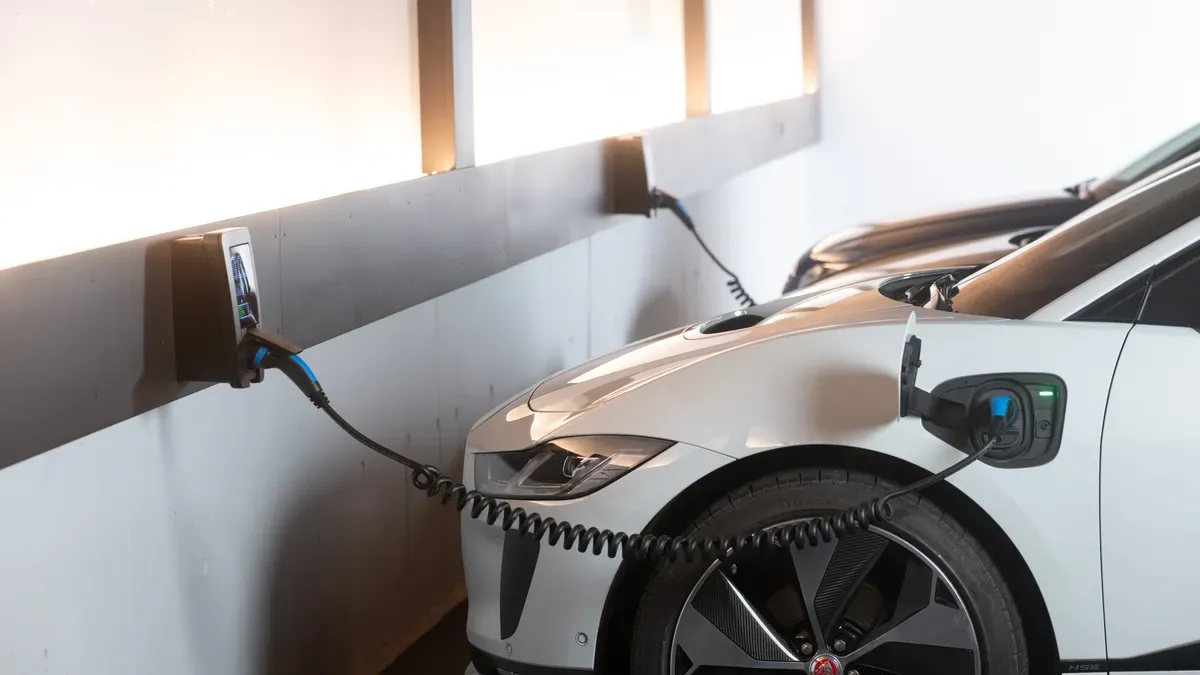
The cheapest way to charge an EV in the UK often involves charging at home with an off-peak, EV-friendly electricity tariff. Many drivers discover that charging at home on an off-peak tariff costs around £4–£6 for a typical 60kWh battery, while public rapid charging can reach £45 for the same amount of energy. These savings translate to £700–£1,200 per year compared to petrol cars. By choosing the right Elektrikli araç şarj çözümleri, such as a reliable EV Şarj Cihazı liderlerden Elektrikli araç şarj cihazı üreticileri, drivers can maximize cost efficiency. Some also benefit from free charging at workplaces or public points. Taşınabilir elektrikli araç şarj cihazları add flexibility for charging your EV on the go.
Cheapest Way: Home Charging with Off-Peak Tariffs

Why Home Charging Offers the Cheapest Way
Charging at home with an off-peak tariff provides the cheapest way to charge an EV in the UK. Drivers benefit from lower electricity rates during nighttime hours, which significantly reduces the cost to charge an electric car. The average cost for home charging remains much lower than public charging options. Home charging options allow drivers to control when and how they charge, maximizing savings.
Cost Comparison: Home vs. Public Charging
Bu elektrikli bir arabayı şarj etme maliyeti at home varies based on the tariff. Off-peak tariffs offer the lowest rates, while public rapid chargers charge much higher prices. The following table compares the cost to charge an electric car using different methods:
| Şarj Tipi | kWh başına maliyet (2025) | Cost per Mile (3.5 miles/kWh) | Annual Cost (6,800 miles) |
|---|---|---|---|
| Home (off-peak) | 7-12p | ~3p | ~£200 |
| Home (standard) | 22-28p | ~7-8p | ~£500 |
| Public (rapid) | 65-95p | ~16-21p | ~£1,100–£1,400 |
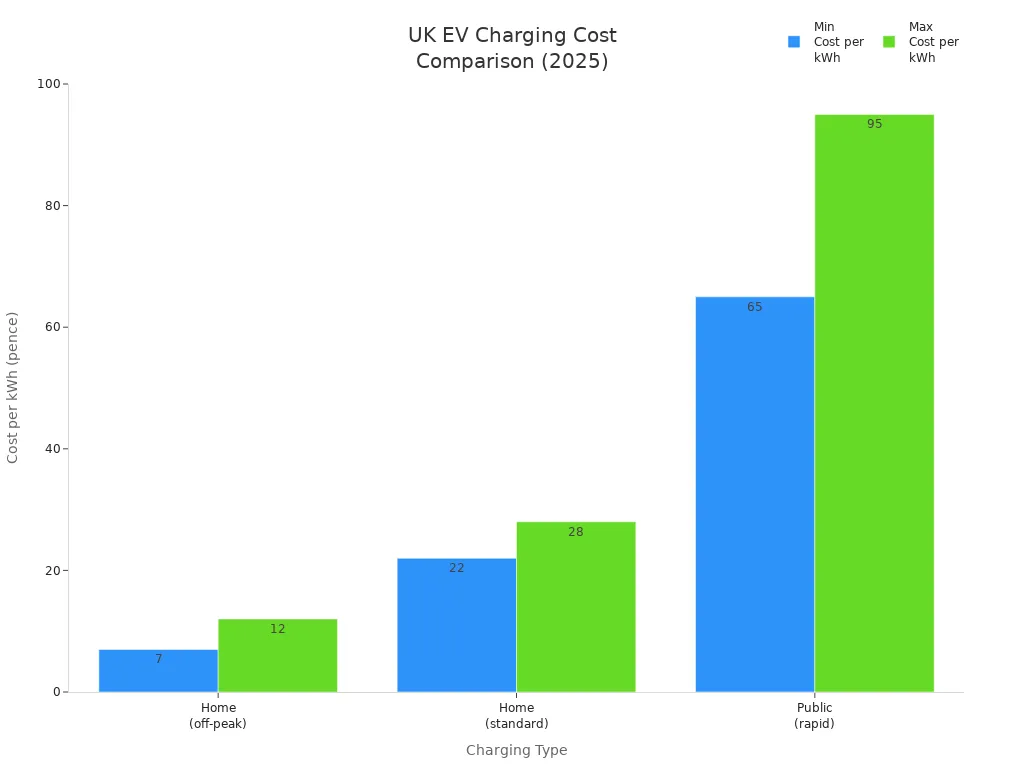
Public EV charging incurs a 20% VAT, while home electricity only incurs 5%. This structural difference increases the cost to charge an electric car at public stations before any energy is consumed.
Upfront Costs and Long-Term Savings
Drivers face upfront costs when installing a home charger, but long-term savings outweigh these expenses. The cost to charge an electric car at home remains low year after year. TPSON offers advanced home charger solutions that comply with UK regulations and provide smart charging features. Investing in a home charger enables drivers to access the cheapest way to charge and benefit from consistent savings.
Choosing the Right EV-Friendly Energy Tariff
Selecting the right energy tariff is essential for maximizing savings when charging at home. EV owners should evaluate their energy usage habits and consider tariffs that reward off-peak charging.
Best Tariffs for EV Owners in the UK
EV-friendly tariffs offer discounted rates for charging during nighttime hours. Providers may also offer green energy options for those prioritizing sustainability. Drivers should look for tariffs that integrate with smart meters and support solar battery systems.
- Energy usage habits: Shift charging and other energy-intensive tasks to off-peak hours.
- Smart meter availability: Track real-time electricity consumption for optimal charging.
- EV ownership: Choose tariffs with special rates for EV charging.
- Solar battery integration: Use stored energy during peak hours to reduce costs.
- Green energy: Select providers offering 100% renewable electricity.
How to Switch Energy Providers
Switching energy providers involves comparing tariffs, checking compatibility with smart meters, and ensuring the new provider supports EV-friendly rates. Drivers should contact their chosen provider, arrange for meter installation if needed, and confirm tariff details before switching.
Setting Up a Home Charging Point
Installing a home charger requires careful planning and compliance with UK regulations. TPSON provides technologically advanced solutions that meet all requirements.
Home Charger Installation Costs and Grants
Installation costs depend on cable length, electricity supply upgrades, and charger features. Some providers include standard installation in the price, while others charge extra for additional work. OZEV grants may reduce costs for eligible renters or flat owners.
- Off-street parking is required, such as a driveway or garage.
- Freeholder or landlord permission is necessary for rented properties.
- Properties built before 2008 may need an electrical safety check.
- Decide between tethered or untethered chargers based on vehicle needs.
Smart Chargers and Scheduling
Modern home chargers feature Wi-Fi or 4G connectivity for remote monitoring and smart scheduling. Drivers can set timers to charge during off-peak hours, optimizing the cost to charge an electric car at home. Smart chargers from TPSON offer compatibility with all EV models and comply with the Electric Vehicles (Smart Charge Points) Regulations 2021.
Tip: Scheduling charging overnight ensures access to the lowest electricity rates and maximizes savings.
Charging at home with the right tariff and a smart home charger delivers the cheapest way to charge an EV in the UK.
Maximizing Off-Peak Charging Savings
Charging an electric vehicle at home during off-peak hours offers significant cost advantages. Many UK energy suppliers provide time-of-use tariffs that reward drivers for shifting their charging to periods of low demand, typically overnight. By leveraging smart technology and careful planning, drivers can maximize these savings and reduce their overall energy bills.
Setting Timers for Overnight Charging
Most modern electric vehicles and home chargers include built-in scheduling features. Drivers can program their vehicles or chargers to begin charging as soon as off-peak rates start, often after midnight. This approach ensures that the battery draws power when electricity costs the least, sometimes as low as 7.5p per kWh compared to 28p during peak times.
- Planlı Şarj: Setting a timer guarantees that charging only occurs during the cheapest hours. This method prevents accidental charging during expensive periods.
- Smart Charging Solutions: Many chargers offer intelligent load management. These systems automatically adjust charging speed and timing based on grid demand and tariff rates.
- Güneş Paneli Entegrasyonu: Some households install solar panels to generate their own electricity. By combining solar generation with scheduled charging, drivers can further reduce reliance on the grid and cut costs.
İpucu: Always check your energy provider’s off-peak hours. These periods can vary between suppliers and regions.
Using Apps to Track Rates and Usage
Technology plays a crucial role in optimizing EV charging. Dedicated apps from energy suppliers and charger manufacturers help drivers monitor electricity rates, track usage, and adjust charging schedules in real time.
- Rate Tracking: Apps display current and upcoming tariff rates, making it easy to identify the best times to charge.
- Usage Monitoring: Detailed usage reports show how much energy the vehicle consumes and the associated costs. This transparency helps drivers spot trends and adjust habits for greater efficiency.
- Remote Scheduling: Many apps allow users to set or modify charging times from anywhere. This flexibility ensures that charging always aligns with the lowest rates, even if plans change unexpectedly.
| Özellik | Fayda |
|---|---|
| Rate Alerts | Notifies when off-peak rates begin |
| Kullanım Analitiği | Tracks energy consumption and costs |
| Uzaktan Kumanda | Adjusts charging schedules on the go |
Not: Some apps also integrate with smart home systems, allowing for seamless automation of charging routines.
By combining scheduled charging, smart technology, and real-time monitoring, drivers can consistently access the lowest electricity rates. These strategies not only reduce the cost to charge an EV but also support a more efficient and sustainable energy system.
Cheapest Way to Use Public Chargers
Understanding Public Charging Networks
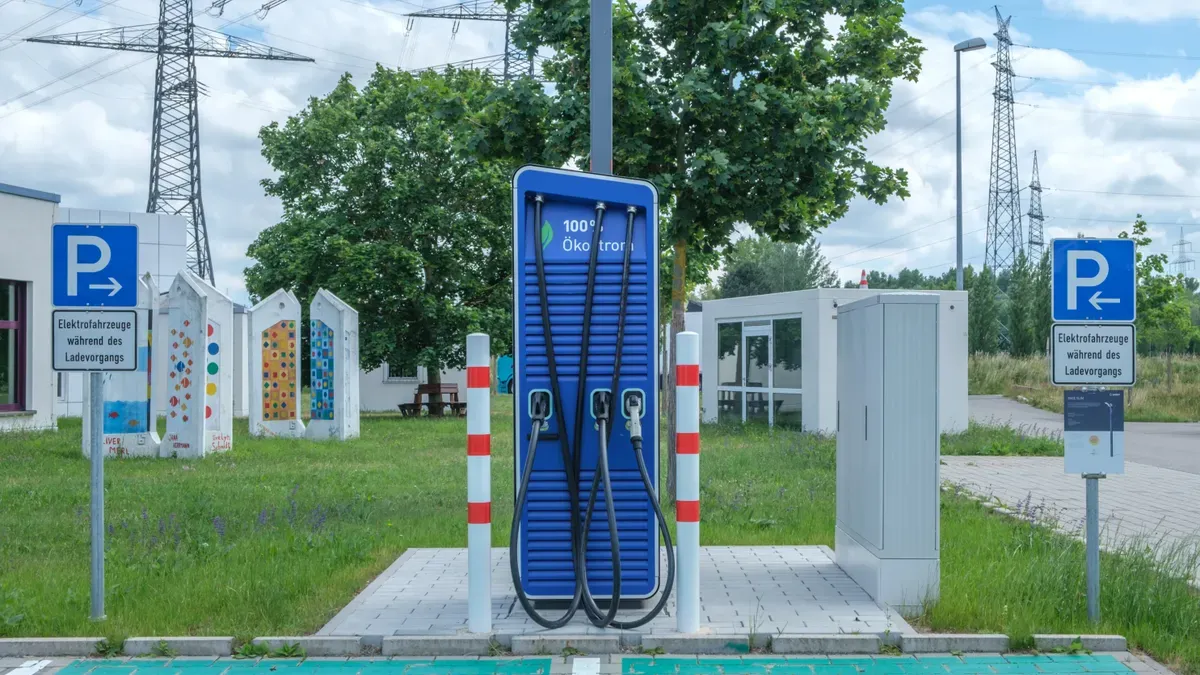
Public charging networks in the UK have expanded rapidly. Drivers now find over 88,000 public charging points across the country. Major networks include BP Pulse, Gridserve, Shell Recharge, Ionity, Instavolt, and MFG. Each network offers different coverage and pricing structures. Some networks provide cheaper rates for registered users, while others require app downloads for payment. The 2023 Public Charging Regulations require all operators to display the total cost of charging sessions. New chargers must support contactless payment, which improves convenience for everyone.
Types of Public Chargers: Rapid, Fast, Slow
Public chargers fall into three main categories:
- Rapid chargers: Deliver high power and can charge most EVs to 80% in 30–40 minutes. These usually have the highest price per kWh.
- Fast chargers: Offer moderate charging speeds, suitable for longer stops. The cost to charge an electric car at these points is lower than rapid chargers.
- Slow chargers: Provide the lowest power output and are often found at workplaces or car parks. These sometimes offer free electric car charging, especially in community spaces.
How Pricing Works at Public Stations
Bu elektrikli bir arabayı şarj etme maliyeti at public chargepoints depends on several factors. Networks may charge per kWh, per minute, or a flat session fee. The price varies by location, charger speed, and membership status. Charging at public locations often incurs a higher cost due to VAT and operational expenses. Drivers should always check the displayed price before starting a session.
Finding the Cheapest Public Charging Options
Drivers can use several tools to compare the cost of charging an electric car at public chargepoints. Apps and websites help users locate the best deals and track real-time availability.
Apps and Websites for Price Comparison
| Kaynak | Özellikler |
|---|---|
| Octopus Electroverse App | Access over 1,000,000 charging points, view pricing, activate chargers, and pay via smartphone. |
| Osprey App | Find chargers, access pricing, and save 10% on charges every weekend. |
| Zap-Map | View locations of public charging points in real-time. |
These resources help drivers find free electric car charging and compare the cost to charge an electric car at public chargepoints.
Off-Peak and Promotional Rates
Some networks offer off-peak or promotional rates. Charging during these periods reduces the cost to charge an electric car at public chargepoints. Drivers should look for special offers, such as weekend discounts or loyalty rewards, to lower their charging costs.
Tip: Always check for free electric car charging at supermarkets, hotels, or council-run sites.
Memberships and Subscriptions for Cheaper Charging
Memberships and subscriptions can reduce the cost of charging for frequent users. Many networks provide discounted rates for members.
Discounted Rates with Charging Network Memberships
Subscribers often receive preferential price rates and regular billing, which makes expense tracking easier. However, the cost of charging may not decrease for infrequent users.
Pay-As-You-Go vs. Subscription Plans
| Avantajlar | Dezavantajlar |
|---|---|
| Cost savings for frequent users | Monthly payment may not be justified for infrequent users |
| Regular billing for easier expense tracking | Multiple subscriptions can add up in cost |
| Preferential rates for subscribers |
Drivers should compare the cost and price structure of each plan. Pay-as-you-go works best for occasional users, while subscriptions suit those who rely on public charging regularly. Understanding the cost to charge an electric car at public chargepoints helps drivers make informed decisions about electric vehicle charging.
Cheapest Way to Charge at Work or Free Public Points
Workplace Charging Schemes
Employer-Provided Charging Benefits
Many drivers find that charging at work offers a practical and cost-effective solution. Employers across the UK increasingly install workplace charging stations to support employees who drive electric vehicles. These stations help reduce the cost to charge an electric car at work, especially when employers offer free or subsidized charging. Employees benefit from the convenience of charging during work hours, which can extend vehicle range and reduce reliance on home or public charging. Some companies also use workplace charging as a perk to attract and retain talent, while supporting sustainability goals.
The Workplace Charging Scheme (WCS) provides financial incentives to organizations that install EV charging infrastructure. The following table summarizes key details:
| Teşvik Türü | Detaylar |
|---|---|
| Hibe Kapsamı | Soket başına 350 £'a kadar, covering 75% of installation costs. |
| Future Increase | Grant will increase to £500 per socket starting April 2026. |
| Application Limit | Businesses can apply for up to 40 sockets across all sites. |
Employers who participate in the WCS can make charging at work more accessible and affordable for their staff. This approach lowers the overall elektrikli bir arabayı şarj etme maliyeti at work and encourages more employees to switch to electric vehicles.
How to Request Workplace Chargers
Employees interested in workplace charging should understand the process for requesting new chargers. The WCS operates as a government grant that assists eligible organizations with installation costs. The application process involves several steps:
- Organizations must be eligible businesses, charities, or public sector entities.
- They need to apply for the grant through the official online application.
- Ensure compliance with all eligibility requirements before applying.
Employees can approach their HR or facilities team to discuss the benefits of workplace charging and share information about available grants. Many organizations find that supporting free EV charging at work aligns with their environmental and employee satisfaction objectives.
Locating Free Public Charging Points
Supermarkets, Shopping Centers, and Hotels
Drivers searching for free electric car charging often find options at popular destinations. Many supermarkets, shopping centers, and hotels provide free charging points for customers. These locations typically offer slow chargers, which suit longer visits or overnight stays. Free EV charging at these venues helps reduce travel costs and supports sustainable transportation choices.
There are just under 2,000 free charging points across the UK. About two-thirds of these are slow chargers. Electric car dealerships, tourist attractions, and hotel car parks also frequently offer free EV charging to visitors.
Community and Council-Run Chargers
Community spaces and local councils sometimes provide free EV charging to encourage greener travel. Drivers can find these free charging points in public car parks, libraries, and recreation centers. Many councils invest in free electric car charging infrastructure to support residents and reduce urban emissions.
To locate free EV charging, drivers can use apps like Zapmap. These tools allow users to filter maps and see available free charging points nearby. By planning routes around these locations, drivers can maximize savings and minimize the cost to charge an electric car at work or on the go.
Tip: Always check the terms of use at each location, as some free charging points may require registration or have time limits.
Cheapest Way Through Energy Incentive Schemes
Smart Charging Incentives
Smart charging incentives help EV owners in the UK reduce charging costs by aligning energy use with grid demand. These programs encourage drivers to charge their vehicles during periods when electricity is cheaper and more abundant.
Grid Balancing and Demand Response Programs
Energy suppliers in the UK offer several smart charging tariffs that reward flexible charging habits. Two-rate tariffs, such as Intelligent Octopus Go and E.ON Next Drive, provide lower electricity prices during off-peak hours. Add-on tariffs, like OVO’s Charge Anytime and Scottish Power’s EV Optimise, allow users to keep their regular household tariff while accessing special EV charging rates.
To participate, drivers need a smart meter and a compatible smart charger. Suppliers often require customers to already hold an account with them. Home EV charging enables drivers to take advantage of off-peak electricity rates, which can be up to 50% cheaper than standard rates. Many providers, including TPSON, support integration with smart meters and intelligent chargers. These devices can schedule charging sessions when grid demand is low, further reducing costs.
İpucu: Strategic planning of charging sessions can lower expenses compared to public charging stations, where prices remain fixed or increase during peak hours.
How to Sign Up for Incentives
Signing up for smart charging incentives involves a few simple steps:
- Check eligibility with your energy supplier.
- Install a smart meter if you do not already have one.
- Choose a compatible smart charger, such as those offered by TPSON.
- Register for the preferred tariff or incentive program.
The UK government, through the Office for Zero Emission Vehicles (OZEV), also provides the EV Chargepoint Grant. This grant offers up to £350 toward the cost of a home charger installation, making smart charging more accessible for renters and flat owners. Some local councils and energy suppliers offer additional incentives, further reducing the financial burden.
Renewable Energy and Vehicle-to-Grid (V2G)
Renewable energy programs and vehicle-to-grid (V2G) technology create new opportunities for EV owners to save money and support the grid.
Earning Credits for Supplying Power Back to the Grid
V2G systems allow EVs to store electricity when prices are low and export it back to the grid when demand and prices rise. Owners can earn up to 30p per kWh for energy sold back, with some participants saving as much as £725 a year. Charging during off-peak periods and exporting during peak times can generate both savings and income, turning an EV into a valuable energy asset.
- V2G charging enables vehicles to charge when renewable energy is abundant, reducing costs.
- Selling surplus energy back to the grid creates an additional income stream.
- Customers in V2G trials have reported significant reductions in their annual energy bills.
Using Solar Panels to Charge Your EV
Many UK households install solar panels to generate renewable electricity. By charging an EV with solar power, drivers can minimize reliance on the grid and further cut costs. Smart chargers, such as those from TPSON, can integrate with home solar systems to prioritize self-generated energy. This approach not only reduces charging expenses but also supports a cleaner energy system.
Not: Combining solar panels with smart charging and V2G technology maximizes savings and environmental benefits for EV owners.
Cheapest Way with Community and Shared Charging Services
Peer-to-Peer Charging Networks
Peer-to-peer charging networks have emerged as a practical solution for EV owners seeking affordable and accessible charging options. These networks allow individuals to share their home chargers with others in the community. This approach addresses the limited public charging infrastructure in many UK neighborhoods.
Renting a Neighbor’s Charger
Renting a neighbor’s charger provides a flexible and cost-effective way to power an electric vehicle. Homeowners who install EV chargers can offer their unused charging time to others for a flat fee. This arrangement benefits both parties. The charger owner earns extra income, which helps offset installation and electricity costs. The renter gains access to convenient local charging, often at rates lower than public stations. This system increases the number of available charging points and reduces range anxiety for drivers.
- Homeowners share chargers when not in use, expanding local charging options.
- Participants set flat rates, making costs predictable for both parties.
- Owners can recoup installation expenses and reduce their own energy bills.
- More charging points in neighborhoods make EV ownership more appealing.
- Increased access supports the UK’s net zero goals by encouraging EV adoption.
İpucu: Drivers can check local peer-to-peer platforms to find available chargers nearby and compare rates before booking.
Community Charging Apps
Community charging apps streamline the process of finding and booking shared chargers. These apps display available chargers, show real-time availability, and handle payments securely. Users can filter by location, price, and charger type. This technology makes it easy for drivers to plan charging sessions around their daily routines. The presence of more charging options in the community accelerates the shift toward electric vehicles and supports lower emissions.
Local Charging Hubs
Local charging hubs play a vital role in making EV charging more affordable and accessible, especially in areas with limited infrastructure. Distribution network operators (DNOs) manage these hubs to ensure that all residents have access to reliable public charging.
Shared Residential Chargers
Shared residential chargers in local hubs allow multiple EV owners to use the same charging point. This setup reduces the need for every household to install a private charger. By pooling resources, residents lower their upfront costs and benefit from group discounts on installation and maintenance. Local charging hubs have increased the number of chargers in some regions by over 200%. These projects forecast cost savings of £30,000 to £60,000 per site, reducing overall connection costs by up to 66%.
- Shared chargers support the needs of thousands of EVs in a single community.
- Lower connection costs translate to cheaper charging for all users.
- Group charging reduces the carbon footprint by supporting more EVs with fewer resources.
Car Clubs and Shared EV Infrastructure
Car clubs and shared EV infrastructure offer another affordable charging solution. Members of car clubs access dedicated charging points as part of their membership. This model suits drivers who do not own a private parking space or who use an EV occasionally. Shared infrastructure ensures that everyone in the community can benefit from the transition to electric vehicles. These initiatives contribute to significant carbon reductions, supporting the UK’s environmental targets.
Not: Community and shared charging services provide flexible, cost-effective options for drivers who want to save money and support sustainable transport.
Cheapest Way by Adopting Efficient Driving and Charging Habits
Reducing Charging Frequency
Electric vehicle owners in the UK can significantly reduce charging frequency by adopting efficient driving habits. Efficient driving maximizes the range of each charge, allowing drivers to travel further before needing to recharge.
Maximizing Range with Efficient Driving
Drivers who focus on efficiency extend their vehicle’s range and lower overall charging costs. Several strategies help achieve this:
- Drive smoothly and avoid rapid acceleration or harsh braking.
- Reduce motorway speeds to conserve battery power.
- Keep tyres properly inflated to minimize energy loss.
- Remove unnecessary weight from the vehicle.
- Activate eco driving modes when available.
These habits not only improve range but also contribute to lower maintenance costs. Drivers who maintain their vehicles and adopt efficient driving techniques spend less on charging over time.
Tip: Using eco driving modes and maintaining correct tyre pressure can increase range by up to 10%.
Trip Planning to Avoid Unnecessary Charging
Careful trip planning prevents unnecessary charging stops and reduces reliance on expensive public chargers. Drivers should:
- Compare charging networks before long journeys to find the best prices.
- Use charging apps to check pence-per-kWh rates and locate discounts at supermarkets or destination chargers.
- Avoid ultra-rapid charging unless absolutely necessary, as it incurs higher costs.
Public charging often costs three to five times more than smart home charging. For daily use, home charging remains the most cost-effective option.
Battery Care and Charging Best Practices
Proper battery care ensures long-term savings and reduces the need for high-cost emergency charging. Following best practices extends battery life and maintains optimal performance.
Avoiding High-Cost Emergency Charging
Emergency charging at public stations, especially ultra-rapid chargers, can be expensive. Drivers minimize these costs by:
- Charging during off-peak hours to take advantage of lower electricity prices.
- Setting delayed charging timers and scheduling charging sessions overnight.
- Planning weekly charging schedules around typical driving patterns.
Combining solar energy with EV charging habits further enhances energy efficiency and reduces reliance on the grid.
Keeping Your Battery Healthy for Long-Term Savings
Maintaining battery health is essential for minimizing long-term charging costs. The following table summarizes key best practices:
| En İyi Uygulama | Açıklama |
|---|---|
| Charge during off-peak hours | Plan charging during periods of lower electricity demand to save on costs. |
| Use battery energy storage | Capture excess energy during low-demand periods for use during peak times. |
| Set charging limits | Limit daily charging to 80% to extend battery lifespan and reduce charging time. |
Drivers who link EV charging with broader household energy planning achieve greater efficiency. Setting charging limits and using battery energy storage systems help preserve battery health and reduce costs. By adopting these habits, EV owners in the UK maximize savings and ensure their vehicles remain reliable for years.
Comparing the Cheapest Way to Charge EV in the UK
Real-World Cost Scenarios
Case Study: Home Charging vs. Public Charging
Drivers in the UK face a wide range of charging costs depending on their chosen method. Home charging remains the most affordable option for those with access to off-street parking and an EV-friendly tariff. Public charging, while convenient for those without home facilities, incurs higher costs due to increased VAT and operational expenses. The following table illustrates typical costs for a full charge of a 70kWh battery:
| Şarj Yöntemi | kWh başına maliyet | Full Charge Cost (70kWh) | Şarj Süresi |
|---|---|---|---|
| Kamu Ücretlendirmesi | £0.82 | £57.40 | 15-45 minutes (80%) |
| Home Charging (off-peak) | £0.07-£0.12 | £4.90-£8.40 | 6-8 hours |
| Public Slow/Fast | £0.35-£0.55 | £24.50-£38.50 | 4-8 saat |
| Hızlı Şarj | £0.65-£0.95 | £45.50-£66.50 | 15-45 minutes (80%) |
Home charging offers significant savings, especially when drivers utilize off-peak tariffs. Public charging costs can be up to ten times higher, making home charging the preferred choice for cost-conscious EV owners.
Annual Savings Breakdown
A typical EV owner who drives 6,800 miles per year can save hundreds of pounds by charging at home. With off-peak tariffs, annual Düşük şarj maliyetleri may total £200–£300. In contrast, relying on public rapid chargers could push yearly expenses to £1,100–£1,400. This difference highlights the impact of tariff selection and charging location on the cost of charging an electric car.
Her Şarj Yönteminin Artıları ve Eksileri
Convenience vs. Cost
- Evde Şarj: Provides unmatched convenience for those with private parking. Drivers can charge overnight, avoid queues, and benefit from lower rates. However, installation costs and the need for off-street parking limit accessibility.
- Kamu Ücretlendirmesi: Offers speed and accessibility for drivers without home charging. Rapid chargers deliver quick top-ups but at a premium price. Public charging incurs higher VAT, making it less cost-effective.
- İşyeri Şarjı: Delivers convenience during work hours. Employers may subsidize costs, but availability depends on company policies and infrastructure.
- Community Charging: Allows charger owners to earn income by renting out their chargers. Users benefit from lower rates and increased availability. Community charging apps enable booking, ensuring access at preferred times.
Community charging increases the number of available points, reduces range anxiety, and encourages EV adoption. Owners recoup installation costs faster, and slower charging preserves battery health.
Flexibility and Accessibility
Home charging offers flexibility for those with suitable parking, allowing overnight charging at reduced rates. Public charging provides accessibility for drivers in urban areas or those traveling long distances. Community charging expands options, especially in rural regions, and supports freedom to travel. Safety improves when charging at private residences, reducing risks associated with public stations. Extended battery life results from slower community charging, which is gentler on batteries compared to rapid public chargers.
The UK’s high electricity prices and VAT structure make public charging more expensive than in many European countries. Home charging remains the most flexible and cost-effective solution for most drivers, while public and community options fill gaps for those without home facilities.
Charging at home remains the cheapest way for most UK EV owners. Drivers who use smart chargers and select overnight tariffs reduce the cost to charge an electric car. Off-peak electricity rates can drop to 39p per kWh, while public charging often exceeds 60p per kWh. Free electric car charging at work, supermarkets, and community hubs offers additional savings. Subscriptions to charging networks provide discounts, such as BP Pulse’s 25% member rate. Researching EV-friendly tariffs and exploring community charging options helps drivers find the cheapest way to charge. Adopting smart charging habits and regularly comparing options ensures the lowest cost and maximizes free electric car charging opportunities.
Drivers who prioritize charging at home, take advantage of free electric car charging, and use akıllı teknoloji achieve the cheapest way to charge their EV.
- Charging at home with an off-peak tariff delivers the cheapest way.
- Free electric car charging at public points and workplaces lowers the cost.
- Community charging and network discounts further reduce the cost to charge an electric car.
- Smart charging habits maximize savings and minimize electricity expenses.
SSS
What is the absolute cheapest way to charge an EV in the UK?
Charging at home using an off-peak, EV-specific tariff usually offers the lowest cost per kWh. Drivers who schedule charging overnight can save hundreds of pounds annually compared to public charging.
Can renters or flat owners install a home EV charger?
Yes, renters and flat owners can install a home charger if they have off-street parking and receive permission from the property owner. The UK government offers grants to help reduce installation costs for eligible applicants.
Are there any free public charging points available?
Many supermarkets, hotels, and some council-run car parks provide free EV charging. Drivers can use apps like Zapmap to locate these points. Always check for time limits or registration requirements before charging.
How do smart chargers help save money?
Smart chargers allow users to schedule charging during off-peak hours. These devices often connect to apps that track electricity rates and usage, ensuring drivers always charge at the lowest possible cost.
Do all energy suppliers offer EV-friendly tariffs?
Not all suppliers provide EV-specific tariffs. Drivers should compare options from major providers and look for tariffs that support off-peak charging and smart meter integration.
Is public rapid charging ever cheaper than home charging?
Public rapid charging rarely beats home charging on price. Rapid chargers offer speed and convenience but usually cost much more per kWh due to higher VAT and operational expenses.
Can solar panels further reduce EV charging costs?
Solar panels can significantly lower charging costs. Drivers who generate their own electricity and use it to charge their EVs reduce reliance on the grid and cut overall expenses.
What is vehicle-to-grid (V2G) charging, and how does it save money?
V2G technology allows EV owners to sell stored energy back to the grid during peak demand. This process can generate income and offset charging costs, making EV ownership more economical.