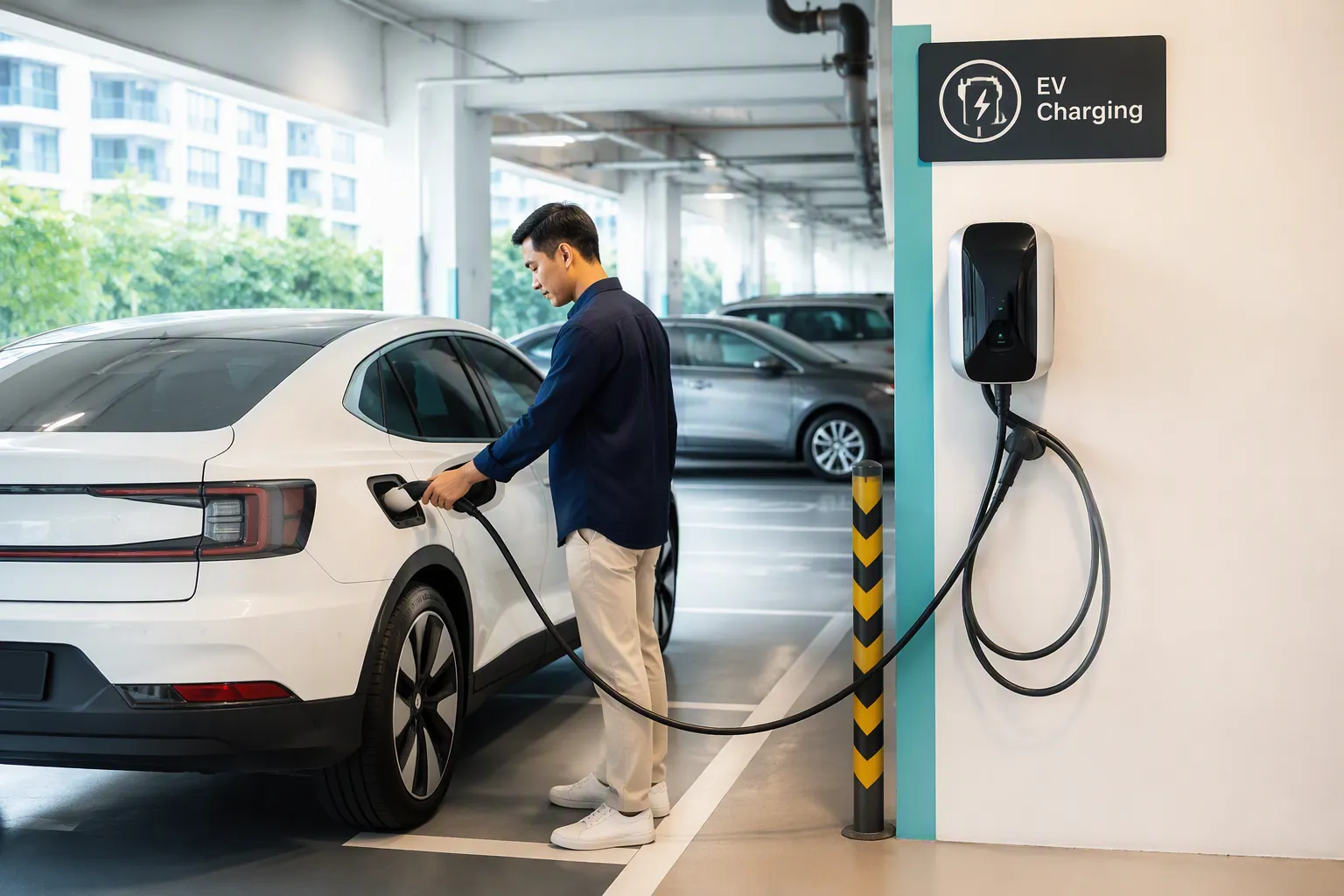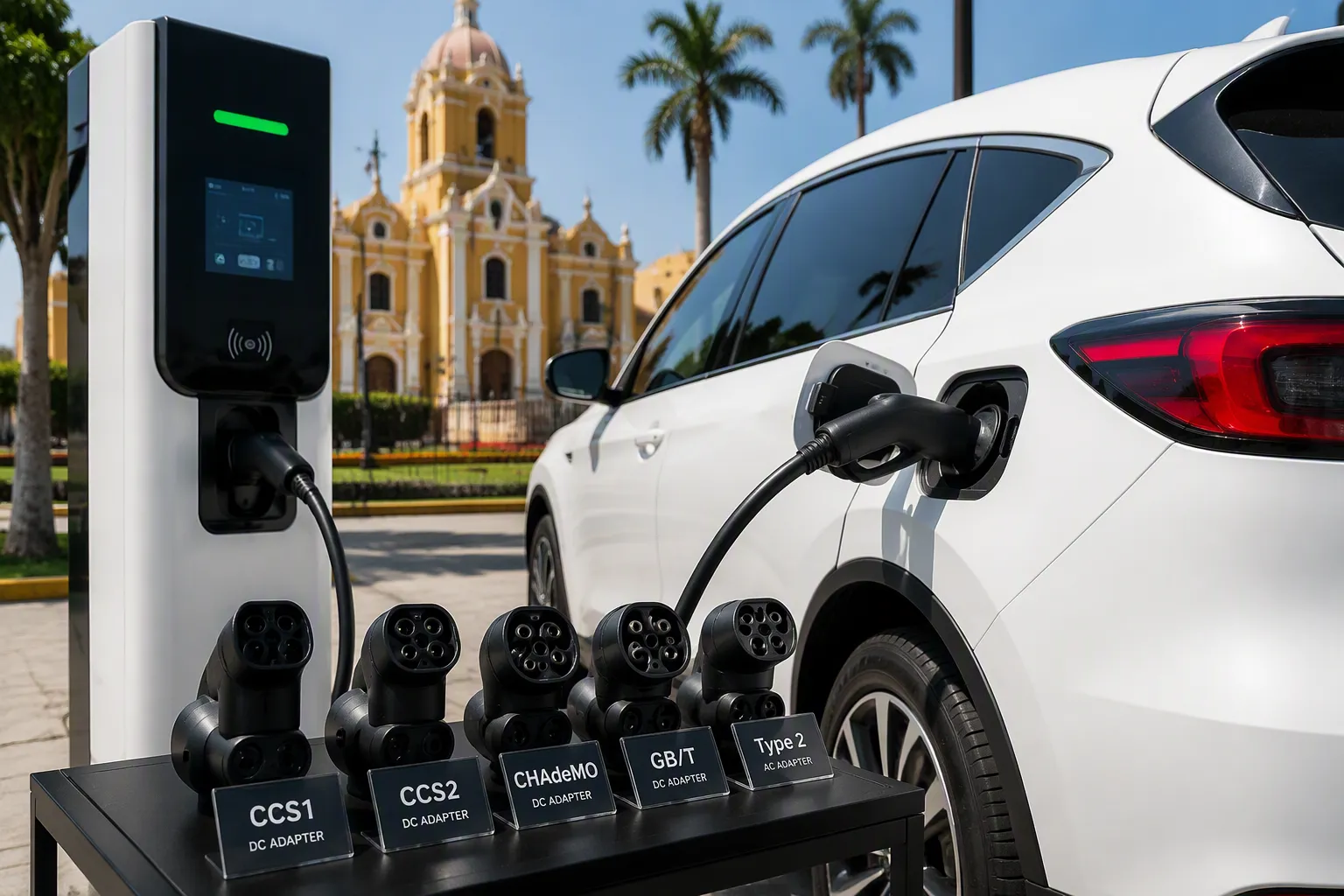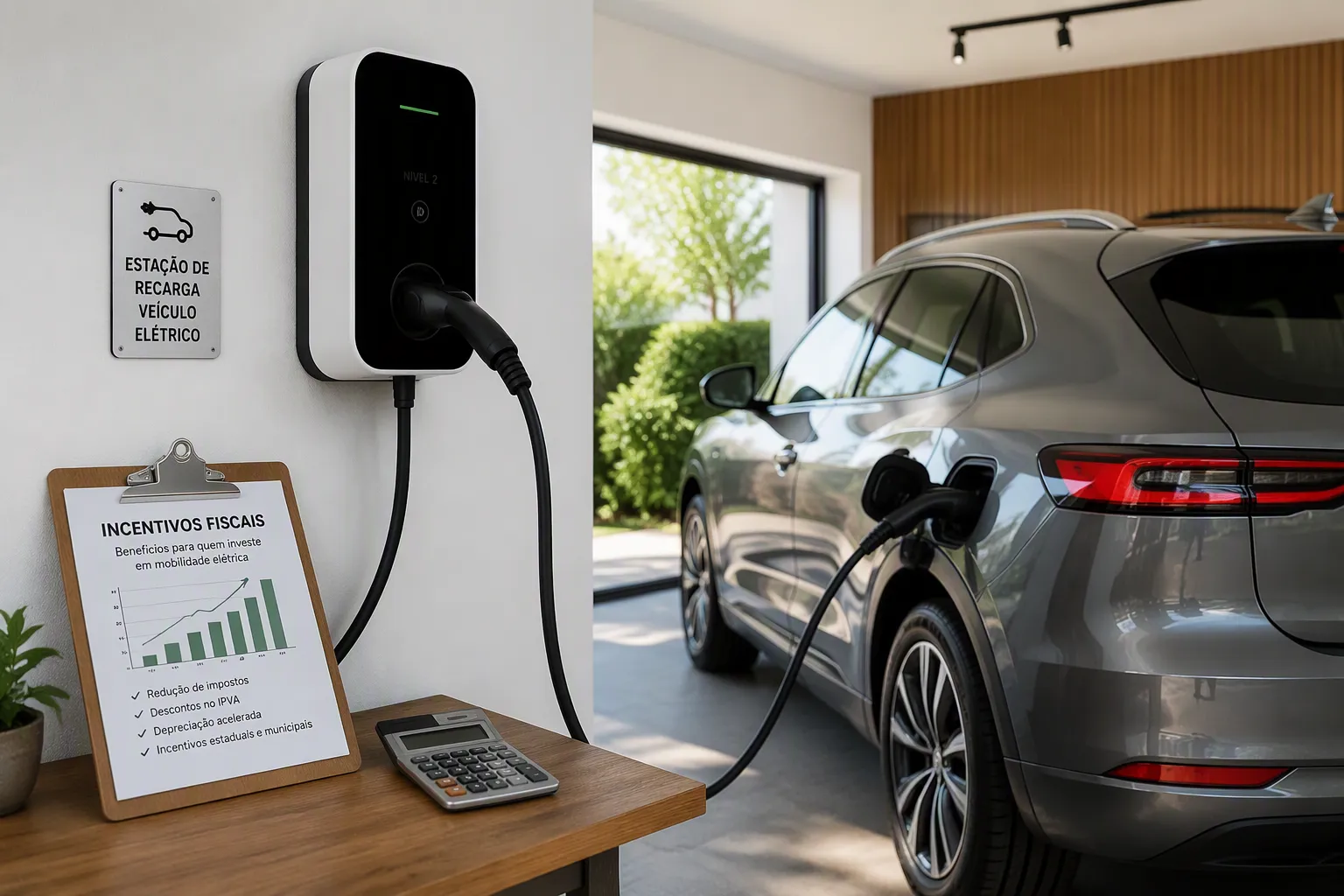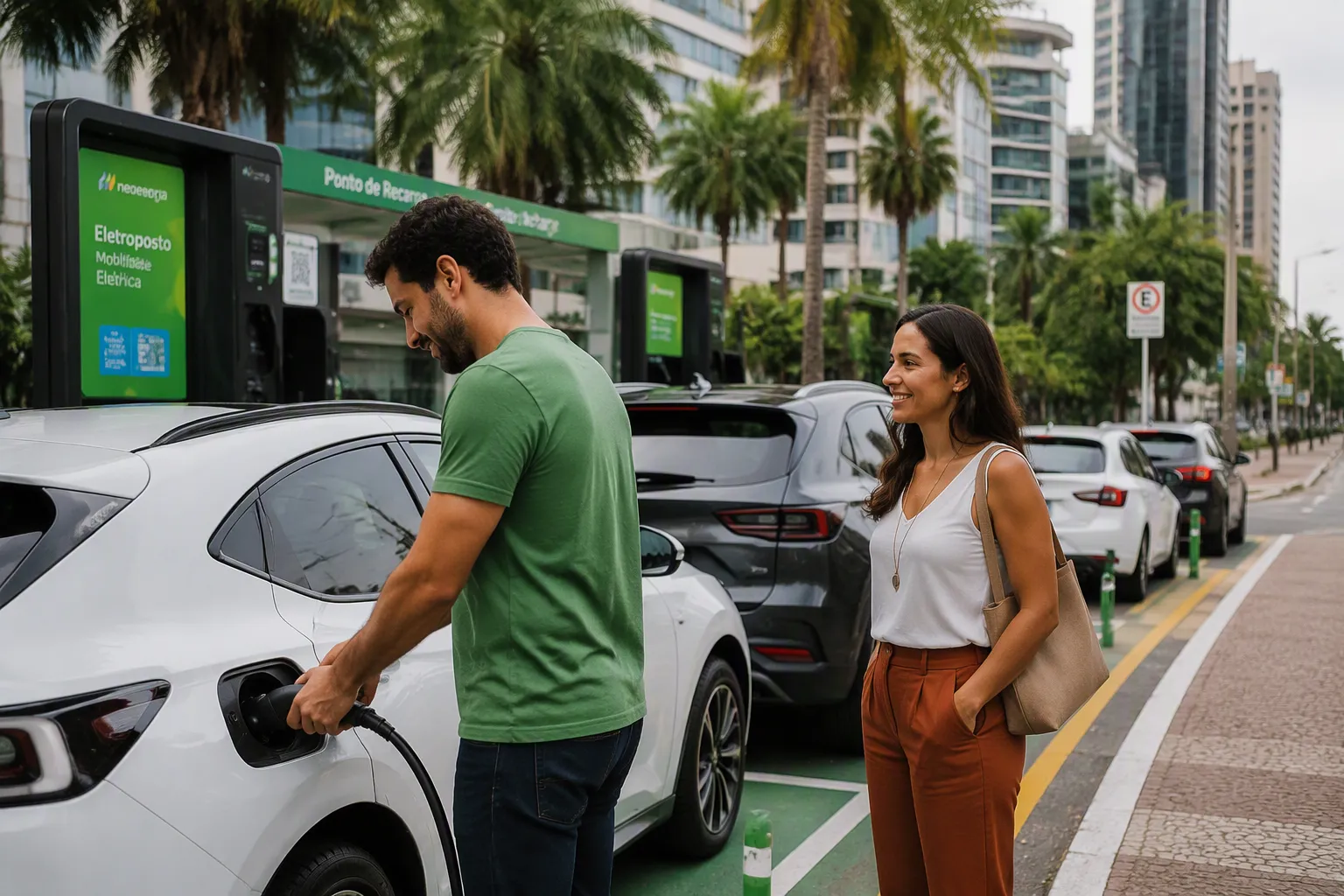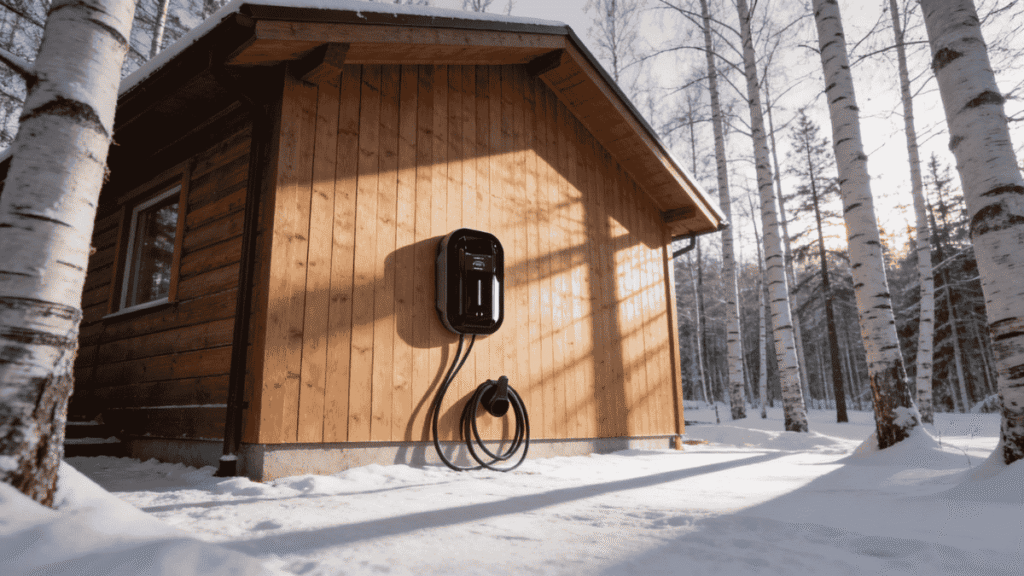
24 amperlik bir EV şarj cihazı, 40A, 48A veya 80A modeller kadar ilgi görmeyebilir, ancak bu onu önemsiz kılmaz. Aslında, daha yavaş şarjın tamamen kabul edilebilir olduğu birçok ev, apartman, karma kullanımlı mülk ve hafif filo durumları için 24A'lık bir şarj cihazı en pratik seçenek olabilir. Bir araç uzun süreler park halindeyse, günlük kilometre orta düzeydeyse ve elektrik kapasitesi sınırlıysa, daha düşük amperajlı bir şarj cihazı seçmek kurulum maliyetlerini düşürürken yine de güvenilir gece şarjı sağlayabilir.
Bu makale, 24 amperlik bir şarj cihazının nasıl çalıştığını, diğer Seviye 2 şarj seçenekleriyle nasıl karşılaştırıldığını ve en çok nerede mantıklı olduğunu açıklamaktadır. Ayrıca, 24A şarjını daha geniş EV altyapı pazarı içinde konumlandırmak için TPSON, ChargePoint, Love’s, Smart Charge America, Emporia ve Car and Driver'dan sağlanan kaynak materyallerden yararlanmaktadır.
- 24A'lık EV Şarj Cihazı Nedir?
- 24A Şarj Ne Kadar Hızlıdır?
- Neden “Biraz Daha Yavaş” Bazen Daha Akıllıca Bir Seçim Olabilir?
- 24A'lık Şarj Cihazı İçin En İyi Kullanım Senaryoları
- 24A ile 32A, 40A ve 48A Arasındaki Gerçek Farklar
- 24A'nın Bir Ev Elektrik Sistemi İçin Faydaları
- Apartmanlar, Ortak Otoparklar ve Ticari Saha
- How 24A Relates to Smart Load Management
- When You Shouldn’t Choose 24A
- TPSON’s Product Approach and Where 24A Fits
- Frequently Asked Questions
- Conclusion
A 24 amp EV charger is an AC charging device with a maximum output current of 24 amps, typically classified as Level 2 AC charging. In a typical North American 240V home environment, its theoretical power is about:
This means 24A charging is significantly faster than Level 1 charging from a standard household outlet, but lower than common higher-power Level 2 chargers such as 32A, 40A, and 48A. Car and Driver’s conversions in its home EV charger testing guidance support this: 24A is about 5.8 kW, 32A is about 7.7 kW, and 40A is about 9.6 kW.
So, 24A isn’t “ultra-fast charging,” but it is still standard high-voltage residential AC charging—and in many real-world scenarios, it’s already more than sufficient.
Many users see 24A and worry it won’t be fast enough. But whether it’s enough depends on how much energy your vehicle needs to replace each day—not just the peak number.
Based on an output of about 5.8 kW:
- About 23.2 kWh added in 4 hours
- About 46.4 kWh added in 8 hours
- About 58 kWh added in 10 hours
Even after accounting for charging losses and tapering near the end, 24A is still enough for many commuters to recharge overnight. Car and Driver emphasizes that the core value of home Level 2 charging is “charging while the vehicle is parked,” not chasing the short-window speed of public DC fast charging.
If your daily commute consumption is only around 10–20 kWh, a 24A charger is often completely sufficient.
| Güncel | Approx. Power at 240V | Positioning | Tipik Kullanım |
|---|---|---|---|
| 16A | 3.8 kW | Slower Level 2 | Low-mileage commutes, limited electrical capacity |
| 24A | 5.8 kW | Low-to-mid power Level 2 | Homes, long parking durations, shared parking |
| 32A | 7.7 kW | Mainstream Level 2 | Most home scenarios |
| 40A | 9,6 kW | Faster home charging | Medium-to-high mileage households |
| 48A | 11,5 kW | Premium residential Level 2 | Future-proofing, hardwired installs |
EV charging doesn’t always need higher and higher amperage. For many people, lower-current charging offers several practical advantages:
- Less strain on the electrical distribution system
- Easier to fit older homes or smaller service capacities
- Lower wiring, breaker, and labor costs
- Better suited for long-parking scenarios, without paying extra just for “speed”
- Easier to share total site power across multiple chargers
Car and Driver clearly points out in its home charging recommendations that a 40A or 50A circuit is enough for overnight charging in most homes, and if capacity is limited, load management can help avoid expensive upgrades. Following that logic, 24A can be a gentler, more economical solution in certain scenarios.
If your daily driving is mostly city commuting, school runs, errands, and short trips, the amount of energy you need to replenish each day is often modest. As long as the car is parked for a few hours each night, a 24A charger is usually enough to restore the range you need for the next day.
Many homes don’t have enough headroom to jump straight to 40A, 48A, or higher. If you upgrade the electrical panel or service just to chase higher amperage, costs can rise quickly. In that case, 24A is a meaningful middle ground: much faster than 120V trickle charging, but not so demanding that installation costs become uneconomical.
In multi-unit buildings, the goal is often not to make one car charge as fast as possible, but to serve more parking spaces within limited total capacity. Lower-amperage charging ports can increase deployment density and pair better with dynamic load management.
Employees parking for 8+ hours, hotel guests staying overnight, and long-dwell parking at attractions or mixed-use complexes are all classic “slower is fine” scenarios. In these environments, 24A charging is not only sufficient, it can also reduce electrical distribution cost per port.
If your home already has a higher-power primary charger, the second one doesn’t necessarily need to be high power as well. A 24A charger as an auxiliary spot—or for the secondary vehicle—can sometimes use available electrical capacity more efficiently.
Where peak demand must be controlled, upgrades must be avoided, or energy management strategies are central, a 24A charger is well suited to be part of the overall solution.
The most common question is: will 24A be too slow? The real answer depends on whether you actually need faster charging—not on whether 24A looks smaller on paper.
Compared with mainstream options:
- Versus 32A, 24A provides about 1.9 kW less output
- Versus 40A, 24A provides about 3.8 kW less output
- Versus 48A, 24A provides about 5.7 kW less output
But these differences matter most when the charging window is short. If the vehicle is parked all night—or even all day—the practical disadvantage of 24A becomes much smaller.
Car and Driver tested multiple home EVSE options spanning 24A and 32A up to 48A and 50A, and emphasized that buyers should consider more than maximum output—such as home circuit capability, the vehicle’s onboard charger limit, and installation method. The same logic applies to choosing 24A.
| Şarj cihazları genellikle kademelere ayrılır | Artıları | Eksiler | İçin En İyisi |
|---|---|---|---|
| 24A | Lower installation load, more budget-friendly, ideal for long parking durations | Slower for short-window top-ups | Low-mileage homes, apartments, shared parking |
| 32A | Well balanced, more mainstream | Can still be challenging for some capacity-limited sites | Most homes |
| 40A | Faster overnight charging, mature market | Higher circuit and installation requirements | Medium-to-high mileage users |
| 48A | Premium residential Level 2 speed | Typically hardwired, higher cost | Users seeking faster charging or future-proofing |
The biggest real-world advantage of choosing a lower-current charger is that it’s easier on a home’s electrical system. Car and Driver notes in its installation guidance that home circuits must account for whole-home loads such as air conditioning, ovens, and dryers. EV charging may require continuous current anywhere from 24A to 80A, so homeowners should evaluate main service capacity and whether adding a new circuit is feasible.
Key benefits of 24A include:
- Easier to deploy without upgrading the overall service
- Easier to coexist with other major appliances
- More friendly for older homes or garage retrofits
- Better for multiple chargers and shared/rotational charging
If a user doesn’t actually need 40A or 48A output, 24A can deliver a lower total cost “good enough” solution.
In commercial and semi-public environments, lower-current charging does not mean lower value. Many sites truly need “more ports, controllable output, and reasonable cost,” not the fastest possible charging at every single port.
ChargePoint emphasizes on its website that the core of a modern EV charging platform is the combination of software, services, hardware, and open compatibility—not just the power rating of a single unit. Its approach to apartments, retail, workplaces, fleets, and commercial real estate is fundamentally about matching charging capability to the scenario.
Smart Charge America’s commercial product list reflects the same thinking. For example:
- ChargePoint CPF50 can be configured from 16A to 50A, emphasizing energy management and panel sharing
- LiteOn 32A emphasizes local load management and OCPP compatibility
- Wallbox Pulsar Plus supports multi-charger power sharing
These examples show that in multi-parking environments, 24A—or similar lower-current settings—can help operators serve more vehicles without increasing total site capacity.
A 24A charger is already easier to deploy than higher-current options, but its value increases further when combined with smart load management.
TPSON emphasizes on its Elektrikli Araç Şarj Cihazları page that its AC charging products include Dynamic Load Balancing to protect the home electrical system. TPSON also lists Dynamic Load Balancing, Dynamic Temperature Control, and Real-Time Diagnostics & Alerts as part of its core advantages on its homepage.
The Emporia Pro’s market positioning is also representative. Car and Driver’s testing notes that the Emporia Pro includes home energy monitoring hardware that can adjust EV charging output in real time to avoid exceeding what the home can safely support. In other words, with intelligent current control, 24A can be a default cap—or an actual operating level after dynamic allocation.
For projects with multiple devices, multiple parking spaces, or limited electrical capacity, this approach is often smarter than simply upgrading to higher amperage.
Public long-distance travel networks typically require faster DC charging. Love’s EV charging page shows that its network is adding more Level 3 DC fast chargers alongside existing Level 2 infrastructure to meet different vehicles and travel needs. This suggests that for highway corridor refueling, 24A-class AC charging is usually not the first choice.
But that doesn’t mean 24A has no public value. It’s better suited for:
- Overnight hotel parking
- All-day office parking
- Residential community shared parking
- Long-dwell destinations such as attractions, hospitals, and campuses
In short, 24A creates value where people stay longer—not where they need to leave quickly.
While 24A is a great fit for many scenarios, it isn’t universal. If the following apply, a higher-power option may be a better match:
- You drive high daily mileage and need to add a lot of energy in a short time
- Your vehicle has a large battery and your parking/charging window is short
- Fleet operations, rideshare, or high-turnover commercial vehicles require faster turnaround
- You explicitly want stronger future-proofing
In these cases, 32A, 40A, 48A, or even higher AC charging levels may be more appropriate. For higher-frequency, time-sensitive operational scenarios, it’s worth further considering DC EV Şarj Cihazları.
For example, TPSON’s portable DC series offers 20 kW, 30 kW, and 40 kW options for emergency rescue, logistics dispatch, event support, and dealer service scenarios. These products don’t compete with 24A AC chargers—they address entirely different operational needs.
Based on TPSON’s public materials, this EV charger manufacturer, founded in 2015, builds solutions around its Current Fingerprint Algorithm, edge computing, AI-driven electrical systems, and EV charging equipment, with an emphasis on:
- Safety protection
- High compatibility
- Energy-efficiency optimization
- Dinamik yük dengeleme
- Real-time diagnostics and alerts
This product philosophy helps explain the value of 24A charging. Because 24A is not the “most aggressive” spec choice, its real value is whether the overall system is safer, more efficient, and easier to deploy.
Within the AC EV Şarj Cihazları category, TPSON presents an AC lineup from TW-10 to TW-40. On the broader Elektrikli Araç Şarj Cihazları Sayfa, AC, DC, aksesuarlar ve Dinamik Yük Dengeleme'yi açıkça eksiksiz bir ekosistem olarak konumlandırır. 24A gibi düşük güç senaryolarında, bu bütünsel çözüm yaklaşımı herhangi bir tek güç rakamından daha önemlidir.
Uygunluğu dört soruyla hızlıca değerlendirebilirsiniz:
- Günlük olarak gerçekte kaç kWh enerji takviyesine ihtiyacınız var?
- Araç tipik olarak her park etme seansında ne kadar süreyle park halinde kalıyor?
- Evinizin veya mülkünüzün elektrik kapasitesi sınırlı mı?
- En düşük maliyetli kurulum mu, yoksa daha yüksek tepe çıkışı mı sizin için daha önemli?
Eğer cevaplarınız “düşük günlük enerji kullanımı, uzun park süresi, sınırlı kapasite ve maliyet hassasiyeti” yönündeyse, o zaman 24A aslında daha akıllı bir seçim olabilir.
Evet—özellikle günlük işe gidiş-geliş mesafesi düşük ve gece boyu uzun park pencereleri olan haneler için. Seviye 1 şarjdan önemli ölçüde daha hızlıdır, aynı zamanda 32A, 40A ve 48A gibi daha yüksek seviyelere kıyasla ev elektrik sistemi üzerinde daha az talep oluşturur.
Bu, kullanım şeklinize bağlıdır. Tipik bir işe gidiş-geliş enerjisini gece boyunca takviye ediyorsanız, 24A genellikle fazlasıyla yeterlidir. Kısa bir süre içinde büyük miktarda enerji eklemeniz gerekiyorsa, 24A doğru seçim olmayabilir.
Güç açısından evet: 24A yaklaşık 5.8 kW iken 40A yaklaşık 9.6 kW'dır. Ancak sonuç açısından, eğer araç bütün gece park halindeyse, bu fark orantılı olarak daha büyük bir konfor avantajına dönüşmeyebilir.
Kesinlikle evet. Ortak park alanlarında anahtar genellikle “daha fazla port ve daha istikrarlı toplam güç tahsisi”dir, en hızlı tek araç hızı değil. Daha düşük amperaj, ölçekli kurulum ve yük yönetimini destekler.
24 amperlik bir EV şarj cihazı bir “düşük seviye şarj cihazı” değildir—son derece pratik bir seçimdir. Mümkün olan en yüksek şarj hızına ihtiyaç duymayan, ancak istikrarlı, ekonomik ve kolay kurulumlu bir çözüme ihtiyaç duyan kullanıcılar ve senaryolar için çok uygundur. İşe gidiş-geliş yapan haneler, apartman mülkleri, ortak park alanları, varış noktası şarjı ve hafif ticari ortamlar için 24A genellikle maliyet ve deneyim arasında daha iyi bir denge sağlar.
Gerçekten mantıklı bir EV şarj çözümü, daha yüksek akımı körü körüne takip etmekle ilgili değildir. Güç seviyesini, park süresini, araç kapasitesini ve elektrik sistemi kısıtlamalarını eşleştirmekle ilgilidir. TPSON tarafından vurgulanan güvenlik, uyumluluk, dinamik yük dengeleme ve akıllı teşhisler de sektörün “rakamları karşılaştırmaktan” “sistem yeteneklerini karşılaştırmaya” geçişini yansıtmaktadır.”
Eğer aracınızın yeterince park süresi varsa ve siz daha çok kurulum verimliliği ve toplam maliyetle ilgileniyorsanız, o zaman 24A büyük olasılıkla bir ödün değildir—en makul cevap olabilir.