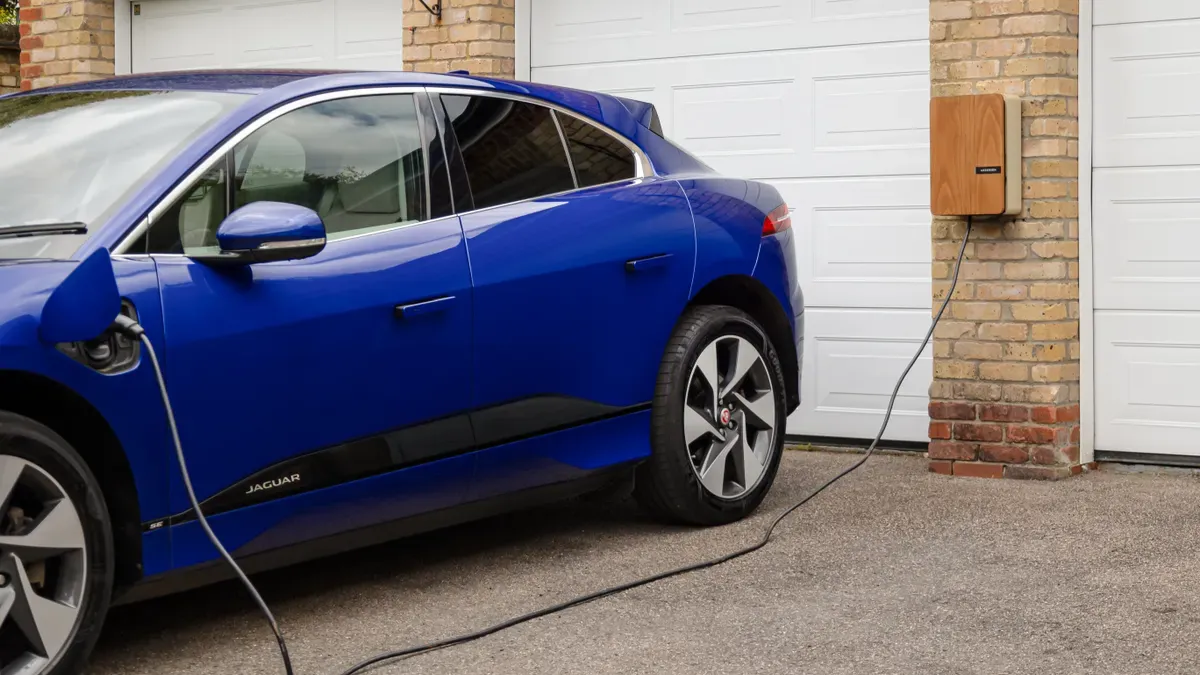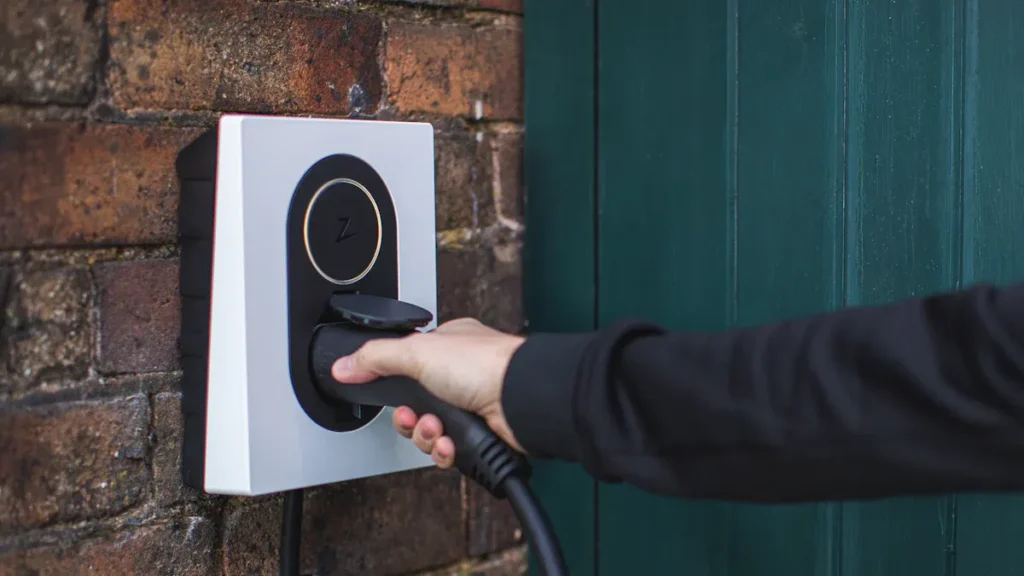

The UK’s electric vehicle market is expanding rapidly. New electric vehicle registrations have reached 478,657, a 25% increase over 2024, far outpacing the total car market’s 3% rise. With over 80% of owners depending on it, the home charging market is crucial. This growth drives new trends in EV charging technology.
The next evolution in home charging transforms your vehicle from a simple mode of transport into an active component of your home’s energy system.
This shift in electric vehicle charging unlocks significant cost savings and greater energy independence. Elektrikli araç şarj cihazı üreticileri, TPSON gibi teknolojik açıdan gelişmiş sağlayıcılar da dahil olmak üzere, yeni nesil EV Şarj Cihazı. This new charging infrastructure supports a smarter, more integrated future of ev charging.
Smart Energy Management: The Future of EV Home Charging with V2H and V2G
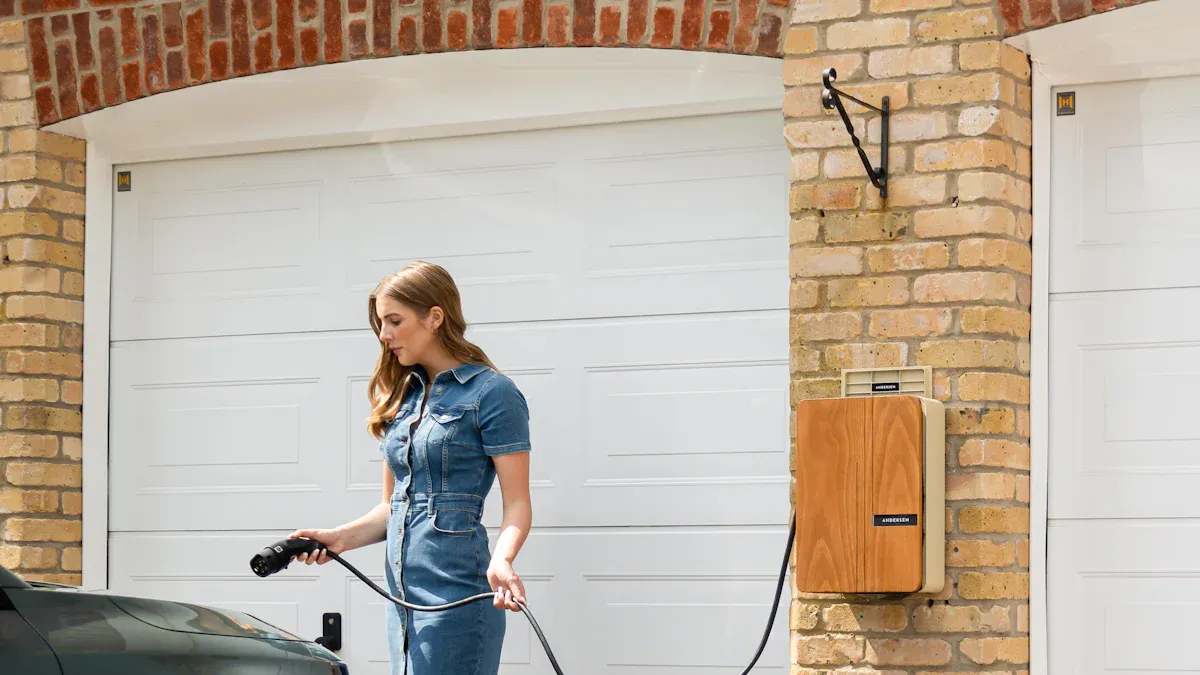
The future of EV charging is moving beyond simple power delivery. It is becoming an intelligent, two-way energy exchange. Technologically advanced providers like TPSON are developing the next-generation hardware that makes this possible, transforming an EV into a dynamic home energy asset. This evolution is built on the concept of çift yönlü şarj.
Çift Yönlü Şarjı Anlama
From One-Way to Two-Way Power Flow
Traditional EV charging is a one-way street: electricity flows from the grid, through the charger, and into the car’s battery. Bidirectional charging opens a two-way path. It allows the stored energy in your EV’s battery to flow back out, either to power your home or to support the wider electrical grid. This capability unlocks two powerful technologies: Vehicle-to-Home (V2H) and Vehicle-to-Grid (V2G).
Defining Vehicle-to-Home (V2H)
Vehicle-to-Home (V2H) technology allows an EV to function as a household power source. It uses the car’s battery to supply electricity directly to a home, bypassing the grid during power outages or peak-cost energy periods.
Defining Vehicle-to-Grid (V2G)
Vehicle-to-Grid (V2G) technology enables an EV to export surplus energy from its battery back to the national grid. This helps energy suppliers balance supply and demand, and it creates an opportunity for EV owners to earn revenue.
| Özellik | V2H | V2G |
|---|---|---|
| Main Benefit | Home backup power and energy savings | Support for national grid stability |
| Fonksiyon | Powers the home from the EV battery | Exports energy from the EV to the grid |
| Required Hardware | Çift yönlü şarj cihazı | V2G-specific charger and supplier support |
Vehicle-to-Home (V2H): Your Car as a Home Battery
How V2H Powers Your Home
With a V2H-compatible charger, your car becomes a large home battery. During off-peak hours, you charge the vehicle with low-cost electricity. During peak hours, when electricity is expensive, you can switch your home to run on the cheaper energy stored in your car. As of 2025, several UK models support this, including:
- Nissan Leaf
- Hyundai Ioniq 5
- Kia EV6
- BYD Atto 3
Major manufacturers like Volkswagen and Ford are also actively developing V2H capabilities, signaling wider adoption.
Practical Benefits and Cost Savings in 2025
The primary benefit of V2H is financial. By avoiding expensive peak-rate electricity, homeowners can significantly reduce their energy bills. It also provides a reliable backup power source during an outage, offering greater energy independence and efficiency.
Vehicle-to-Grid (V2G): Earning Money from Your EV
The V2G Concept Explained
V2G takes the bidirectional concept a step further. Instead of just powering your home, you can sell your EV’s stored energy back to the grid. Energy companies pay for this power to help them manage periods of high demand.
Supporting the National Grid
V2G helps create a more resilient and flexible energy network. When thousands of EVs export power simultaneously, they act as a giant, distributed power plant. This reduces the need for fossil-fuel-powered “peaker” plants that come online to meet high demand.
Monetization Opportunities and ROI
Several UK energy suppliers, including Octopus Energy, Ovo Energy, and EDF, are pioneering V2G tariffs.
Not: While programs are still expanding, research from Cornwall Insight suggests that by 2030, V2G technology could earn EV drivers an average of £320 per year. This makes V2G a compelling long-term investment for EV owners looking to maximize the financial return on their vehicle and EV charging setup.
Advanced Solar Integration: New Trends in Green Charging
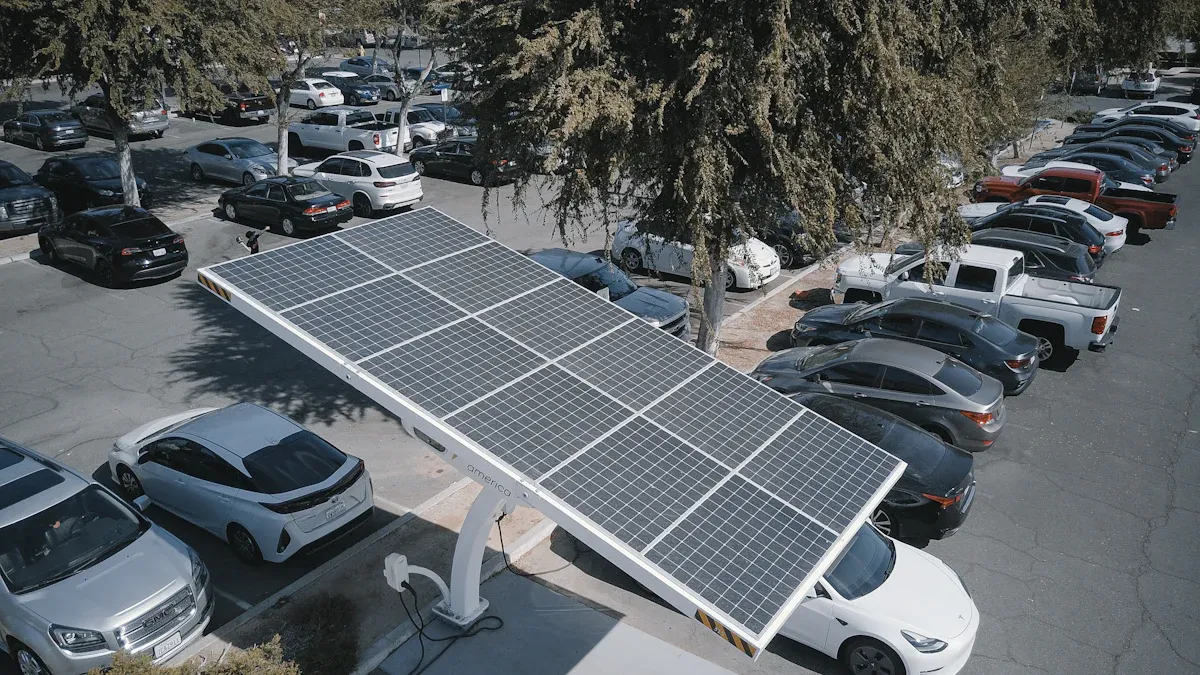
Pairing an electric vehicle with a home solar panel system represents the pinnacle of green personal transport. The latest trends in Elektrikli araç şarjı technology move beyond simple energy diversion. They create a deeply integrated ecosystem that maximizes the use of clean, renewable energy. Technologically advanced providers like TPSON are developing the next-generation hardware and software that make this synergy possible.
The Evolution of Solar EV Charging
From Simple Diversion to Smart Management
Early solar EV charging systems simply diverted any available solar power to the car. Modern smart charging systems are far more sophisticated. They use an energy flow hierarchy to manage power routing. The system constantly monitors solar generation and household consumption. It then instructs the charger to use only the precise amount of surplus renewable energy, ensuring the vehicle charges without pulling from the grid unless necessary.
Why 2025 is a Tipping Point for Solar
Several factors make 2025 a pivotal year for solar EV charging. Advancements in solar panel technology, like Qcells’ record 28.6% efficiency for a new silicon-perovskite cell, mean more power from less space. Furthermore, the wider availability of bidirectional chargers allows EVs to act as mobile power banks. This integration with home energy management systems optimizes the entire process for cost and efficiency.
Intelligent Solar Charging Modes
“Eco” vs. “Fast” Charging Modes
Modern chargers offer distinct modes to manage solar energy. A “Fast” mode will charge the vehicle at maximum power, drawing from both solar and the grid. An “Eco” mode prioritizes sustainability. It uses only surplus renewable power, even if it means charging at a slower rate.
Scheduling Charges with Solar Forecasts
The most advanced systems integrate weather forecasting. The Elli Charger 2, for example, uses solar forecasts to schedule EV charging sessions. It plans charging to coincide with peak sunshine hours. This feature ensures maximum use of available solar energy, even reducing charging power to use small surpluses effectively.
Integrating with Home Battery Storage
Home battery systems like the Tesla Powerwall 3 are a game-changer for solar owners. Integrating a battery with your charger offers several benefits:
- The battery stores excess solar energy generated during the day.
- This stored renewable energy can then charge your EV in the evening.
- It helps you avoid expensive peak-rate grid electricity, enhancing sustainability.
Maximizing Solar Self-Consumption
The Goal of 100% Green Miles
The ultimate objective for many solar EV owners is to power their driving entirely with self-generated energy. Achieving “100% green miles” significantly reduces a household’s carbon footprint and energy costs, creating true energy independence.
How New Chargers Prioritize Solar Energy
A smart charger achieves this goal through a clear, automated process:
- The system monitors real-time energy flow from solar panels and to household appliances.
- It calculates the exact amount of surplus solar power available.
- It instructs the EV charger to draw only that surplus amount.
- This ensures the EV is the first priority for any excess renewable power.
Calculating Your Solar Charging Savings
The financial and environmental impact is substantial. A typical 5kW UK solar system can generate around 18kWh on a sunny day. After an average home uses 9kWh, the remaining 9kWh can go to your EV. Since a typical EV travels about 4 miles per kWh, that surplus solar power provides 36 miles of driving range daily. This equates to nearly 13,000 green miles per year, powered entirely by the sun. ☀️
Innovations for Urban Dwellers Without Private Parking
While homeowners with driveways enjoy the convenience of dedicated home charging, a significant portion of the UK population faces a major hurdle. New charging solutions are emerging to bridge this gap for urban residents.
The Kerbside Charging Challenge
The Problem with On-Street Parking
The core issue is a lack of private space. Approximately a third of UK households do not have a driveway or garage. This figure represents around 9 million homes where installing a private EV charger is not a straightforward option. These residents must rely on public charging infrastructure, which can be inconvenient and more expensive than home charging.
Why Traditional Solutions Are Insufficient
Some EV owners resort to trailing charging cables across public pavements to reach their cars. This practice creates significant safety and accessibility problems. Experts highlight the dangers of this approach.
Pavement Cable Channels
How Pavement Channels Work
Pavement cable channels offer an elegant solution to the trailing cable hazard. These are narrow, recessed gullies installed into the pavement, running from a property line to the kerb. A charging cable sits inside the channel, covered by a hinged lid, creating a flat and safe surface for pedestrians.
Council Approval and Installation Process
Councils are beginning to approve these installations. West Berkshire Council, for example, has an established process for residents to apply for a Kerbocharge channel. The typical application involves these steps:
- The resident completes an EV Cable Channel Application Form.
- The council reviews the site for suitability.
- Upon approval, the council issues a licence.
- The resident contacts an approved supplier for purchase and installation.
Cost and UK Availability in 2025
The cost for supply and installation of a pavement channel typically ranges from £1,000 to £1,500. As more councils formalize their approval processes, availability is expected to expand significantly throughout 2025, making this one of the most promising charging solutions for terraced homes.
Lamp Post Charging Solutions
Utilizing Existing Street Infrastructure
Another key innovation is the conversion of existing street lights into EV charging stations. Companies install a smart charger directly onto the lamp post, leveraging the existing electrical connection. This approach rapidly expands the availability of on-street charging without the need for extensive and disruptive civil works.
Typical Charging Speeds and Costs
Lamp post chargers generally offer charging speeds of around 5.5kW. This is not as quick as dedicated faster charging units but is perfectly adequate for overnight charging. Costs vary by network operator but are typically priced per kilowatt-hour (kWh) and managed via a smartphone app.
UK Rollout Status and Accessibility
Major rollouts are underway across London boroughs, Coventry, and other urban centers. This expansion of the public ev charging network is critical for drivers without private parking. Technologically advanced providers like TPSON are contributing to this ecosystem with hardware that supports diverse charging environments.
Communal and Shared Charging Hubs
For residents of apartment blocks and modern developments, communal charging hubs provide a vital solution. These shared facilities bring the convenience of home charging to buildings where individual installations are impractical. They create a scalable and manageable system for multiple EV drivers in one location.
Dedicated Solutions for Apartment Blocks
Dedicated charging solutions for apartment blocks involve installing a network of smart charging stations in a shared car park. This approach requires a centralized management system to handle the needs of many users. The charging infrastructure is designed for shared use, often incorporating dynamic load balancing. This technology intelligently distributes available power across all active chargers, preventing the building’s electrical supply from becoming overloaded. Technologically advanced providers like TPSON develop hardware that integrates seamlessly into these complex multi-user environments.
Billing and Access Control for Multiple Users
Managing access and billing is critical for shared charging stations. Modern systems use sophisticated software to ensure fair and secure usage. A single smart charger can be accessed and controlled in several ways:
- User Access: Drivers typically use a dedicated smartphone app or a physical RFID card to start and stop a charging session.
- System Management: A Charge Point Operator (CPO) can use cloud-based software to monitor the status of each charge point and manage the entire network.
- Third-Party Integration: Systems often support Open Charge Point Protocol (OCPP), allowing them to work with popular management apps like Monta or Clenergy.
These systems integrate billing directly, which streamlines payment collection. The management platform gives residents a full history of their energy use and costs. It also allows them to schedule charging for off-peak hours to save money. This automated process eliminates manual invoicing and ensures transparent, accurate transactions for everyone.
The Role of Property Management Companies
Property management companies and housing associations play a crucial role in implementing communal ev charging. They often act as the CPO or partner with a specialized service provider to oversee the system. Their responsibilities include approving the initial installation, managing user access, and ensuring ongoing maintenance. By adopting these comprehensive charging solutions, property managers can offer a high-value amenity that attracts and retains residents. This makes their properties more competitive and future-proofs them for the continued growth of electric vehicle ownership.
Key Hardware and Software Requirements for Next-Gen Home EV Chargers
Advanced charging technology relies on a sophisticated interplay between specialized hardware and intelligent software. These components work together to unlock the full potential of smart energy management, from cost savings to grid support. Technologically advanced providers like TPSON are engineering the next generation of home ev chargers that integrate these elements seamlessly.
Hardware for Smart Energy Management
The physical components of a charger are the foundation for all advanced features. Modern charging technology demands more than just a power connection; it requires specific hardware to manage complex energy flows.
Bidirectional Charger Requirements for V2H/V2G
A bidirectional charger needs advanced power electronics to manage two-way energy flow. Key components include:
- A Microcontroller Unit (MCU) to control the system.
- Silicon Carbide (SiC) power modules and Gallium Nitride (GaN) transistors for high efficiency.
- Specialized topologies like Totem-Pole PFC (TP-PFC) coupled with a Dual Active Bridge (DAB).
These elements enable the charger to convert DC power from the car back to AC power for the home or grid.
The Role of CT Clamps in Solar Integration
Current Transformer (CT) clamps are essential for effective solar integration. These small devices clip around the main electrical supply cable of a home. They provide highly accurate, real-time data on household energy consumption. This allows the charger to precisely calculate the amount of surplus renewable energy available and direct it to the vehicle, maximizing the use of free solar power.
Dynamic Load Balancing Hardware
Dynamic load balancing hardware prevents a home’s electrical circuit from overloading. It works through a simple but effective process:
- It constantly monitors the total electrical demand of the property.
- It calculates the available capacity after accounting for other appliances.
- It automatically adjusts the EV charging power to stay within safe limits.
This ensures the charger operates efficiently without tripping a circuit breaker, even when other high-power devices are in use.
Software: The Brains of the Operation
If hardware is the muscle, software is the brain. It processes data, automates decisions, and provides the user with control over their smart charging technology.
The Central Role of the Companion App
The companion app is the central interface for managing home ev chargers. It allows users to remotely start, stop, and schedule charging sessions. Users can also customize settings and monitor the status of their charger from anywhere, putting complete control in the palm of their hand.
Real-Time Data and Energy Analytics
Advanced apps provide detailed energy analytics. They track electricity usage in real-time and generate reports on charging history, costs, and savings. This data empowers users to understand their consumption patterns and optimize their charging habits for maximum efficiency.
Over-the-Air (OTA) Software Updates
OTA updates are crucial for future-proofing an investment in charging technology. They allow manufacturers to deliver new features, security patches, and compatibility improvements directly to the device. This ensures the charger remains secure, efficient, and compatible with new energy tariffs and grid services for years to come.
Smart Tariff and Automation Integration
Combining smart hardware and software with EV-specific energy tariffs unlocks the greatest potential for cost savings.
What Are EV-Specific Smart Tariffs?
UK energy suppliers like EDF offer EV-specific tariffs that provide periods of ultra-low-cost electricity, typically overnight. Tariffs such as GoElectric ve Evolve are designed to make ev charging significantly cheaper by encouraging users to charge during off-peak hours when there is less strain on the grid.
Automated Charging on Off-Peak Rates
Smart charging software integrates directly with these tariffs. The user simply sets their departure time and energy needs in the app. The system then automatically schedules charging sessions to coincide with the cheapest off-peak hours, ensuring the car is ready when needed at the lowest possible cost.
How Much Can Automated Scheduling Save You?
The savings from automated smart charging are substantial.
According to EDF, combining an EV tariff like GoElectric with smart charging can save a driver over £700 per year compared to a standard variable tariff. This demonstrates the powerful financial benefit of adopting a fully integrated charging ecosystem.
The AI Revolution in Home Charging Automation
While smart scheduling marks a significant step forward, the true revolution in home charging is being driven by Artificial Intelligence (AI). AI and machine learning are transforming chargers from programmable devices into intelligent, autonomous systems. This advanced charging technology learns, predicts, and optimizes energy use without constant human input.
AI and Machine Learning in Charging
AI serves as the brain behind the most advanced charging ecosystems. It processes vast amounts of data to make decisions that benefit the user, their wallet, and the environment.
Predictive Charging Schedules
AI-powered systems analyze historical data, including a driver’s daily commute, typical journey lengths, and past charging habits. Using machine learning, the system predicts future energy needs. It ensures the vehicle is always sufficiently charged for the next trip, moving beyond simple time-based schedules to truly proactive energy management.
Optimizing for Cost, Carbon, and Grid Health
AI algorithms create charging plans that balance multiple variables simultaneously. By analyzing grid conditions, renewable energy forecasts, and dynamic tariff pricing, these systems optimize every charging session.
- They shift energy demand to off-peak times, helping to balance the national grid.
- They prioritize charging when solar or wind generation is high, reducing the carbon intensity of the electricity used.
- They can lower a vehicle’s charging-related carbon emissions by up to 40%.
This intelligent optimization can save an average of 800 pounds of CO2 per vehicle annually. This is equivalent to the energy an average home uses in about 40 days.
The Future of “Set and Forget” Charging
The ultimate goal of AI integration is to create a “set and forget” experience. The user simply plugs in their car and tells the system when they next need it. The AI handles the rest, automatically finding the cheapest, greenest, and most grid-friendly time to charge. This seamless automation represents the future of ev ownership.
Enhanced User Experience Through AI
Beyond optimization, AI makes the entire ev charging process more intuitive and user-friendly. Technologically advanced TPSON gibi sağlayıcılar are developing systems that deliver a superior and personalized experience.
Kişiselleştirilmiş Şarj Önerileri
AI anticipates a user’s needs by learning their preferences. It can suggest optimal charging speeds based on past behavior or recommend charging during specific times to take advantage of dynamic pricing. This level of personalization improves overall efficiency and ensures a more cost-effective ownership experience.
Voice Control and Smart Home Integration
The latest chargers integrate with popular smart home ecosystems. This allows users to manage their charging with simple, hands-free commands.
- Users can start or stop a charging session using Amazon Alexa or Google Assistant.
- Voice commands can also retrieve information on power usage and total expenditure.
Proactive Diagnostics and Maintenance Alerts
AI systems continuously monitor the health of the charging hardware. They can detect anomalies and predict potential faults before they cause a failure. The system then proactively alerts the user and may even suggest troubleshooting steps, ensuring the charger remains reliable and operates at peak performance.
The 2025 ev charging trends show a clear path forward. Homeowners gain independence with V2H and renewable energy integration. Urban residents see expanding on-street charging solutions. When selecting a new charger, prioritize robust software and future compatibility. The future of ev is integrated, turning vehicles into dynamic assets. This smart approach to using renewable power enhances sustainability. A bidirectional charger is central to this future of ev.
SSS
What is the main difference between V2H and V2G?
Vehicle-to-Home (V2H) uses your EV’s battery to power your home. Vehicle-to-Grid (V2G) exports your EV’s stored energy back to the national grid. V2H provides backup power and savings, while V2G can generate income and support grid stability.
Do all EVs support bidirectional charging?
No, not all EVs currently support this feature. A driver needs a compatible vehicle, such as a Nissan Leaf or Kia EV6, and a special çift yönlü şarj cihazı. More manufacturers are adding this capability to their new models for 2025 and beyond.
How much can I save with a solar EV charger?
Savings depend on your solar system size and driving habits. A typical 5kW system can provide enough surplus energy for nearly 13,000 miles of free, solar-powered driving per year. This significantly reduces household energy bills and reliance on the grid.
What if I live in a flat without a driveway?
Communal charging hubs are the ideal solution for apartment blocks. Property managers can install shared smart chargers for residents. Technologically advanced providers like TPSON offer systems with integrated billing and access control, making shared charging simple and fair for everyone.
Is a smart charger necessary for an EV?
A akıllı şarj cihazı is not mandatory, but it is highly recommended. It unlocks significant cost savings by automatically charging during off-peak hours. It also provides features like remote control, energy monitoring, and solar integration for a more efficient and convenient experience.
How does AI improve my charging experience?
AI automates and optimizes the entire charging process. It learns your driving patterns to create predictive schedules. It also analyzes energy prices and grid conditions to find the cheapest and greenest times to charge, creating a seamless “set and forget” experience. 🤖