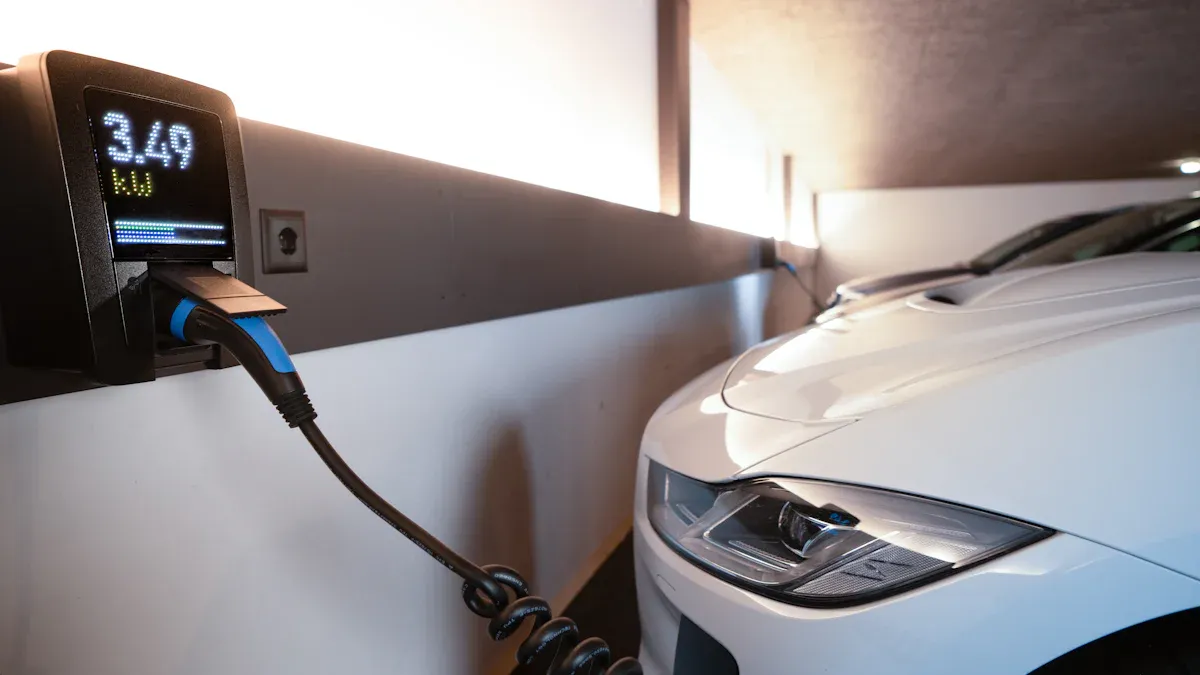
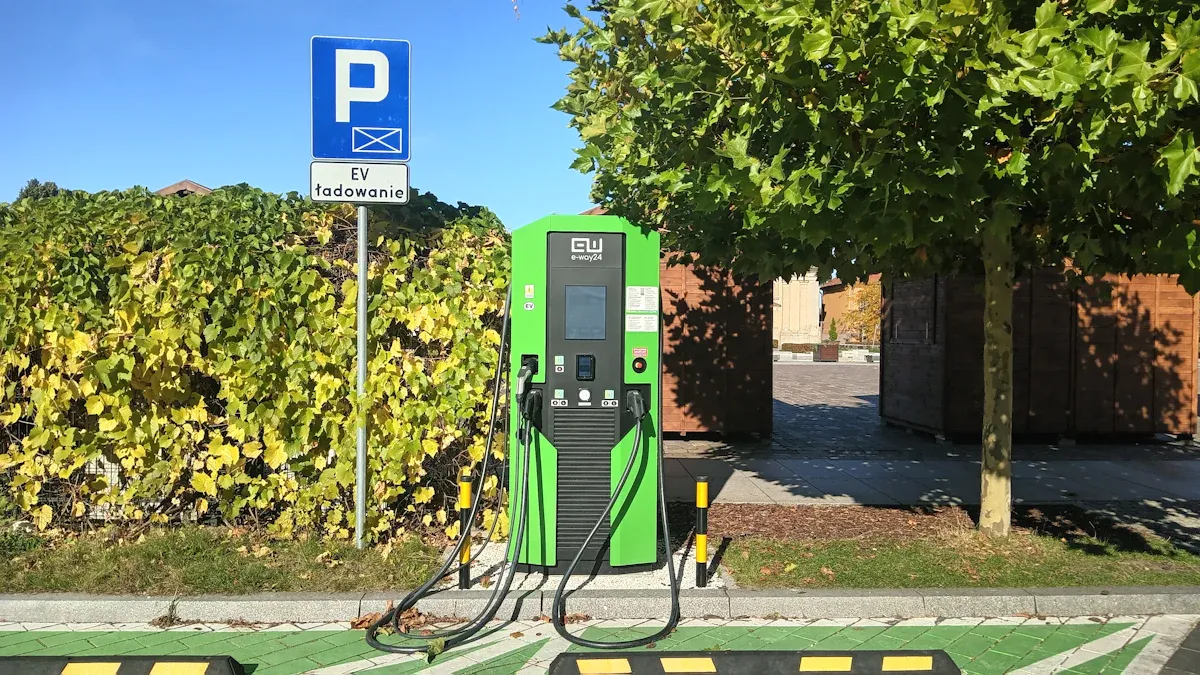
The future of home electric car charging is evolving beyond basic vehicle power-ups to embrace sophisticated smart energy integration. Your EV is poised to become an active component of your home’s energy ecosystem. Leading this transformation are Innovations to Watch like Vehicle-to-Home (V2H) and Vehicle-to-Grid (V2G) technologies. These advancements enable electric cars to power a house during outages or even send energy back to the grid. This capability, facilitated by advanced Зарядное устройство для электромобилей technology, offers substantial cost savings for owners and contributes to a more stable energy network for everyone. As these technologies become more widespread, the role of Производители зарядных устройств для электромобилей will be crucial in developing the infrastructure that supports this dynamic energy exchange.
Key Innovations to Watch in Home EV Charging

The landscape of home EV charging is undergoing a remarkable transformation. The focus is shifting from simple power delivery to intelligent energy management. These key innovations to watch are set to redefine the relationship between electric cars, homes, and the power grid.
Bidirectional Power: Vehicle-to-Everything (V2X)
The most significant development is bidirectional power, often called Vehicle-to-Everything (V2X). This technology allows an EV to not only receive an electric charge but also to send power back out. It effectively turns the vehicle into a large, mobile battery. This capability is split into two primary applications: Vehicle-to-Home (V2H) and Vehicle-to-Grid (V2G).
Vehicle-to-Home (V2H): Your EV as a Home Battery
Vehicle-to-Home (V2H) technology enables an electric vehicle to power a house directly. During a power outage, an EV with a full charge can supply electricity to keep essential appliances running for hours or even days. Beyond emergency backup, V2H allows owners to use stored energy from their car during peak-rate electricity hours, then recharge the vehicle when rates are low. Projected annual savings are significant.
- Compact EV: Over £700 annually
- Medium-sized EV: Over £1,000 annually
- Electric SUV: Up to £1,475 annually
This financial incentive highlights the practical value of integrating an EV into a home’s energy strategy.
Maria Bengtsson, UK head of mobility at EY, stated: “This study provides a compelling case around how V2G and smart charging solutions could enable consumers and electricity transmission and distribution grids to collaborate, helping to reduce EV running costs and optimise grid capacity.”
Vehicle-to-Grid (V2G): Earning Money from Your Car
Vehicle-to-Grid (V2G) takes the concept a step further. It allows EV owners to sell stored energy from their car’s batteries back to the electricity grid. Utility companies can draw on this power during periods of high demand to help stabilize the network. In return, owners receive payments or credits on their energy bills. This creates a new revenue stream and transforms a personal vehicle into an active grid asset.
The Hardware: What Makes a Charger Bidirectional?
Standard EV chargers only allow power to flow in one direction. Bidirectional charging requires specialized hardware. Эти advanced chargers contain an inverter that converts the DC power from the EV’s batteries into AC power suitable for a home or the grid.
This process is governed by strict communication protocols to ensure safety and efficiency. The ISO 15118 standard, particularly the ISO 15118-20 update, is crucial. It defines the secure communication link between the vehicle and the charger that enables bidirectional energy transfer. Other protocols like CHAdeMO also support this function. The industry anticipates future standards, such as IEC 63110 и IEC 63119 between 2025-2027, to further refine these capabilities.
The Next Wave of Smart Charging Software
While hardware enables new functions, intelligent software is what optimizes them. The next generation of smart charging platforms uses data and automation to maximize savings and convenience. These are powerful innovations to watch.
AI-Driven Energy Optimization
Artificial intelligence (AI) is becoming central to the smart charging experience. AI-powered systems learn an owner’s driving patterns, monitor real-time electricity prices, and even check weather forecasts for solar production. The software then creates a personalized charging schedule that automatically ensures the vehicle is ready when needed, all while using the cheapest and greenest energy available.
Advanced Utility Tariff Integration
Smart charging platforms analyze complex utility electricity rates, including time-of-use tariffs. These systems automatically shift EV charging to off-peak hours, which are typically between 23:00 and 07:00, to drastically reduce costs. The software communicates directly with utility companies to access grid demand data and pricing information, making the optimization process seamless for the user.
Integration with Solar and Home Batteries
For homes with renewable energy, smart software creates a complete ecosystem. It prioritizes using self-generated solar or wind power to charge the EV first. Leading platforms and chargers offer deep integration.
- ev.energy: This system offers customizable schedules and can prioritize charging when solar panels generate maximum power.
- Zappi Charger: Known as a top solar EV charger for its direct integration with solar arrays.
- Hypervolt Home: Another charger recognized for its excellent solar integration capabilities.
- Indra Smart Pro: This charger also excels at working with home solar energy systems to maximize self-consumption.
New Charging Methods for Ultimate Convenience
Beyond intelligence, the physical act of charging is also evolving. New methods are emerging to make the process easier and faster, representing the final category of innovations to watch for the near future.
Wireless (Inductive) Charging at Home
Wireless charging eliminates the need for cables. This technology uses an inductive charging pad installed on the garage floor or in a parking space. The driver simply parks the electric car over the pad, and charging begins automatically. Current residential systems can achieve power levels of 7.2-11 kW with an efficiency of 90-93%, only slightly less than a typical wired connection. Major automotive brands like BMW and Genesis plan to integrate this option by 2025, promising a new level of convenience.
The Rise of Residential DC Fast Charging
While most home charging uses AC power, residential DC fast charging is an emerging frontier. These high-speed chargers bypass the vehicle’s onboard converter and supply DC power directly to the battery, significantly reducing charging times. The adoption of ultra-fast charging technology at home will require more robust electrical infrastructure and specialized hardware from technologically advanced electric vehicle charging solution providers like TPSON. This development points toward a future where a substantial charge is possible in minutes, not hours.
Will I Need to Replace My Current Charger?
With so many innovations on the horizon, a key question for current and future electric vehicle owners is whether their existing hardware will become obsolete. The answer depends entirely on which new technology they wish to adopt. For some advancements, a simple software update is sufficient. For others, a complete hardware replacement is unavoidable.
For V2G and V2H: Yes, a New Charger is Required
Adopting Vehicle-to-Grid (V2G) or Vehicle-to-Home (V2H) capabilities requires a new, specialized charger. Current standard home chargers are not equipped for the complex task of bidirectional power flow.
Why Current Chargers Don’t Support Bidirectional Flow
Standard electric vehicle chargers are designed for one-way power transfer. They convert AC power from the grid into DC power to charge the vehicle’s battery. They lack the sophisticated internal components needed to reverse this process. A bidirectional charger is fundamentally different hardware. It contains:
- An Inverter: This is the core component that converts the battery’s DC power back into AC power for use in a home or on the grid.
- Advanced Power Electronics: These include specialized microcontrollers for managing power flow direction, gate drivers for controlling power modules, and high-performance transistors like Silicon Carbide (SiC) or Gallium Nitride (GaN).
- Specific Circuit Designs: Topologies like the CLLC resonant converter are used to enable efficient, high-frequency, bidirectional current flow with galvanic isolation.
These components work together to ensure the safe and efficient export of energy from an electric car, a function that a standard charger simply cannot perform.
What to Look for in a V2G/V2H Charger
When considering an upgrade, owners should look for chargers specifically certified for bidirectional use. Wallbox was a pioneer in this space, launching the first residential bidirectional charger in 2020. The market is now expanding, with several companies offering or developing solutions.
| Компания | Модель зарядного устройства | Статус | Основные характеристики |
|---|---|---|---|
| Настенный ящик | Quasar | Доступно | 7.4kW, CHAdeMO compatible, residential |
| Настенный ящик | Quasar 2 | Upcoming | 11.5kW, WiFi, Ethernet, Bluetooth, CCS1 compatible |
| Fermata Energy | FE-15 | Доступно | 15kW, CHAdeMO compatible, wall-mounted |
| Rectifier Tech | Highbury | Upcoming | 7kW/11kW, 96% efficiency, CHAdeMO & CCS compatible |
Other providers like Sungrow и Alternergy (distributing the Haier Smart Cube) also deliver chargers designed for smart electric energy ecosystems.
Note on Costs: The investment is significant. While installation costs typically range from £500 to £1,000, the total upfront cost for a V2G/V2H charger and its installation can be as high as £6,000.
For Advanced Smart Features: Probably Not
For owners who simply want to access smarter energy management without V2G/V2H, a full hardware replacement is often unnecessary. Many modern “smart” chargers can gain powerful new features through software.
The Power of Over-the-Air (OTA) Software Updates
Many connected chargers are designed to be future-proof. Manufacturers can push Over-the-Air (OTA) software updates to these units, much like a smartphone receives an OS update. These updates can unlock new capabilities, improve efficiency, and integrate with new utility programs.
Several brands are known for leveraging OTA updates to enhance their products continuously. Chargers from Indra, Autel, и BG Sync EV all receive regular software updates that add features and improve performance over time. The Sigen EV DC Charging Module is another example designed with future V2X capabilities that will be enabled via OTA updates.
How to Check if Your Charger is Compatible
An owner can determine if their charger supports advanced updates through a few simple steps:
- Check the Manual: The product documentation often specifies if the charger supports OTA updates and advanced protocols like OCPP.
- Consult the App: The charger’s mobile app is the primary interface for updates. Check the settings or information section for firmware version and update history.
- Review Manufacturer Websites: Look for release notes or support pages that detail recent software enhancements.
- Verify Protocols: Confirm if the charger supports modern communication standards like OCPP 1.6J or higher, which are essential for advanced smart charging.
For Wireless or DC Charging: Yes, Specialized Hardware is Needed
The ultimate convenience of wireless charging or the speed of residential DC fast charging requires a complete and specialized hardware installation. These technologies are not achievable through software updates to existing AC chargers.
The Unique Requirements of Inductive and DC Chargers
Wireless (inductive) charging requires a ground-based transmitting pad and a compatible receiving pad on the electric vehicle. This system uses magnetic fields to transfer energy, a completely different principle from a physical cable connection.
Residential DC fast charging, offered by technologically advanced electric vehicle charging solution providers like TPSON, bypasses the car’s slower onboard AC-to-DC converter. It supplies high-voltage DC power directly to the battery. This requires a much more powerful and complex charger unit and often a more robust electric supply to the property.
Assessing if the Upgrade is Worth It for You
Deciding to upgrade to these advanced charging methods involves weighing convenience against cost. The initial infrastructure investment for both wireless and residential DC systems is substantial.
Financial Hurdle: The installation of wireless charging pads, in particular, presents significant logistical and financial challenges. High initial costs for the hardware and professional installation are a major barrier for many homeowners. The potential for higher maintenance costs and energy losses compared to traditional solutions also factors into the overall expenditure.
For most users today, a modern smart AC charger offers the best balance of speed, intelligence, and cost. However, for those prioritizing cutting-edge convenience or rapid home charging, these specialized hardware upgrades represent the next frontier.
The Future of EV Charging for Homes Without Driveways
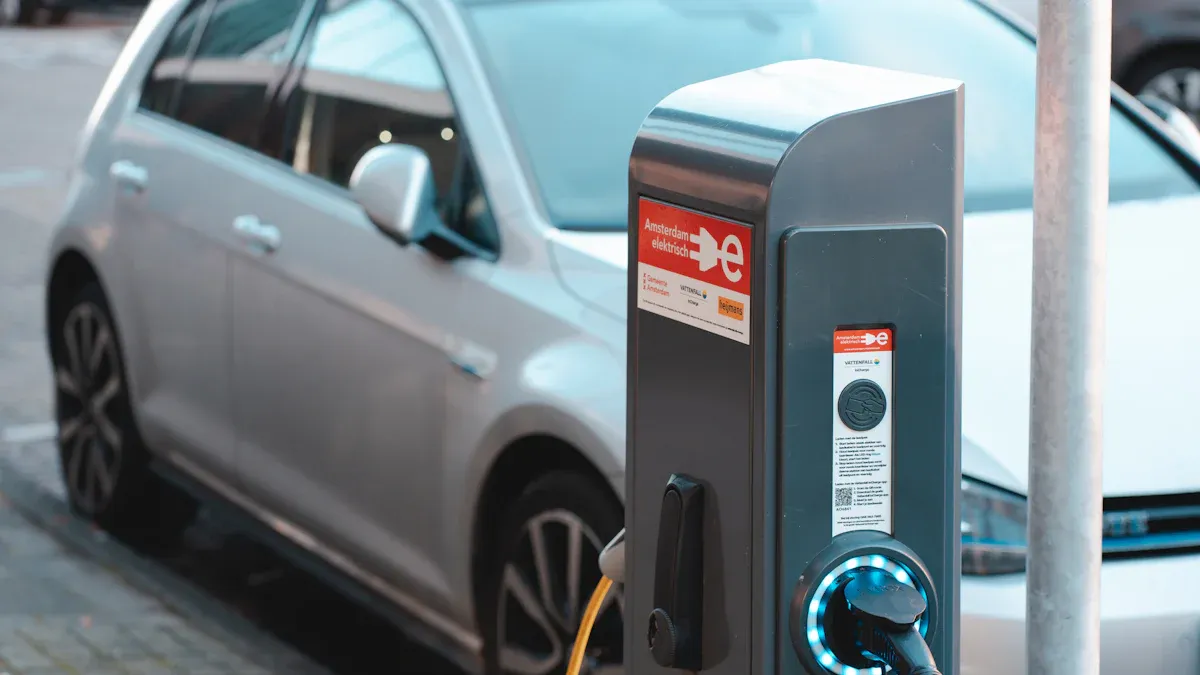
The widespread adoption of electric cars hinges on accessible charging for everyone, not just those with private driveways. In the UK, this is a significant challenge. Approximately one-third of homeowners lack a private driveway, a figure that rises to 60% in major cities. To close this gap, a multi-faceted approach combining kerbside innovation, communal hubs, and supportive policy is creating a robust public charging infrastructure.
Bringing Charging to the Kerbside
Creative solutions are transforming public streets into viable charging locations. These innovations make electric vehicle ownership practical for urban residents.
Lamppost and Bollard Chargers
Cities are retrofitting existing street furniture to provide charging points. Lamppost chargers, pioneered by companies like Shell Recharge ubitricity, integrate charging sockets directly into existing lighting columns. This approach minimizes street clutter and leverages existing electrical connections. Bollard chargers offer a similar, discreet solution for on-street parking bays.
Pop-Up and In-Pavement Charging Solutions
For an even less intrusive option, pop-up chargers retract into the pavement when not in use. In-pavement solutions involve channels built into the sidewalk. The installation of charging stations of this type is complex and requires significant coordination.
Managing Cables with Pavement Channels
A simpler solution involves installing shallow, covered channels across the pavement. These allow residents to run their charging cable from their home to their car safely without creating a trip hazard. This method provides a low-cost way to use a home charger for on-street parking.
Developing Communal and Neighborhood Hubs
Beyond individual kerbside spots, the expansion of shared charging networks is critical. These hubs serve multiple users and are becoming a cornerstone of the public charging ecosystem.
Shared Charging for Apartments and Condos
For multi-unit dwellings, installing shared electric charging stations in communal parking areas is an effective strategy. These systems often use smart software to manage load and billing among residents, making the expansion of charging networks in dense housing developments more efficient.
Dedicated Neighborhood Charging Plazas
Larger, dedicated hubs are emerging as a key part of the charging infrastructure in 2025 and beyond. These plazas, often funded through a mix of public and private investment, feature multiple fast or rapid stations. The UK’s Local EV Infrastructure (LEVI) Fund helps councils build these hubs, while private companies like InstaVolt and Connected Kerb are rapidly building out networks of public stations.
Workplace Charging as a Primary Solution
Workplace charging offers a powerful alternative for commuters. Employees can charge their EV during the workday, reducing reliance on home or public stations. Many companies now offer this as a perk, supported by providers who specialize in commercial installations.
Policy and Infrastructure Initiatives
Government action is essential to accelerate the rollout of accessible charging. New laws and building codes are removing barriers and ensuring the future-readiness of the nation’s infrastructure.
The Impact of “Right to Charge” Legislation
“Right to Charge” laws empower tenants and apartment dwellers by giving them the legal right to request the installation of electric vehicle charging stations, provided they are willing to cover the costs. This policy prevents landlords or property managers from unreasonably refusing requests for charging infrastructure.
New Building Codes and EV-Ready Mandates
New building regulations now mandate EV-readiness. For example, new residential buildings with associated parking must have charging points or at least the cable routes installed.
- New Homes: Every new home with associated parking must have an EV charge point.
- Major Renovations: Buildings undergoing major renovation with over 10 parking spaces must install charge points and cable routes.
- New Non-Residential Buildings: These must have a minimum number of charge points and cable routing for a percentage of remaining spaces.
These forward-thinking codes ensure that the building stock is prepared for the continued growth in electric vehicle adoption.
The Software and Systems Driving the Future
Advanced hardware is only half of the equation. The intelligence driving the next generation of home зарядка электромобилей resides in sophisticated software and integrated systems. These platforms are transforming how owners interact with their vehicles and the electric grid.
The Central Role of the Mobile App
The mobile app is evolving from a simple remote control into a powerful home energy command center. This software is becoming the primary interface for managing the entire electric vehicle ecosystem.
Evolving from a Remote Control to an Energy Manager
Early apps offered basic start, stop, and scheduling functions. Modern platforms now act as intelligent energy managers. They analyze driving habits, utility rates, and grid conditions to create optimal charging plans automatically.
Visualizing Savings and V2G Earnings
A key function of advanced apps is providing clear financial insights. They give owners a transparent view of their energy use and savings.
- Apps track home and public charging expenses, calculating exact costs based on specific electric tariffs.
- By optimizing schedules to use cheaper off-peak electricity, these systems can reduce charging costs by 40-60%.
- They also monitor grid demand, shifting charging to low-demand periods to unlock further savings through dynamic pricing.
Seamlessly Managing Multiple Charging Locations
The best apps consolidate an owner’s entire charging life. They allow users to manage their home charger, monitor sessions at the workplace, and find compatible public stations, all within a single, unified interface.
Utility Programs and Grid Integration
Smart chargers do more than save money for their owners; they play an active role in stabilizing the entire electric grid. This is achieved through participation in utility-managed programs.
Understanding Demand Response Programs
Demand response programs are partnerships between utility companies and consumers. In these programs, EV owners agree to let the utility briefly pause or reduce their charging speed during moments of high overall electricity demand.
How Your Charger Helps Balance the Grid
Managed charging is essential for preventing grid overloads. Smart systems use dynamic load management to adjust charging rates based on real-time grid conditions. This prevents strain on local transformers and distribution networks. During peak demand, chargers can automatically reduce power or, with V2G, even send surplus energy from the EV battery back to support the grid.
Financial Incentives for Participation
Utilities offer direct financial rewards for enrolling in demand response programs. Owners receive payments or bill credits for allowing their charging to be managed. These incentives come from several market categories:
Capacity Markets: Payments for being available to reduce load. Ancillary Services: Payments for helping to balance grid frequency in real time.
The Importance of Open Standards
For this interconnected future to work, all hardware and software must speak the same language. Open standards ensure compatibility and protect consumers from being locked into a single provider’s ecosystem.
What is the Open Charge Point Protocol (OCPP)?
The Open Charge Point Protocol (OCPP) is a universal standard that allows any compliant EV charger to communicate with any compliant management software. It acts as a universal translator, ensuring interoperability between different brands of hardware and networks.
Ensuring Your Freedom to Choose Networks
OCPP prevents vendor lock-in. If a charger owner is unhappy with their software provider’s fees or features, they can switch to a different management platform without replacing their expensive hardware. This freedom fosters competition and drives down costs. The standardisation of charging connectors and communication protocols is vital for a seamless charging experience.
Future-Proofing Your Charging Investment
Choosing hardware that supports open standards like OCPP is the best way to future-proof a charging investment. It ensures the infrastructure will remain compatible with emerging technologies and software platforms. Technologically advanced electric vehicle charging solution providers like TPSON design their systems with these forward-thinking standards in mind, preparing for a fully integrated electric future.
The future of EV charging is intelligent, integrated, and increasingly accessible. Key innovations to watch are driving the electric vehicle revolution. Transformative technologies like V2G will turn an EV into a home energy asset, with trials showing potential earnings of £725 annually. Smart software integration can reduce charging costs by up to 60%. The growing adoption of electric cars is supported by an expanding ecosystem for all users. This evolution marks a new chapter in the future of motoring, creating a sustainable transportation future where vehicles actively support a resilient energy grid.
ЧАСТО ЗАДАВАЕМЫЕ ВОПРОСЫ
What is the main benefit of V2G technology?
Vehicle-to-Grid (V2G) technology allows EV owners to sell surplus energy back to the grid. This creates a new revenue stream. It also helps stabilize the public energy supply during peak demand periods, turning a personal vehicle into a valuable grid asset.
Может ли любой электромобиль использовать двунаправленное зарядное устройство?
No, not all EVs are compatible. The vehicle must support bidirectional power flow. This capability is often enabled by specific communication protocols like CHAdeMO or newer versions of CCS. Owners should check their vehicle’s specifications before investing in a V2G/V2H charger.
How much can a person save with smart charging software?
Smart charging software can reduce an owner’s charging costs by 40-60%. The system automatically schedules charging for off-peak hours when electricity rates are lowest. It optimizes energy use without requiring manual input, maximizing savings and convenience for the owner.
Is residential DC fast charging a practical option today?
Residential DC fast charging is an emerging technology for those seeking rapid charging at home. It requires significant electrical upgrades and specialized hardware. Technologically advanced electric vehicle charging solution providers like TPSON are developing these systems for future home use.
How does a driver know if their charger is “smart”?
A smart charger connects to the internet via Wi-Fi or Ethernet. It has a companion mobile app for remote control, scheduling, and monitoring. Owners can check the product manual or manufacturer’s website to confirm its connectivity features and support for software updates.
What is the simplest charging solution for homes without driveways?
Lamppost chargers offer a simple and effective solution. They utilize existing street infrastructure to provide accessible on-street charging. This approach minimizes street clutter and avoids the need for extensive construction, making it a practical choice for many urban areas.
Совет: Before installing any on-street charging solution, property owners should always consult their local authorities to understand regulations and obtain the necessary permissions.