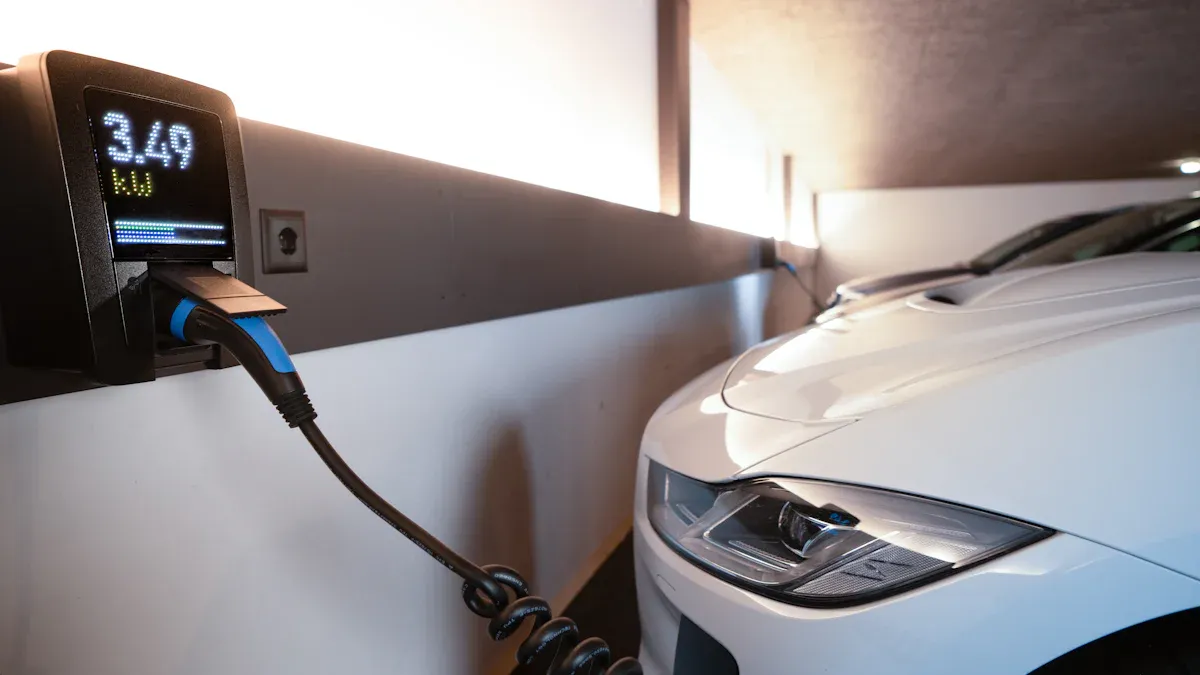
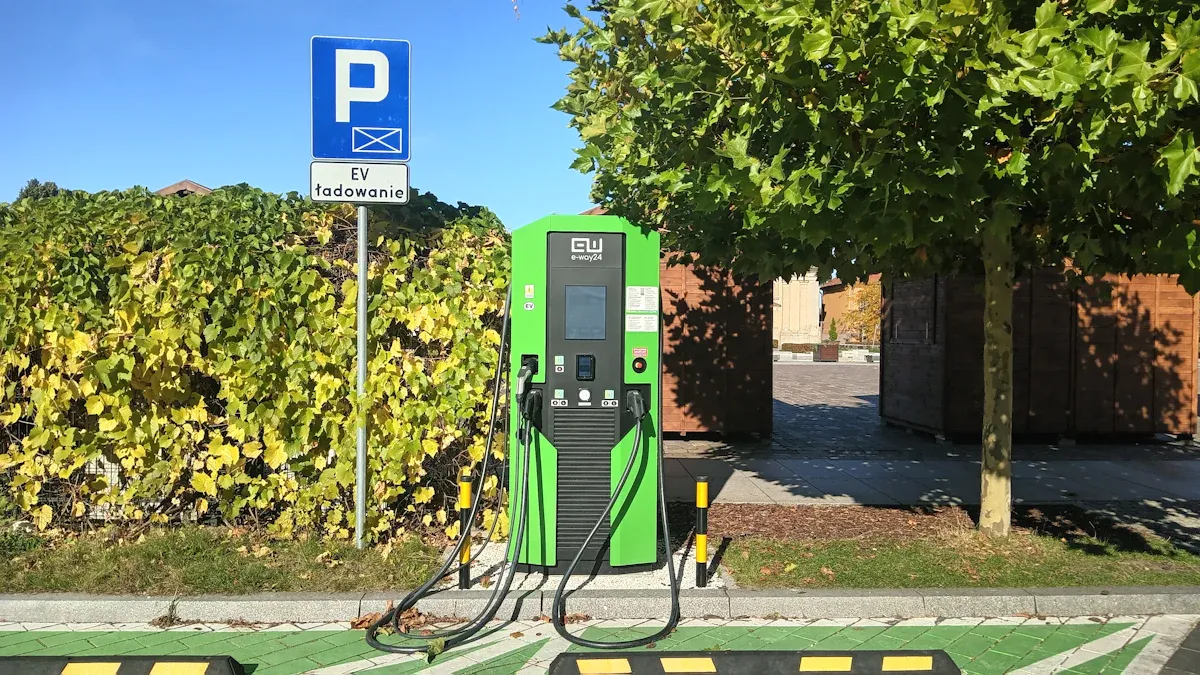
Singapore is accelerating its journey toward sustainable transportation. By 2025, the nation will equip nearly 2,000 HDB carparks with at least one Carregador de veículos eléctricos, a significant milestone toward its 2030 goal of 60,000 EV charging points. This rapid expansion of the EV infrastructure is powered by government support, private investment, and advanced technology from leading Fabricantes de carregadores para veículos eléctricos. For current and future EV owners, this means charging their electric vehicles will become more accessible, fast, and smart across the island. The future of electric mobility is unfolding now, making EV adoption a more practical choice for everyone.
Nota: This ambitious plan ensures that the charging infrastructure keeps pace with the growing number of electric vehicles on the road, solidifying Singapore’s commitment to a greener future. Companies like TPSON are contributing with technologically advanced charging solutions.
The progress is already tangible. Singapore is well on its way to achieving its long-term vision for a comprehensive charging network.

This foundational charging infrastructure ensures that every EV driver has reliable access to a charging point, whether at home, at work, or on the go.
Building the Foundation: A Massive EV Infrastructure Expansion
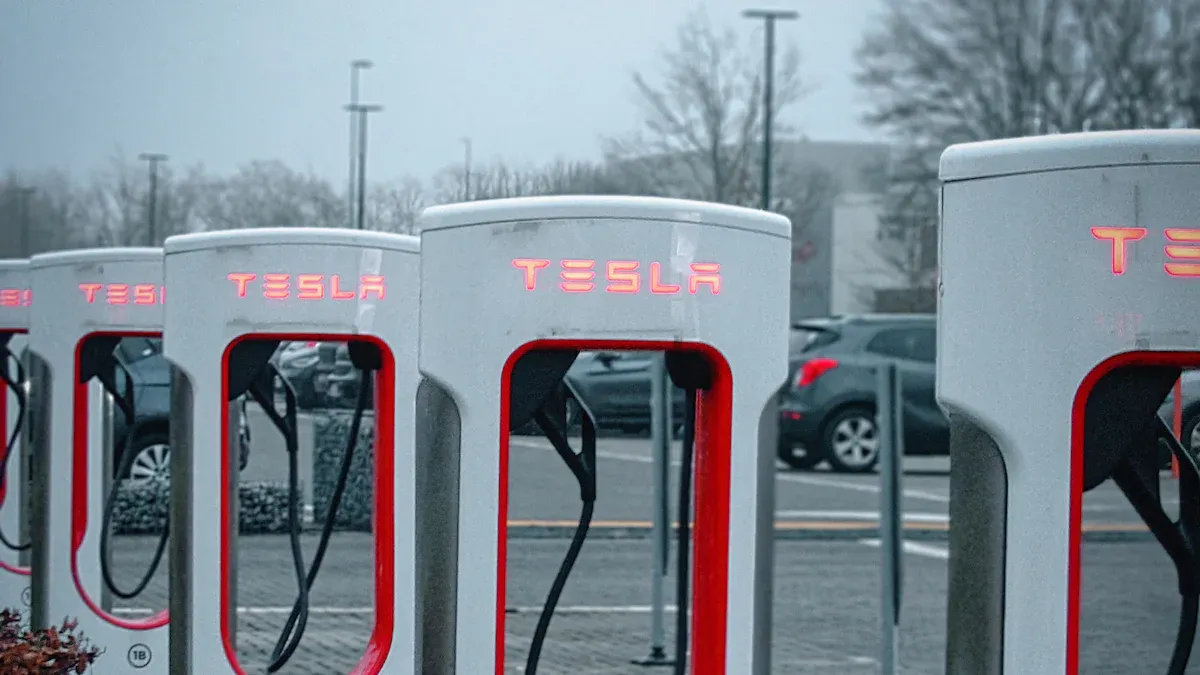
A robust and accessible charging network is the backbone of Singapore’s electric vehicle ambitions. The nation’s strategy focuses on a multi-pronged approach, building a dense EV infrastructure that caters to drivers at home, at work, and on the go. This foundational expansion ensures that owning an EV is not just a sustainable choice but a convenient one for everyone.
Charging at Home: The HDB Mandate
For the majority of Singaporeans living in Housing & Development Board (HDB) flats, convenient home charging is becoming a reality. The government’s mandate is transforming residential carparks into a core component of the national EV infrastructure.
The 2025 HDB Carpark Goal
The government has set a clear and ambitious target: every HDB town will be EV-ready by 2025. Minister for Transport Chee Hong Tat confirmed that Singapore is on track to deploy EV chargers at all HDB carparks by the end of that year. This initiative involves installing an initial 3 to 12 charging points in each of the nearly 2,000 HDB carparks, creating a widespread and reliable network.
Nota: These charging stations will primarily consist of AC chargers designed for overnight use, but will also include faster DC options to meet diverse driver needs.
| Tipo de carregador | Potência de saída | Charging Time (Full Charge) |
|---|---|---|
| AC-based | 7.4kW to 22kW | 4 a 8 horas |
| Carregador rápido DC | 50kW to 350kW | 20% to 80% in as little as 30 minutes |
Impact on Residential Charging
This HDB-focused expansion fundamentally changes the EV ownership experience. It eliminates the need for residents to seek out public charging stations for their daily needs. Drivers can conveniently plug in their EV overnight and wake up to a full battery. This accessibility makes electric vehicle adoption far more practical for the average household, directly supporting the Singapore Green Plan 2030.
Overcoming Installation Hurdles
Deploying charging infrastructure on such a massive scale requires significant coordination and investment. The government is leveraging public-private partnerships to finance and execute this rollout. By issuing green bonds and offering incentives, Singapore attracts private capital to accelerate the development of its charging infrastructure. This collaborative model ensures the technical and financial challenges of this nationwide upgrade are met efficiently.
Charging in Private Residences
Beyond public housing, the government is actively encouraging the installation of EV charging points in private condominiums and other non-landed private residences.
The EV Common Charger Grant (ECCG)
Launched in July 2021, the EV Common Charger Grant (ECCG) directly addresses the upfront cost barrier for private properties. The grant co-funds the installation of shared chargers, covering up to 50% of the expenses. This financial assistance makes it significantly more affordable for Management Corporation Strata Title (MCST) bodies to invest in shared EV charging facilities for their residents.
Upgrading Condominium Infrastructure
Despite the grant, condominium management often faces unique challenges when upgrading their infrastructure. Key hurdles include:
- Capacidade eléctrica: Older buildings may lack the power supply to support multiple charging stations without costly and extensive upgrades.
- Cost Allocation: Deciding on a fair model to share installation and electricity costs among residents requires transparent policies.
- Strategic Planning: Approving individual charger requests without a long-term plan can lead to power shortages as more residents switch to an EV. A future-proofing strategy is crucial for managing the building’s shared power supply effectively.
Public and Commercial EV Charging Points
To complete the ecosystem, a comprehensive network of public charging options is essential for drivers who need to top up their EV on the move. This charging network expansion is driven by private sector investment in commercial and public spaces.
Malls and Retail Hubs
Shopping malls and retail hubs are rapidly becoming popular public charging locations. Operators are installing charging stations in their carparks, allowing EV drivers to power up their vehicles while they shop or dine. This adds a valuable amenity for customers and positions these commercial centers as modern, convenient destinations.
Soluções de carregamento no local de trabalho
Businesses are increasingly offering workplace charging as a key employee perk. Installing charging stations helps companies attract and retain eco-conscious talent, enhances property value, and reinforces their commitment to sustainability. While direct government grants for workplace charging are part of a broader incentive ecosystem, the primary driver is the competitive advantage it offers in the modern marketplace.
Public Carparks and Destination Chargers
The public charging network extends to public carparks, community centers, and tourist destinations. This ensures that a charging point is always within reach, whether a driver is running errands or enjoying a day out. Technologically advanced solutions from providers like TPSON are vital for these public-facing installations, offering the reliability and user-friendly interfaces needed for a seamless public charging experience. This widespread availability of EV charging points is critical for eliminating range anxiety and encouraging EV adoption.
The Players: Key Operators Shaping the Charging Network
Singapore’s rapid EV infrastructure expansion is driven by a competitive landscape of charging operators. Each player brings a unique strategy to the market, contributing to a comprehensive and robust charging network. These companies are building the stations that will power the nation’s electric fleet, from residential carparks to major expressways.
SP Group’s Island-Wide Network
SP Group stands as a dominant force in Singapore’s public charging sector. The company operates one of the largest and most accessible public charging networks across the island.
Network Coverage and Accessibility
SP Group’s strategy focuses on broad, island-wide coverage. Its charging stations are strategically located in public areas, including shopping malls, commercial buildings, and a significant portion of HDB carparks. This extensive network ensures that EV drivers can find a reliable charging point almost anywhere they go, playing a crucial role in the government’s plan to make charging universally available. The sheer scale of their network makes them a foundational pillar of the national EV ecosystem.
App Features and User Experience
A seamless user experience is central to SP Group’s service. The SP App provides EV drivers with essential tools to manage their charging needs efficiently. Key features include:
- Searching for nearby charging stations
- Checking the real-time availability of chargers
- Viewing the power output and charging speeds of stations
- Receiving live updates during a charging session
- Making secure and easy payments directly through the app
This integrated digital platform simplifies the entire charging process, from locating a station to completing payment.
Charge+ and Its Expansion Strategy
Charge+ is a key operator with a targeted expansion strategy, focusing on specific segments of the market to fill critical gaps in the charging infrastructure.
Focus on Condominiums and Commercials
Charge+ has carved out a strong niche in the private residential market. The company actively partners with condominiums to install charging stations, addressing the growing demand from residents in these properties. Its focus extends to commercial locations like office buildings and industrial parks, providing valuable workplace charging solutions. This approach complements the public network by bringing EV charging closer to home and work.
Cross-Border Charging Initiatives
Charge+ is a leader in enabling long-distance EV travel beyond Singapore’s borders. The company has established key roaming partnerships to create a more connected regional charging network. Through agreements with Malaysian operators like Tenaga Nasional Berhad (TNB) and ChargeSini, Charge+ app users can access charging stations in Malaysia. This initiative boosts driver confidence for cross-border trips, making regional EV travel a practical reality.
Shell Recharge’s High-Speed Focus
Shell Recharge leverages its existing retail footprint to deliver high-speed charging solutions, catering to EV drivers who need a quick power boost.
Ultra-Fast Chargers on Expressways
Shell focuses on speed and convenience. The company is deploying a powerful network of ultra-fast charging (UFC) stations, with speeds ranging from 50kW to over 175kW. These powerful stations are strategically placed at Shell service stations along major expressways, allowing EV drivers to add significant range in as little as 30 minutes.
Integrating EV Charging with Gas Stations
Shell is transforming its traditional gas stations into modern mobility hubs. By integrating high-speed EV charging stations into its existing locations, the company offers a familiar and convenient experience. Drivers can enjoy amenities while their EV is charging. The technology at these stations, often supplied by advanced providers like TPSON, ensures reliability and performance.
| Tipo de carregador | Potência de saída | Caso de utilização típico |
|---|---|---|
| Carregador rápido | 50kW | Quick top-up during errands |
| Carregador ultrarrápido | 150kW – 175kW+ | Fast charging on long journeys |
This model effectively bridges the gap between traditional refueling and next-generation EV charging.
Other Key Charging Providers
Beyond the major operators, a diverse group of providers adds depth and competition to Singapore’s charging landscape. These companies bring unique strategies and technologies, further strengthening the national network and offering more choices to EV drivers.
Bluecharge by TotalEnergies
TotalEnergies made a significant move in the market by acquiring Bluecharge. This acquisition positioned TotalEnergies as the operator of what is identified as the largest EV charging network in Singapore. The Bluecharge network boasts a substantial number of charging points across the island, contributing significantly to the overall density and accessibility of the public charging infrastructure. This extensive footprint makes it a vital player in ensuring that EV drivers have reliable charging options in numerous locations.
Volt and Other Emerging Players
New and innovative companies are entering the market with a focus on next-generation technology. Volt, a joint venture with Keppel, is making a notable impact by developing what will be Southeast Asia’s largest public ultrafast charging hub at a single site.
Nota: This ambitious facility demonstrates a clear focus on high-power, high-speed charging to serve a large volume of vehicles efficiently.
Key features of Volt’s upcoming hub include:
- Up to 80 direct-current (DC) charging points.
- Powerful charger ratings of 360kW and 120kW.
- The capability to charge some EVs in as little as 10 minutes.
- Sufficient capacity to support the concurrent charging of up to 80 electric buses.
This massive deployment of ultrafast chargers addresses the need for rapid top-ups, especially for commercial fleets and high-mileage drivers. Such powerful hubs depend on robust and technologically advanced hardware, often sourced from specialized providers like TPSON, to manage high electrical loads and deliver consistent performance.
Furthermore, Volt will leverage artificial intelligence and machine learning from Keppel’s intelligent Operations Nerve Centre (ONC). This technology enables remote monitoring and real-time optimization of the charging infrastructure, ensuring high uptime and efficient energy management. This smart approach sets a new standard for operational excellence in the charging industry.
The Technology: Innovations for Faster and Smarter Vehicles

The expansion of Singapore’s EV infrastructure is not just about quantity; it is also a story of technological advancement. The future of electric mobility depends on faster, smarter, and more convenient soluções de carregamento. This innovation is crucial for enhancing the user experience, improving grid efficiency, and making EV ownership a seamless part of modern life.
The Need for Speed: Ultra-Fast Charging (UFC)
For many drivers, the time it takes to charge an EV remains a key consideration. Ultra-fast charging technology directly addresses this concern, delivering a rapid power boost that mimics the convenience of a traditional refueling stop.
Defining UFC (100kW+)
Ultra-fast charging (UFC) refers to direct current (DC) charging stations that provide power at a rate of 100 kilowatts (kW) or higher. While standard AC chargers are ideal for overnight charging, UFC stations can add significant range to an EV in a matter of minutes. This fast charging capability is essential for drivers on long journeys or those who need a quick top-up during a busy day. The high efficiency of these stations makes them a cornerstone of a practical public charging network.
Key UFC Deployment Locations
Major charging operators are strategically deploying UFC stations across Singapore. These powerful charging stations are commonly found at petrol stations, major shopping malls, and public carparks, ensuring high-speed options are always within reach.
| Charging Provider | DC Power Ratings (kW) | Localizações |
|---|---|---|
| Grupo SP | 100 (150 incoming) | HDB, URA and JTC carparks; malls (SPC service stations incoming) |
| Shell Recharge/Greenlots | 100, 120 | Shell petrol stations; URA and JTC carparks; malls |
| Carregar+ | 120 | HDB, URA and JTC carparks; malls; condominiums |
| CDG ENGIE | 100 | HDB, URA and JTC carparks |
| Tesla Supercharger network | 250 | Across eight malls |
Charge+ and Shell Recharge currently offer some of the fastest publicly available chargers, with Charge+’s 120kW ‘Turbo’ chargers becoming increasingly widespread. This push for speed makes the EV experience more convenient than ever.
The Future of High-Power Charging
The trend toward higher power is set to continue. The future of charging involves even faster speeds, with some stations aiming for 350kW and beyond. This level of power could charge compatible vehicles in as little as 10-15 minutes. Achieving this requires robust hardware from fornecedores tecnologicamente avançados like TPSON, which designs charging stations capable of managing immense electrical loads while ensuring safety and efficiency. This ongoing innovation will further reduce charging times and eliminate range anxiety for all EV drivers.
Smart Charging for a Smarter Grid
Beyond speed, the next frontier is intelligence. Smart charging technology transforms EV charging from a one-way power draw into a dynamic, two-way interaction with the electrical grid. This creates a more efficient and resilient energy ecosystem.
Como funciona o carregamento inteligente
Smart charging enables communication between an EV, the charging station, and the central grid management system. This connectivity allows the charging process to be managed remotely. A smart system can adjust the charging speed or schedule charging sessions based on factors like grid demand, electricity prices, and the availability of renewable energy. This intelligent management optimizes power distribution and prevents grid overload, ensuring greater stability and efficiency.
Off-Peak Charging Benefits
One of the primary advantages of smart charging is its ability to schedule charging during off-peak hours.
- Cost Savings: Electricity is often cheaper late at night when overall demand is low. Smart charging automatically shifts an EV’s charging session to these periods, reducing electricity bills for owners.
- Grid Stability: By avoiding peak demand periods, smart charging helps balance the load on the grid. This reduces stress on the energy infrastructure and minimizes the need for costly power plant upgrades.
- Renewable Energy Use: Smart charging can align charging times with periods of high renewable energy generation, such as midday for solar power, maximizing the use of clean energy.
This smart approach ensures that the growing fleet of electric vehicles supports, rather than strains, the national power grid.
Programas-piloto de veículo para rede (V2G)
Singapore is actively exploring an even more advanced form of smart charging: Vehicle-to-Grid (V2G). V2G technology allows an EV not only to draw power from the grid but also to supply stored energy back to it.
Pilot programs are underway to test and refine this technology. These initiatives are crucial for developing the policies and infrastructure needed for a full-scale rollout. Key factors driving V2G development in Singapore include:
- Government goals to achieve net-zero emissions by 2050.
- The plan to install over 60,000 EV charging points by 2030, with many being V2G-enabled.
- Breakthroughs in AI-driven energy management and smart grid solutions that enhance V2G efficiency and reliability.
The success of V2G depends on clear regulations and business models that incentivize both manufacturers and consumers to adopt this groundbreaking technology.
Next-Generation Charging Solutions
Innovation in the EV space is moving at a fast pace. Researchers and companies are developing next-generation solutions that promise even greater convenience and flexibility for charging electric vehicles.
A promessa do carregamento sem fios
Wireless charging technology is an emerging trend that could revolutionize the EV experience. It allows an EV to charge simply by parking over a charging pad embedded in the ground, eliminating the need for cables.
- Enhanced Convenience: This hands-free solution offers ultimate ease of use.
- Market Growth: The wireless EV charging market in Singapore is projected to grow significantly, reflecting strong interest in this technology.
- Dynamic Charging: A major breakthrough is dynamic wireless charging, which could one day allow vehicles to charge while driving on specially equipped roads.
This technology is reshaping the competitive landscape by meeting consumer demand for a truly seamless charging experience.
Mobile and On-Demand Charging Services
For drivers who cannot access a fixed charging station, mobile charging offers a flexible solution. In Singapore, companies like Power Up Tech (P.UP) are pioneering on-demand charging services. Using its ‘PowerOnTheGo’ technology, the company dispatches a mobile charging unit to an EV’s location. This service typically provides a DC fast charge to bring a battery up to 80% in about 30 to 60 minutes, offering a vital lifeline for drivers in need. This innovation provides a practical solution for urban environments where installing permanent stations may be challenging.
The Experience: Policy, Pricing, and Usability
A world-class EV infrastructure requires more than just hardware. Singapore is focusing on the user experience, ensuring that the entire charging journey is simple, transparent, and efficient. This involves standardizing technology, creating clear pricing models, and providing strong government oversight to drive EV adoption. The goal is a future where charging an electric vehicle is easier than fueling a conventional one.
Creating a Seamless User Journey
A fragmented network with different standards and payment methods creates friction for drivers. Singapore is actively working to eliminate these barriers to create a unified and user-friendly charging network.
The TR25 National Standard
Technical Reference 25 (TR25) is a national standard that governs the safety and performance of EV charging systems. It ensures all public charging stations meet consistent technical requirements. This standard provides peace of mind for EV owners, guaranteeing that every public station is safe, reliable, and compatible with their vehicles.
The Push for Network Interoperability
The government is pushing for network interoperability among charging operators. The ultimate goal is to allow drivers to use any public charging station, regardless of the operator, with a single account or app. This removes the hassle of managing multiple subscriptions and makes the entire public charging network feel like one seamless system.
Standardizing Payment Systems
To further simplify the process, efforts are underway to standardize payment methods. This includes promoting open payment terminals at charging stations that accept common credit cards. A unified payment system reduces complexity and enhances the convenience of the public charging experience for all users.
The Cost of Charging: Future Pricing Models
Understanding the cost of charging is crucial for consumers. Singapore’s market features competitive pricing, with smart future models designed to improve grid efficiency.
Understanding Current Costs
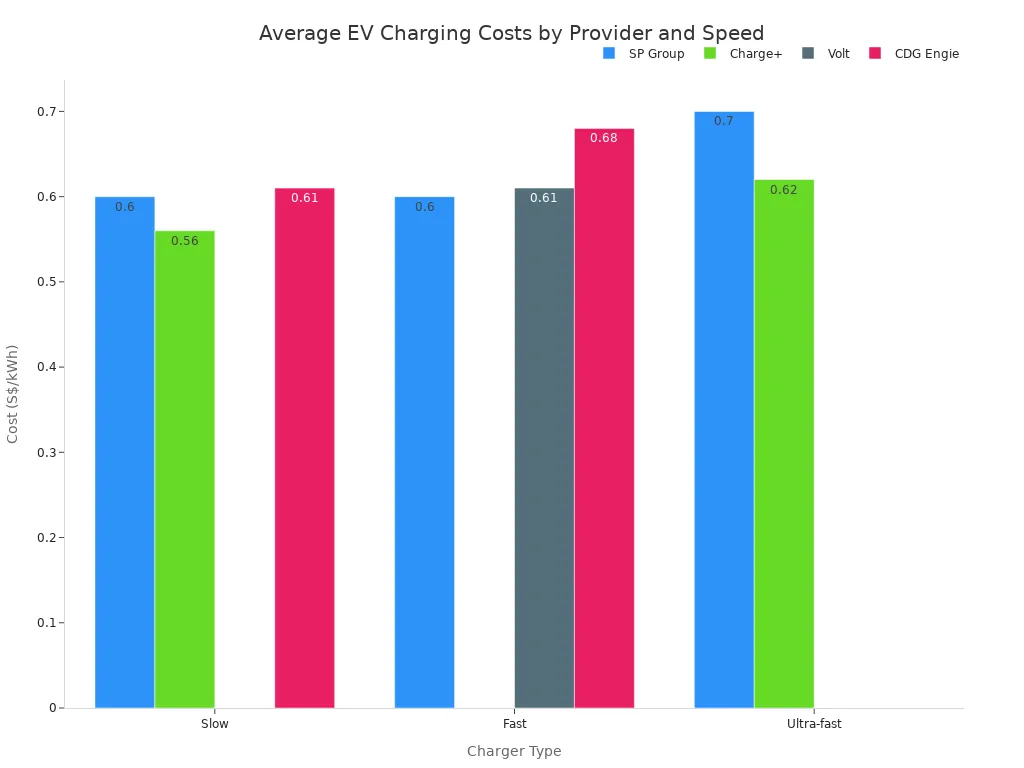
The cost of charging an EV in Singapore varies by provider and charging speed. Slower AC charging is generally more affordable, while ultra-fast DC stations command a premium for their speed. The following table outlines the current average costs.
| Fornecedor | Tipo de carregador | Speed (kW) | Cost (S$/kWh) |
|---|---|---|---|
| Grupo SP | Lento | N/A | 0.60 |
| Grupo SP | Fast (AC) | 40, 43 | 0.60 |
| Grupo SP | Ultra-fast (DC) | 50+ | 0.70 |
| Carregar+ | Lento | 7.4 | 0.56 |
| Carregar+ | Ultra-fast | 120 | 0.62 |
| Volt | Rápido | 22 | 0.57 |
| Volt | Rápido | 30 | 0.65 |
| CDG Engie | Lento | 7.4 | 0.61 |
| CDG Engie | Rápido | N/A | 0.68 |
Time-of-Use Pricing Structures
The future of charging costs lies in smart pricing. Time-of-use tariffs will offer lower prices during off-peak hours. This smart charging approach incentivizes drivers to charge their vehicles overnight, which helps balance the load on the electric grid and improves overall efficiency.
Planos de subscrição e de adesão
Many operators offer subscription plans that provide lower per-kWh rates for a monthly fee. These plans are ideal for high-mileage drivers, offering significant savings and making the cost of electric mobility even more predictable and affordable.
Government’s Role in Driving Adoption
The Singaporean government plays a pivotal role in orchestrating the transition to electric vehicles. It coordinates policy, offers incentives, and ensures the national infrastructure is ready for a fully electric future.
The National Electric Vehicle Centre (NEVC)
O National Electric Vehicle Centre (NEVC) acts as a central command for Singapore’s EV ambitions. This one-stop office is responsible for:
- Spearheading the national vision for all vehicles to run on cleaner energy by 2040.
- Overseeing the deployment of 60,000 EV charging points by 2030.
- Setting regulations and standards for the EV infrastructure.
- Cultivating a vibrant local EV industry and research ecosystem.
The NEVC ensures all parts of the ecosystem work together to accelerate EV adoption.
Ongoing Grants and Incentives
The government continues to offer grants and incentives to make EV ownership more attractive. These programs help offset the initial cost of purchasing an EV and installing charging infrastructure, directly supporting the growth of the EV market.
Grid Readiness and Power Upgrades
A massive increase in electric vehicles requires a robust and smart power grid. The government is proactively upgrading the national infrastructure to manage the additional electrical load. This involves deploying smart charging solutions and advanced hardware from providers like TPSON. These smart technologies ensure high efficiency and stability, preparing the grid for the widespread adoption of EVs.
Market Outlook and the Future Beyond 2025
Singapore’s commitment to electric mobility is creating a vibrant market with a clear trajectory for growth. The period leading up to 2030 will be defined by rapid market expansion, widespread EV adoption, and the realization of a long-term vision for a fully integrated EV ecosystem. This forward-looking strategy solidifies the nation’s path toward a sustainable future.
Projected Market Growth to 2030
The financial outlook for Singapore’s EV sector is exceptionally strong. Significant investment in charging infrastructure and rising consumer demand are fueling remarkable growth projections.
Market Value Projections
The value of Singapore’s electric vehicle market is set for exponential growth. Projections show a steep upward trend, reflecting strong confidence in the nation’s electrification goals.
| Métrica | Valor |
|---|---|
| Electric Vehicle Market Value (2023) | USD 103.21 Million |
| Projected CAGR (2024-2030) | 27.46% |
| Projected Electric Vehicle Market Value (2030) | USD 564.12 Million |
The EV charger service market shows a similar explosive growth pattern. This expansion highlights the immense business opportunities in building and operating the charging infrastructure.
| Métrica | Valor |
|---|---|
| EV Charger Service Market Value (2024) | USD 5.5 Billion |
| Projected CAGR (2026-2033) | 18.5% |
| Projected EV Charger Service Market Value (2033) | USD 25.4 Billion |
Rising EV Adoption Rates
O extensive development of charging stations is directly accelerating the adoption of electric cars. As public and private charging options become more accessible, consumer confidence grows. This rising adoption creates a positive cycle, justifying further investment in the EV infrastructure. The government’s supportive policies and the expanding network of charging stations make owning an EV a practical and attractive choice for more drivers, paving the way for a future dominated by electric vehicles.
Long-Term Vision for Singapore’s EV Ecosystem
Singapore’s strategy extends far beyond 2025. The nation is building a comprehensive ecosystem that supports long-term sustainability and technological leadership in sustainable transportation.
The 2030 Goal of 60,000 Chargers
The government’s ambitious target is to deploy 60,000 charging points by 2030. This goal ensures the charging infrastructure keeps pace with the growing number of electric cars. The plan includes a mix of public charging stations and private installations, creating a dense network that eliminates range anxiety. This robust EV infrastructure is fundamental to achieving the nation’s decarbonisation targets.
Managing New Electrical Load Profiles
The massive increase in EV charging requires a smarter, more resilient power grid. Singapore is implementing proactive strategies to manage the new electrical load.
As principais iniciativas incluem:
- Leveraging EV batteries for grid services like frequency regulation and demand response.
- Investing in smart grid technologies to support higher charging loads.
- Developing advanced Vehicle-to-Grid (V2G) concepts.
- Applying AI to predict energy demand and optimize resource use.
This intelligent development ensures grid stability and efficiency. Technologically advanced charging stations from providers like TPSON are essential components of this smart infrastructure, enabling dynamic energy management for a stable future.
Singapore as a Leader in Urban Mobility
Through strategic planning and technological innovation, Singapore is positioning itself as a global leader in sustainable transportation. The nation’s comprehensive approach to building its EV ecosystem serves as a model for cities worldwide. This long-term vision for decarbonisation and sustainability ensures a cleaner, greener future for urban mobility, driven by a world-class charging network and widespread EV adoption.
By 2025, Singapore’s EV charging landscape will be transformed. The future of electric mobility is defined by widespread accessibility, fast charging speeds, and a smart, integrated user experience. The combination of a charger in nearly every HDB carpark, the strategic placement of ultra-fast chargers, and a unified network will eliminate range anxiety for the average EV driver. This robust roadmap for electric vehicle charging not only supports the growing number of EV owners but also cements Singapore’s future as a global leader in sustainable transportation. The smart charging network, powered by advanced solutions from providers like TPSON, is key to this vision for EV charging.
FAQ
Will every HDB carpark have an EV charger by 2025?
Yes, Singapore is on track to equip all nearly 2,000 HDB carparks with at least one EV charging point by the end of 2025. This initiative ensures that residential charging becomes widely accessible for the majority of the population.
How much does it cost to charge an EV in Singapore?
The cost varies by operator and charging speed. Slower AC charging typically costs around S$0.56-S$0.61 per kWh. Faster DC charging is priced higher, ranging from approximately S$0.62 to S$0.70 per kWh, reflecting the speed and convenience offered.
Qual é a diferença entre o carregamento AC e DC?
AC (Alternating Current) chargers are ideal for slower, overnight charging at home, taking several hours. DC (Direct Current) chargers are much faster, providing a significant charge in under an hour. They are commonly found at public stations for quick top-ups.
How can condominiums get EV chargers installed?
Condominiums can apply for the EV Common Charger Grant (ECCG). This grant co-funds up to 50% of installation costs. The Management Corporation Strata Title (MCST) must approve the installation and plan for the building’s electrical capacity.
What makes a charging station “smart”?
Smart charging stations communicate with the power grid to optimize energy use. They can schedule charging during off-peak hours to save costs and prevent grid overload. Technologically advanced providers like TPSON supply the hardware that enables these intelligent functions.
Do I need multiple apps to use different public chargers?
Currently, drivers often need different apps for various operators. However, Singapore is pushing for network interoperability. The goal is to allow drivers to use any public charger with a single account, creating a more seamless user experience.
What is Singapore’s long-term goal for EV chargers?
The nation aims to deploy 60,000 EV charging points by 2030. This ambitious target includes 40,000 public chargers and 20,000 private chargers. The extensive network will support the goal of phasing out internal combustion engine vehicles by 2040.