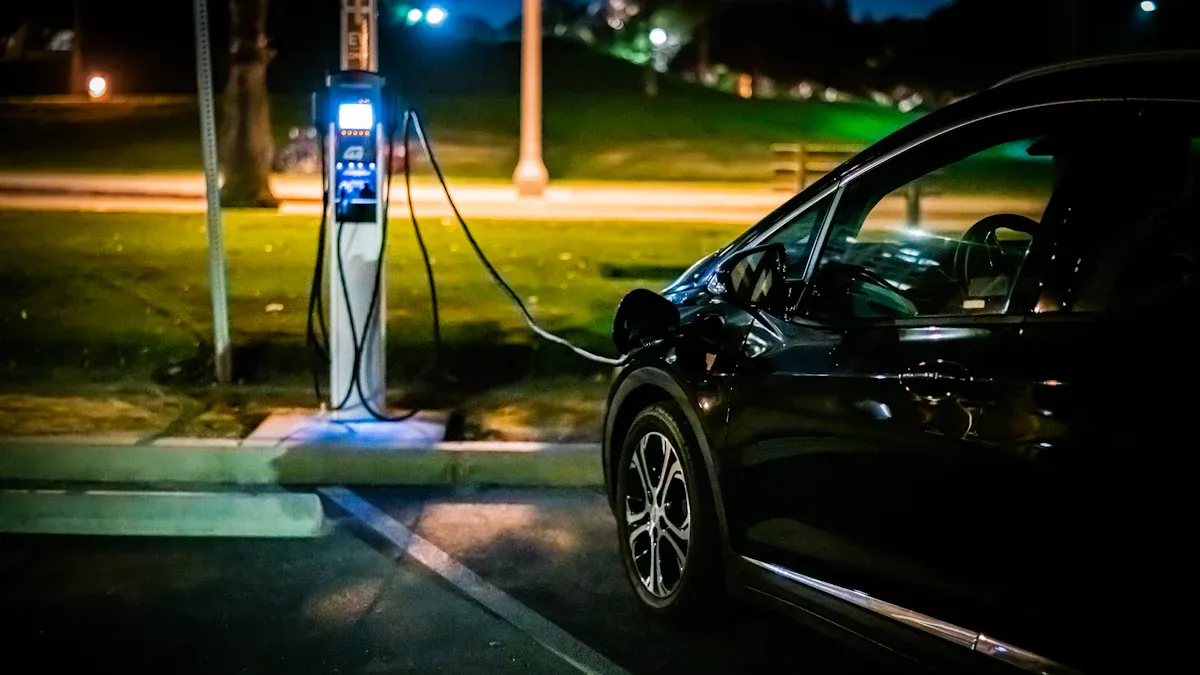
Level 3 charging hubs stand at the forefront of the future of urban mobility in UK cities. Their expansion has driven a surge in EV adoption, with a 38% growth in charging infrastructure and record-breaking sales of pure-electric vehicles. These hubs deliver more than just power—they offer seamless Soluções de carregamento de veículos eléctricos, support for carregadores ev portáteis, and foster sustainable transport by reducing congestion and emissions. City planners and Fabricantes de carregadores para veículos eléctricos recognize the vital role of advanced Carregador EV networks in shaping safer, more connected urban environments.
- Sustainable transport and urban planning
- Convenience and connectivity for all users
Charging Infrastructure and the Future of Urban Mobility
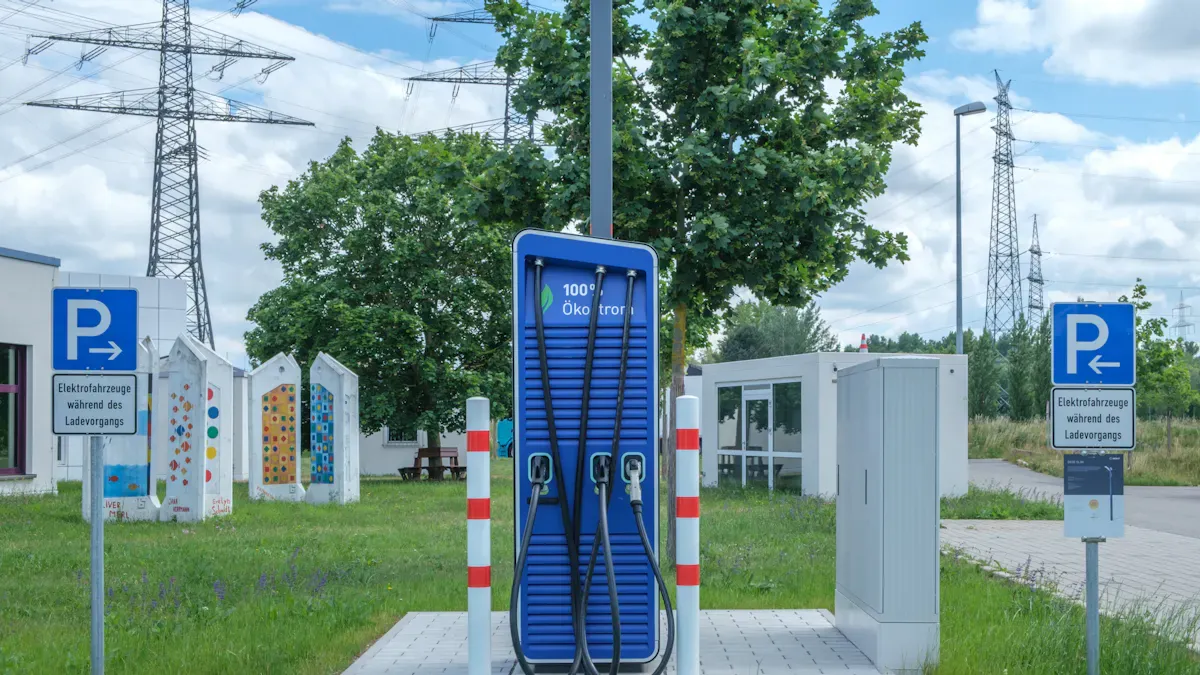
Explicação do carregamento de nível 3
Differences Between Level 1, Level 2, and Level 3 Charging
Level 1 charging uses a standard household outlet and delivers slow charging speeds. Drivers often rely on this method for overnight charging at home. Level 2 charging operates at a higher voltage and provides faster charging, making it suitable for workplaces and residential complexes. Level 3 charging, also known as DC fast charging, offers rapid energy transfer. This technology enables drivers to recharge their electric vehicles in less than an hour, making it ideal for urban environments where time and convenience matter.
| Nível de carga | Tensão | Utilização típica | Tempo de carregamento |
|---|---|---|---|
| Nível 1 | 120V | Início | 8-12 horas |
| Nível 2 | 240V | Work/Home | 4-6 horas |
| Nível 3 | 400V+ | Public Hubs | 30-60 minutos |
Benefits for Urban Drivers and City Transport
Level 3 charging brings significant advantages to urban drivers. Rapid charging reduces downtime and increases the practicality of electric vehicles for daily commutes. City transport systems benefit from faster turnaround times for electric buses and taxis. TPSON, a technologically advanced electric vehicle charging solution provider, supports the deployment of Level 3 charging hubs that enhance ev charging availability and streamline urban mobility. These hubs improve access to rapid chargers, making electric vehicle infrastructure more robust and reliable.
Note: Areas with more charging stations show higher rates of electric vehicle adoption. The UK government aims to phase out petrol and diesel cars by 2035, emphasizing the need for a robust charging network.
The Role of Charging Hubs in Cities Racing Towards an Electric Future
Reducing Range Anxiety for EV Owners
Charging hubs play a crucial role in alleviating range anxiety. Drivers gain confidence when they see reliable ev charging infrastructure throughout the city. Public charge points offer convenient locations for quick charging, ensuring that ev owners can travel without worrying about battery depletion. The presence of charging hubs directly influences the electric vehicle market, encouraging more people to switch to EVs.
Supporting Public and Private Transportation Fleets
Urban mobility depends on efficient fleet operations. Charging infrastructure supports both public and private fleets by providing consistent ev charging availability. Birmingham’s City-Wide Electric Vehicle Charging Strategy plans to install thousands of public charge points by 2030. This initiative will help meet climate targets and support ev adoption. Charging hubs enable electric buses, taxis, and delivery vehicles to operate smoothly, reducing emissions and supporting sustainable city transport.
- Charging infrastructure strengthens urban mobility.
- Charging hubs support the growth of electric vehicles and fleet operations.
- Reliable ev charging availability encourages adoption and reduces congestion.
EV Growth and the Current State of Level 3 Charging in UK Cities
National Expansion and Recent Trends
Growth Statistics and 2024 Milestones
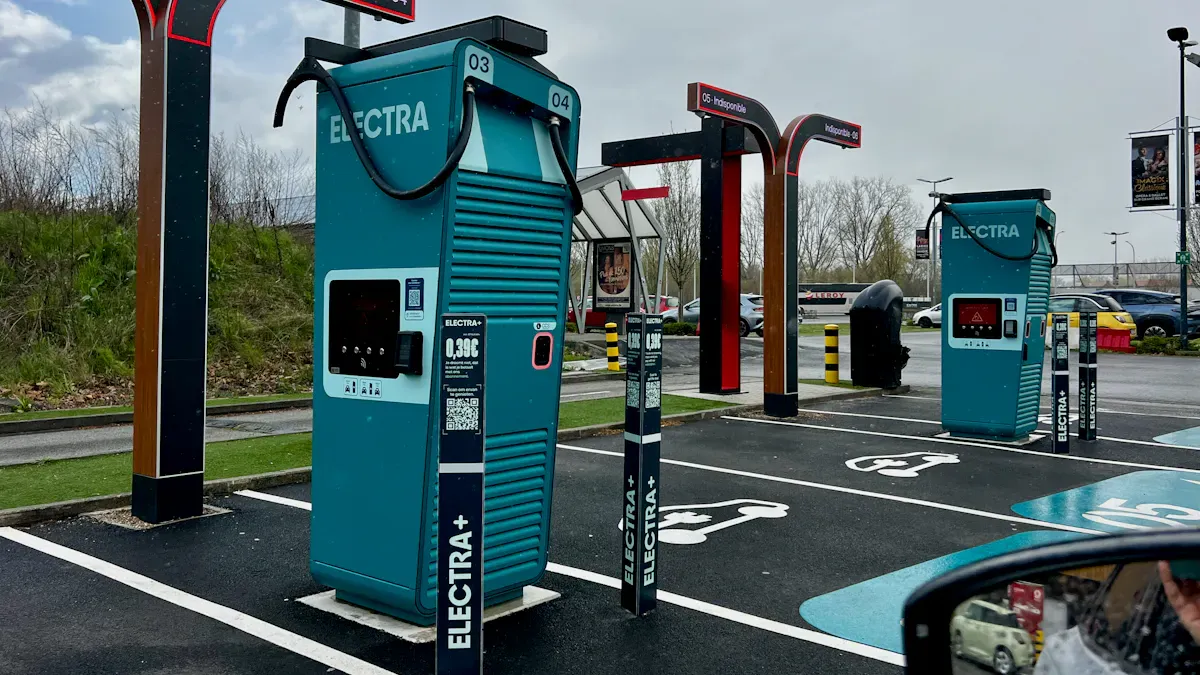
UK cities have experienced remarkable ev growth in recent years. Network operators target the installation of 300,000 public charging points by 2030. The government aims for a tenfold increase in chargepoints, with 15,000 rapid chargepoints and over 100,000 on-street chargepoints by 2025. bp pulse plans to invest £1 billion in developing charging infrastructure, enhancing high-speed charging and digital technology. Ultra-rapid charging stations now transform motorway infrastructure, reducing charging times for drivers and fleet operators.
| Evidência | Descrição |
|---|---|
| 300,000 public charging points by 2030 | Network operators are targeting the installation of 300,000 public charging points by 2030, indicating a significant expansion in infrastructure. |
| Tenfold expansion in chargepoints by 2030 | The UK government aims for a tenfold increase in chargepoints, with 15,000 rapid chargepoints and over 100,000 on-street chargepoints by 2025. |
| Investment by bp pulse | bp pulse plans to invest £1 billion in developing charging infrastructure, enhancing high-speed charging and digital technology. |
| Ultra-rapid charging stations | Comprehensive transformation of motorway charging infrastructure with ultra-rapid charging stations reducing charging times significantly. |
Urban and motorway infrastructure continues to expand. Ultra-rapid charging stations appear every 20 miles along major routes. Urban charging networks grow through lamp post conversions, making ev charging more accessible for city residents. These milestones mark a turning point for the future of urban mobility and signal a robust commitment to sustainable transport.
Comparison with Other European Countries
UK cities have made significant progress in ev charging growth, but some European countries maintain a lead in infrastructure density. The Netherlands and Germany deploy higher numbers of rapid chargers per capita. France invests heavily in urban charging networks, focusing on accessibility and reliability. UK cities now close the gap by expanding Level 3 charging hubs and investing in high-speed charging solutions. The future ev cities in Britain benefit from strategic deployment and public-private partnerships, positioning the UK as a contender in the race for sustainable urban mobility.
Note: The UK’s ambitious targets and investments place it among the leaders in charging infrastructure expansion, but continued focus on reliability and accessibility will determine long-term success.
Cities Racing Towards an Electric Future: Leaders and Laggards
London’s Charging Infrastructure Pipeline
London stands at the forefront of cities racing towards an electric future. The city’s charging infrastructure pipeline includes thousands of new rapid and ultra-rapid charging stations. Public-private partnerships drive expansion, integrating ev charging infrastructure with public transport hubs and residential areas. London’s strategy prioritizes accessibility, reliability, and seamless integration with urban mobility systems. The city’s leadership in ev charging growth sets a benchmark for other UK cities.
Coventry’s Rapid EV Growth
Coventry demonstrates rapid ev growth through citywide expansion and community engagement. The city invests in charging hubs that support both residents and businesses. Incentives encourage adoption, and local authorities collaborate with infrastructure providers to ensure reliable ev charging. Coventry’s approach fosters sustainable transport and positions the city as a model for future ev cities.
Progress in Manchester, Birmingham, and Glasgow
Manchester, Birmingham, and Glasgow scale up charging infrastructure through local government initiatives and regional funding. These cities deploy rapid charging stations in strategic locations, supporting public and private fleets. Accessibility efforts focus on underserved neighborhoods, ensuring equitable access to ev charging. The expansion of infrastructure in these cities contributes to the overall ev growth across the UK.
Cities Lagging Behind and Contributing Factors
Some UK cities lag behind in ev charging infrastructure deployment. Southampton, for example, maintains an underdeveloped network with only 119 chargers and 21 rapid chargers, creating a significant gap for a major transport hub. Bristol offers good quality infrastructure but risks falling behind without increased investment. Contributing factors include limited funding, lack of strategic planning, and slower adoption rates. These cities must address gaps to participate fully in the future of urban mobility.
| Cidade | Total Chargers | Chargers per 100,000 | Carregadores rápidos | Notas |
|---|---|---|---|---|
| Southampton | 119 | 48 | 21 | Underdeveloped network, significant gap for a major transport hub. |
| Bristol | 189 | 31 | Over 40% | Good quality but risks falling behind without more investment. |
Tip: Cities that invest in charging infrastructure and prioritize accessibility see higher rates of ev growth and adoption.
Leading Cities and Their Charging Infrastructure Strategies
London: Pioneering Urban Mobility
Public-Private Partnerships and Policy Initiatives
London stands as one of the cities leading the charge in the transition to electric vehicles. The city has established robust public-private partnerships to accelerate ev charging infrastructure. Policy initiatives focus on expanding charging hubs and integrating high-speed charging solutions across urban areas. Businesses recognize ev charging as a commercial opportunity, shifting from a luxury to a necessity. Property owners and retail establishments now leverage ev charging to attract customers and boost revenue. London’s approach ensures that infrastructure development aligns with the needs of residents and commuters.
Integration with Public Transport Hubs
London integrates charging infrastructure with public transport hubs to maximize accessibility. The city places public charge points at strategic locations, including train stations and bus depots. This integration supports both private vehicles and public fleets, reducing emissions and improving urban mobility. The city’s plans include establishing high-power charging sites, such as those developed by IONITY, to support drivers without home charging access. London’s strategy positions it among the best cities for fast charging in the UK.
Coventry: A Model for EV Growth
Citywide Expansion and Community Engagement
Coventry demonstrates rapid ev growth through citywide expansion and active community engagement. The city invests in charging hubs that serve both residents and businesses. Local authorities collaborate with infrastructure providers to ensure reliable charging options. Community engagement initiatives encourage adoption and educate residents about the benefits of electric vehicles. Coventry’s model emphasizes accessibility and sustainability, making it a leader among UK cities.
Incentives for Residents and Businesses
Coventry offers incentives to promote ev charging and infrastructure development. Residents receive support for home charging installations, while businesses benefit from grants and reduced fees. These incentives address the challenge that 35% of households outside London lack access to off-street parking, which rises to 63% in Greater London. By targeting these gaps, Coventry increases ev growth and ensures equitable access to charging infrastructure.
Manchester, Birmingham, and Glasgow: Scaling Up Charging Infrastructure
Iniciativas da administração local
Manchester, Birmingham, and Glasgow scale up charging infrastructure through targeted local government initiatives. Authorities deploy rapid charging stations in underserved neighborhoods to improve accessibility. Birmingham enhances its Level 3 charging infrastructure with ultra-rapid charging solutions, highlighted by IONITY’s urban site in Birmingham South Aston. Hubber’s initiative utilizes underused properties to increase reliable charging options and improve urban mobility.
Regional Funding and Accessibility Efforts
Regional funding supports infrastructure expansion in these cities. Efforts focus on making ev charging accessible to drivers without home charging. IONITY’s strategy includes establishing high-power charging in urban areas, with plans for similar sites in London and Manchester. These cities address the needs of households lacking off-street parking and support both public and private fleets. The expansion of charging infrastructure contributes to ev growth and positions these cities as leaders in sustainable urban mobility.
Note: 85% of surveyed drivers believe there is a lack of public charging points for EVs. Increasing charging accessibility remains a priority for UK cities.
| Cidade | Charging Strategy Highlights |
|---|---|
| Londres | Public-private partnerships, transport hub integration |
| Coventry | Citywide expansion, incentives, community engagement |
| Birmingham | Ultra-rapid charging, property utilization |
| Manchester | High-power urban charging, regional funding |
| Glasgow | Accessibility efforts, local government initiatives |
Edinburgh and Other Scottish Cities: Regional Approaches
Policy Support and Equity Focus
Edinburgh has established itself as a leader in Scotland’s transition to electric vehicles. The city council implements robust policy support for EV charging infrastructure. Local authorities prioritize equity by targeting underserved communities. They allocate funding to neighborhoods with limited access to charging stations. Scottish government initiatives provide grants for rapid charger installation. These programs ensure that residents in both urban and rural areas benefit from the expansion.
Other Scottish cities, such as Aberdeen and Dundee, follow similar strategies. They collaborate with national agencies to secure investment. Policy makers emphasize the importance of equitable access. They design programs that address socioeconomic disparities. For example, Dundee’s “Electric Mobility Strategy” includes subsidies for low-income households. Aberdeen’s city planners focus on integrating charging hubs into public spaces. These efforts create a more inclusive environment for EV adoption.
Note: Equity remains a central theme in Scotland’s approach. Cities aim to bridge the gap between affluent and disadvantaged areas. Policy support drives the deployment of Level 3 charging hubs across the region.
Addressing Urban and Suburban Needs
Scottish cities recognize the unique challenges of urban and suburban environments. Edinburgh deploys charging stations in high-density neighborhoods. The city targets areas with limited off-street parking. Local authorities install rapid chargers near apartment complexes and shopping centers. This strategy increases convenience for residents who lack private parking.
Suburban communities require a different approach. Glasgow expands its network by placing chargers along commuter routes. City planners identify key locations near schools and community centers. Aberdeen invests in charging infrastructure for suburban business parks. These efforts support both daily commuters and fleet operators.
| Cidade | Urban Strategy | Suburban Strategy |
|---|---|---|
| Edinburgh | High-density deployment, public spaces | Chargers near shopping centers |
| Glasgow | Rapid chargers in neighborhoods | Chargers along commuter routes |
| Aberdeen | Integration with public transport | Business park infrastructure |
| Dundee | Equity-focused subsidies | Community center installations |
Cities leading the charge in Scotland demonstrate flexibility in their planning. They adapt strategies to meet the needs of diverse populations. Urban areas benefit from dense charging networks. Suburban regions gain access through targeted infrastructure projects. This regional approach supports sustainable growth and positions Scottish cities as models for inclusive urban mobility.
Tip: Residents can use online maps to locate the nearest rapid charging station. Local councils update these resources regularly to improve accessibility.
Challenges for the Future of Urban Mobility and Charging Infrastructure
Regional Disparities in Charging Infrastructure
Urban vs. Rural Access to Level 3 Charging
Regional disparities shape the landscape of charging infrastructure in UK cities. Urban areas like London experience high demand for Level 3 charging due to dense populations and limited parking. These cities often see rapid EV growth, as more residents rely on public charge points for daily use. In contrast, rural regions face inadequate infrastructure and lower demand, which slows EV adoption. Local authorities must design targeted strategies to address these gaps, adapting existing assets such as lamp posts and car parks to support charging. This approach ensures that both urban and rural communities benefit from the transition to electric vehicles.
Socioeconomic Barriers to Adoption
Socioeconomic factors also influence access to charging. High property costs and competition for prime locations in cities like London can limit the deployment of new hubs. Many households lack off-street parking, making home charging difficult. These barriers often affect lower-income neighborhoods, where residents may not have the resources to invest in EVs or charging solutions. Local governments must prioritize equitable access to public charge points and offer incentives to encourage adoption across all communities.
Reliability and Maintenance of Charging Hubs
Technical Challenges and Downtime
Reliability remains a critical concern for EV charging infrastructure. Common issues at Level 3 charging hubs include damaged cables, breaker trips, connectivity problems, and software glitches. Regular maintenance is essential to minimize downtime and ensure that drivers can depend on charging stations. Delays in planning permission and regulatory hurdles can further complicate the deployment and upkeep of reliable infrastructure.
User Experience and Accessibility Concerns
User experience shapes the success of EV adoption. Fragmented payment systems, with over 40 different methods identified, create friction for drivers. Standardization and interoperability must improve to make charging more accessible. Accessibility concerns also arise when stations are not maintained or are located in hard-to-reach areas. Local authorities and operators must focus on seamless user experiences to support continued EV growth.
Grid Capacity and Renewable Energy Integration
Infrastructure Upgrades for EV Growth
Grid capacity presents a significant challenge for UK cities. Many small and medium sites require major upgrades to support high-powered charge points. Insufficient capacity leads to costly and time-consuming reinforcements, which can slow the rollout of new infrastructure. Electric buses and other fleet vehicles require substantial electricity, placing additional strain on local networks. Distribution network operators must plan strategically to accommodate rising demand from EVs and heat pumps.
| Tipo de desafio | Descrição |
|---|---|
| Grid Capacity Limitations | Need for additional network capacity to support a large number of charge points. |
| Planning Permission Delays | Average processing time for applications is 16 weeks, with complex sites taking even longer. |
| Site Acquisition Issues | High property costs and competition for prime locations complicate the acquisition of sites. |
| Normalização e interoperabilidade | Fragmented payment systems create user friction, with over 40 different payment methods identified. |
| Regulatory Hurdles | Complex regulations can delay the deployment of charging infrastructure significantly. |
Transitioning to Sustainable Energy Sources
The integration of renewable energy with charging infrastructure supports long-term sustainability. Technologies such as battery energy storage systems and power management systems help manage peak demand and reduce grid congestion. Vehicle-to-grid technology allows EVs to act as mobile energy storage, supporting grid stability. Smart charging algorithms optimize energy flow and create new revenue opportunities for EV owners. These advancements will help UK cities meet their climate goals and ensure that EV charging remains reliable as adoption increases.
Note: The future of urban mobility depends on overcoming these challenges. Collaboration between local authorities, network operators, and technology providers will drive the next wave of EV growth in UK cities.
Opportunities and the Future of EV Growth in UK Cities
Policy and Regulatory Support for Charging Infrastructure
National and Local Government Initiatives
National and local governments play a pivotal role in shaping the future of urban mobility. Their initiatives drive the expansion of EV charging infrastructure and accelerate EV adoption. Strategic programs and mandates provide both funding and regulatory clarity, ensuring that cities can meet ambitious sustainability targets.
| Iniciativa | Descrição | Impacto |
|---|---|---|
| Low-No Program | Funds up to 85% of vehicle costs and 90% of charging infrastructure | Accelerates EV adoption nationwide |
| California Mandate | Requires 100% zero-emission buses by 2040 | Encourages long-term planning for transit agencies |
| European Green Deal | Aims for a 55% reduction in greenhouse gas emissions by 2030 | Drives electrification across Europe |
- Alternative Fuels Infrastructure Directive (AFID) mandates the development of public EV charge points across the EU.
- National subsidies in countries like Germany and France provide substantial financial incentives for EV purchases and infrastructure.
- Regulatory clarity through EU standards helps fleet operators manage electrification strategies across borders.
As the EV market matures, government funding becomes more targeted. Early grants focused on stimulating adoption now evolve into strategic investments that maximize local economic and environmental outcomes. This policy progression ensures that infrastructure development aligns with the unique needs of each city.
Impact of Upcoming Regulations on Urban Mobility
Upcoming regulations will reshape urban mobility in the UK. Zero-emission zones, stricter emissions standards, and requirements for new developments to include EV charging infrastructure will drive further adoption. These policies encourage cities to prioritize sustainable transport and invest in advanced charging solutions. As regulations become more stringent, cities must adapt quickly to maintain compliance and support residents in the transition to electric vehicles.
Tip: City planners should monitor regulatory changes closely to anticipate infrastructure needs and secure funding for future projects.
Technological Advancements Shaping the Future
Ultra-Fast Charging and Smart Grid Integration
Technological innovation continues to transform the EV charging landscape. Carregadores ultrarrápidos, capable of delivering up to 350 kW, significantly reduce charging times and enhance the practicality of EVs for daily use. Smart grid integration enables real-time energy management, balancing supply and demand while optimizing costs.
| Tipo de prova | Descrição |
|---|---|
| Charging Speed Improvement | Ultra-rapid chargers can replenish EV batteries to 80% in 15-20 minutes, significantly reducing range anxiety and making EVs more practical for daily use. |
| Consumer Behavior | 34% increase in purchase intentions when ultra-rapid charging is available within 5 miles, indicating a direct correlation between charging infrastructure and EV adoption. |
| Frequência de Carregamento | Faster charging leads to more frequent, shorter charging sessions, optimizing battery health and reducing overall charging costs. |
Smart charging systems use IoT and AI to optimize energy flow, while wireless charging technology promises seamless, cable-free experiences. These advancements support the future of urban mobility by making EV charging more accessible and efficient.
Synergy with Autonomous and Shared Mobility
The integration of EV charging infrastructure with autonomous and shared mobility services will define the next phase of urban transport. Autonomous vehicles require reliable, high-speed charging to operate efficiently within city environments. Shared mobility platforms, such as ride-hailing and car-sharing services, depend on robust charging networks to maintain fleet availability.
- Ultra-fast chargers support the rapid turnaround needed for autonomous fleets.
- Smart charging systems enable dynamic scheduling and energy management for shared vehicles.
- Wireless charging solutions reduce downtime and streamline operations for mobility providers.
These synergies will create new opportunities for cities to reduce congestion, lower emissions, and enhance the quality of urban life.
Market Trends and Forecasts for Cities Racing Towards an Electric Future
Projections for Charging Infrastructure Expansion
Market forecasts indicate rapid growth in EV charging infrastructure across UK cities. Network operators and private investors plan to deploy thousands of new charge points, focusing on both urban centers and underserved areas. By 2030, the UK aims to install 300,000 public charging points, with a significant share dedicated to Level 3 and ultra-fast chargers.
- Ultra-fast charging stations will become standard along major routes and within city centers.
- On-street charging solutions, such as lamp post conversions, will increase accessibility for residents without off-street parking.
- Wireless and smart charging technologies will see broader adoption as costs decrease and reliability improves.
These trends position UK cities as leaders in the global transition to electric mobility.
Private Sector Investment and Innovation
Private sector investment drives innovation in EV charging infrastructure. Companies develop new business models, such as subscription-based charging and integrated mobility services, to meet the evolving needs of urban residents. Partnerships between technology firms, energy providers, and city governments accelerate the deployment of advanced charging solutions.
- High-power charging hubs attract retail and hospitality partners, creating new revenue streams.
- Startups introduce wireless charging and AI-driven energy management platforms.
- Established automakers invest in proprietary charging networks to support their EV customers.
This wave of investment and innovation ensures that the future of urban mobility remains dynamic and responsive to technological change.
Note: Collaboration between public and private sectors will determine the pace and success of EV adoption in UK cities. Stakeholders must continue to prioritize accessibility, reliability, and sustainability in all infrastructure projects.
Impact on Urban Life and Sustainability
Reducing Emissions and Traffic Congestion
Level 3 charging hubs play a transformative role in shaping the future of sustainable travel in UK cities. These hubs support the shift from traditional vehicles to electric alternatives, which directly impacts urban air quality. Area charging reduces car demand at the local level, especially for short-distance trips that contribute heavily to urban emissions. This approach encourages residents to choose more sustainable travel options, such as public transport or shared mobility services.
- Area charging can significantly reduce car demand for short trips.
- Modeling results show that area charging in large urban areas can lower CO2e emissions by 15% to 26%.
- While some traffic rerouting may occur, the overall effect improves air quality in congested zones.
Cities that invest in advanced ev charging infrastructure see a measurable decline in vehicle-related pollution. The adoption of Level 3 charging hubs also helps manage traffic congestion by supporting efficient fleet operations and reducing the need for private car ownership. As more drivers transition to evs, the cumulative effect leads to cleaner air and less crowded streets.
Note: Cleaner air and reduced congestion create healthier environments for all city residents.
Enhancing Quality of Life for City Residents
The expansion of ev charging networks enhances the quality of life in urban areas. Residents benefit from quieter streets, as evs produce less noise than traditional vehicles. Reliable charging infrastructure increases convenience, allowing drivers to recharge quickly and continue their daily routines without long delays. This reliability supports both individual drivers and public transport fleets, ensuring that essential services remain accessible.
Charging hubs located near residential and commercial centers make ev adoption practical for a wider range of people. These hubs support equitable access, especially for those without off-street parking. The presence of visible, accessible charging stations reassures residents that the city supports their transition to sustainable travel.
- Improved air quality leads to better health outcomes.
- Reduced noise pollution creates more pleasant neighborhoods.
- Accessible charging infrastructure supports social inclusion.
The future of urban mobility depends on sustainable solutions that prioritize both environmental and social well-being. Level 3 charging hubs represent a cornerstone of this future, enabling cities to achieve their sustainability goals while enhancing daily life for their communities.
Level 3 charging hubs drive the future of urban mobility in UK cities. City leaders, businesses, and residents benefit from electric vehicle adoption in several ways:
- Electric vehicles reduce air pollution and improve noise levels.
- They offer lower operating costs than petrol or diesel vehicles.
- The UK government supports adoption by phasing out new petrol and diesel cars by 2035.
Coordinated planning for hubs increases efficiency and strengthens communities. Integrated transport solutions prevent duplication and improve land use. Cities can expect resilient growth as charging infrastructure expands.
FAQ
What is a Level 3 charging hub?
A Level 3 charging hub uses DC fast charging technology. Drivers can recharge electric vehicles in 30 to 60 minutes. These hubs support rapid charging for both private and public fleets.
How do Level 3 charging hubs benefit city residents?
Level 3 charging hubs reduce charging time. Residents gain access to convenient locations. These hubs improve air quality and support sustainable urban mobility.
Are Level 3 charging stations compatible with all electric vehicles?
Most modern electric vehicles support Level 3 charging. Some older models may not. Drivers should check their vehicle specifications before using a Level 3 charger.
How can drivers locate Level 3 charging hubs in their city?
Drivers use mobile apps or online maps to find nearby charging hubs. Local councils update these resources regularly. Many hubs appear near transport centers and shopping areas.
What challenges do cities face when expanding Level 3 charging infrastructure?
Cities encounter grid capacity limits, high property costs, and regulatory hurdles. Maintenance and reliability also present challenges. Strategic planning helps address these issues.
Do Level 3 charging hubs use renewable energy?
Many hubs integrate renewable energy sources. Operators install battery storage and smart grid systems. This approach supports sustainability and reduces emissions.
Can businesses install Level 3 charging stations?
Businesses partner with infrastructure providers to install Level 3 chargers. Grants and incentives support installation. Charging stations attract customers and increase revenue.
How does Level 3 charging impact fleet operations?
Fleet operators benefit from rapid charging. Electric buses and taxis recharge quickly. This efficiency reduces downtime and supports reliable urban transport.