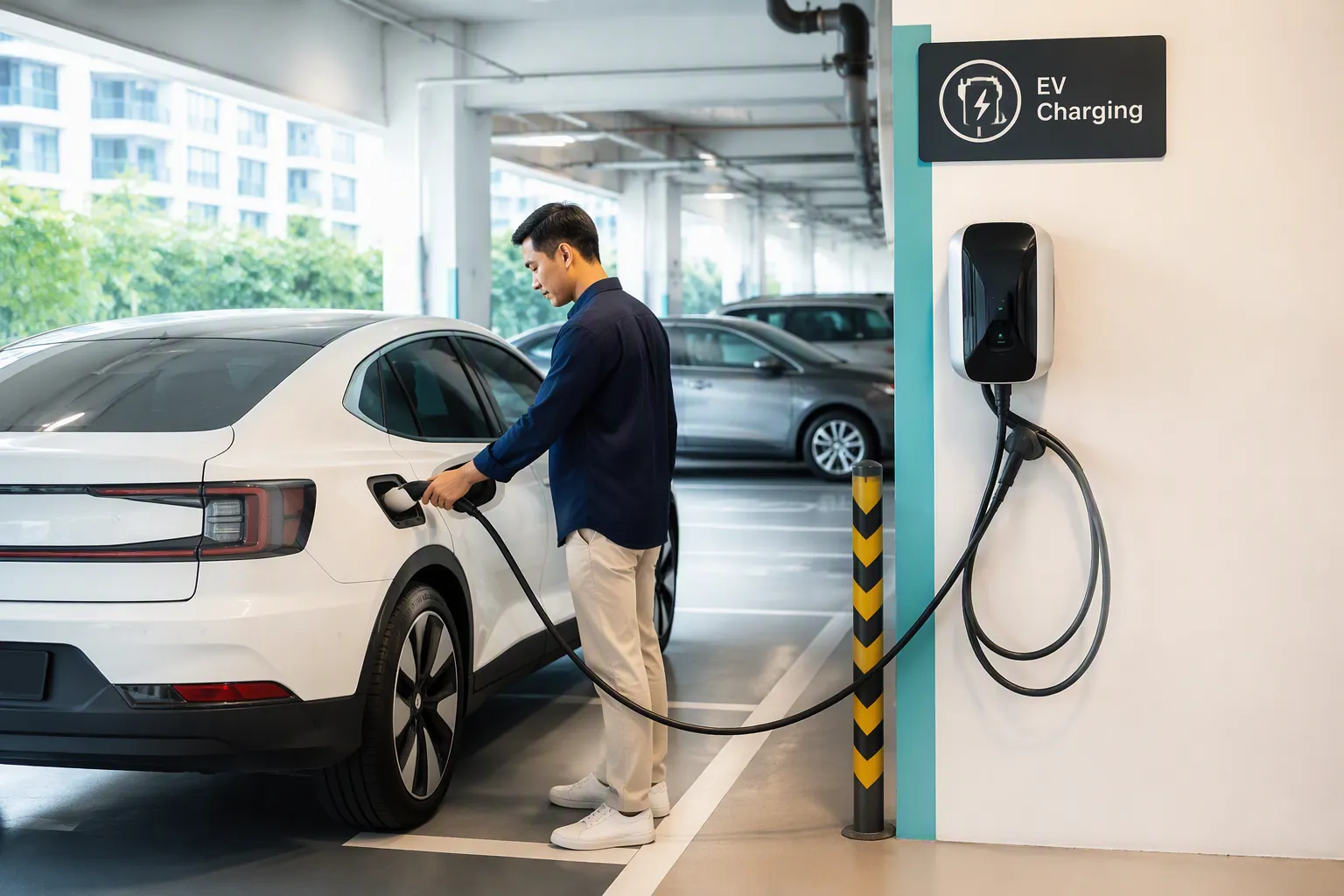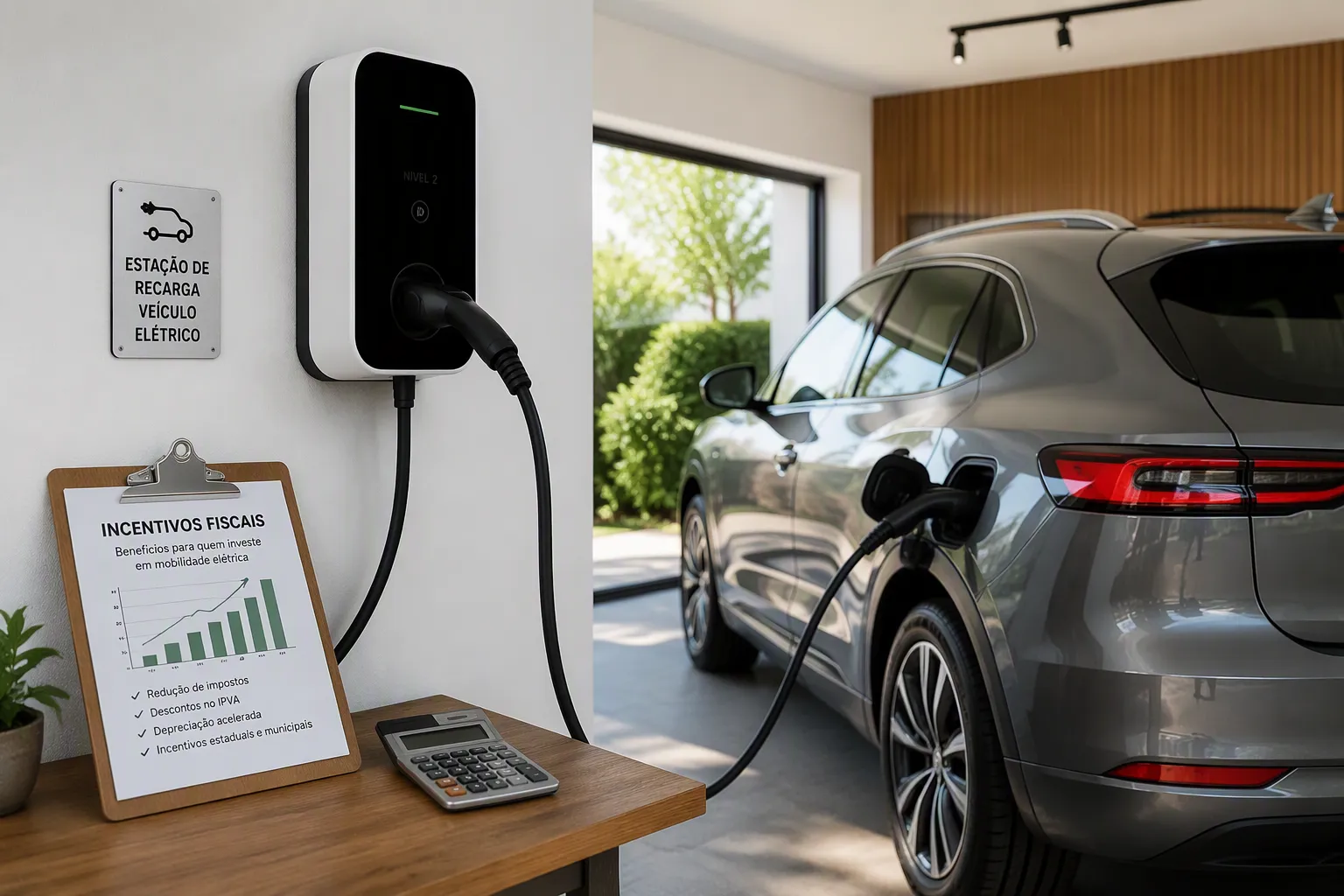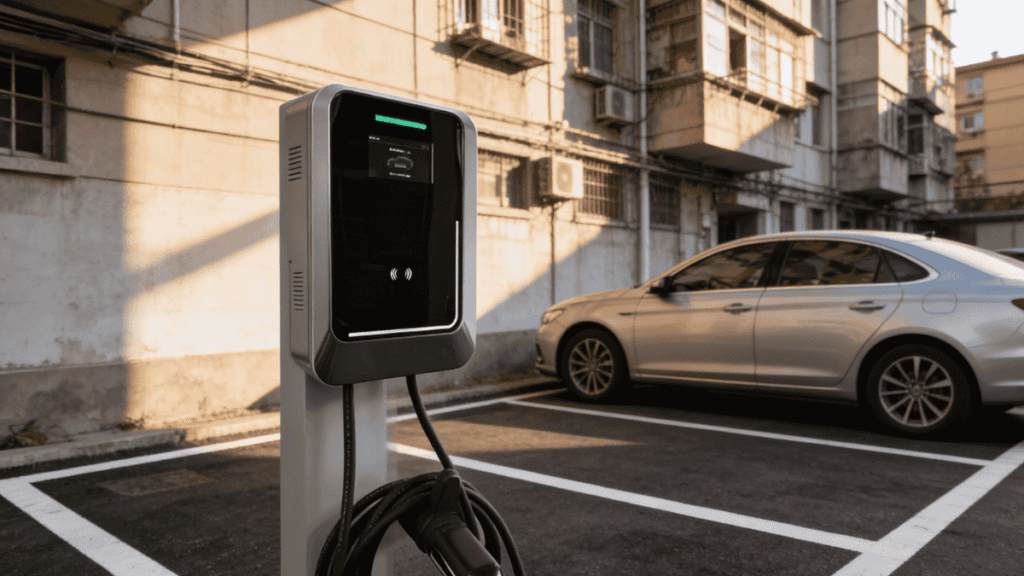
Commercial EV charging solutions work best when they are planned as a complete system: the right mix of carregamento AC Nível 2 e Carregamento rápido DC, paired with gestão de carga, network software, and a clear operations model. For most properties, the winning approach is to align charging speed with typical dwell time, design the electrical architecture for growth, and choose platforms that keep stations discoverable, reliable, and simple for drivers to use.
This overview is written for a global audience. Requirements for electrical codes, permitting, accessibility, and payment compliance vary by jurisdiction. It should be used for planning and stakeholder alignment, then validated with licensed electrical professionals and local authorities.
- What “commercial EV charging solutions” includes
- AC vs DC charging: selecting the right mix
- Use-case playbook by property type
- Power and load management: scaling without overbuilding
- Network software, access control, and payments
- Hardware selection checklist (commercial-grade)
- Where TPSON fits: product scope and safety/energy focus
- FAQs
- Sources and references
A commercial EV charging solution is not a single charger model. It is a coordinated set of decisions and components that determine whether the site is profitable, resilient, and easy to use. The full stack usually includes:
- Charging hardware (AC and/or DC), with the correct connector strategy for local markets and driver mix.
- Electrical design (service capacity, distribution, protection, grounding, and expansion planning).
- Gestão de energia (load balancing, scheduled charging, and peak-demand control where applicable).
- Network platform / software for monitoring, pricing, access control, diagnostics, and reporting.
- Operations (support workflows, maintenance, and uptime management).
- Experiência do condutor (wayfinding, stall layout, cable reach, and discovery through apps/maps).
ChargePoint describes its offering as an EV charging platform, combining software, services, and stations to “make it simple for everyone to go electric,” and emphasizes that charging programs can operate ChargePoint stations, partner stations, or OCPP compliant hardware of the site owner’s choice. This is a reminder that for commercial properties, operational capability often matters as much as power rating.
The most reliable commercial deployments tie every hardware choice to a business goal (tenant retention, fleet uptime, retail conversion), and every software choice to a measurable operational outcome (uptime, utilization, cost recovery, billing accuracy).
The fastest charger is not always the best investment. Commercial sites generally succeed by matching charging speed to dwell time (how long vehicles stay parked). Love’s provides a clear example of portfolio thinking: it is adding more carregadores rápidos CC (Nível 3) to complement an existing rede de carregamento CA (Nível 2) network to meet a variety of vehicles and charging needs.
| Site context | Tempo de permanência típico | Best-fit charging | Por que funciona |
|---|---|---|---|
| Workplace / office | 4–10 horas | Nível 2 AC | Enough time to recover meaningful energy without extreme power demand. |
| Apartamentos / condomínios | Durante a noite | Nível 2 AC + balanceamento de carga | Many ports can be installed if power is managed intelligently. |
| Retail / destination | 30–120 minutos | AC + selected DC | AC covers longer visits; a few DC ports serve quick top-ups and improve satisfaction. |
| Highway / travel stop | 15–45 minutos | DC fast (Level 3) primary | Throughput and driver turnaround become the core KPI. |
| Dealership/service center | Variable / operational | AC + flexible DC | Fast top-ups help deliveries/test drives; portable DC can support non-fixed workflows. |
Note: The table illustrates planning logic. Actual power levels and connector requirements depend on region, fleet mix, and site electrical constraints.
A visão geral da TPSON Carregadores de veículos eléctricos overview describes a product line that includes versatile AC chargers with Balanceamento de carga dinâmico to protect an electrical system, and compact DC fast chargers for commercial and emergency applications, with flexible power options and global-standard connectors.
Common SERP themes for commercial EV charging include scalability, interoperability, total cost of ownership, and uptime. These factors tend to outrank pure “kW” specs in real-world property decisions.
Commercial EV charging is deployed across many segments—workplaces, multifamily housing, retail, and corridor travel. ChargePoint explicitly lists industries such as apartments, retail, workplace, parking operators, and fueling/convenience retail, reflecting how charging programs are built to serve different operational realities.
| Property type | Primary business goal | Recommended starting point | Operational must-haves |
|---|---|---|---|
| Workplace | Employee retention; ESG reporting | Level 2 AC with managed access | Access control, reporting, fair-use policies |
| Multifamily / HOA | Tenant attraction and retention | Many Level 2 ports; plan for growth | Billing/cost recovery, load management, user administration |
| Retail / destination | Foot traffic; longer dwell time | AC baseline + limited DC fast | Wayfinding, uptime, pricing clarity |
| Fleet depot / logistics | Vehicle readiness; lower TCO | AC overnight + DC for turnaround | Gestão de energia, scheduling, uptime SLA |
| Travel stop / corridor | Throughput; driver satisfaction | DC fast primary | Reliable backhaul, 24/7 support, amenities |
Love’s states that EV drivers have access to 100+ carregadores em 36 localizações em 14 estados, with new fast-charging locations being added through 2026, and that sites are built less than a mile off highways with efficient entry/exit. That kind of corridor positioning is a practical insight for commercial developers: a strong charging site is a blend of power, layout, and driver-facing convenience.
Power constraints are one of the most common blockers in commercial charging projects. The scalable answer is usually not “install fewer chargers,” but rather “install the right number of chargers with gestão de carga and an expansion plan.” Load balancing can allow more ports to share limited capacity and can delay expensive service upgrades.
These figures are presented on TPSON’s site and are included here as company-provided context. In commercial procurement, buyers typically validate fit with pilot deployment data (uptime, utilization, maintenance response) and local compliance checks.
Not every commercial charging need is solved by fixed, high-power equipment. TPSON’s TP-DC Compact Series is designed as a compact, mobile DC unit with 20/30/40 kW configurations, offering flexible deployment for assistência de emergência em estrada, fleet yards, events, and dealerships/service centers. For sites where trenching is difficult or charging needs move around a campus, this can complement fixed infrastructure.
| Portable DC model | Rated power | Output voltage range | Output current | Conectividade | IP rating |
|---|---|---|---|---|---|
| TP-DC 20kW | 20 kW | DC50–1000V | 0–66.7A | Ethernet, optional 4G | IP20 |
| TP-DC 30kW | 30 kW | DC50–1000V | 0–100A | Ethernet, optional 4G | IP20 |
| TP-DC 40kW | 40 kW | DC50–1000V | 0–133.3A | Ethernet, optional 4G | IP20 |
Source: TPSON Portable DC EV Charger parameters — tpsonpower.com/portable-dc-ev-charger/
IP20 indicates indoor protection level; for outdoor commercial deployment, enclosure placement and site protection should be planned by qualified professionals.
Commercial charging programs live or die by operations: uptime, session control, pricing, and support. ChargePoint highlights a unified platform that helps organizations set up, manage, and monitor charging operations, and it explicitly notes the ability to operate ChargePoint stations, ChargePoint Ready stations, or any OCPP compliant hardware.
- Amenity model: charging is free or discounted to attract tenants/customers; policies prevent abuse.
- Recuperação de custos: pricing is set to recoup electricity + operations; common for multifamily and workplaces.
- Revenue model: pricing is set as a business line (often corridor retail/DC fast); requires strong uptime and support.
Smart Charge America’s catalog illustrates how commercial stations can include RFID access control, OCPP support, web-portal management, and even integrated payment terminals on DC fast chargers (e.g., Ford Pro DC stations with payment terminal features and OCPP compatibility). It also lists systems aimed at multifamily and workplace environments with billing/reporting, and highlights products positioning around dynamic load optimization.
Commercial buyers often search using terms like EV charging management software, o tempo de atividade da estação, OCPP interoperability, RFID access control, time-of-use scheduling, e energy metering. These topics typically appear across top-ranking SERP pages and should be addressed in any internal project brief.
The most effective procurement process uses a structured checklist that covers technical, operational, and user-experience requirements. Below is a practical, vendor-neutral checklist aligned with common commercial needs and the feature patterns shown in the reference materials.
| Categoria | What to specify | Por que é importante | Evidence / examples from provided sources |
|---|---|---|---|
| Nível de carregamento | Level 2 AC, Level 3 DC (or both) | Matches dwell time and throughput needs | Love’s adds DC fast (Level 3) to complement AC (Level 2) |
| Power & scalability | kW range, number of ports, expansion plan | Prevents stranded investment; supports phased rollout | Smart Charge America lists AC (48A/80A) and DC (120/240kW) examples |
| Conectividade | Ethernet/Wi-Fi/LTE; signal and backhaul plan | Enables monitoring, billing, updates | TPSON portable DC: Ethernet + optional 4G; Ford Pro stations: 4G LTE |
| Interoperabilidade | OCPP compliance; network choice | Reduces lock-in; supports integration | ChargePoint: operate any OCPP compliant hardware |
| Access control & payments | RFID, app, payment terminal, pricing rules | Controls usage, supports monetization | Smart Charge America DC examples include payment terminal; RFID noted on AC stations |
| Safety & protection | Fault protection, surge protection, temperature monitoring | Reduces incidents and downtime | TPSON portable DC lists multiple electrical protections including gun temperature detection |
| Experiência do condutor | Wayfinding, stall layout, cable reach | Reduces support calls; increases utilization | Love’s emphasizes amenities + app; ChargePoint emphasizes driver app and in-vehicle integration |
For many sites, installing more Level 2 ports (with controlled power and load management) delivers better utilization than installing a small number of very high-power ports that drivers queue for. DC fast becomes a strategic addition where throughput is essential.
TPSON positions its offering around intelligent energy and charging solutions powered by a “Current Fingerprint Algorithm,” highlighting a focus on safety, energy efficiency, and smart maintenance. On its home page, TPSON states it serves mais de 5.000 empresas e 1 million households, and cites 200+ invention patents e um Equipa de I&D de 150 pessoas as part of its strengths and capabilities.
- Carregadores de veículos eléctricos: portfolio overview covering AC chargers (with Balanceamento de carga dinâmico) and compact DC fast chargers for commercial/emergency applications.
- Carregadores AC para veículos eléctricos: TW-10, TW-20, TW-30, and TW-40 Dual Gun Wallbox EV Charger listed as the AC lineup.
- Carregadores DC EV: TP-DC Compact Series portable DC charger (20/30/40kW) with multi-standard interface support and mobile deployment scenarios.
- Fabricante de Carregadores para VE: company background stating TPSON was founded in 2015, located in Hangzhou, and uses edge computing and a patented algorithm to develop AI-driven smart electrical systems and vehicle chargers.
For a site owner selecting equipment, TPSON’s published positioning supports three common needs: (1) a scalable AC foundation, (2) a complementary DC option for operational flexibility, and (3) an energy-management narrative that can align with safety and efficiency requirements. In procurement, the next step is to validate site-specific requirements (environmental rating, compliance, network expectations, support model) and to test performance in a small pilot.
Many properties benefit from both, but the mix depends on dwell time. Love’s states it is adding more DC fast chargers (Level 3) to complement a current AC charging (Level 2) network, illustrating how a blended approach can serve different vehicles and stop durations.
Over-optimizing for peak power while under-planning for operations. Commercial charging is an ongoing service: uptime monitoring, access control, and support often determine driver satisfaction and long-term ROI more than maximum kW.
OCPP is commonly used to enable interoperability between charging hardware and management software. ChargePoint emphasizes that station owners can operate ChargePoint stations, partner stations, or any OCPP compliant hardware—helping buyers avoid unnecessary lock-in.
One approach is to deploy more Level 2 ports paired with balanceamento de carga or other energy management methods. TPSON’s EV Chargers overview specifically highlights AC chargers with Dynamic Load Balancing to protect the electrical system. Other commercial catalogs highlight panel sharing and scheduled charging as practical tools for scaling.
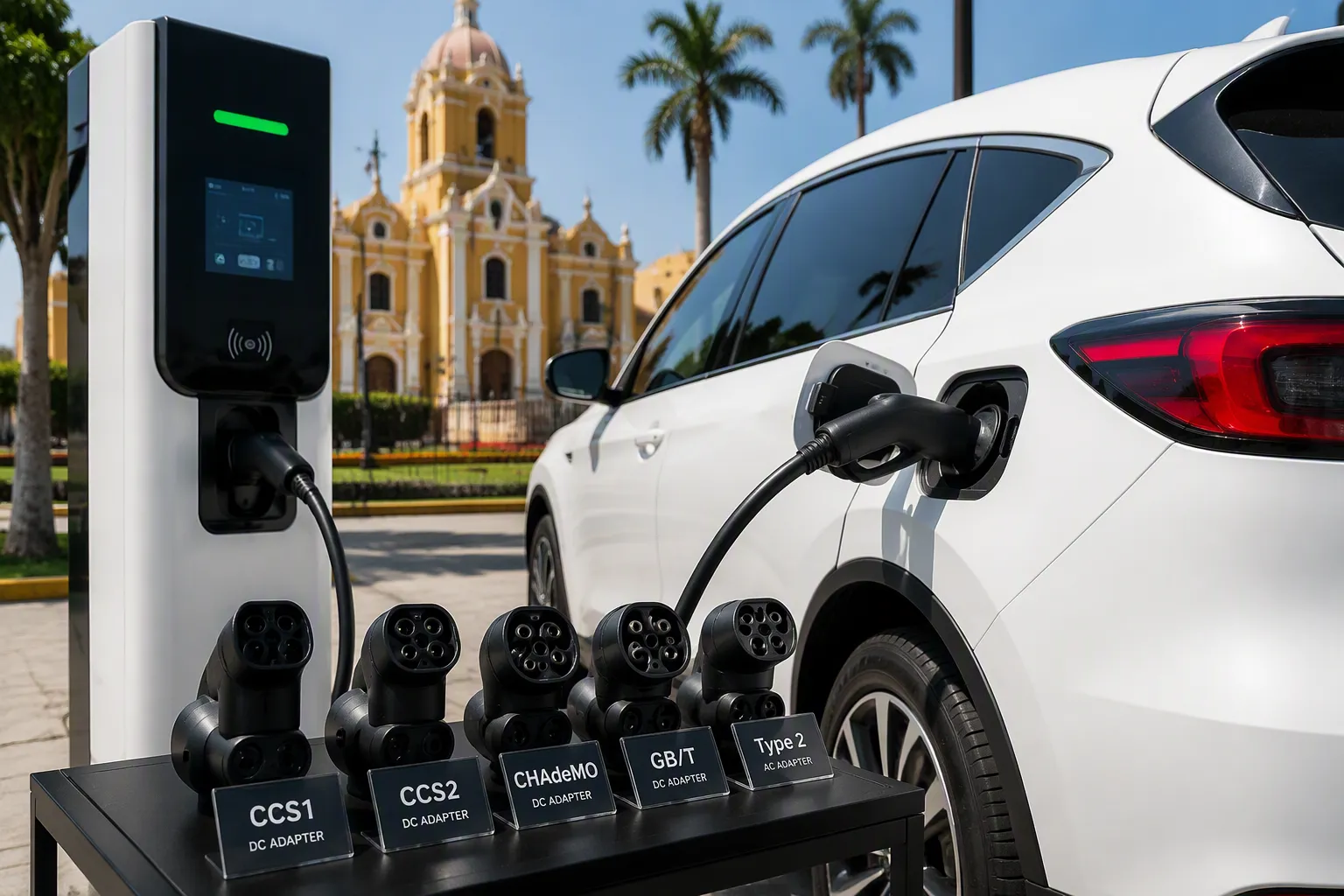
Yes—particularly for operational use cases where charging needs move, such as fleet yards, temporary events, roadside assistance, or dealership/service operations. TPSON’s TP-DC Compact Series is described as a wheel-mobile all-in-one unit with 20/30/40kW configurations and supports interfaces such as CCS2, CCS1, CHAdeMO, and GB/T.
Amenities can materially improve the charging experience and reduce “range anxiety.” Love’s highlights food and beverage options, clean restrooms and dog parks, 24/7 staffing, and Wi?Fi as part of a “better EV charging experience,” alongside its growing charging network.
A platform should be assessed on operational outcomes: monitoring, driver experience, pricing/access control, reporting, and support. ChargePoint describes a unified platform designed to help organizations set up, manage, and monitor charging operations, and to attract drivers through a consistent app-based experience.
TPSON states it is powered by a Current Fingerprint Algorithm and uses edge computing and a patented algorithm to develop AI-driven smart electrical systems and vehicle chargers. It emphasizes smart energy management, enhanced safety, and sustainable digital grids, and provides company milestones dating back to 2015.
A complete commercial EV charging program is built around three priorities: (1) an AC/DC mix aligned with dwell time and business goals, (2) a power plan that scales via gestão de carga and staged expansion, and (3) a platform/operations model that protects uptime, billing integrity, and driver experience.
For commercial properties that need a structured portfolio view, TPSON’s Carregadores de veículos eléctricos overview provides a clear categorization: AC chargers with Dynamic Load Balancing and compact DC solutions for commercial and emergency applications. In parallel, platform providers like ChargePoint highlight interoperability and a unified software layer that can help sites manage operations and integrate charging into the driver journey.
The following pages were referenced for factual statements, product listings, and platform descriptions:
- TPSON EV Chargers portfolio overview (AC with Dynamic Load Balancing; DC for commercial/emergency): https://tpsonpower.com/ev-chargers/
- TPSON AC EV Chargers category (TW-10, TW-20, TW-30, TW-40 Dual Gun):