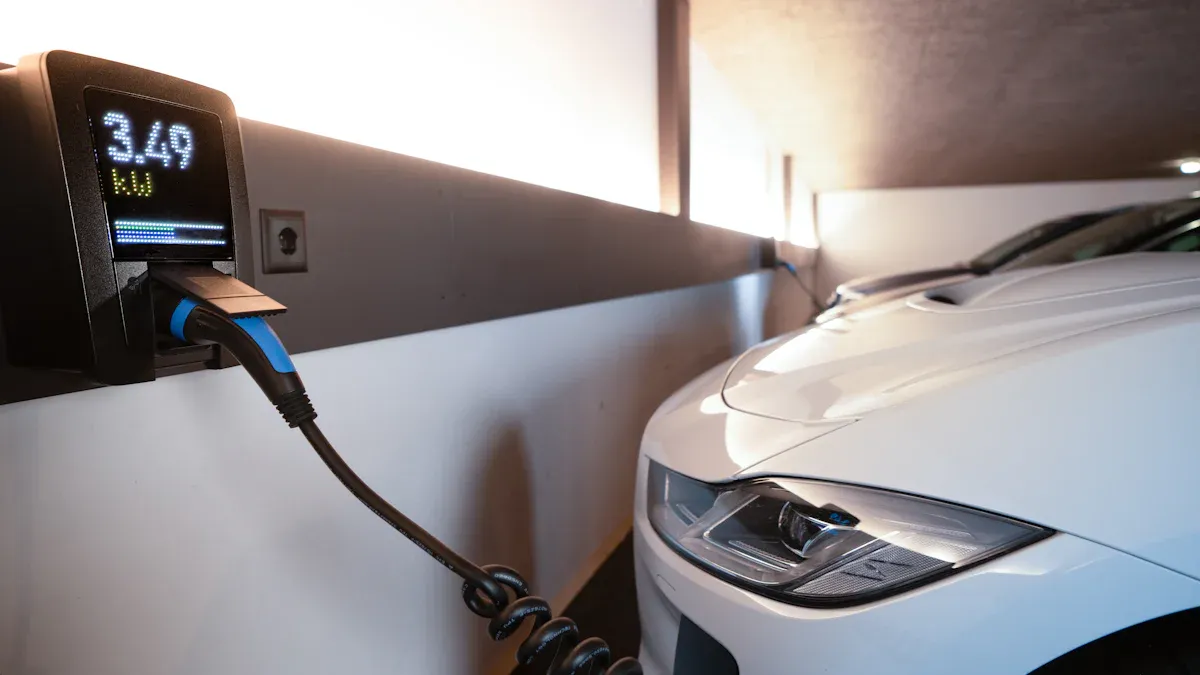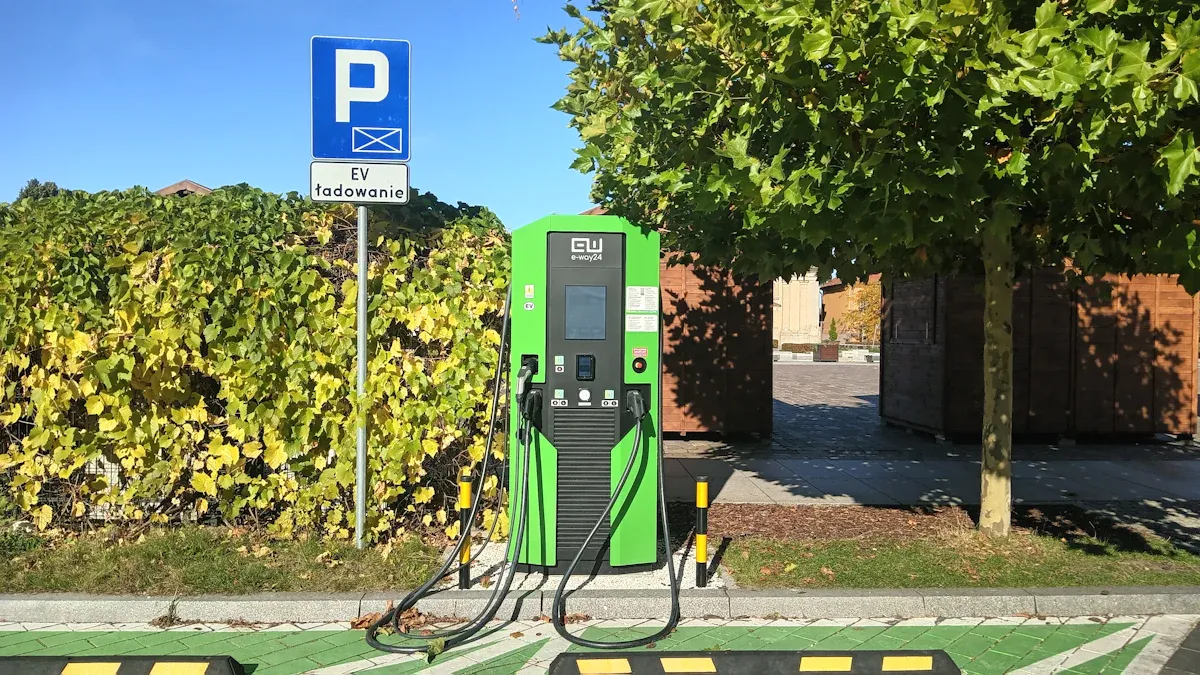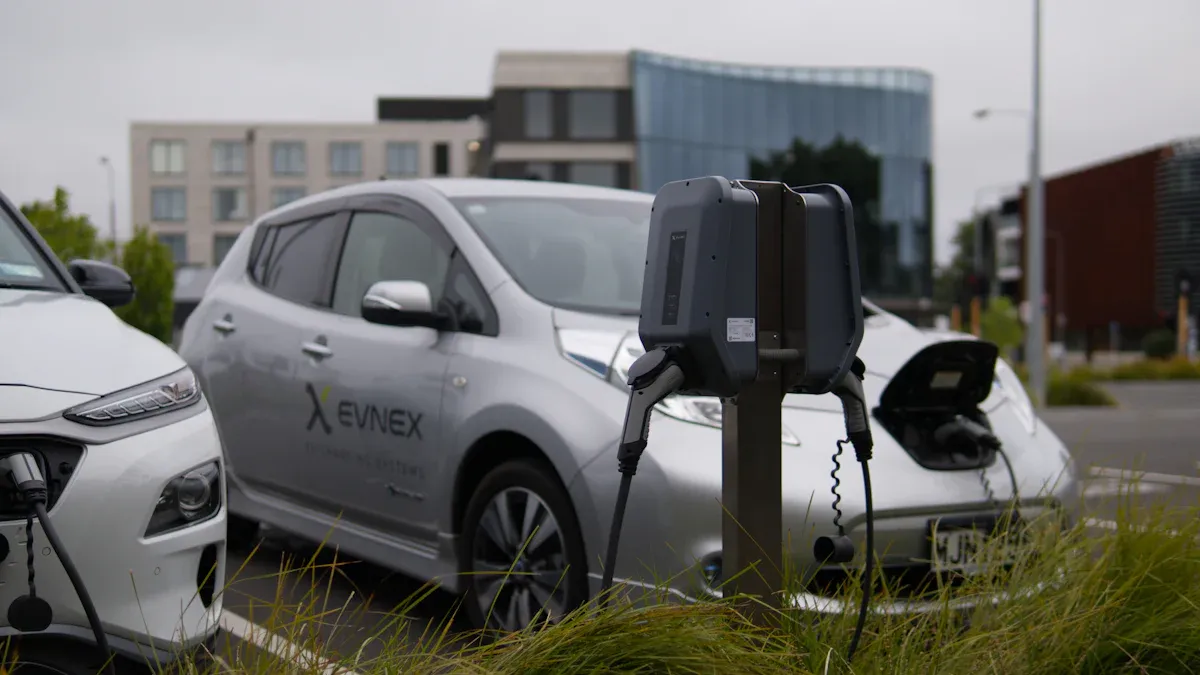
Businesses that install a commercial EV charger see measurable gains in customer engagement and sustainability. Workplace charging facilities have become essential as electric vehicle adoption rises, with commercial registrations growing at twice the rate of private purchases. Retail chains and corporate campuses now rely on high-capacity chargers to support fleet operations and employee vehicles. EV charger manufacturers report a 20% year-on-year increase in commercial installations. Companies gain a competitive edge by offering charging as an amenity, which boosts foot traffic and positions them for future growth.
Key Advantages of Commercial EV Charger Installation
Attracting More Customers with Charging
Increased Foot Traffic
Businesses that install a commercial EV charger attract a larger customer base. Many EV drivers actively seek out locations with charging stations, which increases the likelihood of visits.
- 83% of EV drivers prefer visiting locations with charging facilities.
- EV chargers provide a competitive edge in markets where many competitors do not offer this amenity.
- Commercial installations of charging points make businesses more attractive to eco-conscious customers.
Retailers and service providers see a noticeable rise in foot traffic when they offer charging. Customers who drive electric vehicles often plan their stops around available charging stations, which leads to more frequent visits.
Enhanced Customer Experience
Charging stations enhance the overall customer experience. EV drivers spend up to 50% more per visit at locations with chargers compared to non-EV drivers. Longer dwell times translate into increased spending and higher satisfaction. Businesses can match charger types to expected customer behavior:
- DCFC or Level II chargers suit retail businesses, aligning with average shopping durations.
- Level I chargers work best for locations where vehicles remain parked for extended periods.
| Business Type | Dwell Time Impact | Spending Behavior Impact |
|---|---|---|
| Restaurants | Negative | Decreased |
| Grocery/Clothing Stores | Negative | Decreased |
| Hotels | Negative | Decreased |
| Gas Stations with Convenience | Positive | Increased |
Charging points encourage customers to stay longer, which increases the opportunity for additional purchases and repeat visits.
Future-Proofing Your Business with Commercial EV Charger Installation
Staying Ahead of Market Trends
Commercial EV charger installation positions businesses at the forefront of industry trends. The U.S. EV market is projected to grow at a compound annual growth rate of over 25% between 2021 and 2028. Companies that invest in charging infrastructure now prepare for future demand and regulatory changes. Incentive programs from government and private sectors continue to drive EV adoption, making early investment a strategic move.
| Evidence Description | Key Points |
|---|---|
| Growth in e-commerce | Increased demand for efficient, sustainable last-mile delivery solutions, leading to preference for electric vans and light commercial vehicles due to their zero-emission operation and lower operating costs. |
| Technological advancements | Improvements in battery technology and charging infrastructure are facilitating the adoption of electric commercial vehicles. |
| Government regulations | Stricter emission standards and financial incentives are encouraging businesses to transition to electric commercial vehicles, making them a viable alternative to traditional vehicles. |
Supporting Fleet Electrification
Businesses with commercial installations of charging stations support the transition to electric fleets. Fleet electrification reduces operating costs and aligns with sustainability goals. Companies that install a commercial EV charger can accommodate both employee and company vehicles, ensuring operational efficiency and compliance with emerging standards.
Sustainability and Corporate Responsibility through Charging
Reducing Carbon Footprint
Commercial EV charger installation helps businesses reduce their carbon footprint. The transportation sector accounts for 29% of all greenhouse gas emissions. By providing charging points, companies contribute to lowering emissions and support the shift to cleaner transportation.
- Over 60% of consumers consider ESG program trends in their purchase decisions, showing strong demand for sustainable practices.
Meeting ESG Goals
Charging stations play a vital role in meeting corporate ESG goals. Companies demonstrate a commitment to sustainable practices and align with stakeholder expectations. The installation of commercial EV chargers positively impacts corporate reputation and long-term viability.
| Benefit | Description |
|---|---|
| Reducing Carbon Emissions | Implementing EV charging installations significantly contributes to lowering carbon footprints. |
| Attracting Customers | EV chargers can enhance customer loyalty and attract new clientele. |
| Enhancing Property Value | Installing charging stations can increase the overall value of commercial properties. |
Tip: Businesses that prioritize charging infrastructure not only meet ESG goals but also enhance their reputation and revenue potential.
- Shows commitment to sustainable practices.
- Aligns with ESG goals.
- Enhances hotel reputation and revenue.
Employee Benefits of Commercial EV Charger Installation
Supporting Green Commuting
Companies that invest in commercial EV charger installation empower their employees to embrace green commuting. Employees who drive electric vehicles often face challenges finding reliable charging options during the workday. By offering workplace charging, businesses remove a significant barrier to EV adoption and support a more sustainable commute.
- Employees can charge their vehicles while at work, which addresses a major logistical concern.
- Workplace charging alleviates range anxiety, making it easier for employees to transition to electric vehicles.
- Companies that provide charging stations align with the values of a modern, eco-conscious workforce.
Note: Supporting green commuting not only benefits the environment but also demonstrates a company’s commitment to forward-thinking workplace policies.
Improving Employee Satisfaction
Workplace charging delivers tangible improvements in employee satisfaction and retention. Employees value practical benefits that make their daily routines easier and more efficient. Commercial installations of EV chargers show that a company recognizes and supports the needs of its staff.
- Installing workplace EV chargers enhances employee satisfaction and helps attract top talent, especially among those who prioritize sustainability.
- Charging at work improves quality of life for EV-driving employees.
- Providing charging stations can enhance job retention and contribute to a positive work environment.
- 89% of EV drivers prefer employers that offer charging facilities, highlighting the importance of this amenity.
- The availability of workplace charging reduces the stress of finding public chargers, which can significantly improve job satisfaction.
Tip: Companies that offer workplace charging often see higher employee retention rates and a more engaged workforce.
Competitive Differentiation with Commercial EV Charger Installation
Standing Out in Your Industry
Commercial EV charger installation sets businesses apart in competitive markets. Companies that invest in charging infrastructure demonstrate innovation and a commitment to sustainability. This approach attracts customers, partners, and employees who value forward-thinking organizations.
| Company | Competitive Differentiation Example |
|---|---|
| Pod Point | Focused on making chargers easy to install and use, creating a clear market advantage. |
| Enteligent | Developed a game-changing charger for the energy transition, positioning itself as an industry leader. |
| Lumissil | Endorsed open-source operating systems for EV chargers, highlighting innovation and adaptability. |
| Chargespot | Prioritizes outpacing competitors by leveraging advanced charging solutions. |
Companies that lead with commercial installations of EV chargers often become industry benchmarks for sustainability and technology adoption.
Building Brand Reputation
A strong brand reputation grows from visible commitments to sustainability and innovation. Businesses that install commercial EV chargers signal environmental responsibility and attract a broader customer base.
- Consumers increasingly choose businesses that emphasize sustainability.
- 65% of consumers prefer to buy from brands that advocate for sustainability.
- Installing EV chargers enhances a business’s image as environmentally responsible and positions properties as innovative.
- Companies attract tenants and customers who prioritize green infrastructure.
- Promoting green commuting boosts employee satisfaction and retention, while also attracting talent who value eco-friendly workplaces.
- Businesses generate additional revenue and enhance their sustainability credentials by offering charging amenities.
Callout: A visible commitment to sustainability through commercial EV charger installation can transform a company’s public image and drive long-term growth.
The Commercial EV Charger Installation Process

A successful commercial EV charger installation follows a structured process. Each step ensures the charging station equipment operates efficiently and meets business needs.
Site Assessment for Charging
Evaluating Location Suitability
Site assessment begins with evaluating the best location for charging. Professionals consider several factors to maximize usage and safety:
- Electrical infrastructure
- Charger locations
- Safety and lighting
- Visibility
- Traffic flow
- Understanding the audience and market
Selecting a visible and accessible spot increases the likelihood that drivers will use the charging station equipment. Placing chargers near entrances or high-traffic areas often leads to better customer engagement.
Determining Power Availability
Assessing power availability is essential before installation. The team reviews the site’s electrical capacity to ensure it can support the charging infrastructure. Upgrading electrical panels or service lines may be necessary for high-powered chargers. This step prevents future disruptions and supports reliable charging for all users.
Equipment Selection for Commercial EV Charger Installation
Choosing Charger Types (Level 2, DC Fast)
Businesses select charger types based on user needs and site characteristics. The two most common options include:
- Level 2 Chargers: Deliver about 25 miles of range per hour. These work well for locations where vehicles remain parked for several hours, such as offices or shopping centers.
- Level 3 (DC Fast Chargers): Provide up to 200 miles of range per hour. These suit highway stops or locations where drivers need quick charging.
The table below summarizes key differences:
| Charger Type | Charging Time | Installation Cost | Typical Locations |
|---|---|---|---|
| Level 1 (AC) | 8-12 hours | Low | Homes, Small Businesses |
| Level 2 (AC) | 4-6 hours | Moderate | Parking Lots, Shopping Centers |
| DC Fast Charger | 20-60 minutes | High | Highway Rest Areas, Large Fleets |
| Ultra-Fast Charger | 15-30 minutes | Very High | Major Transportation Hubs |
Selecting Smart Features
Modern charging station equipment often includes smart features. These may involve network connectivity, payment systems, and remote monitoring. Smart chargers help businesses manage energy use, track charging sessions, and offer flexible payment options for users.
Tip: Selecting smart features can future-proof the installation and improve the user experience.
Planning and Design for Charging Infrastructure
Layout and Accessibility
Effective planning ensures the charging infrastructure is accessible and user-friendly. Designers consider layout, parking space allocation, and compliance with accessibility standards. Proper lighting and clear signage improve safety and convenience for all users.
Integration with Existing Infrastructure
Integrating new charging station equipment with existing infrastructure reduces costs and streamlines installation. Placing chargers near current electrical panels can lower expenses, but businesses must also prioritize visibility and user safety. Staying updated on technology trends helps companies adapt as the EV landscape evolves.
A well-planned installation process supports long-term business growth and customer satisfaction.
Installation Steps for Commercial EV Chargers
Preparing the Site
Site preparation marks the first hands-on phase of commercial EV charger installation. The team clears the area, removes obstacles, and ensures the ground is level. Workers often mark parking spaces and set up barriers to keep the work zone safe. They check for underground utilities to prevent damage during excavation. Proper site preparation helps avoid delays and supports a smooth installation process.
Tip: Early coordination with local authorities can speed up site readiness and reduce unexpected issues.
Electrical Work and Setup
After preparing the site, electricians begin the technical part of the installation. They connect the charging station equipment to the building’s electrical system. This step may require upgrading electrical panels or adding new wiring to handle the power demand. Electricians install conduit, circuit breakers, and safety disconnects. They mount the chargers and connect them to the power supply. The team follows all safety codes and standards to ensure reliable operation.
A typical commercial EV charger installation follows several key phases. The table below outlines each phase and its expected timeline:
| Phase | Description | Timeline |
|---|---|---|
| Planning and Site Selection | Identify high-traffic areas and evaluate existing infrastructure. | Several months to a year |
| Permits and Approvals | Obtain necessary permits from local authorities. | Few weeks to several months |
| Equipment Procurement and Installation | Procure equipment and install the charging station. | Several weeks to a few months |
| Testing and Commissioning | Conduct tests to ensure functionality and safety. | Several days to a few weeks |
| Launch and Maintenance | Launch the station and ensure regular maintenance. | Ongoing |
Post-Installation Testing and Commissioning
Safety Checks
Once the installation is complete, the team performs safety checks. Inspectors verify that all electrical connections meet code requirements. They test ground fault protection and emergency shutoff systems. The team checks for proper signage and clear access to the chargers. These safety checks protect users and ensure compliance with regulations.
System Commissioning
System commissioning marks the final step before opening the charging station to the public. Technicians run diagnostic tests on each charger. They confirm that the software, payment systems, and network connections work as intended. The team monitors the first charging sessions to ensure smooth operation. Successful commissioning signals that the installation is ready for daily use.
Note: Thorough testing and commissioning help prevent future problems and build trust with users.
Compliance and Regulatory Requirements for Commercial EV Charger Installation
Permits and Approvals for Charging Stations
Local Building Permits
Local governments require property owners to submit project plans before installing commercial EV chargers. These plans must show the proposed location and include electrical schematics. Approval ensures the installation meets local codes and zoning requirements. Many regions incentivize EV charging projects, but eligibility depends on strict compliance with regulations.
Property owners must also consider community guidelines and existing use-permits. The process often involves paying permit and inspection fees.
Tip: Early engagement with local authorities can streamline the approval process and help businesses qualify for funding.
Electrical Permits
Electrical permits play a critical role in commercial EV charger installation. Inspectors review load calculations and panel capacity to confirm the electrical system can support the new chargers. Contractors must submit manufacturer specifications to verify compatibility with local codes.
The table below summarizes common documentation required for permit approval:
| Requirement Type | Description |
|---|---|
| Site plans and electrical schematics | Show installation location and electrical connections. |
| Load calculations and panel capacity | Ensure the electrical panel can handle the load. |
| ADA compliance plans | Demonstrate accessibility for all users. |
| Manufacturer specifications | Verify safety and code compatibility. |
| Permit application forms | Include contractor license and project details. |
Businesses must complete all forms and provide proof of a licensed contractor to receive approval.
Safety Standards for Commercial EV Charger Installation
National Electrical Code (NEC) Compliance
Installers must follow the National Electrical Code (NEC) during every phase of commercial EV charger installation. NEC compliance ensures safe operation and protects users from electrical hazards.
Installers use only high-quality, certified charging equipment and materials. They adhere to local electrical codes and conduct regular maintenance to check for wear and tear.
- Use certified charging equipment
- Follow local electrical codes
- Schedule regular maintenance checks
ADA Accessibility Requirements
Accessibility remains a top priority for public charging stations. ADA compliance plans must demonstrate that chargers are usable by individuals with disabilities. Installers design layouts with accessible parking spaces, clear pathways, and proper signage.
Note: ADA compliance not only meets legal requirements but also expands the customer base by making charging available to everyone.
Utility Coordination for Charging Infrastructure
Grid Connection Approvals
Utility companies work closely with businesses to approve grid connections for commercial EV chargers. They analyze historical data to help select strategic locations for new stations. This collaboration ensures the electrical supply meets demand and supports efficient charging.
Utility representatives provide insights into local regulations and upcoming programs, helping businesses plan projects effectively.
Load Management Regulations
Managing electricity supply becomes essential as more chargers come online. Utilities help businesses implement load management strategies to avoid overloading the grid.
- Utilities collaborate on location planning
- They advise on electricity supply and cost-saving measures
- They share information about local regulations and incentive programs
Effective utility coordination supports reliable charging operations and maximizes cost savings for businesses.
Environmental Considerations for Commercial EV Charger Installation
Impact Assessments
Environmental impact assessments play a crucial role in commercial EV charger installation projects. Project managers evaluate each site to determine potential effects on the surrounding environment. They consider land use, ecological sensitivity, and proximity to protected areas. Site selection requires careful analysis to minimize disruption and preserve local habitats.
Regulatory agencies often require businesses to complete permitting processes before construction begins. In states such as California, these requirements can be extensive. Companies must submit detailed plans that address both construction and operational impacts. Accessibility compliance remains essential, with guidelines like the Americans with Disabilities Act (ADA) ensuring that installations serve all users.
Tip: Early engagement with local authorities streamlines permitting and helps businesses avoid costly delays.
Environmental regulations cover several key areas. The table below summarizes common requirements for commercial EV charger installations:
| Regulation Type | Description |
|---|---|
| Electrical Codes | Compliance with local electrical codes, such as the National Electrical Code (NEC) in the U.S. |
| Permitting | Necessary permits from local authorities, including electrical, construction, and zoning permits. |
| Safety Standards | Compliance with safety standards for EV charging equipment, such as UL 2202 or CE marking. |
| Accessibility | Follow ADA guidelines to ensure usability for all individuals. |
| Environmental Impact | Minimize disruption during installation and consider renewable energy sources for powering stations. |
Project teams also evaluate cumulative impacts when installing multiple charging stations. They identify strategies to mitigate adverse effects, such as using renewable energy or implementing energy-efficient lighting. These measures support sustainability goals and reduce the overall carbon footprint of the project.
- Site selection considers land use and environmental sensitivity.
- Cumulative impacts require evaluation for larger installations.
- Mitigation measures include renewable energy integration and habitat preservation.
Waste Disposal Guidelines
Proper waste disposal ensures that commercial EV charger installation projects meet environmental standards. Contractors manage construction debris, packaging materials, and obsolete electrical components according to local regulations. Responsible disposal practices protect soil and water quality near the installation site.
Project managers separate recyclable materials from hazardous waste. They work with certified disposal companies to handle batteries, wiring, and electronic components. Many regions require documentation of waste management procedures as part of the permitting process.
Note: Adhering to waste disposal guidelines demonstrates a company’s commitment to environmental stewardship.
The installation process often generates packaging waste, scrap metal, and concrete debris. Teams recycle materials whenever possible to reduce landfill use. Hazardous items, such as batteries or chemicals, receive special handling to prevent contamination.
- Contractors sort and recycle packaging, metal, and concrete.
- Hazardous waste receives specialized disposal.
- Documentation of waste management supports regulatory compliance.
By following strict waste disposal guidelines, businesses minimize environmental risks and enhance their reputation for responsible operations. These practices align with broader sustainability objectives and contribute to long-term community well-being.
Cost Breakdown for Commercial EV Charger Installation
Understanding the cost breakdown for commercial EV charger installation helps businesses plan effectively and avoid unexpected expenses. The total investment includes hardware, installation costs, and potential grid upgrades. Each component plays a significant role in the overall budget for charging stations.
Hardware Costs for Commercial EV Chargers
Charger Unit Pricing
The price of the charger unit forms the foundation of installation costs. Level 2 chargers typically range from $500 to $2,000 per unit. DC fast chargers require a higher investment, with prices between $10,000 and $40,000. Businesses select charger types based on expected usage and customer needs.
| Cost Component | Cost Range |
|---|---|
| Level 2 Charger | $500 – $2,000 |
| DC Fast Charger | $10,000 – $40,000 |
Selecting the right charger ensures the charging stations meet demand and provide reliable service.
Accessories and Add-ons
Accessories and add-ons can increase the total hardware cost. These may include cable management systems, payment terminals, and protective bollards. Smart features, such as network connectivity and remote monitoring, also add to the initial investment. Businesses should evaluate which features align with their operational goals before finalizing their charging equipment.
Installation Expenses for Charging Infrastructure
Labor Costs
Labor represents a significant portion of installation costs. Electricians and contractors handle tasks such as mounting chargers, wiring, and integrating safety systems. For Level 2 charging stations, labor costs usually fall between $500 and $2,500 per unit. DC fast charger installation can range from $10,000 to $50,000, reflecting the complexity of the work.
Site Preparation Fees
Site preparation fees cover activities like trenching, paving, and marking parking spaces. These costs vary depending on the site’s condition and the number of charging stations planned. Proper site preparation ensures safe access and compliance with local regulations. Businesses should include these fees in their installation costs to avoid budget overruns.
Tip: Early site assessment can help identify potential obstacles and reduce unexpected installation costs.
Grid Upgrades for Commercial EV Charger Installation
Electrical Panel Upgrades
Many commercial sites require electrical panel upgrades to support new charging stations. Upgrades may cost between $5,000 and $30,000, depending on the existing infrastructure. These improvements ensure the electrical system can handle the increased load from multiple charging units.
Utility Service Enhancements
Utility service enhancements, often called make-ready infrastructure, can significantly impact installation costs. These upgrades include both utility-side improvements (such as transformer upgrades and trenching) and customer-side work (like new conduit and panel installations). Make-ready costs can account for up to 30% of the total charging installation budget.
| Category | Description | Cost Impact |
|---|---|---|
| Make-Ready Infrastructure | Influences total cost of charging installation | ~30% of total cost |
| Utility-side Make-Ready | Upgrades in front of the meter (trenching, transformer, etc.) | Varies by utility |
| Customer-side Make-Ready | Installations behind the meter (panel, conduit, etc.) | Varies by customer |
Careful planning for grid upgrades ensures reliable charging and helps businesses avoid costly delays.
Ongoing Operational Costs of Charging Stations
Maintenance and Repairs
Commercial EV charging stations require regular maintenance to ensure reliable operation. Technicians inspect equipment, replace worn components, and address minor faults before they escalate. Routine servicing helps prevent unexpected downtime and extends the lifespan of charging units. Businesses schedule periodic inspections to comply with safety standards and manufacturer recommendations. Maintenance expenses typically range from $500 to $2,000 per year for each station. These costs cover labor, replacement parts, and emergency repairs. Companies that invest in proactive maintenance reduce the risk of costly breakdowns and maintain customer satisfaction.
Software and Network Fees
Modern charging stations rely on software platforms and network connectivity for efficient management. Operators use cloud-based systems to monitor usage, process payments, and update firmware. Network subscription fees and software licenses represent a significant portion of ongoing expenses. Annual costs for network access range from $1,200 to $6,000 per station. Payment processing and software management add another $600 to $3,600 each year. These services enable remote diagnostics, real-time analytics, and secure transactions. Businesses that choose advanced software features benefit from streamlined operations and improved user experiences.
| Cost Category | Annual Cost Range |
|---|---|
| Electricity consumption costs | $500 – $3,000 per station |
| Maintenance expenses | $500 – $2,000 per year |
| Network subscription fees | $1,200 – $6,000 annually |
| Software and payment processing | $600 – $3,600 annually |
Electricity consumption also contributes to operational costs. Usage varies based on charger type and customer demand. Companies monitor energy use to optimize efficiency and control expenses.
Return on Investment from Commercial EV Charger Installation
Revenue Opportunities
Businesses generate revenue from commercial EV charging stations through several channels. Operators may charge users per session, offer subscription plans, or provide charging as a premium amenity. Retailers often see increased sales from customers who spend more time on-site while charging their vehicles. Some companies partner with third-party networks to expand payment options and attract a broader user base. Revenue streams depend on location, charger type, and pricing strategy. Companies that leverage smart features and flexible payment models maximize their earning potential.
Long-Term Savings
Commercial EV charger installation delivers long-term financial benefits. Businesses reduce fleet operating costs by transitioning to electric vehicles. Lower fuel expenses and reduced maintenance requirements contribute to overall savings. Companies also benefit from enhanced property value and improved tenant retention. Sustainable infrastructure attracts eco-conscious customers and employees, strengthening brand reputation. Over time, these advantages offset initial investments and support business growth.
The analysis finds that revenues are nowhere near able to pay back the capital and operating costs of even DC fast chargers with the lowest installation cost over a three-year period, a commonly used payback period for businesses.
Many organizations view EV charger installation as a strategic investment. While short-term returns may be limited, long-term gains in customer loyalty, operational efficiency, and sustainability drive continued adoption. Careful planning and ongoing management help businesses realize the full value of their charging infrastructure.
Financial Incentives and Grants for Commercial EV Charger Installation
Businesses planning commercial EV charger installation can access a range of financial incentives that lower upfront costs and accelerate project timelines. These programs exist at the federal, state, and utility levels, supporting the expansion of charging infrastructure across the United States.
Federal Incentives for Charging Infrastructure
Tax Credits
The federal government offers significant tax credits to encourage the adoption of charging stations. The Alternative Fuel Infrastructure Tax Credit (AFITC) provides a 30% tax credit on the purchase and installation cost of commercial EV chargers, up to $100,000 per project. This incentive applies to multi-family buildings, commercial parking lots, public sites, corporate fleets, and municipal transit agencies.
| Incentive Type | Description |
|---|---|
| Alternative Fuel Infrastructure Tax Credit (AFITC) | Offers a 30% tax credit on the purchase and installation cost of commercial EV chargers, up to $100,000. |
| Applicability | Multi-family buildings, commercial parking lots, public sites, corporate fleets, and municipal transit agencies. |
Alternative Fuel Infrastructure Tax Credit and NEVI Program
The Alternative Fuel Infrastructure Tax Credit (30C) extends up to $100,000 per EV charging port for installations completed between January 1, 2023, and June 30, 2026. Applicants must locate their projects in designated census tracts to qualify. The National Electric Vehicle Infrastructure (NEVI) program, funded by the Infrastructure Investment and Jobs Act, supports the development of a national charging network, making it easier for businesses to participate in the growing EV market.
State and Local Programs for Commercial EV Charger Installation
Rebates and Subsidies
Many states offer rebates and subsidies to reduce the cost of charging station installation. These programs help businesses offset expenses and encourage the deployment of charging infrastructure in both urban and rural areas.
| State | Program Name | Description |
|---|---|---|
| California | California Electric Vehicle Infrastructure Project (CALeVIP) | Provides rebates to help businesses install EV chargers. |
| Texas | Texas Volkswagen Environmental Mitigation Program (TxVEMP) | Offers grants for building new EV charging stations. |
| New York | Charge Ready 2.0 program | Provides rebates for companies installing EV charging stations statewide. |
| Pennsylvania | Driving PA Forward Initiative | Offers rebates for building Level 2 and DC fast charging stations. |
| Illinois | Illinois Environmental Protection Agency (IEPA) | Provides rebates covering up to 80% of the project costs for installing Level 2 and DC fast chargers. |
Workplace Charging Scheme and Regional Grant Opportunities
The Infrastructure Investment and Jobs Act (IIJA) allocates funding to build a national EV charging network. Regional grant opportunities and workplace charging schemes further support businesses that want to provide charging for employees and customers. These programs often prioritize projects in underserved or high-traffic areas.
Utility Company Incentives for Charging Stations
Installation Rebates
Utility companies frequently offer installation rebates to reduce the financial burden of commercial EV charger installation. For example, the California Electric Vehicle Infrastructure Project provides a 50% cost-share for projects in underserved areas, funding up to 20 sites per applicant. Some utilities also assist with installation fees for public charging stations.
| Program Name | Location | Incentive Details |
|---|---|---|
| California Electric Vehicle Infrastructure Project | US | 50% cost-share for projects in underserved areas, funding for up to 20 sites. |
| Charge NY Program | US | Various incentives for multifamily buildings and workplaces. |
| Additional rebates from utility companies | N/A | Some utility companies may assist with installation fees for public chargers. |
Demand Response Programs
Many utilities offer demand response programs that reward businesses for managing electricity use during peak periods. By participating, companies can reduce operational costs and support grid stability while operating their charging stations efficiently.
Tip: Businesses should consult local utility providers to identify all available incentives and maximize savings on commercial EV charger installation.
How to Apply for Commercial EV Charger Incentives
Eligibility Requirements
Businesses seeking commercial EV charger incentives must meet specific eligibility criteria. These requirements vary by program, but most share common elements. Companies should review each incentive’s guidelines before starting the application process.
Typical eligibility criteria include:
- Business Type: Most programs accept applications from commercial property owners, fleet operators, retail centers, and multi-family housing managers.
- Project Location: Many incentives require installations in designated areas, such as disadvantaged communities or specific census tracts.
- Charger Specifications: Programs often mandate the use of approved charger models, such as Level 2 or DC fast chargers, that meet safety and performance standards.
- Permitting and Compliance: Applicants must secure all necessary local permits and demonstrate compliance with building codes, electrical codes, and accessibility standards.
- Operational Commitments: Some incentives require businesses to keep the charging stations operational for a minimum period, often three to five years.
Tip: Businesses should consult the official program documentation or contact program administrators to confirm eligibility before investing in equipment or site preparation.
The table below summarizes common eligibility factors:
| Eligibility Factor | Description |
|---|---|
| Business Type | Commercial, fleet, or multi-family properties |
| Location | Within eligible regions or census tracts |
| Charger Type | Level 2 or DC fast, UL-listed or equivalent |
| Permits & Compliance | All local and state permits secured |
| Operational Commitment | Minimum years of public access or operation |
Application Process
Applying for commercial EV charger incentives involves several key steps. Each program may have unique requirements, but the general process remains consistent across most federal, state, and utility offerings.
Step-by-step application process:
Review Program Guidelines:
Businesses should read all program materials to understand requirements, deadlines, and documentation needs.Prepare Documentation:
Gather essential documents, such as site plans, charger specifications, proof of permits, and contractor information.Complete the Application Form:
Fill out the official application, either online or by mail. Double-check all entries for accuracy.Submit Supporting Materials:
Attach required documents, including project budgets, site maps, and compliance certifications.Await Review and Approval:
Program administrators will review the submission. They may request additional information or clarification.Receive Award Notification:
If approved, the business receives an incentive award letter outlining funding details and next steps.Install and Commission Chargers:
Complete the installation according to program guidelines. Schedule inspections as required.Submit Final Documentation:
Provide proof of installation, such as photos, invoices, and inspection reports, to receive reimbursement or tax credits.
Note: Early preparation and attention to detail can speed up the approval process and reduce the risk of delays.
Businesses should track deadlines and maintain organized records throughout the process. Many programs offer technical assistance or helplines to support applicants. By following these steps, companies can maximize their chances of securing valuable incentives for commercial EV charger installation.
Impact of Commercial EV Charger Installation on Business Operations
Customer Experience Enhancements through Charging
Increased Dwell Time
Commercial installations of charging stations transform how customers interact with businesses. When drivers see visible and convenient charging points, they often choose to stop and explore the location. Charging a vehicle takes time, so customers remain on-site longer. This increased dwell time leads to more shopping, dining, or using other services. Businesses benefit from higher sales as customers spend more time browsing and making purchases.
- Well-placed charging points encourage EV drivers to visit and stay.
- Longer dwell times often result in increased spending.
- Charging stations create opportunities for additional revenue streams.
Loyalty and Retention
Charging infrastructure plays a key role in building customer loyalty. When customers find reliable charging stations at their favorite locations, they are more likely to return. Consistent access to charging points enhances satisfaction and encourages repeat visits. Businesses that demonstrate environmental care through commercial EV charger installation also improve their brand image. Customers appreciate companies that support sustainability, which strengthens long-term loyalty.
- Convenient charging locations boost customer satisfaction.
- Demonstrating environmental responsibility improves brand loyalty.
- Attracting more customers through charging points increases retention rates.
Operational Considerations for Commercial EV Charger Installation
Parking Space Management
Introducing charging stations requires careful planning of parking spaces. Businesses must allocate dedicated spots for electric vehicle charging without disrupting regular parking. Clear signage and well-marked spaces help drivers identify available charging points. Proper management ensures efficient use of parking areas and prevents congestion.
Tip: Designating prime parking spots for charging can maximize visibility and usage.
Charger Usage Policies
Establishing clear policies for charging station use supports smooth operations. Businesses often set time limits or usage fees to ensure fair access for all drivers. Posting guidelines near charging stations helps customers understand expectations. These policies prevent misuse and keep charging points available for those who need them most.
Monitoring and Management of Charging Infrastructure
Usage Analytics
Modern charging infrastructure includes tools for tracking usage patterns. Businesses can monitor how often each charging station is used, peak times, and session durations. Usage analytics provide valuable insights for optimizing operations and planning future expansions. Data-driven decisions help maximize the return on investment for commercial installations.
Remote Management Tools
Remote management tools allow businesses to oversee charging stations from any location. Operators can check the status of each unit, perform diagnostics, and update software remotely. These features reduce maintenance costs and minimize downtime. Remote access ensures that charging points remain operational and ready for customers at all times.
Note: Investing in advanced monitoring and management tools supports reliable service and efficient business operations.
Scalability and Expansion of Commercial EV Charger Installation
Adding More Chargers
Businesses often start with a few charging stations. As demand grows, they need to expand their infrastructure. Adding more chargers requires careful planning. Companies must assess current usage data and predict future needs. They should review the electrical capacity of their site before installing additional units. If the existing system cannot support more chargers, an upgrade becomes necessary.
A phased approach works best for many organizations. They can install extra conduit and wiring during the initial build. This strategy reduces costs and minimizes disruptions when adding new chargers later. Companies also benefit from modular charging systems. These systems allow easy expansion without major construction.
Tip: Businesses should consult with certified electricians and charging solution providers before scaling up. Early planning helps avoid costly mistakes.
Key considerations for adding more chargers include:
- Site Layout: Ensure enough space for new charging spots.
- Power Supply: Confirm that the electrical panel can handle increased load.
- User Demand: Analyze usage trends to determine the right number of chargers.
- Permitting: Secure updated permits for expanded infrastructure.
A well-planned expansion supports business growth and meets the needs of more EV drivers.
Upgrading Technology
The EV charging industry evolves rapidly. New technologies offer faster charging, smarter management, and better user experiences. Businesses must stay current to remain competitive. Upgrading technology involves more than swapping out hardware. Companies should evaluate software platforms, payment systems, and network capabilities.
Modern chargers support features such as remote monitoring, dynamic load management, and contactless payments. These upgrades improve efficiency and attract more users. Some businesses choose to integrate renewable energy sources, like solar panels, to power their stations. This step further reduces operational costs and supports sustainability goals.
| Upgrade Option | Benefit |
|---|---|
| Smart Charging Software | Real-time monitoring and analytics |
| Faster Chargers | Reduced wait times for users |
| Payment Integration | Flexible billing and user convenience |
| Renewable Integration | Lower energy costs and emissions |
Note: Regularly reviewing technology trends ensures that charging infrastructure remains future-ready.
By investing in scalable solutions and embracing new technology, businesses position themselves as leaders in the EV market. They create a flexible charging network that adapts to changing needs and supports long-term success.
Businesses that install a commercial ev charger gain a clear advantage. They attract more customers, support sustainability, and prepare for future growth. Commercial ev charger installation helps companies stand out in a competitive market. Charging options increase customer satisfaction and support every vehicle on site. Companies should install a commercial ev charger now to benefit from incentives and stay ahead.
- Take action today to install a commercial ev charger and unlock new opportunities with charging.
FAQ
What types of commercial EV chargers are available?
Businesses can choose Level 2 chargers for standard charging or DC fast chargers for rapid charging. Each type suits different user needs and site requirements. Selection depends on expected usage, location, and available electrical capacity.
How long does commercial EV charger installation take?
Installation time varies by project size and site conditions. Most installations require several weeks for planning, permitting, and construction. Larger projects or those needing grid upgrades may take longer.
Are commercial EV chargers compatible with all electric vehicles?
Most commercial EV chargers use standard connectors, such as J1772 or CCS. These connectors work with the majority of electric vehicles in North America. Some vehicles may require an adapter.
What maintenance do commercial EV charging stations require?
Routine inspections, software updates, and cleaning keep charging stations operational. Technicians check for wear, test safety systems, and replace parts as needed. Regular maintenance extends equipment life and ensures user safety.
Can businesses set pricing for EV charging?
Yes. Businesses control pricing models for their charging stations. They may offer free charging, set per-session fees, or use time-based rates. Smart chargers allow flexible pricing and payment options.
Do commercial EV chargers increase property value?
Installing EV chargers often enhances property value. Charging infrastructure attracts tenants, customers, and employees who drive electric vehicles. Properties with charging stations stand out in competitive markets.
What incentives are available for commercial EV charger installation?
Federal, state, and utility programs offer tax credits, rebates, and grants. Eligibility depends on location, charger type, and compliance with program requirements. Businesses should research available incentives before starting a project.
Is special training required to operate commercial EV chargers?
Most commercial EV chargers feature user-friendly interfaces. Staff training focuses on basic troubleshooting and customer support. Certified electricians handle installation and technical maintenance.