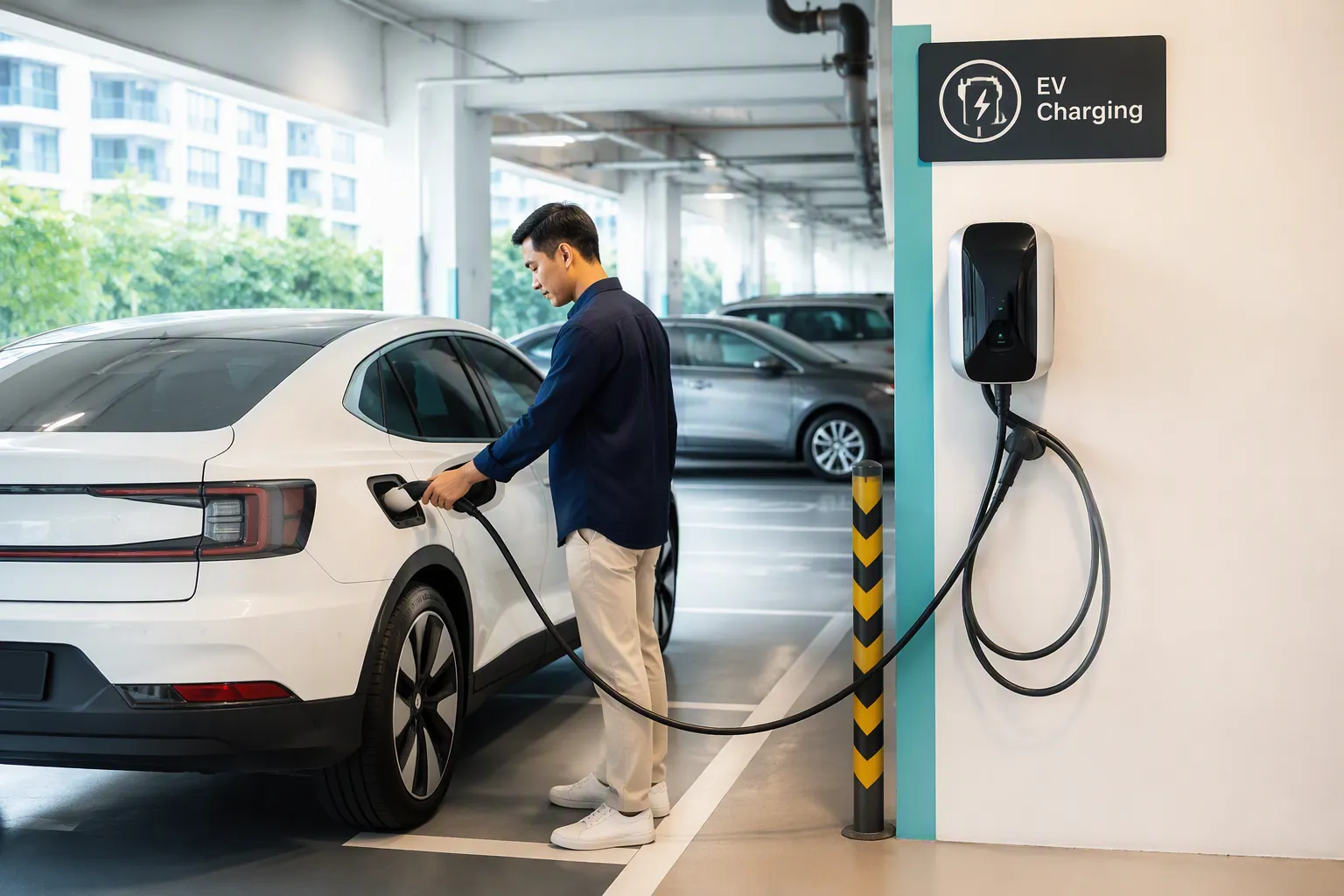

Japanese import electric vehicles often use the J1772 plug, which differs from the standard connectors found at Malaysian charging stations. Drivers encounter ev plug compatibility challenges when they try to connect their EV to a local Chargeur EV. J1772 to type 2 adapters offer a practical solution for seamless charging. With this adapter, owners access Solutions de recharge pour véhicules électriques de divers Fabricants de chargeurs de VE, y compris chargeurs ev portables. The right charger ensures safe charging for every EV.
Charging becomes straightforward when drivers use an adapter designed for both J1772 and Type 2 connections.
EV Plug Compatibility: J1772 vs Type 2
J1772 Connector Overview
Features of J1772 (Type 1)
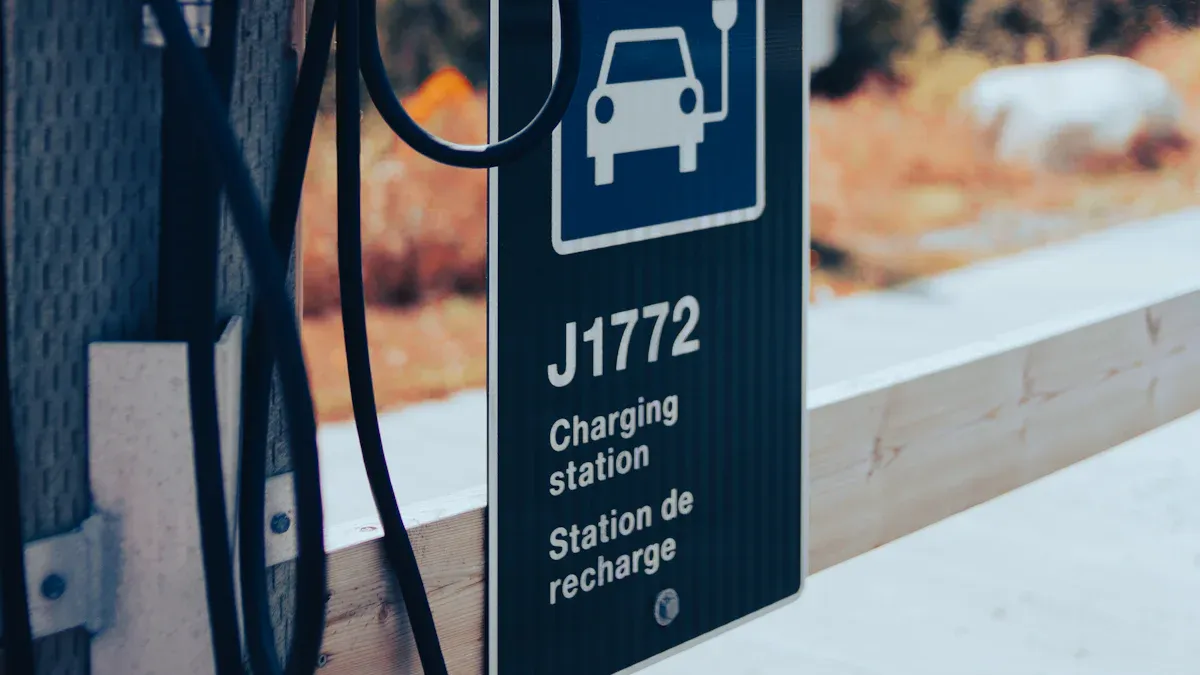
The J1772 connector stands as one of the most common EV plug types for electric vehicles imported from Japan. Manufacturers design the J1772 plug with five pins, supporting single-phase charging only. The connector uses a manual locking clip for secure attachment. Many Japanese EVs, including Tesla models, rely on J1772 for efficient charging. The plug features high-grade, weather-resistant materials, weighs about 0.2kg, and offers enhanced safety through over-current protection and short-circuit prevention. Owners benefit from a simple plug-and-play design, which ensures easy connection and reliable performance.
| Feature/Specification | Description |
|---|---|
| Type de connecteur | Type1 J1772 to Tesla |
| Matériau | High-grade, weather-resistant plastic and metal components |
| Poids | 0.2kg |
| Compatibilité | Tesla Model X, Model Y, Model 3, and Model S |
| High-Quality Construction | Durable, weather-resistant materials for long-lasting performance |
| Efficient Charging | Facilitates fast and efficient charging to reduce downtime |
| Sécurité renforcée | Over-current protection and short-circuit prevention |
Japanese Import EVs and J1772
Japanese import EVs typically use the J1772 plug. This standard dominates North America, Japan, and Taiwan. Owners in Malaysia often face ev plug compatibility issues because local charging stations use a different connector. To resolve compatibility, drivers must purchase adapters that bridge J1772 and Type 2 plug standards.
Type 2 Connector Overview
Features of Type 2
The Type 2 plug, also known as Mennekes, features seven pins and supports both single-phase and three-phase charging. The plug uses an automatic locking mechanism, which increases safety and convenience. Type 2 offers a maximum charging capacity of up to 22 kW, making it suitable for faster charging sessions. The connector adheres to the EN 62196 standard, which ensures compatibility across many EV models in Europe and Malaysia.
Malaysian Charger Infrastructure
Malaysia’s charging stations primarily use the Type 2 plug. This infrastructure supports both AC and DC charging, thanks to the combined charging system (CCS). The widespread adoption of Type 2 in Malaysia means Japanese import EV owners must use adapters to achieve ev plug compatibility. Charging stations in Malaysia provide reliable power and performance, but only when the vehicle’s plug matches the charger.
Compatibility Differences
Physical Design
J1772 and Type 2 plugs differ in pin layout and locking mechanisms. J1772 uses five pins and a manual clip, while Type 2 features seven pins and an automatic lock. These physical differences create compatibility challenges for Japanese import EVs at Malaysian charging stations.
| Fonctionnalité | J1772 (Type 1) | Type 2 |
|---|---|---|
| Pin Layout | 5 pins | 7 pins |
| Mécanisme de verrouillage | Manual locking clip | Automatic locking mechanism |
Vitesse et puissance de recharge
Type 2 plug supports higher charging speeds, with capacities up to 22 kW. J1772 offers up to 7.4 kW. The difference in charging speed impacts how quickly drivers can recharge their EVs. Type 2’s three-phase support allows for more efficient charging, especially at public charging stations.
Utilisation régionale
J1772 dominates in North America, Japan, and Taiwan. Type 2 leads in Europe and Malaysia. These regional preferences influence charger infrastructure and compatibility. Japanese import EV owners in Malaysia must address ev plug compatibility by using adapters, ensuring their vehicles can connect to local charging stations.
Owners should always check plug compatibility before visiting a charger to avoid charging delays.
J1772 to Type 2 Adapters: How They Work
Adapter Functionality
Connecting J1772 to Type 2 Chargers
J1772 to type 2 adapters bridge the gap between Japanese import EVs and Malaysian charging stations. The adapter connects the J1772 plug on the vehicle to the Type 2 socket found at most local chargers. Drivers insert the J1772 plug into the adapter, then attach the adapter to the Type 2 charger. This process enables seamless charging, allowing the vehicle to draw power from the station without compatibility issues. The adapter ensures that the physical connection matches both plug types, making it possible for Japanese EVs to access Malaysia’s charging infrastructure.
Power and Communication Handling
The adapter manages both power transfer and communication between the vehicle and the charger. It translates the signals from the J1772 plug to the Type 2 charger, ensuring proper handshake and safety protocols. The adapter supports single-phase charging, which matches the capabilities of most Japanese EVs. It also handles the communication required for charging authorization and session monitoring. The adapter maintains the integrity of the charging process, preventing errors and interruptions. This level of functionality allows drivers to use public charging stations confidently.
Compatibility with EVs and Chargers
Supported Japanese Import EV Models
Many Japanese import EVs rely on the J1772 plug for charging. Models such as Nissan Leaf, Mitsubishi Outlander PHEV, and certain Tesla vehicles use the sae j1772 plug. The adapter supports these vehicles, ensuring compatibility with Malaysian charging stations. Owners of Japanese EVs benefit from the adapter’s ability to connect their vehicles to Type 2 chargers, eliminating the need for specialized infrastructure.
Supported Malaysian Charging Stations
Malaysian charging stations primarily feature Type 2 sockets. The adapter allows Japanese EVs to use these stations without modification. Drivers can access both public and private chargers, including portable units. The adapter works with most level 2 charging stations, providing flexibility and convenience. Compatibility extends to stations from various manufacturers, making the adapter a versatile solution for EV owners.
Tip: Always check the compatibility of your EV charging plugs and charging stations before starting a session.
Safety and Limitations
Dispositifs de sécurité intégrés
J1772 to type 2 adapters incorporate several caractéristiques de sécurité. Manufacturers design the adapter with impact resistance rated to 1m, ensuring durability during daily use. Waterproof protection meets IP54 standards, allowing safe operation in wet conditions. The adapter complies with multiple safety standards, including SAE J2929, ISO 26262, and ECE R100. These features protect both the vehicle and the charger during charging.
- Impact resistance up to 1 meter
- Waterproof protection (IP54)
- Compliance with international safety standards
Power Limits and Restrictions
The adapter supports single-phase charging, which matches the capabilities of most Japanese EVs. Charging speed depends on the vehicle and the charger, with a maximum output typically around 7.4 kW. The adapter cannot increase the charging speed beyond the limits of the J1772 plug or the vehicle’s onboard charger. Drivers must avoid overloading the adapter by checking amperage and voltage ratings before use. The adapter ensures safe operation within these limits, preventing overheating and electrical hazards.
Weather Resistance and Durability
Manufacturers build the adapter with high-grade materials to withstand harsh environments. The adapter meets protection classes such as IP6K9K and IP6K7, offering resistance to dust and water. Operating temperature ranges from -40°C to 105°C, making the adapter suitable for Malaysia’s climate. The adapter’s robust construction ensures long-lasting performance, even with frequent use at outdoor charging stations.
| Standard | Description |
|---|---|
| SAE J1772 | North American standard for electrical connectors for electric vehicles. |
| IEC 61851-1 | International standard for EV conductive charging systems. |
| SAE J2929 | Electric and Hybrid Vehicle Propulsion Battery System Safety. |
| ISO 26262 | Road Vehicles – Functional safety standard. |
| ISO 6469-3 | Safety specifications for electric road vehicles. |
| ECE R100 | Protection against electric shock standard. |
| IEC 61000 | Electromagnetic Compatibility (EMC) standard. |
| IEC 61851-21 | Requirements for conductive connection to AC/DC supply for electric vehicles. |
| IEC 60950 | Safety of Information Technology Equipment standard. |
| UL 2202 | Standard for Electric Vehicle (EV) Charging System Equipment. |
| FCC Part 15 B | EMC emission measurement services for information technology equipment. |
| IP6K9K, IP6K7 | Protection classes for environmental resistance. |
| Temperature Range | Operating temperature range from -40°C to 105°C. |
Note: The adapter must meet these standards to ensure safe and reliable charging for electric vehicles.
Choosing the Right J1772 to Type 2 Adapter
Key Features for Compatibility
Amperage and Voltage Ratings
First-time EV owners often overlook amperage and voltage ratings when selecting j1772 to type 2 adapters. These ratings determine the maximum power that the adapter can safely handle during charging. Most Japanese import electric vehicles support 240V AC single-phase charging at 16A, which delivers up to 3.7kW per hour. Owners should always match the adapter’s ratings with their vehicle’s requirements to ensure safe and efficient charging at any station.
Cable Length and Build Quality
Cable length and build quality play a crucial role in daily use. A longer cable offers flexibility at public charger locations, especially when the charging station’s plug is not close to the vehicle’s port. High-quality materials, such as weather-resistant plastics and robust electrical connections, increase durability and safety. Universal adapters with IP55 waterproof ratings withstand Malaysia’s humid climate and frequent rain, making them ideal for outdoor charging stations.
Certification and Standards
Certification ensures that the adapter meets international safety and performance standards. TPSON and other reputable brands design universal adapters that comply with IEC 61851, SAE J1772, and other relevant standards. These certifications guarantee compatibility with both ac ev charging and dc ev charging connectors. Owners should always check for certification marks before purchasing to avoid compatibility issues and ensure reliable charging.
Tip: Use a compatibility checklist to confirm that the adapter supports your EV model, charging connectors, and local charging stations.
| Fonctionnalité | Description |
|---|---|
| Compatibilité universelle | Fully compatible with all UK and European standard charging points, ensuring seamless connection. |
| Performance | Supports 240V AC Single Phase and 16A, charging at up to 3.7KW per hour for efficient performance. |
| Caractéristiques de sécurité | Designed for durability with IP55 waterproof rating and robust electrical connections for safety. |
| Ease of Use | Plug-and-play design for simple operation without vendor lock-in or app registrations. |
Where to Buy Adapters in Malaysia
Local Retailers
Many local retailers in Malaysia stock universal adapters for j1772 charging connectors. These stores often provide hands-on advice for first-time EV owners and allow buyers to inspect the plug and cable quality before purchase. TPSON offers advanced solutions through authorized dealers, ensuring reliable compatibility and after-sales support.
Online Marketplaces
Online marketplaces provide a wide selection of universal adapters for various charging connectors. Shoppers can compare prices, read product specifications, and select adapters that match their EV plug compatibility needs. Most platforms offer fast delivery to major cities and towns, making it convenient for EV owners to access the right adapter.
Importing from Overseas
Some owners choose to import universal adapters from overseas suppliers. This option expands the range of available products, including specialized adapters for unique charging connectors. Buyers should verify certification and compatibility with Malaysian charging stations before importing to avoid issues with level 2 charging or dc ev charging.
Price Range and Warranty
Typical Costs
The price of a J1772 to Type 2 adapter varies based on features and build quality. In Malaysia, the cost typically starts at $84.00 for a basic Type 1 to Type 2 EV car adapter. Universal adapters with tethered cables range from £76.67 to £130.40, depending on cable length and additional safety features.
- Type 1 to Type 2 EV Car Adapter: $84.00
- Type 2 Tethered Cable: £76.67 – £130.40
Garantie et assistance
Warranty and support provide peace of mind for first-time EV owners. Leading brands like TPSON offer warranties that cover manufacturing defects and ensure long-term reliability. Buyers should always check warranty terms and available support channels before purchasing an adapter for their charging station.
Note: Reliable warranty and support help maintain safe and efficient charging for all electric vehicles.
Step-by-Step Guide: Using J1772 to Type 2 Adapters
Preparing Your EV and Adapter
Inspecting the Adapter
Before starting any charging session, drivers should inspect the adapter for signs of damage or wear. They check the plug ends for cracks, bent pins, or corrosion. A clean and intact adapter ensures safe operation and maintains ev plug compatibility. Drivers verify that the locking mechanism functions smoothly. They also confirm that the waterproof seals remain intact. A quick inspection prevents unexpected issues at charging stations.
Checking Your EV’s Charging Port
Drivers examine the charging port on their EV for debris or moisture. They look for any obstructions that could interfere with the plug connection. A clean charging port allows the adapter to fit securely. Drivers confirm that the port matches the j1772 standard. They check for any signs of wear or loose fittings. Proper preparation ensures reliable compatibility and efficient charging.
Connecting to a Charger
Plugging in the Adapter
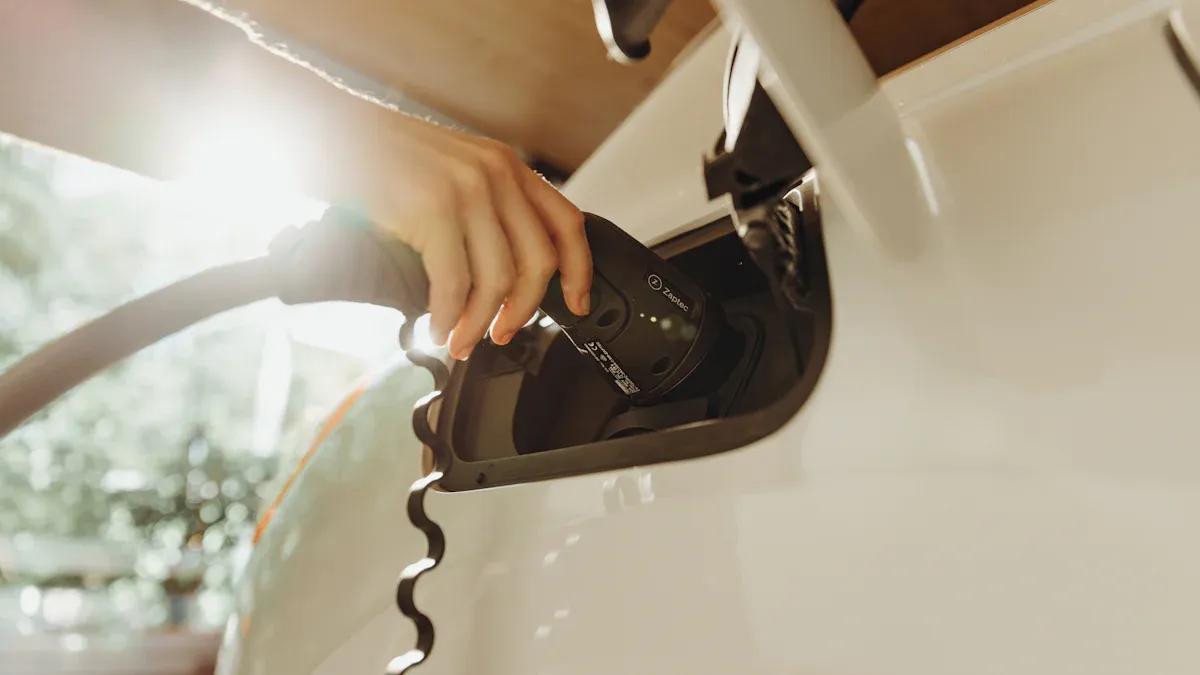
Drivers align the j1772 plug with the adapter and insert it firmly. They listen for a click that signals a secure connection. Next, they connect the adapter to the Type 2 charger at the station. The plug must fit tightly to prevent interruptions during charging. Drivers check that both ends lock in place. A secure connection supports safe power transfer and communication between the EV and the charger.
Starting the Charging Session
After connecting the adapter, drivers activate the charging station. They follow the instructions on the station’s display or app. The charger initiates a handshake with the EV through the adapter. Drivers monitor the station for confirmation that charging has started. They check the EV dashboard for charging indicators. A successful session begins when both the station and the vehicle display active charging status.
Tip: If the charging session does not start, drivers should recheck all plug connections and consult the station’s troubleshooting guide.
Safe Operation Tips
Suivi des progrès de la tarification
Drivers monitor the charging progress using the EV dashboard or the station’s display. They check the charging speed and estimated completion time. If the station supports notifications, drivers enable alerts for charging status updates. Regular monitoring helps detect any interruptions or errors early.
Disconnecting Safely
When charging completes, drivers stop the session using the station controls. They unlock the plug from the charger and adapter. Drivers remove the adapter from the EV charging port. They avoid pulling on the cable to prevent damage. Safe disconnection protects both the adapter and the vehicle’s charging port.
Storing the Adapter Properly
Drivers store the adapter in a dry, secure location after use. They avoid exposure to extreme temperatures or moisture. Proper storage extends the adapter’s lifespan and maintains reliable compatibility. Drivers keep the adapter in a dedicated case or compartment to prevent accidental damage.
| Étape | Action |
|---|---|
| Inspect Adapter | Check for damage, clean plug ends, verify locking mechanism |
| Check Charging Port | Remove debris, confirm j1772 standard, inspect for wear |
| Connect Adapter | Align plug, insert firmly, lock both ends |
| Start Charging | Activate station, monitor dashboard, confirm charging status |
| Monitor Progress | Check speed, enable alerts, watch for errors |
| Disconnect Safely | Stop session, unlock plug, remove adapter carefully |
| Store Adapter | Keep dry, use case, avoid extreme conditions |
Note: Following these steps ensures safe and efficient charging at all Malaysian charging stations.
Common Mistakes with Compatibility
Drivers often encounter issues when connecting Japanese import EVs to Malaysian charging stations. Understanding common mistakes helps prevent disruptions and ensures safe charging sessions. The following analysis highlights frequent errors related to plug compatibility and provides practical guidance.
Using the Wrong Adapter Type
Selecting the correct adapter remains essential for successful charging. Many owners mistakenly purchase adapters designed for different plug standards. For example, a Type 2 to Type 1 adapter will not fit a J1772 plug. This mismatch prevents the EV from connecting to the station and may damage the charging port. He should always verify the plug type before buying an adapter. A compatibility chart assists in matching the vehicle’s plug with the station’s socket.
| Type de fiche | Compatible Adapter Needed | Result of Wrong Adapter |
|---|---|---|
| J1772 (Type 1) | J1772 to Type 2 | No charging possible |
| Type 2 (Mennekes) | Type 2 to J1772 | No charging possible |
Tip: He should check the plug shape and pin configuration before purchasing any adapter.
Overloading the Adapter
Overloading occurs when the charging station supplies more power than the adapter can handle. Some drivers connect their EV to high-capacity stations without checking the adapter’s amperage and voltage ratings. This mistake leads to overheating, electrical faults, or even permanent damage to the plug and charging port. She must always match the adapter’s specifications with the station’s output and the vehicle’s requirements. Monitoring the charging session prevents accidental overloads.
- Check the adapter’s maximum amperage rating.
- Confirm the station’s power output.
- Monitor the plug for signs of heat during charging.
Alert: Overloading the adapter can void warranties and compromise safety.
Ignoring Weather Conditions
Weather conditions affect the performance and safety of charging equipment. Many drivers ignore rain, humidity, or extreme temperatures when connecting the plug to the station. Moisture can enter the charging port, causing corrosion or electrical shorts. He should use adapters with proper waterproof ratings and store them in dry locations. She must avoid charging outdoors during heavy rain unless the adapter meets high-level protection standards.
| Weather Condition | Risk to Plug and Adapter | Action recommandée |
|---|---|---|
| Rain | Water ingress | Use waterproof adapter |
| Humidité | Corrosion | Store adapter in dry place |
| Extreme Heat | Material degradation | Avoid charging midday |
Note: Always inspect the plug and adapter for moisture or debris before starting a charging session.
Drivers who avoid these mistakes achieve reliable compatibility and extend the lifespan of their charging equipment. He should remain vigilant during every charging session and follow manufacturer guidelines for safe operation.
Troubleshooting J1772 to Type 2 Adapter Issues
Adapter Not Recognized by Charger
Causes possibles
Un chargeur peut ne pas reconnaître l'adaptateur J1772 vers Type 2 pour plusieurs raisons. Il doit vérifier la présence de logiciels obsolètes soit sur le véhicule, soit sur la borne de recharge. Un firmware défectueux peut empêcher une communication correcte entre la prise et le chargeur. Les dommages physiques, tels que des boîtiers fissurés ou des broches corrodées, perturbent souvent la connexion. Un câblage desserré à l'intérieur de l'adaptateur ou de la prise peut également causer des problèmes de reconnaissance. Les facteurs environnementaux, y compris la poussière ou l'humidité, peuvent interférer avec les contacts électriques.
- Logiciel ou firmware obsolète
- Dommage physique à la prise ou à l'adaptateur
- Câblage desserré ou endommagé
- Poussière ou humidité dans le port de recharge
Solutions rapides
Elle peut résoudre la plupart des problèmes de reconnaissance par des étapes simples. Tout d'abord, elle doit mettre à jour le firmware du véhicule et de la borne de recharge vers la dernière version. Ensuite, elle doit inspecter la prise et l'adaptateur pour détecter tout dommage visible. Nettoyer le port de recharge avec un chiffon sec élimine la poussière et l'humidité. Si le câblage semble desserré, il doit consulter un technicien pour réparation. Redémarrer le chargeur rétablit parfois une communication correcte.
Conseil : Une maintenance régulière et des mises à jour logicielles aident à prévenir les problèmes de reconnaissance aux bornes de recharge.
Arrêt inattendu de la charge
Diagnostic du problème
Les interruptions de recharge peuvent frustrer les propriétaires de véhicules électriques. Il doit commencer par vérifier la prise pour détecter tout dommage physique. Des boîtiers fissurés ou des broches corrodées provoquent souvent l'arrêt de la recharge. Un câblage desserré à l'intérieur de l'adaptateur peut entraîner un flux de courant intermittent. Un logiciel obsolète sur le véhicule ou le chargeur peut également déclencher des arrêts inattendus. Les facteurs environnementaux, tels que la poussière ou l'humidité, peuvent affecter le port de recharge et interrompre la session.
| Cause | Action de diagnostic |
|---|---|
| Dommage physique | Inspecter la prise et l'adaptateur |
| Câblage desserré | Vérifier les connexions internes |
| Logiciel obsolète | Mettre à jour le firmware |
| Facteurs environnementaux | Nettoyer le port de recharge |
Que faire ensuite ?
Elle doit traiter la cause racine avant de redémarrer la session. Si un dommage physique existe, elle doit remplacer la prise ou l'adaptateur. Pour un câblage desserré, il doit rechercher une réparation professionnelle. Mettre à jour le firmware à la fois sur le véhicule et le chargeur assure la compatibilité. Nettoyer le port de recharge élimine les contaminants environnementaux. Après avoir résolu le problème, il peut reconnecter l'adaptateur et reprendre la recharge.
Alerte : Ignorer des interruptions répétées peut entraîner des dommages permanents à la prise ou à l'adaptateur.
Dommage ou usure physique
Signes à surveiller
Les dommages ou l'usure physique réduisent la fiabilité de l'adaptateur J1772 vers Type 2. Il doit rechercher des fissures dans le boîtier de la prise, des broches pliées ou corrodées et des câbles effilochés. Elle peut remarquer une difficulté à verrouiller la prise dans le chargeur. Une décoloration ou une fusion près de la prise indique une surchauffe. Une inspection de routine aide à identifier ces problèmes tôt.
- Boîtier de prise fissuré
- Broches pliées ou corrodées
- Câbles effilochés ou endommagés
- Difficulté à verrouiller la prise
- Décoloration ou fusion
Quand remplacer l'adaptateur
Il doit remplacer l'adaptateur si des signes de dommage apparaissent. Des interruptions de recharge persistantes, même après nettoyage et mise à jour du logiciel, suggèrent des défauts internes. Elle doit éviter d'utiliser des adaptateurs présentant une usure visible pour prévenir les risques de sécurité. L'achat d'un nouvel adaptateur garantit une recharge fiable à tous les niveaux de bornes de recharge.
Note : Le remplacement en temps opportun des adaptateurs endommagés protège le véhicule électrique et maintient un fonctionnement sûr.
Conseils pratiques pour les propriétaires de véhicules électriques d'importation japonaise
Planifier les arrêts de recharge pour la compatibilité
Trouver des chargeurs compatibles
Il doit toujours planifier à l'avance avant de commencer un voyage avec un véhicule électrique d'importation japonaise. De nombreuses bornes de recharge en Malaisie utilisent la prise Type 2, il doit donc confirmer la compatibilité avec le connecteur J1772 de son véhicule. Les propriétaires peuvent vérifier les détails des stations en ligne ou visiter les sites Web des fabricants pour des informations actualisées. Certaines stations affichent les types de prises et les niveaux de puissance sur leurs applications ou leur signalétique. Une vérification rapide l'aide à éviter des retards inutiles et assure une expérience de recharge fluide.
| Nom de la station | Type de fiche | Niveau de puissance | Localisation |
|---|---|---|---|
| ChargeNow KL | Type 2 | AC 22 kW | Kuala Lumpur |
| EV Connection JB | Type 2 | AC 7.4 kW | Johor Bahru |
| GreenTech Penang | Type 2 | AC 11 kW | Penang |
Utiliser des applications de recharge
Elle peut utiliser des applications de recharge pour localiser des stations compatibles. Des applications comme PlugShare et ChargEV fournissent des mises à jour en temps réel sur la disponibilité des stations et les types de prises. Ces plateformes permettent aux utilisateurs de filtrer par normes de connecteur et niveaux de puissance. Il peut définir des alertes pour les stations à proximité et consulter les avis d'autres propriétaires de véhicules électriques. Les applications de recharge simplifient la planification d'itinéraire et aident les conducteurs à maximiser l'efficacité lors de longs trajets.
Astuce : Les applications de recharge incluent souvent des évaluations et des photos d'utilisateurs, facilitant l'identification de stations fiables.
Garder un adaptateur de secours J1772 vers Type 2
Pourquoi c'est utile
Un adaptateur de secours offre une tranquillité d'esprit aux propriétaires de véhicules électriques d'importation japonaise. Il peut rencontrer des problèmes inattendus avec l'adaptateur principal, tels que des dommages physiques ou un dysfonctionnement. Avoir une pièce de rechange garantit un accès ininterrompu aux bornes de recharge, surtout lors de longs trajets ou dans des endroits éloignés. Elle évite les retards et maintient une flexibilité lors du passage entre différents types de chargeurs.
Pratiques de stockage recommandées
Il doit stocker l'adaptateur de secours dans un étui dédié pour le protéger de l'humidité et de la poussière. L'étui doit tenir en toute sécurité dans le coffre ou la boîte à gants du véhicule. Elle vérifie régulièrement l'adaptateur pour détecter des signes d'usure et le garde à l'écart des températures extrêmes. Un stockage approprié préserve la durabilité de l'adaptateur et garantit une compatibilité fiable à chaque arrêt de recharge.
- Utiliser un étui étanche pour le stockage.
- Inspecter l'adaptateur mensuellement.
- Évitez de placer des objets lourds sur le boîtier.
Se tenir informé des infrastructures de recharge
Nouvelles évolutions en Malaisie
Il doit se tenir informé des nouvelles stations de recharge et des mises à niveau des infrastructures. Les autorités malaisiennes et les groupes industriels de véhicules électriques annoncent les nouveaux emplacements et niveaux de puissance via des communiqués de presse et les réseaux sociaux. Elle suit les canaux officiels pour connaître les stations dotées de fonctionnalités avancées, telles qu'une recharge plus rapide ou une meilleure compatibilité des prises. Se tenir informé aide les propriétaires à planifier leurs trajets et à accéder aux dernières technologies.
Rejoindre les communautés locales de véhicules électriques
Elle bénéficie de l'adhésion aux communautés locales de véhicules électriques et aux forums en ligne. Ces groupes partagent des expériences de première main, des évaluations de stations et des conseils de dépannage. Il peut poser des questions sur la compatibilité des chargeurs et recevoir des conseils de propriétaires expérimentés. L'implication communautaire favorise le partage des connaissances et permet aux conducteurs de rester informés des changements d'infrastructure.
Remarque : Une participation active aux communautés de véhicules électriques aide les propriétaires à s'adapter à l'évolution de la technologie et à maintenir des pratiques de recharge optimales.
- Les conducteurs en Malaisie peuvent facilement alimenter les véhicules électriques japonais importés avec des adaptateurs J1772 vers Type 2. Les adaptateurs de qualité assurent la compatibilité à tous les niveaux de l'infrastructure publique. La recharge sécurisée devient une routine lorsque les propriétaires suivent les meilleures pratiques.
- Avec les bonnes connaissances, chaque propriétaire de véhicule électrique peut utiliser en toute confiance le réseau de recharge malaisien.
- Qu'est-ce qu'un adaptateur J1772 vers Type 2 ?.
Un adaptateur J1772 vers Type 2 connecte les véhicules électriques japonais importés équipés de prises J1772 aux stations de recharge malaisiennes utilisant des prises Type 2. L'adaptateur permet une recharge transparente et assure la compatibilité entre les différents standards de prise.
FAQ
Quels modèles de véhicules électriques japonais prennent en charge les adaptateurs J1772 vers Type 2 ?
Il peut utiliser l'adaptateur avec la Nissan Leaf, la Mitsubishi Outlander PHEV et certains modèles Tesla importés du Japon. L'adaptateur fonctionne avec la plupart des véhicules électriques japonais équipés d'une prise de recharge J1772.
Les adaptateurs J1772 vers Type 2 sont-ils sûrs pour la recharge en extérieur ?
Les fabricants conçoivent des adaptateurs avec des indices de protection contre l'eau tels que IP54 ou IP55. Elle peut recharger en toute sécurité à l'extérieur si l'adaptateur répond à ces normes. Inspectez toujours l'adaptateur pour détecter d'éventuels dommages avant utilisation.
Astuce : Rangez l'adaptateur dans un étui sec après la recharge pour prolonger sa durée de vie.
À quelle vitesse un véhicule électrique japonais importé peut-il se recharger avec l'adaptateur ?.
La vitesse de recharge dépend du véhicule et de la station. La plupart des adaptateurs prennent en charge jusqu'à 7,4 kW pour la recharge monophasée. Il doit vérifier les spécifications du chargeur embarqué du véhicule électrique pour connaître la vitesse maximale prise en charge.
Où les propriétaires peuvent-ils acheter des adaptateurs J1772 vers Type 2 en Malaisie ?
Elle peut acheter des adaptateurs auprès de détaillants locaux de véhicules électriques, sur des places de marché en ligne, ou les importer de fournisseurs étrangers. Vérifiez toujours les certifications et la compatibilité avec les stations de recharge malaisiennes avant l'achat. Que doivent faire les conducteurs si l'adaptateur cesse de fonctionner ?.
| Type d'adaptateur | Puissance de sortie maximale |
|---|---|
| J1772 to Type 2 | 7,4 kW |
Il doit inspecter l'adaptateur pour détecter des dommages physiques, vérifier les connexions desserrées et nettoyer la prise de recharge. Si les problèmes persistent, contactez le fabricant ou remplacez l'adaptateur pour garantir une recharge sécurisée.
Les conducteurs peuvent-ils utiliser l'adaptateur dans toutes les stations de recharge malaisiennes ?.
La plupart des stations publiques équipées de prises Type 2 prennent en charge l'adaptateur. Elle doit vérifier les détails de la station via des applications ou sites web de recharge pour confirmer la compatibilité avant de s'y rendre.
Adaptateurs J1772 vers Type 2 : Un guide pour les véhicules électriques japonais importés en Malaisie 1.
Adaptateurs J1772 vers Type 2 : Un guide pour les véhicules électriques japonais importés en Malaisie 2
Adaptateurs J1772 vers Type 2 : Un guide pour les véhicules électriques japonais importés en Malaisie 3.