
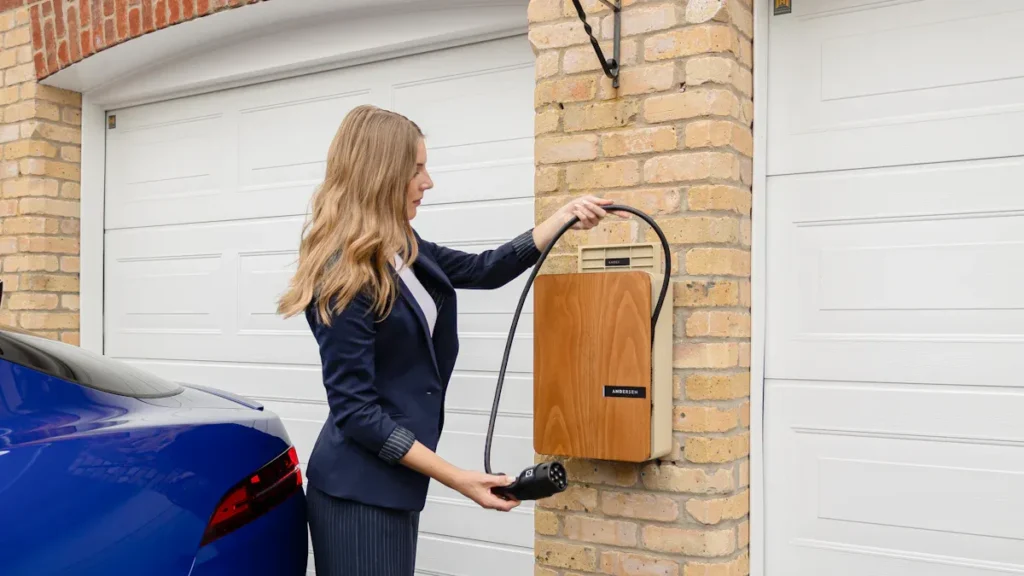

When you install an electric vehicle charger at home, you unlock significant financial advantages. Charging at home usually costs less than public stations or gasoline. The table below shows average annual costs, highlighting the savings you gain with a home electric vehicle charger:
| Méthode de chargement | Average Annual Cost | Savings Compared to Gasoline |
|---|---|---|
| Home EV Charging | $485 | $632 – $1,515 |
| Véhicule à essence | $1,117 | N/A |
Smart electric car charging habits and rebates from Fabricants de chargeurs de VE help you maximize your savings.
Upfront Costs to Install an Electric Vehicle Charger

Electric Car Charger Equipment Costs
Chargement des véhicules électriques de niveau 1 ou de niveau 2
When you consider installing electric car charging stations at home, you need to choose between Level 1 and Level 2 chargers. Level 1 chargers use a standard household outlet and work best for overnight charging. Level 2 chargers require a dedicated 240-volt circuit and deliver faster charging speeds, making them ideal for daily use.
Conseil : Level 2 chargers can add up to 35 miles of range per hour, while Level 1 chargers typically provide only 3-5 miles per hour.
Features That Affect Electric Car Charger Price
The price of electric car charger equipment depends on the type and features you select. You may want a basic model or a smart charger with advanced scheduling and remote monitoring. The table below shows typical price ranges for popular charger types:
| Type de chargeur | Fourchette de prix (€) | Description |
|---|---|---|
| Green’Up reinforced socket | 150 – 300 | Economical option for light users, ideal for overnight charging. |
| Standard 7kW wallboxes | 500 – 800 | Best compromise for most users, charges about 35 km per hour. |
| Smart connected stations | 800 – 1500 | Advanced features, remote scheduling, and optimization for heavy users. |
| Three-phase stations (11-22 kW) | 1200 – 2000 | High-end solution for fast charging, requires installation upgrades. |
If you want the fastest charging speeds, you may need to upgrade your electrical system, which increases the cost to install an electric car charger.
Installation Expenses for Electric Vehicle Charging
Professional Installation vs. DIY for EV Chargers
You can choose to install an Chargeur de VE yourself or hire a professional electrician. Professional installation ensures safety and compliance with local codes. Labor costs for electricians usually range from $40 to $100 per hour. Simple installations typically cost between $800 and $1,300, but prices vary by region. Costs are higher in the Western and Northeastern U.S., while Central and Southeast states offer lower rates.
Electrical Upgrades for Electric Vehicle Charging
If your home’s electrical panel cannot support a Level 2 charger, you may need upgrades. These upgrades can add $200 to $1,000 or more to your total expenses. The complexity of the installation, local labor rates, and the condition of your existing infrastructure all influence the final price. Most homeowners spend between $800 and $2,500 à installer un chargeur de voiture électrique, including equipment and labor.
Comparing Home Installation to Public Electric Car Charging
Convenience vs. Cost of Electric Vehicle Charging
When you install an electric car charger at home, you gain convenience and long-term savings. Charging at home can reduce your costs by 30-50% compared to public stations. Over your vehicle’s lifetime, you may save $6,000 to $10,000. Annual savings range from $506 to $720, especially if you drive long distances. Public charging can be up to three times more expensive for the same amount of electricity.
Remarque : Home charging offers predictable costs and saves you time by eliminating trips to public stations.
Ongoing Savings from Home Electric Car Charging

Home Electric Vehicle Charging vs. Public Charging
Cost Per Kilowatt-Hour for Electric Car Charging
You can save a substantial amount by charging at home instead of using public stations. The cost per kilowatt-hour for home charging can be as low as 10p during off-peak hours. Public charging stations often charge up to 55p per kilowatt-hour for slow or fast charging. This difference means you pay up to 450% more at public stations compared to charging at home.
- Home charging: as low as 10p per kWh (off-peak)
- Public charging: up to 55p per kWh (slow/fast)
- Public charging is generally more expensive due to location-based energy costs and service premiums
If you install an electric vehicle charger at home, you control your charging schedule and avoid the high rates at public stations.
Subscription and Access Fees for Public Charging
Public charging networks often require you to pay subscription or access fees. These fees add to your overall cost and can make public charging less attractive. You may encounter monthly membership charges, connection fees, or minimum usage requirements. Charging at home eliminates these extra expenses, giving you a more predictable and manageable cost structure.
Recharger à domicile helps you avoid hidden fees and gives you full control over your charging routine.
Home Electric Car Charging vs. Gasoline Vehicles
Fuel Cost Comparison: Electric Vehicle Charging vs. Gasoline
Switching from gasoline to electric car charging leads to significant fuel savings. Electric vehicles cost about half as much per mile to operate compared to petrol cars (6p vs 12p). You can save around £600 annually on fuel costs alone. For example, filling a Ford Focus for a year costs about £1,230. Charging a Volkswagen ID.3 at home costs around £630 annually. This difference highlights the financial advantage of charging an electric car at home.
- Electric vehicles: 6p per mile
- Petrol cars: 12p per mile
- Annual savings: approximately £600
Maintenance Savings with Electric Vehicle Charging
Electric vehicles require less maintenance than gasoline vehicles. You avoid oil changes, exhaust repairs, and many other routine services. The table below shows the lifetime maintenance costs for both vehicle types:
| Type de véhicule | Lifetime Maintenance Costs | Différence de coût |
|---|---|---|
| Véhicules Électriques | $4,600 | -$4,600 |
| Véhicules essence | $9,200 | N/A |
You can expect a 50% reduction in maintenance costs when you drive an electric vehicle. Lower maintenance expenses add to your overall savings and make electric car charging a smart choice.
| Type de véhicule | Maintenance Cost Reduction |
|---|---|
| Véhicules Électriques | 50% lower |
| Véhicules essence | N/A |
Long-Term Financial Benefits of Installing an EV Charger
Predictable Monthly Costs for Electric Car Charging
When you install an electric vehicle charger at home, you benefit from predictable monthly costs. You avoid fluctuating fuel prices and unexpected public charging fees. You can monitor your electricity usage and set charging schedules to take advantage of off-peak rates. This control helps you manage your budget and plan your expenses with confidence.
Reduced Wear and Tear from Home Charging
Charging at home reduces wear and tear on your vehicle. You avoid frequent trips to public stations and minimize unnecessary driving. You also protect your battery by using consistent charging routines. Over time, these habits extend your vehicle’s lifespan and lower your total cost of ownership.
- Installing a home EV charger can increase your property value by attracting environmentally conscious and tech-savvy buyers.
- Properties with EV charging stations are becoming expected features in modern homes, enhancing market appeal.
- Compliance with government incentives reduces installation costs and aligns with sustainability goals, further increasing property value.
If you install an electric vehicle charger, you not only save money on fuel and maintenance, but you also boost your home’s value and appeal.
Government Incentives and Rebates for Installing an EV Charger
Federal Incentives for Electric Vehicle Charging
Tax Credits for Installing an Electric Car Charger
You can reduce your upfront costs when you install an electric vehicle charger by taking advantage of federal tax credits. The federal government offers a tax credit worth up to 30% of your total installation expenses, capped at $1,000 per home. This credit covers the cost of Level 2 home chargers, electrical panel upgrades, and professional installation. You must install the equipment and place it in service by December 31, 2032. To claim this benefit, you need to complete IRS Form 8911.
- The tax credit applies to your principal residence.
- You can include labor and property directly related to the charger.
- The maximum credit is $1,000 per charging port.
Eligibility Requirements for EV Charger Incentives
Before you apply for federal incentives, you should review the eligibility criteria. The table below outlines the most common requirements:
| Type d'exigence | Détails |
|---|---|
| Vehicle Requirements | Must meet criteria like battery capacity, weight rating, and sourcing of components. MSRP limits apply. |
| Buyer Requirements | Income limitations, e.g., MAGI above $150,000 for single filers may disqualify buyers. |
| Phase-Outs | Manufacturers had caps on eligible vehicles, now linked to supply chain criteria. |
| Used EV Credit | Up to $4,000 available if vehicle meets age and price requirements and buyer meets income thresholds. |
You should confirm your eligibility before you install an ev charger to ensure you qualify for the available tax credits.
State and Local Rebates for Electric Vehicle Charging
Regional Programs for Electric Car Charger Installation
Many states and local agencies offer rebates to help offset the cost of installing electric car charging stations. The table below highlights some of the highest rebate amounts available:
| State/Provider | Montant du remboursement |
|---|---|
| Central Electric Co-op | Up to $150 |
| Consumers Power Inc. | $400 |
| Douglas Electric Cooperative | $250 |
| Eugene Water & Electric Board | Jusqu'à $500 |
| Lane Electric Cooperative | $500 |
| Pacific Power | Jusqu'à $1,500 |
| Portland General Electric | $300 (up to $1,000 for income-qualified) |
| Commission des services publics de Springfield | Jusqu'à $500 |
| Tillamook PUD | $250 |
| Umatilla Electric Cooperative | $200 |
| Pennsylvania Department of Environmental Protection | Jusqu'à $2 000 |
| National Grid | Up to $1,400 |

Utility Company Offers for Electric Vehicle Charging
Utility companies also provide rebates and special programs to encourage you to install a home ev charger. These programs can cover a significant portion of your installation costs. For example, California’s SGIP and utility programs offer up to $800, while Colorado’s Xcel Energy rebate provides up to $1,500 for qualifying households. Massachusetts, New York, and Texas also have programs ranging from $250 to $1,000. Some programs target income-qualified customers, increasing accessibility.

Vous pouvez cumuler les remises fédérales, nationales et des services publics pour économiser entre 500 $ et 1 500 $, certains programmes couvrant jusqu'à 75 % de vos dépenses totales.
Comment demander les incitations au recharge de véhicule électrique
Documents nécessaires pour les remises sur borne de recharge VE
Lorsque vous demandez une remise ou une incitation, vous devez rassembler des documents spécifiques. Le tableau ci-dessous liste les exigences typiques :
| Type de document | Description |
|---|---|
| Preuve d'achat | Contrat de vente, facture d'achat ou contrat de location. |
| Détails du véhicule | N° d'identification du véhicule (VIN), marque, modèle, année. |
| Données personnelles | Permis de conduire, justificatif de domicile, preuves de revenus. |
| Reçus pour l'équipement de recharge | Reçus pour l'installation de la borne domestique si vous réclamez une remise. |
Vous devez conserver tous les reçus et documents liés à votre achat et installation.
Processus de demande pour les incitations à la borne de recharge de voiture électrique
Pour demander des incitations, suivez ces étapes :
- Vérifiez les critères d'éligibilité de chaque programme.
- Rassemblez tous les documents nécessaires.
- Remplissez les formulaires de demande requis, comme le formulaire IRS 8911 pour le crédit d'impôt fédéral.
- Soumettez votre demande en ligne ou par courrier, selon le programme.
- Suivez l'état de votre demande et répondez à toute demande d'informations complémentaires.
Astuce : Démarrez votre demande peu après l'installation des bornes de recharge pour voiture électrique afin de ne pas manquer les délais.
Conseils pratiques pour maximiser vos économies lors de l'installation d'une borne de recharge VE
Recharger pendant les heures creuses pour la recharge de véhicule électrique
Tarifs électriques à heures variables pour la recharge de voiture électrique
Vous pouvez Maximisez vos économies en rechargeant votre VE pendant les heures creuses. De nombreux fournisseurs proposent des tarifs à heures variables, ce qui signifie que l'électricité coûte moins cher tard le soir ou tôt le matin. Recharger entre minuit et 5 heures du matin peut réduire vos coûts de jusqu'à 70% par rapport aux heures de pointe. Le tableau suivant montre combien vous pouvez économiser par recharge :
| Temps de charge | Coût par recharge complète | Économies par recharge |
|---|---|---|
| Heures creuses (0h – 5h) | £4-5 | £10-12 |
| Pic | £15-16 | N/A |
Les tarifs spécialisés VE peuvent réduire votre prix jusqu'à 6,7 pence par kWh. En rechargeant systématiquement à ces heures, vous pouvez économiser des centaines de livres chaque année.
Programmer les recharges pour des économies maximales
La plupart des bornes et VE modernes permettent de programmer les recharges. Vous pouvez configurer votre borne pour qu'elle démarre automatiquement pendant les heures creuses. Cette stratégie garantit de toujours bénéficier des tarifs les plus bas. Les applications de recharge intelligente aident à suivre votre consommation et à optimiser votre routine de recharge. Vous pouvez aussi comparer les tarifs des fournisseurs pour trouver la meilleure offre pour votre foyer.
Astuce : Utilisez la télématique pour surveiller votre consommation en kWh et éviter le gaspillage d'énergie.
Choisir la bonne borne de recharge pour voiture électrique selon vos besoins
Évaluer les habitudes de conduite quotidiennes pour la recharge de véhicule électrique
Le choix de la borne dépend de vos habitudes de conduite. Si vous parcourez de courtes distances quotidiennement, une borne de faible puissance peut suffire. Pour des trajets plus longs ou des déplacements fréquents, une borne de niveau 2 offre une recharge plus rapide et plus efficace. Prenez en compte les facteurs suivants :
| Facteur | Description |
|---|---|
| Habitudes de conduite | Adaptez la puissance de la borne à votre kilométrage quotidien (3,6 kW, 7 kW ou 22 kW). |
| Espace disponible | Assurez-vous que votre domicile a assez d'espace et de capacité électrique pour l'installation. |
| Entrée de gamme | Coût. |
| Vitesse de chargement | Les bornes coûtent entre 350 £ et 1 500 £ ; équilibrez coût et fonctionnalités. |
| Type de connecteur | Compatibilité du véhicule. |
| Exigences en matière d'installation | Sélectionnez une borne compatible avec les capacités de votre véhicule. |
Vérifiez la compatibilité avec la prise de recharge de votre VE.
Installation électrique, Vérifiez l'installation électrique de votre domicile et les normes de sécurité.. Préparer l'avenir de votre installation de recharge pour voiture électrique.
Vous devriez anticiper vos besoins futurs lors de l'installation. Choisissez un modèle avec des fonctions de surveillance et de contrôle à distance. Les bornes intelligentes peuvent vous aider à économiser l'énergie et réduire les coûts,
permettant d'économiser jusqu'à 200 £ par an
. Si vous prévoyez de changer de VE ou d'ajouter un véhicule, choisissez une borne de plus grande capacité avec une connectivité flexible. Entretenir votre borne de recharge pour véhicule électrique.
Inspections régulières pour les bornes de recharge de voiture électrique
Un entretien régulier.
garantit la fiabilité et la sécurité de votre borne. Inspectez le câble et la prise pour détecter usure ou dommages. Nettoyez régulièrement la prise et le port de recharge pour éviter les mauvais contacts. Surveillez les composants électriques (chaleur ou bruits anormaux).
Résolution des problèmes courants avec les bornes de recharge VE
Les mises à jour du firmware améliorent les fonctionnalités et la fiabilité de votre borne. Si vous constatez des interruptions ou une lenteur, vérifiez les mises à jour logicielles ou consultez le support du fabricant. Résoudre les problèmes mineurs rapidement évite des réparations coûteuses et garantit des économies à long terme.
Note : Un entretien régulier prolonge la durée de vie de votre borne et protège votre investissement dans la recharge d'une voiture électrique.
Autres moyens d'économiser avec la recharge domestique de véhicule électrique lowers both initial and ongoing maintenance costs. Smart chargers help you manage charging times for each vehicle, so you avoid peak electricity rates and optimize your energy use. You can also integrate your charging setup with renewable energy sources, such as solar panels, to further decrease expenses.
- Sharing a charger cuts down on installation and maintenance costs.
- Smart charging schedules help you minimize electricity expenses.
- Integrating with solar power can drive costs even lower.
Neighborhood Charging Co-ops for Electric Car Charging
You can join or form a neighborhood charging co-op to share the benefits of installing electric car charging stations. By pooling resources, you and your neighbors can split installation and maintenance costs. This arrangement works well in communities where not every home has the infrastructure for a dedicated charger. Smart scheduling ensures everyone gets access when needed, and group purchasing may unlock discounts on equipment or installation.
Integrating Solar Power with Electric Vehicle Charging
Solar Panel Installation for Electric Car Charging
Pairing solar panels with your home charging station leads to significant financial and environmental benefits. You reduce your monthly utility bills and make your electric vehicle charging more cost-effective. When you add battery storage, you can store excess solar energy for use during peak hours, maximizing your savings. This setup also lowers your carbon footprint, supporting a cleaner environment.
Net Metering Benefits for Electric Vehicle Charging
Net metering programs allow you to sell excess solar energy back to the grid, which further enhances your savings. Solar energy costs over 60% less than grid electricity, making it a smart choice for powering your EV. Charging your vehicle with solar energy ensures your driving remains 100% carbon-free. Installing a solar system locks in your electricity costs for up to 25 years, protecting you from rising utility rates.
- You benefit from reduced electricity bills.
- You may sell excess energy back to the grid.
- The initial investment in solar panels leads to long-term cost savings.
Monitoring and Managing Energy Use for Electric Car Charging
Smart Charging Apps for Electric Vehicle Charging
Smart charging apps give you powerful tools to manage your energy use and control costs. These apps let you set charging schedules, collect data on electricity usage, and receive notifications about your charging sessions. The table below highlights key features:
| Fonctionnalité | Description |
|---|---|
| Set charging schedules | Charge at convenient times to take advantage of lower rates and avoid overloading circuits. |
| Collect data, insights, and statistics | Track electricity usage and charging behavior to optimize costs and battery life. |
| Receive notifications and alerts | Get updates on charging status and alerts for any issues during the session. |
Tracking Savings Over Time with Electric Car Charging
You can track your savings over time by reviewing your charging data and utility bills. Many smart apps provide monthly reports, so you see exactly how much you save by charging at home. Monitoring your usage helps you adjust your habits and maximize the benefits of your home charging setup.
Common Misconceptions About the Cost to Install an Electric Vehicle Charger
Myth: Home Electric Car Chargers Are Too Expensive
Breaking Down Real Costs of Electric Vehicle Charging
Many drivers believe that installing a home electric vehicle charger costs too much. You might hear that the upfront investment is out of reach for most households. However, the reality often surprises people. Here are some facts that challenge this myth:
- 27% of petrol or diesel car owners think charging an EV at home costs more than refueling a traditional vehicle.
- Installation costs for home chargers usually range from $800 to $2,000. The final price depends on factors like the distance from your electrical panel and the type of charger you select.
- Not every home charger needs professional installation. Some models plug directly into existing outlets, which can reduce your expenses.
You can see that the initial cost is manageable for many homeowners. When you compare these numbers to the ongoing costs of gasoline, the investment becomes even more attractive.
Comparing to Long-Term Savings from Home Charging
You save money over time by charging your EV at home. The overall cost of running an electric vehicle is now 50% lower than fueling a car with an internal combustion engine for the same distance. You avoid frequent trips to the gas station and benefit from des tarifs d'électricité plus bas, especially if you charge during off-peak hours. The savings add up quickly, making the upfront cost of a home charger a smart financial decision.
Tip: You can further reduce your costs by taking advantage of available rebates and incentives for home charger installation.
Myth: Public Electric Vehicle Charging Is Always Cheaper
Hidden Fees and Inconveniences of Public Charging
Some drivers assume that using a public charging point will always cost less than charging at home. This belief often overlooks hidden fees and extra charges. Public charging networks may require you to pay connection fees, subscription costs, or higher rates for fast charging. These expenses can make public charging more expensive than you expect.
Public electric vehicle charging can be more expensive than home charging, especially when you use fast chargers. The type of public charge point and current electricity prices both affect your total cost. You also spend more time waiting for your vehicle to charge, which adds inconvenience to your routine.
Reliability and Accessibility of Electric Car Charging
You may also face challenges with reliability and accessibility at public charging stations. Sometimes, chargers are out of service or already in use. You might need to drive out of your way to find an available spot. Home charging gives you control and convenience, letting you charge your vehicle whenever you need without extra hassle.
Note: Charging at home offers predictable costs and greater peace of mind compared to relying on public infrastructure.
Is It Worth It to Install an EV Charger at Home?
Assessing Your Home’s Suitability for Electric Vehicle Charging
Electrical Capacity for Installing an EV Charger
Before you installer un chargeur ev, you need to check your home’s electrical system. Your panel must handle the extra load, especially if you want a Level 2 charger. Many homes can support a Level 1 charger with no upgrades, but Level 2 units often require a dedicated circuit. You should also confirm that your wiring meets national and local codes. In the U.S., NEC 625 sets the standard for safe installation. This includes a dedicated circuit, GFCI protection, and proper grounding.
Parking and Accessibility for Electric Car Charging
You should consider where you park your vehicle. The ideal location for your charger is close to your parking spot, whether in a garage or driveway. Think about whether you need an indoor or outdoor installation. Make sure the area is accessible and safe for daily use. Some local building codes require permits for installation, so check with your city or county before you begin.
Tip: Easy access to your charger makes daily charging simple and stress-free.
Key factors to evaluate:
- Electrical system capacity
- Space and installation location
- Local building codes and permit requirements
Evaluating Your Driving Patterns for Electric Vehicle Charging
Daily Commute Needs and Electric Car Charging
Your driving habits play a major role in your potential savings. If you drive many miles each year, you will charge your vehicle more often at home. This leads to greater savings on electricity compared to gasoline. Charging at home also lets you take advantage of off-peak rates, which can lower your costs even further.
Occasional Long Trips and Electric Vehicle Charging
If you take long trips only occasionally, you can still benefit from home charging. Most of your charging will happen at home, where rates are lowest. For rare road trips, you may use public chargers, but your main savings come from daily home use. Local electricity rates and gasoline prices in your area also affect your total savings.
- Frequent home charging maximizes your cost benefits.
- Off-peak pricing increases your savings.
- High local gas prices make switching to electric even more attractive.
Making the Decision to Install an Electric Vehicle Charger
Cost-Benefit Analysis for Electric Car Charging
You should weigh the costs and benefits before you install an electric vehicle charger. The table below outlines the main points to consider:
| Catégorie | Détails |
|---|---|
| Upfront Installation Costs | Total typical cost ranges from $1,000 to $2,500, including charger, installation, and potential upgrades. |
| Coûts Électriques Courants | Average cost per mile for EV is approximately $0.04-$0.05, significantly lower than gas costs of $0.14 per mile. |
| Potential Annual Savings | For 10,000 miles driven, savings can reach $1,000 annually compared to gas vehicles. |
| Non-Financial Benefits | Includes convenience, improved battery health, time savings, and energy independence. |
Next Steps to Install an EV Charger
To move forward, follow these steps:
- Assess your electrical infrastructure to ensure it can support an ev charger.
- Choose a charger that fits your vehicle’s connector type and future needs.
- Understand installation requirements, including local codes and safety standards.
- Research available incentives and rebates to offset your installation costs.
Note: Compliance with wiring codes and safety standards ensures reliable and safe operation for years to come.
By evaluating your home’s suitability, your driving patterns, and the financial impact, you can make an informed decision about whether to install an ev charger at home.
Installing an electric vehicle charger at home helps you save money on fuel and maintenance. You benefit from federal tax credits, state rebates, and smart charging management. You also increase your property value. Review the table below to see how these factors improve your return on investment:
| Bénéfice | Impact on Savings |
|---|---|
| Incitations fiscales | 6% federal tax credit |
| Long-Term Cost Savings | 40% lower maintenance costs |
| Immediate Fuel Savings | Lower energy costs |
| Smart Charging Management | Up to 45% reduced energy costs |
| Augmentation de la valeur de la propriété | Higher rental income |
| Grants and Rebates | Lower upfront installation cost |
Consider your driving habits and available incentives. You can maximize your savings with a home EV charger.
FAQ
Combien coûte l'installation d'un chargeur de VE à domicile ?
You typically spend between $800 and $2,500 for equipment and installation. The final price depends on your charger type, labor rates, and any electrical upgrades needed.
Can you install an EV charger yourself?
You can install some Level 1 chargers yourself. For Level 2 chargers, you should hire a licensed electrician to ensure safety and compliance with local codes.
What incentives are available for installing an EV charger?
You may qualify for federal tax credits, state rebates, and utility company offers. These incentives can cover up to 75% of your installation costs. Check eligibility before you apply.
Will a home EV charger work with any electric vehicle?
Most chargers use standard connectors like J1772. You should confirm compatibility with your vehicle’s charging port before purchasing.
How often should you maintain your EV charger?
You should inspect your charger monthly for wear or damage. Clean the plug and port regularly. Schedule professional inspections annually to ensure safe operation.
Does installing an EV charger increase your home’s value?
You can boost your property’s appeal by adding an EV charger. Many buyers look for homes with charging stations, especially in areas with high EV adoption.
How much can you save by charging at home instead of public stations?
You save up to 50% on charging costs by using home electricity, especially during off-peak hours. You also avoid subscription and access fees from public networks.
What should you do if your EV charger stops working?
You should check for loose connections and reset the charger. If problems persist, contact your manufacturer or a certified electrician for support.




