
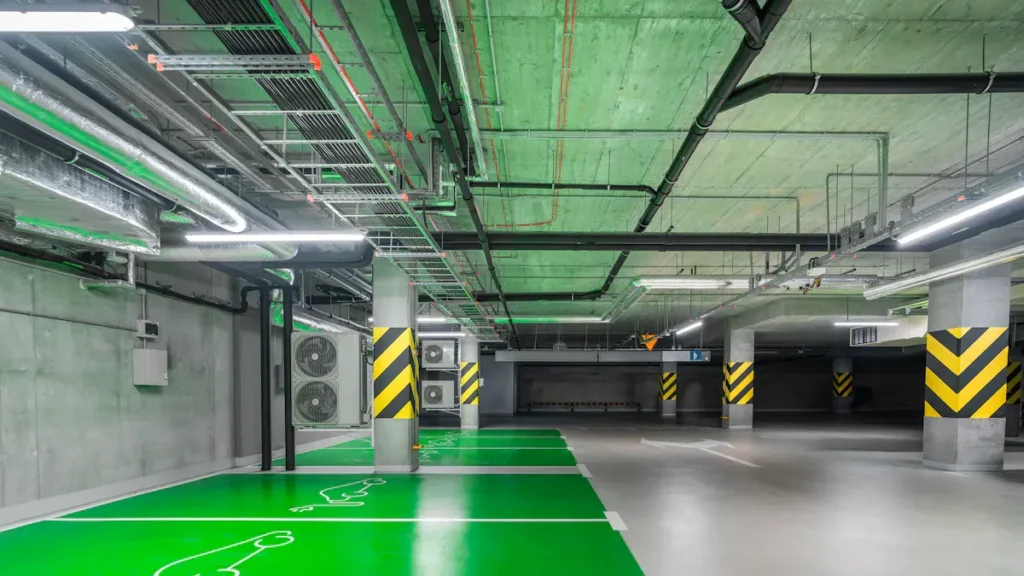

Europe’s EV charging landscape frequently undergoes rapid changes. The Alternative Fuels Infrastructure Regulation (AFIR) demands new public EV charging station deployment, such as implementing fast chargers every 60 kilometers along major transport routes. This rule will increase accessibility for every EV driver.
AFIR directly addresses the uneven distribution of Cargador EV infrastructure and ensures reliable access for users.
- As of late 2023, the EU hosts 632,423 public charging points, supporting nearly 3 million EVs.
- The Netherlands, France, and Germany account for 61% of all charging points in Europe.
- Only 13.5% of chargers offer fast charging capabilities, showing a need for more high-capacity solutions.
- Fabricantes de cargadores para VE now focus on interoperability and renewable integration, improving the charging experience.
Rapid Growth of Public Charging Infrastructure

Expansion Across Europe
Key Statistics and Projections
There has been a remarkable surge in puntos de recarga públicos across Europe. By the end of 2024, the continent reached over 882.000 puntos de recarga públicos, a sevenfold increase from just 127,000 in 2020. This rapid growth reflects your changing mobility needs and the push for cleaner transportation. The European Union set a goal of 3.5 million public charging points by 2030, but experts project that 8.8 million may be necessary to support the rising number of battery electric vehicles (BEVs). Today, there are about 11 EVs per public charging point, compared to 16 vehicles per charging point in 2020. This improvement means easier access and shorter wait times for charging.
- 16% of public charging points are DC chargers, offering faster charging for your EV.
- 84% are AC chargers, suitable for daily use and longer parking durations.
- The Netherlands, Germany, and France host 61% of all public charging points, even though they cover only 22% of Europe’s land area.
Despliegue urbano frente a rural
Most public charging points concentrate in urban centers. Cities like Amsterdam and Paris lead the way, providing dense networks that support daily commutes and urban lifestyles. Rural areas, however, lag behind. It can be difficult to find charging stations outside major cities, which can hinder long-distance travel and rural EV adoption. Policymakers now prioritize expanding public charging points in less populated regions to ensure reliable access anywhere.
Government Investment and Incentives
Funding Programs
Governments across Europe invest heavily in infraestructura pública de recarga. National strategies accelerate deployment and make charging more accessible. The following table highlights how some leading countries approach expansion:
| País | Puntos de recarga actuales | Future Goals | Government Strategy |
|---|---|---|---|
| Reino Unido | Increasing since 2015 | End sale of new internal combustion engines by 2030 | Strategy to make charging more accessible. |
| Suecia | Lacking in charge points | Build a 3,000 km network by 2035 | Shifted subsidies to encourage more charging point installations. |
| Francia | Over 110,000 | Aim for 400,000 public chargers by 2030 | Actively investing in expansion; citizens also installing home chargers. |
| Alemania | ~97,000 | Expand charging network | Financial incentives for EV buyers; focus on fast charging stations. |
Asociaciones público-privadas
Public-private partnerships drive innovation and efficiency. Governments collaborate with energy companies and technology firms to build and operate charging stations. These partnerships help provide access to reliable public charging points and encourage private investment in the sector.
Tip: Look for new charging stations funded by joint ventures in your area. These often offer advanced features and better user experiences.
Addressing Coverage Gaps in Public Charging Points
Focus on Underserved Areas
Significant disparities exist in the availability of public charging points across Europe. Some regions remain underserved, making it harder to adopt an EV for those living outside major cities. Policymakers now target these coverage gaps, aiming to create a more balanced network that supports widespread EV adoption.
Cross-border Connectivity
Drivers can benefit from cross-border compatibility initiatives. These efforts ensure help EV owners travel seamlessly between countries without worrying about charging station compatibility.
Cross-border projects make it easier for EV driver to move across Europe, supporting both local and international travel.
EU-Level Policy Frameworks and Directives for EV Charging Station Deployment
Reglamento sobre infraestructuras de combustibles alternativos (AFIR)
Mandates for Charging Station Density
The Alternative Fuels Infrastructure Regulation (AFIR) is shaping the future of EV charging in Europe. This regulation sets mandatory deployment targets for charging infrastructure, which directly increases the number of available stations available. AFIR requires a specific ratio of charging power output per registered EV, so the network grows alongside vehicle adoption. This approach solves the chicken-and-egg dilemma, where buyers might hesitate to buy an EV without enough charging stations, and providers might delay building stations without enough EVs on the road. AFIR’s mandates ensure that charging station density matches the needs of users, making EV travel more practical across Europe.
Requirements for Accessibility
AFIR also focuses on accessibility. You experience improvements in transparent pricing and standardized payment options at public estaciones de carga. The regulation requires operators to display clear pricing and offer multiple payment methods, which helps you make informed decisions and trust the charging process. These requirements create a user-friendly environment, encouraging more drivers to switch to EVs. You find charging stations that meet your needs, whether you travel locally or across borders.
AFIR’s accessibility standards help to avoid confusion and frustration when using public charging points in different countries.
The European Green Deal and Fit for 55 Package
Emissions Targets and EV Adoption
The European Green Deal and the Fit for 55 Package contain ambitious goals. These EU policy initiatives accelerate the roll-out of charging infrastructure and set binding targets for phasing out fossil fuel vehicles. There is a clear timeline for the transition, lending confidence to the future of EVs. The Fit for 55 Package requires member states to provide at least 1 kW of publicly accessible fast-charging power per battery electric vehicle (BEV). This minimum standard ensures access to reliable charging, even as the number of EVs grows.
Integración con energías renovables
EV owners benefit from the integration of renewable energy and charging networks. The EU Green Deal encourages smart charging capability, so every publicly accessible charger connects digitally and supports smart energy management. This integration allows EV charging using cleaner energy sources, reducing drivers’ carbon footprints. The policy also mandates recharging points every 60 kilometers on motorways, making cross-border travel easier.
| Key Requirement | Descripción |
|---|---|
| Acelerar el despliegue de infraestructura de carga | El Paquete "Fit for 55" tiene como objetivo mejorar la disponibilidad de estaciones de carga para vehículos eléctricos en toda Europa. |
| Fecha vinculante para la eliminación gradual de los combustibles fósiles | Establece un cronograma claro para la transición hacia vehículos sin combustibles fósiles. |
| Objetivos vinculantes mínimos para la infraestructura de carga | Los Estados miembros deben proporcionar al menos 1 kW de potencia de carga rápida de acceso público por vehículo eléctrico de batería (VEB). |
| Marcos de Política Nacional | Cada Estado miembro debe definir su evaluación, objetivos e hitos para el desarrollo de redes de carga. |
| Puntos de recarga cada 60 km en autopistas | Garantiza que los conductores de vehículos eléctricos encuentren estaciones de carga cada 60 km, facilitando los viajes transfronterizos. |
| Capacidad de carga inteligente | Exige que todos los cargadores de acceso público estén conectados digitalmente y sean capaces de carga inteligente. |
Estándares de Interoperabilidad para la Infraestructura de Carga Pública
Acceso Abierto y Itinerancia (Roaming)
Los estándares de interoperabilidad desempeñan un papel crucial en la experiencia de carga de su vehículo eléctrico. El acceso abierto y la itinerancia permiten que cualquier persona utilice estaciones de carga de diferentes proveedores sin complicaciones. Los conductores pueden viajar por Europa y cargar su vehículo eléctrico en cualquier estación pública, independientemente del operador. Este acceso sin barreras elimina obstáculos y favorece el crecimiento de una red de carga unificada.
Armonización de Sistemas de Pago
Los sistemas de pago armonizados en las estaciones de carga pública simplifican aún más la experiencia de carga. Múltiples opciones de pago, como tarjetas sin contacto y aplicaciones móviles, facilitan el pago de los servicios de carga. La transparencia en los precios genera confianza, evitando sorpresas. Estos estándares mejoran tanto la experiencia del usuario como la eficiencia de la red.
| Aspecto | Impacto en la Experiencia de Usuario | Impacto en la Eficiencia de la Red |
|---|---|---|
| Formas de pago | Múltiples métodos de pago aumentan la comodidad para los conductores. | Los sistemas de pago estandarizados agilizan las operaciones. |
| Transparencia de precios | La visualización clara de tarifas mejora la confianza y la toma de decisiones. | Las estructuras de precios consistentes pueden optimizar el uso de las estaciones. |
| Accesibilidad | Una infraestructura fácil de usar aumenta la accesibilidad general. | Un despliegue uniforme favorece un crecimiento eficiente de la red. |
Al planificar un viaje por Europa, los estándares de interoperabilidad garantizan una carga sencilla del vehículo eléctrico en cualquier lugar.
Iniciativas Nacionales e Innovaciones Regulatorias en la Infraestructura de Carga para Vehículos Eléctricos
Países Líderes y sus Enfoques
Varios países de Europa están a la vanguardia en la expansión de la cobertura de carga para vehículos eléctricos. Alemania, Francia y los Países Bajos utilizan estrategias distintas para acelerar el crecimiento y mejorar su experiencia como conductor de un vehículo eléctrico.
Plan Maestro de Infraestructura de Carga de Alemania
Alemania invierte fuertemente en infraestructura de carga. La Ley de Carga Rápida (conocida como SchnellLG en alemán) establece el objetivo de 1 millón de puntos de carga para 2030. Una inversión de 6.700 millones de euros respalda una red integral de carga rápida. Este plan garantiza opciones de carga confiables tanto en ciudades como en zonas rurales.
Estrategia Nacional de Vehículos Eléctricos de Francia
Francia se centra en soluciones de carga públicas y privadas. Ya hay más de 110.000 puntos de carga públicos disponibles. La estrategia nacional aspira a alcanzar 400.000 cargadores públicos para 2030. También hay incentivos para la instalación de cargadores domésticos, facilitando la carga nocturna.
Modelo de Red Abierta de los Países Bajos
Los Países Bajos destacan por su enfoque de red abierta. La Agenda Nacional de Infraestructura de Carga (NAL) respalda el acceso público a la carga. El apoyo financiero fomenta tanto la compra de vehículos eléctricos como el desarrollo de infraestructura de carga. El Esquema de Subvención para Automóviles Eléctricos de Pasajeros (SEPP) y el Esquema de Subvención para Infraestructura de Carga Pública de Transporte Pesado (SPULA) brindan asistencia a emprendedores y operadores de puntos de carga. Todo esto proporciona una experiencia de conducción y carga fluida en todo el país.
| País | Iniciativa Descripción | Objetivos/Metas |
|---|---|---|
| Alemania | La Ley de Carga Rápida (SchnellLG) exige una infraestructura integral de carga rápida. | 1 millón de puntos de carga para 2030; inversión de 6.700 millones de euros. |
| Francia | La estrategia nacional de vehículos eléctricos respalda la expansión de la carga pública y privada. | 400.000 cargadores públicos para 2030. |
| Países Bajos | NAL, SEPP, SPULA respaldan la red abierta y los incentivos financieros para la cobertura de carga. | Adopción generalizada y desarrollo de infraestructura. |
Políticas Locales y Regionales para Puntos de Carga Pública
Las políticas locales y regionales desempeñan un papel fundamental en la cobertura de carga para vehículos eléctricos. Estas políticas abordan vacíos que las estrategias nacionales pueden pasar por alto.
Mandatos a Nivel Municipal
Las ciudades suelen establecer mandatos para expandir los puntos de carga públicos. Londres y Ámsterdam lideran con densas redes urbanas. Las autoridades locales dependen de fondos gubernamentales y aportes comunitarios para decidir dónde ubicar la infraestructura. Las políticas regionales establecen objetivos más amplios, pero los mandatos locales garantizan que la carga satisfaga las necesidades diarias de los conductores.
- El Fondo LEVI ayuda a los gobiernos locales a acelerar el despliegue de la carga para vehículos eléctricos, especialmente en áreas con falta de inversión privada.
- Cornwall expande su red de carga para vehículos eléctricos con hasta 2.000 nuevos puntos de carga, centrándose en aportes comunitarios para identificar ubicaciones prioritarias.
- El 43% de los cargadores públicos en el Reino Unido se encuentran en Londres y el Sudeste, lo que destaca las disparidades regionales en la cobertura de carga para vehículos eléctricos.
Incentivos para Instalaciones Privadas
Algunas áreas ofrecen incentivos para instalar estaciones de carga privadas. Los consejos locales apoyan a residentes sin estacionamiento fuera de la vía pública, garantizando un acceso equitativo. La estrategia de Cornwall incluye participación comunitaria, asegurando que la infraestructura satisfaga las necesidades locales y mejorando la cobertura de carga para vehículos eléctricos en zonas rurales.
Superar Barreras Legales y Administrativas para el Despliegue de Estaciones de Carga para Vehículos Eléctricos
Pueden existir barreras legales y administrativas al expandir la cobertura de carga para vehículos eléctricos. Los esfuerzos para agilizar estos procesos hacen que el acceso a una carga confiable sea más rápido.
Agilización de los Procesos de Permisos
Los gobiernos trabajan para simplificar los permisos para nuevas estaciones de carga. Las autoridades locales utilizan el Fondo LEVI para acelerar las aprobaciones. La participación comunitaria garantiza que la nueva infraestructura se ajuste a las necesidades locales.
Simplificación de los Procedimientos de Conexión a la Red
Los procedimientos de conexión a la red también se están volviendo más eficientes. A mediados de 2022, solo el 13% de la infraestructura de carga para vehículos eléctricos prevista estaba operativa, representando solo el 10% de la potencia instalada requerida. Los procesos simplificados ayudan a evitar retrasos y mejoran la confiabilidad. Los informes destacan la insatisfacción entre los conductores de vehículos eléctricos respecto a las experiencias de carga pública, a menudo debido a costos opacos y baja confiabilidad del equipo. Abordar estos problemas conduce a una mejor experiencia general de carga.
Breaking Barriers: Accessibility, Interoperability, and Grid Integration in EV Charging
Improving Accessibility for All Users at Public Charging Points
Universal Design and Disabled Access
Public charging infrastructure should serve everyone, regardless of ability. Universal design principles now shape new public charging points, making them accessible for users with disabilities. Some examples that can be seen at new stations are lower mounting heights, tactile surfaces, and clear signage. These features help people who use wheelchairs or have limited mobility.
Language and Payment Options
Multilingual interfaces and simplified payment systems at public charging stations ensure a streamlined experience for users from all across Europe. Operators now provide instructions in several languages, so anyone can easily understand how to use the equipment. Contactless payments, mobile apps, and card readers offer flexibility and reduce barriers. These improvements ensure anyone can access public charging points without confusion, even when traveling across Europe.
Enhancing Interoperability of EV Charging Infrastructure
Cross-Network Charging
Drivers should be able to use any public charging station regardless of the network. Recent policy changes and technology standards make this possible. The table below highlights key initiatives that support interoperability across Europe:
| Policy/Initiative | Descripción |
|---|---|
| EU’s Fit for 55 package | Sets binding targets for emissions and public charging infrastructure, promoting interoperability. |
| Open Access Mandate | Germany and France require open access, so you can use any public charger. |
| OCPP Adoption | The Open Charge Point Protocol lets different networks communicate seamlessly. |
| Roaming Platforms | Platforms like Hubject and Gireve allow you to access multiple public networks with one account. |
Data Sharing and Transparency
Real-time data helps drivers find available public charging points. Operators share information about station status, pricing, and availability. This transparency helps drivers plan trips and avoid unnecessary delays. Open data standards also support app developers, providing accurate information to smartphones or navigation systems.
Grid Integration and Smart Charging for EV Charging Station Networks
Managing Grid Capacity
Smart charging solutions can manage when and how an EV draws power from the grid. These systems adjust charging based on factors like electricity prices and grid demand. Smart charging maximizes energy efficiency and reduces costs. Advanced protocols like IEEE 2030.5 coordinate charging to prevent grid overload and enable optimized demand response. Utilities can now synchronize public charging with periods of high renewable energy generation.
- Smart charging regulates EV charging timing and methods.
- Optimized demand response manages charging based on real-time grid conditions.
- Enhanced renewable energy utilization aligns charging with green power availability.
Vehicle-to-Grid (V2G) Solutions
One new feature in many recent EV chargers is bidirectional charging, which allows your EV to send energy back to the grid. This technology, also known as vehicle-to-grid (V2G), supports grid stability and efficient battery use. As V2G adoption grows, you help balance electricity supply and demand. New public charging stations increasingly support V2G, making your EV an active part of the energy ecosystem.
- Bidirectional charging lets an EV contribute energy to the grid.
- Smart grid integration enables better load balancing and energy transfer.
- Wireless charging and ultra-fast charging further enhance the public charging experience.
Tip: Look for public charging stations with V2G capability to maximize your EV’s value and support a more resilient grid.
Innovative Solutions and New Business Models in EV Charging Infrastructure

Fast and Ultra-Fast EV Charging Networks
Deployment Strategies
The is an ongoing, rapid transformation in the EV charging landscape as fast charging and ultra-fast charging networks expand across Europe. Operators focus on strategic deployment along highways, urban centers, and high-traffic corridors. This approach ensures access to a reliable network in the city or during long distance travel. The European public network reached 520,000 charging points by Q1 2024, marking a 42% increase since 2022. Out of these, 140,000 are DC fast chargers, making up 27% of all charging outlets. Germany leads with 120,000 charging points, followed by France and the Netherlands. These numbers show a growing network that prioritizes fast charging accessibility.
Impacto en la Experiencia de Usuario
Fast charging networks change how drivers use their EVs. They spend less time waiting and more time on the road. Ultra-fast charging stations can deliver significant range in minutes, making EVs practical for daily commutes and long trips. The presence of a dense network of fast charging points reduces range anxiety and increases confidence in EV adoption. Charging network design increasingly focuses on convenience, speed, and reliability.
Subscription and Pay-as-You-Go Models for Public Charging Points
Flexibility for Consumers
There are more choices than ever when it comes to paying for charging. Subscription models and pay-as-you-go options both offer unique benefits. Subscriptions encourage users to return to the same network, which increases reliability and familiarity. Customers can enjoy cost savings and a streamlined charging process, making the experience faster and more economical. Pay-as-you-go models provide flexibility, letting drivers use any network without long-term commitments.
Market Adoption Trends
Charging point operators (CPOs) benefit from predictable, recurring revenue through subscriptions. This stability allows them to plan better and invest in network improvements. Customers become part of a community, which fosters loyalty and repeat usage. As more drivers choose subscriptions, networks grow and improve. The market now supports both flexible and committed users, ensuring that EV owners can find a model that fits their needs.
Tip: Consider your driving habits before choosing a subscription or pay-as-you-go plan. Frequent users may save more with a subscription, while occasional drivers might prefer pay-as-you-go.
Community and Shared Charging Initiatives for EVs
Residential and Workplace Charging
As residential and commercial charging networks expand, convenience grows. Employers and property managers install charging points, making it easier to charge your EV during the day or overnight. This approach reduces pressure on the public network and supports a balanced charging ecosystem.
Peer-to-Peer Charging Platforms
Peer-to-peer charging platforms let users share their home chargers with others. This creates a network of users who offer and access charging points in neighborhoods and workplaces. This model increases the overall network size and helps fill gaps where public charging is limited. Owners can contribute to a collaborative charging network that supports wider EV adoption.
Integration with Renewable Energy Sources in EV Charging Station Networks
Estaciones de carga solares
Solar-powered charging stations are emerging as a key trend in Europe’s EV infrastructure. These stations use photovoltaic panels to generate electricity directly on-site. When an EV is charged at one of these locations, it taps into clean energy that reduces carbon emissions. Solar panels often sit atop canopies or nearby structures, capturing sunlight throughout the day. This setup allows users to charge their vehicles even when the grid faces high demand.
Operators like Fastned lead the way by running high-speed charging stations powered entirely by renewable sources, including solar and wind. This approach ensures that every kilowatt-hour EV comes from clean energy. Solar-powered stations also help stabilize the grid. When sunlight is abundant, these stations can store excess energy or feed it back into the local network.
Solar-powered charging stations often feature real-time displays showing how much energy comes from the sun. This transparency helps users understand the environmental impact of your charging session.
Solar integration not only supports sustainability but also increases the resilience of charging networks. During peak hours or grid disruptions, these stations can continue to operate, providing drivers with reliable access to charging.
Energy Storage Solutions
Energy storage solutions play a crucial role in the evolution of EV charging infrastructure. Some stations are equipped with battery systems that store renewable energy generated during sunny or windy periods. These batteries release stored power when demand spikes or when renewable generation drops. This process ensures access to clean energy, regardless of weather or time of day.
Smart charging systems connect directly to these storage units. When plugged in to an EV, the system decides whether to draw power from the grid, the battery, or a combination of both. This flexibility reduces reliance on fossil fuels and helps balance grid demand. The result is fewer delays and more consistent charging speeds, especially during busy periods.
- Advantages of Energy Storage in EV Charging:
- Reduces peak load on the grid
- Increases use of renewable energy
- Enhances reliability during outages
Energy storage, combined with solar generation, creates a robust and sustainable charging ecosystem. As more stations adopt these technologies, drivers can have confidence that EV charging supports both mobility and the planet’s health.
Real-World Examples and Case Studies of Public Charging Infrastructure
Successful National Rollouts of EV Charging Infrastructure
Norway’s EV Charging Expansion
Norway is leading Europe in public charging infrastructure. The country’s success comes from a combination of strong government incentives, strategic infrastructure development, and consistent policy support.
- Incentives like no VAT on EVs, reduced tolls, and access to bus lanes.
- Charging hubs appear every 50 kilometers, making it easy to find a charging point and reducing range anxiety.
- Over 15 years, Norwegian governments have maintained policies that encourage EV adoption and investment.
Norway’s approach shows you how policy consistency and infrastructure planning can transform public charging infrastructure and make EVs a practical choice.
Spain’s Urban Charging Networks
Spain has focused on expanding public charging infrastructure in urban areas. Reliable charging points can be found in city centers, shopping districts, and residential neighborhoods.
- Availability of charging infrastructure at diverse locations supports the transition to EVs.
- Strong government leadership and clear regulations attract investment and simplify the process for new charging station deployment.
Industry experts highlight that Spain’s supportive framework for investment and robust legal system support access to public charging infrastructure with confidence.
Innovative Local Projects for Public Charging Points
London’s Curbside Charging
Curbside charging initiatives in London provide greater accessibility. Local councils install on-street chargers, ensuring drivers can charge EVs even without a private driveway.
- On-street EV charging infrastructure promotes social equity, giving all residents equal access to public charging infrastructure.
- Community charging projects make sure you benefit regardless of property type or location.
Amsterdam’s Smart Charging Program
Amsterdam’s smart charging program improves efficiency and accessibility. Many charging stations are equipped with technology that manages energy use and prioritizes disabled access.
- Collaboration among stakeholders ensures that public charging infrastructure meets the needs of all drivers, including those with disabilities.
- Projects like Fuuse Aware use bay occupancy sensors to reduce non-charging vehicles occupying charging bays, increasing availability.
These local innovations demonstrate how cities can address unique challenges and improve public charging infrastructure for everyone.
Lessons Learned and Best Practices in EV Charging Station Deployment
Colaboración de las partes interesadas
Collaboration among government agencies, private companies, and community groups is essential. When stakeholders work together, everyone benefits from accessible and efficient public charging infrastructure.
Scalability and Replicability
Best practices in public charging infrastructure deployment focus on scalability and adaptability.
- Models consider vehicular flow and road capacity, placing chargers in the areas with the greatest need.
- Structured approaches allow cities and countries to tailor solutions to their specific needs, making public charging infrastructure replicable across Europe.
- Stochastic analysis of operational constraints supports adaptability in diverse environments, ensuring continuous access to reliable charging.
Future Outlook and Emerging Trends in EV Charging Infrastructure
Upcoming Policy Changes for EV Charging Station Networks
Anticipated EU Directives
Major policy changes are shaping the future of EV charging across EU countries. The Alternative Fuel Infrastructure Regulation (AFIR), published in September 2023, will take effect in April 2024. This directive requires every member state to establish basic public charging infrastructure and share national strategies by the end of 2024. France has announced new funding measures to reach 7 million chargers by 2030, including 400,000 public ones. These changes will make driving EVs easier and more reliable across all of Europe.
| Reglamento | Date Published | Puntos clave |
|---|---|---|
| Alternative Fuel Infrastructure Regulation (AFIR) | Sep-23 | Applies from April 13th, 2024. Sets minimum coverage and requires national strategies. |
| Deployment of Charging Stations | Oct-23 | France targets 7 million chargers by 2030, with new funding to support expansion. |
National Roadmaps
You will notice that EU countries are developing national roadmaps to meet these ambitious goals. Each country must outline its strategy for expanding charging networks and integrating new technologies. These roadmaps focus on closing gaps in rural areas, improving cross-border travel, and supporting the rapid growth in EV ownership. As you continue driving your ev, you will benefit from more consistent access to charging stations and better coverage across the continent.
Technological Advancements in Public Charging Infrastructure
Carga inalámbrica
Wireless charging technology is nearing commercial reality in EU countries. Soon, drivers will be able to charge their EVs simply by parking over a charging pad, without plugging in cables. This innovation will make driving EVs more convenient, especially in busy urban environments. Wireless charging also supports bidirectional energy flow, allowing vehicles to interact with the grid and contribute to energy resilience.
- Wireless EV charging pads
- Bidirectional energy flow through Vehicle-to-Grid (V2G) technology
- Ultra-fast chargers delivering 150kW and above
AI-Driven Network Optimization
Artificial intelligence is transforming how charging networks operate. It can support smarter charging stations that use AI to predict demand, optimize energy use, and reduce wait times. These systems help balance grid loads and integrate renewable energy sources, making EV ownership more sustainable. As the number of battery EVs in the EU-27 is projected to surpass 80 million by 2030, AI-driven solutions will be essential for managing this growth.
Smart charging and V2G technology will play a key role in supporting the energy needs of EU countries as EV adoption accelerates.
Evolving Consumer Expectations for EV Charging
Experiencia de usuario sin fisuras
Los conductores de vehículos eléctricos desean y esperan una experiencia sin interrupciones. El número de estaciones de carga públicas ha aumentado más del 50% en los últimos dos años, pero este crecimiento aún se queda atrás respecto a las ventas de vehículos eléctricos. Para satisfacer la demanda proyectada, los países de la UE deben triplicar el número de estaciones de carga para 2025. Las zonas urbanas ofrecen más opciones de carga, pero los conductores pueden sufrir ansiedad por la autonomía en regiones rurales. La mayoría de los conductores prefieren soluciones de carga doméstica, con más del 70% de los propietarios de vehículos eléctricos optando por cargar en casa.
- Es necesario triplicar las estaciones de carga para 2025
- La concentración urbana genera brechas en zonas rurales
- La carga doméstica es preferida por la mayoría de los propietarios de vehículos eléctricos
Demandas de Sostenibilidad
Muchos propietarios de vehículos eléctricos se preocupan por la sostenibilidad al conducir su vehículo eléctrico. Desean una infraestructura de carga que respalde la energía renovable y minimice el impacto ambiental. Además, los consumidores ahora buscan vehículos eléctricos de gama media y económicos que ofrezcan rendimiento sin precios premium. Una opción es explorar modelos de propiedad alternativos, como alquileres y suscripciones, para reducir los riesgos financieros. Los altos costos iniciales y las responsabilidades continuas siguen siendo motivo de preocupación, pero están surgiendo nuevos modelos de negocio para abordar estos problemas.
Consejo: Al planificar el futuro, busque soluciones de carga que se alineen con sus objetivos de sostenibilidad y ofrezcan opciones de propiedad flexibles.
Los conductores ahora pueden beneficiarse de una red de carga pública en rápida expansión, que creció más del 35% en 2024 y superó el millón de puntos. Las tecnologías de carga inteligente y vehículo-a-red optimizan el uso de energía y transforman los vehículos eléctricos en un activo para la red, garantizando un acceso confiable y sostenibilidad.
- Plataformas como NXT Mobility Charge y Plug-and-Charge simplifican su experiencia de carga.
- Las asociaciones estratégicas, como la integración de Wevo y Eco-Movement, facilitan la localización y el uso de cargadores en toda Europa.
La innovación continua, los estándares abiertos y la colaboración entre las partes interesadas siguen siendo esenciales para respaldar los objetivos de movilidad y sostenibilidad.
PREGUNTAS FRECUENTES
¿Cuál es el principal beneficio de las nuevas políticas europeas de carga para vehículos eléctricos?
Acceso más fácil a las estaciones de carga. Estas políticas aumentan el número de cargadores públicos, mejoran los sistemas de pago y respaldan la integración de energías renovables. Los conductores pueden experimentar menos barreras al conducir y cargar vehículos eléctricos en toda Europa.
¿Cómo mejoran los cargadores rápidos y ultrarrápidos su experiencia con el vehículo eléctrico?
Los conductores pasan menos tiempo esperando para cargar. Los cargadores rápidos y ultrarrápidos entregan más potencia, por lo que puede volver rápidamente a la carretera. Esta tecnología hace que los viajes de larga distancia sean más prácticos y convenientes.
¿Se puede usar una sola tarjeta o aplicación para diferentes redes de carga?
Los conductores pueden utilizar servicios de roaming y plataformas de acceso abierto. Estas soluciones permiten a los usuarios cargar sus vehículos eléctricos en estaciones de diferentes proveedores con una sola tarjeta o aplicación. Esto evita la molestia de múltiples cuentas o métodos de pago.
¿Cómo abordan las nuevas políticas la disponibilidad de carga pública en zonas rurales?
Las nuevas políticas incluyen inversiones específicas e incentivos para las regiones rurales. Los responsables políticos se centran en expandir las redes fuera de las ciudades. Este enfoque garantiza que los conductores puedan encontrar estaciones de carga incluso en áreas menos pobladas, mejorando la disponibilidad de carga pública para todos los conductores.
¿Qué es la tecnología vehículo-a-red (V2G)?
La tecnología V2G envía energía desde un vehículo eléctrico de vuelta a la red. Este proceso ayuda a equilibrar la oferta y la demanda de electricidad, apoyando la estabilidad de la red y aprovechando mejor las baterías de los vehículos.
¿Son fiables las estaciones de carga con energía solar?
Las estaciones con energía solar generan energía limpia in situ. Estas estaciones suelen incluir almacenamiento en baterías, por lo que los conductores pueden cargar incluso durante el tiempo nublado o por la noche. No solo son fiables, sino que pueden ayudar a reducir la huella de carbono de los conductores de vehículos eléctricos.
¿Cómo ayudan los sistemas de carga inteligente a la red eléctrica?
Los sistemas de carga inteligente ajustan los tiempos de carga según la demanda de la red y los precios de la electricidad. Esta tecnología evita la sobrecarga de la red y respalda el uso de energías renovables. Esto ahorra dinero a los conductores y ayuda a mantener un suministro eléctrico estable.




