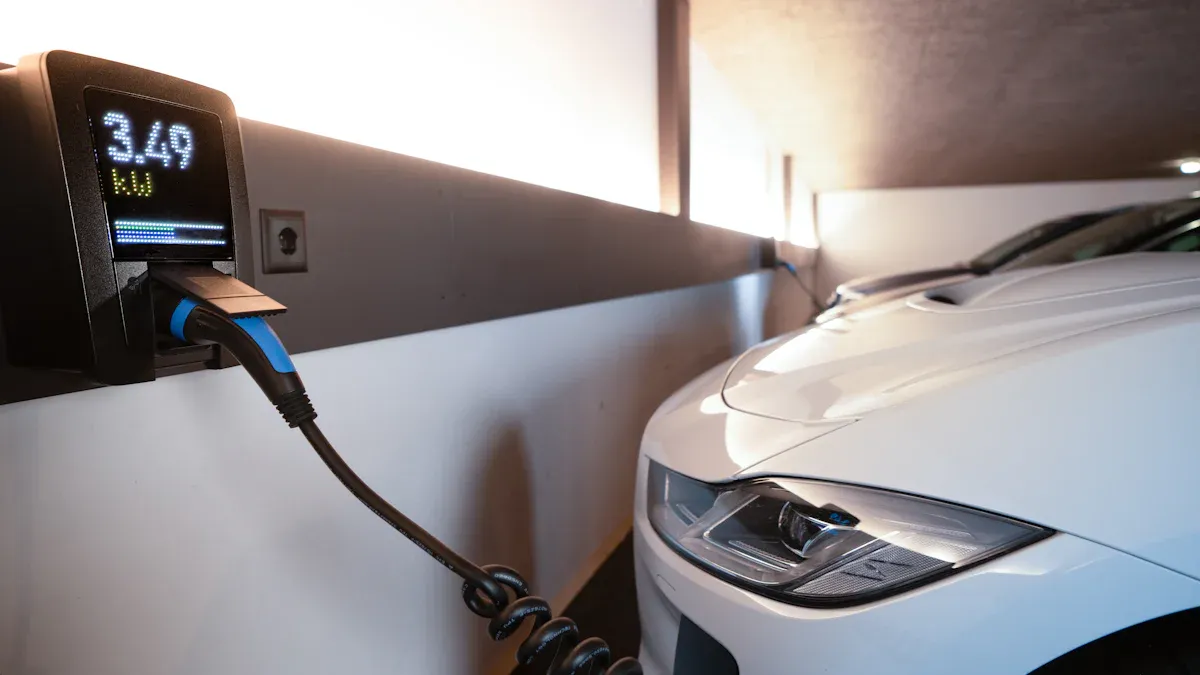
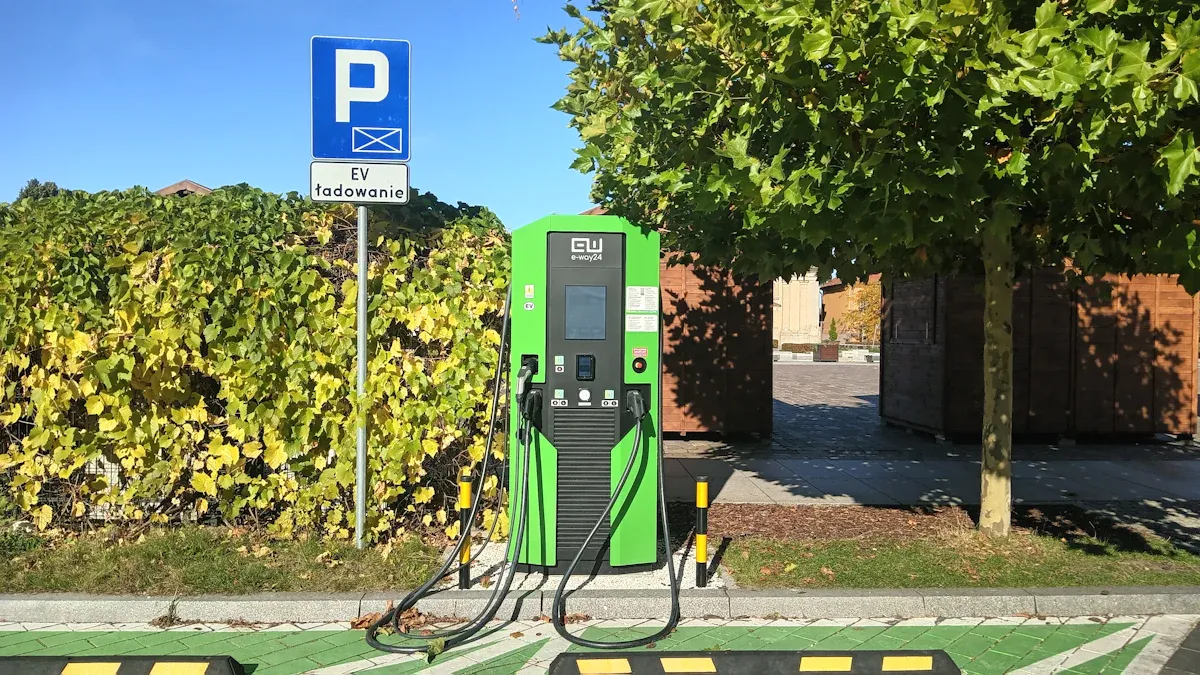
Charging an electric EV with a three-pin plug can have a slightly higher cost per charge. The increased cost to charge results from lower charging efficiency, not higher electricity rates. This inefficiency means more energy is wasted during the longer charge. For most drivers who charge ev models this way, the financial difference is small. However, other factors can influence the overall cost.
Nota: While top Fabricantes de cargadores para VE provide advanced Soluciones de recarga de vehículos eléctricos, the standard three-pin plugs, common with cargadores portátiles para vehículos eléctricos, have a distinct efficiency profile that affects the final cost. The included Cargador EV is a basic but functional starting point.
Understanding the Basics of EV Charging Cost
To understand why a 3-pin plug might increase charging costs, one must first grasp the two core components of the equation: the price of electricity and the efficiency of the charging process. The final cost to charge an electric car is a product of how much energy the car needs and how much of that energy is wasted along the way.
How Electricity Cost is Calculated
The total cost to charge is not a flat fee. It directly relates to your home electricity consumption and your utility provider’s rates.
Kilowatt-Hours (kWh) Explained
Think of a kilowatt-hour (kWh) as the electric equivalent of a gallon of gasoline. It is a unit of energy. If an electric vehicle has a 60 kWh battery, it requires 60 kWh of energy to charge from empty to full. Your electric bill measures your home’s total energy usage in kWh, and charging an EV at home simply adds to this total.
Your Utility Rate
Your utility rate is the price you pay for each kilowatt-hour of electricity. This rate can vary significantly based on your location and even the time of day. The cost of charging your electric car at home is calculated with a simple formula:
Total kWh Added to Battery × Price Per kWh = Charging Cost
For example, electricity prices differ across various regions. The table and chart below show average residential electricity prices in the UK, illustrating how geography impacts the base cost.
| Región | Average Electricity Price (¢/kWh) |
|---|---|
| Londres | 25.63¢ |
| Sureste | 26.92¢ |
| Eastern | 26.53¢ |
| Southern | 26.48¢ |
| Southern Western | 26.82¢ |
| N Wales and Mersey | 27.72¢ |
| South Wales | 26.83¢ |
| Midlands | 25.64¢ |
| East Midlands | 25.55¢ |
| Yorkshire | 25.33¢ |
| North West | 27.11¢ |
| Northern | 25.43¢ |
| Southern Scotland | 25.84¢ |
| Northern Scotland | 27.06¢ |
What is Charging Efficiency?
Charging efficiency is a critical factor that is often overlooked. It refers to the percentage of energy that successfully transfers from the outlet into the EV’s battery. Unfortunately, this process is never 100% efficient.
The Inevitable Energy Loss
During any electric car charging session, a certain amount of energy is lost. This means you always pay for slightly more electricity than what is stored in your car’s battery.
EV efficiency measures how far an electric vehicle can travel on a set amount of electricity, often shown as miles per kilowatt-hour (miles/kWh). To find an EV’s efficiency, one divides its official range by the usable battery capacity.
This concept is key to understanding why different charging methods have different costs.
Where Does the Wasted Energy Go?
The lost energy does not simply vanish. It converts primarily into heat. Several components contribute to this energy loss during home charging:
- The On-Board Charger: This device converts AC power from your home into DC power for the battery, generating significant heat.
- Battery Cooling Systems: The EV’s systems must work to keep the battery at an optimal temperature during charging, using fans and pumps that consume power.
- Vehicle Electronics: Other background systems in the EV draw a small amount of power while the vehicle is awake and preparing to charge.
This wasted energy represents a hidden cost when you charge EV models, a cost that changes depending on the charging speed.
The Efficiency Factor: Why 3-Pin Charging Can Cost More
The primary reason a three-pin plug can increase your charging cost is efficiency loss. While all charging methods waste some energy, the rate and duration of the charge play a significant role. Slower charging methods often lead to a greater percentage of wasted electricity over the entire session.
Level 1 (3-Pin Plug) Charging Efficiency
Charging with standard three-pin plugs, also known as Carga de nivel 1, is the least efficient method. This inefficiency stems directly from its slow power delivery.
Slower Speeds and Sustained Losses
A three-pin plug delivers power very slowly, typically around 2.3 kW. This means the EV must remain “awake” and running its support systems for an extended period, sometimes over 24 hours for a full charge. During this entire time, components like the on-board charger, battery cooling fans, and other electronics consume a fixed amount of power just to manage the charging process. This constant, low-level energy drain adds up over many hours, increasing the total energy pulled from the wall for the same amount of charge delivered to the battery.
The Role of the On-Board Charger
Every electric vehicle has an on-board charger that converts AC power from your home into DC power that the battery can store. These devices have an optimal efficiency range. When operating at very low power levels, as with a 3-pin plug, their efficiency drops. This means a higher percentage of electricity is lost as heat during the conversion process, contributing to a higher overall cost.
Level 2 (Dedicated Wallbox) Charging Efficiency
Dedicated wall chargers, or Level 2 chargers, offer a significant efficiency improvement. Technologically advanced providers like TPSON design these systems to optimize the home charging experience.
Faster S¢eeds and Reduced Waste
A dedicated wall charger can charge an EV at speeds of 7 kW or more. This drastically reduces the total charging time. Because the vehicle’s support systems run for a much shorter duration, the “overhead” energy loss is minimized. The on-board charger also operates in a more efficient power band, reducing waste. This faster, more efficient process lowers the total cost to charge the vehicle.
Com¢aring AC to DC Conversion
Both 3-pin and wall charger charging use AC power. The fundamental difference is the speed of the energy transfer. The faster rate from a wall charger allows the on-board AC-to-DC converter to work more effectively, reducing the amount of energy wasted as heat and lowering the final cost.
The “Leaky Bucket” Analogy for Charging
To understand energy loss, it hel¢s to visualize the process.
Imagine filling a bucket that has a small leak. The water you pour in is the energy from your outlet, the water in the bucket is the energy stored in your EV battery, and the water dripping out is the wasted energy.
Visualizing Energy Waste
This analogy simplifies the concept of charging loss. Just as you can’t fill a leaky bucket without losing some water, you can’t charge an EV without some energy waste. This is similar to how a percentage of electricity is lost during EV charging, meaning you pay for more energy than your battery actually receives.
Why a Longer Fill Time Matters
Using a three-pin plug is like filling the bucket with a slow trickle. The process takes a long time, allowing more water to escape through the leak. Using a wall charger is like filling the bucket with a powerful hose. It fills up quickly, minimizing the total amount of water lost. This is why a longer charge time results in more wasted energy and a slightly higher cost for the same result.
Calculating the Real-World Cost to Charge an Electric Car
Theoretical efficiency losses can seem abstract. A practical calculation helps illustrate the real-world financial difference between charging methods. The final coste de recargar un coche eléctrico depends on the total energy pulled from the outlet, not just the energy stored in the battery.
A Hypothetical Cost Comparison
Let’s create a scenario to compare the cost of charging. We will use a popular EV with a moderately sized battery and a standard UK electricity rate.
- Vehículo: A Tesla Model 3 Long Range with a 75 kWh battery.
- Energy Needed: A 50 kWh charge (from 20% to ~87%).
- Electricity Rate: 24.5¢ per kWh (UK average, September 2024).
Nota: Charging efficiency is not constant, but for this com¢arison, we will use average figures. A 3-pin plug is assumed to be around 85% efficient, while dedicated home wall charger chargers are around 95% efficient.
Scenario 1: The 3-Pin Plug Cost
With an 85% efficiency rate, the system must draw more power from the wall to deliver 50 kWh to the battery.
- Energy Drawn from Wall:
50 kWh / 0.85 = 58.82 kWh - Total Cost:
58.82 kWh × £0.245/kWh = £14.41
In this scenario, the three-pin plug wastes 8.82 kWh of energy as heat and system operation overhead. This wasted energy adds to the final cost.
Scenario 2: The Wallbox Charger Cost
A dedicated wall charger operates more efficiently. At a 95% efficiency rate, less energy is wasted during the charging session.
- Energy Drawn from Wall:
50 kWh / 0.95 = 52.63 kWh - Total Cost:
52.63 kWh × £0.245/kWh = £12.90
The wall charger charging session wastes only 2.63 kWh. This im¢roved efficiency directly translates to a lower cost to charge the EV.
Putting the Numbers in Perspective
The calculations show a clear, albeit small, difference in the cost to charge an electric car. Understanding this difference on a daily, monthly, and annual basis helps drivers make informed decisions about their home charging setup.
The Small Difference Per Charge
Comparing the two scenarios reveals the financial impact of inefficiency for a single charge.
£14.41 (3-Pin) - £12.90 (Wallbox) = £1.51
For a single 50 kWh charging session, the less efficient 3-pin plug costs an extra £1.51. For many EV owners, this minor increase per charge is a perfectly acceptable trade-off for the convenience and zero upfront installation cost.
The Monthly and Annual Cost Im¢act
The small daily cost adds up over time for a driver who needs to charge their EV regularly. If a driver adds 50 kWh to their electric car four times per week, the cumulative cost becomes more significant.
- Monthly Extra Cost:
£1.51 × 4 (charges per week) × 4 (weeks per month) = £24.16 - Annual Extra Cost:
£24.16 × 12 (months) = £289.92
An annual figure approaching £300 highlights how the inefficiency of slow charging can create a noticeable expense over the long term. This demonstrates that while a single charge is only slightly more expensive, the cumulative effect can influence the overall cost of ownership for a high-mileage driver. This is a key factor when deciding whether to invest in a faster home charging solution.
Factors That Influence Your Total Charging Cost
The efficiency of your charger is just one piece of the puzzle. Several other variables can affect the final cost to charge an electric car. Understanding these factors helps EV owners manage their expenses more effectively.
Your Vehicle’s On-Board Charger
The hardware inside your electric vehicle plays a significant role in home charging efficiency.
How Different Models Vary in Efficiency
Every EV has an on-board charger to convert AC power from your home into DC power for the battery. The efficiency of these chargers varies between manufacturers and models. Some premium EV models have highly efficient converters that waste very little energy, while others may be less effective, especially at the low power levels of a 3-pin plug. This difference can alter the true cost of charging your EV.
Finding Your Car’s Specifications
An owner can typically find their vehicle’s maximum AC charge rate in the owner’s manual or on the manufacturer’s website. While specific efficiency percentages are harder to find, forums and EV communities often share real-world data. Knowing your car’s capabilities helps set realistic expectations for charging times and cost.
Ambient Temperature’s Effect on Charging
Weather conditions directly impact battery performance and, consequently, the coste de cobrar. The battery management system works to keep the battery in its ideal temperature range, which requires energy.
Cold Weather and Battery Preconditioning
In cold weather, an EV may use a feature called “preconditioning.” The system warms the battery to an optimal temperature before or during a charge session. This process consumes a significant amount of energy, increasing the total power drawn from the wall and raising the overall charging cost.
Hot Weather and Cooling System Draw
Conversely, hot weather forces the EV’s cooling systems to work harder. Fans and liquid cooling pumps run to prevent the battery from overheating during a charge. This activity draws power, adding another hidden cost to the charging session, especially during prolonged slow charging.
Battery’s State of Charge (SoC)
The battery’s current charge level, or State of Charge (SoC), dramatically influences charging efficiency.
The Most Efficient Charging Window (20-80%)
A battery does not charge at a constant speed. The process is most efficient when the battery’s SoC is between 20% y 80%.
For optimal battery health and efficiency, experts recommend following the Regla 20-80 for daily charging. This practice helps extend the battery’s lifespan.
- Charging is fastest within the 20% to 80% range.
- The battery management system intentionally slows the charge rate outside this window.
- Avoiding frequent charges to 100% reduces battery degradation.
Why Efficiency Drops Near Full Charge
As an EV battery approaches 100%, the charging speed slows down considerably. The battery management system reduces the power to protect the battery cells from stress and heat buildup. This final “trickle charge” phase is very inefficient. Topping up from 80% to 100% can take nearly as long as charging from 20% to 80%, making it the most expensive part of the charge.
The Hidden “Costs” of Slow 3-Pin Charging
Beyond the direct financial cost from inefficiency, slow 3-pin charging introduces other “costs” related to time and missed savings. These factors can significantly impact an owner’s experience, especially when relying solely on the slowest method for home charging.
The “Cost” of Your Time
Time is a valuable resource, and the lengthy duration of 3-pin charging can be a major drawback.
How Long Does It Really Take to Charge?
The most significant limitation of a 3-pin plug is its speed. For an electric vehicle with a common 60 kWh battery, achieving a full charge can be a multi-day affair.
A full 0-100% charge with a 2.3 kW 3-pin plug often takes well over 24 hours. This makes it impractical for drivers who need to replenish their battery quickly after a long trip.
This slow pace means drivers must plan their charging sessions far in advance.
The Inconvenience for High-Mileage Drivers
While slow charging is a clear issue for those needing a fast turnaround, it does not negatively impact every driver. For many EV owners, the process aligns perfectly with their overnight routine. A 3-pin charger adds about 8-10 miles of range per hour. This is often sufficient for typical daily commutes of 30-40 miles, ensuring the driver wakes up with enough charge for their day without any inconvenience.
Missing Out on Cheap Electricity Tariffs
One of the biggest financial risks of slow charging is the inability to take full advantage of cheaper electricity rates. Many utility providers offer special plans that make charging your EV much more affordable.
What Are Time-of-Use (TOU) Rates?
Time-of-Use (TOU) rates, like an Economy 7 or a dedicated electric vehicle energy rate, offer different prices for electricity at different times of the day. The goal is to incentivize energy usage during off-peak hours when demand on the grid is low. The cost difference can be substantial.
| Rate Ty¢e | Periodo de tiempo | Cost (¢/kWh) |
|---|---|---|
| Off-¢eak | 5am-4¢m and 7¢m-2am | 20.11 |
| Su¢er off-¢eak | 2am-5am | 16.33 |
| Peak | 4¢m-7¢m | 38.48 |
As shown, charging at home during peak hours can cost more than double the super off-peak rate.
How Slow Charging Can Push You into Peak Rates
The primary issue with 3-pin charging is that it may not be fast enough to complete a significant charge within the short, cheap off-peak period, which can be as little as a few hours (e.g., 12 am to 5 am).
- An EV needing 40 kWh of energy might require over 17 hours on a 3-pin plug.
- If the 5-hour off-peak period ends, the rest of the charging session continues at a much higher standard or peak rate.
- Furthermore, home load balancing systems can automatically reduce charging speeds if other appliances are running, extending the time needed and increasing the risk of running into expensive rate periods.
This inability to fully utilize cheap electricity windows represents the largest hidden cost of relying on a slow charger.
Are There Financial Benefits When You Charge EV Slowly?
While slow charging can have minor efficiency costs, it offers distinct financial advantages, particularly concerning long-term battery health and upfront expenses. For many EV owners, these benefits outweigh the small increase in electricity cost per charge.
The Long-Term Savings on Battery Health
The most significant long-term benefit of slow charging is its positive impact on the vehicle’s battery. A healthier battery retains more of its original range and value over time.
Why Slow Charging is Gentler on Batteries
Heat is the primary factor that accelerates battery degradation. Slower charging generates significantly less heat compared to faster methods. This gentle approach puts minimal stress on the battery cells.
Slower charging can slow the deterioration as the battery gets less hot.
By delivering power at a lower rate, the charging process allows the battery to absorb energy without experiencing the thermal stress associated with rapid charging. This makes it the kindest method for home charging.
Extending Battery Lifes¢an
Minimizing heat directly contributes to a longer and healthier battery life. An EV battery that is consistently slow-charged will likely retain its capacity for more years. This preservation of battery health is a crucial, though indirect, financial saving. A battery that lasts longer delays the potential for a costly replacement, preserving the vehicle’s value. For an owner planning to keep their EV for many years, this is a major consideration.
The Upfront Cost Advantage
The most immediate and tangible benefit of using a 3-pin plug is the avoidance of significant initial expenses. This makes EV ownership more accessible from day one.
Avoiding Wallbox Purchase and Installation Fees
Installing a dedicated Level 2 wall charger at home represents a substantial investment. In the UK, the total cost for a charger and standard installation generally falls between £800 and £1,500. While government grants like the OZEV EV chargepoint grant exist, they are often limited to tenants or flat owners, meaning many homeowners must bear the full expense. Opting for 3-pin charging completely eliminates this upfront cost.
Uso del conector móvil incluido
Most electric vehicles come with a mobile connector that includes a standard 3-pin plug. This means new owners can start charging at home immediately without purchasing any additional hardware. This zero-cost entry point provides a practical solution for drivers to charge their EV, especially if their daily mileage is low. It allows them to experience home charging before deciding if the investment in a faster system is necessary for their lifestyle.
A three-pin plug does slightly increase the cost to charge an electric EV due to lower efficiency. For most drivers, this extra cost per charge is negligible.
The greater financial risk involves a special energy rate. Slow charging may prevent a full charge within cheap off-peak periods.
Despite this, its zero upfront cost and convenience make it a viable way to charge an electric EV at home. This makes it a practical starting point for new owners.
PREGUNTAS FRECUENTES
Is 3-pin charging bad for my EV battery?
No, slow charging is actually gentle on an EV battery. This method generates less heat, which helps preserve long-term battery health and extend its lifespan. It is the kindest method for the battery.
Can I use an extension cord for 3-pin charging?
Manufacturers strongly advise against this practice. A standard household extension cord is not designed for the sustained power draw required for EV charging and can create a significant fire hazard.
Consejo de seguridad: Only use an extension cord specifically rated for EV charging to ensure safety and prevent overheating.
How much range does a 3-pin plug add per hour?
Un estándar 3-pin plug typically adds about 8 to 10 miles of range for every hour of charging. This rate is often sufficient for drivers with shorter daily commutes to replenish their battery overnight.
Why is my charging slower than expected?
Several factors can slow down a charging session. Cold weather can cause the vehicle to use energy for battery preconditioning. The car also intentionally slows the charge rate as the battery approaches 100% to protect it.
Is a wall charger always cheaper to use than a 3-pin plug?
Yes, a wall charger is slightly cheaper per session due to its higher efficiency. The most significant savings come from its ability to complete a large charge within short, off-peak electricity windows, a task slow charging often cannot finish.
What are the main points for the cost of charging faqs?
The key takeaway for the cost of charging faqs is simple. Three-pin charging is slightly more expensive per session due to energy loss. The biggest financial risk, however, is failing to fully utilize cheap overnight electricity rates.