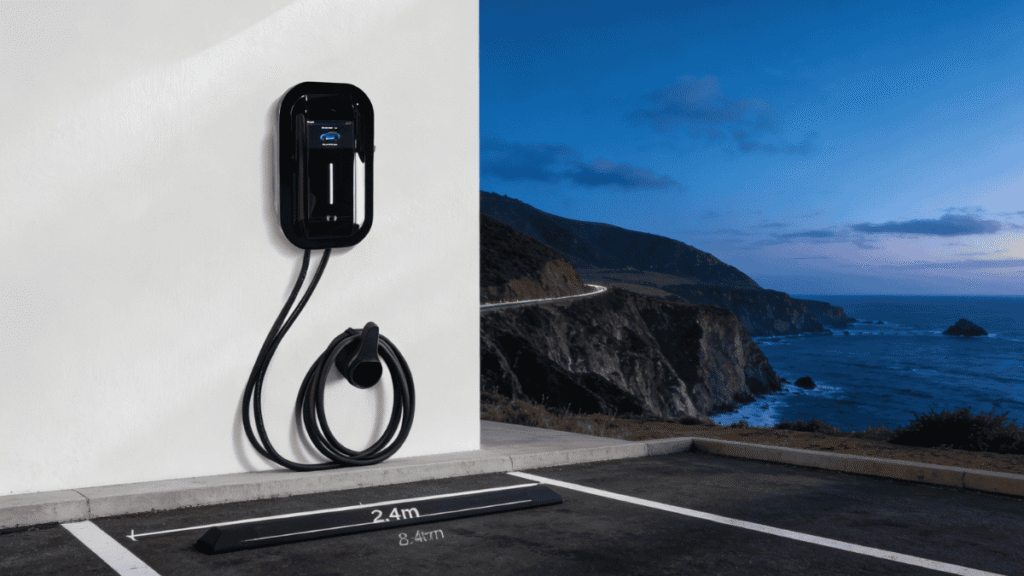
An EV fleet charging strategy is a reliability strategy. The goal is simple: keep vehicles on the road with predictable state-of-charge, while minimizing energy and operating costs. The best plans treat charging as a system made of vehicles + schedules + site power + charging hardware + software operations—and optimize across all of them.
Global note: tariffs (especially demand charges), allowable pricing methods, and electrical codes vary by region. The framework below is universal, but you should validate the numbers with local utility and installer inputs.
- Core principles: cost, uptime, and operational simplicity
- Fleet charging profiles (depot, opportunity, corridor, mixed)
- Hardware mix: AC vs DC and where each wins
- Power capacity: load balancing and scaling port count
- Uptime playbook: monitoring, alerts, and maintenance
- Cost optimization: scheduling, rates, and avoiding peaks
- Phased deployment plan and KPIs
- Where TPSON fits (AC wallboxes + compact portable DC)
- FAQ (8 questions)
- Sources & references
North-star metric
Vehicles ready on time
If vehicles miss routes, every “cheap kWh” savings is irrelevant.
Cost focus
Minimize peak-driven costs
Schedule charging and manage loads to avoid high-cost peaks.
Enfoque operativo
Reduce failure + recovery time
Monitoring and support are part of the charging product.
ChargePoint explicitly positions itself as a platform combining software, services, and stations that helps organizations scale, “reduce operating costs while increasing station uptime,” and improve efficiency with proactive management tools and support. For fleets, these points map directly to strategy: you’re not buying chargers, you’re buying availability. (Source: ChargePoint)
Your charging strategy should match your fleet’s duty cycle. Here are the four most common patterns:
| Profile | Typical vehicles | Charging window | Best-fit approach | Risk if misdesigned |
|---|---|---|---|---|
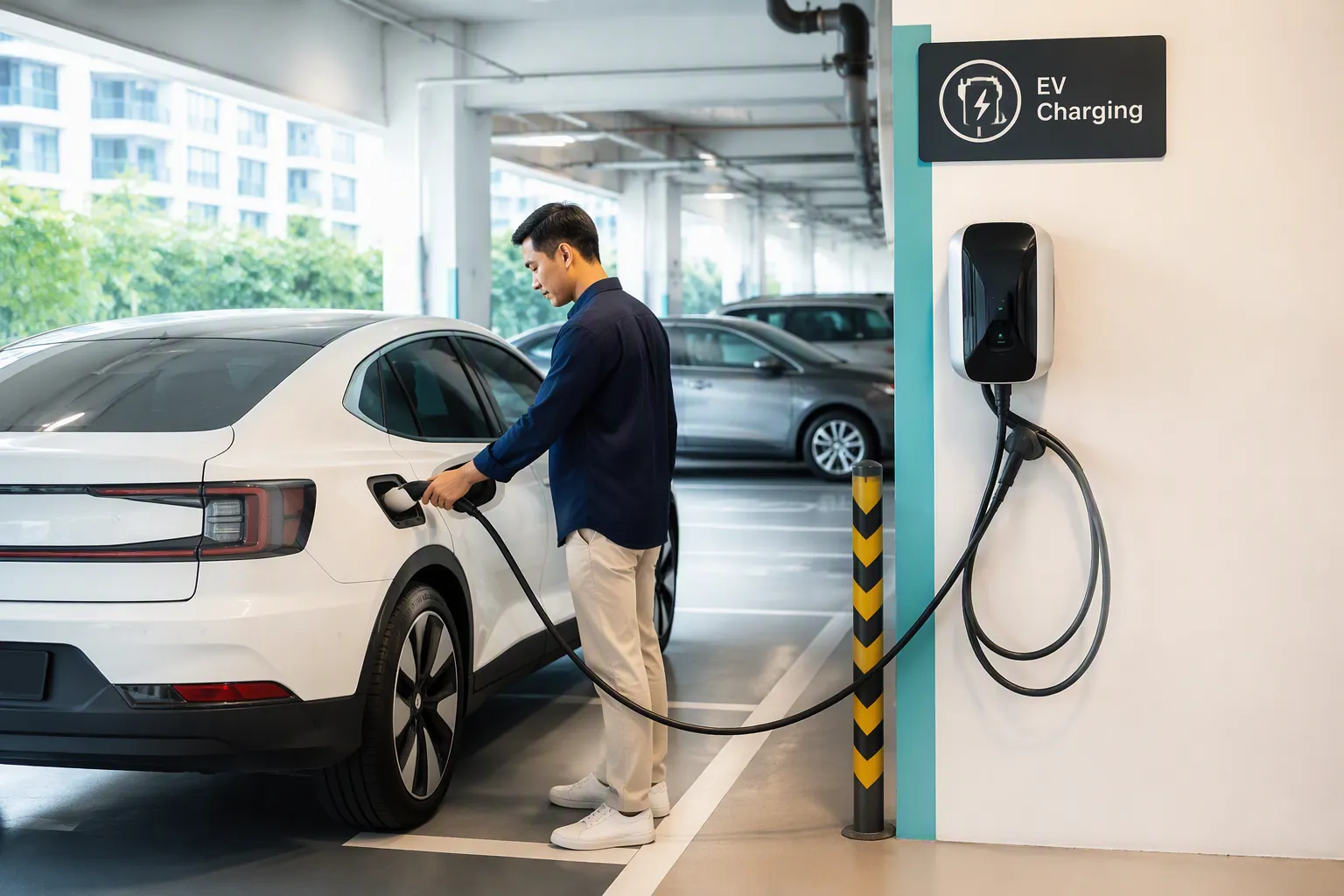
| Depot overnight | Company cars, motor pools, light-duty logistics | 6–12 hours | Many Level 2 ports + load management | Overbuild DC and blow capex; underbuild ports and create queues |
| Opportunity charging | Campus services, municipal, mixed shifts | 30 min–3 hours | AC near high-dwell stops + selective DC | Too few fast options causes route anxiety |
| Corridor / travel-stop | Long-haul service vehicles, cross-region ops | 15–45 minutos | DC fast-dominant, amenities-driven | AC-only sites fail because dwell is short |
| Mixed | Most real fleets | Varía | AC foundation + DC where time-critical | One-size-fits-all infrastructure creates bottlenecks |
Love’s provides a useful corridor reference point: it has been in the EV charging business since 2017, offers “100+ chargers across 36 locations in 14 states,” and is “adding more DC fast chargers (Level 3) to complement” its Level 2 network—explicitly acknowledging that faster charging is needed for road-trip and travel-stop use cases. (Source: Love’s EV Charging)
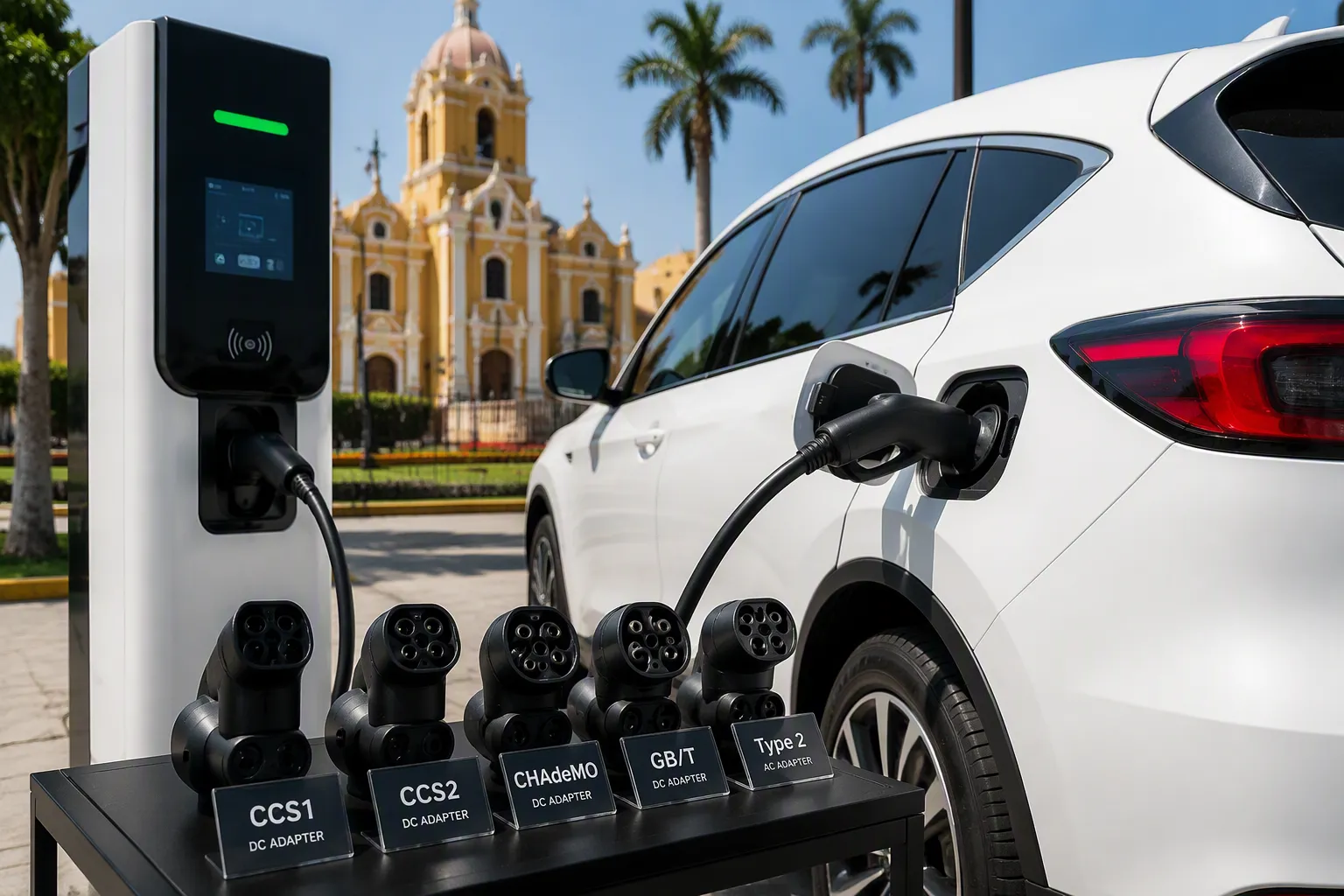
Car and Driver’s guide explains the practical distinction: Level 2 typically delivers roughly 6–19 kW and can charge overnight, while Level 3/DC fast charging is typically 50–350 kW and is designed for rapid top-ups. Fleet strategy uses the same physics: AC = scale and efficiency, DC = time. (Source: Car and Driver)
| Constraint | Choose more Level 2 AC when… | Choose DC fast when… |
|---|---|---|
| Tiempo | Vehicles park for hours | Vehicles must return to duty quickly |
| Económico | You need many ports at lower total cost | You can justify capex with avoided downtime |
| Power capacity | Panel-limited sites (use managed load) | Utility upgrades are feasible and demand supports them |
| Operational resilience | Redundancy via many ports | Need fast “recovery” capability during disruptions |
Most depots and mixed-use fleet sites are power-constrained. TPSON’s EV Chargers overview highlights “versatile AC chargers with innovative Equilibrio dinámico de la carga” and positions compact DC fast chargers for “commercial and emergency applications.” This is exactly the fleet planning logic: use load balancing to scale AC ports, then add DC where time-critical. (Source: TPSON EV Chargers)
Market examples show how common load management has become. Smart Charge America’s catalog includes solutions described with “dynamic load optimization” to install more chargers without expensive electrical upgrades, and also lists commercial products with OCPP support, RFID access, and networking options. (Source: Smart Charge America)
Fleet charging fails in boring ways: tripped protection, damaged cables, authentication issues, communications outages, or just poor user behavior. Build an uptime playbook:
- Supervisión: dashboards for station health, session success rate, and fault codes.
- Alerts: notify ops when a charger is down, overheating, or repeatedly failing sessions.
- Spare parts: keep critical spares (connectors/cables if field-replaceable, RFID cards, signage).
- Service SLAs: define response time, parts lead time, and escalation path.
- Redundancy: many AC ports can be more resilient than a single high-power DC unit.
ChargePoint emphasizes proactive management tools and support to improve efficiency and increase station uptime—this aligns with fleet needs, where downtime directly impacts vehicles staying on the road. (Source: ChargePoint)
Energy cost optimization is typically more about cuando you charge than how fast you charge—especially under tariffs with time-of-use rates or demand charges. Even at home scale, Car and Driver notes home charging is “roughly one-third the cost” of DC fast charging. Fleets can amplify that advantage by charging off-peak at depots. (Source: Car and Driver)
Fleet cost lever: Use scheduling + load management so your “charging peak” doesn’t become your “site peak.” This can reduce both energy and capacity-driven costs.
Fleets should deploy in phases, because early usage data improves design far more than assumptions.
| Fase | What to deploy | KPIs to track | Expansion trigger |
|---|---|---|---|
| Phase 1 | AC baseline in depot + basic monitoring + policies | Vehicle-ready-on-time %, sessions success rate, kWh/vehicle/day | Queueing or missed readiness targets |
| Phase 2 | Load balancing expansion (more ports) + access control | Peak kW, energy cost per mile/km, charger utilization by hour | When capacity limits or congestion appears regularly |
| Phase 3 | Add DC where time-critical (or for resilience) | Avoided downtime, route completion %, fast-charge dependency | Documented operational bottleneck solved by DC |
TPSON states it was founded in 2015 and is located in Hangzhou, using edge computing and a patented Algoritmo actual de huellas dactilares to develop AI-driven smart electrical systems and vehicle chargers. (Source: TPSON About)
- Cargadores de CA para VE: TPSON lists TW-10, TW-20, TW-30, and TW-40 Dual Gun wallbox chargers—useful as the depot/workplace foundation layer.
- Cargadores de CC para VE: TPSON’s TP?DC Compact Series integrates 20kW, 30kW, and 40kW intelligent modules with wheel mobility, DC50–1000V output range, optional Ethernet/4G connectivity, and scenarios including emergency roadside assistance and dynamic fleet/logistics management.
- Portfolio overview: Cargadores de VE (positions AC with Dynamic Load Balancing and DC for commercial/emergency needs).
“Vehicles ready on time” (or route completion rate) is the best north-star KPI. Energy cost per kWh matters only after readiness is stable.
Most fleets need both, but in different places. AC is ideal when vehicles park for hours (depot/workplace). DC is ideal when vehicles need rapid turnaround. Love’s highlights adding DC fast (Level 3) to complement Level 2 for varied needs—this is the same portfolio logic fleets should use. (Source: Love’s EV Charging)
Use load management and scale port count intelligently. TPSON’s EV Chargers overview explicitly highlights AC chargers with Equilibrio dinámico de la carga as part of its product line. (Source: TPSON EV Chargers)
It can be—especially if you want flexibility in hardware/software choices. ChargePoint states it can operate ChargePoint stations, partner stations, or “any OCPP compliant hardware.” (Source: ChargePoint)
When mobility creates operational value: moving the charger to vehicles around a depot, supporting temporary sites/events, or providing emergency assistance. TPSON lists these as applicable scenes for its TP?DC Compact Series (20/30/40kW). (Source: TPSON Portable DC EV Charger)
Combine monitoring, alerts, service processes, and redundancy. ChargePoint emphasizes proactive management tools and expert support to improve efficiency and uptime. (Source: ChargePoint)
Car and Driver notes home charging is “roughly one-third the cost” of DC fast charging. Fleets can capture similar savings by maximizing depot charging during low-cost hours and reducing reliance on public fast charging for routine energy needs. (Source: Car and Driver)
Start with enough AC ports to avoid nightly queueing, then expand using utilization data. Add DC only when it solves a documented turnaround bottleneck or acts as resilience insurance.
- TPSON About (founded 2015; Hangzhou; Current Fingerprint Algorithm): https://tpsonpower.com/about/
- TPSON EV Chargers overview (Dynamic Load Balancing positioning; AC + DC narrative): https://tpsonpower.com/ev-chargers/
- TPSON AC EV Chargers list (TW-10/TW-20/TW-30/TW-40 Dual Gun): https://tpsonpower.com/ac-ev-chargers/
- TPSON Portable DC EV Charger (TP?DC 20/30/40kW; wheel mobility; scenarios; DC50–1000V; Ethernet/optional 4G): https://tpsonpower.com/portable-dc-ev-charger/
- ChargePoint (platform, OCPP framing, uptime focus, fleet solutions framing): https://www.chargepoint.com/
- Love’s EV Charging (network scale; DC fast expansion to complement Level 2): https://www.loves.com/ev-charging
- Car and Driver (charging levels; home vs DC fast cost framing; typical equipment cost band): https://www.caranddriver.com/shopping-advice/a39917614/best-home-ev-chargers-tested/
- Smart Charge America catalog (examples of load optimization framing, OCPP, RFID, commercial hardware options): https://smartchargeamerica.com/electric-car-chargers/
- Emporia Classic product page (illustrative Level 2 specs and safety/scheduling expectations): https://shop.emporiaenergy.com/products/emporia-ev-charger
Internal links used in-body (as required): Cargadores de VE · fabricante de cargadores para vehículos eléctricos · Cargadores de CA para VE · Cargadores de CC para VE