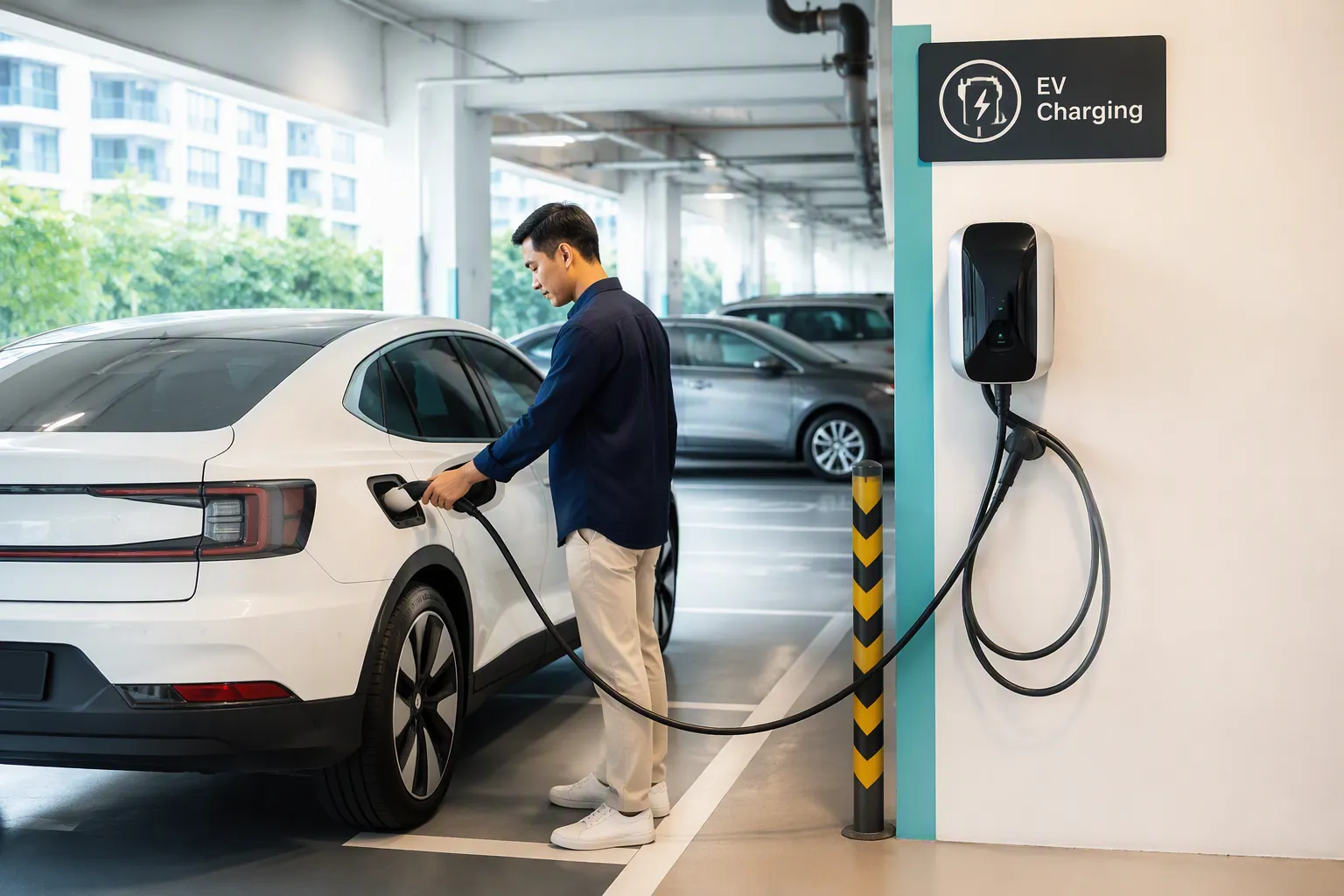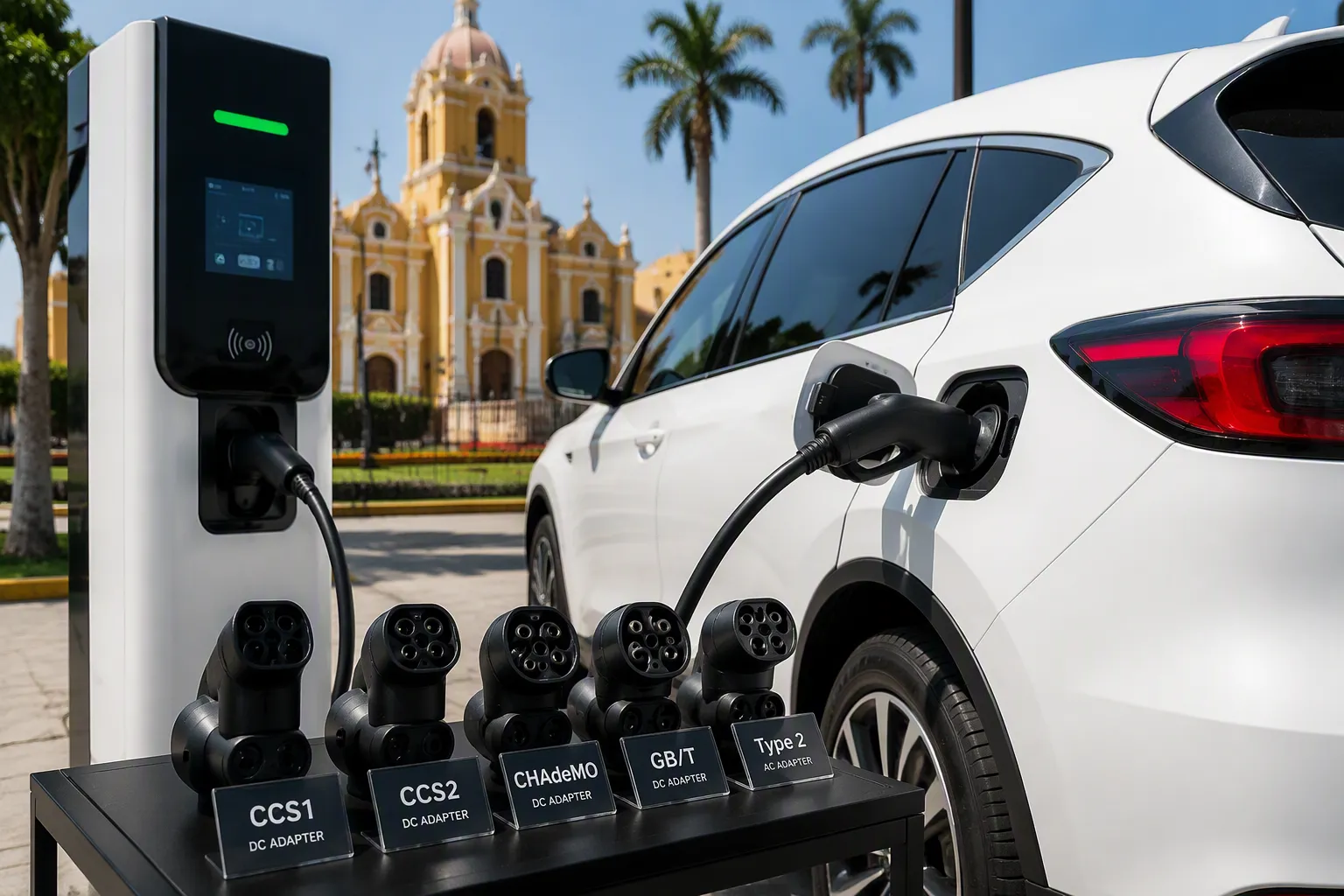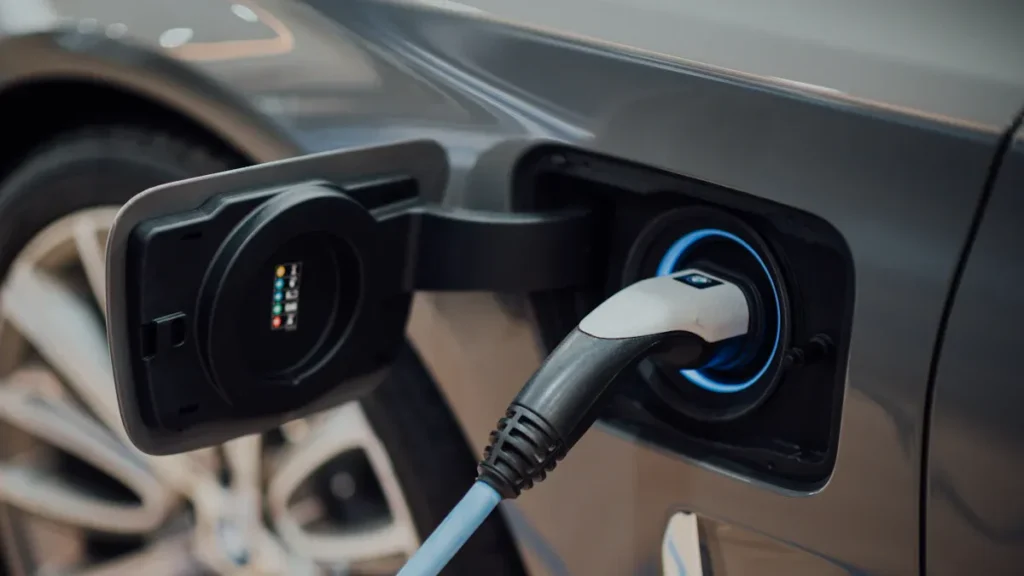

Navegar por el mundo de la Carga de Vehículos Eléctricos en Singapur es sencillo una vez que se comprenden los adaptadores clave y las Soluciones de recarga de vehículos eléctricos. opciones disponibles. A partir de enero de 2020, había 1,125 vehículos eléctricos registrados en Singapur, una cifra que ha crecido significativamente, aumentando la demanda de Cargador EV opciones confiables de carga. Para la mayoría de los conductores, su vehículo eléctrico utilizará un adaptador Tipo 2 para la carga estándar de CA y un adaptador CCS2 para la carga rápida de CC. El adaptador CHAdeMO es un estándar de CC menos común, principalmente para modelos específicos de automóviles japoneses. Elegir el adaptador correcto es crucial; determina la velocidad de carga de su vehículo eléctrico y la compatibilidad con las estaciones en toda la isla. Muchos Fabricantes de cargadores para VE proveedores ahora ofrecen una gama de productos, incluyendo cargadores portátiles para vehículos eléctricos, diversos adaptadores, para satisfacer las diversas necesidades de los consumidores.
Los Fundamentos de la Carga de Vehículos Eléctricos: CA vs. CC
Comprender la diferencia entre Corriente Alterna (CA) y Corriente Continua (CC) es fundamental para dominar la carga de vehículos eléctricos. La red eléctrica suministra CA, pero la batería de un vehículo eléctrico solo puede almacenar CC. Esta distinción dicta la velocidad, ubicación y equipo utilizado en cada sesión de carga. Los dos protocolos principales de carga se basan en métodos diferentes para realizar esta conversión de energía.
Comprendiendo la Carga de CA (Corriente Alterna)
Cómo Funciona la Carga de CA
La carga de CA es el método más común para la carga en el hogar y en destinos públicos. El proceso comienza con la energía CA que fluye desde la red hacia el vehículo. Esta energía no va directamente a la batería. En su lugar, primero debe convertirse en energía CC.
El papel del cargador de a bordo de tu coche
Cada vehículo eléctrico contiene un cargador a bordo. La única función de este componente es convertir la electricidad CA entrante en electricidad CC que la batería pueda almacenar. El tamaño y la capacidad de este cargador a bordo limitan la velocidad de carga. La mayoría de los cargadores a bordo manejan niveles de potencia entre 3.7kW y 22kW.
Mejores Casos de Uso para la Carga de CA
La carga de CA es ideal para situaciones en las que el vehículo estará estacionado durante varias horas. Esto la hace perfecta para:
- La carga nocturna en casa.
- Recargar durante la jornada laboral en la oficina.
- Cargar mientras se realizan compras o se cena en centros comerciales.
Este método más lento y constante es suave con la batería y es la solución más conveniente para las necesidades de conducción diaria.
Comprendiendo la Carga Rápida de CC (Corriente Continua)
Cómo funciona la carga de CC
La carga rápida de CC proporciona una recarga mucho más rápida. En este escenario, la conversión de CA a CC ocurre fuera del vehículo, dentro de la propia estación de carga. Estas estaciones albergan convertidores grandes y potentes, una tecnología en la que proveedores avanzados como TPSON se especializan. Luego, la estación suministra energía CC directamente a la batería del vehículo.
Evitar el cargador de a bordo para ganar velocidad
Carga de CC Esto evita por completo el cargador a bordo más lento del automóvil. Esta conexión directa permite una entrega de potencia significativamente mayor. Los cargadores rápidos de CC públicos comienzan en 50 kW 50kW y pueden alcanzar, velocidades ultrarrápidas de 150kW, 250kW o incluso 350kW.
, reduciendo drásticamente el tiempo de carga.
Mejores Casos de Uso para la Carga de CC
- La carga rápida de CC está diseñada para la velocidad y la conveniencia cuando el tiempo es limitado. Es mejor utilizarla para:.
- Recargar rápidamente durante viajes de larga distancia por autopistas.
- Recargas rápidas cuando un conductor necesita volver a la carretera rápidamente.
Utilizar centros de carga de alta velocidad dedicados.
Por Qué el Tipo de Corriente Dicta el Adaptador Las diferencias fundamentales entre los protocolos de carga de CA y CC.
| Característica | Carga de CA | Carga de CC |
|---|---|---|
| Tipo actual | Corriente alterna (CA) | Corriente continua (CC) |
| Ubicación de la conversión | requieren conectores físicos distintos. | Dentro del vehículo (cargador a bordo) |
| Potencia típica | Dentro de la estación de carga | 3.7kW – 22kW |
| Velocidad de carga | Varias horas | 50kW – 350kW+ |
20-40 minutos para 80%
Adaptadores de CA para Energía Cotidiana y Más Lenta.
Los adaptadores de CA están diseñados para sesiones de menor potencia y mayor duración. Su configuración de pines es más simple, reflejando la tarea directa de suministrar energía CA al convertidor a bordo del automóvil. Esto los hace perfectos para la infraestructura generalizada de carga de vehículos eléctricos que se encuentra en los estacionamientos residenciales y comerciales de Singapur.
Adaptadores de CC para Sesiones Rápidas y de Alta Potencia.
Los adaptadores de CC son más grandes y complejos. Deben manejar de forma segura una inmensa potencia eléctrica. Su diseño les permite comunicarse con el vehículo y suministrar energía CC de alto voltaje directamente, permitiendo las velocidades de carga rápida necesarias para los vehículos eléctricos modernos en movimiento.
Tipo 2: El Estándar Nacional para la Carga de CA de Vehículos Eléctricos en Singapur.
El conector Tipo 2 es la piedra angular de la carga de CA de vehículos eléctricos en Singapur. El gobierno lo designó como el estándar nacional obligatorio, garantizando una red unificada y accesible para todos los conductores de vehículos eléctricos. Esta estandarización simplifica la experiencia de carga pública. Elimina la confusión de múltiples tipos de enchufes para las necesidades de carga diaria.
¿Qué es el Adaptador Tipo 2 (Mennekes)?.
El adaptador Tipo 2, a menudo llamado Mennekes por su diseñador original alemán, es el conector universal para la carga de CA en Europa y muchas otras regiones, incluida Singapur. Su adopción garantiza compatibilidad y confiabilidad para la gran mayoría de los vehículos eléctricos en circulación.
Estándar Oficial de CA de Singapur.
En 2016, Singapur adoptó oficialmente el estándar Tipo 2 para la carga de CA. Esta decisión fue crucial para construir una infraestructura de carga pública cohesiva. Significa que casi todos los cargadores públicos de CA instalados en HDBs, condominios, centros comerciales y oficinas tendrán una toma o cable integrado Tipo 2. Esta uniformidad simplifica el proceso de carga de vehículos eléctricos para todos los usuarios.
Diseño Físico y Configuración de Pines.
- El conector Tipo 2 tiene un diseño distintivo de siete pines. Esta configuración es muy versátil y admite diferentes fuentes de alimentación. Dos pines.
- son para la comunicación entre el vehículo y la estación de carga. Este protocolo de comunicación gestiona las comprobaciones de seguridad y determina la velocidad máxima de carga. Hasta cinco pines.
suministran la energía. Estos incluyen pines para electricidad monofásica o trifásica y una conexión neutra y de tierra.
Este diseño inteligente es fundamental para los protocolos de carga modernos, permitiendo una transferencia de energía segura y eficiente.
Niveles de Potencia y Velocidades de Carga.
El conector Tipo 2 puede manejar una amplia gama de niveles de potencia. La velocidad de su sesión de carga de vehículo eléctrico depende del suministro eléctrico del edificio y de las especificaciones del cargador. Proveedores tecnológicamente avanzados como TPSON diseñan cargadores para optimizar estas salidas de potencia de manera segura.
Potencia Monofásica (3.7kW – 7.4kW).
- 3.7kW chargers are a common baseline, often used for overnight charging.
- Cargadores de 7,4 kW offer a faster home charging solution, effectively halving the time compared to a 3.7kW unit. They are also frequently found in public parking lots.
Three-Phase Power (11kW – 22kW)
Three-phase power is more common in commercial and industrial buildings. This allows for significantly faster AC charging speeds.
- 11kW chargers provide a substantial boost over single-phase options, ideal for workplaces and shopping malls.
- 22kW chargers represent the fastest AC charging available, capable of adding significant range in just a couple of hours.
Expected Charging Times with a Type 2 Connector
The time required for a full charge depends on the EV’s battery size, the charger’s power output, and the car’s onboard charger capacity.
Nota: An EV’s onboard charger can limit speed. For example, if your car’s onboard charger is rated at 7.4kW, it will only draw 7.4kW of power even when connected to an 11kW or 22kW station.
Full Charge Overnight at Home
Overnight charging is the most convenient and cost-effective method for daily use. A 7.4kW home charger can easily replenish a typical EV battery while the driver sleeps, ensuring the car is ready with a full battery each morning.
Topping Up While at Work or Shopping
Public AC chargers are perfect for adding range while the car is parked. An 11kW charger at a mall can add a substantial amount of range during a two-hour shopping trip. The table below illustrates the time needed to fully charge a typical 60kWh EV battery.
| Tipo de cargador | Potencia (kW) | Tamaño de la batería (kWh) | Tiempo de carga (horas) |
|---|---|---|---|
| Tipo 2 | 7.4 | 60 | 8.1 |
| Tipo 2 | 11 | 60 | 5.5 (approx. 5 hours 30 minutes) |
As shown, an 11kW charger provides a noticeably faster charge, making it a powerful option for daytime top-ups.
Where to Find Type 2 Chargers
The Type 2 connector’s status as the national standard makes it the most widespread and accessible plug in Singapore. EV drivers will find these chargers in nearly every corner of the island, integrated seamlessly into daily life.
Residential Charging (HDBs and Condos)
Home is where most EV charging happens. The government is actively expanding the residential charging infrastructure to support this.
- HDB Car Parks: The Land Transport Authority (LTA) is overseeing a large-scale deployment of charging points in Housing & Development Board (HDB) parking lots. This initiative aims to provide convenient overnight charging for residents.
- Condominiums: Many newer condominiums include shared charging stations as a standard amenity. Residents in older condos can also work with their Management Corporation Strata Title (MCST) to install personal or shared chargers.
Public Car Parks and Malls
Destination charging is a popular way to top up an EV’s battery. Malls, retail hubs, and public parking lots have widely installed Type 2 charging stations. This allows drivers to add significant range while they are busy with other activities. These chargers are commonly found at:
- Shopping Malls (e.g., ION Orchard, VivoCity)
- Supermarkets and Grocery Stores
- Community Centers and Sports Hubs
- Government Buildings and Public Institutions
Soluciones de carga en el lugar de trabajo
Forward-thinking companies are installing charging stations as an employee benefit. This form of ev charging allows commuters to replenish their vehicle’s battery during the workday. It ensures they have a full charge for the journey home and any evening errands. This expansion of the workplace charging infrastructure is a critical component of the nation’s transition to electric mobility.
Vehicle Compatibility for Type 2
The Type 2 connector is the universal standard for AC charging on almost every new electric vehicle sold locally. This broad compatibility removes guesswork for drivers, as their car’s AC port will match the public infrastructure.
Universal Standard: Regardless of the brand, if an EV is officially sold in Singapore, its AC charging port will be Type 2. This simplifies the ownership experience tremendously.
European Models (BMW, Mercedes, Audi, Porsche)
European automakers were early adopters of the Type 2 standard. All electric models from brands like BMW (iX, i4), Mercedes-EQ (EQS, EQC), Audi (e-tron), and Porsche (Taycan) come equipped with a Type 2 port for AC charging.
Korean Models (Hyundai, Kia)
Korean manufacturers have a strong presence in the EV market. Popular models such as the Hyundai Ioniq 5, Hyundai Kona Electric, and Kia EV6 all use the Type 2 connector for their AC charging needs.
American Models (Tesla)
Tesla is a major player in the global EV market. Models delivered to the Singapore market, including the Model 3 and Model Y, are factory-fitted with a Type 2 charging port. This differs from models in North America, ensuring seamless compatibility with the local charging network.
Chinese Models (BYD, MG, Ora)
The latest wave of competitive and feature-rich EVs from China also adheres to the Type 2 standard. Vehicles from brands like BYD (Atto 3), MG (MG4, ZS EV), and Ora (Good Cat) all use the Type 2 port, allowing them to connect to the extensive network of AC chargers across the country.
CCS2: The Dominant Standard for DC Fast EV Charging

While Type 2 handles daily AC charging, the Combined Charging System 2, or CCS2, is the national standard for high-speed DC fast charging in Singapore. This powerful connector is the key to unlocking rapid top-ups, making long-distance travel and quick turnarounds a reality for EV drivers. Its adoption ensures a unified and future-proof network for the growing number of electric vehicles on the road.
What is the CCS2 (Combined Charging System) Adapter?
The CCS2 adapter is an ingenious evolution of the Type 2 connector. It cleverly integrates both AC and DC charging capabilities into a single, convenient port on the vehicle. This eliminates the need for multiple charging ports, streamlining vehicle design and simplifying the user experience.
The “Combined” Type 2 and DC Pin Design
The “Combined” in CCS2 refers to its hybrid design. The connector adds two large DC power pins directly below the standard seven-pin Type 2 configuration. This unified interface allows a vehicle to use the same port for different charging methods.
- The top section is the familiar Type 2 connector, enabling AC charging.
- Two large pins at the bottom are dedicated to high-power DC current (DC+ and DC-).
- The connector retains essential communication and safety pins that manage the charging session.
This design allows the CCS2 receptacle on a vehicle to accept a standard Type 2 plug for AC charging or a full CCS2 plug for DC fast charging.
How It Enables Both AC and DC Charging
The dual-function design of the CCS2 port provides ultimate flexibility. When a driver connects to a Type 2 AC charger, the car uses the upper pins to receive AC power, which its onboard charger converts to DC. When connecting to a CCS2 DC fast charger, the vehicle uses the large lower pins to accept high-voltage DC power directly into its battery, bypassing the onboard charger for maximum speed. This intelligent system relies on advanced charging protocols to communicate and select the correct power delivery method.
Unlocking Ultra-Fast Charging Speeds
The primary advantage of the CCS2 standard is its ability to handle immense power, drastically reducing the time spent at a charging station. Technologically advanced providers like TPSON engineer robust charging solutions that deliver these high speeds safely and efficiently. The network in Singapore offers several tiers of DC fast charging.
50kW Fast Chargers
A 50kW charger is the baseline for DC fast charging. These units are common across the island and can typically add around 100km of range in about 20-25 minutes, depending on the vehicle. They represent a significant step up from AC charging and are perfect for substantial top-ups during a short stop.
100kW-180kW High-Performance Chargers
This tier of high-performance chargers is becoming increasingly widespread, especially at dedicated ev charging hubs. A 150kW charger can replenish a vehicle’s battery much faster than a 50kW unit, often delivering a 10-80% charge in well under 30 minutes for compatible EVs. These are ideal for drivers who need to get back on the road quickly.
350kW+ Ultra-High-Speed Chargers
Representing the pinnacle of current electric vehicle charging technology, 350kW+ chargers are built for next-generation EVs. While few vehicles can currently accept this full power level, these stations are future-proof. For compatible premium models, they can add hundreds of kilometers of range in just a matter of minutes, making the charging experience nearly as fast as a traditional gasoline stop.
Real-World Charging Times with CCS2
The promise of CCS2 is rapid energy delivery, turning long waits into short breaks. The most common metric used to measure DC fast charging speed is the time it takes to charge from a low state of charge (around 10%) to 80%.
Achieving 10-80% in Under 30 Minutes
For many modern EVs equipped with a CCS2 port, charging from 10% to 80% at a high-performance station (100kW or higher) can be accomplished in 20 to 30 minutes. This speed makes it practical to recharge during a coffee break or a quick meal, fundamentally changing how drivers plan their journeys.
Charging Curve Explained: An EV does not charge at a constant maximum speed. The charging rate is fastest between 10% and 50% and then gradually slows down as it approaches 80% to protect the battery’s health and longevity. Charging from 80% to 100% can often take as long as the 10-80% session.
Factores que influyen en la velocidad de carga
The advertised charging speed is a maximum potential. The actual speed a driver experiences depends on several real-world variables:
- Vehicle’s Maximum Charging Rate: A car rated for 100kW charging will not charge any faster at a 350kW station.
- Battery State of Charge (SoC): Charging is fastest when the battery is nearly empty and slows significantly as it fills up.
- Battery Temperature: The battery management system must warm up or cool down the battery to an optimal temperature for fast charging. Extreme weather can impact initial charging speeds.
- Charger’s Power Output: The station itself may have a lower output than advertised if it is sharing power with another vehicle charging simultaneously.
Locating CCS2 Chargers Across Singapore
The rapid expansion of the DC fast charging infrastructure means CCS2 chargers are becoming increasingly accessible. Drivers can find these powerful charging stations at strategic locations designed for convenience and speed, ensuring that a quick top-up is always within reach.
Dedicated Fast-Charging Hubs
Dedicated fast-charging hubs are purpose-built sites that feature multiple high-speed chargers. These hubs are the best option for drivers seeking the fastest possible ev charging experience.
- They often house a bank of chargers, reducing wait times.
- Operators like SP Group and Charge+ manage extensive hubs across the island.
- These locations typically offer a mix of 50kW, 100kW, and even faster chargers to cater to different vehicle capabilities.
Stations Along Major Expressways
For maximum convenience during transit, CCS2 charging stations are strategically placed along Singapore’s major expressways. These sites are invaluable for drivers who need to add significant range quickly without a major detour from their route. A quick 15-20 minute stop can provide enough power to complete a cross-island journey with confidence.
Newer Public Charging Networks
A growing number of public and private operators are building out the nation’s charging infrastructure. These networks are installing CCS2 chargers in publicly accessible locations like shopping malls, industrial parks, and community centers. Technologically advanced providers like TPSON supply the robust hardware that underpins this expansion, ensuring the reliability and safety of the new charging stations. This growing network makes it easier than ever for drivers to find a fast charger near their destination.
Vehicle Compatibility for CCS2
The CCS2 connector is the mandated national standard for DC charging. This decision ensures that nearly every new electric vehicle sold in the country can use the expanding fast-charging network without needing special adapters.
Most New EVs Sold in Singapore
Automakers have universally adopted the CCS2 standard for vehicles destined for the local market. This provides a seamless and predictable experience for all EV owners.
A Unified Standard: Any electric vehicle purchased through official channels in Singapore will be equipped with a CCS2 port for DC fast charging. This guarantees compatibility with the public charging infrastructure from day one.
Popular Models (Tesla Model 3/Y, Hyundai Ioniq 5/6, Kia EV6)
The most popular electric vehicles on the road today all utilize the CCS2 standard. Mainstream models that drivers see every day are fully compatible with the fast-charging network. This includes:
- Tesla Model 3 and Model Y
- Hyundai Ioniq 5 and Ioniq 6
- Kia EV6 and Niro EV
- BYD Atto 3
- MG4 and ZS EV
Premium Models (Porsche Taycan, Audi e-tron GT)
High-performance electric vehicles also use the CCS2 standard to enable their ultra-fast charging capabilities. Premium models like the Porsche Taycan and Audi e-tron GT can take advantage of 150kW+ chargers to replenish their batteries at incredible speeds. The standard also supports next-generation hypercars. For example, the Lotus Evija hypercar, available from 2023, features a CCS2 charging port at the rear and is capable of accepting a DC charge of up to 350 kW.
CHAdeMO: The Legacy DC Adapter

Before CCS2 became the national standard, another DC fast charging connector had a presence in Singapore: CHAdeMO. While now considered a legacy adapter, understanding its role provides a complete picture of the local ev charging landscape. It primarily serves a niche group of early electric vehicle models.
What is the CHAdeMO Adapter?
CHAdeMO is an early standard for DC fast charging that originated in Japan. The name is an abbreviation of “CHArge de MOve,” which translates to “charge for moving.” It was a pioneering technology in the early days of modern EVs.
The Japanese DC Charging Standard
Developed by a consortium of Japanese automakers and utility companies, CHAdeMO was the dominant fast-charging solution for vehicles like the Nissan Leaf. Its goal was to create a universal DC plug for Japanese EVs, and it saw adoption in many parts of the world before the rise of CCS.
Unique Physical Design
The CHAdeMO connector is noticeably large and round, featuring a robust locking mechanism. Unlike the integrated CCS2 plug, it is a dedicated DC-only connector. This means vehicles with a CHAdeMO port have a separate, smaller port (often Type 1 or Type 2) for AC charging.
Support for Vehicle-to-Home (V2H)
A key feature of the CHAdeMO standard is its inherent support for bi-directional power flow. This technology enables Vehicle-to-Home (V2H) and Vehicle-to-Grid (V2G) applications, allowing the car’s battery to supply power back to a home or the electrical grid.
The Status of CHAdeMO in Singapore
The presence of the CHAdeMO adapter is diminishing across the island as the nation moves toward a single, unified standard.
A Declining Presence
Drivers will find CHAdeMO chargers are increasingly rare. They are mostly located at older DC charging sites and are not being installed in new deployments. As vehicles that use this standard age, the infrastructure supporting them is naturally being phased out.
Why CCS2 Became the National Standard
The Singapore government mandated CCS2 as the national standard to create a streamlined, future-proof, and non-proprietary charging network. This decision ensures maximum compatibility for all new EVs sold locally and encourages investment in a single, powerful technology, leaving little room for competing charging protocols.
Velocidad de carga y rendimiento
Aunque en su momento se consideró rápida, el rendimiento de CHAdeMO ahora es superado significativamente por la tecnología moderna de carga de corriente continua (DC).
Potencia de salida típica (hasta 50 kW)
La mayoría de los cargadores CHAdeMO en funcionamiento ofrecen una potencia de salida de hasta 50 kW. A principios de la década de 2010, esta velocidad fue revolucionaria, pero ahora representa el nivel básico para la carga rápida de corriente continua.
Comparación de velocidad con el CCS2 moderno
La diferencia de rendimiento entre CHAdeMO y el CCS2 moderno es marcada. El estándar más nuevo ofrece un límite de potencia mucho más alto, permitiendo una carga más rápida para los vehículos compatibles.
| Tipo de cargador | Velocidad de carga típica |
|---|---|
| CHAdeMO | Hasta 50kW |
| CCS2 moderno | 50 kW hasta 350 kW |
Esta brecha significativa en capacidad subraya por qué la industria y la infraestructura nacional se han consolidado en torno al estándar CCS2, más potente y versátil.
Dónde encontrar cargadores CHAdeMO
Encontrar un conector CHAdeMO requiere una búsqueda más específica en comparación con los omnipresentes enchufes Tipo 2 y CCS2. A medida que la infraestructura nacional se moderniza, el número de estos cargadores está disminuyendo. Sin embargo, los propietarios de vehículos compatibles aún pueden encontrarlos en ubicaciones específicas de Singapur.
Sitios de carga DC antiguos
Las primeras estaciones públicas de carga rápida de corriente continua en Singapur a menudo incluían un enchufe CHAdeMO junto con uno CCS. Estos sitios antiguos siguen operativos, aunque no forman parte de los nuevos despliegues de infraestructura. Los conductores pueden usar aplicaciones de terceros como PlugShare para filtrar su búsqueda en el mapa específicamente por el conector CHAdeMO. Esto ayuda a localizar las unidades activas restantes.
Consejo para conductores: Siempre verifique el estado de un cargador CHAdeMO en la aplicación de la red antes de visitarlo. Dado que son unidades más antiguas, existe una mayor probabilidad de que estén fuera de servicio por mantenimiento.
Centros de servicio de concesionarios específicos
Los lugares más confiables para encontrar un cargador CHAdeMO en funcionamiento suelen ser los centros de servicio de las marcas que vendieron estos vehículos. Los concesionarios de marcas como Nissan y Lexus suelen mantener estos cargadores para apoyar a sus clientes. Estas estaciones de carga ofrecen una opción confiable para los propietarios que necesitan una carga garantizada.
Compatibilidad de vehículos con CHAdeMO
La lista de vehículos que utilizan el estándar CHAdeMO en Singapur es breve y específica. Consiste principalmente en modelos tempranos de vehículos eléctricos de fabricantes japoneses. El contraste es claro al compararla con las soluciones de carga modernas diseñadas por proveedores como TPSON, que se centran en el estándar CCS2.
Nissan Leaf
El Nissan Leaf es el vehículo más destacado en Singapur que utiliza el estándar CHAdeMO. Como uno de los primeros coches eléctricos de producción masiva a nivel mundial, fue un pionero que dependía de esta tecnología de carga rápida desarrollada en Japón. Los propietarios del Nissan Leaf dependen de la red restante de estos cargadores para sus necesidades de carga rápida de corriente continua.
Lexus UX 300e
Otro modelo clave equipado con un puerto CHAdeMO es el Lexus UX 300e. Este crossover de lujo totalmente eléctrico también utiliza el estándar para su capacidad de carga rápida de corriente continua. Su presencia en el mercado es otra razón por la que algunos cargadores CHAdeMO permanecen en funcionamiento, particularmente en los centros de servicio de Lexus.
Modelos tempranos del Mitsubishi Outlander PHEV
Ciertos modelos tempranos del Mitsubishi Outlander PHEV (Vehículo Eléctrico Híbrido Enchufable) estaban equipados con un puerto CHAdeMO. Esto permitía cargar rápidamente la batería del vehículo, una característica poco común para un PHEV en aquel momento.
Es importante que los propietarios verifiquen el año específico de su modelo, ya que no todas las versiones del Outlander PHEV incluyen esta característica.
La siguiente tabla resume los modelos clave que utilizan el estándar CHAdeMO en Singapur.
| Fabricante | Modelo | Puerto de carga |
|---|---|---|
| Nissan | Leaf | CHAdeMO |
| Lexus | UX 300e | CHAdeMO |
| Mitsubishi | Outlander PHEV (Modelos tempranos) | CHAdeMO |
Una guía práctica de adaptadores para conductores de vehículos eléctricos en Singapur
Dominar los adaptadores es el primer paso, pero una carga efectiva del coche eléctrico requiere conocimiento práctico. Esta guía ayuda a los conductores de vehículos eléctricos en Singapur a identificar con confianza las necesidades de su vehículo e interactuar con la red pública de carga.
Cómo identificar el puerto de carga de su vehículo eléctrico
Saber qué puerto tiene un vehículo es esencial para una carga exitosa. Afortunadamente, los fabricantes facilitan encontrar esta información.
Localizar el puerto en su vehículo
La ubicación del puerto de carga varía según el modelo. Los conductores suelen encontrar la tapa del puerto en uno de estos lugares comunes:
- Parte delantera: Integrado en la parrilla o cerca del emblema de la marca.
- Lateral: En el guardabarros delantero o trasero, similar a una tapa de gasolina tradicional.
- Parte trasera: Cerca de las luces traseras.
Un rápido recorrido alrededor del vehículo suele ser suficiente para localizarlo. El puerto en sí tendrá la forma distintiva de un combinado Tipo 2/CCS2 o de un enchufe CHAdeMO.
Consultar el manual o las especificaciones de su vehículo
La fuente de información más definitiva es la documentación del vehículo. El manual del propietario contiene una sección dedicada a la carga que especifica el tipo de puerto y las velocidades máximas de carga. El sitio web oficial del fabricante también enumera estas especificaciones técnicas en la página del modelo.
Usar las estaciones de carga públicas de manera efectiva
Encontrar una estación es solo la mitad de la batalla; los conductores también deben asegurarse de que tenga el conector adecuado para sus necesidades.
Identificar los conectores disponibles en el cargador
Las estaciones de carga públicas están claramente etiquetadas. La unidad en sí tendrá símbolos o texto que indican los conectores disponibles (por ejemplo, Tipo 2, CCS2). Los enchufes físicos también son distintos, lo que permite una confirmación visual rápida antes de iniciar una sesión.
Usar aplicaciones de redes de carga para filtrar por conector
El método más eficiente para encontrar una estación compatible es usar una aplicación de red de carga. Todos los operadores principales proporcionan aplicaciones que muestran un mapa de sus cargadores.
Consejo profesional: Utilice la función de filtro de la aplicación para mostrar solo los cargadores con el conector que necesita (por ejemplo, CCS2 para carga rápida). Esto ahorra tiempo y evita un viaje inútil a una estación de carga de vehículos eléctricos incompatible.
Comprender los cables de carga
Las estaciones de carga vienen en dos configuraciones principales: con cable integrado y sin cable integrado. Proveedores tecnológicamente avanzados como TPSON diseñan ambos tipos de soluciones robustas para satisfacer diferentes necesidades de infraestructura.
Cables integrados (permanentemente unidos)
Un cargador con cable integrado tiene un cable permanentemente unido a la unidad. Esto ofrece la máxima comodidad, ya que el conductor simplemente estaciona, toma el cable y lo enchufa.
Estaciones sin cable integrado (traiga su propio cable)
Una estación sin cable integrado es esencialmente un enchufe que requiere que el conductor use su propio cable de carga. Esto proporciona una mayor flexibilidad pero añade un paso adicional al proceso. La elección entre ellos implica compensaciones..
| Característica | Tethered Charger (Cable Attached) | Untethered Charger (BYO Cable) |
|---|---|---|
| Conveniencia | High; simply plug and go. Ideal in bad weather. | Lower; requires handling your own cable. |
| Flexibilidad | Low; fixed to one connector type (e.g., Type 2). | High; use different cables for different cars. |
| Estética | Less tidy; cable is always visible. | Clean and discreet when not in use. |
| Seguridad | High; cable cannot be stolen. | Moderate; personal cable is at risk of theft. |
Do You Need to Buy a Separate Adapter?
For most EV drivers in Singapore, the answer is no. The national standardization of Type 2 and CCS2 connectors means that vehicles purchased through official channels are ready to use the red pública de recarga out of the box. However, specific situations may require an additional charging device or adapter.
The Role of Portable Chargers
A portable charger, often called a “Mode 2” charger, is a cable with a standard three-pin wall plug on one end and a Type 2 connector on the other. Most electric vehicles include a basic version of this device. Its primary role is for emergency or opportunity charging where a dedicated EV charging station is unavailable.
Nota importante: A portable charger allows an EV to draw power from any standard domestic power outlet. The charging speed is very slow, typically around 2.3kW, adding only a few kilometers of range per hour. It is a useful backup tool but not a practical solution for daily charging.
Technologically advanced providers like TPSON engineer sophisticated portable chargers with features like adjustable current and enhanced safety protections. These can offer a more robust and reliable charging experience compared to the basic units supplied by automakers.
Third-Party Adapters (e.g., CCS1 to CCS2)
Third-party adapters are physical devices that bridge the gap between two different charging standards. While the vast majority of drivers will never need one, they are essential for a specific category of vehicles. EV owners in Singapore with grey-import vehicles, which are not officially distributed by authorized dealers, would need to purchase a third-party adapter. This is because such vehicles may not be compatible with the charging standards prevalent in Singapore, necessitating an adapter to ensure safe and compliant charging at public charging stations.
Common scenarios where an adapter might be necessary include:
- A vehicle imported from North America with a CCS1 port needing to connect to a CCS2 fast charger.
- An older imported vehicle with a Type 1 AC port needing to connect to a Type 2 AC station.
Drivers considering the use of a third-party adapter must prioritize safety. It is crucial to purchase high-quality, certified adapters from reputable suppliers. Using a poorly made adapter can pose significant risks to both the vehicle and the charging station, potentially leading to damage or electrical faults. Always verify the adapter’s specifications and compliance with local safety standards.
The Future of EV Charging Singapore Standards
The landscape of ev charging singapore is set for continued evolution. The current standards provide a stable foundation. However, global technological shifts will shape the future of the nation’s charging infrastructure. Understanding these trends offers a glimpse into the next generation of electric mobility.
The Continued Dominance of CCS2
The CCS2 connector will remain the cornerstone of the local charging network for the foreseeable future. This dominance is supported by both government policy and industry alignment.
Government Mandates and Infrastructure
The Singapore government mandates the ccs2 standard for all new public DC chargers. This decisive policy provides certainty for investors and operators. It ensures the continued build-out of a cohesive and interoperable charging infrastructure. This unified approach prevents fragmentation and simplifies the ev charging experience for all drivers. The focus remains on expanding this reliable charging infrastructure.
Manufacturer Adoption Trends
Automakers align their production with regional standards. Since Europe and Singapore have adopted CCS2, manufacturers produce vehicles with this port for these markets. This trend reinforces the standard’s position. It guarantees that new electric vehicles entering the country will be compatible with the growing public charging infrastructure.
La Norma Norteamericana de Carga (NACS)
A major global development is the rise of the North American Charging Standard (NACS), originally developed by Tesla.
What is NACS?
NACS is a compact charging connector capable of handling both AC and DC charging. Several major automakers in North America have announced plans to adopt it. This has positioned it as a significant player in global charging protocols.
Potential for Future Adoption in Singapore
The industry is observing the NACS trend closely. However, a shift away from the established CCS2 standard in Singapore is unlikely in the short term. The nation has invested heavily in its current charging infrastructure. A change in charging protocols would require a massive overhaul and create confusion for existing EV owners.
Wireless Charging and Other Innovations
Looking further ahead, new technologies promise to redefine the charging experience entirely. Technologically advanced providers like TPSON are at the forefront of developing these next-generation solutions.
The Prospect of Inductive Charging
Wireless, or inductive, charging allows an EV to replenish its battery by simply parking over a charging pad embedded in the ground.
This technology eliminates the need for cables and physical connectors. It offers the ultimate convenience for home and public charging. While still in early stages, it represents a significant long-term goal for urban mobility.
Future-Proofing the Charging Network
The ultimate goal is to create a future-proof charging infrastructure. This involves supporting current standards while preparing for new innovations. The network must be robust, adaptable, and capable of integrating new technologies as they mature.
Navigating the ev charging singapore landscape becomes simple with the right knowledge. EV drivers should remember these key points for a seamless experience:
- Most vehicles in Singapore use a Type 2 port for AC charging and a CCS2 port for DC fast charging.
- The CHAdeMO adapter is a niche connector for specific models and is becoming increasingly rare.
- Drivers should always verify their car’s port and use charging network apps to confirm a station’s available connectors before visiting.
This understanding is the key to confident and efficient charging across the island.
PREGUNTAS FRECUENTES
What are the main EV charging adapters in Singapore?
For most drivers, their vehicle will use two primary adapters. The Type 2 adapter handles standard AC charging at home or malls. The CCS2 adapter is for DC fast charging along expressways and at dedicated hubs.
Can a non-Tesla EV use a Tesla Supercharger in Singapore?
No. In Singapore, the Tesla Supercharging network is currently exclusive to Tesla vehicles. Other EV drivers must use public charging networks that offer CCS2 connectors for fast charging. These networks are widely available across the island.
Do I need to bring my own charging cable?
It depends on the station.
- Tethered stations have a cable attached.
- Untethered stations require the driver to use their own Type 2 cable. It is wise for drivers to keep a Type 2 cable in their vehicle for maximum flexibility.
¿Por qué mi vehículo eléctrico carga más lento que la velocidad anunciada por la estación?
Varios factores limitan la velocidad de carga. La velocidad máxima de carga del vehículo, el nivel actual de carga de la batería y su temperatura juegan un papel importante. Un automóvil solo tomará energía tan rápido como lo permita su sistema, independientemente de la capacidad de la estación.
¿Para qué se utiliza un cargador portátil de vehículo eléctrico?
Un cargador portátil permite conectar un vehículo eléctrico a un enchufe de pared estándar de tres patas. Ofrece una carga muy lenta y es ideal para emergencias o carga nocturna donde no hay una estación dedicada disponible. Los cargadores portátiles avanzados de proveedores como TPSON ofrecen características de seguridad mejoradas.
¿Debería preocuparse un nuevo comprador de un vehículo eléctrico por el adaptador CHAdeMO?
No. CHAdeMO es un estándar obsoleto para algunos modelos antiguos específicos, como el Nissan Leaf. Todos los vehículos eléctricos nuevos vendidos oficialmente en Singapur utilizan el estándar CCS2 para carga rápida de corriente continua, lo que hace que CHAdeMO sea irrelevante para los nuevos compradores.