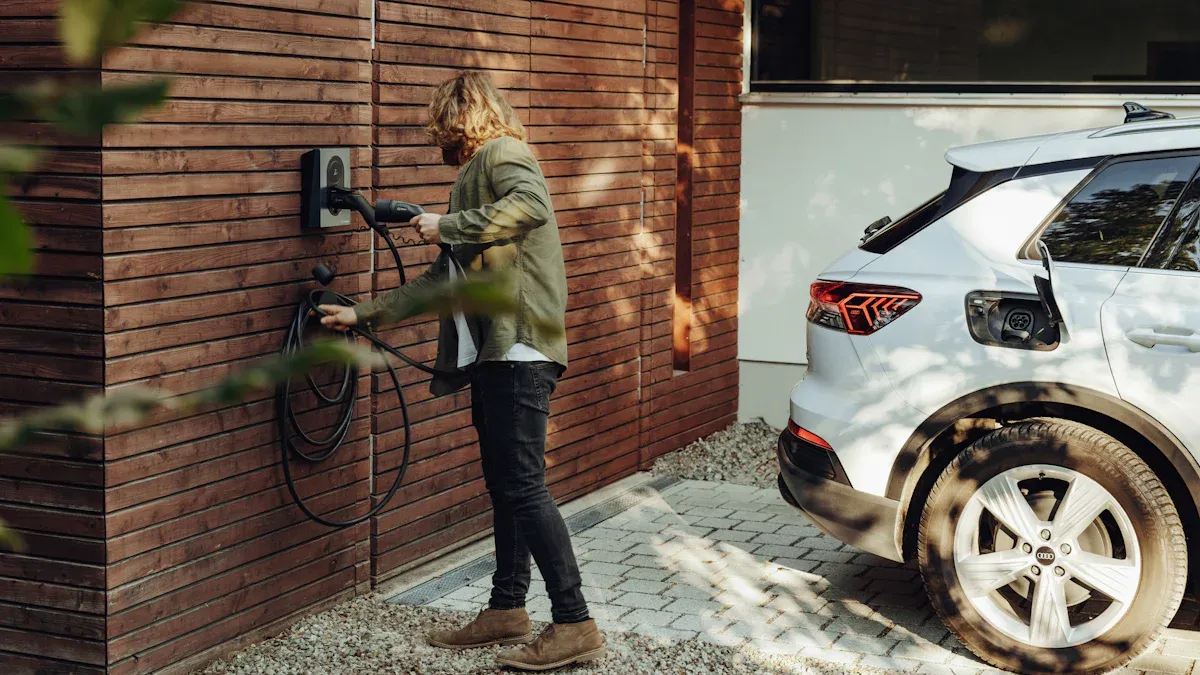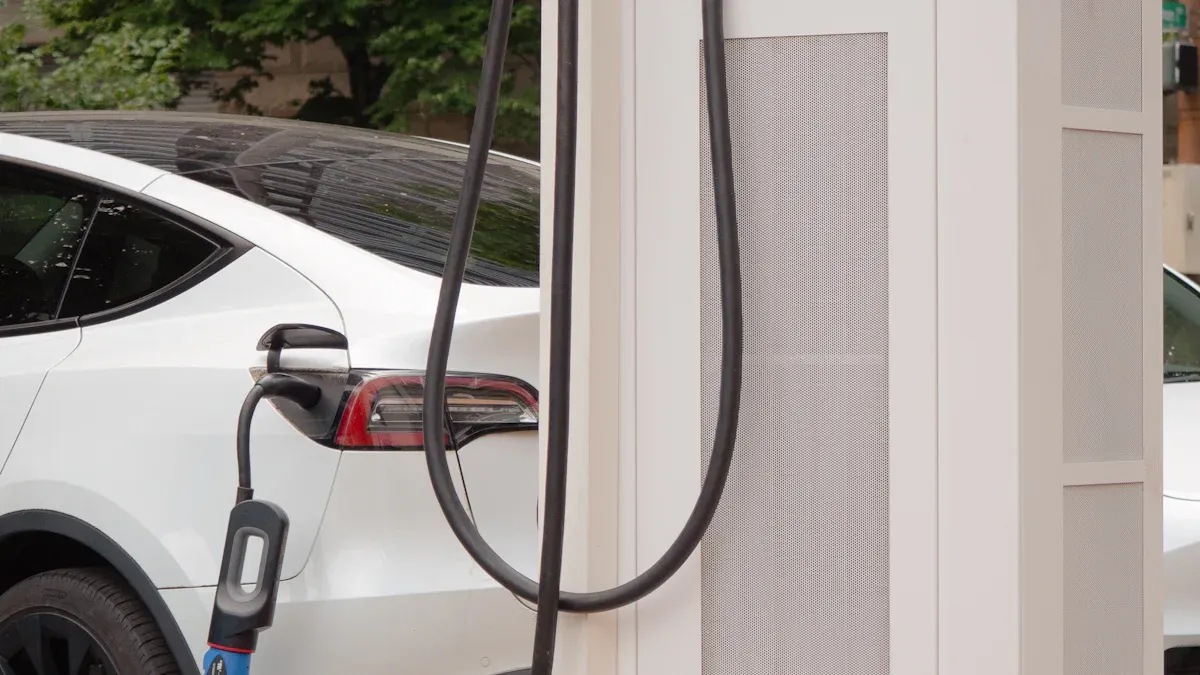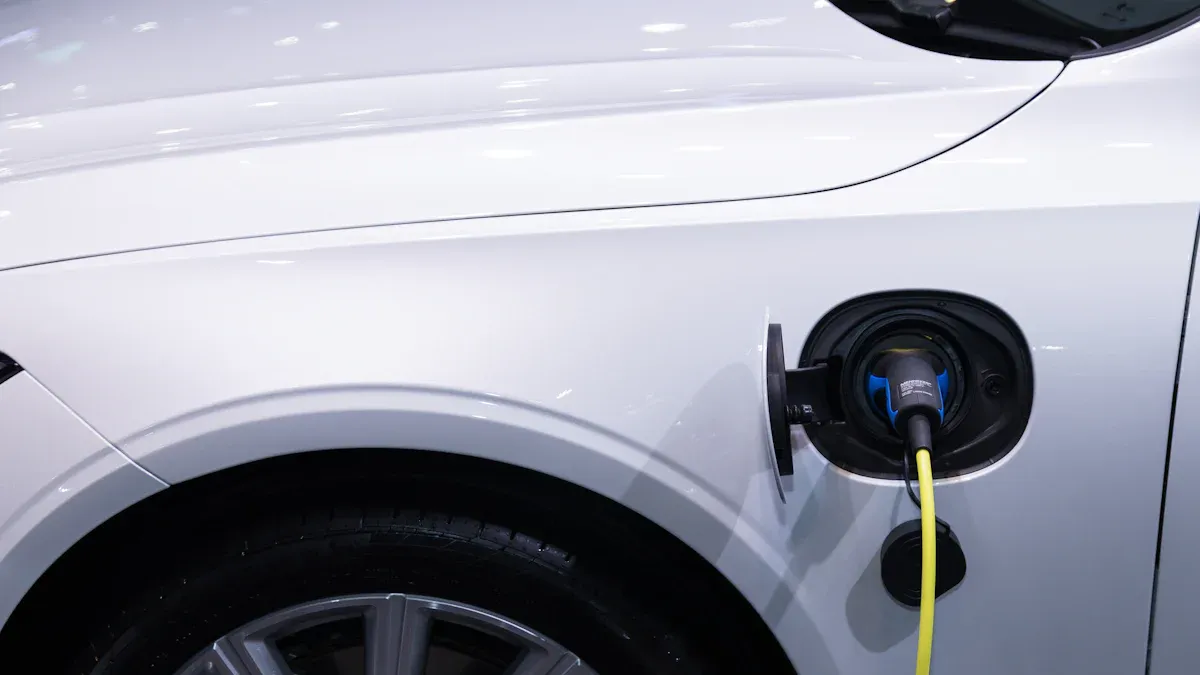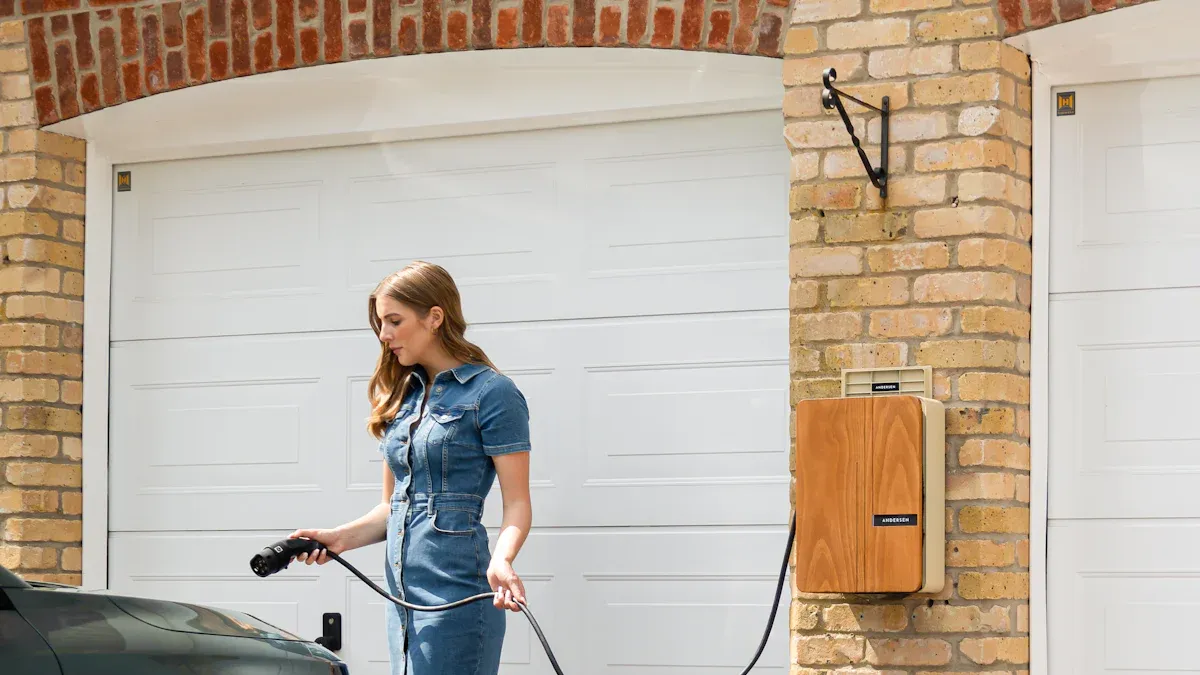
Kann ich ein E-Fahrzeug an jede Steckdose anschließen?
Yes, you can plug an EV into a regular 120V outlet, but it’s very slow, adding only 3-5 miles of range per hour. This method is best for emergencies or PHEVs.

Yes, you can plug an EV into a regular 120V outlet, but it’s very slow, adding only 3-5 miles of range per hour. This method is best for emergencies or PHEVs.

In the UK, you cannot legally install your own EV charging point. Regulations require a qualified electrician to handle the installation for safety and compliance.

While you can use a Level 1 charger with a standard outlet, you must hire a professional to install an EV charger for Level 2. DIY work risks fire & shock.

Yes, you can have a 7kW charger at home if your electrical system is prepared. This guide covers checking your 240V access and panel capacity for installation.

Yes, you can get a government grant for an EV charger. Funding up to £350 is available for renters, flat owners, landlords, and businesses to install a charger.

Yes, you can get a free EV home charger. The main ways are through automaker deals, utility company rebates, or by combining tax credits to cover the full cost.

Yes, you can get a federal tax credit for 30% of the cost, up to $1,000, for installing a home EV charger. State and local rebates may also be available.

Yes, you can use a Singapore EV charger in Thailand with a grounded Type G to Type O/B adapter. Your charger must support 220V, which most modern ones do.

Kleinere elektrische Arbeiten, wie das Auswechseln eines Schalters, können Sie zwar selbst durchführen, aber für die meisten Arbeiten ist ein zertifizierter Elektriker erforderlich. In diesem Leitfaden erfahren Sie, was Sie tun können und wann Sie einen Profi hinzuziehen sollten.

You can buy an EV charger and install a Level 1 unit yourself by plugging it in. However, a Level 2 charger requires a professional for a safe, legal install.

Ja, Sie können zu Hause ein Schnellladegerät für Elektrofahrzeuge installieren. Ein Level-2-Ladegerät erfordert einen 240-V-Stromkreis, einen Parkplatz abseits der Straße und eine professionelle Installation aus Sicherheitsgründen.

Ja, man kann ein Elektroauto in Notfällen an eine französische Haushaltssteckdose anschließen, aber für den regelmäßigen Gebrauch ist dies aufgrund der Brandgefahr durch Überhitzung und langsames Aufladen unsicher.

Ja, Sie können ein Ladegerät der Stufe 1 in einer malaysischen Eigentumswohnung verwenden, wenn Sie eine schriftliche Genehmigung der Hausverwaltung und eine Sicherheitsüberprüfung der Steckdose und der Verkabelung durch einen Elektriker erhalten.

Yes, Colombia’s power grid can handle gradual Level 1 EV charging. The main concern isn’t national capacity but local transformers and home wiring safety.

Ja, Sie können Ihr Elektroauto sicher im Regen aufladen. EV-Ladegeräte und Fahrzeuganschlüsse sind mit wetterfesten Dichtungen und Sicherheitsprotokollen ausgestattet, die den Stromfluss verhindern, bis eine sichere Verbindung hergestellt ist.

Thinking of a DIY EV charger install? Our safety checklist for Thai homeowners details the serious risks, from voiding warranties to violating MEA/PEA rules.

Our analysis shows Colombia’s electrical grid can support limited EV chargers now, but mass adoption will overwhelm local distribution networks without upgrades.

While a licensed electrician can legally install an EV charger, it requires special skills. An improper installation risks fire, voids warranties, and can damage your EV.