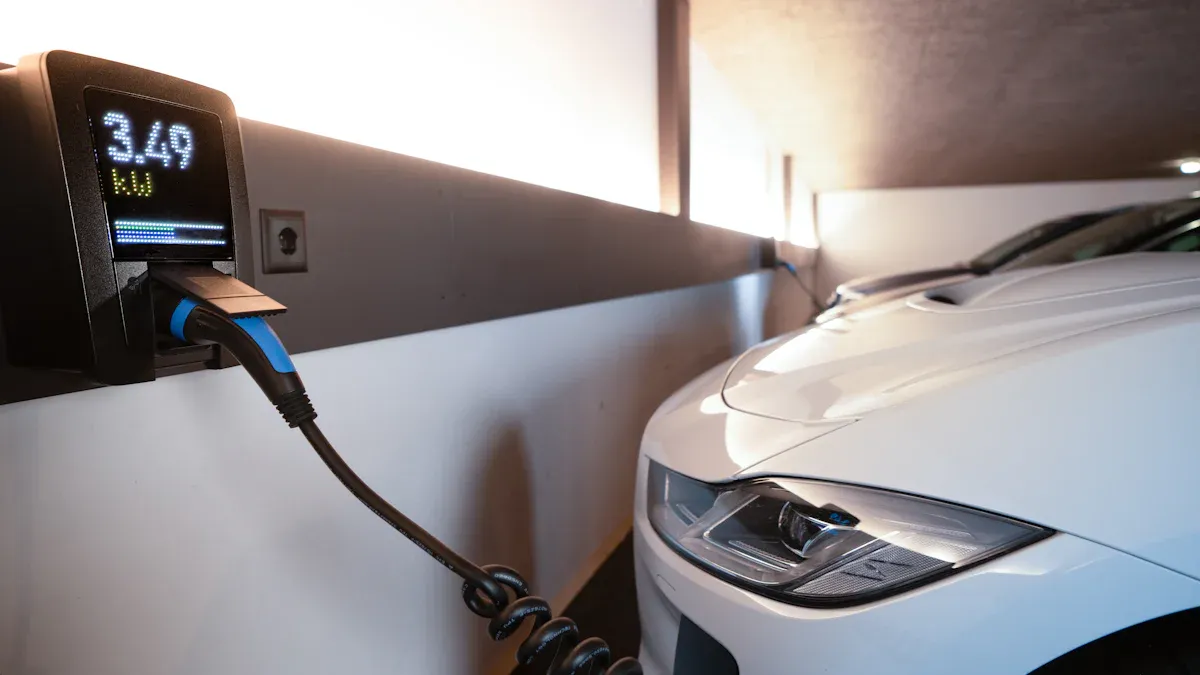
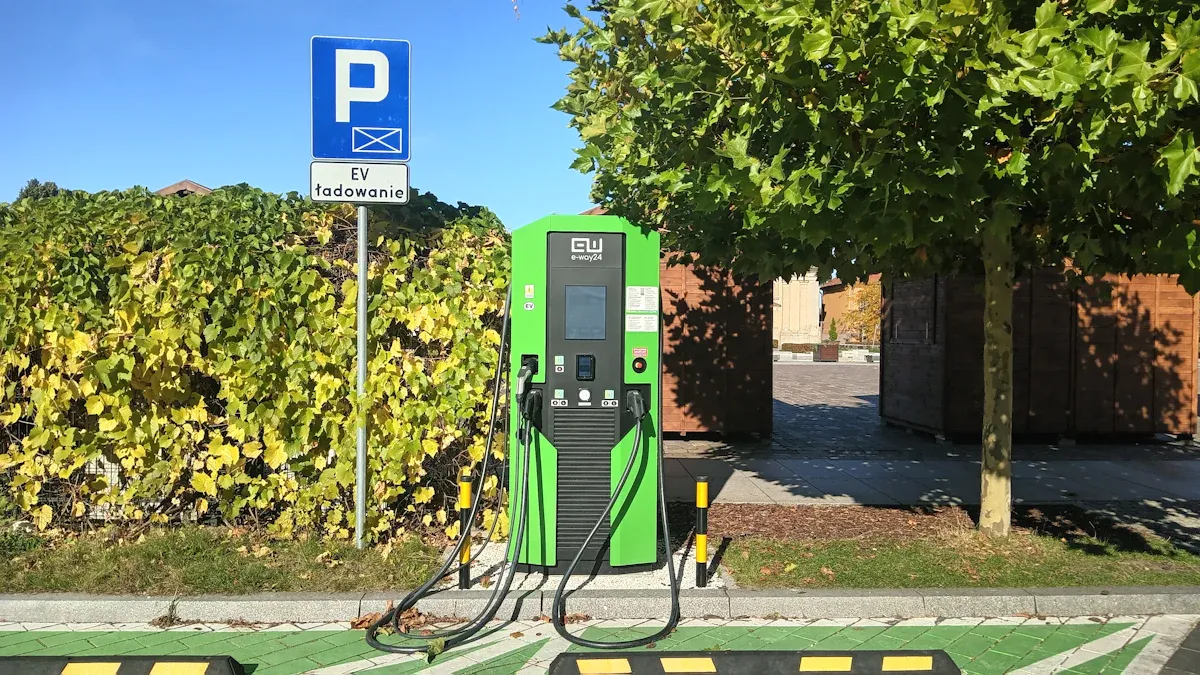
You face a decision every time your battery runs low. Most EV owners charge at home, but only 31% regularly use public electric vehicle chargers.
31% of drivers rely on public EV charging
You might choose a public EV charging station for several reasons. The table below highlights the most common motivations:
Reason for Choosing Public Charging | Açıklama |
|---|---|
Esneklik | Public charging stations are widely available in urban areas, shopping centers, and along highways, making it convenient for long trips or when away from home. |
Erişilebilirlik | The expansion of public charging networks makes it easier for more people to access EV charging infrastructure. |
Necessity for Non-homeowners | For those without the option to install a home charging station, public charging is a vital alternative, especially for apartment dwellers. |
You gain flexibility and accessibility, but you must weigh cost and practicality. Leading Elektrikli araç şarj cihazı üreticileri continue to expand networks, making public charging more viable. Public charging works best when you lack home access or travel long distances.
Cost of Public Electric Vehicle Chargers vs. Home Charging

Kamu Ücretlendirme Maliyetleri
Paid Charging Rates
When you use public electric vehicle chargers, you encounter a range of prices depending on the type of charger and location. The cost to charge an electric car at a public charge point often depends on the speed of the charger. Here is a breakdown of typical rates:
Şarj İstasyonu Tipi | Price per kWh (€) |
|---|---|
AC (22 kWh) | 0.20 – 0.35 |
Fast DC (50 kWh) | 0.40 – 0.55 |
Ultra-fast (150-350 kWh) | 0.50 – 0.79 |
You will notice that faster chargers usually cost more per kilowatt-hour. Prices also vary by network and region. For example, rapid and ultra-rapid chargepoints can average 80p per kWh, while slower chargepoints average 57p per kWh. Charging costs can differ significantly between urban and rural areas, and between different charging networks. This means you need to pay attention to both the type of charger and its location when planning your charging stops.
Free EV Charging Points
Some public electric vehicle chargers offer free charging, but these are less common. You may find free charging at certain supermarkets, retail locations, or public parking lots. These free options can help reduce the overall cost to charge an electric car, but they often come with time limits or require you to be a customer of the business.
Ev Şarj Maliyetleri
Evde Elektrik Fiyatları
Charging your EV at home usually costs less than using public electric vehicle chargers. In the United States, homeowners pay an average of $0.17 per kilowatt-hour. However, this rate can vary:
$0.17 per kWh is the national average.
California: $0.32 per kWh.
Hawaii: $0.41 per kWh.
Washington: $0.12 per kWh.
State rates can range from $0.11 to $0.40 per kWh.
You can see that the cost to charge an electric car at home depends on where you live, but it is generally lower than public charging rates.
Installation and Equipment Costs
To charge at home, you need to install a home EV şarj cihazı. The upfront cost includes the charger and installation. While this requires an initial investment, you benefit from lower ongoing costs. Over time, the savings on fuel and lower electricity rates can offset the installation expense. Home EV chargers have lower installation and equipment costs compared to the ongoing expense of using public charge points. The cost to charge an electric car at home remains significantly lower than both public charging and gasoline.
Hidden Fees and Pricing Models
Memberships and Subscriptions
Many public charging networks offer memberships or subscription plans. If you use public electric vehicle chargers frequently, a monthly fee can provide lower rates compared to pay-per-use options. For example, a monthly subscription might cost £7.85, and you can compare this to your typical charging expenses to see if it saves you money. Subscriptions also make it easier to manage your charging expenses with predictable monthly billing.
Idle Fees and Penalties
Public charging stations often include hidden fees. You may encounter penalties for leaving your EV plugged in after it is fully charged, known as EV blocking or overstay fees. Some networks charge a pre-authorisation fee to ensure you have enough funds before you start charging. Overstay fees can add up quickly, such as £0.05 per minute for 22kW charge points during peak hours. These extra costs can make public charging more expensive than you expect.
İpucu: Always check the fee structure before using a public charge point to avoid unexpected charges.
Is Public Charging Cheaper?
You want to know if public charging stations can save you money compared to charging at home. The answer depends on several factors, including your location, charging habits, and the type of charger you use. Let’s break down the situations where public charging can be more affordable and when home charging offers better value.
When Public Charging Saves Money
You may find public charging cheaper in specific scenarios. Here are the most common cases:
Ücretsiz Şarj Noktaları: Some businesses, such as supermarkets or hotels, offer free charging to attract customers. If you regularly shop or stay at these places, you can take advantage of complimentary charging. You avoid electricity costs entirely, which can lead to significant savings over time.
İşyeri Şarjı: Many employers provide free or subsidized charging for employees. If your workplace offers this perk, you can charge your EV during work hours without paying extra.
Promotional Offers and Loyalty Programs: Charging networks sometimes run promotions or offer discounted rates for members. You can benefit from reduced prices if you join a loyalty program or use a special app.
Low Regional Electricity Costs: In some regions, public charging stations may offer lower rates than your home electricity provider. For example, if your local utility charges a high rate per kWh, but a nearby public charger offers a lower price, you save money by charging away from home.
İpucu: Always check for free or discounted charging opportunities in your area. Use charging apps to locate stations with the best rates.
Here’s a quick comparison table to help you spot savings:
Senaryo | kWh başına Tipik Maliyet | Potansiyel Tasarruflar |
|---|---|---|
Free supermarket charging | $0.00 | Yüksek |
Workplace charging | $0.00 – $0.10 | Moderate to High |
Promotional rates | $0.15 – $0.25 | Orta düzeyde |
Home charging (high rate) | $0.30 – $0.40 | Düşük |
You maximize savings when you combine free charging with regular use. If you rely on public stations that offer promotions or workplace charging, you reduce your overall EV operating costs.
When Home Charging Wins
Home charging usually provides the lowest cost per mile for most EV owners. You control when and how you charge, and you avoid many hidden fees that public stations may charge. Here are the main reasons home charging often wins:
Lower Electricity Rates: Most utility companies offer lower rates for residential customers, especially during off-peak hours. You can schedule charging at night to take advantage of these discounts.
No Idle or Overstay Fees: Public stations often charge penalties if you leave your car plugged in after charging. At home, you avoid these extra costs.
Predictable Expenses: You know your electricity rate and can estimate your monthly charging costs. Public charging rates can fluctuate based on demand, location, and network.
Convenience and Control: You decide when to charge and never wait for a spot to open. You avoid the hassle of busy stations and peak-hour surcharges.
Not: If you drive daily and have access to home charging, you save more over time. The initial investment in a home charger pays off with lower ongoing costs.
Consider this simple list of advantages:
Lower average cost per kWh
No surprise fees or penalties
Flexible charging schedule
Reliable access to your own charger
You benefit most from home charging if you drive regularly, have a dedicated parking space, and live in an area with reasonable electricity rates. Over the long term, home charging remains the most cost-effective solution for most EV owners.
Convenience and Accessibility of Electric Vehicle Charging Points
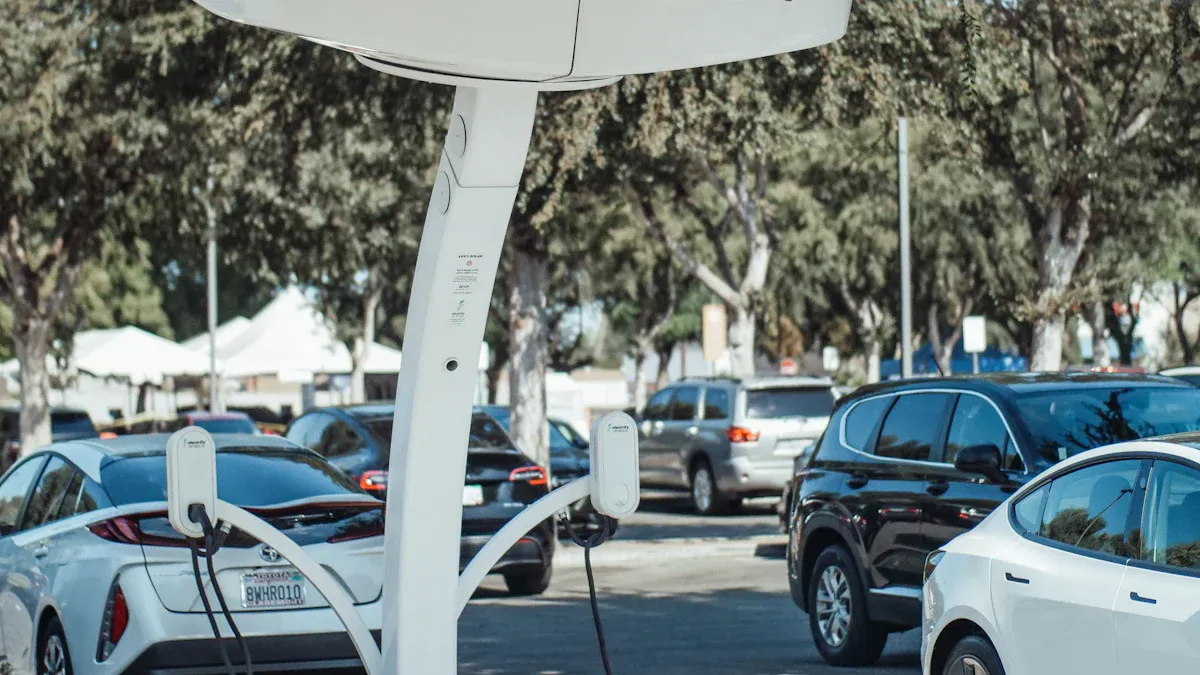
Location and Distribution
Kentsel ve Kırsal Mevcudiyet
You will notice a clear difference in the distribution of electric vehicle charging points between urban and rural areas. As of 2024, Europe has 882.012 operasyonel kamu şarj noktaları. Urban areas benefit from a much denser network, while rural regions remain significantly underserved. In fact, 78% of all charging points are located in cities, leaving rural drivers with fewer options.
Bölge Tipi | Percentage of Charging Points |
|---|---|
Kentsel Alanlar | 78% |
Rural Regions | Underserved |
Intermediate Areas | 45% |
Urban centers like Amsterdam and Berlin offer dense networks of charging points. In contrast, rural regions, especially in Eastern Europe, provide only a few thousand charging points. This uneven distribution means you will find it much easier to access electric vehicle charging points in cities than in the countryside.
Charging Networks and Apps
You can rely on major charging networks and mobile apps to locate available chargers. These platforms help you find the nearest charging point, check real-time availability, and even start a charging session remotely. Most apps display pricing, charger type, and user ratings, making it easier to plan your route and avoid unnecessary detours.
Charging networks often partner with supermarkets, parking garages, and shopping centers.
Apps like PlugShare and ChargeMap allow you to filter by charger speed and connector type.
Charger Types and Speed
Seviye 2 ve DC Hızlı Şarj
You will encounter several types of chargers at public stations. Level 2 chargers provide power outputs from 3.6 kW to 22 kW, adding 16 to 96 km of range per hour. DC fast chargers deliver between 30 kW and 400 kW, allowing you to charge your vehicle much faster.
Şarj Cihazı Tipi | Güç Çıkışı | Şarj Hızı |
|---|---|---|
Seviye 2 Şarj | 3.6 kW to 22 kW | Adds 16 to 96 km of range per hour |
DC Hızlı Şarj | 30 kW to 400 kW | 15 minutes to 1 hour for a full charge |
Level 2 chargers suit daily use and longer parking sessions. DC fast chargers work best for quick top-ups during long trips.
How Long Does Charging Take?
Charging time depends on the charger type and your vehicle’s battery. Level 2 chargers usually take between 3 to 10 hours for a full charge. DC fast chargers can charge your battery to 80% in about 20 to 30 minutes.
DC fast chargers provide 50-350 kW of power, delivering up to 200 miles of range in about 30 minutes.
You should choose the charger that matches your schedule and travel needs.
Availability and Wait Times
Peak Hours and Busy Locations
You may experience longer wait times at popular charging points, especially during peak hours. Urban locations near shopping centers or highways often see high demand. Planning your charging sessions outside of busy periods can help you avoid delays.
Rezervasyon Sistemleri
Some networks offer reservation systems that let you book a charging point in advance. These systems reduce waiting times and improve your overall experience. According to recent findings, pre-scheduled reservations save time and increase user satisfaction. Effective reservation systems also help balance the use of charging stations, preventing both overuse and underuse.
Kanıt Türü | Bulgular |
|---|---|
Reservation Type | Pre-scheduled reservations reduce waiting times and improve satisfaction. |
Utilization | Effective systems address over/underutilization of charging stations. |
Simulation Results | Time savings observed with pre-scheduled reservations. |
Model Insights | Models predict congestion based on driver behavior. |
Tip: Use apps that support reservations to secure your spot and minimize wait times.
Practical Considerations for Public Electric Vehicle Chargers
Elektrikli Aracınızla Uyumluluk
Konnektör Tipleri
You need to check the connector type before using public charging devices. Most modern electric vehicles support the Combined Charging System (CCS) or CHAdeMO connectors. However, some older models may require adapters. The transition to the North American Charging Standard (NACS) is underway, which will improve compatibility and convenience for many EV owners. If your vehicle uses an older connector, you may need an adapter to access NACS charging devices. This temporary inconvenience can complicate your charging experience, but the move toward NACS will eventually create a more uniform and efficient process.
Ücretlendirme Standartları
Charging standards play a critical role in your ability to use public charging devices. The adoption of NACS is expected to increase compatibility and make charging more convenient. You will benefit from a more streamlined experience as networks upgrade their charging devices. This shift could also encourage more drivers to switch to electric vehicles. You should always verify that your vehicle supports the charging standard at your chosen charging point.
Tip: Check your vehicle’s manual or manufacturer website to confirm which charging devices and standards are compatible.
Restrictions and Limitations
Time Limits and Access Rules
Public charging devices often come with restrictions. Many charging points impose time limits for parking and charging. You should only park at a charging point when actively charging your vehicle. Parking etiquette matters, and you must use the correct slot that matches your vehicle’s charging port. If all charging devices are occupied, you need to wait patiently for your turn.
Restriction/Limitations | Açıklama |
|---|---|
Time Limits | Many public EV charging stations impose designated time limits for parking and charging. |
Parking Etiquette | Users should only park at charging stations when actively charging their vehicles. |
Compatibility with Charging Equipment | It’s essential to park in the correct slot corresponding to the vehicle’s charging port. |
Waiting for Availability | If all charging ports are in use, users should wait patiently for their turn. |
Ödeme Yöntemleri
You encounter a variety of payment methods at public charging devices. Some stations accept credit cards, mobile payments, or network-specific apps. The configuration of charging devices affects your interaction, and attributes like authentication and pricing are crucial for convenience. Diverse payment options rank as highly important for accessibility. Harmonization of payment methods across regions remains a challenge, so you should check accepted payment types before arriving at a charging point.
Aspect | Importance Level |
|---|---|
Diverse payment options | 5 |
Charging devices may require app-based authentication.
Some charging points offer contactless payment.
Pricing transparency varies by network.
Note: Always review payment options in advance to avoid delays at the charging point.
Safety and Reliability
Bakım ve Onarım
You rely on well-maintained charging devices for a smooth experience. Hardware issues account for 36% of reported problems at public charging points. Payment failures and technical glitches can prevent charging devices from starting, which frustrates users. Slow charging speeds compared to traditional refueling times also pose challenges. You should look for charging points with a reputation for regular maintenance and prompt repairs.
Security Concerns
Using public charging devices involves certain risks. Vandalism, theft, and data privacy concerns can affect your experience. Technical issues and downtime may occur, and limited availability of compatible charging devices can disrupt your plans. You should remain aware of your surroundings and avoid leaving valuables in your vehicle while charging.
Alert: If you notice damaged charging devices or suspicious activity at a charging point, report it to the network operator immediately.
Free Electric Car Chargers and Free EV Charging Points
Where to Find Free Charging
Supermarkets and Retail Locations
You can often find free EV charging points at supermarkets and large retail centers. Many businesses install these chargers to attract environmentally conscious shoppers and encourage longer visits. Some grocery chains and shopping malls provide free electric car chargers in their parking lots. These locations usually display clear signage, making it easy for you to spot available chargers while you shop.
Workplaces and Public Parking
Workplaces increasingly offer free EV charging points as an employee benefit. If your employer participates, you can charge your vehicle during work hours at no extra cost. Public parking lots and garages in city centers sometimes provide free charging as well. However, only about 2% of public charging points offer free charging. You will most commonly find these at:
Accommodation sites, such as hotels
Car dealerships
Public car parks
How Free Charging Works
Access Requirements
Accessing free EV charging points can involve several requirements. You may need to meet specific conditions before you can plug in your vehicle. These requirements often include:
Time limits that restrict how long you can use the charger for free
Membership or subscription to a particular charging network
Being a customer of the business providing the charger
Paying for parking, even if the charging itself is free
Priority access for certain vehicles, such as company fleet cars
Using a specific app or RFID card to activate the charger
You should always check the posted rules at each location to avoid misunderstandings.
Time Limits and Fair Use Policies
Most free EV charging points enforce time limits to ensure fair access for all users. Businesses may set a maximum charging duration, such as one or two hours, to prevent vehicles from occupying chargers all day. Some locations implement fair use policies that prioritize short-term charging or limit the number of free sessions per user. These measures help maximize availability and reduce congestion.
Tip: Set a timer on your phone to avoid overstaying and risking penalties or disconnection.
Pros and Cons of Free Charging
Maliyet Tasarrufu
Free electric car chargers can significantly reduce your transportation costs. You avoid paying for electricity, which adds up over time, especially if you regularly visit locations with free EV charging points. For commuters and frequent shoppers, these savings can make a noticeable difference in your monthly expenses.
Availability and Competition
While the cost benefits are clear, you may face challenges when using free EV charging points. High demand often leads to long wait times, especially during peak hours. Outdated information on charger availability can cause frustration, as you might arrive to find all chargers occupied. Many users leave without charging due to these delays. Complicated authentication processes, such as downloading apps or registering accounts, can further hinder access. Technical issues, including failed connections or payment initiation problems, sometimes prevent successful charging sessions.
Users often encounter outdated availability information.
Long wait times are common, with many drivers leaving without charging.
Authentication and hardware issues can disrupt your charging experience.
You should weigh these factors when deciding whether to rely on free EV charging points for your daily needs.
Real-World Scenarios for Using Public Electric Vehicle Chargers
Road Trips and Long-Distance Travel
Rotanızı Planlama
When you plan a road trip in your electric vehicle, you need to map out charging stops in advance. Public charging stations along highways and major routes make long-distance travel possible. You can use charging network apps to locate fast chargers and estimate how much time you will spend at each stop. Careful planning helps you avoid running low on battery in remote areas.
Hareket Halindeyken Şarj Etme
During your journey, you will likely rely on DC fast chargers for quick top-ups. These stations reduce downtime and keep your trip on schedule. Many rest stops and service areas now offer high-speed charging, so you can recharge while taking a break. You should always check charger availability before you arrive, especially during busy travel seasons.
Daily Commuting
Using Public Chargers for Work
If you commute to work, public charging stations near your workplace can make your daily routine easier. You gain several benefits from charging at or near your job:
Convenient charging options enhance your commuting experience.
You reduce range anxiety, knowing your vehicle will have enough power for the return trip.
Charging at work can be a cost-effective solution, especially if your employer offers free or subsidized charging.
Access to workplace charging supports the transition to electric vehicles as more drivers make the switch.
Charging While Shopping or Dining
You can also charge your vehicle while running errands or enjoying a meal. Many shopping centers and restaurants now provide charging points in their parking lots. This setup lets you top up your battery while you shop or dine, making efficient use of your time. You avoid extra trips just to charge your car, which streamlines your daily schedule.
Apartman ve Site Yaşamı
Lack of Home Charging Access
Living in an apartment or condo presents unique challenges for electric vehicle owners. You may not have a dedicated parking space or the ability to install a home charger. Shared car parks can make it difficult to find available charging points. High modernization costs for electrical upgrades and limited power grid capacity can further restrict your options.
Relying on Public Infrastructure
When you cannot charge at home, you must depend on public charging infrastructure. This reliance brings its own set of hurdles:
Limited access to charging facilities for apartment residents.
Bureaucratic hurdles often slow down the process of getting permits for new installations.
Logistical issues arise from shared parking spaces and limited electrical capacity.
You need to plan your charging sessions carefully and stay flexible. Public charging networks continue to expand, but drivers in multi-unit buildings still face more obstacles than those with private garages.
Pros and Cons of Public Electric Vehicle Chargers
Avantajlar
Flexibility and Freedom
You gain significant flexibility when you use public electric vehicle chargers. These stations allow you to travel beyond your usual routes without worrying about running out of power. You can find charging points in city centers, shopping malls, and along highways. This network gives you the freedom to plan longer trips and explore new destinations. You do not need to rely solely on home charging. Instead, you can top up your battery while you shop, dine, or work.
You can charge your vehicle during errands or while at work.
You can travel confidently, knowing you have access to charging infrastructure.
Tip: Use charging apps to locate available stations and plan your stops efficiently.
Expanding EV Adoption
Public electric vehicle chargers play a vital role in expanding electric vehicle adoption. When you see more charging stations in your area, you feel more confident about switching to an EV. Public infrastructure reduces range anxiety and encourages more drivers to make the transition. Businesses and local governments continue to invest in charging networks, making EV ownership practical for a wider audience.
Fayda | Impact on EV Adoption |
|---|---|
Increased visibility | Boosts consumer confidence |
Greater accessibility | Attracts new EV drivers |
Support for non-owners | Enables apartment dwellers |
Dezavantajlar
Cost and Time Factors
You may face higher costs when using halka açık şarj istasyonları compared to home charging. Many networks charge premium rates, especially for fast charging. Idle fees and penalties can add to your expenses if you leave your car plugged in after charging. Charging at public stations often takes longer than refueling a gasoline car. You might need to wait for an available charger during busy periods.
Charging costs can vary by location and network.
Wait times increase during peak hours or at popular locations.
Note: Always check pricing and availability before you arrive to avoid surprises.
Reliability Issues
Reliability remains a concern with some public charging stations. You may encounter broken chargers, payment failures, or slow charging speeds. Maintenance delays can leave stations out of service for extended periods. These issues can disrupt your plans and cause frustration, especially if you depend on public infrastructure for daily charging.
Sorun | Potential Impact |
|---|---|
Out-of-service units | Limits charging options |
Technical glitches | Delays charging sessions |
Inconsistent upkeep | Reduces user confidence |
You should always have a backup plan in case your preferred station is unavailable.
Tips for Making the Most of Electric Vehicle Charging Points
Finding the Best Chargers
Uygulamaları ve Haritaları Kullanma
You can streamline your search for a reliable charging point by using dedicated apps and online maps. Platforms such as PlugShare and ChargeMap display real-time data on charger availability, speed, and location. These tools allow you to filter results by connector type, charging speed, and network. You can plan your route with confidence, knowing you will find a charging point that matches your vehicle’s requirements. Many apps also show proximity to amenities, which helps you choose safe and convenient locations.
Tip: Always check the app for updates before you set out. Charger status can change quickly, especially in busy urban areas.
Checking Reviews and Ratings
You should review user ratings and comments before selecting a charging point. Many charging apps include feedback from other drivers about reliability, speed, and ease of use. These insights help you avoid stations with frequent outages or slow service. You can also learn about payment methods and any restrictions at specific locations. By consulting reviews, you reduce the risk of delays and improve your overall charging experience.
Saving Money and Time
Free Charging Opportunities
You can lower your EV operating costs by seeking out free charging opportunities. Supermarkets, retail centers, and some workplaces offer complimentary charging for customers and employees. Public parking lots in city centers sometimes provide free charging, though availability remains limited. You should check for time limits and fair use policies to avoid penalties. Apps often highlight free charging points, making it easier to plan cost-effective charging sessions.
Note: Set a reminder to move your vehicle when charging is complete. Overstaying at a free charging point may result in fines or disconnection.
Yoğun Zamanlardan Kaçınmak
You can save time by charging your vehicle during off-peak hours. Early mornings and late evenings typically see lower demand at public stations. By avoiding peak periods, you reduce wait times and increase the likelihood of finding an available charging point. Reservation systems offered by some networks allow you to book a slot in advance, further minimizing delays.
To maximize your access to affordable and reliable charging, consider these strategies:
Leverage large-scale infrastructure by choosing locations with multiple charging points.
Seek out partnerships between public agencies and private businesses, which often result in well-maintained stations.
Look for charging points in underserved areas to ensure equitable access and avoid congestion.
Align your charging habits with locations that support your travel patterns and safety needs.
Callout: Proximity to amenities and safe environments enhances your charging experience. Always prioritize stations in well-lit, secure areas.
You face a choice every time your EV needs a charge. Public charging stations offer flexibility and support long trips, but you often pay higher rates and may encounter wait times. Home charging provides lower costs and greater control. Consider your driving habits, access to home charging, and local infrastructure.
İpucu: Use public chargers for travel or when home charging is unavailable. Rely on home charging for daily use to maximize savings and convenience.
SSS
How do you find public EV charging stations near you?
You can use apps like PlugShare or ChargeMap. These platforms show real-time locations, charger types, and availability. Many navigation systems in electric vehicles also display nearby charging points.
Are public EV charging stations safe to use?
Most public charging stations follow strict safety standards. You should inspect the charger for visible damage before plugging in. Charging in well-lit, busy areas increases your security.
What payment methods do public EV chargers accept?
You can pay with credit cards, mobile wallets, or dedicated charging network apps. Some stations require RFID cards or app-based authentication. Always check accepted payment options before you arrive.
How long does it take to charge your EV at a public station?
Charging time depends on the charger type and your vehicle’s battery. DC fast chargers usually take 20–40 minutes for an 80% charge. Level 2 chargers may require several hours.
Can you leave your car parked at a public charger after charging?
Most networks charge idle fees if you overstay. You should move your vehicle promptly after charging finishes. This practice helps other drivers and avoids penalties.
Do all public chargers work with every electric vehicle?
Not all chargers fit every EV. You must check connector compatibility and charging standards. Most modern EVs use CCS or NACS, but older models may need adapters.
Kamusal şarj evde şarjdan daha mı pahalı?
Public charging usually costs more per kilowatt-hour. You may pay extra fees for fast charging or idle time. Home charging offers lower rates and fewer hidden costs.
Halka açık bir şarj cihazı hizmet dışı ise ne yapmalısınız?
You should report the issue using the charging network’s app or website. Move to another nearby station if possible. Keeping backup charging options ensures you avoid delays.