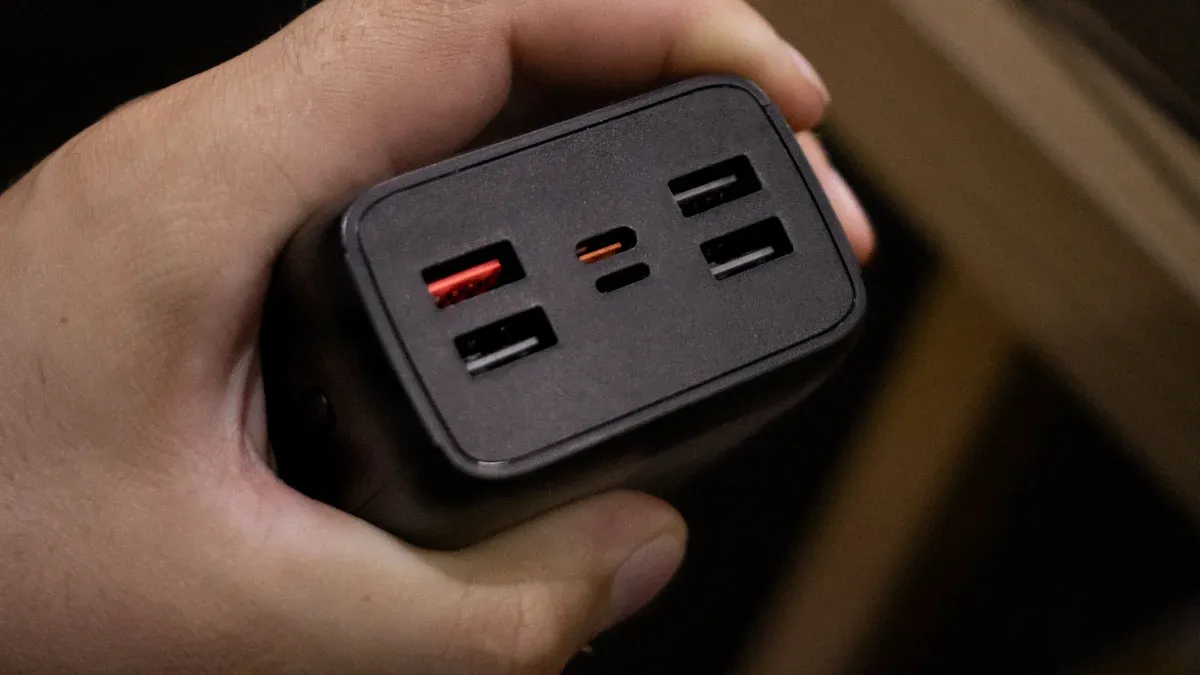
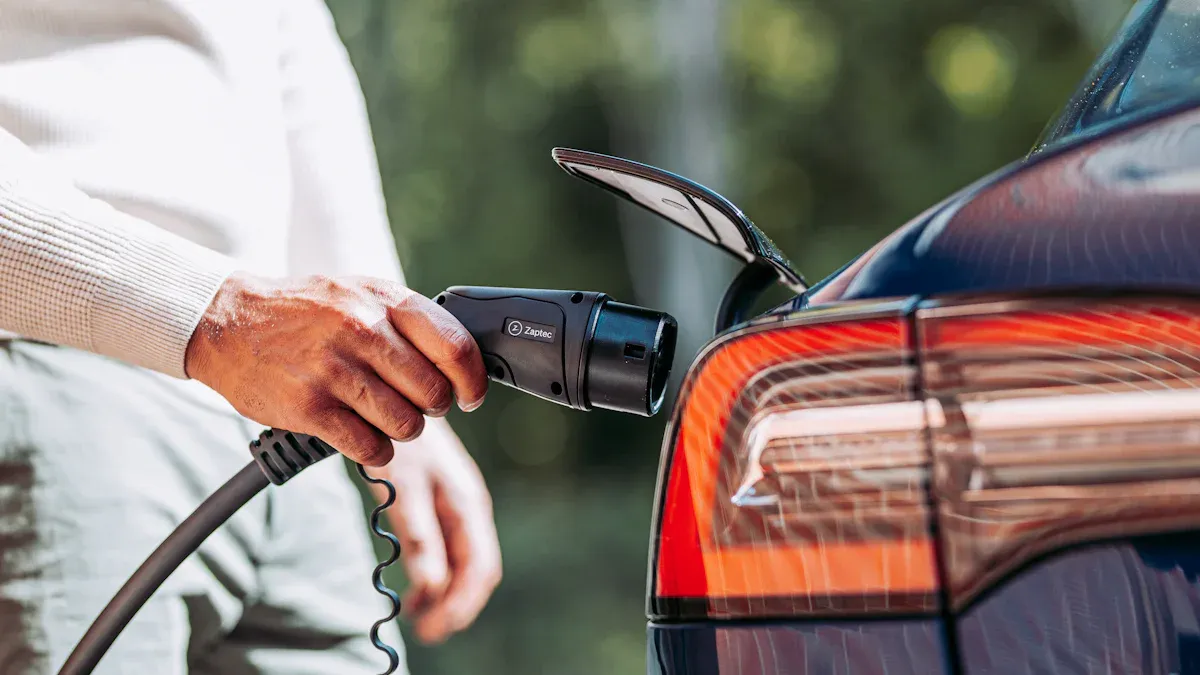
Acquiring a free EV home charger is an achievable goal, though it rarely involves a simple giveaway. The primary pathways include automaker promotions, special utility company programs, or combining rebates to cover the full cost. Elektrikli araç şarj cihazı üreticileri sometimes provide a free ev şarj cihazı, with options ranging from wall units to taşınabilir ev şarj cihazları.
Did You Know? A recent study showed that more than half (54%) of new EV buyers acquired an EV Charger as part of a bundle with their vehicle purchase.
Technologically advanced providers like TPSON offer various Elektrikli araç şarj çözümleri. Buyers can explore free ev charging options to secure free electric vehicle charging points. These incentive programs can effectively provide a free electric vehicle charger.
How Your New Car Can Come with a Free EV Charger

One of the most direct paths to securing a free ev home charger is through the dealership at the time of your vehicle purchase. Automakers understand that convenient home charging is a major selling point. They often create bundled packages to make the transition to electric driving seamless for new owners. These promotions are a powerful marketing tool, simplifying the overall electric car charging experience from day one.
Automaker Promotions and Bundles
Many manufacturers partner with charging companies to offer these valuable incentives. The key for a prospective buyer is to identify which brands are running these promotions and to approach the negotiation process with the right strategy.
Which Car Brands Offer Free Chargers?
Automaker offers change frequently, but there are always brands looking to gain a competitive edge. For example, Skoda sometimes provides customers buying a new Enyaq or Elroq with a free Level 2 (7kW) smart home charger through its partnership with Ohme. Similarly, Kia is known to run promotions offering a PodPoint Home Charger with free installation for buyers of its electric vehicles. These deals directly bundle a free EV charger with the car.
How to Ask for a Charger in Your Deal
A buyer should not assume a charger is included. It is crucial to ask the sales representative about current promotions for a home chargepoint. If no official promotion exists, a savvy buyer can still negotiate. Treat the charger like any other accessory, such as floor mats or a service package. A dealership may have the flexibility to include a home chargepoint to close the sale.
Reading the Fine Print on a Dealership Offer
A “free” offer almost always comes with terms and conditions. A buyer must review the details carefully to understand the true value and avoid unexpected costs. Technologically advanced providers like TPSON offer a range of şarj çözümleri̇, so understanding what is included in a deal is vital for comparison.
Profesyonel ipucu: Always request the full terms and conditions in writing before signing any agreement. An offer’s value is only as good as its details.
Checking for Limited-Time Offers
Most automaker promotions are temporary. An offer may be valid for a specific month or model year and can be amended or withdrawn without notice. This creates urgency but also means a buyer must confirm the deal is active when they purchase.
Identifying the Type of Charger Included
The fine print reveals exactly what the offer contains. Standard installation for a specific 7kW charger model might be included, but the buyer is responsible for any additional costs. These limitations often include:
- The offer is non-transferable and cannot be exchanged for cash.
- The customer must be a homeowner or have landlord permission for installation.
- Installation is limited to a standard setup, often with a maximum cable length (e.g., 10 meters).
- The customer pays for non-standard work, such as routing cables under floorboards, groundworks, or addressing insufficient electrical capacity.
Getting a Free Charger from Your Utility Company
Local utility companies are another excellent resource for EV owners. These providers have a vested interest in managing electricity demand. They often create incentive programs to encourage charging during off-peak hours, which helps stabilize the power grid. For consumers, these programs can translate into a significantly discounted or even a free ev home charger.
Finding Your Utility’s EV Programs
Discovering these offers requires a bit of targeted research. Most utility providers centralize this information on their websites, making it accessible to customers who know where to look.
How to Search Your Provider’s Website
A customer should navigate to their utility provider’s main website. Look for menu sections labeled “Electric Vehicles,” “EVs,” “Clean Energy,” or “Rebates & Incentives.” These pages typically contain comprehensive details about all available programs, eligibility rules, and application instructions for obtaining a home chargepoint.
Key Search Terms for Finding Offers
Using the website’s search bar can speed up the process. Effective search terms will yield the most relevant results quickly.
EV charger rebateElectric vehicle incentivesHome charging programSmart charging credit
Common Types of Utility Offers
Utility incentives come in several forms. Some provide the hardware directly, while others offer financial rebates that can cover the entire purchase price.
Free Hardware for Program Enrollment
Some utilities offer a free EV charger to customers who enroll in a managed charging or “smart charging” program. For instance, programs like PG&E’s ChargeForward offer participants significant annual earnings for allowing the utility to manage their charging schedule. This ensures the vehicle charges when energy demand is low and renewable sources are abundant.
Full Rebates That Cover 100% of the Cost
A more common approach is a post-purchase rebate. Many providers in Texas and Florida offer credits between $500 and $1,000 for the installation of a residential home chargepoint. A rebate of this size can easily cover the full hardware costs of a technologically advanced unit from a provider like TPSON, making it effectively free.
Understanding Eligibility Requirements
Securing these benefits requires meeting specific criteria. Customers must carefully review the terms and conditions before applying.
Program Requirements: A customer must typically agree to several conditions. These often include having a smart meter, owning the property (or having landlord permission), and enrolling in a specific electricity plan.
Confirming Your Service Area and Customer Status
The first and most basic requirement is that the applicant must be an active residential customer within the utility’s designated service area. These offers are not available to those living outside the provider’s territory.
Checking for Qualifying EV Models
In some cases, an incentive may be tied to a partnership with a specific automaker. A customer should always verify that their electric vehicle model qualifies for the program before purchasing a charger.
Agreeing to Managed Charging or Time-of-Use Plans
Most utility offers require enrollment in a special rate plan. These plans are central to the utility’s goal of managing electric car charging load. Common requirements include:
- Switching to a Time-of-Use (TOU) or specific EV tariff, which offers lower rates during off-peak hours (e.g., 7.2p per kWh between midnight and 5 am).
- Having a smart meter installed that can send half-hourly data readings to the utility.
- Agreeing to have the charger installed on a suitable permanent structure with reliable Wi-Fi access.
Using Rebates and Credits to Get a Free EV Home Charger
While automaker and utility deals are direct, a strategic approach combining various financial incentives can also lead to a free EV home charger. This method requires more research but gives a buyer control over their choice of hardware. A buyer can select a technologically advanced unit from a provider like TPSON and use rebates to erase the purchase price.
The Strategy: Stacking Incentives
Stacking involves layering multiple financial offers from federal, state, and local sources. The goal is to make the combined value of the incentives equal to or greater than the total costs of the charger and installation. This turns an upfront purchase into a net-zero expense after all rebates are paid and credits are claimed.
Combining Local, State, and Federal Offers
An EV owner should start by identifying every available incentive in their area. Federal credits provide a nationwide baseline. State energy offices often offer their own rebates. Finally, many municipal utilities or counties provide additional grants to encourage EV adoption. Each program has its own application process, so organization is key.
A Hypothetical Example of a “Free” Charger
Imagine a buyer purchases a home chargepoint for $600.
- Their local utility offers a $250 rebate for installing a qualified charger.
- The state provides a $150 rebate for residential charging equipment.
- The federal tax credit covers 30% of the remaining cost, which is $60 (30% of $200).
In this scenario, the buyer receives $460 in combined incentives, making the final cost of the home chargepoint just $140. Finding a slightly larger local rebate could easily make it a free ev charger.
Finding and Using Federal Tax Credits
The federal government provides a significant incentive for electric car charging infrastructure. This tax credit directly reduces a person’s tax liability, making it a powerful tool for lowering expenses.
The Alternative Fuel Vehicle Refueling Property Credit (30C)
The primary federal incentive is the Alternative Fuel Vehicle Refueling Property Credit, also known as Form 30C. For equipment placed in service starting in 2023, this credit is for 30% of the cost, up to a maximum of $1,000. This applies to the charger hardware and any installation fees, but only for taxpayers in eligible locations.
Not: Tax laws can change. An individual should always consult a tax professional to confirm their eligibility and understand the latest requirements for the 30C credit.
How to Claim the Federal Credit on Your Taxes
To claim the credit, a taxpayer must complete and file IRS Form 8911, “Alternative Fuel Vehicle Refueling Property Credit,” with their annual tax return. They will need to keep all receipts for the charger purchase and installation as proof of the expense.
Uncovering State and Local Rebates
The most valuable incentives often come from state and local entities. These programs are designed to meet regional clean energy goals and can vary widely from one place to another.
Using State Energy Office Databases
Nearly every state has an energy office or public utility commission with a website. These sites often feature searchable databases of clean energy incentives. A buyer can filter for “electric vehicles” or “EV charging” to find a list of available rebates for their new home chargepoint.
Finding City and County-Level Incentives
Many local utilities and municipalities offer their own programs. For example, incentives are available from providers across the country.
- San Isabel Electric Association (SIEA)
- Black Hills Enerji
- Gunnison County Electric Association (GCEA)
- Holy Cross Energy (HCE)
- Xcel Energy
Ayrıca, some states dedicate massive funds to this effort. The California Energy Commission has committed millions to install stations in underserved areas, while New York State has a large program to build tens of thousands of new charging stations.
What About Free Installation for Your Home Chargepoint?

While securing a free charger is possible, getting the installation for free is a separate and often more complex challenge. The costs for installation can vary significantly, so understanding what is included in any offer is crucial for managing your budget for electric car charging.
Is Installation Ever Included for Free?
Completely free installation is rare, but some promotions come close by offering credits or allowances that cover a portion of the expense. These deals are typically tied to specific bundles or utility programs.
Premium Bundled Deals with Installation Credit
Some premium automaker packages or direct-from-manufacturer deals include an allowance toward installation. For example, a car brand might partner with a charging provider to offer “free installation” that covers a standard setup. The buyer must read the terms to see what this covers, as any work beyond the standard scope will incur extra charges.
Utility Allowances for Standard Installation
Certain utility company rebates are generous enough to cover both the hardware and a standard installation. If a utility offers a $1,000 rebate and a buyer purchases a technologically advanced home chargepoint from a provider like TPSON for $600, the remaining $400 can be applied to the installation costs, potentially covering a standard job entirely.
How to Estimate Your Installation Costs
A buyer should always get a quote from a kali̇fi̇ye elektri̇kçi̇ before committing. The final price depends heavily on the complexity of the job and the existing electrical infrastructure of the property.
What Qualifies as a “Standard” Installation?
A “standard” installation has a very specific definition. It is not a one-size-fits-all service. Homeowners can expect a standard package to include:
- Fitting the home chargepoint to a permanent structure.
- Running up to 15 meters of cable from the fuse box to the charger.
- Drilling through one or two walls (up to 500mm thick).
- Installing necessary circuit and surge protection devices.
- Testing and certification of the work by the electrician.
Not: A standard installation is typically expected to take an electrician less than four hours to complete. Any job requiring more time will likely be considered non-standard.
Factors That Drive Up Installation Costs
Any deviation from the standard scope will increase the final bill. While a basic installation might cost between £300 and £700, more complex jobs can easily push the total to £1,000 or more. Factors that drive up installation costs include:
- Consumer Unit Upgrades: Older homes with outdated fuse boxes may need a partial or full replacement, which can cost anywhere from £150 to over £750.
- Long Cable Runs: Needing more than the standard 15 meters of cable will add material and labor costs.
- Groundworks: Trenching to run a cable to a detached garage or remote parking spot is a significant extra expense.
- Additional Safety Devices: Upgrading earthing and bonding or adding load management modules will increase the price.
These variables are why a personalized quote is essential for accurately estimating the total expense for a home chargepoint.
Vetting “Free” Offers for Your Charging at Home
A “free” offer can be an excellent deal, but a savvy buyer must investigate the terms before accepting. Not all promotions provide equal value. Some come with long-term obligations or hidden costs that can diminish the initial savings. Proper vetting ensures a buyer understands the full scope of the agreement for their electric car charging setup.
Key Questions to Ask Before You Commit
Asking the right questions upfront protects an EV owner from future surprises. A clear understanding of the commitment is essential.
What Are the Long-Term Commitments?
Many utility programs offering free hardware require enrollment in specific electricity plans for a minimum period, often 12 to 24 months. Leaving the program early could result in a penalty, sometimes equal to the full retail value of the charger. A buyer should confirm the duration of any required contract and the consequences of early termination.
Are There Data-Sharing Requirements?
Managed or “smart” charging programs work by collecting data about a user’s charging habits. A utility uses this information to manage grid load. An owner must be comfortable with the provider monitoring their charging sessions, including when they plug in, how long they charge, and how much energy they use. The terms and conditions should clearly outline what data is collected and how it is used.
Spotting Potential Hidden Costs
The word “free” often applies only to the charger hardware itself. Other expenses can arise, turning a no-cost item into a significant purchase. A buyer should look for any additional fees associated with the offer.
Buyer Beware: Always read the full agreement. The total costs of an offer are often found in the fine print, not the headline.
Shipping and Handling Fees
Some promotions from manufacturers or third-party retailers may require the customer to pay for shipping and handling. While this fee is usually minor, it is still an out-of-pocket expense. A buyer should verify if these charges apply before finalizing an order for their charging at home equipment.
Monthly Program or Network Fees
Some offers, especially those involving networked or smart chargers, may include ongoing service fees. While the hardware might be free, the service is not. These network fees are necessary to keep the charger connected and functional. This is a common practice for many free-to-use chargers in public spaces, and it can apply to residential programs too. A buyer should look for details on:
- Software and Connectivity: Monthly payments, often between $20 and $50, may be required to cover software updates, data processing, and customer support.
- Network Access: This fee ensures the charger, even a technologically advanced unit from a provider like TPSON, remains connected to the management system for monitoring and performance tracking.
Failing to account for these recurring charges can make a seemingly free electric car charging solution more expensive over time.
A Step-by-Step Guide to Applying for Incentives
An EV owner can successfully navigate the application process for rebates and tax credits with careful preparation. This guide provides a clear roadmap for applying for utility rebates and claiming tax credits, turning potential savings into reality.
How to Apply for Utility Rebates
Utility rebate programs require applicants to follow a specific procedure. Success depends on gathering the correct documents and accurately completing the online application.
Gathering Required Documents
Each program has unique documentation requirements. An applicant must collect all necessary paperwork before starting the application to ensure a smooth process. Common requirements include:
- A completed application form.
- A quote or invoice from an approved chargepoint installer.
- Proof of property ownership or landlord consent.
- Photographs of the final installation.
For example, some programs, like those for households with on-street parking, may require consent from the local highways authority. Workplace schemes often ask for a business’s VAT registration number or Companies House reference to verify eligibility.
Navigating the Online Application Portal
Most utilities use an online portal for rebate applications. An applicant should create an account and follow the on-screen instructions carefully. The portal will guide them through each step, from entering personal information to uploading the required documents. It is essential to double-check all entries for accuracy before submission to avoid delays.
Profesyonel ipucu: Save a digital copy of the completed application and all submitted documents. This creates a personal record for future reference.
How to Claim Tax Credits
Claiming tax credits involves a different process focused on an individual’s annual tax return. Proper record-keeping throughout the year is the key to a successful claim.
Filing IRS Form 8911
To claim the federal tax credit, a taxpayer must complete and file IRS Form 8911, “Alternative Fuel Vehicle Refueling Property Credit,” with their tax return. This form calculates the credit amount based on the total costs of the charger and installation. The form requires the taxpayer to provide details about the property and the total expense.
Keeping Records for Tax Season
Meticulous record-keeping is non-negotiable for tax purposes. A taxpayer must retain all documents related to the purchase and installation of their home charger. These records serve as proof of the expenses if the tax authority requests verification. Important documents to keep include:
- Invoices and receipts for the charger and installation.
- Contracts and correspondence with the installer.
- Proof of payment, such as credit card statements or bank transfers.
- Customs records and freight charges, if applicable.
Tax authorities require claimants to keep these records for a minimum of three years from the date of the claim. Maintaining a dedicated folder for all EV-related expenses can simplify the process come tax season.
Securing a free EV charger is possible through three primary avenues: automaker deals, utility programs, and stacking financial incentives. With significant government support, such as the Bipartisan Infrastructure Law’s $7.5 billion allocation and a federal tax credit covering up to 30% of costs, buyers have powerful tools at their disposal.
Your Action Plan
- Ask the car dealer about current home chargepoint promotions.
- Search the local utility’s website for “EV charger rebates.”
- Research federal and state incentives to cover remaining costs.
With dedicated research, obtaining a free EV home charger is a realistic goal.
SSS
What is the difference between a rebate and a tax credit?
A rebate provides a direct cash-back payment to a buyer after the purchase. A tax credit reduces the amount of income tax a person owes. Rebates offer immediate savings, while tax credits are claimed during the annual tax filing season.
Do free charger offers include smart features?
Yes, many free chargers offered through utility programs are smart chargers. These units allow for managed charging schedules. Technologically advanced providers like TPSON often supply these chargers, ensuring owners receive modern, connected hardware with their incentive.
Can renters get a free EV charger?
Renters can sometimes qualify for free charger programs. Success typically requires written permission from the landlord or property owner before installation. Some incentives are specifically designed for multi-unit dwellings to encourage EV adoption among tenants.
Is a “free” charger lower quality?
Not necessarily. Automakers and utilities partner with reputable brands to ensure reliability. These programs often provide high-quality, certified chargers. An owner should always confirm the brand and model included in an offer to verify its specifications and features.
How long does it take to receive a rebate?
Processing times for rebates vary by program. An applicant can typically expect to wait between 4 to 12 weeks after submitting a complete application. Following all instructions carefully and providing accurate documentation helps avoid delays.
What happens if my installation is non-standard?
If an installation requires work beyond the standard scope, the homeowner is responsible for the additional costs. “Free installation” credits usually only cover a basic setup. A buyer should always get a detailed quote from an electrician beforehand.
Are portable chargers ever offered for free? 🔌
Portable chargers are less commonly included in free offers, which usually focus on permanent wall-mounted units. However, some automaker bundles may include a portable charger as a purchase incentive. A buyer should ask the dealership about all available accessory promotions.