Thailand leads Southeast Asian countries in the number of charging stations, with Singapore and Malaysia following closely. Many drivers trust EV Charger networks built by prominent EV charger manufacturers in these countries. The electric vehicle market continues to grow as more charging stations appear. The table below shows the latest figures:
| Country | Number of Charging Stations | Future Plans |
|---|---|---|
| Singapore | 1,800 | 60,000 by 2030 |
| Thailand | 1,000 | 53,000 electric motorcycle taxis by 2022, 5,000 electric buses by 2025 |
| Malaysia | N/A | 25,000 public and 100,000 private charging points by 2030 |
Ranked List of Southeast Asian Countries by Number of EV Charging Stations

Quick Comparison Table of EV Charging Stations
Number of Charging Stations by Country
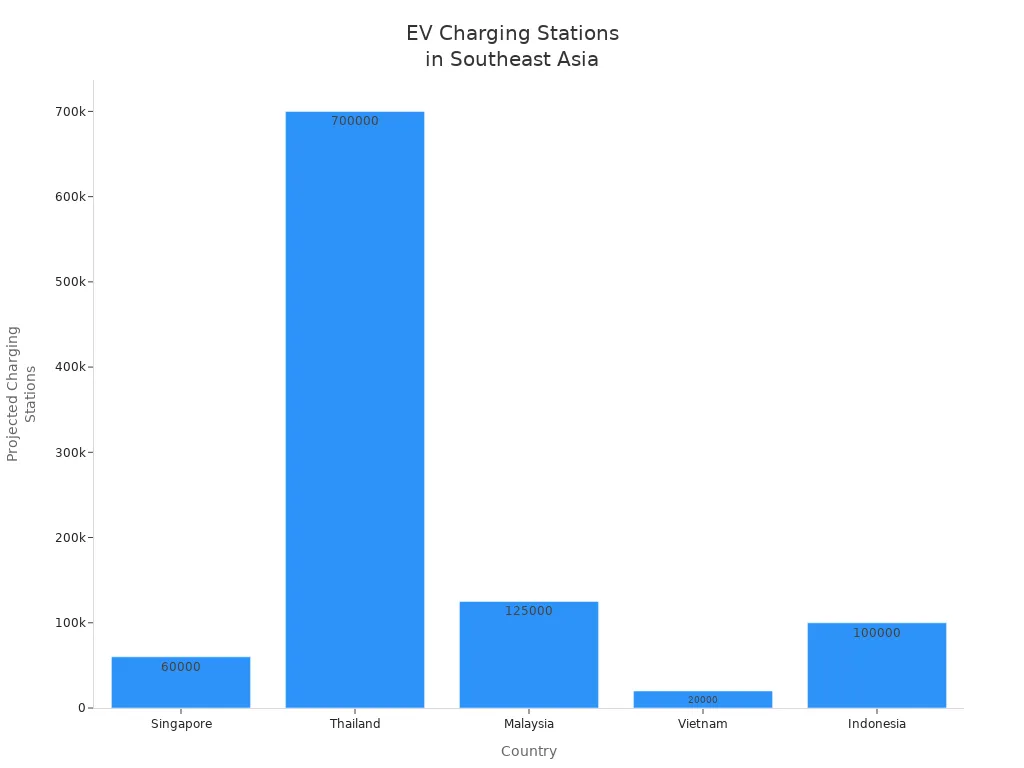
ASEAN countries continue to expand their electric vehicle charging networks. The table below highlights the current and projected number of charging stations in the region:
| Country | Current Charging Stations | Projected Charging Stations |
|---|---|---|
| Singapore | 1,800 | 60,000 |
| Thailand | 1,000 | 700,000 |
| Malaysia | N/A | 125,000 |
| Indonesia | N/A | 100,000 |
| Vietnam | N/A | 20,000 |
Singapore, Thailand, and Malaysia lead the region in both current and future plans for electric vehicle infrastructure. Indonesia and Vietnam are also making significant progress.
Growth Rate of Charging Station Installations
The growth rate of charging stations in these countries reflects their commitment to supporting electric vehicles. Thailand and Singapore have set ambitious targets, aiming to multiply their charging points over the next decade. Malaysia plans to reach 125,000 stations, while Indonesia and Vietnam are scaling up their networks to support the rising number of electric cars and motorcycles.
📈 The projected growth in charging infrastructure demonstrates the determination of ASEAN countries to support the adoption of electric vehicles.
Top Three Southeast Asian Countries for Electric Vehicle Charging
Thailand: Leading in EV Charging Infrastructure
Thailand stands out as a leader in EV charging infrastructure. The country focuses on building a robust network of charging stations to make electric vehicle use more convenient. Government policies, such as tax breaks and subsidies, encourage both consumers and manufacturers to invest in electric cars. Public-private partnerships play a key role in attracting investment and expertise, accelerating the expansion of charging networks.
| Factor | Description |
|---|---|
| Building a Robust Charging Infrastructure | Expanding the network of charging points to enhance convenience for EV users. |
| Government Policies and Incentives | Implementation of tax breaks, subsidies for EV purchases, and incentives for local manufacturing. |
| Investment in Infrastructure Development | Opportunities for public-private partnerships to attract investments and expertise. |
Singapore: High Density and Smart Charging Solutions
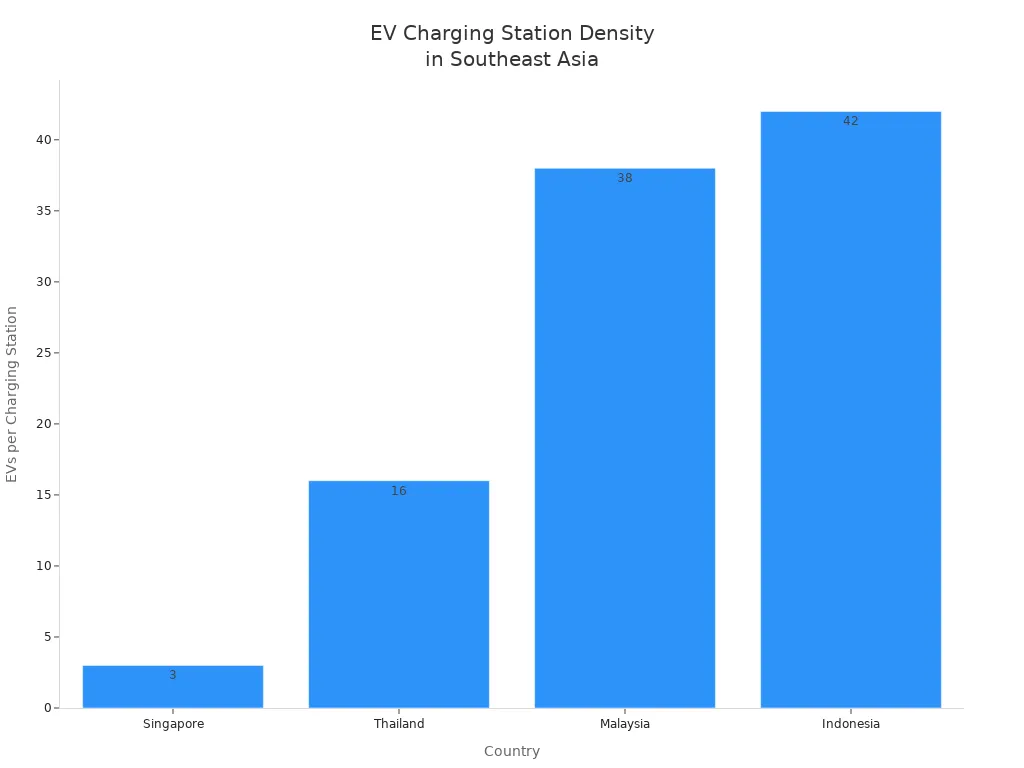
Singapore offers the highest density of charging stations in Southeast Asia. The city-state has only three electric vehicles per charging station, making it easy for drivers to find available chargers. Singapore also invests in smart charging solutions, integrating technology to provide real-time information and efficient energy management.
| Country | EVs per Charging Station |
|---|---|
| Singapore | 3 |
| Thailand | 16 |
| Malaysia | 38 |
| Indonesia | 42 |
Malaysia: Rapid Expansion of Charging Stations
Malaysia continues to expand its electric vehicle charging network. The government has set a target of 125,000 charging stations by 2030. This rapid growth aims to support the increasing number of electric cars and motorcycles on Malaysian roads. The country’s strategy includes both public and private sector involvement to ensure widespread access.
Other Notable Southeast Asian Countries in EV Charging
Indonesia: Growing Electric Vehicle Market
Indonesia is emerging as a key player in the ASEAN electric vehicle market. The country plans to install 100,000 charging stations, supporting the shift to electric cars and motorcycles. However, Indonesia faces challenges such as electricity reliability and the need for integrated national plans.
Vietnam: Early Stage Charging Network Development
Vietnam is in the early stages of developing its electric vehicle charging infrastructure. The government aims to reach 20,000 charging stations. Vietnam must address issues like technological barriers and policy fragmentation to accelerate adoption.
Philippines: Developing EV Charging Infrastructure
The Philippines is working to build its electric vehicle charging network. The country faces challenges, including electricity supply issues and the lack of cohesive strategies. Overcoming these obstacles will be essential for the growth of electric vehicles in the Philippines.
- Electricity reliability issues remain a challenge for Indonesia, Vietnam, and the Philippines.
- Many countries lack integrated plans for expanding charging infrastructure.
- Technological barriers and policy fragmentation slow the adoption of electric vehicles.
How Leading Southeast Asian Countries Make EV Charging Easy
Policies and Incentives for Electric Vehicle Charging Stations
Government Support for Charging Station Installation
Governments in ASEAN countries have played a pivotal role in accelerating the deployment of electric vehicle charging infrastructure. Malaysia, Thailand, and Singapore have each adopted unique strategies to encourage the installation of charging stations. The following table summarizes some of the most effective government policies:
| Country | Policy Type | Details |
|---|---|---|
| Malaysia | Tax Incentives | Up to 100% reduction of income tax for local manufacturers of EV charging equipment until 2032. |
| Investment Allowance | 100% investment tax allowance for five years. | |
| Charging Station Target | 125,000 EV charging stations by 2030. | |
| Thailand | Tax Exemption | Five-year tax exemption for investments in charging stations numbering 40 or more. |
| Charging Station Target | Planned stations numbering 700,000 by 2030. | |
| Singapore | N/A | N/A |
Malaysia and Thailand have set ambitious targets for the number of charging stations, with strong fiscal incentives to attract both local and foreign investment. These policies have created a favorable environment for rapid growth in electric vehicle infrastructure.
Tax Breaks and Subsidies for EV Infrastructure
Tax breaks and subsidies remain essential tools for promoting electric vehicle adoption and charging network expansion. ASEAN governments have introduced a variety of incentives:
- Thailand approved a package of incentives, including tax cuts and subsidies, to promote EVs and charging infrastructure.
- Malaysia offers import duty and excise tax exemptions for electric vehicles, with expectations of additional financial incentives in future budgets.
- Indonesia is considering reducing the value-added tax on electric car sales from 11% to 1%, which could further stimulate demand for electric vehicles and related infrastructure.
These measures lower the cost of both electric cars and charging station installations, making the transition to electric mobility more attractive for consumers and businesses.
Partnerships with the Private Sector
Public-private partnerships drive innovation and accelerate the rollout of charging infrastructure in Southeast Asian countries. Collaboration between governments and private companies ensures access to advanced technology and capital. Notable examples include:
| Partnership | Focus | Contribution |
|---|---|---|
| Betamek & Jiangsu Yibang | Technical R&D | Establishing manufacturing facilities in Malaysia for EV communication controllers, enhancing interoperability. |
- XPeng and Charge+ have partnered to establish at least 20 DC supercharging sites across Southeast Asia, improving access to fast charging.
- Gentari and Virta collaborate to enable EV charging interoperability and deploy advanced charging services throughout the region.
These partnerships help standardize technology, expand network coverage, and improve the overall user experience for electric vehicle owners.
Coverage and Accessibility of EV Charging Stations
Urban Charging Networks in Southeast Asian Countries
Urban centers in ASEAN countries have seen significant investment in high-capacity charging stations. Supercharging sites in cities like Singapore, Kuala Lumpur, and Bangkok offer fast and efficient charging for electric vehicles. The following table highlights the operational status of major urban charging sites:
| Location | Type of Charging | Power Rating | Status |
|---|---|---|---|
| Singapore | DC Fast Charging | 480kW DC | Operational |
| Kuala Lumpur | DC Fast Charging | 350kW DC | Operational |
| Bangkok | DC Fast Charging | 480kW DC | Operational |
| Various Locations | DC Fast Charging | Up to 480kW | Planned |
- At least 20 new DC fast charging sites are being installed across Singapore, Malaysia, Thailand, and Indonesia.
- Four ultra-fast charging sites already operate in urban centers, delivering a charge from 10% to 80% in as little as 12 minutes.
These developments ensure that electric vehicle users in cities have access to reliable and rapid charging solutions.
Expanding Access in Rural and Remote Areas
Expanding charging infrastructure beyond urban centers remains a priority for ASEAN countries. Several strategies have proven effective:
- V-Green aims to establish 500,000 EV charging ports by 2028, focusing on rural and remote areas.
- The introduction of a franchising policy for charging stations has encouraged public investment, leading to a rapid increase in applications and faster expansion.
- Plans for 2025 include extending networks into key provincial capitals and major districts, ensuring balanced distribution of charging stations.
Government intervention and context-specific strategies play a crucial role in promoting inclusive electric mobility transitions, especially in resource-constrained environments.
Highway and Long-Distance Electric Vehicle Charging
Long-distance travel with electric vehicles is becoming more convenient due to the development of highway charging networks. The Charge+ EV Charging Highway project exemplifies this progress:
| Feature | Details |
|---|---|
| Project Name | Charge+ EV Charging Highway |
| Total Distance | 5,000 km |
| Countries Involved | Singapore, Malaysia, Thailand, Cambodia, Vietnam |
| Number of Charging Stations | 45 DC fast-charging locations |
| Average Distance Between Stations | 120 km |
| Operational Timeline | 18 stations by end of 2024, remaining 27 by end of 2025 |
| Key Cities for Urban Hubs | Singapore, Kuala Lumpur, Bangkok, Phnom Penh, Ho Chi Minh City, Hanoi |
| Company | Charge+, part of Sunseap Group |
| Current Charging Points | Approximately 1,000 across six countries |
| Purpose | Enhance EV travel convenience and address long-distance charging concerns |
This network connects major cities and supports seamless travel for electric car owners across multiple ASEAN countries.
User Experience at EV Charging Stations
Payment Options and Affordability for Electric Vehicle Owners
ASEAN countries have prioritized user-friendly payment systems at charging stations. Many networks support cashless payments, credit cards, and mobile wallets. These options make it easier for electric vehicle owners to pay for charging services, increasing affordability and convenience.
Mobile Apps and Real-Time Charging Station Information
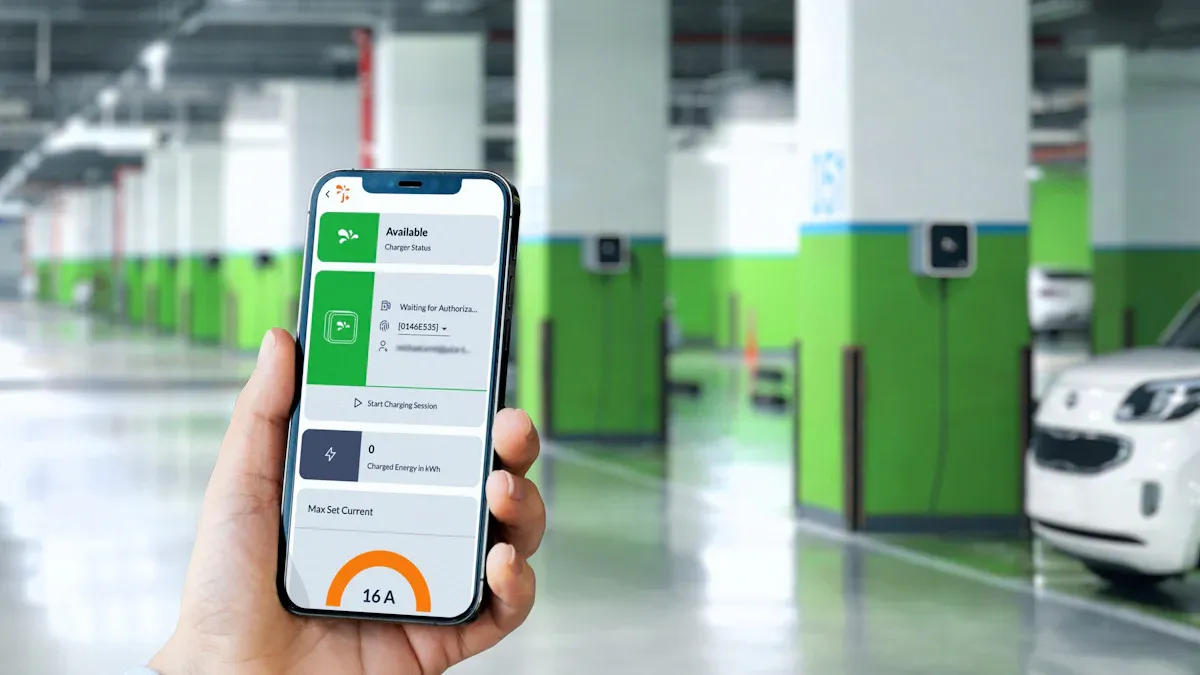
Mobile apps have transformed the charging experience for electric vehicle users. These apps provide real-time charging status, allow users to schedule charging sessions, and send notifications about station availability. Payment gateways integrated into these apps streamline the process, while AI-powered features predict demand and suggest optimal charging times. This technology reduces wait times and enhances satisfaction for electric car owners.
Interoperability Across Charging Networks
Interoperability remains a key focus for ASEAN countries. Governments and industry partners have established standards to ensure compatibility across different charging networks. The following table summarizes important measures:
| Measure | Description |
|---|---|
| Minimum Charge Point Requirements | Policies set to ensure a baseline for charging infrastructure. |
| Interoperability Requirements | Standards established to facilitate compatibility across different charging networks. |
| National Technical Regulations (2025) | Establishes safety and performance standards for EV charging stations, ensuring reliability and interoperability. |
| Multi-standard DC Chargers | Promotes the use of chargers that can accommodate various EV models, enhancing interoperability. |
| Open Standards | Essential for ensuring interoperability within the EV charging infrastructure, allowing for seamless user experience across different networks. |
These efforts allow electric vehicle owners to use multiple networks without compatibility issues, supporting the growth of the entire ecosystem.
Customer Support and Charging Station Reliability
Customer support and reliability ratings vary among charging providers in Southeast Asian countries. The following chart compares ratings for major providers:
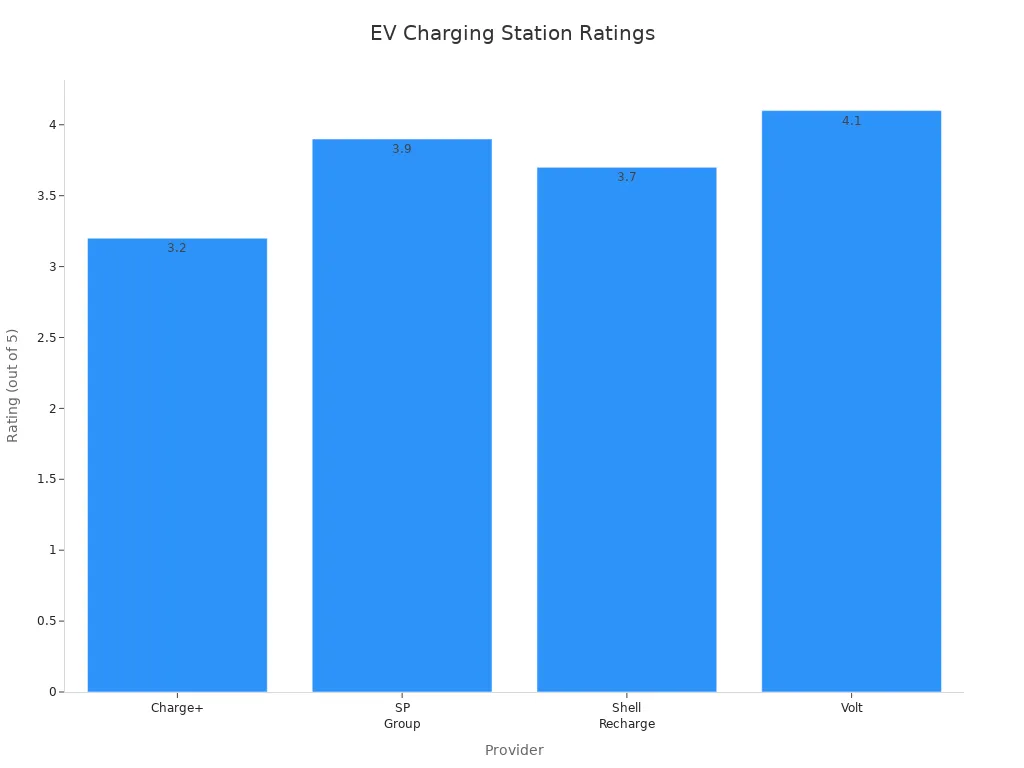
Providers such as Volt, SP Group, and Shell Recharge have achieved high reliability scores, reflecting their commitment to quality service. Reliable support and well-maintained charging stations build trust and encourage more drivers to switch to electric vehicles.
What Sets Top Southeast Asian Countries Apart in EV Charging
Key Strategies and Innovations in Electric Vehicle Charging
Integrated National Plans for Charging Stations
Southeast Asian countries have developed integrated national plans that drive the success of their EV charging infrastructure. Thailand, Singapore, and Malaysia align their policies with broader energy and transportation goals. These plans set clear targets for charging stations and support the growth of electric vehicles. The table below highlights how national frameworks contribute to effective deployment:
| Policy/Framework | Description | Impact on EV Charging Stations |
|---|---|---|
| EV 3.5 Policy (2024) | Flexible production requirements, focus on exports | Boosts domestic charging networks for logistics |
| National EV Policy 2021 | Charging targets in AEDP, cost-competitive regulations | Ensures affordable public charging operations |
| PDP 2024-2037 | 51% renewable energy in power generation by 2037 | Strengthens grid resilience for electric charging |
| BOI Incentives | Tax exemptions for charging station investments | Encourages infrastructure establishment |
These integrated plans help ASEAN countries maintain momentum in electric vehicle adoption and infrastructure growth.
Adoption of Smart Charging Technologies
Leading ASEAN countries invest in smart charging technologies to improve efficiency and user experience. Singapore and Thailand deploy fast-charging stations, wireless charging, and battery-swapping models. These innovations reduce wait times and support the needs of both urban commuters and logistics fleets. Smart grid-enabled chargers and modular systems allow for scalable growth, making electric car charging more accessible.
Public-Private Collaboration in EV Infrastructure
Public-private collaboration plays a vital role in expanding EV infrastructure across Southeast Asian countries. Governments partner with private companies to co-finance charging projects, bridging funding gaps and accelerating network development. This approach encourages investment and brings advanced technology to the region. For example, strategic partnerships in Malaysia and Thailand support the deployment of charging stations and enhance grid reliability. The European Union’s commercial incentives, such as grants and tax relief, offer valuable lessons for ASEAN countries seeking to attract private sector participation.
Lessons for Other Southeast Asian Countries Expanding EV Charging
Scalable Models for Charging Station Growth
ASEAN countries use scalable models to support the rapid expansion of charging infrastructure. Key strategies include:
- Integrating renewable energy sources with EV charging station development.
- Investing in public-fast chargers and modular battery-swapping systems.
- Providing solutions for both urban and rural electric car users.
- Diversifying energy sources to ensure cost-effective and reliable charging.
These models help countries like Thailand, Singapore, and Malaysia address congestion and promote widespread electric vehicle adoption.
Community Engagement in Electric Vehicle Adoption
Community engagement strengthens the transition to electric vehicles in ASEAN countries. Governments and industry leaders organize educational campaigns and pilot programs to raise awareness. These initiatives encourage individuals and businesses to embrace electric mobility, fostering a supportive environment for charging infrastructure growth.
Overcoming Infrastructure Challenges for EV Charging
Infrastructure challenges remain in several Southeast Asian countries, including Vietnam and the Philippines. Issues such as compatibility, range anxiety, and grid reliability can slow progress. The table below outlines common challenges and solutions:
| Country | Infrastructure Challenges | Solutions Addressed |
|---|---|---|
| Thailand | Compatibility issues, low utilization rates | Incentives, electrification goals |
| Malaysia | Range anxiety, grid reliability | Strategic partnerships, charging station targets |
| Singapore | N/A | 1,800 public charging points, 60,000 goal |
| Philippines | Range anxiety, grid reliability | N/A |
ASEAN countries continue to address these barriers through government incentives, strategic partnerships, and ambitious electrification targets. These efforts ensure that electric vehicle charging infrastructure remains reliable and accessible for all users.
Thailand, Singapore, and Malaysia lead Southeast Asian countries in EV charging station numbers and accessibility. These countries implement effective policies, expand coverage, and offer user-friendly systems that simplify EV charging for drivers. Other countries in the region can learn from these successful strategies to improve their own infrastructure. Future trends show rapid growth in EV charging solutions:
- Thailand positions itself as an EV manufacturing hub with strong government incentives.
- Indonesia experiences high demand for charging infrastructure due to urbanization and government support.
- Vietnam promotes EV adoption through policy incentives, increasing the need for charging stations.
- Cambodia emerges as a market with opportunities for early investments in charging networks.
FAQ
How easy is it to find EV charging stations in Southeast Asia?
Drivers in major cities like Bangkok, Singapore, and Kuala Lumpur can easily locate charging stations. Most urban areas offer multiple options, and mobile apps help users find available chargers quickly.
What payment methods do EV charging stations accept?
Most charging stations accept credit cards, mobile wallets, and contactless payments. Some networks also support payments through dedicated mobile apps, making transactions fast and convenient.
Are charging stations compatible with all electric vehicle brands?
Most public charging stations use standardized connectors. Multi-standard DC chargers support various EV models, ensuring compatibility for most vehicles on the market.
How long does it take to charge an electric vehicle at public stations?
Charging time depends on the charger type. Fast chargers can deliver 80% charge in about 30 minutes. Standard chargers may require several hours for a full charge.
Do governments offer incentives for installing EV charging stations?
Governments in Thailand, Malaysia, and Singapore provide tax breaks, subsidies, and investment allowances. These incentives encourage businesses and individuals to install more charging stations.
Can drivers travel long distances between Southeast Asian countries using EVs?
Yes, regional projects like the Charge+ EV Charging Highway connect major cities across borders. Drivers can travel between Singapore, Malaysia, and Thailand with access to fast-charging stations along highways.
What should drivers do if a charging station is out of service?
Drivers can use mobile apps to check real-time station status. If a station is unavailable, the app suggests nearby alternatives. Most networks also provide customer support hotlines for assistance.
Are there plans to expand EV charging networks in rural areas?
Yes, several initiatives focus on expanding charging infrastructure beyond cities. Companies and governments plan to install more stations in rural and remote locations to support wider EV adoption.