


Government policy acts as a catalyst for the advancement of Level 3 charging networks in Colombia. Law 1964 of 2019, tax incentives, and technical standards have spurred investment from Производители зарядных устройств для электромобилей and encouraged the adoption of Решения для зарядки электромобилей. The National Development Plan aims for thousands of new stations, while regulatory frameworks ensure safety and consumer trust. This policy-driven environment also supports innovation, including портативные зарядные устройства для электромобилей, to meet diverse mobility needs across the country.
| Policy/Regulation | Key Provisions | Воздействие |
|---|---|---|
| Law 1964 of 2019 | Sets quotas for zero/low-emission vehicles, mandates EV quotas for public fleets, tax benefits | Drives EV adoption, creating demand for charging infrastructure |
| National Development Plan | Aims for 6,000 public charging points by 2026, promotes public-private partnerships | Facilitates infrastructure development and renewable integration |
| Tax Incentives & Mechanisms | Income tax deductions for charging investments, VAT exemptions | Encourages investment in charging infrastructure |
| Regulatory Framework | Safety standards and technical rules for EV charging stations | Ensures operational viability and consumer protection |
Current Landscape of Charging Infrastructure in Colombia
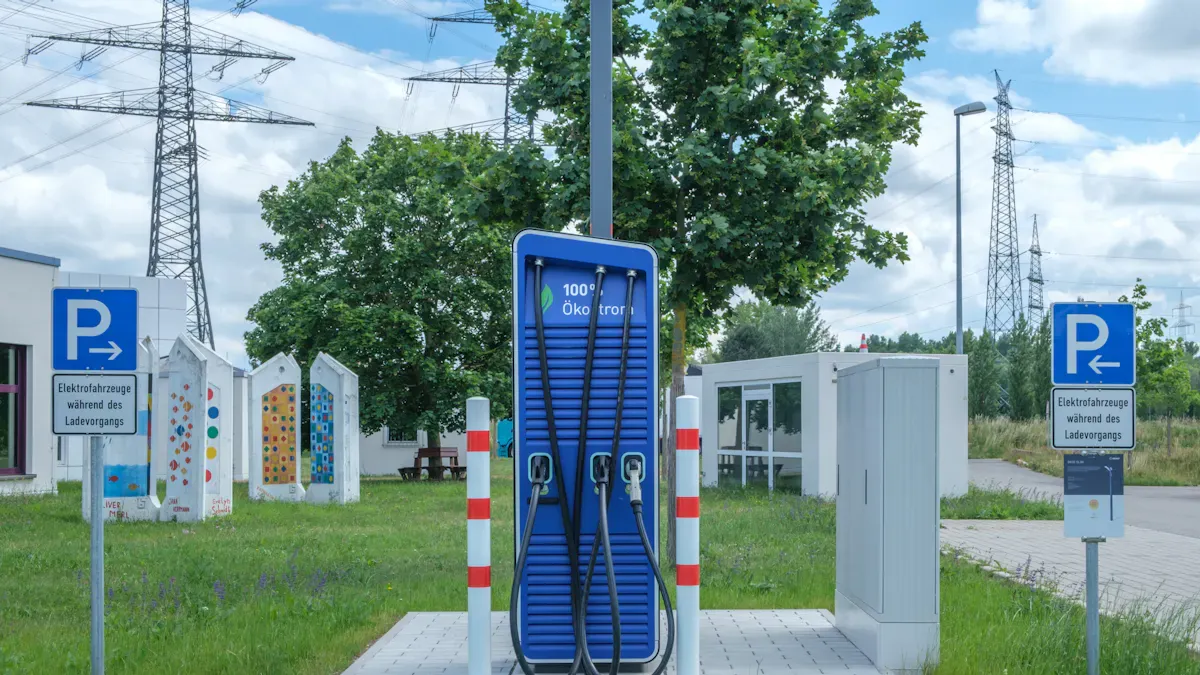
Status of Level 3 Charging Stations
Geographic Distribution Across Colombia
Colombia has made significant progress in deploying Level 3 charging stations. Major cities such as Bogotá, Medellín, and Cali host the highest concentration of these stations. The Caribbean coast and central regions also see growing numbers, while remote areas remain underserved. This uneven distribution reflects both population density and economic activity. Urban centers benefit from early investments and government incentives, which attract private operators. In contrast, rural zones face logistical and financial barriers that slow expansion.
Station Density and Accessibility for EV Users
The density of Level 3 charging stations varies widely across Colombia. In metropolitan areas, users can find a station within a reasonable driving distance. These locations often appear near shopping centers, business districts, and major highways. However, outside these hubs, drivers may travel long distances to access fast charging. Accessibility remains a challenge for those living in less populated regions. The government continues to address these gaps by supporting new projects and encouraging private sector participation.
Electric Vehicle Adoption and Infrastructure Growth
Market Growth and Consumer Demand for EVs
The market for electric vehicles in Colombia has experienced steady growth. Consumers show increasing interest in sustainable mobility options. Sales of electric cars and motorcycles have risen each year, driven by environmental awareness and supportive policies. The expansion of зарядная инфраструктура plays a key role in this trend. As more stations become available, potential buyers gain confidence in the practicality of owning an electric vehicle. This positive feedback loop accelerates adoption and encourages further investment.
Key Stakeholders in Colombia’s Charging Infrastructure
Several stakeholders shape the development of charging infrastructure in Colombia. The national government sets regulations and provides incentives. Local authorities implement policies and oversee station deployment. Private companies invest in technology and operate charging networks. Utilities ensure reliable power supply and grid integration. Non-governmental organizations advocate for clean transportation and monitor progress. Collaboration among these groups supports the growth of charging stations and strengthens the transition to electric mobility.
Note: The success of Colombia’s charging infrastructure depends on coordinated action from all stakeholders. Effective partnerships help overcome technical and financial challenges.
Government Policy Driving Infrastructure Expansion

National Legislation and Incentives for Charging Infrastructure
Tax Benefits, Subsidies, and Law 1964 of 2019
Government policy in Colombia has established a strong foundation for the expansion of charging infrastructure. Law 1964 of 2019 stands as a landmark regulation. This law sets quotas for zero and low-emission vehicles and mandates that public fleets include a minimum percentage of electric vehicles. The law also provides tax benefits, such as income tax deductions and VAT exemptions, for investments in electric vehicle charging stations. These incentives reduce the financial burden for both private investors and public entities. As a result, more companies, including advanced providers like TPSON, have entered the market to deploy new charging solutions. The combination of subsidies and tax relief accelerates the implementation of charging networks and supports the growth of electric mobility across the country.
Regulatory Frameworks and Unified Charging Standards
A robust regulatory framework ensures the safe and efficient operation of charging infrastructure. The government has introduced technical standards that all charging stations must meet. These standards address safety, interoperability, and consumer protection. Unified charging standards prevent market fragmentation and encourage competition among providers. Regulatory oversight also helps maintain a balance between rapid expansion and quality control. By setting clear guidelines, government policy fosters trust among users and investors. This approach supports the development of a cohesive network of electric vehicle charging stations that can serve both urban and rural areas.
Local and Regional Government Policy Initiatives
Municipal Support Programs in Major Cities
Local governments in Colombia play a vital role in the expansion of charging infrastructure. Major cities such as Bogotá, Medellín, and Cali have launched municipal support programs to promote the installation of rapid charging stations. These programs often include streamlined permitting processes, reduced fees, and direct financial support for station deployment. City authorities collaborate with private companies and utilities to identify strategic locations for new stations. By focusing on high-traffic areas and public transportation hubs, municipal programs improve accessibility for electric vehicle users. These initiatives demonstrate how local government policy can complement national policies and accelerate the adoption of electric mobility.
Regional Pilot Projects Advancing Charging Infrastructure
Regional governments have initiated pilot projects to test innovative approaches to charging infrastructure. In regions like Antioquia, local authorities partner with technology providers and energy companies to deploy pilot networks of Level 3 charging stations. These projects evaluate the technical, economic, and social impacts of new charging solutions. Successful pilots often lead to broader implementation and inform future policy decisions. Regional initiatives also address unique challenges, such as serving remote communities or integrating renewable energy sources. By supporting pilot projects, government policy encourages experimentation and adaptation to local needs.
Integration with Colombia’s National Energy Strategy
Renewable Energy Mandates for Charging Infrastructure
Colombia’s national energy strategy aligns closely with the expansion of charging infrastructure. The strategy sets clear targets for electric vehicle adoption and mandates the integration of renewable energy into charging networks. By mid-2022, Bogotá must have at least 20 rapid charging stations, while five other major cities require a minimum of five each. This mandate ensures that the growth of charging infrastructure keeps pace with the increasing number of electric vehicles on the road. The use of solar and wind power in charging stations supports the broader goal of decarbonizing Colombia’s transport sector and reduces the climate impact of electric mobility.
- Colombia’s national energy strategy supports electric vehicle targets.
- Major cities must meet minimum requirements for rapid charging stations.
- The effectiveness of charging infrastructure depends on the ratio of public fast charging stations to the number of EVs.
Grid Modernization and Decarbonising Colombia’s Transport Sector
The government recognizes that expanding charging infrastructure requires a modern and reliable grid. Investments in grid modernization improve capacity and reliability, enabling the integration of more charging stations without compromising service quality. These upgrades support the transition to clean energy and help decarbonize Colombia’s transport sector. By aligning infrastructure development with climate goals, government policy ensures that the shift to electric vehicles delivers real environmental benefits. The focus on grid modernization also attracts private investment and encourages innovation from advanced solution providers like TPSON. This integrated approach positions Colombia as a regional leader in sustainable transport and electric mobility.
Challenges in Implementing Government Policy for Charging Infrastructure
Regulatory and Administrative Barriers in Colombia
Permitting, Licensing, and Interagency Coordination
Colombia faces several regulatory and administrative barriers that slow the implementation of Level 3 charging infrastructure. The process for permitting and licensing new charging stations often involves multiple agencies. This complexity can lead to delays and confusion for project developers. Coordination between national and local government remains a challenge. Policies sometimes conflict, making it difficult to plan and execute projects efficiently. The lack of integrated policies and clear regulations discourages investment and hinders the growth of electric vehicle infrastructure.
Note: Streamlined processes and better communication between agencies can help reduce these barriers and accelerate the deployment of charging solutions.
| Тип барьера | Описание |
|---|---|
| Lack of clear regulatory frameworks | The absence of effective regulations hinders the establishment of charging infrastructure. |
| Insufficient integrated policies | Fragmented policies make it difficult to plan and attract investment for electric mobility. |
| Inadequate incentives | Lack of financial incentives limits the viability of charging station projects. |
| Coordination challenges | Complexities in aligning national and local government policies slow down infrastructure development. |
Standardization to Prevent Monopolies and Encourage Competition
Standardization plays a critical role in the successful implementation of charging infrastructure. Without unified technical standards, providers may create incompatible systems. This fragmentation can limit user access and reduce the effectiveness of government policy. Standardization also helps prevent monopolies by ensuring that multiple companies can operate charging stations under the same rules. A competitive market encourages innovation and lowers costs for EV users.
Infrastructure and Grid Limitations
Grid Capacity, Reliability, and Technical Standards
The expansion of Level 3 charging infrastructure places new demands on Colombia’s electric grid. High-power charging stations require significant energy, which can strain local transformers and cause voltage fluctuations. In areas with weak grids, concentrated deployment of DC fast charging can lead to overloads and service interruptions. The country needs substantial investment in grid reinforcement and smart grid technologies to support reliable operation.
| Тип доказательства | Описание |
|---|---|
| High-Power Demand | Concentrated deployment of DCFC in areas with weak grids risks overloading transformers. |
| Investment Needs | Significant investment in grid reinforcement and smart grid technologies is necessary. |
| Voltage Fluctuations | Existing grid issues can negatively affect charger performance and reliability. |
Interoperability of Charging Infrastructure
Interoperability ensures that EV drivers can use any charging station, regardless of the provider. Lack of interoperability creates inconvenience and discourages electric vehicle adoption. Technical standards and open protocols are essential for seamless operation across the network. Government policy must address these issues to build a user-friendly and accessible charging system.
Financing and Investment Obstacles
Public Funding Constraints and Private Sector Engagement
Financing remains a major obstacle for charging infrastructure projects. Public funding is often limited, which restricts the number of new stations that can be built. The government encourages private sector engagement, but investors may hesitate due to regulatory uncertainty and slow permitting processes. Clear incentives and risk-sharing mechanisms can help attract more private investment.
Attracting Investment for Sustainable Infrastructure
Sustainable infrastructure requires long-term investment and commitment. Investors look for stable policies, predictable returns, and transparent regulations. By improving the investment climate, Colombia can accelerate the deployment of charging stations and support the transition to a cleaner transport sector.
Opportunities Created by Government Policy in Charging Infrastructure
Public-Private Partnerships for Infrastructure Expansion
Collaborative Investment Models in Colombia
Государственно-частные партнерства have become a driving force behind the expansion of Level 3 charging infrastructure. These partnerships allow both sectors to pool resources and expertise, which accelerates the deployment of electric vehicle charging stations. By leveraging innovative financing models, private investors can participate in projects that might otherwise face funding gaps. The government creates a favorable environment by updating regulatory frameworks and offering incentives. This collaboration not only attracts capital but also improves operational efficiency, making the implementation of new charging stations more effective.
Shared Risk and Innovation in Charging Infrastructure
When public and private entities share risks, they foster a climate of innovation. Companies can introduce advanced technologies, such as rapid charging stations, while the government provides support through policy and oversight. This shared approach reduces the burden on any single party and encourages the development of solutions tailored to Colombia’s unique needs. As a result, the charging network grows faster and adapts to changing demands in electric mobility.
Integration with Renewable Energy for Decarbonising Colombia’s Transport Sector
Solar and Wind-Powered Level 3 Charging Stations
The integration of renewable energy sources into charging infrastructure supports the goal of decarbonizing Colombia’s transport sector. Many new charging stations use solar and wind power to supply clean electricity. This approach reduces reliance on fossil fuels and aligns with national sustainability targets. By combining renewable energy with Level 3 charging, Colombia can offer environmentally friendly options for EV users and set an example for other countries in the region.
Environmental Impact Reduction and Sustainability
Charging infrastructure powered by renewables delivers significant environmental benefits. It lowers greenhouse gas emissions and supports the transition to a cleaner energy mix. The government’s commitment to sustainability ensures that the expansion of public charging stations contributes to long-term environmental goals. This strategy not only benefits the climate but also enhances public trust in electric vehicle adoption.
Regional Development and Economic Growth
Job Creation and Support for Local Industry
The expansion of charging infrastructure creates new opportunities for regional economic growth. The government’s plan to install over 6,000 public charging points by 2026 opens the market to a wide range of stakeholders. This growth generates jobs in several areas:
- Installation, maintenance, and operation of charging stations
- Development of renewable energy projects
- Implementation of smart grid technologies
Local industries benefit from increased demand for equipment and services related to electric mobility.
Urban and Rural Connectivity through Charging Infrastructure
Improved charging infrastructure enhances connectivity for both urban and rural communities. New stations make it easier for people to travel longer distances in electric vehicles. This connectivity supports economic activity and helps bridge the gap between cities and remote areas. The government’s focus on equitable access ensures that the benefits of electric mobility reach all regions of Colombia.
Case Studies of Policy-Driven Charging Infrastructure Expansion in Colombia
National Fast Charging Network Rollout
Deployment Led by Government and Public Entities
The Colombian government has played a central role in the deployment of the national fast charging network. Public entities have coordinated the planning and construction of new charging stations along major highways and in urban centers. They have prioritized locations that connect key cities and support long-distance travel for electric vehicles. This approach ensures that drivers can access reliable charging options across the country. Public investment has reduced risks for private partners and encouraged broader participation in the market.
Standardization and Network Cohesion Initiatives
Standardization has become a cornerstone of the national network. Authorities have established technical requirements for all charging infrastructure. These standards guarantee compatibility between different providers and simplify the user experience. The government has also promoted network cohesion by integrating payment systems and data sharing. As a result, drivers can locate and use any charging station with ease. This cohesive network supports the rapid adoption of electric vehicles and strengthens public confidence in new technology.
Incentive-Driven Station Deployment
Tax Exemptions and Subsidies Accelerating Station Growth
Incentives have accelerated the growth of charging stations throughout Colombia. The government has offered tax exemptions and direct subsidies to companies that invest in new infrastructure. These financial benefits lower the cost of installation and operation. Many private firms have responded by expanding their networks and introducing advanced charging solutions. The incentive programs have proven effective in both urban and rural areas, helping to close gaps in service.
Impact of Law 1964 of 2019 on Charging Infrastructure
Law 1964 of 2019 has had a significant impact on the implementation of charging infrastructure. The law mandates minimum quotas for electric vehicles in public fleets and provides clear guidelines for station deployment. It also requires public and private actors to follow unified technical standards. This legal framework has created a stable environment for investment and innovation. The law’s influence can be seen in the steady increase in charging stations and the growing number of electric vehicles on Colombian roads.
Bogotá’s Municipal Charging Strategy
Expansion of Rapid Charging Stations in Bogotá
Bogotá has emerged as a leader in the expansion of rapid charging stations. City officials have mapped high-demand areas and prioritized the installation of fast chargers in strategic locations. They have focused on public transportation hubs, shopping centers, and main roads. This targeted approach improves accessibility for EV users and supports the city’s sustainability goals. The expansion has made Bogotá a model for other cities seeking to develop their own charging networks.
Municipal Policies Supporting EV Adoption
Municipal policies in Bogotá have supported the adoption of electric vehicles through a range of measures. The city has streamlined permitting processes and reduced fees for charging infrastructure projects. Officials have also launched public awareness campaigns to educate residents about the benefits of electric mobility. These efforts have increased public interest and encouraged more people to consider electric vehicles as a viable option. Bogotá’s comprehensive strategy demonstrates the power of local policy in shaping the future of transportation.
Regional Pilot Projects in Antioquia
Local Government-Led Charging Infrastructure Pilots
Antioquia has emerged as a leader in testing new approaches to charging. The local government initiated several pilot programs to address the unique needs of the region. These pilots focused on deploying charging stations in both urban and rural areas. Officials selected strategic locations to maximize accessibility for ev users. They partnered with private companies and academic institutions to design and install the infrastructure. The pilots included rapid charging stations along major highways and near public transportation hubs. These efforts aimed to reduce range anxiety and encourage electric vehicle adoption.
The government monitored each pilot closely. They collected data on usage patterns, station reliability, and user satisfaction. This information helped identify technical challenges and operational bottlenecks. The pilots also tested different business models, such as public-private partnerships and community-owned stations. By experimenting with various approaches, Antioquia gained valuable insights into what works best for the region.
Lessons from Regional Implementation
The implementation of these pilots revealed several important lessons. First, local context matters. Solutions that succeed in urban centers may not translate directly to rural communities. Flexibility in planning and execution proved essential. Second, stakeholder engagement drives success. Collaboration between government, private sector, and local communities ensured that charging infrastructure met real-world needs.
Note: Continuous feedback from users improved the design and operation of charging stations.
A few challenges emerged during the process. Technical issues with grid integration sometimes delayed station deployment. Maintenance and support required ongoing attention, especially in remote areas. Despite these obstacles, the pilots demonstrated that targeted investment and strong partnerships can accelerate the growth of charging networks.
Lessons Learned from Policy Implementation
Best Practices and Pitfalls in Colombia’s Approach
Colombia’s experience highlights several best practices. Clear regulatory frameworks and unified standards create a stable environment for investment. Incentives, such as tax benefits and subsidies, lower barriers for new entrants. Transparent processes for permitting and licensing speed up project timelines. However, pitfalls remain. Fragmented policies and inconsistent enforcement can slow progress. Overly complex regulations may discourage private investment.
A focus on adaptability helps address these issues. Policymakers must remain open to revising guidelines based on real-world results. Regular evaluation of policy outcomes ensures that infrastructure development aligns with national goals.
Stakeholder Collaboration and Outcomes
Effective collaboration stands out as a key factor in successful implementation. Government agencies, private companies, and civil society organizations each play a role. Joint planning sessions and shared data platforms foster trust and transparency. These partnerships lead to better resource allocation and more resilient charging networks.
The outcomes speak for themselves. Increased availability of charging stations supports higher rates of electric vehicle adoption. Regional pilot projects, like those in Antioquia, provide a blueprint for scaling up infrastructure across the country.
Evaluating the Effectiveness of Government Policy and Future Directions for Charging Infrastructure
Measuring Impact on Infrastructure Growth and EV Adoption
Station Deployment Metrics and Accessibility
Government policy shapes the expansion of charging stations across Colombia. Policymakers track the number of new installations, focusing on both urban and rural areas. They use metrics such as station density, average distance between locations, and uptime reliability. These indicators help authorities understand where users face gaps in service. Accessibility remains a top priority. Officials assess whether drivers can reach a charging point within a reasonable distance, especially outside major cities. Data-driven evaluations guide future investments and highlight regions that need additional support.
EV Adoption Rates and User Experience
The growth of electric vehicle ownership reflects the success of infrastructure implementation. Analysts monitor registration rates for new EVs and compare them to the availability of charging options. Surveys and user feedback provide insight into the daily experience of drivers. Many users report increased confidence when they see reliable charging infrastructure along highways and in city centers. Positive experiences encourage more people to consider switching to an electric vehicle. Policymakers use this information to refine strategies and address any remaining barriers.
Government policy has driven the expansion of Level 3 charging stations in Colombia. They have addressed regulatory and financial barriers. Stakeholders continue to innovate and refine strategies. Collaboration remains essential for equitable access to every charging station. Strategic recommendations include increasing incentives, improving regulatory frameworks, and supporting public-private partnerships. These actions will help the country decarbonize its transport sector and encourage more vehicle owners to choose an EV.
ЧАСТО ЗАДАВАЕМЫЕ ВОПРОСЫ
What is Level 3 charging infrastructure?
Зарядка уровня 3, also called DC fast charging, provides rapid energy transfer to electric vehicles. These stations can charge most EV batteries to 80% in less than an hour. They support long-distance travel and reduce charging time for drivers.
How does government policy support charging infrastructure in Colombia?
Government policy offers tax incentives, sets technical standards, and mandates EV quotas. These actions attract investment, ensure safety, and encourage the adoption of electric vehicles. National and local policies work together to expand the charging network.
Who can install and operate Level 3 charging stations?
Private companies, public utilities, and local governments can install and operate Level 3 charging stations. They must follow national technical standards and obtain the necessary permits from regulatory authorities.
What incentives exist for businesses investing in charging stations?
Businesses receive income tax deductions, VAT exemptions, and access to public funding programs. These incentives lower installation costs and encourage more companies to participate in the charging infrastructure market.
Are Level 3 charging stations available outside major cities?
Many Level 3 stations are in large cities like Bogotá and Medellín. The government supports projects in rural and remote areas, but coverage remains limited. Ongoing initiatives aim to improve access across all regions.
How does Colombia ensure charging station interoperability?
The government enforces unified technical standards. These standards require all providers to use compatible hardware and software. Interoperability allows drivers to use any station, regardless of the operator.
What challenges slow the expansion of charging infrastructure?
Key challenges include complex permitting processes, limited grid capacity, and funding constraints. Coordination between agencies and investment in grid modernization help address these issues.
How does charging infrastructure support Colombia’s climate goals?
Charging stations powered by renewable energy reduce greenhouse gas emissions. The government’s strategy links infrastructure growth with clean energy targets, supporting the decarbonization of the transport sector.




