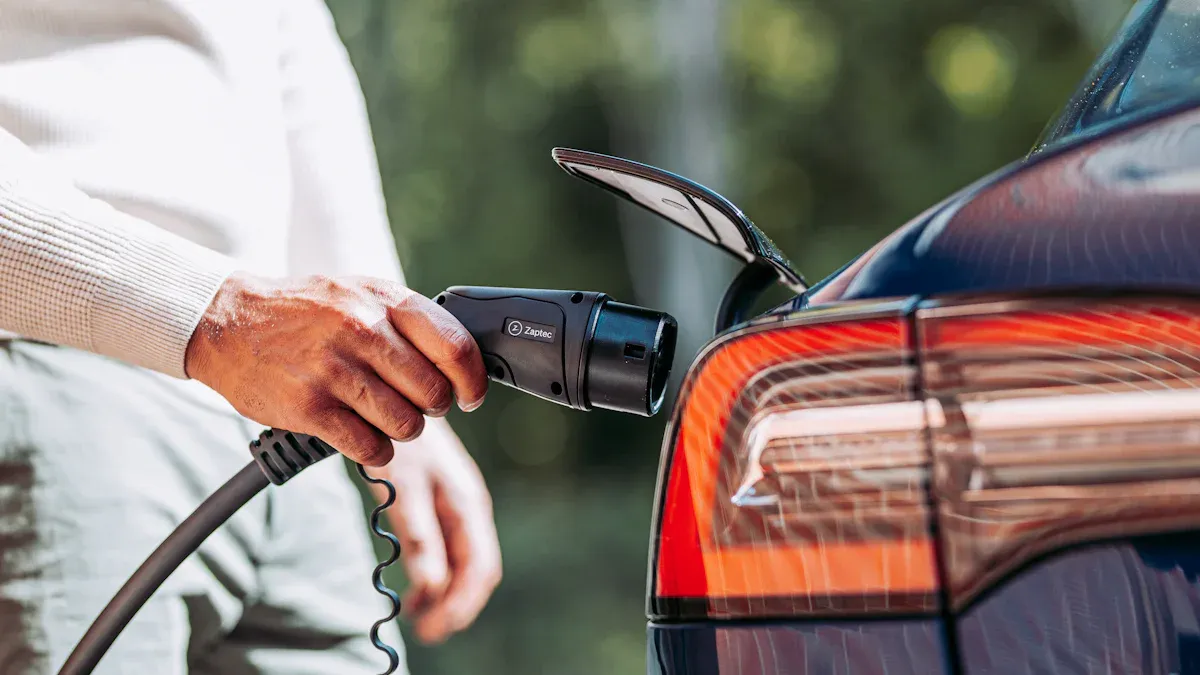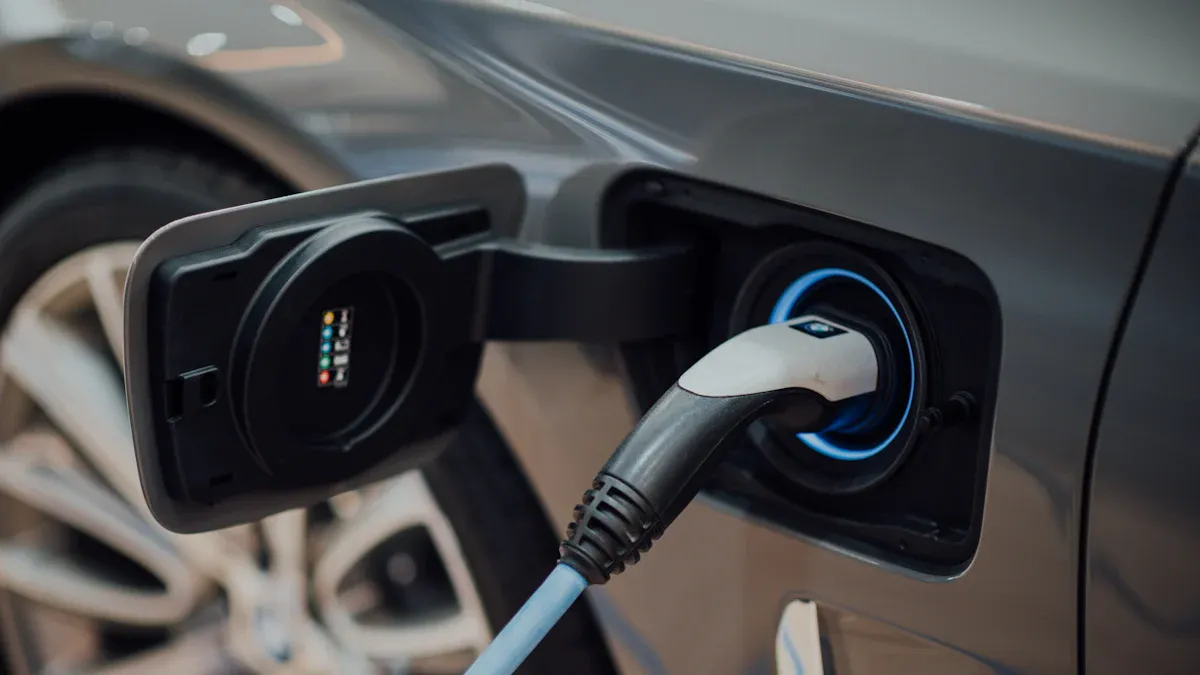
Homeowners planning to install an Carregador de veículos eléctricos at home must follow a key process. This involves selecting a suitable EV charger and assessing the property’s electrical system. Fabricantes de carregadores para veículos eléctricos, such as TPSON, provide technologically advanced Soluções de carregamento de veículos eléctricos. Unlike basic carregadores portáteis para veículos eléctricos, most Level 2 units require a qualified electrician to install ev charger safely and ensure warranty compliance.
The total cost, including the unit and professional labor, typically ranges from $800 to $2,500. This price varies based on the home’s existing electrical configuration.
Step 1: Choose the Right EV Charger for Your Home

Selecting the right charger is the foundational step in setting up a convenient home charging station. Homeowners must consider charging speed, installation type, and smart features to find a unit that fits their vehicle and lifestyle. Technologically advanced providers like TPSON offer a range of solutions to meet these diverse needs.
Understand Charger Levels
The “level” of a charger refers to its power output and charging speed. Understanding the difference is crucial for setting realistic expectations.
Level 1 Chargers: The Basics
Level 1 charging uses a standard 120-volt household outlet. These chargers are typically included with the purchase of an EV. They require no special installation. However, their slow speed is a significant drawback. A Level 1 charger adds only 3-5 miles of range per hour. A full charge on a standard 60kWh battery can take 20-30 hours. This option works for drivers with short commutes or plug-in hybrids.
Level 2 Chargers: The Home Standard
Level 2 chargers are the preferred standard for home installations. They use a 240-volt circuit, similar to an electric dryer or oven. This higher voltage dramatically speeds up the charging process. A Level 2 unit can fully charge most EVs overnight, typically in 6-10 hours. This makes them ideal for the daily needs of most EV owners.
Select Your Charger Type
Beyond speed, homeowners must choose between installation methods and feature sets.
Plug-In vs. Hardwired Chargers
A key decision is whether to install a plug-in unit or a hardwired one. Plug-in chargers connect to a 240-volt outlet, while hardwired chargers are wired directly to the electrical panel.
| Caraterística | Plug-in Level 2 Charger | Carregador de nível 2 com fio |
|---|---|---|
| Instalação | Requires a NEMA 14-50 or 6-50 outlet. | Wired directly into the electrical panel. |
| Flexibilidade | The outlet can power other 240V appliances. | Dedicated solely to EV charging. |
| Desempenho | May charge slightly slower. | Generally offers faster, more stable charging. |
| Fiabilidade | Can experience “nuisance tripping” with GFCI breakers. | Avoids GFCI conflicts for greater reliability. |
Dumb vs. Smart Chargers
Chargers also come in “dumb” and “smart” varieties. A dumb charger simply supplies power. A smart charger connects to Wi-Fi, unlocking advanced features.
Smart Charger Benefits: Smart chargers offer significant advantages for managing energy use and costs. Homeowners can:
- Schedule Charging: Set the charger to operate during off-peak hours when electricity rates are lowest, potentially reducing costs by até 70%.
- Monitor Energy Use: Track electricity consumption, costs, and even CO2 savings through a smartphone app.
- Control Remotely: Start, stop, or adjust charging sessions from anywhere, providing ultimate convenience.
Check Connector Compatibility
Finally, homeowners must ensure the charger’s plug matches their vehicle’s port.
The J1772 Standard for Most EVs
The J1772 is the standard connector for nearly all non-Tesla EVs in North America. Brands using this connector include:
- Nissan
- Chevrolet
- Ford
- Toyota
- Honda
Tesla’s NACS Connector and Adapters
Tesla vehicles use a proprietary connector known as the North American Charging Standard (NACS). However, adapters are widely available. Tesla owners can use a J1772 charger with an adapter, and many third-party chargers now come with NACS plugs or adapters included.
Top EV Charger Brands to Consider
Selecting a reputable brand ensures reliability, safety, and access to modern features. Homeowners have many excellent options. Each offers a unique combination of performance, durability, and smart technology.
Technologically advanced providers like TPSON are driving innovation in the market. They offer a wide range of EV charging solutions that often include the smart features and robust build quality seen in these leading brands.
ChargePoint Home Flex
The ChargePoint Home Flex is a popular choice known for its flexibility and smart capabilities. It allows users to select the right amperage for their home’s electrical system, from 16 to 50 amps. This adaptability makes it a versatile option for many households.
- Amperagem ajustável: Users can set the power output via a mobile app to match their circuit’s capacity.
- Caraterísticas inteligentes: It connects to Wi-Fi for scheduled charging, energy tracking, and remote control.
- Wide Compatibility: The unit uses the standard J1772 connector, making it compatible with most EVs.
JuiceBox Smart EV Charging Station
The JuiceBox series is highly regarded for its powerful smart charging software. It provides detailed analytics and control over energy consumption, helping owners minimize their electricity costs. The robust app is a key feature for tech-savvy drivers.
- Energy Management: The JuiceNet software platform enables smart grid integration and charging during off-peak hours.
- High Power Output: It is available in various models that support charging up to 48 amps.
- Construção duradoura: The weatherproof casing makes it suitable for both indoor and outdoor installations.
Grizzl-E Classic
The Grizzl-E Classic prioritizes durability and simplicity. Built with a tough metal body, this charger is designed to withstand harsh weather conditions, making it an excellent choice for outdoor or garage installations in demanding climates.
- Robust Build: Its heavy-duty construction ensures long-term reliability.
- Adjustable Power: Internal switches allow an electrician to set the maximum power output to 16, 24, 32, or 40 amps.
- Simple Operation: This is a “dumb” charger, focusing on one task: charging the vehicle safely and efficiently without complex software.
Conector de parede universal Tesla
Tesla’s Universal Wall Connector offers a seamless solution for households with both Tesla and non-Tesla EVs. It features an integrated adapter that eliminates the need for separate, easy-to-lose accessories. This makes it a convenient all-in-one option.
- Integrated Adapter: A built-in J1772 adapter neatly attaches to the NACS plug, serving all EV types.
- Partilha de energia: Multiple Wall Connectors can share power from a single circuit, ideal for homes with more than one EV.
- Wi-Fi Connectivity: It allows for firmware updates and remote diagnostics, ensuring the charger stays current.
Step 2: Assess Your Home’s Electrical System
Before purchasing a charger, a homeowner must evaluate their home’s electrical infrastructure. This assessment ensures the system can safely support the continuous power draw of a Level 2 charger. A thorough check of panel capacity, charger location, and existing wiring is a critical step in the installation process.
Check Your Electrical Panel Capacity
The electrical panel, or breaker box, is the heart of a home’s electrical system. Its capacity determines if it can handle the added load of an EV charger.
How to Find Your Main Breaker
The main breaker is the largest switch in the electrical panel, usually located at the top. This switch controls all power to the house. The number printed on it indicates the panel’s total amperage capacity.
When You Might Need a Panel Upgrade
The amperage of the main breaker is a key factor. Many homes have panels with different capacities, which influences their ability to support an EV charger.
- Older Homes: These properties often have main breaker panels rated at 100 amperes.
- Modern Homes: Newer constructions or upgraded homes typically feature 200-amp panels.
A 100-amp panel may not have enough spare capacity for a Level 2 charger, especially in a home with other large electric appliances. An electrician must perform a load calculation to determine if an upgrade to a 200-amp panel is necessary for a safe installation.
Identify the Best Location for Your Charger
Choosing the right spot for the charger involves balancing convenience with installation cost. The ideal location is close to both the parking space and the electrical panel.
Proximity to Your Parking Spot
The charger must be placed where the charging cable can easily reach the vehicle’s charge port. Homeowners should consider their daily parking habits.
| Considerações | Indoor Installation (Garage) | Instalação no exterior |
|---|---|---|
| Protection | Protects the charger from weather, extending its lifespan. | Requires a weatherproof (IP-rated) charger to withstand rain and dust. |
| Ventilação | Requires good air circulation to prevent overheating. | Benefits from natural airflow. |
| Acessibilidade | Access is easy if the garage is kept clear. | The charger must be accessible without moving obstacles. |
Proximity to Your Electrical Panel
The distance from the panel directly impacts custos de instalação. A location within 33 feet of the panel is the most cost-effective, as it minimizes the length of expensive, heavy-gauge wiring required. Longer distances can significantly increase labor and material fees.
Do You Have an Existing 240-Volt Outlet?
Some homes already have 240-volt outlets for appliances like electric dryers or ovens. While it may seem convenient to use one, it is rarely a safe or compliant option for EV charging.
Identifying NEMA 14-50 and 6-50 Outlets
A NEMA 14-50 outlet has four prongs (two hot, one neutral, one ground) and is common for electric ranges. A NEMA 6-50 outlet has three prongs (two hot, one ground) and is often used for welders.
Can You Safely Use a Dryer Outlet?
Alerta de segurança: Using an existing appliance outlet for regular EV charging is not recommended. National Electrical Code (NEC) requires a circuito dedicado for an EV charger to prevent overloads and ensure safety.
An electrician must verify that any circuit used for EV charging meets these critical requirements:
- Circuito dedicado: The circuit must serve only the EV charger and no other appliances.
- Proper Wiring: The wire gauge must be thick enough to handle the charger’s continuous load without overheating.
- GFCI Protection: The circuit must include a Ground Fault Circuit Interrupter (GFCI) breaker to protect against electric shock.
Sharing a circuit with another appliance creates a serious fire hazard. A professional must install a new, dedicated 240-volt circuit for the EV charger.
Step 3: How to Hire a Qualified Electrician to Install an EV Charger at Home
Once a homeowner has assessed their electrical system, the next crucial step is finding the right professional. While some may wonder who can install the unit, only a licensed and experienced electrician should perform this work. Hiring a qualified professional ensures the installation is safe, compliant, and reliable for years to come.
Why You Need a Professional
Attempting to install an EV charger at home without proper training is extremely dangerous. A professional electrician brings the expertise needed to manage high-voltage connections safely and correctly.
Ensuring Safety and Mitigating Risks
Improper installation creates significant hazards. A qualified electrician mitigates these risks by ensuring the system is correctly configured.
- Electrical Overloads: Professionals prevent overloads by installing a dedicated circuit that can handle the charger’s continuous demand, reducing the risk of overheating and fire.
- Danos no equipamento: Correct installation protects the EV charger and the vehicle’s battery from damage, preventing costly repairs.
- Warranty Invalidation: Most EV charger manufacturers, including technologically advanced providers like TPSON, require an Electric Installation Certificate from a professional to validate the product warranty.
- Insurance Issues: Many insurance providers will not cover damage caused by uncertified electrical work.
Meeting National Electrical Code (NEC) Compliance
EV charger installations must adhere to strict safety standards outlined in the National Electrical Code (NEC). A qualified electrician understands these complex regulations. They ensure the project meets all legal requirements for wiring, circuit protection, and placement, which is essential for passing a final electrical inspection.
How to Find a Qualified Electrician
Finding an electrician with specific EV charger experience is key. Homeowners have several reliable methods for sourcing a skilled professional.
Using EV Charger Manufacturer Networks
Many charger manufacturers maintain a database of certified installers. Contacting the brand of your chosen charger is an excellent starting point. These electricians are already familiar with the specific product and its installation requirements.
Checking Local Directories and Reviews
Online platforms are a valuable resource for finding local tradespeople.
Websites like Yell, My Builder, and Rated People allow homeowners to search for electricians in their area. These directories often include customer reviews, ratings, and project photos to help vet potential candidates.
Getting Recommendations from Neighbors or EV Groups
Word-of-mouth referrals are often the most trustworthy. Homeowners can ask neighbors who already own an EV for recommendations. Online forums and local EV owner groups on social media are also great places to find trusted electricians.
Perguntas a fazer antes de contratar
Before making a final decision, a homeowner should interview at least two or three electricians. Asking the right questions helps confirm their qualifications and clarifies the scope of work.
Inquiring About Specific EV Charger Experience
General electrical experience is not enough. Homeowners should ask about specific training and qualifications related to EV charging. A well-qualified electrician may hold a Level 3 Award in the Requirements for the Installation of Electric Vehicle Charging Points and be current with the 18ª Edição dos Regulamentos de Cablagem.
Requesting a Detailed, Itemized Quote
A professional electrician will provide a transparent, itemized quote after an on-site assessment. This document should clearly break down all costs to install EV charger, including:
- Labor fees
- Equipment and components (conduit, wiring, breaker)
- Taxas de autorização
- Any necessary electrical modifications
Verifying License, Bonding, and Insurance
Finally, always verify the electrician’s credentials. Ask for proof of their license, bonding, and public liability insurance. This documentation protects the homeowner from financial liability in the event of an accident or property damage during the installation.
Step 4: The Installation Process Explained

Understanding the installation process from start to finish helps homeowners know what to expect. The process is methodical, beginning with a detailed assessment and concluding with a final safety inspection. Each phase ensures the system is installed correctly and operates safely.
The Pre-Installation Assessment
Before any work begins, the electrician conducts a thorough on-site evaluation. This step is essential for creating an accurate plan and quote.
The Electrician’s On-Site Walkthrough
During the walkthrough, the electrician evaluates several key factors to design the installation. This assessment prevents surprises on installation day. Key evaluation points include:
- Infra-estruturas eléctricas: The professional inspects the main panel’s capacity, the condition of existing wiring, and the home’s grounding system to ensure it can support the new load.
- Site Conditions: They identify the best location for the charger, considering proximity to the parking space and the electrical panel to minimize wiring runs.
- Charger Compatibility: The electrician confirms the chosen charger, such as a technologically advanced unit from TPSON, is compatible with the vehicle and the home’s electrical system.
- Risk Management: They identify any site-specific safety considerations and confirm the plan meets all compliance standards.
Finalizing the Installation Plan and Quote
After the walkthrough, the electrician provides a finalized installation plan and an itemized quote. This document details all labor, materials, and permit costs. The homeowner should review and approve this plan before scheduling the work.
O que esperar no dia da instalação
A standard Level 2 charger installation is typically efficient. Most jobs are completed by a professional in just two to four hours.
Running the New Dedicated Circuit
The first major task is creating a new, dedicated circuit for the charger. The electrician will turn off the main power for safety. They then install a new circuit breaker in the panel and run a heavy-gauge cable from the panel to the designated charger location, often enclosing it in a conduit for protection.
Mounting and Connecting the Charger
With the circuit in place, the electrician securely mounts the EV charging unit to the wall. They then connect the new wiring directly to the charger terminals. This step is critical to install EV charger hardware correctly for safe, reliable power delivery.
Final Testing and System Walkthrough
Once everything is connected, the electrician restores power and performs a series of tests. They check voltage, confirm the charger communicates with the vehicle, and ensure all safety features are functional. They will then walk the homeowner through the basic operation of the new system.
Post-Installation: The Final Inspection
The last step is a formal inspection by a local electrical inspector to certify the work.
Scheduling the Electrical Inspection
The electrician or the homeowner, depending on local rules, will schedule the final inspection after the installation is complete. This is a mandatory step for safety and compliance.
What the Inspector Checks for Compliance
The inspector verifies that the installation meets all National Electrical Code (NEC) requirements. An installation might fail if the inspector finds:
- Um overloaded circuit or improper grounding.
- Water ingress into the charger or its components.
- Use of incorrect wire gauges or breaker sizes.
- A shared neutral wire, which is a serious safety violation.
Passing this inspection provides the final approval, confirming the home charging station is safe and ready for use.
Step 5: Understand Costs, Permits, and Rebates
A successful home ev charger installation requires a clear understanding of the associated costs, legal permits, and available financial incentives. Homeowners can manage their budget effectively by breaking down expenses and exploring opportunities to save money. This final step ensures the project is not only technically sound but also financially manageable.
Breaking Down the Total Cost to Install EV Charger
The total investment varies based on the charger model and the complexity of the electrical work. Homeowners should anticipate costs for the unit, professional labor, and any necessary system upgrades.
EV Charger Unit Cost
The price of the charging unit itself is the first major expense. Costs depend on the brand, power output, and features.
- Basic Chargers: Simpler, non-smart models are more budget-friendly.
- Carregadores inteligentes: Units from technologically advanced providers like TPSON offer features like Wi-Fi connectivity and app control, which can influence the price.
Generally, homeowners can expect the charger unit to cost between The article uses the British Pound (£) symbol and UK-specific costs. This should be replaced with the US Dollar ($) symbol and typical US market costs (e.g., ‘$400 and $800’). All other instances of ‘£’ should be similarly updated for a US audience.. A popular 7 kW charging point, for example, often costs around £600.
Professional Installation Labor Fees
Labor is a significant part of the budget. The question of who can install the unit is critical; only a qualified electrician should perform this work. A reasonable labor cost of £300 to £400 acknowledges the professional’s expertise. However, for more complex jobs, fees can range from £400 to £800.
Potential Electrical Panel Upgrade Costs
Some homes, particularly older ones, may need an electrical panel upgrade to support the charger. An electrician will determine if this is necessary. If an upgrade is required, it can add between £400 and £1,000 to the total project cost.
Navigating Electrical Permits and Regulations
Proper permits and adherence to regulations are non-negotiable for safety and legal compliance.
Why a Permit is Necessary for Installation
A permit ensures that the installation is inspected and certified by a local authority. This process verifies that the work meets all safety codes, protecting the homeowner from fire hazards and electrical faults. It also provides an official record of the upgrade, which can be important for insurance and property resale.
Who is Responsible for Pulling the Permit
The qualified electrician is typically responsible for obtaining all necessary permits. This service is usually included in their itemized quote. Homeowners should confirm this responsibility before work begins.
Finding Rebates and Incentives to Lower Costs
Many government and utility programs offer financial incentives to encourage EV adoption. These can significantly reduce the overall cost to install ev charger.
Créditos fiscais federais para equipamentos de carregamento de veículos eléctricos
Homeowners should investigate available federal tax credits. These programs can allow them to claim a percentage of the total cost of the charger and installation on their tax returns, providing a substantial saving.
Descontos de governos estaduais e locais
Many state and local governments offer their own rebate programs. These incentives vary by location and may provide direct cash back or vouchers for purchasing and installing a charger.
Programas de incentivo das empresas de serviços públicos
Local utility companies are another excellent source of savings. They often provide rebates, special electricity rates for EV charging, or other promotions. Homeowners should check their utility provider’s website for current offers.
A successful home EV charger installation is a straightforward project. Homeowners select a suitable Level 2 charger, have their electrical system assessed, and engage a qualified professional. This ensures a fast, convenient, and reliable charging experience right at home.
Prioritizing safety is paramount. Homeowners must always use a licensed electrician with proven experience to install an EV charger, ensuring the system is compliant and the warranty is protected.
Finally, exploring available rebates and incentives can significantly lower the overall project cost.
FAQ
Um proprietário pode instalar ele próprio um carregador de veículos eléctricos?
No. A qualified electrician must install a Level 2 EV charger. This ensures safety, meets regulatory compliance, and protects the product warranty. Attempting a DIY installation is extremely hazardous and can void insurance coverage in case of an accident.
Quanto tempo demora uma instalação típica?
A standard installation is quite efficient. A professional electrician can usually complete the entire process, from running the circuit to testing the unit, in just two to four hours. More complex jobs involving panel upgrades will take longer.
Is a smart charger necessary for home use?
A smart charger is not essential but offers significant benefits. Technologically advanced providers like TPSON offer smart units that allow homeowners to schedule charging for off-peak rates and monitor energy use. This can lead to considerable cost savings and convenience.
What if a home has an older electrical system?
An electrician must perform a load calculation on an older system. If the electrical panel lacks sufficient capacity, an upgrade to a higher amperage panel may be required. This ensures the system can safely handle the charger’s continuous power draw.
Can an extension cord be used with a Level 2 charger?
No. Homeowners must never use a standard extension cord with a Level 2 EV charger. The charger requires a dedicated, heavy-gauge circuit to operate safely. Using an extension cord creates a serious fire risk due to overheating.
What is the main difference between plug-in and hardwired chargers?
A plug-in charger connects to a 240-volt outlet, offering some portability. A hardwired charger connects directly to the electrical panel. Hardwired installations are generally considered more reliable and can support higher power outputs for faster charging speeds.
How should a homeowner maintain their EV charger?
Home EV chargers require minimal maintenance. Homeowners should periodically inspect the cable and connector for any signs of wear or damage. Keeping the unit clean and ensuring the area around it is clear of obstructions is also good practice.