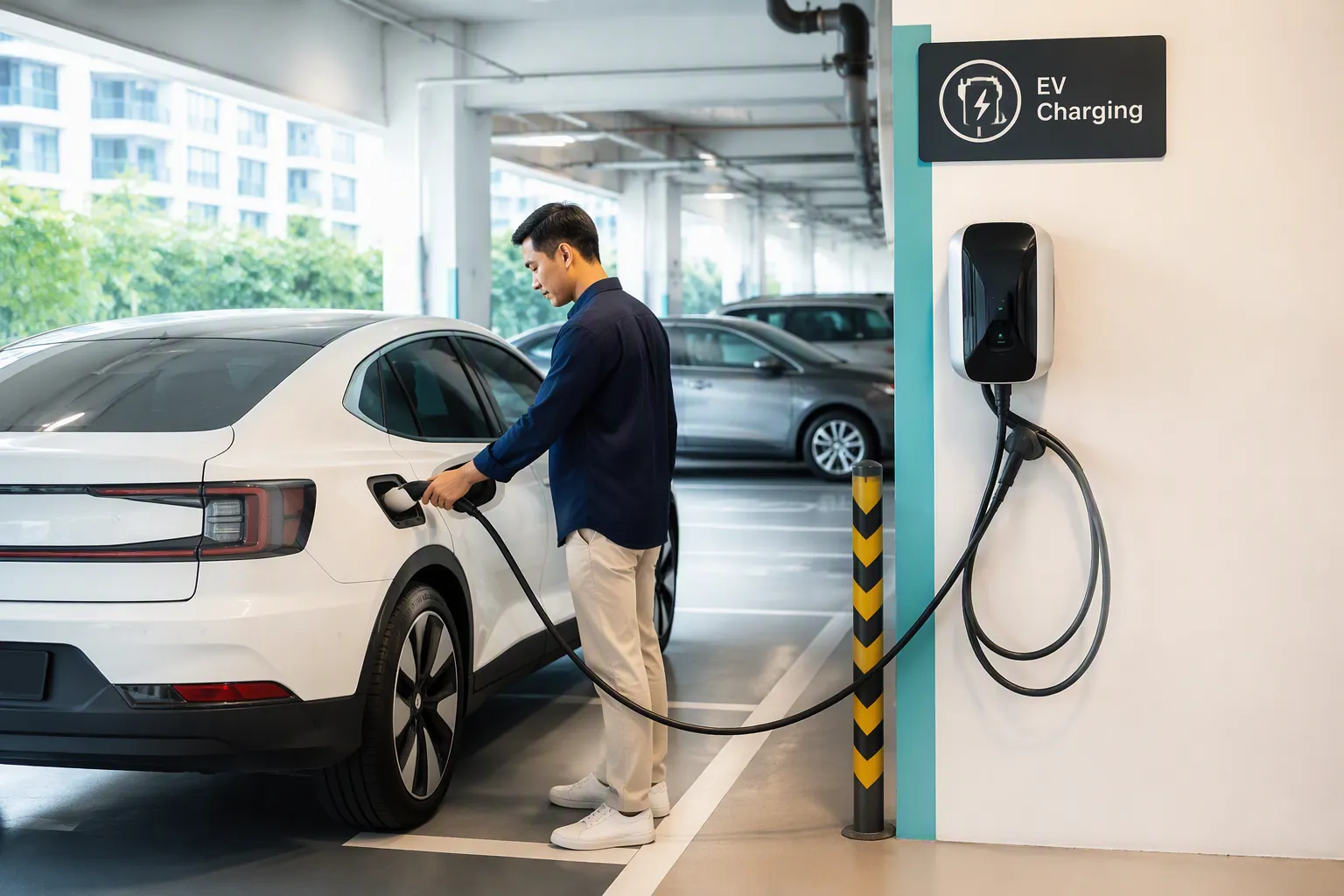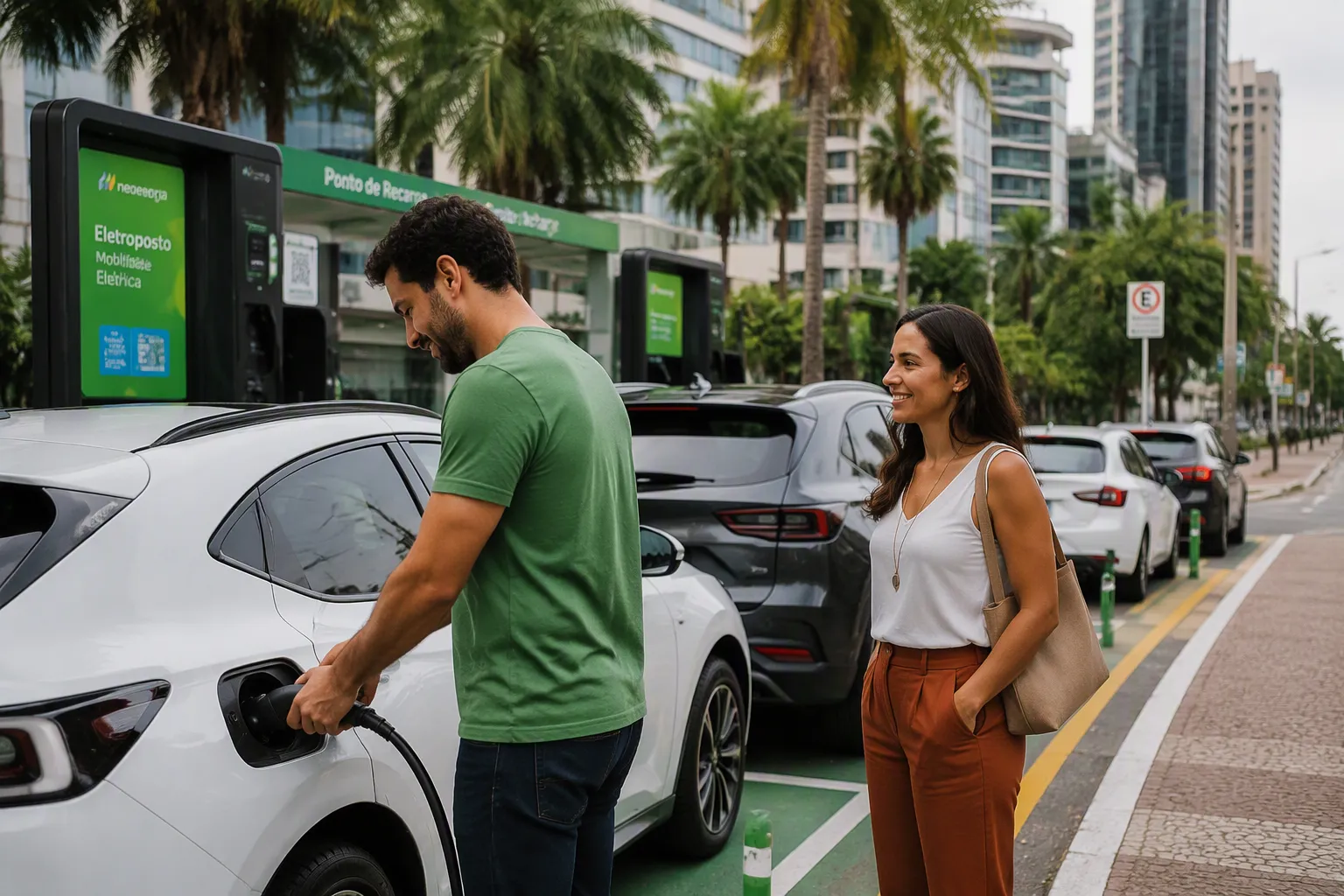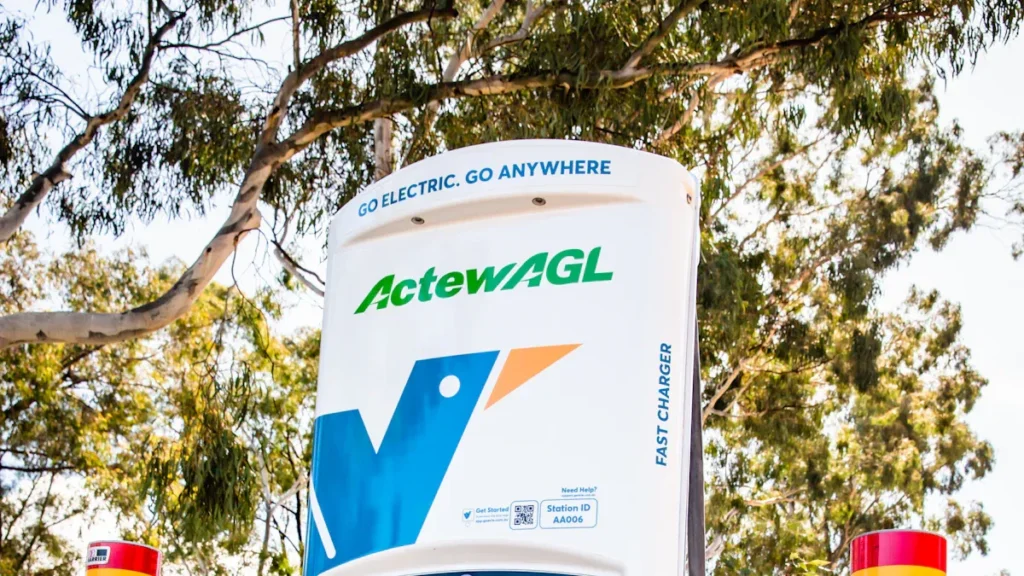

This essential guide helps an EV owner find the nearest EV charging stations. A driver’s quickest method for locating an available electric car charging station is a dedicated app or the vehicle’s navigation. These tools display a live map of chargers. They show connector types, charging speeds, and real-time availability for each Carregador EV. This allows a car owner to find a compatible charging spot in seconds. The infrastructure for electric vehicle charging is expanding rapidly, with Fabricantes de carregadores para veículos eléctricos building more stations.
The projected growth for public charging infrastructure is significant:
Tipo CAGR 2025-2035 AC 19.58% DC 17.08% Total 18.73%
This growth makes knowing how to find the right electric vehicle for your car more important than ever.
Your Go-To Toolkit: Best Apps and Maps for Electric Car Charging
Navigating the world of electric car charging is simple with the right digital tools. An EV driver’s smartphone or vehicle dashboard becomes the command center for finding power. Different apps and systems offer unique advantages. Some provide a comprehensive view of all available chargers, while others deliver a streamlined experience within a specific network.
All-in-One Charging Network Apps
Aggregator apps are the Swiss Army knives for EV drivers. They compile data from numerous charging networks into a single, unified map. This approach gives users the broadest possible view of nearby charging options, regardless of the provider.
PlugShare: The Community-Powered Map
PlugShare stands out due to its vast, community-driven database. Users actively contribute to the platform by adding new stations, leaving reviews, posting photos, and reporting on the status of chargers. This real-time feedback from fellow EV drivers provides invaluable insights that go beyond what official network data can offer. A driver can quickly see if a station is broken or if there is a long queue, all thanks to recent user check-ins.
Zapmap: A Comprehensive Option
For drivers in the UK and Europe, Zapmap offers an exceptionally detailed resource. It functions as a comprehensive uk map of electric car charging points, showing extensive data on network operators, charger speeds, and live availability. Its route planner is a key feature, helping drivers plan journeys with necessary charging stops included. Zapmap’s robust filtering options make it easy to find the exact type of charger needed.
ChargePoint: A Network and an App
ChargePoint operates one of the largest public charging networks globally and provides a sophisticated app to access it. While the app focuses on ChargePoint’s own stations, it also displays chargers from partner networks. This creates a broad, yet curated, experience. Users can start a charging session, track progress, and handle payments directly within the app, making it a convenient all-in-one solution for frequent users of the ChargePoint network.
Aggregator vs. Network-Specific Apps Understanding the core differences helps a driver choose the right tool. Aggregators offer wide coverage, while network apps provide a deeper, more integrated experience.
Caraterística Community-Powered Charging Maps (Aggregator Apps) Network-Specific Apps Data Source Gathers data from various networks Developed and maintained by individual networks Cobertura Extensive, unified interface across regions/countries Exclusive to stations within their specific network Data Contribution Relies on user-generated data (e.g., adding private stations) Maintained by network operators, up-to-date info Experiência do utilizador One-stop-shop, diverse selection, community-driven Seamless, integrated experience for specific provider Recursos Adicionais N/A Account management, loyalty programs, promotions, payment processing
Major Network-Specific Apps
For drivers who frequently use a particular public charging network, the provider’s dedicated app often delivers the most seamless experience. These apps are designed to work perfectly with their own hardware and often include exclusive features like loyalty programs and simplified payment processing.
Electrify America & EVgo
These two networks are major players in building out fast-charging infrastructure.
- Eletrificar a América: This network is expanding rapidly, aiming to operate over 4,300 ports across 46 states by 2025. Its app is essential for activating a session, tracking charging status, and managing payments.
- EVgo: With over 1,100 locations across 40 states, EVgo is another critical network. Its app allows users to find stations, reserve a charger in advance at some locations, and earn rewards points.
Carregamento intermitente
Blink Charging offers a significant global presence, having deployed over 78,000 charging ports worldwide. The Blink app is the primary tool for interacting with its network, which includes a mix of Level 2 and DC fast chargers. The app facilitates locating a station, initiating a charging session, and viewing your charging history.
Recarga de conchas
Leveraging its existing global footprint, Shell is rapidly converting its service stations into comprehensive energy hubs. The Shell Recharge app provides access to a growing network of electric car charging points. It allows drivers to locate chargers, pay for sessions, and manage their account, integrating the EV charging experience into a familiar brand.
Integrated In-Car Navigation Systems
Many modern electric vehicles come equipped with sophisticated navigation systems designed specifically for EV ownership. These systems integrate route planning with the car’s battery management, providing a highly convenient and stress-free way to manage charging on the go.
Tesla’s Supercharger Network
Tesla’s integrated system is often considered the gold standard. The vehicle’s large touchscreen displays the entire Supercharger network. When a driver enters a destination, the car automatically calculates the necessary charging stops, estimates the required charging time at each stop, and even preconditions the battery upon approach to ensure the fastest possible charging speeds.
FordPass and the BlueOval Charge Network
Ford offers its EV owners access to the BlueOval Charge Network through the FordPass app and the vehicle’s SYNC navigation system. This network aggregates multiple charging providers, including Electrify America, into a single, easy-to-use platform. It simplifies the process by allowing drivers to find and pay for charging at various stations using one account.
Other Manufacturer Systems
Most major automakers now offer similar integrated solutions. Companies like Hyundai, Kia, Volkswagen, and others provide in-car systems and companion apps that help drivers locate public chargers, monitor their vehicle’s state of charge, and plan routes. These systems often partner with technologically advanced solution providers like TPSON to ensure reliable and efficient electric car charging performance.
Route Planning for Long-Distance Electric Trips
While network apps are excellent for daily driving, long-distance travel in an electric vehicle requires a different strategy. Dedicated route planners are essential tools for road trips. They do more than just find chargers; they calculate an optimal journey based on the car’s capabilities, the driver’s habits, and the route’s terrain. This proactive approach to electric car charging ensures a smooth and efficient trip.
Um melhor planeador de rotas (ABRP)
A Better Routeplanner (ABRP) is widely regarded as the most powerful tool for planning complex electric journeys. This application creates highly detailed trip plans by considering a multitude of variables that generic maps ignore. Its primary goal is to minimize total travel time, which includes both driving and charging.
ABRP’s intelligence lies in its sophisticated charging strategy. The app understands that an EV battery charges much slower as it approaches 100%. Therefore, it builds routes with shorter, more frequent charging stops.
- It calculates just enough charge to safely reach the next planned station.
- The system avoids lengthy charging sessions that push the battery beyond 85-90%, where charging speeds drop significantly.
- It often plans for the driver to arrive at the final destination with about 10% battery remaining, reducing unnecessary charging time on the final leg.
- A driver can customize preferences, such as preferred charging networks or specific chargers to avoid, and the app will recalculate the route accordingly.
ABRP’s core philosophy is optimization. It prioritizes getting the driver to the destination in the shortest total time, which means spending less time waiting at a charger.
The app’s calculations are incredibly detailed. ABRP accounts for road speeds, elevation changes, and even assumed battery degradation over the life of the vehicle. For maximum accuracy, a driver can connect the app to their car using an OBD2 dongle. This allows ABRP to use live data to learn the user’s unique driving efficiency and the vehicle’s actual battery health, further refining its predictions. It also knows the specific charging capabilities of different EV models, ensuring its estimates are based on what the car can actually handle.
Google Maps & Apple Maps EV Features
Mainstream navigation apps are rapidly improving their support for the electric car owner. Both Google Maps and Apple Maps now offer integrated EV routing features that make planning simpler and more accessible for every driver.
When a user enters a destination in these apps, they can automatically add necessary charging stops along the way. The real power comes from connecting the app directly to the EV. This allows the map to pull real-time battery percentage data from the car. With this information, the app can provide more accurate predictions and adjust the plan on the fly if the battery is draining faster or slower than expected.
While convenient, these apps offer a different experience than a specialized planner.
| Caraterística | Google/Apple Maps | Um melhor planeador de rotas (ABRP) |
|---|---|---|
| Primary Goal | Convenience and ease of use | Minimizing total travel time |
| Personalização | Basic (e.g., connector type) | Highly detailed (e.g., arrival SoC) |
| Data Input | Can use live vehicle data | Uses live data plus deep vehicle models |
| Melhor para | Everyday EV drivers, simple trips | Meticulous road trip planners |
For many EV drivers, the built-in features of Google Maps and Apple Maps are more than sufficient for planning trips. They provide a seamless and familiar interface for finding charging stations. However, for those who want the most optimized and detailed plan possible, a dedicated tool like ABRP remains the superior choice.
Mastering the Map: How to Find the Right Charger
Charging apps are powerful, but their maps can be overwhelming with icons. A driver can master these tools by using filters. This process ensures a driver only sees relevant, compatible chargers, turning a cluttered map into a clear, actionable guide. Learning how to use a public charging point starts with finding the right one.
Step 1: Allow Location Access
The first step is the simplest. Upon opening a charging app, a user must grant it permission to access the device’s location. This allows the app to center the map on the user’s current position and display the nearest stations. Without this access, a driver would have to manually search for their location, which is far less efficient. Enabling location services is the foundation for finding a convenient charger quickly.
Step 2: Filter by Connector Type
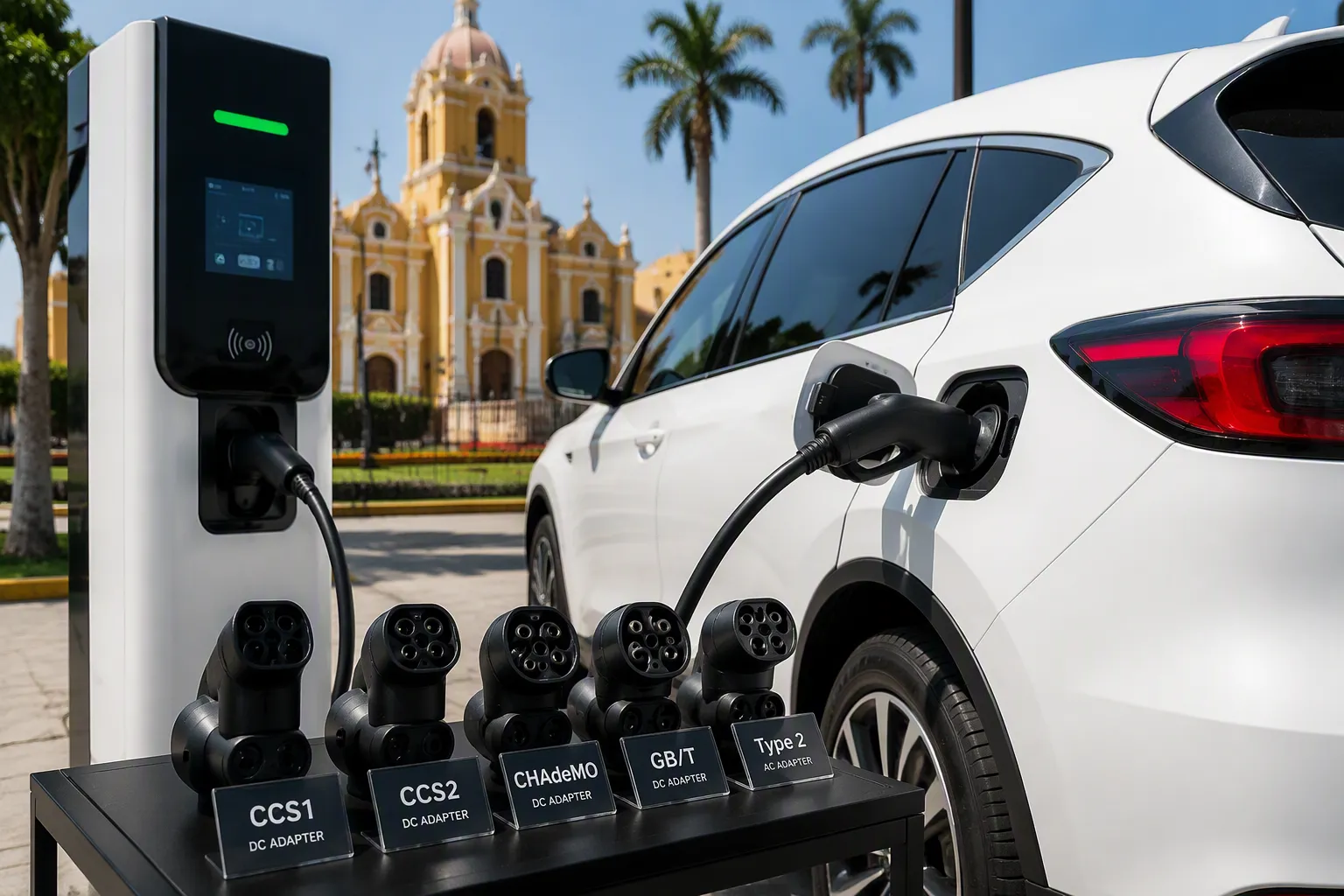
Not all chargers work with every electric vehicle. Each car has a specific port for charging, and a driver must find a station with a matching connector. Using the app’s filter function to select the vehicle’s connector type is the most critical step in the search process. This action removes all incompatible stations from the map.
CCS (Sistema de carregamento combinado)
The Combined Charging System, or CCS, is the standard connector for DC fast charging on most electric vehicles in North America and Europe. Automakers like Volkswagen, Hyundai, Kia, and BMW have historically equipped their cars with a CCS port. It combines the J1772 connector with two large pins below it for high-speed direct current charging.
NACS (Norma de Carregamento da América do Norte)
The North American Charging Standard (NACS) was developed by Tesla and was previously exclusive to its vehicles. However, it is rapidly becoming the new industry standard. According to U.S. Department of Energy (DOE) data, Tesla’s fast charging ports in the United States represent 62% of the country’s total DC fast charging ports, giving NACS a dominant market presence.
The Industry is Shifting 🔌 A major transition is underway. Nearly every major automaker has announced plans to adopt the NACS port for their future electric models, starting around 2025. This move will streamline the public charging experience for all EV drivers.
General Motors has publicly stated that its future electric vehicles will exclusively feature the NACS connector. Ford has consistently stated that it is transitioning to NACS starting in 2025. The table below outlines the adoption plans for major brands.
| Automaker | NACS Adoption Timeline | Adapter Availability for Existing CCS EVs |
|---|---|---|
| Ford | Starting 2025 | Early 2024 |
| General Motors | Starting 2025 | 2024 |
| Rivian | NACS ports as of 2025 | Early as spring 2024 |
| Volvo | Starting 2025 | Early 2024 |
| Polestar | Starting 2025 | Mid-2024 |
| Genesis | Q4 2024 (US), 2025 (Canada) | Q1 2025 |
| BMW Group | Starting 2025 | Likely early 2025 |
| Hyundai / Kia | Adopt NACS ports | Não especificado |
| Lucid | Integrate NACS in 2025 | Adapters in 2025 |
| Mercedes-Benz | Starting 2025 | Offer an adapter |
| Nissan/Infiniti | Starting 2025 | Intermediate adapter available |
| Subaru | Starting 2025 | Available 2025 |
| Toyota/Lexus | Starting 2025 | Starting 2025 |
| Grupo Volkswagen | Starting 2025 | Exploring solutions |
| Stellantis | Starting with select models in 2025 | Details to be provided |
CHAdeMO
CHAdeMO is an older DC fast charging standard, primarily found on the Nissan LEAF and Mitsubishi Outlander PHEV. While still available at many locations, the industry has moved away from this connector. New EV models are not being built with CHAdeMO ports, and the number of available stations is not growing. Drivers of these vehicles should pay close attention to app filters to locate these specific chargers.
J1772 (Tipo 1)
The J1772 connector is the universal standard for Level 1 and Level 2 AC charging in North America. Every non-Tesla electric car comes with a J1772 port. Tesla vehicles can also use J1772 chargers with a simple adapter that is typically included with the car. This makes J1772 the most common connector type found at destination chargers.
Step 3: Filter by Charging Speed
After filtering by connector, the next step is to filter by charging speed. The speed, measured in kilowatts (kW), determines how long a charging session will take. A driver’s needs dictate the best speed. A quick top-up on a road trip requires a different charger than an overnight charge at a hotel. This section explains how to charge your electric car at different speeds.
Level 1: Standard Wall Outlet
Level 1 charging uses a standard 120-volt wall outlet, the same kind used for a phone or lamp. This is the slowest method, adding only about 3-5 miles of range per hour of charging. It is primarily used for home charging overnight when time is not a concern. Public Level 1 chargers are very rare.
Level 2: The Everyday Public Charger
Level 2 is the most common type of public carregamento de carros eléctricos. These stations use a 240-volt connection, similar to an electric dryer, and are found in workplaces, shopping centers, and public parking garages. A Level 2 charger typically adds 20-30 miles of range per hour. This speed is perfect for adding a significant amount of charge while the driver is busy for a few hours.
DC Fast Charging: The Road Trip Essential
DC Fast Charging is the quickest way to power an EV. These stations can add hundreds of miles of range in as little as 20-30 minutes, making them essential for long-distance travel.
- Power Levels: Speeds range from 50 kW to an impressive 350 kW.
- Vehicle Compatibility: A vehicle’s maximum charging speed determines how much power it can accept. Plugging a car with a 150 kW max speed into a 350 kW charger will not cause damage; the car will simply charge at its 150 kW limit.
- Finalidade: The goal of DC fast charging is to get a driver back on the road quickly, not to charge the battery to 100%. Most sessions charge the battery to around 80%, as the charging speed slows dramatically after that point.
Step 4: Check Real-Time Status
A driver can save significant time and frustration by checking a charger’s real-time status before driving to it. Most charging apps provide live data directly from the network. This information confirms not only if a charger is available but also if it is operational. This final check is a critical habit for a smooth charging experience.
Identifying Available vs. Occupied Stations
Charging apps use a simple color-coded system to show the current status of each charger. This visual guide allows a driver to assess availability at a glance. While colors may vary slightly between apps, the convention is generally consistent.
- Verde: The charger is available and ready for use.
- Blue or Gray: The charger is currently occupied by another vehicle.
- Red or Black: The charger is out of service or offline.
Dica profissional 💡 Some apps allow a driver to tap on an occupied station to see how long the current charging session has been active. This can help estimate potential wait times.
Spotting Out-of-Service Chargers
An available spot is useless if the equipment is broken. Apps clearly mark chargers that are offline or reported as non-functional. A driver will typically see a red icon, a crossed-out symbol, or text that says “Out of Service” or “Unavailable.” This data comes directly from the network operator. Seeing this status means the station is not communicating with the network and will not be able to initiate a session. Ignoring these indicators often leads to a wasted trip.
Reading User Check-ins and Comments
Automated data provides the technical status, but user comments offer invaluable real-world context. Fellow EV drivers often leave check-ins and notes that reveal issues an app’s live data might miss. This community feedback is a goldmine of practical information.
A driver should look for recent comments that mention:
- Successful or Failed Sessions: A string of recent failed charging attempts is a major red flag, even if the app shows the charger as “Available.”
- Actual Charging Speeds: A user might report that a 150 kW station is only delivering 50 kW of power.
- Physical Obstructions: A comment could warn that the parking spot is blocked by a non-EV (“ICE-d”) or that the cable is too short to reach the car’s port.
- Payment System Issues: Users may report problems with credit card readers or app activation at specific stations.
Checking the timestamp on these comments is essential. A problem reported five minutes ago is more relevant than one from two weeks ago. This final layer of human intelligence helps a driver choose the most reliable estação de carregamento.
Where to Find Public Electric Car Charging Points

Knowing where to find public charging stations is key to confident EV ownership. Chargers are increasingly integrated into daily life, appearing along highways and at popular destinations. A driver can find power in more places than ever before.
Dedicated Highway Charging Hubs
Long-distance travel is supported by a growing network of high-speed charging hubs. These facilities are strategically placed along major travel corridors to make road trips seamless.
Along Interstates and Major Routes
The U.S. government is accelerating the buildout of a national EV charging network through the National Electric Vehicle Infrastructure (NEVI) Program. This initiative provides funding to states to deploy reliable electric car charging points along designated Alternative Fuel Corridors. The program’s goal is to create an interconnected motorway network, making charging at motorway services convenient and accessible for every electric vehicle. This ensures a driver is never far from a fast charger on a major motorway.
What to Expect at a Charging Plaza
A modern motorway charging plaza offers more than just power. To receive NEVI funding, a station must be within one mile of a motorway and provide at least four DC fast chargers capable of charging simultaneously at 150 kW. This focus on high-speed charging minimizes wait times. Drivers can expect well-lit, safe locations, often with amenities like restrooms and food options nearby, improving the experience of charging at motorway services.
Carregamento no retalho e no destino
Many retailers now offer EV charging as an amenity to attract customers. This allows a driver to add range to their car while shopping.
Grocery Stores and Supermarkets
Supermarkets are ideal locations for Level 2 charging. A typical shopping trip of 30-60 minutes can add a useful amount of range to an electric car. Chains like Kroger are actively installing carregadores públicos at their stores.
Big-Box Retailers and Shopping Malls
Major retailers have formed partnerships to build out their charging infrastructure. This makes it easy for an EV owner to combine errands with a charging session.
| Cadeia de retalho | EV Charging Network Partner(s) |
|---|---|
| Objetivo | Tesla (Supercharger stations) |
| Walmart | Eletrificar a América |
| Kroger | Blink, Electrify America, EVgo, Tesla, Volta |
Locais de hotelaria e lazer
The hospitality industry recognizes the value of providing electric car charging for guests. This amenity is becoming a standard feature at many locations.
Hotéis e resorts
Overnight charging at a hotel is a significant convenience for travelers. A 2022 report indicated that over 26% of hotels in the U.S. already offer this service, a number that continues to grow. An EV driver can wake up to a full battery, ready for the next leg of their journey.
Restaurantes e cafés
Some restaurants and coffee shops provide chargers, allowing patrons to top up their vehicle while they dine. This is a great way to add a few miles of range to the car.
Movie Theaters and Venues
Level 2 charging stations are perfect for venues where people spend several hours. A driver can park their EV, enjoy a movie or event, and return to a vehicle with significantly more charge.
Community and Municipal Charging
An EV driver can find reliable charging options through community and municipal programs. Cities and local governments are actively installing electric car charging points to support the transition to electric vehicles. These public chargers are often located in convenient, accessible spots that people visit regularly. This makes it easier for residents and visitors to power their electric cars.
Public Parking Garages and Lots
Municipal parking facilities are becoming key locations for EV charging. Cities are integrating chargers into public garages and lots to provide a dependable service for commuters and residents. These installations often feature multiple Level 2 chargers, which are perfect for drivers who park for several hours while at work or running errands.
Cities are implementing forward-thinking policies to expand this infrastructure.
- Orlando, Florida: The city’s Electric Vehicle Readiness Policy requires new commercial buildings to prepare a certain percentage of parking spaces for future charging stations.
- Portland, Oregon: This city updated its codes to permit curbside EV charging, making it easier to install chargers in dense urban areas.
These initiatives ensure that as the number of electric vehicles grows, the charging infrastructure grows with it.
Bibliotecas e centros comunitários
Libraries and community centers are transforming into hubs for electric vehicle charging. These locations are ideal because they are centrally located and serve a broad cross-section of the community. A driver can plug in their car while they borrow a book, attend a class, or use other public services.
The City of Phoenix provides a great example. It successfully installed EV chargers at six public library locations. This project is part of a larger plan to host 500 public charging stations by 2030, showing a strong municipal commitment to sustainable transportation.
Partnerships are also driving this growth. In Boston’s Life Sciences hub, a collaboration between private companies is deploying 83 advanced EV chargers across a large campus, supporting tenants and the public.
National and State Parks
Enjoying nature in an electric vehicle is becoming easier. Many national and state parks are installing chargers in their parking areas and visitor centers. This allows visitors to explore scenic drives and remote trails without worrying about their battery range. The availability of charging in these natural settings encourages sustainable tourism. A driver can enjoy a hike and return to a car that is ready for the journey home. This thoughtful placement of chargers supports both environmental preservation and the needs of modern travelers.
The Ultimate Convenience: Home and Workplace Charging
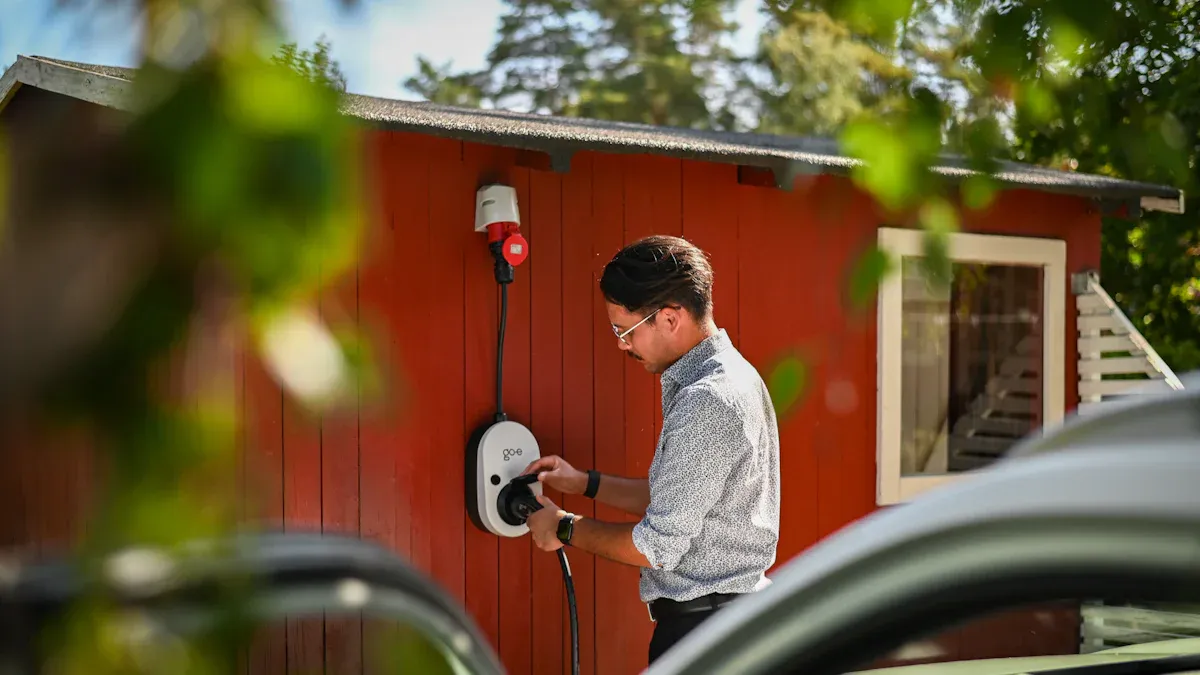
While public charging networks are essential for travel, the most convenient and cost-effective charging happens at home and at work. These locations integrate electric car charging seamlessly into a driver’s daily routine.
Why Home Charging is a Game-Changer
For most EV owners, electric car charging at home is the primary method for powering their vehicle. It offers unparalleled convenience and significant financial benefits.
As vantagens do carregamento noturno
The greatest advantage of a home EV charger is the ability to charge overnight. An owner can plug in their car when they get home from work and wake up to a fully charged battery every morning. This eliminates the need for weekly trips to a gas station and ensures the electric vehicle is always ready for the day’s commute.
Cost Savings vs. Public Charging
Charging an electric car at home is substantially cheaper than using public stations. Residential electricity rates are much lower than the prices at commercial chargers, especially DC fast chargers. This difference leads to significant savings over the life of the vehicle.
| Tipo de carregamento | Custo médio por kWh |
|---|---|
| Residential Electricity | $0.17 |
| Carregamento rápido DC | $0.40–$0.60 |
Setting Up Your Home Charger
Instalar um carregador EV doméstico is a straightforward process that transforms the ownership experience. A driver has a couple of options depending on their needs.
Level 1 vs. Level 2 Home Chargers
A Level 1 charger uses a standard wall outlet but is very slow. A Level 2 home EV charger is the preferred choice, using a 240-volt connection to add 20-30 miles of range per hour of charging. This speed is more than enough for overnight charging.
O processo de instalação
Setting up a Level 2 charger typically requires a professional electrician. The process involves purchasing the unit and having it installed, which may require a permit.
| Componente | Gama de custos |
|---|---|
| Equipment (Level 2) | $299 – $799+ |
| Mão de obra de instalação | $800 – $2,500 |
| Taxas de autorização | $50 – $800 |
Descontos e incentivos
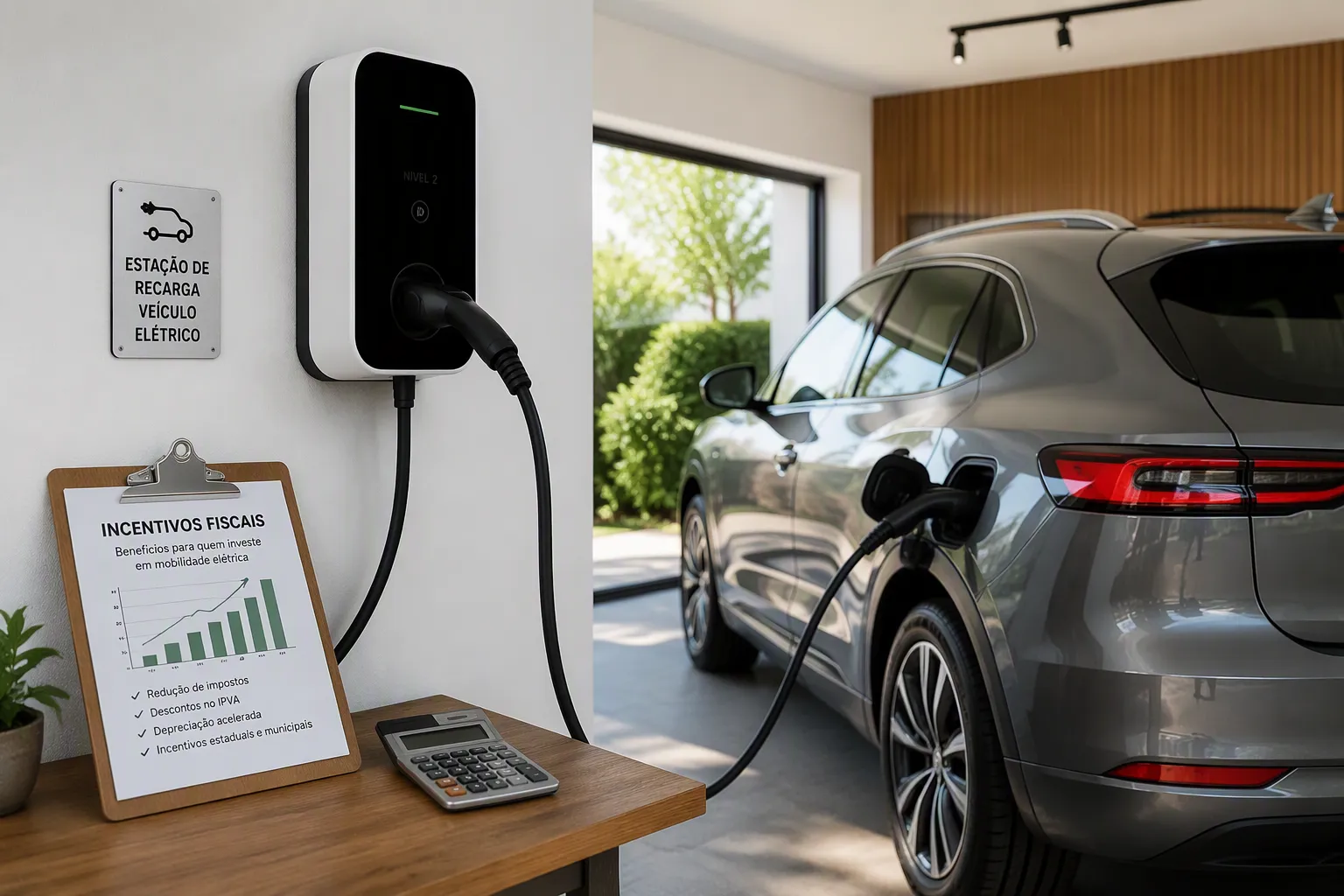
Government and utility programs can help offset the cost of a home EV charger. The federal 30C tax credit offers 30% of the cost, up to $1,000, for qualifying installations. Many states and local utilities also provide rebates.
- Tucson Electric Power (AZ): Offers a $500 rebate for a Level 2 charger.
- Eversource (CT): Provides a $500 rebate for purchasing and installing a qualifying Level 2 station.
Carregamento no escritório
Electric car charging at work is a rapidly growing amenity that benefits both employees and employers. It provides a convenient option for employees to top up their EV during the day.
A ascensão do carregamento no local de trabalho
Workplace charging is becoming a standard feature. Approximately 70% of prime U.S. office buildings now offer EV charging ports. This “at-work” charging market is expected to grow to about 6 million charge points by 2030, making electric car charging at work more accessible.
Como pedir carregadores ao seu empregador
An employee interested in workplace charging can approach their employer with a proposal. They can highlight the benefits, such as attracting and retaining talent, meeting corporate sustainability goals, and providing a valuable perk. Many employers are receptive to adding this amenity to support their workforce’s transition to electric vehicles.
The Basics of Electric Car Charging Costs and Payments
An EV driver needs to understand the various payment models and methods for cobrança pública. This essential guide breaks down the costs and payment processes, helping drivers manage their expenses effectively. Knowing how much does it cost to charge an electric car depends on the network, the payment model, and the charging speed.
Common Payment Models
Charging networks use several pricing structures. Each model affects the final cost of a session differently.
Pay-Per-kWh
Pay-per-kilowatt-hour (kWh) is the most straightforward and equitable model. A driver pays for the exact amount of energy their electric vehicle receives, similar to how a gas station charges per gallon. This method is transparent and ensures a fair price for the energy consumed during the charging session.
Pay-Per-Minute and Session Fees
Some networks use time-based billing, charging per minute or per hour. This model can be less efficient for some drivers. Time-based pricing disproportionately affects slower-charging electric vehicles, as they occupy the station for longer to get the same amount of energy, leading to higher costs. A charging session might also include a flat fee just to start the process, which adds to the overall expense. This structure can make it difficult to predict how much does it cost to charge.
Planos de subscrição e de adesão
Frequent users of a specific network can often save money with a subscription plan. These plans typically involve a monthly fee in exchange for lower charging rates. For example, a network might offer pay-as-you-go rapid charging at £0.89/kWh, while subscribers pay a reduced rate of £0.69/kWh. For drivers who rely heavily on public charging, these memberships can offer significant savings over time.
How to Pay at a Station
Paying for electric car charging is becoming easier with multiple convenient options available at most stations.
Using the Network App
The most common payment method is through the charging network’s dedicated smartphone app. A driver links a credit card to their account, finds a station on the app’s map, and uses the app to initiate and pay for the charging session.
Credit Card Readers
Many newer charging stations are equipped with standard credit card readers. This allows for a simple tap-to-pay experience, just like at a retail store. This method is ideal for drivers who do not want to download multiple apps for different networks.
Using Plug & Charge Technology
Plug & Charge is the most seamless payment technology available. A driver simply plugs the connector into their compatible electric vehicle, and the charging and payment processes happen automatically. The station communicates directly with the car to authorize the session and bill the driver’s linked account.
How to Find Free Charging Stations
Finding free electric car charging points can help reduce running costs. While not as common as paid options, free charging is available in many areas.
Filtering for Free Chargers in Apps
Most charging apps include a filter to display only free stations. A driver can activate this filter to see a map of locations that offer complimentary charging. This is the quickest way to find no-cost options nearby.
Locais comuns para carregamento gratuito
Free charging is often offered as an amenity to attract customers. A driver can frequently find these chargers at:
- Retail stores and shopping centers
- Hotéis
- Locais de trabalho
- Some municipal parking garages
Knowing how much does it cost to charge is simple when the answer is zero. These locations provide a great opportunity to top up the battery without any expense.
Your Essential Guide to Charging Etiquette
Following proper etiquette at public charging stations ensures a positive experience for every driver. This essential guide outlines the simple rules of the road for powering an electric car. A shared understanding of these courtesies helps the entire EV community function smoothly.
Não ocupar um lugar desnecessariamente
A charging station is for active charging, not for long-term parking. Occupying a spot when the car is not charging prevents other drivers from accessing needed power.
Move Your Car When Done
A driver should move their vehicle as soon as its charging session is complete. Many apps send a notification when the battery reaches its target level. Networks actively discourage this behavior with financial penalties.
This policy encourages turnover and ensures the station remains available for the next person.
Avoid “ICE-ing” a Spot
“ICE-ing” refers to a vehicle with an Internal Combustion Engine (ICE) parking in a spot designated for EV charging. This action blocks access for electric car drivers who may urgently need to power their vehicle. A driver of a non-electric vehicle should always leave these dedicated spots open.
Manter a área de carregamento limpa
A clean and organized charging station is safer and more pleasant for everyone. A driver plays a role in maintaining the space.
Properly Stow Cables
After finishing a charging session, a driver must return the cable to its holster. Leaving a cable on the ground creates a serious tripping hazard. It also exposes the connector to damage from weather or being run over by another car. Proper storage helps the equipment work for the next user.
Report Any Damage
If a driver notices a station is not working correctly, they should report it. Using the network’s app to report an issue helps technicians fix it faster. Common problems to look for include:
- Physical damage like frayed cables or cracked connectors
- Error messages or unusual warning lights on the screen
- Inconsistent power or unexpected stops during a session
- Unusual buzzing or humming sounds from the unit
Be Mindful of Charging Limits
Many public stations have rules to ensure fair access, especially in high-demand areas.
Respecting Time-Based Restrictions
Some locations post time limits, such as one or two hours, to encourage turnover. A driver should respect these limits even if their vehicle is not finished charging. This allows more people to use the station throughout the day.
Allowing Others to Charge
Good etiquette often comes down to simple consideration. At a busy station, a driver can help others by charging only as much as needed to reach their next destination. This cooperative spirit makes the public charging network better for the entire community.
Troubleshooting Common Charging Issues
Even with the best planning, a driver may occasionally encounter a public charger that fails to work. This essential guide provides a systematic approach to diagnosing and resolving common charging problems, helping an EV owner get back on the road.
What to Do if a Charger Isn’t Working
Arriving at a non-functional station is a common frustration. Reliability varies significantly across networks, with some studies showing that a small number of networks account for over 75% of all reported station downtimes.
Checking the App for Outages
The first step is to consult the charging network’s app. It should display the station’s real-time status. However, a driver should know that software often overestimates station availability. A survey of EV owners revealed that 23% experienced major reliability issues, while only 13% reported no problems at all.
Contacting Customer Support
If the app shows the station is online but it will not activate, a driver should call the customer support number listed on the unit. A support agent can often remotely diagnose the problem or reboot the station to initiate the charging session.
Finding an Alternate Nearby Charger
Often, the most efficient solution is to find another charger. With nearly half of all technical issues taking between 4 and 24 hours to resolve, waiting for a fix is rarely practical. A driver can use an aggregator app like PlugShare to quickly locate a nearby alternative.
Handling Payment and App Errors
Many charging failures stem from software or payment glitches. The need for multiple apps to access different networks creates a fragmented experience where technical difficulties are common.
Restarting the App
A simple but effective first step is to completely close and restart the charging app. Users frequently report issues like login failures, app crashes, and connection errors. A quick reboot of the application can often resolve these temporary software bugs.
Ensuring Your Payment Method is Valid
If restarting the app fails, a driver should verify their payment information. An expired credit card or insufficient funds will prevent a session from starting. Since most stations lack credit card readers, a valid payment method within the app is critical for the vehicle to begin charging.
When Your Car Won’t Start Charging
Sometimes the issue lies with the physical connection or the vehicle itself. Understanding the common causes helps a driver troubleshoot effectively.

Checking the Cable Connection
A driver must ensure the charging cable is securely plugged into both the station and the car’s port. A loose connection will prevent the charging process from starting. A driver should also visually inspect the port and connector for any dirt or debris that could obstruct a solid connection.
Consulting Your Vehicle’s Manual
If the connection is secure and the station appears operational, the issue might be with the vehicle. The car’s owner’s manual contains specific troubleshooting steps and explains what different dashboard error lights mean. This can help a driver determine if the problem requires a simple reset or professional service.
This essential guide shows an EV owner that finding electric car charging is simple. A driver’s phone is their most powerful tool for locating a compatible station. Home charging offers the best convenience for daily driving. A route planner helps an electric car owner map out DC fast charging stops for any motorway journey. An EV driver should always check the connector, speed, and availability before driving to any electric car charging points. The future of charging promises even greater convenience for every electric vehicle.
The EV charging landscape continues to evolve:
- Ultrafast Chargers will reduce wait times at motorway stations.
- Carregamento sem fios is an anticipated solution for the future.
- Smart Charging Systems will optimize power use for the electric vehicle.
FAQ
Quanto tempo demora a carregar um automóvel elétrico?
Charging time depends on the charger’s speed and the car’s battery.
- Nível 2: Adds 20-30 miles of range per hour.
- Carregamento rápido DC: Can add over 100 miles in 20-30 minutes.
Can I use any charging station for my EV?
No. A driver must find a station with a connector that matches their EV. Apps allow users to filter by connector type, such as NACS or CCS, to ensure compatibility before they arrive.
What should I do if a charging spot is blocked?
This is known as “ICE-ing.” A driver should avoid confrontation. It is best to check for parking enforcement signs or use an app to locate another available charger nearby.
Is it okay to leave my car plugged in after it’s full?
A driver should move their vehicle once charging is complete. Many networks charge expensive idle fees to discourage this. Moving the car ensures the station is available for the next person.
How much does public electric car charging cost?
Costs vary widely. Networks may charge per kilowatt-hour (kWh) or per minute. Home charging is typically the most affordable option for powering an electric vehicle.
Preciso de uma aplicação diferente para cada rede de carregamento?
Often, yes. While some apps show all stations, a driver usually needs the network’s specific app to start and pay for a session. Using stations with credit card readers can simplify the process.