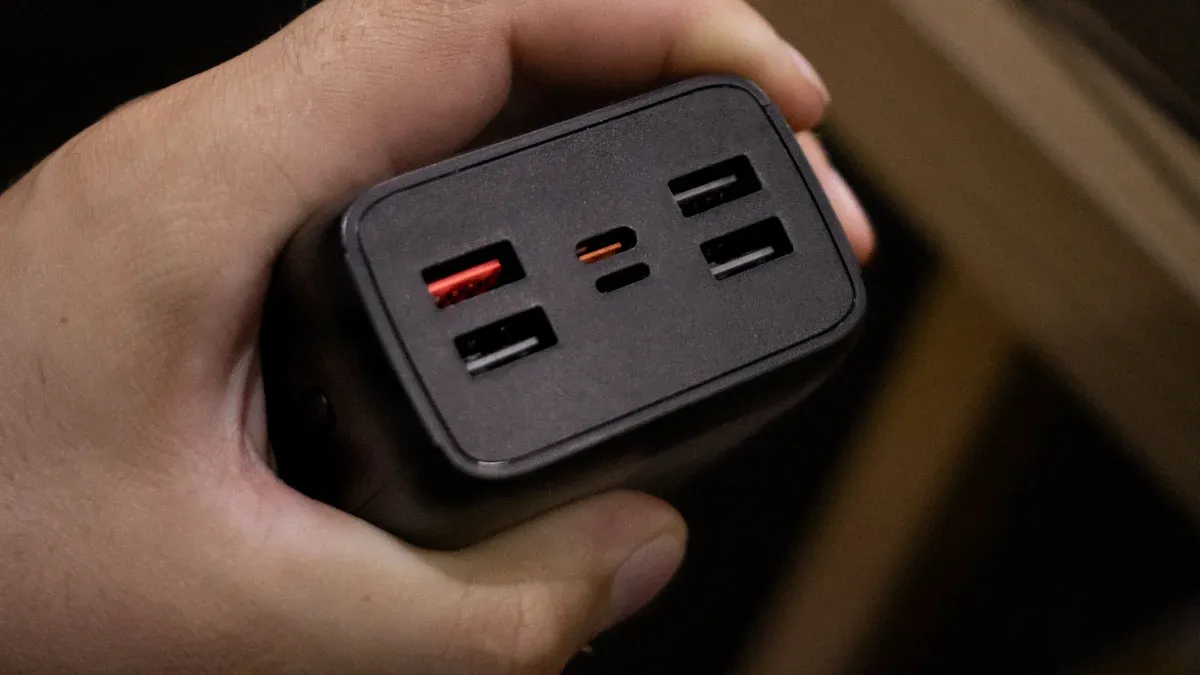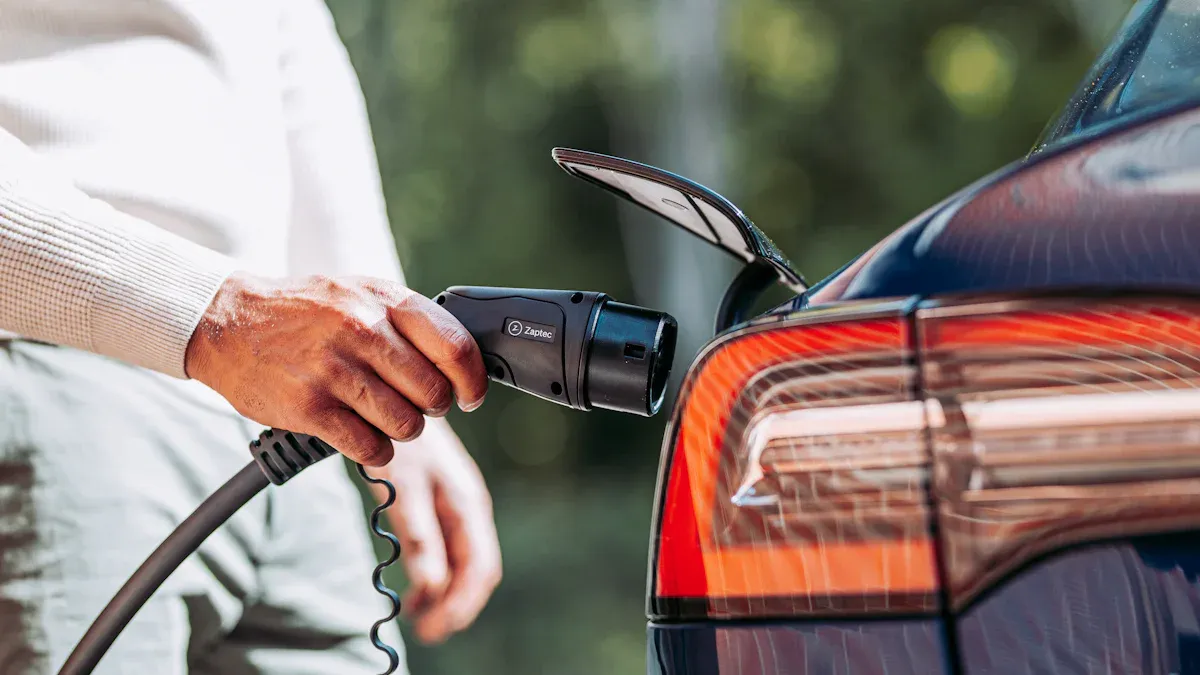
Charging an EV at home typically adds between $30 and $80 to a monthly electricity bill. This final cost to charge fluctuates based on the specific EV, driving patterns, and local energy rates. For most owners, the cost of running an electric vehicle presents a substantial financial advantage compared to the expense of gasoline.
Remarque : The right chargeur ev is key for efficient home charging. Fabricants de chargeurs de VE fournir de nombreux Solutions de recharge pour véhicules électriques, including simple chargeurs ev portables, to help drivers manage how they charge their car at home and control their final bill.
The Simple Formula for the Cost to Charge an Electric Car
Calculating the monthly coût de la recharge d'une voiture électrique is straightforward. It does not require complex electrical knowledge, only basic arithmetic. The final cost depends on three primary variables that every EV owner can easily find.
Understanding the Three Key Numbers
At its core, the expense of home charging hinges on how much energy the vehicle consumes and the price of that energy. An owner must identify these three key figures to determine their monthly charging cost.
The standard formula for calculating EV charging costs includes:
- The vehicle’s energy efficiency
- The total miles driven in a month
- The local electricity rate
Your Car’s Efficiency (kWh/mile)
A vehicle’s efficiency rating quantifies how much electrical energy it consumes to travel one mile. This metric is measured in kilowatt-hours per mile (kWh/mile). Think of it as the electric equivalent of “gallons per mile” for a gasoline car. A lower kWh/mile number signifies a more efficient EV that requires less energy to cover the same distance.
Your Monthly Mileage
The total number of miles driven in a month is a direct multiplier for energy consumption. A driver who commutes long distances will naturally use more electricity than someone who only runs local errands. This variable connects a driver’s real-world habits to the final bill.
Your Electricity Rate ($/kWh)
The final variable is the price of electricity, expressed in dollars per kilowatt-hour ($/kWh). This rate is set by the local utility company and can be found on any monthly electric bill. This figure represents the actual cost of the energy used to charge the vehicle.
Putting It All Together: A Step-by-Step Calculation
With the three key numbers identified, calculating the monthly charging expense becomes a simple, two-step process. This calculation provides a clear estimate of how much an EV will add to an electric bill.
Step 1: Calculate Total Monthly Energy Use
First, determine the total amount of energy the EV will consume in a month. This is done by multiplying the monthly miles driven by the car’s efficiency rating.
La formule est la suivante :
Monthly Miles Driven x Vehicle Efficiency (kWh/mile) = Total Monthly Energy (kWh)
This result shows the total kilowatt-hours of energy needed to power the vehicle for the month.
Step 2: Calculate Total Monthly Cost
Next, calculate the total cost for the energy consumed. This step converts the kilowatt-hours from Step 1 into a dollar amount by multiplying it by the local electricity rate.
La formule est la suivante :
Total Monthly Energy (kWh) x Electricity Rate ($/kWh) = Total Monthly Charging Cost ($)
This final number is the estimated monthly cost to charge the EV at home, providing a clear picture of the financial impact of home charging.
Factor 1: Your Electric Vehicle’s Battery and Efficiency
The specific electric vehicle an owner drives is one of the largest determinants of the final charging cost. Just like gasoline cars have different MPG ratings, every EV model has a unique efficiency rating. A vehicle’s battery size and its energy consumption directly influence how much electricity is needed to travel a certain distance.
How EV Efficiency is Measured
Understanding EV efficiency begins with a few key terms. These metrics are the foundation for calculating energy use and the associated expense.
What is a Kilowatt-Hour (kWh)?
A kilowatt-hour (kWh) is the standard unit for measuring energy. It is not a measure of power, but rather the total amount of energy consumed or stored over time.
What a kWh Represents for an EV:
- It measures the amount of energy transferred to and stored in an EV battery during charging.
- It defines the vehicle’s battery capacity, similar to the volume of a gas tank. A higher kWh capacity generally means a longer driving range.
- A battery with a 60 kWh capacity can, in theory, deliver 60 kilowatts of power for one hour.
Finding Your Car’s kWh/mile Rating
Manufacturers and agencies measure EV efficiency in two primary ways. One common metric is miles per kilowatt-hour (miles/kWh), where a higher number indicates better efficiency. However, the U.S. Environmental Protection Agency (EPA) often uses kilowatt-hours per 100 miles (kWh/100 mi). For simpler monthly calculations, many owners convert this to kWh per mile (kWh/mi). With this metric, a lower number is better, as it means the car uses less energy to go one mile.
An owner can find their vehicle’s official efficiency rating on the EPA’s FuelEconomy.gov website, on the vehicle’s window sticker, or in the owner’s manual.
Efficiency of Popular EV Models
Efficiency varies significantly across different types of electric vehicles. Sedans are typically the most efficient, while larger SUVs and trucks consume more energy due to their size and weight. This directly impacts the long-term cost to charge the vehicle.
| Type de véhicule | Modèle | Typical Efficiency (kWh/mile) |
|---|---|---|
| Sedan | Tesla Model 3 RWD | 0.25 |
| Polestar 2 | 0.31 | |
| SUV | Hyundai Ioniq 5 | 0.30 |
| Ford Mustang Mach-E | 0.33 | |
| Truck | Rivian R1T | 0.45 |
| Ford F-150 Lightning | 0.48 |
Note: Efficiency figures are approximate and vary by trim, battery, and driving conditions.
How Your Driving Style Affects the Cost of Charging
A driver’s habits behind the wheel can cause the real-world cost of charging to differ from official estimates. An aggressive driving style consumes more energy, while a smooth approach conserves it.
Aggressive vs. Smooth Driving
Rapid acceleration is a primary factor that drains an EV battery more quickly. Harsher actions require more power, reducing overall efficiency. A smooth and steady driving style is crucial for maximizing an EV’s range and minimizing charging needs. The difference in behavior is clear when comparing driving patterns.
| Métrique | Aggressive Driver | Eco-Driver |
|---|---|---|
| Accelerator Use | Frequently pushes pedal past 70% | Rarely pushes pedal past 90% |
| Pedal Movement | Rapid and frequent changes | Slow and deliberate movements |
The Impact of Speed on Range
Higher speeds dramatically increase energy consumption. An EV uses significantly more energy to travel at 75 mph than it does at 55 mph. This is due to increased aerodynamic drag and rolling resistance. For long highway trips, maintaining a moderate speed is a simple way to extend range and reduce the frequency of charging stops.
Using Regenerative Braking
Most electric vehicles feature regenerative braking. This smart technology captures kinetic energy that is normally lost during deceleration and braking. The system converts this energy back into electricity, which it then uses to partially charge the battery. 🔋 Effective use of regenerative braking can improve a vehicle’s overall efficiency by 10-20%, lowering the total energy needed from the grid and reducing the final cost.
Factor 2: Your Driving Habits and Mileage
The distance an owner drives each month directly impacts the total charging cost. More miles require more energy, which translates to a higher electric bill. Accurately calculating monthly mileage is a critical step in forecasting the expense to charge an electric vehicle.
How to Calculate Your Monthly Miles
An owner can use several methods to determine their monthly driving distance. Combining these approaches often yields the most accurate estimate.
Using Your Car’s Odometer
The most precise way to track mileage is by using the vehicle’s odometer. An owner can record the odometer reading at the beginning of a month and again at the end. The difference between these two numbers is the exact mileage for that period. For a reliable average, a driver can also reference past service records. These documents often show mileage history, allowing for the calculation of an annual average that can be divided by 12 for a monthly figure.
Estimating Based on Your Daily Commute
For many drivers, the daily commute makes up the bulk of their mileage. An owner can calculate this portion easily.
- Measure the round-trip distance from home to work.
- Multiply that distance by the number of days worked per month.
Exemple : A 25-mile round-trip commute driven 20 days a month equals 500 miles of commute-related driving.
Factoring in Weekend Trips and Errands
Commuting is only part of the picture. An owner must also account for non-work-related driving, such as grocery runs, social activities, and weekend trips. A simple way to do this is to track all miles driven during a typical week. Multiplying this weekly total by four provides a solid monthly estimate that includes all driving habits. This comprehensive number is essential for an accurate charging forecast.
Typical Monthly Mileage Examples
Driving needs vary greatly from person to person. Understanding where one fits among common driver profiles helps put the potential cost of EV ownership into perspective.
The Low-Mileage Commuter (Under 500 miles/month)
This driver primarily uses their EV for short commutes, local errands, and occasional weekend outings. Their low mileage results in a minimal impact on their monthly electric bill, making the cost to charge very low.
The Average American Driver (Around 1,000 miles/month)
This profile represents a typical driver with a moderate daily commute and regular weekend activities. This mileage is a common benchmark for estimating the average monthly charging expense for an EV.
The High-Mileage Road Warrior (Over 1,500 miles/month)
This individual drives long distances for work or frequently takes road trips. While their charging needs are higher, the fuel savings compared to a gasoline vehicle become even more significant at this level of use.
Factor 3: Your Local Electricity Rates
An EV owner’s location is a major factor in the final cost to charge an electric car. Electricity rates vary significantly across the country, meaning the same EV driven the same number of miles can have a different impact on a monthly electricity bill depending on the state. Understanding local energy prices is essential for accurately forecasting charging expenses.
How to Find Your Electricity Rate
An owner must first identify their specific electricity rate, measured in dollars per kilowatt-hour ($/kWh). This figure is the foundation for calculating the cost of charging.
Reading Your Utility Bill
The most direct method is to examine a recent utility bill. The statement will detail the total kWh consumed and the total charges. An owner can find the rate listed as a line item, often labeled “Price to Compare” or “Supply Charge.”
Checking Your Utility Company’s Website
Utility company websites are a valuable resource. Most have a section dedicated to residential pricing plans. An owner can log into their account or browse public rate schedules to find the current cost per kWh for their service area.
Understanding “Blended” Rates
Many bills do not show a single flat rate. Instead, they include various charges like supply, delivery, and taxes. To find a practical “blended” rate, an owner can divide the total dollar amount of their bill by the total kWh used.
Blended Rate Formula:
Total Bill Amount ($) / Total Energy Used (kWh) = Blended Rate ($/kWh)This provides a comprehensive cost per kWh that accounts for all fees.
National Average vs. Your Actual Rate
While a national average provides a useful benchmark, an owner’s actual rate is what truly matters. As of 2025, the average U.S. residential electricity rate is approximately 17.0 cents per kilowatt-hour. However, this figure masks wide regional differences.
States with the Highest Electricity Costs
States like Hawaii, California, and those in New England often have rates well above the national average. In these areas, the cost of charging an electric car will be higher, making strategies to reduce consumption even more critical.
States with the Lowest Electricity Costs
Conversely, states such as Washington, Texas, and parts of the Midwest often enjoy lower energy prices. EV owners in these regions benefit from a lower overall cost to charge their vehicles.
Time-of-Use (TOU) Rate Plans
Many utility companies offer special rate plans that can significantly lower the cost of charging an EV. Time-of-Use (TOU) plans are one of the most effective tools for managing this expense.
What Are TOU Plans?
A TOU plan adjusts the cost of electricity based on the time of day. A utility charges more for energy during “peak” hours when grid demand is high and less during “off-peak” hours when demand is low. This structure encourages shifting energy use to times when the grid is less stressed.
Identifying Peak vs. Off-Peak Hours
The specific hours for each period vary by utility, but a general pattern exists.
- Heures de pointe : Typically occur on weekdays when people return from work and school, often from 4 p.m. to 9 p.m.
- Heures creuses : Usually late at night, from around 9 p.m. until 7 a.m., and all day on weekends.
How TOU Plans Can Lower the Cost of Charging an Electric Car
TOU plans are ideal for EV owners. By scheduling their vehicle to charge exclusively during off-peak hours, drivers can take advantage of the lowest available electricity rates. This simple habit can dramatically reduce the monthly cost of charging, making the switch to an EV even more financially beneficial. Most modern EVs and home chargers allow for easy scheduling, making this an effortless way to save money.
How Your EV Charger Choice Impacts Cost and Efficiency

The type of EV charger an owner uses directly affects both convenience and the final charging cost. While all chargers deliver electricity to the vehicle, their speed, efficiency, and installation requirements differ significantly. Understanding these differences helps an owner select the best charging solution for their needs.
Level 1 Charging (120-Volt Outlet)
Qu'est-ce qu'un chargeur de niveau 1 ?
A Level 1 charger is the most basic charging method. It uses a standard 120-volt household wall outlet. These chargers are often portable and come included with the purchase of a new electric vehicle. They require no special installation.
Charging Speed and Convenience
Level 1 charging is convenient but very slow. It is best suited for plug-in hybrids with smaller batteries or for EV owners who drive very few miles daily.
| Caractéristique | Description |
|---|---|
| Puissance de sortie | 1 to 1.8 kW |
| Vitesse de chargement | 3-7 miles d'autonomie par heure |
| Temps de charge complet | 22-40 hours for a Battery Electric Vehicle (BEV) |
| Cas d'utilisation typiques | Recharge de nuit pour les conducteurs à faible kilométrage |
Is Level 1 Less Efficient?
Yes, Level 1 charging is the least efficient method. The longer charging duration leads to greater energy loss as heat and during the power conversion process. Studies show Level 1 efficiency can be as low as 88%, meaning some electricity is wasted and does not make it into the car’s battery.
Level 2 Charging (240-Volt Outlet)
What is a Level 2 Charger?
A Level 2 charger is the most common home charging solution. It operates on a 240-volt circuit, similar to an electric dryer or oven. Technologically advanced providers like TPSON offer a range of these EV charging solutions.
Faster Charging Speeds
Level 2 units provide much faster charging speeds. A typical 7 kW Level 2 charger can add 25-30 miles of range per hour. This speed allows most EV owners to fully charge their vehicle overnight, even from a nearly empty battery.
Installation Costs and Considerations
Installing a Level 2 charger requires a licensed electrician. The process involves running a dedicated 240-volt circuit from the home’s electrical panel to the charger’s location. The total cost varies based on the charger unit, labor rates, and whether the home’s electrical panel needs an upgrade.
Efficiency Gains with Level 2
Level 2 charging is more efficient than Level 1. The higher power transfer rate reduces the total time the car’s onboard systems must be active during a charge. This results in less energy waste, with efficiency ratings often reaching 92% or higher. This improved efficiency can lead to a lower overall cost to charge the EV.
Does a Faster Charger Use More Electricity?
A common question is whether a faster charger consumes more total electricity for a full charge. The answer lies in understanding the difference between power and energy.
Understanding Power vs. Energy
- Power (kW): Kilowatts measure the taux of energy transfer. Think of it as the speed of water flowing from a hose. A Level 2 charger has a higher kW rating, so it “fills” the battery faster.
- Energy (kWh): Kilowatt-hours measure the total amount of energy stored. This is like the total volume of a swimming pool. The battery’s capacity (kWh) determines how much energy it can hold.
The Myth of Higher Consumption
A faster charger does not use more total energy to fill the same battery. It simply delivers that energy in less time. In fact, due to its higher efficiency, a Level 2 charger often uses slightly less total electricity from the wall to deliver the same amount of energy to the battery compared to a Level 1 unit.
Real-World Examples of the Cost to Charge an Electric Car at Home

Applying the formula with real-world data shows how the coût de la recharge d'une voiture électrique varies. The following examples illustrate the monthly expense for different vehicles, locations, and driving habits. Each scenario highlights the significant savings over gasoline.
Example 1: A Tesla Model 3 in California
A driver in California owns a Tesla Model 3 RWD. They drive an average of 1,000 miles per month. California has a high average electricity rate.
Calculating the Monthly Cost
The calculation uses the car’s efficiency and the local electricity rate to find the total charging cost.
- Efficacité du véhicule : 0.25 kWh/mile
- Monthly Miles: 1,000 miles
- Tarif de l'électricité : $0.29/kWh
The monthly charging cost is $72.50.
(1,000 miles x 0.25 kWh/mile) x $0.29/kWh = $72.50
Comparing to Gasoline Costs
This driver’s EV charging cost offers substantial savings compared to a similar gasoline sedan.
| Métrique | Tesla Model 3 (EV) | Honda Civic (Gas) |
|---|---|---|
| Miles mensuels | 1,000 | 1,000 |
| Fuel Efficiency | 0.25 kWh/mile | 35 MPG |
| Fuel Price | $0.29/kWh | $5.00/gallon |
| Coût mensuel | $72.50 | $143.00 |
Example 2: A Ford F-150 Lightning in Texas
A contractor in Texas uses a Ford F-150 Lightning for work. They drive about 1,500 miles per month. Texas has a lower-than-average electricity rate.
Calculating the Monthly Cost
The larger truck consumes more energy, but the low electricity rate helps manage the cost of charging.
- Efficacité du véhicule : 0.48 kWh/mile
- Monthly Miles: 1,500 miles
- Tarif de l'électricité : $0.14/kWh
The monthly cost to charge the truck is $100.80.
(1,500 miles x 0.48 kWh/mile) x $0.14/kWh = $100.80
Comparing to Gasoline Costs
Even for a high-mileage truck, the savings are significant. The owner saves over $150 each month by choosing to charge at home.
Monthly Savings: The gasoline equivalent would cost approximately $253. This electric truck saves the owner about $152 per month.
Example 3: A Hyundai Ioniq 5 in Florida
A low-mileage commuter in Florida drives a Hyundai Ioniq 5. They travel around 500 miles per month for errands and short trips.
Calculating the Monthly Cost
This driver’s low mileage results in a very low cost to charge an electric car at home.
- Calculate Energy Use: 500 miles x 0.30 kWh/mile = 150 kWh
- Calculate Total Cost: 150 kWh x $0.15/kWh = $22.50
Comparing to Gasoline Costs
For a low-mileage driver, the monthly charging expense is minimal. The cost is less than half of what they would spend on gasoline for a comparable SUV. This makes home charging an extremely affordable option.
Top Strategies to Minimize Your Charging Bill
An EV owner can actively manage their monthly charging bill. Simple adjustments to charging habits can lead to significant savings. These strategies focus on charging at the right time, choosing the right plan, and using the right type of charger.
Charge During Off-Peak Hours
One of the most effective ways to lower charging costs is to charge the vehicle when electricity is cheapest. Utility companies often offer lower rates during periods of low demand, known as off-peak hours.
How to Find Your Off-Peak Window
An owner can find their utility’s off-peak hours by visiting the company’s website or calling customer service. These hours are typically late at night, often starting around 9 p.m. and ending early in the morning. Charging during this window can dramatically reduce the coût de la recharge d'une voiture électrique.
Using Your EV’s Scheduled Charging Feature
Most modern EVs and smart chargers make it easy to take advantage of off-peak rates. Owners can use their vehicle’s infotainment system or a dedicated app to set a charging schedule. For example, the CITA EV App allows users to schedule charging sessions to begin automatically during off-peak hours. This ensures the car is always ready by morning while minimizing the cost. This simple automation makes saving money effortless.
Sign Up for a Special EV Rate Plan
Many utilities offer rate plans designed specifically for electric vehicle owners. These plans provide even deeper discounts for off-peak charging.
How to Check for EV Plans with Your Utility
An owner should check their utility provider’s website for information on special EV rate plans. These are often advertised as a way to save money on home charging. A quick phone call to the utility can also provide details on available options and enrollment.
Types of EV Rate Plans (TOU, Tiered)
The most common type is a Time-of-Use (TOU) plan, which offers lower prices during off-peak hours. Some utilities may also offer tiered rates, where the price per kWh increases after a certain amount of energy is used. For an EV owner, a TOU plan is almost always the most beneficial option.
Avoid Relying on Public DC Fast Chargers
While convenient, public DC fast chargers are the most expensive way to charge an EV. Home charging remains the most economical choice.
The High Cost of Convenience
The cost to charge an electric car at a public charging point is significantly higher than residential rates. Public fast charging can cost between $0.45 and $0.85 per kWh. In contrast, off-peak home charging rates can be as low as $0.08 per kWh. This price difference makes frequent use of public charging a major factor in a higher monthly bill.
Quand la recharge rapide prend tout son sens
Public charging is essential for long-distance road trips. It provides the speed needed to get back on the road quickly. However, for daily driving needs, an owner should rely on their more affordable home charging solution to keep the overall cost of charging low.
Precondition Your Car While Plugged In
An owner can further reduce the monthly cost of charging by using a feature called preconditioning. This intelligent strategy prepares the vehicle for a drive while it is still connected to the charger. It uses grid power to handle the most energy-intensive tasks before the car is unplugged. This simple habit optimizes the battery for the road and preserves its range, leading to direct savings.
What is Preconditioning?
Preconditioning is the process of remotely heating or cooling an EV’s cabin and battery to their optimal temperatures before a trip begins. An owner typically activates this feature through the vehicle’s mobile app 15 to 30 minutes before they plan to leave. The system uses electricity from the wall outlet instead of draining the battery.
This process is crucial for efficiency. Preconditioning an EV’s cabin and battery while plugged in draws electricity from the mains, not the car’s battery. This ensures the battery starts the journey with a full charge, preserving the predicted driving range from the very start.
By completing this step, the driver enters a comfortable cabin without sacrificing any miles. The primary purpose of the battery’s energy is then dedicated to propulsion, not climate control. This makes the entire charging and driving cycle more efficient.
Saving Battery Power in Hot or Cold Weather
Extreme temperatures are a major factor in battery performance. A battery that is too hot or too cold operates less efficiently and can experience a significant reduction in range. Preconditioning directly addresses this challenge and lowers the overall cost of ownership.
- In Cold Weather: A cold battery can reduce an electric vehicle’s range by up to 30%. Preconditioning warms the battery to its ideal operating temperature. This action maximizes its efficiency and power output from the moment the drive begins. It also means the heater, a major power consumer, does most of its work using grid power.
- In Hot Weather: High temperatures can also strain a battery. Preconditioning cools the cabin and the battery pack. This prevents the air conditioning system from drawing a large amount of energy from a full charge at the start of a trip.
Ultimately, preconditioning shifts the energy demand for climate control from the battery to the electrical grid. This preserves the maximum amount of stored energy for driving. An owner who preconditions their EV will find they need less frequent charging sessions, which directly lowers their monthly expense.
An owner’s final monthly bill for home charging typically falls between $30 and $80. They ultimately control their charging costs. The vehicle’s efficiency, driving distance, and local electricity rates determine this amount. Charging an EV at home is almost always cheaper than buying gasoline.
Smart habits, like off-peak charging with a capable EV charger, lower the expense to charge even more. A quality EV charger is key to efficient charging.
FAQ
Is it cheaper to charge an EV at home or at a public station?
Home charging is significantly cheaper. An owner pays low residential electricity rates. Public DC fast chargers charge a premium for convenience, making them best for long-distance travel, not daily charging.
Combien de temps faut-il pour recharger un véhicule électrique à domicile ?
Le temps de charge dépend du type de chargeur.
- Niveau 1 (120V) : Adds 3-7 miles of range per hour.
- Niveau 2 (240V) : Adds 25-30 miles of range per hour, enabling a full overnight charge.
Does charging an EV use a lot of electricity?
An EV charger’s consumption is similar to other large appliances like an electric oven. A Level 2 charger uses about 7,200 watts. Charging during off-peak hours minimizes its impact on the total electric bill.
Can I just use a regular outlet to charge my car?
Yes, an owner can use a standard 120-volt outlet with a Level 1 charger. This method is very slow and less efficient. It is best for plug-in hybrids or drivers with very low daily mileage.
Will I need to upgrade my home’s electrical panel?
An upgrade may be necessary for a Level 2 charger installation. An electrician must assess the home’s electrical panel capacity. Many modern homes have sufficient capacity and do not require an upgrade.
How does weather affect my charging cost? 🌡️
Extreme cold or heat reduces battery efficiency, requiring more energy to travel the same distance. This increases charging frequency and cost. Preconditioning the vehicle while it is plugged in helps minimize this effect.